MDF for Commercial Interiors: Best Practices for Offices, Retail & Hospitality
A practical guide to using MDF in commercial interiors—where it excels, moisture/fire considerations, and detailing for long service life.
Quick Decision Summary
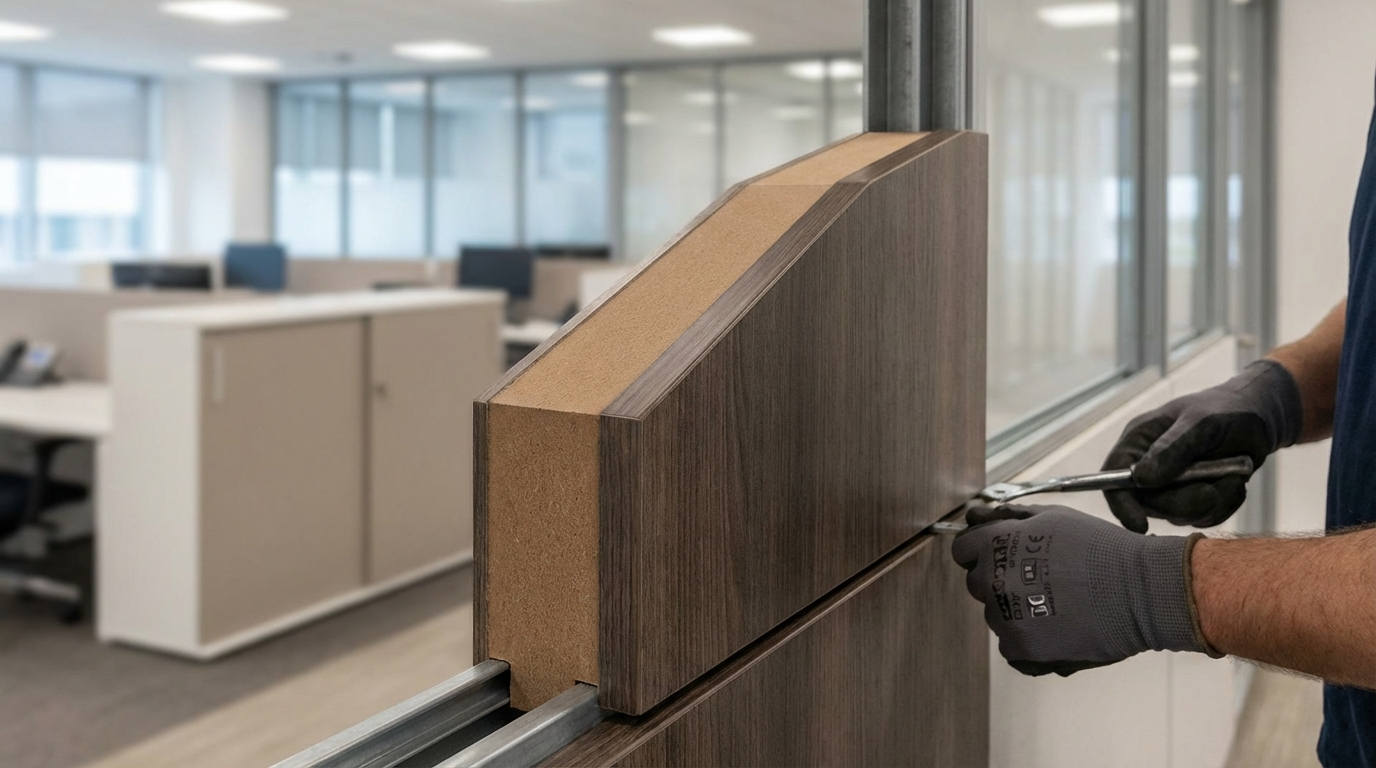
MDF shines in commercial interiors for cost-effective, smooth finishes in low-moisture, high-volume areas like office partitions and retail displays.
If you’re in a hurry: Opt for standard MDF (16-18mm) with laminate facing and PVC edge banding for offices and dry retail zones. Switch to moisture-resistant variants (MR grade or HDFMR) in hospitality near kitchens or coastal sites. Prioritize sealed edges and proper storage to counter Indian monsoons. Expect 8-12 year service life with good detailing; verify density (700-800 kg/m³) and screw-hold before bulk orders. Avoid exposed edges or wet zones without upgrades.
- Choose this if: Budget-tight projects need uniform machinability, paint-ready surfaces, and quick CNC routing for modular offices or retail fixtures.
- Avoid this if: High-humidity hospitality lobbies, frequent spills in food courts, or heavy-impact zones like gym partitions demand plywood or WPC alternatives.
What This Material/Option Actually Is
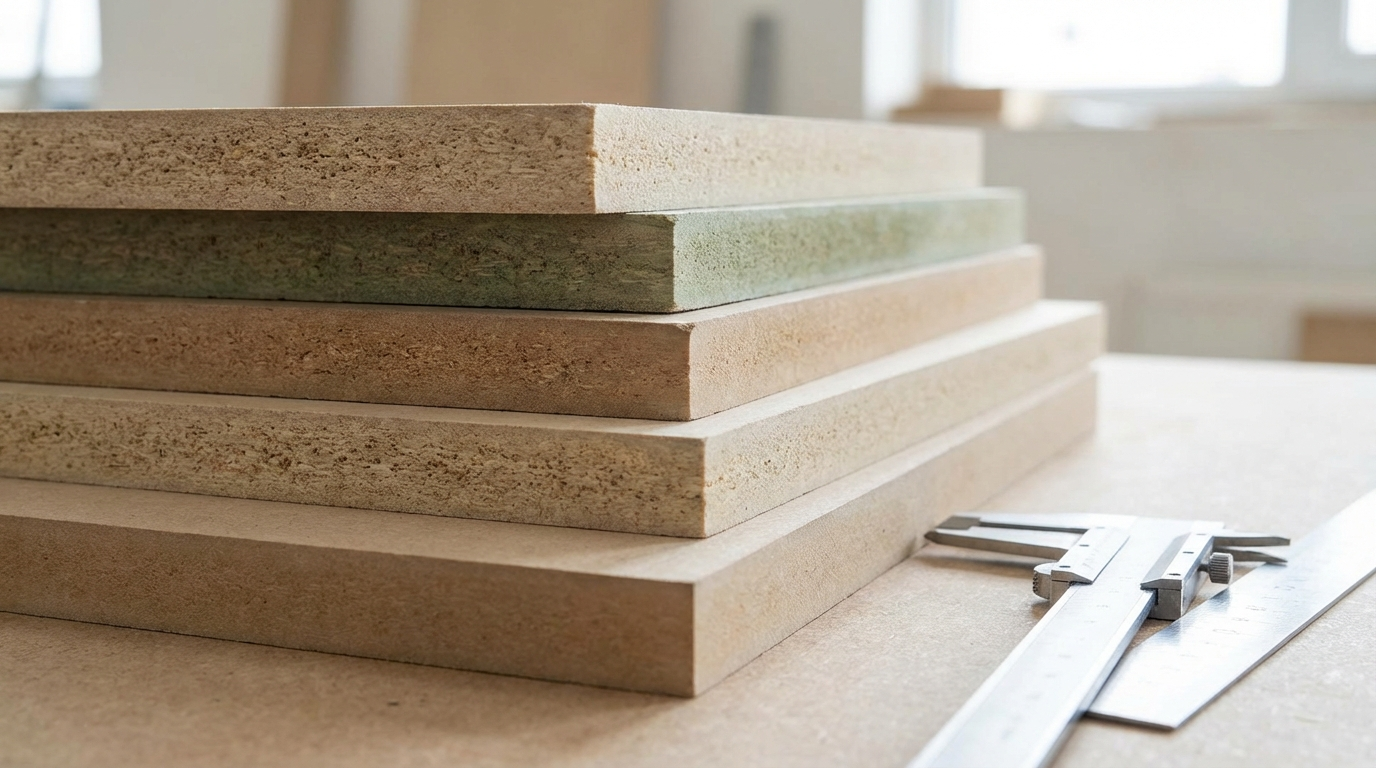
MDF, or Medium Density Fiberboard, is an engineered wood panel made by compressing wood fibers with resins under heat and pressure. In commercial interiors, it serves as a base for laminates, veneers, or paints, offering a flat, void-free surface ideal for furniture and joinery.
Standard MDF suits dry interiors; moisture-resistant (MR) grades add wax or melamine for humid conditions common in Indian commercial spaces. Thicknesses from 3mm to 25mm fit partitions, cabinets, and counters. Unlike plywood, MDF has no grain direction, enabling intricate CNC cuts for modern office desks or retail shelving.
It pairs with pre-laminates for durability or melamine for budget faces. Edge banding (PVC/ABS) hides the core, preventing moisture ingress—a must in high-traffic hospitality.
Why It Matters in Indian Commercial Sites
Indian commercial spaces face monsoon humidity (70-90% RH), coastal salt air, and inconsistent AC, accelerating MDF swelling if unsealed. Offices in Mumbai or Chennai see edge delamination without MR grades; retail in Delhi summers warps thin panels from dry-wet cycles.
High footfall in hospitality scratches surfaces quickly, demanding laminate overlays. Poor site storage—stacked outdoors—leads to 10-15% wastage from bloating. Screw holding drops in humid zones, loosening hinges on office cabinets.
Yet, MDF cuts costs 20-30% vs plywood for large-scale retail displays, with smoother finishes reducing paint layers. Proper acclimation (48 hours indoors) and sealed edges extend life to match plywood in controlled environments.
Practical Use Cases (What Works, What Fails)
| Application | Recommended Thickness | Finish Notes | Risk Notes (India Context) |
|---|---|---|---|
| Office Partitions | 12-18mm | Laminate or paint | Low moisture risk; seal edges for AC fluctuations |
| Retail Display Units | 16-19mm | Pre-laminated | High dust/handling; use PVC edges, avoid floor-level |
| Hospitality Reception Desk | 18-25mm | High-pressure laminate (HPL) | Spill-prone; MR grade + bullnose edges essential |
| Office Credenzas | 16mm | Melamine faced | Good screw hold if density checked; ventilate storage |
| Restaurant Wall Panels | 8-12mm | Veneer or foil | Fails in steam zones; limit to dry accents |
Use cases succeed when matched to exposure: MDF excels in modular office systems but fails in uncoated wet bars, swelling 5-10% in monsoons.
Is MDF suitable for high-traffic office lobbies?
Yes, for counters and panels in air-conditioned lobbies, use 18mm MR MDF with 1-2mm PVC edging and HPL topcoat. It handles moderate footfall without chipping if edges are flushed perfectly.
Caveats: Coastal sites need HDFMR for salt resistance; avoid direct floor contact to prevent capillary moisture. Check for uniform density to ensure even load distribution. Next step: Test screw pull-out on samples—aim for 200-300N hold.
Can MDF handle retail fixture demands?
Absolutely for shelving and POS stands; 16mm pre-laminated MDF routs cleanly for branding cutouts. Add ABS edges for impact resistance in busy stores.
Nuance: Monsoon stacking risks warping—acclimate 72 hours. High-abuse zones like apparel racks need reinforcement. Verify edge adhesion post-CNC; peel test by hand.
How to Decide or Do This in 5 Steps
- Assess Exposure: Map wet zones (kitchens, restrooms), humidity (coastal >60% RH), and traffic. Dry offices: standard MDF. Hospitality spill areas: HDFMR.
- Select Specs: Thickness per load (18mm+ for desks), density 700kg/m³ min, face type (laminate for scratch-prone).
- Prototype Check: CNC a sample; inspect edges for fuzzing, test screw hold after 24hr humidity exposure.
- Detail for India: Mandate 48hr site acclimation, double edge seal, ventilation gaps in cabinets.
- QC Batch: Weigh panels for density, tap for voids, monitor first install for swelling.
Failure point: Skipping step 4 causes 20% rework in monsoons—always include in BOQ.
Decision Framework for Commercial Projects
| Project Condition | Recommended MDF Variant/Finish/Edge | What to Verify On-Site |
|---|---|---|
| Wet zone (hospitality kitchenette) | HDFMR + HPL + 2mm PVC | Water bead test on sealed edges; no absorption in 30min |
| Coastal high humidity | MR grade + melamine + ABS edge | Density uniformity; screw hold post-salt spray mockup |
| Heavy use (retail checkout) | 19mm standard + post-formed laminate | Impact test: drop 2kg from 1m, no dent >2mm |
| Tight budget office fitout | 16mm prelam + 1mm PVC | Flatness: <1mm sag over 1m span unloaded |
| Fast delivery modular | Pre-laminated stock sheets | CNC compatibility: clean cuts, no tear-out |
| High scratch risk (open office) | HPL or acrylic + bullnose edge | Surface hardness: fingernail scratch resistance |
Two-Minute Comparison (What Changes in Real Life)
| Aspect | MDF | Plywood | Particleboard |
|---|---|---|---|
| Moisture Resistance (Monsoon) | MR grades fair; seals critical | Best with BWR grade | Poor; swells fast |
| Machinability (CNC) | Excellent, no splinter | Grain limits curves | Good but voids common |
| Cost per sqm (18mm) | Medium | High | Low |
| Screw Hold (Repeated) | Medium; plugs needed | Strong | Weak |
| Finish Smoothness | Best for paint/laminate | Patches needed | Fair |
Choose MDF for smooth, budget modulars; plywood for structural wet areas. Trade-off: MDF faster to finish but needs edge protection in humid India sites.
What thickness of MDF for office desks?
18-25mm for tops with 16mm sides; supports 50kg/m² evenly. Lighter loads (computers) use 16mm.
India nuance: Thicker in non-AC Chennai offices to resist sag. Verify with 1m span load test. Next: Match to leg frame—flush alignment prevents wobble.
Does MDF work in fire-prone commercial spaces?
Limited; standard burns like plywood—use FR grade paints or gypsum backing for compliance. Not structural fire barrier.
Conditions: Retail exits need intumescent coatings. Check char rate visually on scrap. Step: Consult local norms for escape routes.
Common Mistakes Architects and Contractors Make
Avoid these to cut rework by 30%:
- Skipping MR grade in coastal hospitality—results in swelling; check RH logs first.
- Thin edges without banding—chips in retail handling; double-seal always.
- Poor acclimation—stack outdoors pre-install; 48hr indoors mandatory.
- Overlooking density—light panels fail screw hold; tap test for solidity.
- No overhang protection—desk edges curl in monsoons; bullnose or metal trim.
- Bulk cutting sans dust extraction—CNC fuzz; vacuum during routing.
- Ignoring ventilation—cabinet moisture traps; drill 10mm gaps.
- Single coat finishes—scratches fast; 2-3 layers min for offices.
- Forget wastage buffer—10% extra for warps; store flat, elevated.
- Hinge placement on edge—pulls apart; inset 50mm, use confirms.
Failure Modes and Fixes
- Symptom: Edge swelling
Cause: Moisture ingress in monsoons.
Prevention: PVC/ABS banding + silicone seal.
Fix: Sand, re-band; replace if >2mm swell. - Symptom: Screw loosening
Cause: Low density or humidity.
Prevention: 700kg/m³ min, pilot holes.
Fix: Wooden plugs + rescrew; upgrade to cam locks. - Symptom: Surface delamination
Cause: Poor laminate adhesion, steam.
Prevention: HPL over melamine, no wet zones.
Fix: Spot glue + clamp 24hr; panel replace. - Symptom: Chipping on cuts
Cause: Dull blades, high speed.
Prevention: Triple-chip blades, 18m/min feed.
Fix: Fill epoxy, sand flush. - Symptom: Sag under load
Cause: Thin span, no support.
Prevention: 600mm max span 18mm.
Fix: Add ribs underneath. - Symptom: Scratches showing core
Cause: Soft face, high traffic.
Prevention: Acrylic/HPL, felt pads.
Fix: Buff + polish; deep—re-laminate. - Symptom: Color fade
Cause: UV in windows, cleaners.
Prevention: UV coat, neutral pH wipes.
Fix: Minimal; plan for refresh every 5yr.
Quality Checks You Can Do Without Lab Tests
Before Buying
- Tap panels: uniform thud, no hollows.
- Weigh sample: 700g+ per 0.1m³.
- Bend test: <2mm deflection over 1m.
- Edge scrape: no crumbling fibers.
- Ask: Resin %, MR additives, batch consistency.
After Cutting
- Inspect routs: smooth, no tear-out.
- Screw 5x: pull resistance even.
- Water drop: no darkening in 10min.
- Flat lay: no warp overnight.
After Installation
- Flush edges: <0.5mm step.
- Clean test: mild soap, no haze.
- Load mock: stable 24hr.
- Humidity cycle: fan + dehu, check gaps.
How to edge band MDF for commercial durability?
Apply 2mm PVC via hot-melt machine at 180°C, 8m/min; pre-mill groove 1.2mm deep. Overlap corners, trim flush.
India tip: Extra silicone bead on top for monsoons. Test peel strength by hand. Next: CNC groove accuracy <0.1mm for seamless joints.
Tips for Architects, Contractors, and Facility Managers
Architects: Spec MR + HPL for hospitality; detail 10mm overhangs, ventilation slots. Use CAD for CNC files, include 5% wastage in drawings.
Contractors/Carpenters: Acclimate sheets, use 4mm pilot holes, reinforce with 50x25mm ribs. CNC at low speed for clean edges; handle with gloves to avoid oils.
Facility Managers (Homeowners analog): Weekly damp cloth cleans, no abrasives. Annual edge inspect; report sags early. Avoid dragging chairs—felt pads mandatory.
OEM/Modular Makers: Standardize 18mm kits; QC density per batch. Pack with silica packs; track returns for humidity patterns.
Design Ideas You Can Actually Build
Offices (6 ideas):
- Modular workstations: 16mm lam MDF + T-mold edge; fits open plans, easy reconfig.
- Reception pods: 19mm curved CNC, acrylic face; humidity low.
- Storage walls: Slotted shelves 12mm, powdercoat; high density for books.
- Meeting pods: Acoustic panels 9mm foil; seal joints tight.
- Desk clusters: Post-formed edges 18mm; bullnose for clean look.
- Cable mgmt units: Routed channels 16mm; hinged doors.
Retail (6 ideas):
- Slatwall displays: 12mm grooves; HPL durable.
- POS islands: 25mm top, 16mm body; impact edges.
- Jewelry cases: Mirrored 9mm; LED routed.
- Garment racks: Perforated backs; ventilate.
- Seasonal kiosks: Modular clip-fit 18mm.
- Mannequin plinths: 19mm stacked, carpet top.
Hospitality (6 ideas):
- Lobby vanities: MR 18mm HPL; drip grooves.
- Bar fronts: Curved 19mm veneer; sealed.
- Room cabinets: Melamine 16mm; soft-close.
- Menu boards: Slim 8mm framed.
- Partition screens: Slatted 12mm paint.
- Banquet tables: Lam base 25mm.
Each adapts to monsoons: Seal all cuts, elevate off floors.
Is fire-rated MDF necessary for retail exits?
Not always; standard + intumescent paint meets most. True FR boards add cost without gain in non-structural use.
Nuance: Hospitality lounges near kitchens—yes. Verify char spread on sample flame. Step: Layer with gypsum for paths.
Can you paint MDF directly for office panels?
Yes, prime with MDF sealer, 2-3 acrylic coats. Sand 220 grit between.
Conditions: Low abrasion zones; laminate better for scratches. India: UV stable paints for windows. Test adhesion post-humidity.
FAQs
Why choose MDF over plywood for office partitions?
MDF offers flatter surfaces for seamless joints and easier painting, cutting costs on fillers in large commercial runs. It machines without splinters, speeding CNC workflows for modular offices. In Indian sites, plywood edges better in wet zones, but MDF with proper banding matches in dry AC spaces, saving 15-25% on material while enabling complex profiles like acoustic slots.
How does humidity affect MDF in coastal hotels?
High RH causes fiber expansion, leading to edge swelling and joint gaps if unsealed. MR grades resist up to 90% RH better, but always acclimate and edge-band. Coastal salt accelerates corrosion on fittings, so pair with stainless hinges. Prevention beats cure—store elevated, install with dehumidifiers running first week.
What edge treatment lasts in retail high-traffic?
2mm PVC or ABS hot-applied edges withstand daily bumps, outlasting tape. Machine-mill grooves for flush fit, add silicone top bead for monsoons. In busy stores, bullnose profiles reduce snags. Check adhesion by flexing corners—no lift means good. Replaces every 5-7 years in heavy use.
Can MDF support heavy office filing cabinets?
Yes, 18-25mm at 750kg/m³ density holds 100kg shelved with vertical supports every 500mm. Reinforce with plywood backs for side loads. Test unloaded sag first. In non-AC sites, MR variant prevents softening. Avoid overhangs >100mm without brackets.
How to clean laminate MDF in hospitality?
Use pH-neutral soap damp cloth daily, dry immediately—no abrasives or ammonia that dulls. For spills, blot fast to avoid seeps. Weekly microfiber polish maintains shine. In humid areas, ventilate to prevent mold under edges. Lasts 10+ years with habits; test cleaners on scrap first.
Is pre-laminated MDF good for quick retail fitouts?
Ideal for speed—no extra facing needed, direct CNC and assemble. Uniform color hides joints in displays. India logistics favor it—less damage in transit. Drawback: Limited designs; custom laminate for branding. Acclimate to match site temp, edge immediately post-cut.
What if MDF warps after installation?
Rare if acclimated; root often storage or uneven supports. Flatten with clamps + weights 48hr, shim legs. Prevent by 72hr indoor rest, flat stacking. For partitions, add mid-spans. Contractors note site RH before blame material.
How thick for hospitality countertops?
25-32mm built-up or 19mm solid with substrate for spills. HPL top, drip edge mandatory. Handles 200kg/m². Thinner risks cracks under mixers. Verify flatness <1mm/m; bullnose prevents chips in busy bars.
Does MDF dent easily in office use?
Medium resistance; laminate hardens it for drawers. Avoid direct impacts—use stops. Dents fill with wax sticks, sand repaint. Thicker + ribs boost. In high-use, acrylic faces toughest.
Can you use MDF for ceiling bulkheads?
Yes, 9-12mm light frames; paint sealed. Good acoustics, easy curves. Suspend properly—no direct humidity. Monsoon: Ventilate voids. Lighter than gypsum, faster install.
Disclaimer: This content is provided for general informational purposes based on industry practices and publicly available information. Product specifications, standards, prices, and availability may vary by manufacturer, region, and time. Readers should independently verify details with manufacturers, dealers, or qualified professionals before making purchase or construction decisions.Want Plywood Suggestions?
Share a few details and a VIR MDF specialist will suggest suitable brands and connect you to responsive dealers.