18mm MDF Price Guide: What Affects Cost + Best Uses for Furniture
18mm MDF is the workhorse for furniture. See what affects price, when to choose MR vs exterior grade, and buying checks to avoid low-quality sheets.
Quick Decision Summary
18mm MDF sheets typically range from Rs. 80-140 per square foot for standard commercial grades, making them a sturdy choice for furniture like wardrobes and cabinets.
If you're in a hurry: Opt for moisture-resistant (MR) 18mm MDF at Rs. 95-130 per sq ft for most Indian homes, especially in humid areas. It's thick enough for load-bearing shelves without sagging, but pair it with proper edge banding to prevent moisture ingress during monsoons. Avoid raw exterior grades for indoor use unless sealed heavily, as they add unnecessary cost without benefits in dry zones. Always verify density above 750 kg/m3 by tapping for a solid thud, and calculate total project cost including 10-15% wastage from CNC cuts.
- Choose this if you need strong screw-holding for heavy furniture in ventilated interiors with moderate humidity.
- Avoid this if your site has direct water exposure or extreme coastal salt air—switch to HDFWR or marine-grade alternatives.
What This Material/Option Actually Is
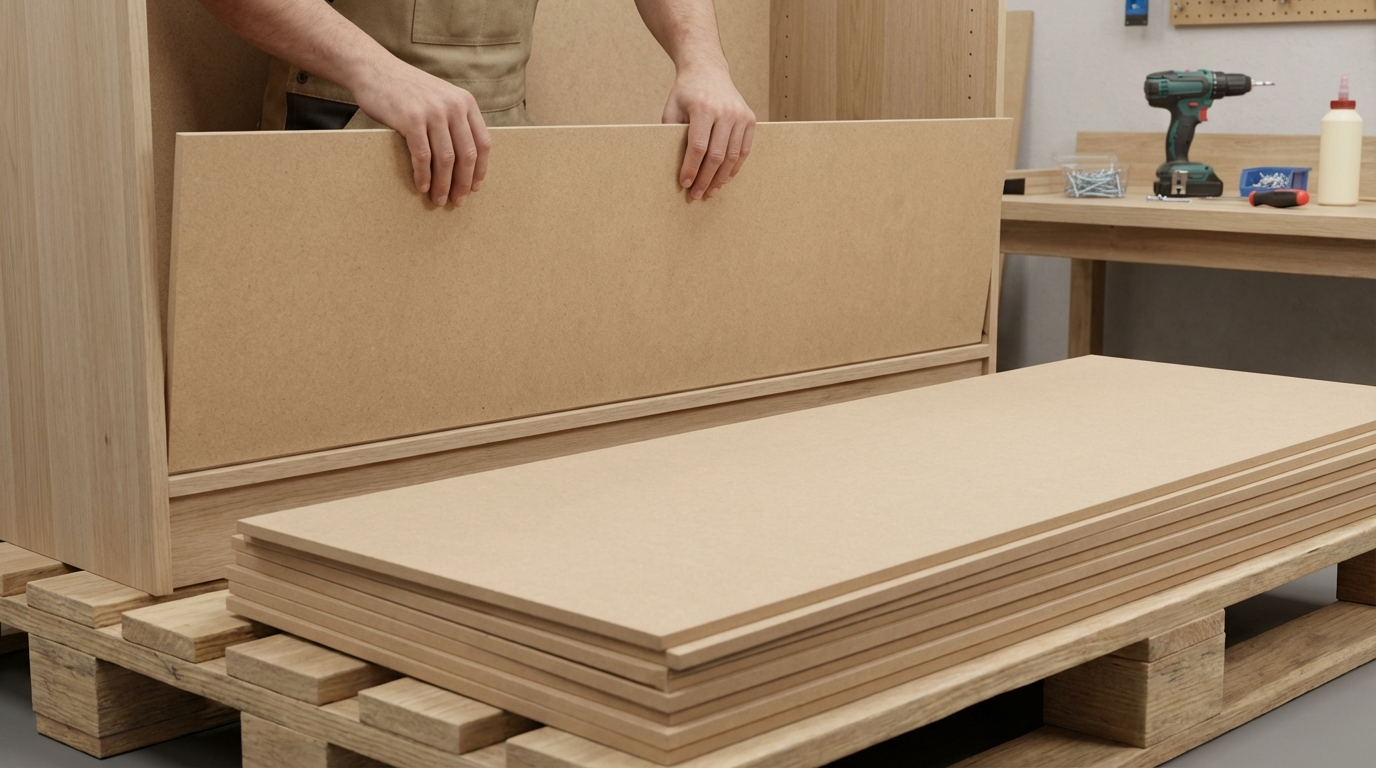
18mm MDF refers to medium-density fiberboard panels precisely 18 millimeters thick, engineered from fine wood fibers bonded with synthetic resins under high pressure and heat. The standard size in India is 8 feet by 4 feet (2440x1220mm), covering about 32 square feet per sheet.
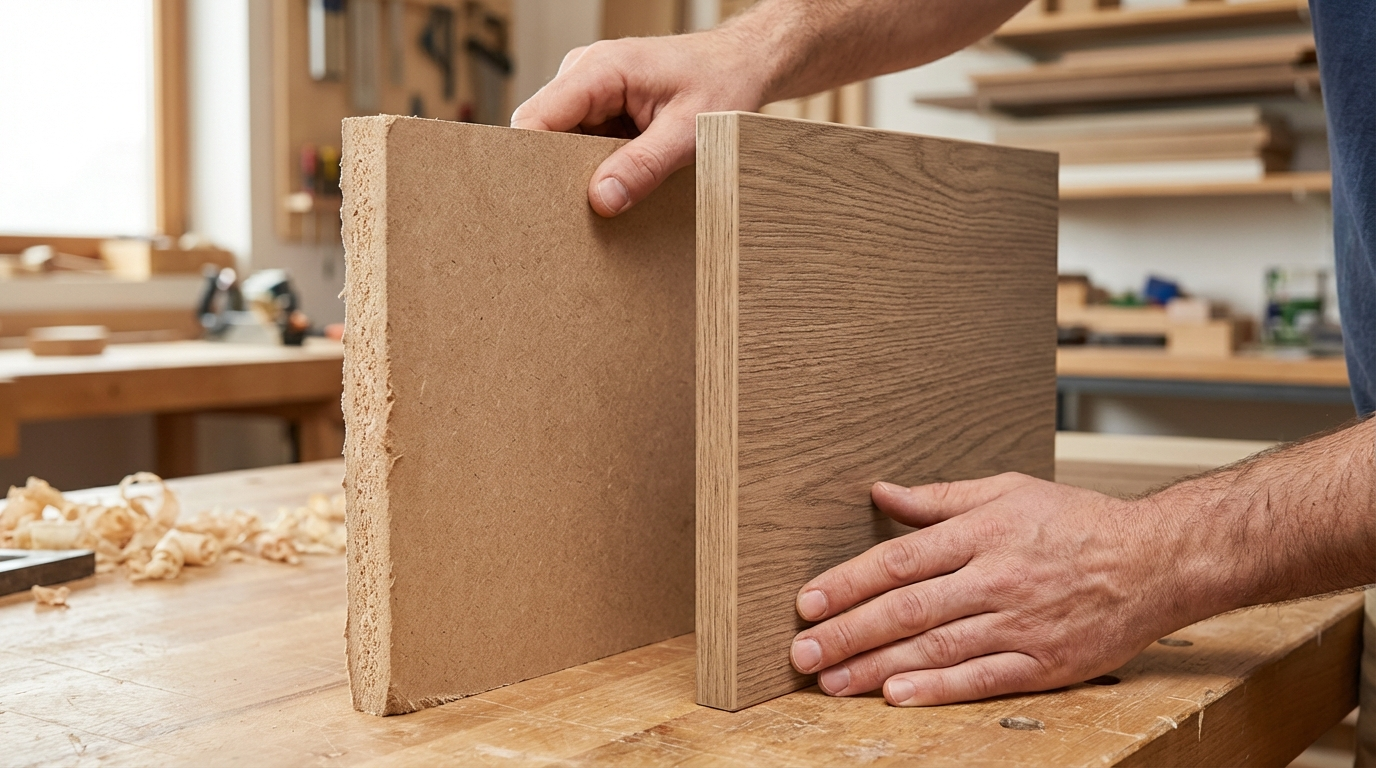
It sits between thinner 6-12mm sheets for light panels and heavier 25mm+ for structural beams. Unlike plywood, MDF offers a smooth, uniform surface ideal for laminates or paint, with no knots or grain variations that cause uneven finishes. Commercial grades balance density (typically 700-850 kg/m3) for machinability and strength.
Variations include raw MDF, pre-laminated, or moisture-resistant types, but 18mm specifically targets furniture carcasses where thickness prevents warping under weight.
Is 18mm MDF the same as plywood?
No, 18mm MDF is denser and more uniform than plywood, providing better screw retention and smoother CNC routing without splinters. Plywood has visible layers and grains that show through thin veneers, while MDF accepts paints evenly. In real projects, MDF cuts cleaner for modular wardrobes but absorbs more moisture if unsealed—always edge-seal within hours of cutting. Check by weight: a good 18mm sheet feels hefty at 35-45 kg. For coastal homes, MR MDF edges out plywood due to fewer voids trapping humidity.
Why It Matters in Indian Homes and Sites
In India, 18mm MDF shines for furniture because it handles everyday loads like stacked clothes or dishes without bowing, unlike thinner boards. However, monsoon humidity (70-90% RH) and poor site storage often lead to edge swelling if not moisture-resistant.
Coastal areas amplify risks with salt-laden air corroding unprotected resins, causing delamination over 2-3 years. On sites, dust from cutting clogs vacuums, scratching surfaces before installation. Proper acclimation—stacking sheets flat under cover for 48 hours—prevents cupping during humid assembly.
Workmanship realities like uneven screw spacing weaken hold, so thickness provides forgiveness. In ventilated AC rooms, it lasts 10+ years; in open kitchens, pair with laminates for wipeability.
Price Range and Cost Drivers
Expect 18mm MDF to cost Rs. 80-140 per square foot in major cities, varying widely by grade and finish. Raw commercial MR grade often falls at Rs. 95-115, while BWR (boiling water resistant) pushes to Rs. 120-140 for wetter applications.
Key drivers include density (higher = pricier but stronger screw hold), resin type (urea-formaldehyde standard vs. premium phenolic), sheet size uniformity, and factory location—northern mills cheaper for southern buyers due to logistics. City premiums add 10-20% in metros like Mumbai or Bangalore from transport and storage.
Finishes multiply costs: pre-laminated adds Rs. 20-40/sq ft; edge-banded profiles extra Rs. 5-10 per meter. Wastage from CNC nesting hits 10-15%, so factor project totals accordingly.
What is a realistic budget for an 18mm MDF wardrobe?
For a standard 8x6x2.5 ft double wardrobe (about 25 sqm sheet coverage), budget Rs. 25,000-40,000 just for boards, excluding labor or hardware. This assumes MR grade at Rs. 105/sq ft plus 12% cut waste. Add Rs. 5,000-8,000 for laminate facing and edges. In tier-2 cities, shave 10-15%; monsoon-season deals drop 5% but check stock age. Verify quotes by specifying density, MR certification cues (ask for swelling test demo), and delivery terms to avoid hidden freight hikes.
How to ask for a quote: Checklist
- Specify: "18mm MR MDF, 750+ kg/m3 density, 8x4 sheets, quantity X."
- Add: "Include per sq ft rate, transport to [city], and 5% scrap allowance."
- Ask: "Show a sample for edge smoothness and screw test."
Practical Use Cases (What Works, What Fails)
18mm MDF excels in load-bearing furniture but fails in exposed wet zones without upgrades. Here's a breakdown:
| Use Case | Recommended Grade | Finish Notes | Risk if Wrong Choice |
|---|---|---|---|
| Wardrobe carcass/shelves | MR, 750+ density | Laminate + PVC edge | Sagging under clothes (use thinner = fails) |
| Kitchen cabinets (shutters) | BWR if splashes | High-pressure laminate | Swelling at edges from steam |
| TV unit base | Standard MR | PU paint + ABS edge | Chipping from remote drops |
| Office partitions | MR | Veneer or melamine | Delam in AC fluctuations |
| Wall panels (dry walls) | Standard | Digital print laminate | Works fine; overkill = waste |
Can 18mm MDF handle outdoor furniture?
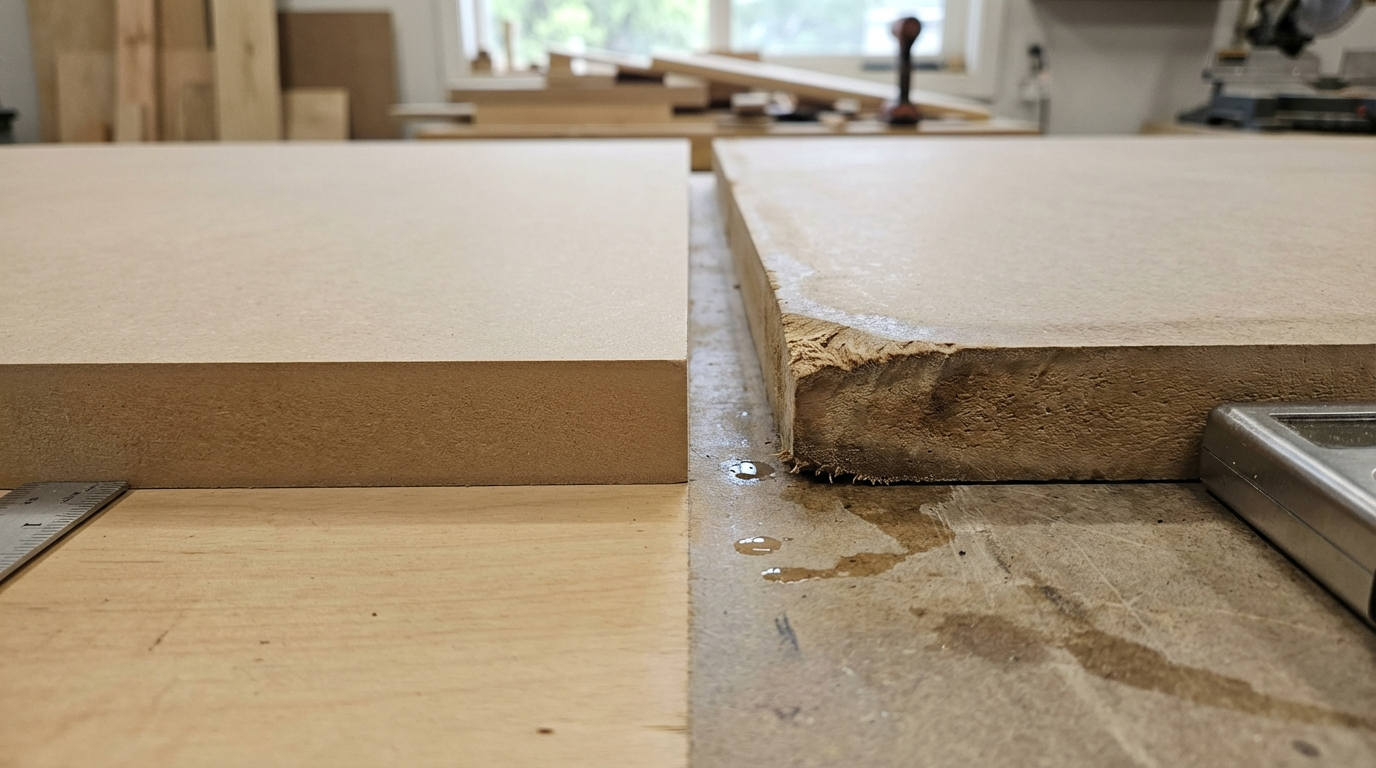
Rarely—standard grades warp in 3-6 months under rain. Use BWP exterior with heavy sealant for patios, but even then, expect 2-3 year life vs. 10 indoors. In Indian monsoons, untreated edges balloon 5-10mm. Test by soaking a scrap edge overnight; no swell over 2mm is good. Prefer WPC for true outdoors to avoid callbacks. Indoors near windows, MR with double edge banding suffices if ventilated.
Two-Minute Comparison: MR vs Exterior Grades
MR suits 90% of furniture; exterior (BWR/BWP) for rare wet risks. See trade-offs:
| Factor | MR Grade | Exterior (BWR/BWP) |
|---|---|---|
| Price/sq ft | Rs. 95-115 | Rs. 120-140 |
| Humidity tolerance | Good for interiors (70% RH) | Boiling water resistant |
| Screw hold | Strong if density high | Similar, but heavier |
| Best for | Wardrobes, cabinets | Kitchen bases, bathrooms |
| India fit | Monsoon homes w/ vents | Coastal direct splash |
Choose MR unless proven wet exposure—saves 20% without real-world difference in most sites.
Decision Framework: Match Conditions to Choices
| Site Condition | Recommended 18mm MDF Spec | Verify This |
|---|---|---|
| High humidity/monsoon | MR grade, 800kg/m3+, PVC edges | Edge swell test on sample |
| Coastal/salty air | BWR + melamine face | Salt spray hold (visual check) |
| Heavy use/kids | High density, prelam finish | Scratch test w/ key |
| Tight budget | Standard MR raw, ABS edges | Weight per sheet >38kg |
| Fast project | Pre-laminated stock | Batch uniformity tap test |
| Scratch-prone | Laminated + thick edges | Surface hardness feel |
Should I choose 18mm or 16mm for shelves?
Go 18mm for spans over 60cm or loads >20kg to avoid deflection. 16mm sags 2-3mm under books, visible in glossy finishes. In Indian wardrobes, 18mm holds winter woolens without mid-supports. Measure span, multiply load by 1.5 safety, pick thicker if >15kg/m. Post-install, check level with spirit tool—uneven = weak board.
Failure Modes and Fixes
- Symptom: Edge swelling post-monsoon. Root: Unsealed cuts absorb humidity. Prevent: Seal all edges same day with PVA or epoxy. Fix: Sand swollen area, re-seal; replace if >3mm bulge.
- Symptom: Sagging shelves. Root: Low density or wide spans. Prevent: Limit to 70cm, add ribs. Fix: Reinforce underside with battens.
- Symptom: Screw pull-out. Root: Undersized holes or thin pilot. Prevent: 4mm pilot, 50mm screws in zones. Fix: Plug and re-drill.
- Symptom: Surface delamination. Root: Poor resin or steam. Prevent: Laminate grade for kitchens. Fix: Spot glue, clamp 24hrs.
- Symptom: Chipping on cuts. Root: Dull blade. Prevent: Triple-chip blade, low feed. Fix: Fill with putty, sand.
- Symptom: Color fade/scratches. Root: Abrasive cleaners. Prevent: Microfiber + mild soap. Fix: Repolish minor marks.
Common Buyer Mistakes and How to Avoid
- Mistake 1: Buying cheapest raw grade—leads to quick swell. Avoid: Insist on MR, tap for density.
- Mistake 2: Ignoring wastage—quotes exclude cuts. Avoid: Add 12% buffer in calcs.
- Mistake 3: No acclimation—cups on site. Avoid: 48hr flat stack indoors.
- Mistake 4: Skipping edge banding—moisture highway. Avoid: PVC lips on all exposed.
- Mistake 5: Wrong screws—strips holes. Avoid: Confirm 45-50mm wood screws.
- Mistake 6: Overlooking transport damage. Avoid: Inspect on unload, note dents.
- Mistake 7: Metro pricing blind—tier-2 cheaper. Avoid: Compare 2-3 local quotes.
- Mistake 8: No finish spec—paint peels. Avoid: Specify laminate thickness upfront.
- Mistake 9: Coastal use of standard—rusts fast. Avoid: BWR min, vent gaps.
- Mistake 10: CNC without nesting—excess waste. Avoid: Software preview sheets.
Quality Checks You Can Do Without Lab Tests
Before buying
- Tap sheet: Solid thud = good density; hollow = voids.
- Press edges: No crumble = strong resin.
- Weigh sample: 18mm should be 38-45kg.
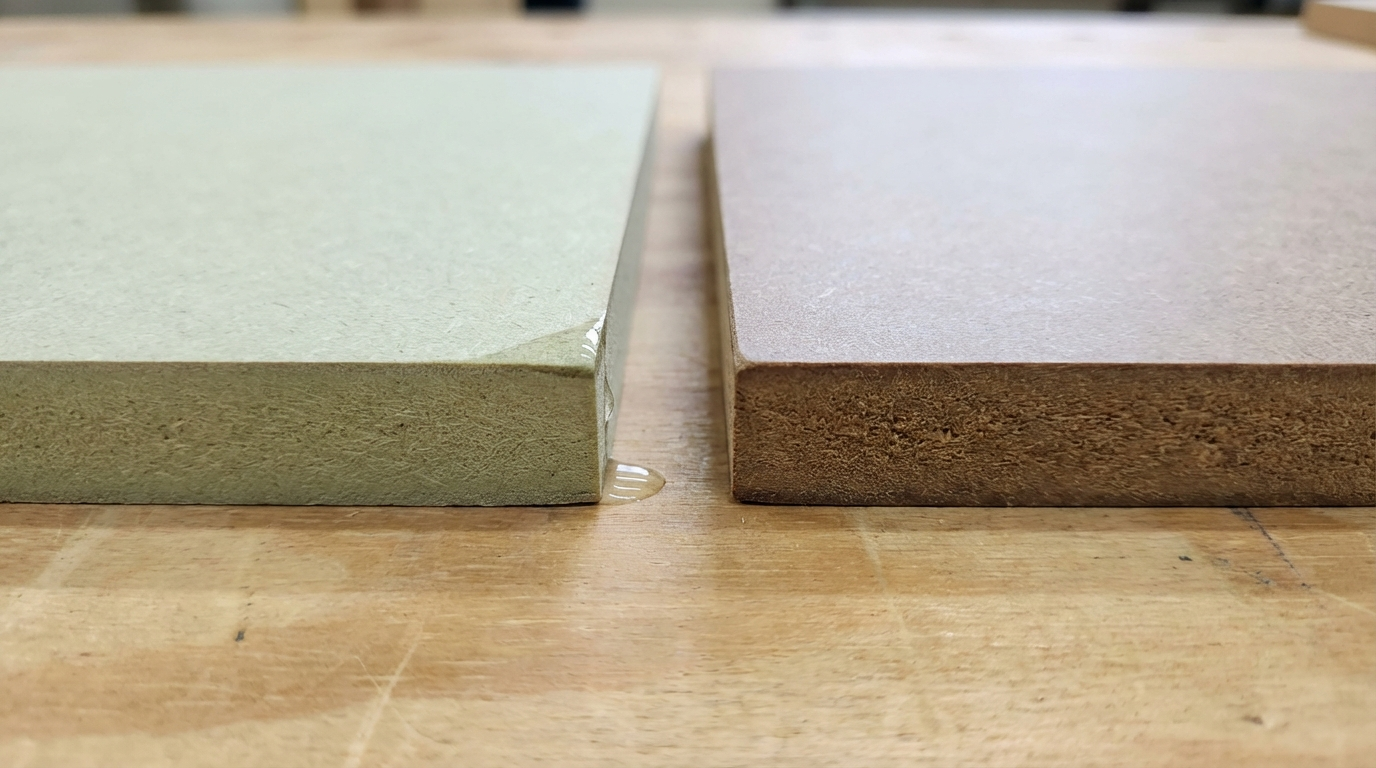
- Ask soak test: Edge in water 24hr, measure swell <2%.
After cutting
- Smooth edges? No fuzz = quality fibers.
- Screw test: 5 pulls without spin.
- Burn scrap: Clean smoke = low formaldehyde.
After installation
- Level check: No bow under hand pressure.
- Wipe test: No sticky residue.
- Humidity expose: No color shift in week.
Tips by Buyer Persona
Homeowners
Focus durability: Daily wipe with damp cloth ok on laminates, but no abrasives. Place away from direct AC drip. Expect 8-12 years in bedrooms; clean hinges to prevent sagging pullouts.
Carpenters
Cut at 5000rpm, zero-clearance insert. Pre-drill all, space screws 10cm edges. Handle with suction lifts to avoid fingerprints. Band edges hot-melt for monsoon sites.
Architects/Designers
Spec: "18mm MR MDF, 780kg/m3 min, E1 emission." Detail 5mm edge returns for kitchens. Simulate loads in software for spans. Coastal: Add 10% thicker reveals.
OEM/Modular Makers
QC: Batch-tap every 10th sheet. Nest parts 95% efficiency. Track returns: Swell = bad storage. Standardize edges for repeat glue-ups.
Is 18mm MDF good for modular kitchens?
Yes for carcasses, not tabletops. Handles drawer slides and utensils; laminate resists stains. In humid kitchens, MR prevents base swell from floor mops. Verify by loading sample shelf 30kg overnight—no dip. Pair with SS hardware for longevity. Avoid if budget tight—12mm saves 25% but needs frames.
FAQs
How much does 18mm MR MDF cost per sheet?
A full 8x4 sheet (32 sq ft) typically runs Rs. 3,000-4,500 depending on density and city logistics. Higher in coastal metros due to anti-humidity resins. Factor 10% extra for cuts; quotes often list per sq ft to compare grades. Always break down: base rate + freight + taxes. Request sample pricing for prelam variants, as they add Rs. 800-1,200 per sheet but cut finishing time.
What's the difference between commercial and MR 18mm MDF?
Commercial suits dry storage; MR has extra wax/paraffin for 20-30% better humidity resistance, vital in Indian monsoons. Price gap is Rs. 10-20/sq ft. MR edges swell less than 5% in tests vs. 15% standard. Use MR for any furniture below 1m height where spills happen. Check by feel: MR cuts slightly waxier.
Can I use 18mm MDF for bathroom vanities?
Only BWR grade with full sealing—standard MR risks delam from steam. In coastal bathrooms, add silicone caulk at joints. Lasts 5-7 years if vented; otherwise, opt PVC. Post-install, monitor edges quarterly. Thickness gives good basin support, but drill oversize for faucets to avoid cracks.
How to calculate total MDF for a wardrobe?
Measure panels: sides x2, top/bottom x2, shelves xN, back x1, add 12% waste. For 7x4x2 ft: ~22 sqm or 7 sheets. Software like CabinetVision nests better, saving 5-8%. Account for curves doubling material. Dry-run layout on floor first.
Does 18mm MDF need support for shelves?
Yes over 60cm span or 15kg load—add cleats every 80cm. High-density holds solo to 50cm. In kids' rooms, rib underside. Test deflection: <1mm under fist = ok. Indian humidity softens over time, so overdesign by 20%.
What's better for edges: PVC or ABS?
PVC for budget humidity resistance; ABS for premium finish match. Both 2mm thick seal well, but PVC flexes less in heat. Apply hot-melt, roll firm. In monsoons, double-band bottoms. Check adhesion: Peel test post-24hr cure.
How long does 18mm MDF furniture last in India?
10-15 years in AC bedrooms; 7-10 in kitchens with care. Failures from poor sealing accelerate by 50%. Annual clean vents, avoid standing water. Coastal drops to 5-8 without BWR. Track via photo logs yearly.
Can 18mm MDF be painted directly?
Yes after sanding 180-grit and primer—takes enamel smoothly. Laminates unnecessary for matte looks. In dusty sites, prime same day. Multiple coats build 0.2mm protection. Test adhesion on scrap first.
Is 18mm MDF termite resistant?
Not inherently—treat with borate spray pre-assembly. Dense fibers slow attacks vs. plywood. Store off-ground, use neem oil gaps. Infestations rare indoors; check quarterly in ground floors.
Why is 18mm MDF pricier in some cities?
Transport from mills (Punjab/Gujarat hubs) adds 15-25% to south/east. Monsoon surcharges for covered trucks. Bulk buys drop 10%. Compare landed cost per sq ft, not ex-factory.
Disclaimer: This content is provided for general informational purposes based on industry practices and publicly available information. Product specifications, standards, prices, and availability may vary by manufacturer, region, and time. Readers should independently verify details with manufacturers, dealers, or qualified professionals before making purchase or construction decisions.Want Plywood Suggestions?
Share a few details and a VIR MDF specialist will suggest suitable brands and connect you to responsive dealers.