6mm MDF Price + Use Guide: Back Panels, Craft, and CNC Work
6mm MDF is ideal for back panels and detailed work. Learn price drivers, cutting tips, and how to keep thin sheets flat and damage-free.
Quick Decision Summary
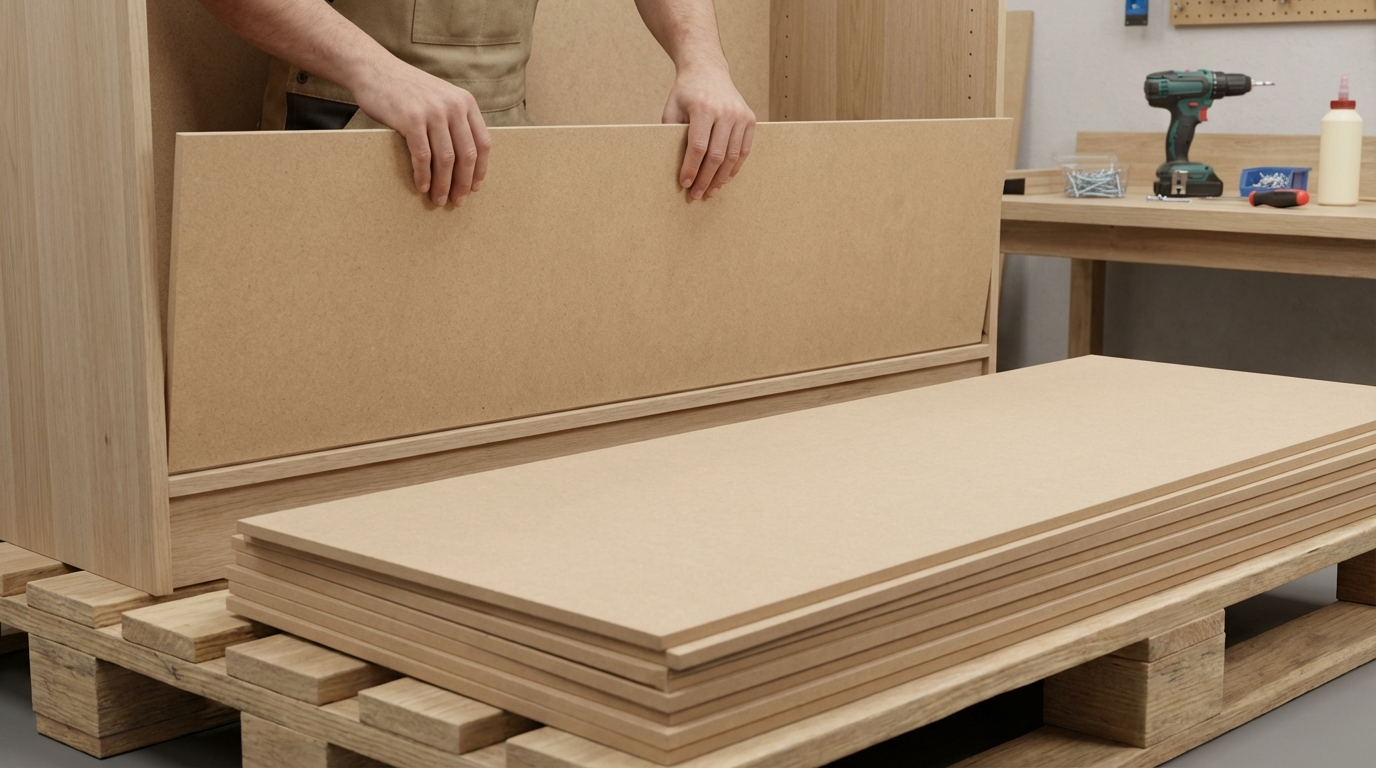
6mm MDF sheets typically cost Rs 25-55 per square foot for plain boards, making them a budget pick for back panels, crafts, and CNC routing where light weight matters most.
If you’re in a hurry: Opt for moisture-resistant (MR) grade 6mm MDF if humidity exceeds 70% RH, like in coastal or monsoon areas. Standard size is 8x4 feet (32 sq ft). Expect Rs 800-1,800 per sheet. Use for non-structural parts only—back panels save 30-40% vs thicker options. Check flatness by sighting along edges; avoid warped stock. For CNC, ensure density above 700 kg/m3 for clean cuts. Acclimatize 48 hours before cutting to prevent cupping in Indian site conditions.
- Choose 6mm MDF if: Tight budget, need intricate CNC shapes, lightweight backs or crafts, dry interiors, fast workflow.
- Avoid 6mm MDF if: Load-bearing shelves, wet kitchens/bathrooms without WR grade, high-impact zones, poor storage risking warp.
What This Material/Option Actually Is
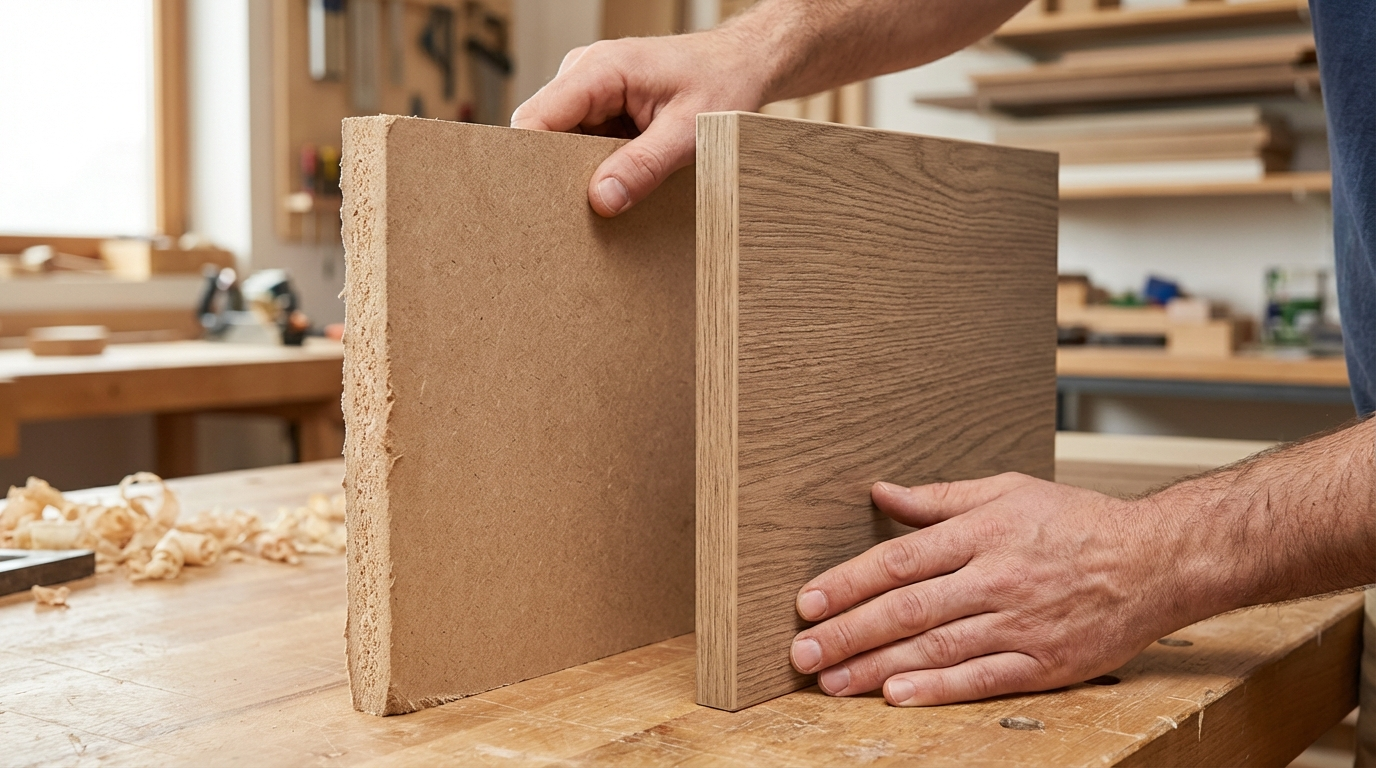
6mm MDF stands for 6 millimeters thick Medium Density Fiberboard, an engineered panel made from fine wood fibers bonded with urea-formaldehyde resin under heat and pressure. Density usually ranges 700-850 kg/m3, giving a smooth surface ideal for paints, laminates, or CNC machining.
It differs from thicker 12-18mm structural MDF or HDF (high density, over 850 kg/m3). 6mm version suits non-load applications due to thin profile—flexes under weight but cuts precisely. Available plain, MR (moisture resistant), or pre-laminated. Standard sheets: 8x4 feet or 6x4 feet, sometimes cut-to-size.
What density range should I expect in 6mm MDF?
Expect 700-800 kg/m3 for standard 6mm MDF; higher suits CNC. Lower density feels light but chips easily. Test by weight: a 32 sq ft sheet weighs 20-28 kg typically. Higher density costs 10-20% more but holds edges better post-routing. In India, verify by tapping—solid thud means good compaction. For crafts, 720+ kg/m3 prevents sagging in humid storage.
Why It Matters in Indian Homes and Sites
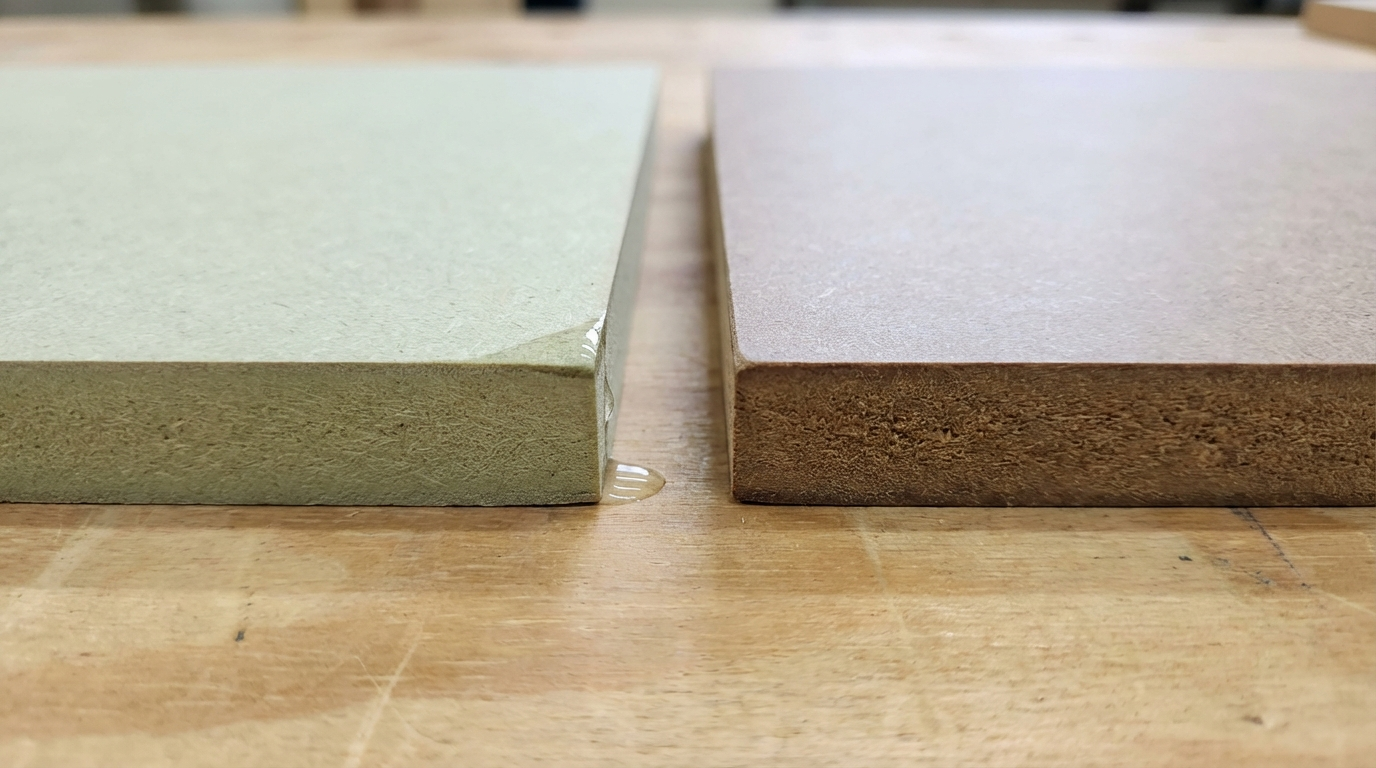
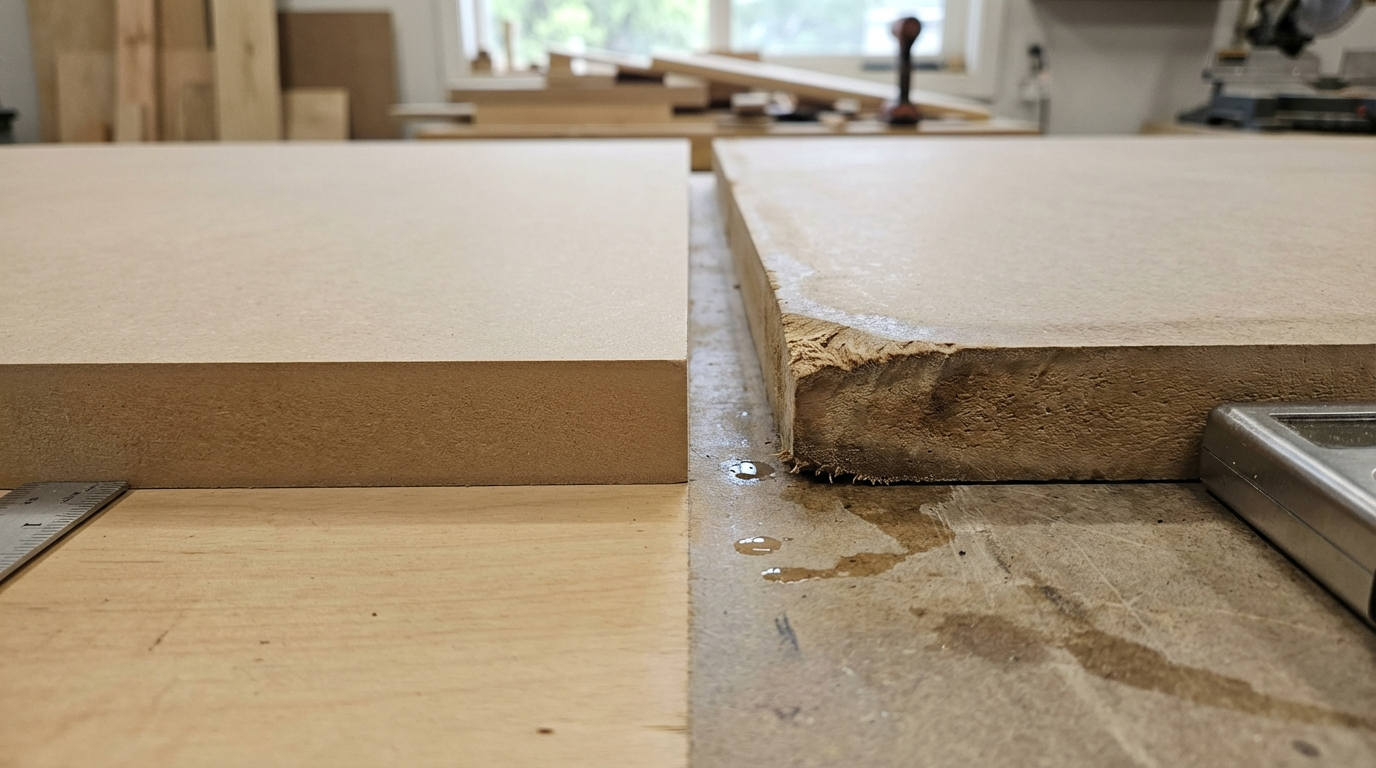
In India’s varied climates, 6mm MDF shines in dry interiors but risks warping from monsoon humidity (80%+ RH) or coastal salt air. Thin profile absorbs moisture faster than 12mm, causing edge swelling up to 2-3% if stored flat on damp floors.
Site realities like poor ventilation during plywood stacking lead to cupping. Transport in open trucks exposes to rain, denting thin faces. Workmanship issues: carpenters often skip edge sealing, inviting termites in humid zones. Yet, for urban apartments, it cuts weight for easy handling, reducing labor 20% on wardrobe installs.
Practical upside: Uniform surface accepts melamine or paint without grain telegraphing, key for modular kitchens in space-tight Mumbai flats.
Price Range and Cost Drivers
Plain 6mm MDF typically ranges Rs 25-45 per sq ft across India; MR grade Rs 35-55; pre-laminated Rs 50-85. A standard 8x4 ft sheet (32 sq ft) falls Rs 800-1,800. Prices vary 15-25% by city—Mumbai/Coastal higher due to logistics, Delhi/North lower.
Key drivers:
- Density/Grade: Standard vs MR/WR adds Rs 8-15/sq ft.
- Finish: Plain cheapest; one-side laminate +Rs 20-30/sq ft.
- Size/Thickness tolerance: Full 8x4 pricier than cut pieces.
- Quantity: Bulk (10+ sheets) drops 10-15%.
- Region/Logistics: Coastal +10-20% for humidity-proof packing.
- Wastage/Edges: CNC projects factor 10-15% scrap.
Budget example: Wardrobe back panels (50 sq ft) at Rs 35/sq ft = Rs 1,750 material + Rs 500 labor/cutting = Rs 2,250 total.
How do I ask for an accurate quote on 6mm MDF?
Specify: “6mm MR MDF, 8x4 ft, density 750+ kg/m3, E1 emission, quantity 5 sheets, delivery to [city].” Ask for moisture content <12%. Get breakdown: base + packing + transport. Negotiate bulk discount; compare 2-3 suppliers. Check tolerance: ±0.3mm thickness. In monsoon season, add sealed wrapping fee.
Practical Use Cases (What Works, What Fails)
| Use Case | Why 6mm MDF Fits | Risks in India | Alternatives if Fails |
|---|---|---|---|
| Wardrobe back panels | Lightweight, flat paint finish, easy slot-in | Humidity warp; use MR | 3mm hardboard |
| Craft models/displays | Precise laser/CNC cuts, paintable | Scratch-prone; seal edges | Bal sa wood |
| CNC prototypes/routers | Fine detail, low tool wear | Chip-out on exit; use upcut bits | 5mm acrylic |
| TV unit partitions | Slim profile for speakers | Screw pull-out; reinforce | Particle board |
| Wall art panels | Smooth for vinyl/LED | Coastal sag; ventilate | HDF 6mm |
Works best dry zones; fails wet without prep.
Can 6mm MDF handle CNC routing for intricate designs?
Yes, for details under 3mm depth—holds vacuum well, minimal vibration. Use 750+ kg/m3 density, single flute bits at 18,000 RPM. In humid shops, dry 24 hours pre-run. Expect clean edges on straight passes; curves may chip 0.5mm—sand or veneer post. Test scrap first for feed rate (4-6 m/min). Saves 25% time vs thicker on prototypes.
How to Decide or Do This in 5 Steps
- Assess load/site: Non-structural? Humidity >70%? Pick MR.
- Measure needs: Area +10% wastage; CNC adds kerf.
- Check stock: Flat, no delam, moisture tap test.
- Prep workflow: Acclimatize 48hrs; edge seal all cuts.
- Install/fasten: Glue + screws spaced 150mm; avoid over-tight.
Failure point: Skipping step 4 causes 80% warp issues.
Failure Modes and Fixes
- Symptom: Edge swelling post-monsoon. Cause: Unsealed cuts absorb humidity. Prevent: Wax/polyurethane edges. Fix: Sand + reseal; replace if >2mm swell.
- Symptom: Chipping on CNC/table saw. Cause: Dull blade/low RPM. Prevent: 60-tooth blade, scorer for thin. Fix: Fill + sand; use veneer.
- Symptom: Cupping/warp in storage. Cause: Flat stack damp floor. Prevent: Vertical racks, <70% RH. Fix: Re-flatten under weight 24hrs.
- Symptom: Screw pull-out in backs. Cause: Thin for torque. Prevent: Pilot holes + washers. Fix: Insert plugs + redrill.
- Symptom: Surface dents/scratches. Cause: Soft face handling. Prevent: Cover during site. Fix: Filler + repaint.
- Symptom: Delamination core. Cause: High moisture pre-press. Prevent: <10% MC buy. Fix: Discard; no fix viable.
Quality Checks You Can Do Without Lab Tests
Before buying:
- Sight edge-on for flatness—no waves >1mm.
- Tap center/edge: Uniform sound, no hollow.
- Weigh sample: 0.8-1 kg/sq ft good.
- Ask MC <12%, density cert.
After cutting: Edges smooth, no fuzz; test screw hold.
Post-install: Check gaps <1mm, no flex under hand press.
How can I tell if 6mm MDF is warped before buying?
Place straight edge (aluminum ruler) along length/width—gap <1mm ok. Rock sheet on floor; wobble signals cup. In humid depots, insist recent stock. Warped from old batch bows 2-5mm, scrapes Rs 10/sq ft loss. Buy acclimatized stacks.
Decision Framework: When to Choose 6mm MDF
| Condition | Recommend 6mm MDF? | What to Verify/Adjust |
|---|---|---|
| Wet kitchen zone | No—use 6mm HDFWR | WR grade, edge band fully |
| Coastal humidity | Yes if MR | MC <10%, store vertical |
| Heavy use/office | No—go 9mm | Screw zones reinforced |
| Tight budget | Yes | Bulk buy, plain finish |
| CNC detailed craft | Yes | High density, fine bits |
| Fast modular delivery | Yes | Pre-cut tolerance ±0.5mm |
| High scratch risk | Maybe—laminate | 0.8mm overlay min |
Two-Minute Comparison: 6mm MDF vs Thinner/Thicker Options
| Aspect | 3mm Hardboard | 6mm MDF | 9mm MDF |
|---|---|---|---|
| Price/sq ft | Rs 15-30 | Rs 25-55 | Rs 40-70 |
| Screw hold | Poor | Fair | Good |
| CNC ease | Too flex | Best balance | Stiffer, slower |
| Humidity warp | High | Medium | Lower |
| India fit: Backs | Ok cheap | Ideal | Overkill |
Choose 6mm for sweet spot cost/precision; trade-off flex vs strength.
8 Common Mistakes and How to Avoid Them
- Mistake 1: Buying non-MR for humid sites. Avoid: Specify MR, test water drop absorption.
- Mistake 2: Storing flat on concrete. Avoid: Vertical A-frames, spacers.
- Mistake 3: No pilot holes for screws. Avoid: 3mm bit, 50mm spacing.
- Mistake 4: Ignoring cut edge sealing. Avoid: PVA glue or wax immediate.
- Mistake 5: Dull blade cutting. Avoid: New 80-tooth, table saw scorer.
- Mistake 6: Skipping acclimatization. Avoid: 48hrs room condition.
- Mistake 7: Overloading backs. Avoid: <5kg uniform, center brace if needed.
- Mistake 8: Poor packing transport. Avoid: Foam corners, strapped tight.
Tips by User Type
Homeowners: Durability Do’s and Don’ts
Do: Wipe with microfiber damp cloth weekly; avoid direct water. Don’t: Drag cleaners or hang heavy mirrors. In monsoon, use dehumidifier near wardrobes. Expect 5-8 years life with laminate; plain paint yearly touch-up.
Carpenters: Cutting and Handling
Use circular saw with fence for straights; jigsaw slow for curves. Edge band hot-melt 1mm PVC. Fasten with 25mm screws + glue. Handle by edges to avoid dents; stack max 10 sheets.
Architects/Designers: Spec Writing
Specify: “6mm MR MDF, 750 kg/m3 min, E1, flatness <1mm/3m.” Detail hinges 100mm inset. Wet zones: WR + full laminate. CNC: DXF tolerance 0.2mm.
OEM/Modular Makers: Workflow QC
Batch test flatness; automate edge band. Reduce returns: Pack with silica packs. Repeatability: Fixed clamps, digital calipers post-cut.
Is 6mm MDF strong enough for wardrobe back panels?
Yes for standard 6x7 ft wardrobes under 20kg clothes—slots into grooves fine. Reinforce corners if kids climb. In humid Delhi summers, MR prevents bow. Check by loading test scrap with 10kg center. Trade-off: Lighter install but flexes slightly; brace mid if over 2m height.
FAQs
How much does 6mm MDF cost per sheet in India?
A standard 8x4 ft (32 sq ft) plain 6mm MDF sheet typically costs Rs 800-1,500, depending on grade and location. MR adds Rs 200-400; laminated Rs 1,600-2,700. Factors like bulk orders lower to Rs 25/sq ft, while small cuts raise effective rate with wastage. Always factor transport—Rs 100-300 extra in metros. Compare quotes specifying size and MC for fairness.
Can 6mm MDF be used for kitchen cabinets?
Not recommended as shutters—too thin for daily slams, risks denting. Fine for internal partitions if WR grade and edge-banded fully. In steamy Indian kitchens, seal all edges and ventilate; expect swelling otherwise. Opt for 9-12mm there, save 6mm for backs or fillers. Test: Water exposure 24hrs should show <1% swell.
What’s the best way to cut 6mm MDF without chipping?
Use table saw with zero-clearance insert and scoring blade first pass. For portable, circular saw upside-down on track. CNC: Compression bits, taped back. Always cut face-down for laminates. Support full sheet to avoid vibration—horseshoe clamps. Post-cut, sand 180 grit immediately to seal fibers against humidity.
Does 6mm MDF warp in humid Indian climates?
Yes, standard grade warps in 70%+ RH without prep. MR resists better, limit to 1-2% swell. Store vertical, acclimatize site-matched. Common in coastal Goa/Mumbai—use dehumidifiers during install. Prevention beats cure: Edge seal + back ventilation gaps 5mm in wardrobes.
Is 6mm MDF good for painting or laminating?
Excellent—smooth face takes primer/paint uniform, no grain show. Laminate bonds strong with contact cement. Prime first for paint adhesion in dusty sites. For crafts, 2K PU topcoat adds scratch resistance. Avoid direct sun exposure pre-finish to prevent yellowing.
How to keep 6mm MDF sheets flat during transport?
Strap flat on pallet with cross-boards, foam edges. Vertical truck-side ok if tied. Avoid overhangs. At site, unload to dry rack ASAP. In rain-prone routes, insist plastic cover + desiccant. Inspect on arrival—reject bows >2mm.
What edge banding works best for 6mm MDF?
0.8-1mm PVC or ABS, matching finish. Hot-melt machine for speed, hand iron for small. Overlap 1mm, trim flush. In humid areas, PUR glue resists moisture. CNC pre-groove for flush fit. Check bond by peel test post-24hrs.
Can I use 6mm MDF for wall panels?
Yes for dry walls, fluted designs via CNC. Laminate or veneer for looks. Fix with adhesive + battens 400mm centers. Coastal: MR + sealed joints. Weight light—1kg/sq m, easy solo install. Avoid direct bath exposure.
What’s the screw size for fixing 6mm MDF?
25-30mm chipboard screws, pilot 3mm hole. Space 150mm edges, 250mm field. Glue first for hold. Hinges: 35mm euro, 4 screws each. Test pull-out on scrap—should hold 20kg point load. Reinforce with washers if vibrating.
Is 6mm MDF termite resistant?
No inherent resistance—treat with oil-based termiticide pre-cut. In termite-prone South India, use MR + full sealing. Store off-ground. Inspect quarterly; replace nibbled edges. Combine with metal tracks for wardrobes.
Disclaimer: This content is provided for general informational purposes based on industry practices and publicly available information. Product specifications, standards, prices, and availability may vary by manufacturer, region, and time. Readers should independently verify details with manufacturers, dealers, or qualified professionals before making purchase or construction decisions.Want Plywood Suggestions?
Share a few details and a VIR MDF specialist will suggest suitable brands and connect you to responsive dealers.