20 Modern MDF Wall Panel Designs (With Layout Tips for Small Rooms)
Explore MDF wall panel design ideas with layout rules (spacing, symmetry, proportions) and finishing tips for a premium look on a budget.
Quick Decision Summary
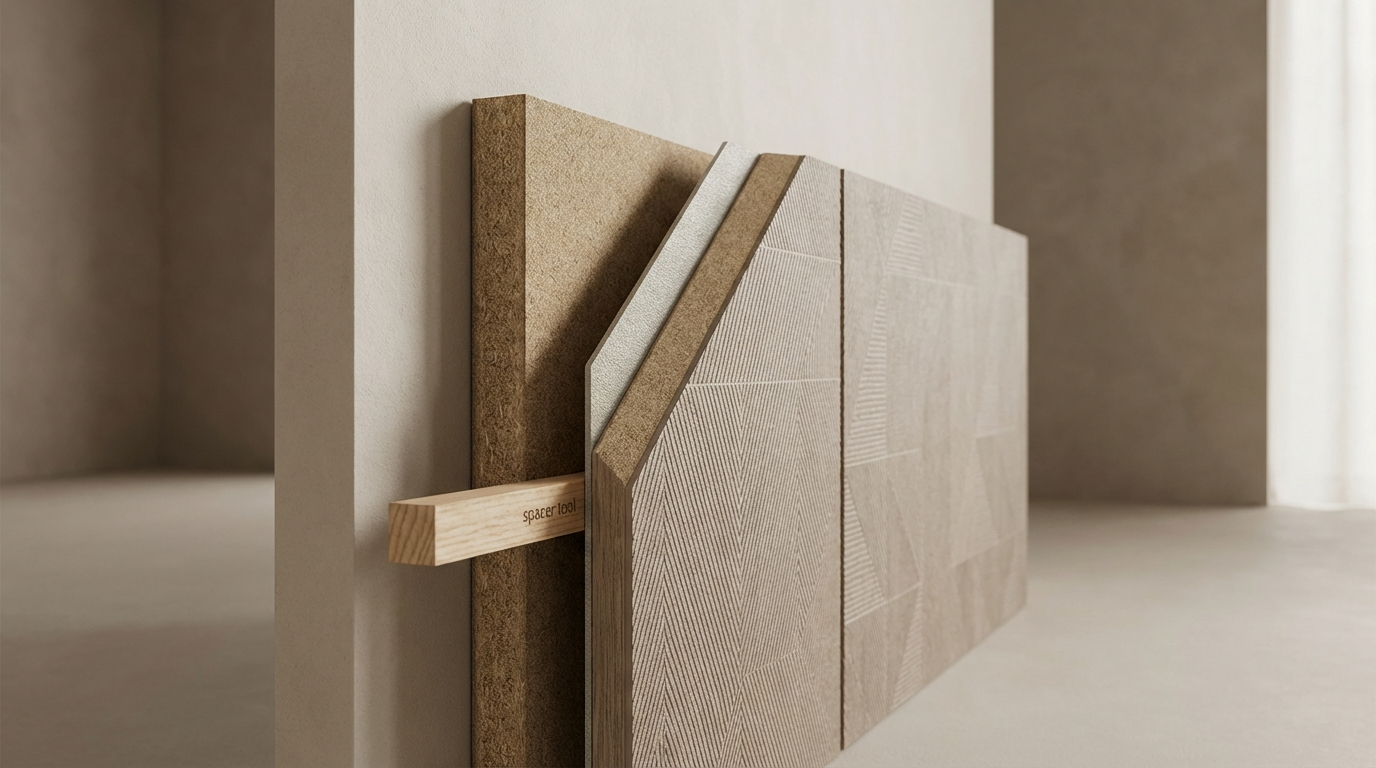
Slim 8-12mm laminated MDF panels with vertical layouts create modern wall accents that make small rooms feel taller and airier.
If you’re in a hurry: Opt for moisture-resistant MDF grades in small rooms prone to humidity. Use symmetrical patterns with 10-15cm spacing between panels to avoid clutter. Pair matte or textured laminates for depth without glare. Focus on 30-50% wall coverage to balance openness. Vertical grooves or slim slats elongate space visually. Edge-band all cuts tightly to prevent swelling in Indian monsoons. Test sample heights against room ceilings for proportion.
- Choose this if: Small urban apartments (under 100 sq ft), need quick modern upgrade on budget, dry-to-moderate humidity interiors.
- Avoid this if: Direct wet zones like bathrooms, high-impact areas prone to knocks, or if carpenter lacks CNC/edge banding tools.
What This Material/Option Actually Is
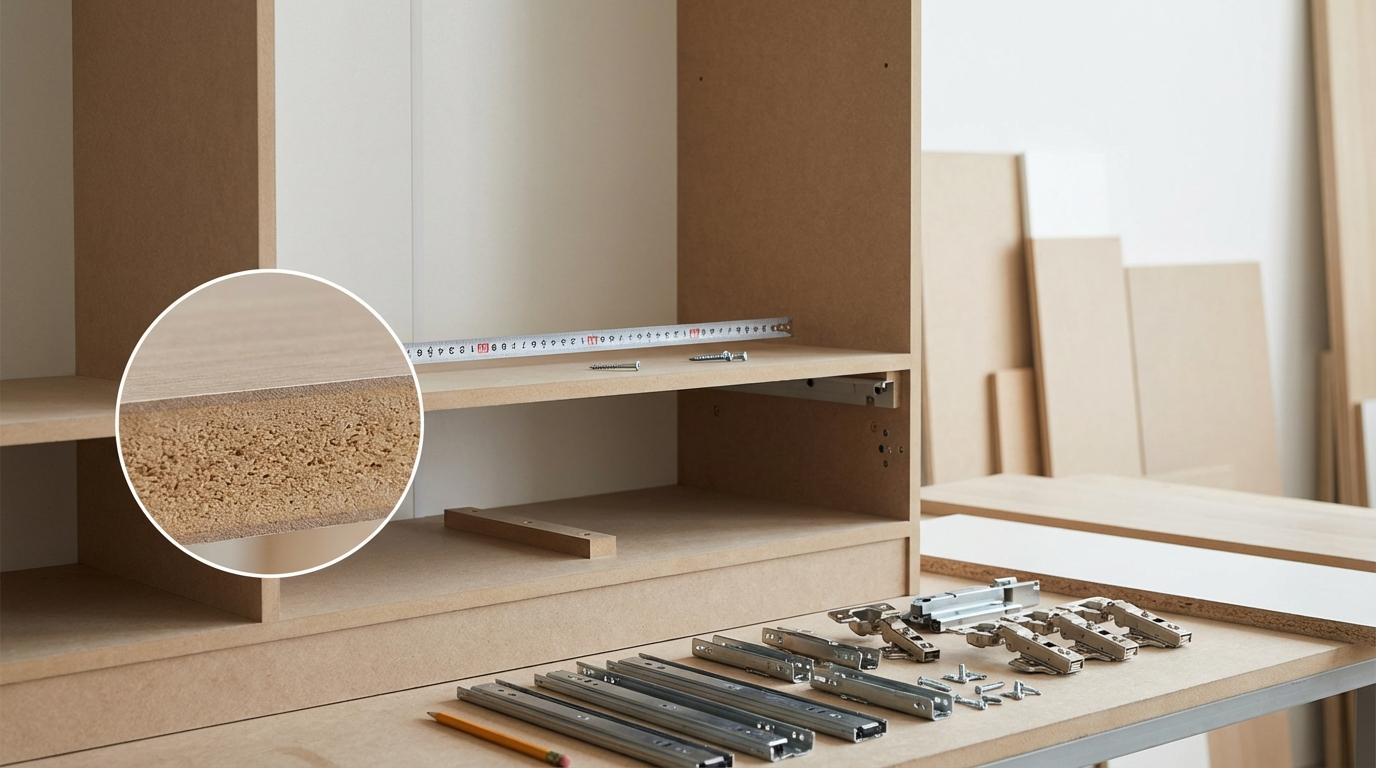
MDF wall panels consist of medium-density fiberboard sheets, typically 6-18mm thick, cut into planks, tiles, or custom shapes for accent walls. They come plain for painting, pre-laminated with melamine or wood-look finishes, or faced with PVC/veneer overlays. Unlike plywood, MDF offers smoother surfaces for clean lines and CNC routing.
In small rooms, panels act as feature walls rather than full coverage, installed via screws or adhesive over leveled plaster. Laminates provide ready color/texture, while raw MDF suits site painting. Edge banding seals exposed sides, crucial for stability.
What thickness works best for MDF wall panels in small rooms?
Use 8-12mm thickness for most small room applications. Thinner 6mm flexes too much under screws, risking cracks; thicker 18mm adds bulk that shrinks perceived space. In 10x10 ft rooms, 9mm balances lightness and screw-hold. Check room height: under 9ft ceilings pair with slim panels to avoid heaviness. Verify density (700-800 kg/cu m) by tapping—dense MDF resists dents. For coastal homes, pick MR-grade to handle 70-80% humidity without warping. Next, measure wall flatness; uneven plaster needs shims under panels.
Why It Matters in Indian Homes and Sites
In Indian contexts, MDF wall panels face monsoon humidity (up to 90%), coastal salt air, and poor storage during transport. Unsealed edges swell 2-3x faster than cores, leading to wavy walls. Small rooms amplify issues—poor ventilation traps moisture, causing delamination in laminated panels.
Site realities like dusty construction, variable carpenter skills, and tight budgets demand practical choices. Panels enable modular installs without heavy carpentry, suiting urban 1BHKs. Vertical designs counter low ceilings common in Mumbai/Pune flats, creating height illusion amid 80%+ summer humidity.
Do MDF wall panels hold up in monsoon-prone small rooms?
Moisture-resistant (MR) or HDFWR grades hold up if edges are banded and gaps ventilated. Standard MDF swells at edges in 80% RH, but MR variants with wax/resin additives limit it to 8-10%. In small rooms, avoid full coverage; use 40% accents with 5cm air gaps. Install post-monsoon or use dehumidifiers during. Test by wetting sample edge overnight—minimal bloat means good grade. Ventilate via ceiling fans; pair with anti-termite primers for coastal sites. If bulging occurs, sand and re-band promptly.
Practical Use Cases (What Works, What Fails)
MDF panels excel in low-moisture accents but fail in direct water hits or poor sealing. In small rooms, they define zones without enclosing space.
| Use Case | Recommended Thickness | Finish Notes | Risk Notes (India-Specific) |
|---|---|---|---|
| Living room accent | 9-12mm | Matte laminate or vertical grooves | Humidity swelling if unvented; use MR grade |
| Bedroom headboard wall | 8-10mm | Wood-look veneer, slim slats | Low risk; seal edges against AC drips |
| TV unit backdrop | 6-9mm | Textured or geometric pattern | Dust buildup in monsoons; matte finish easier clean |
| Study nook partition | 12mm | Shelf-integrated laminate | Screw-hold fails if overloaded; reinforce studs |
| Kitchen false wall | 12-15mm (MR only) | High-pressure laminate | Steam delam if unsealed; avoid direct splashes |
5 Steps to Plan and Install MDF Wall Panels in Small Rooms
- Measure and sketch: Scale room (e.g., 10x12ft), mark 30-50% coverage. Use symmetry: center panel at eye level (1.2-1.5m height).
- Select grade/thickness: MR-MDF 8-12mm for India; test flatness on plaster.
- Design layout: Vertical elements, 10-15cm gaps. Mockup with cardboard for proportion.
- Prep and cut: CNC route if possible; edge-band immediately. Acclimatize 48hrs.
- Install and finish: Screw to studs (40cm spacing), silicone gaps. Paint/seal extras.
How much wall coverage for small rooms using MDF panels?
Limit to 30-50% coverage in rooms under 120 sq ft. Full walls overwhelm, reducing airiness; accents like one feature wall expand visually. For 8x10ft bedroom, cover 4x8ft section with vertical panels. Symmetry rule: mirror left-right, top-bottom aligned to ceiling baseboard. In humid Delhi summers, ventilate gaps to prevent moisture trap. Check by stepping back 2m—space should feel open, not boxed. Adjust if furniture crowds; prioritize TV/headboard walls.
20 Modern MDF Wall Panel Designs You Can Actually Build
These designs use 8-12mm MR-MDF with laminates, suited for small Indian rooms. Layout tips emphasize verticality, spacing (10-20cm), and symmetry for spacious feel. Grouped by style for easy pick.
Minimalist Designs (1-5)
- Vertical slim slats (5cm wide, 10cm gaps): Matte grey laminate. Layout: Full height symmetry, centers TV. Illusion: Tall room.
- Horizontal thin planks staggered: White oak finish. Layout: Eye-level band (1.5m high), 15cm vertical gaps.
- Single large panel with cutouts: Black textured. Layout: Centered, 20cm from corners for breathing space.
- Flush grid (20x50cm tiles): Neutral beige. Layout: 3x4 grid on one wall, offset for rhythm.
- Asymmetric verticals (varying widths): Walnut veneer. Layout: Mirror image, widest center.
Geometric Designs (6-10)
- Hexagon tiles: Gloss-free laminate. Layout: Cluster at 1.2m height, symmetrical hexagon honeycomb.
- Chevron pattern routed: Plain MDF painted. Layout: Zigzag vertical, 12cm repeat spacing.
- 3D wave grooves: CNC-routed grey. Layout: Full wall waves, top-aligned to ceiling.
- Diamond lattice: Interlocked panels. Layout: Centered diamond, gaps equal sides.
- Circle insets: Perforated backdrop. Layout: Grid of 10cm circles, even spacing.
Textured & Wood-Look (11-15)
- Reclaimed wood slats: Laminate planks. Layout: Random verticals, 8-12cm gaps for shadow play.
- Brick-effect panels: 10x30cm. Layout: Running bond pattern, offset rows.
- Shiplap overlaps: Whitewashed. Layout: Horizontal at bed height, symmetrical ends.
- Corduroy ridges: Vertical flutes. Layout: Full height, uniform 5cm spacing.
- Bamboo weave sim: Thin strips. Layout: Woven band across wall midpoint.
Bold & Functional (16-20)
- Shelf-integrated slats: Routed niches. Layout: Vertical with floating shelves centered.
- LED-backlit panels: Frosted slots. Layout: Low wall strip, symmetrical glow.
- Metallic accent stripes: Silver laminate. Layout: Three verticals, equal gaps.
- Abstract routed art: Custom shapes. Layout: Focal cluster, balanced proportions.
- Mixed media (panels + mirrors): Slim frames. Layout: Panel base, mirror insets top for depth.
Each adapts to small rooms by vertical emphasis; scale down gaps in tighter spaces (under 8ft wide).
Which MDF finish hides small room flaws best?
Matte or low-sheen laminates hide uneven plaster and lighting glitches. Gloss amplifies imperfections in compact spaces. Wood-look textures add depth illusion. In monsoon-lit rooms, matte grey/taupe masks humidity stains. Test under room lights: no glare hotspots. Pair with primer on raw edges. For coastal, UV-stable laminates prevent fading. Clean weekly with microfiber to maintain; avoids scratches showing dirt.
Decision Framework for Small Room Wall Panels
| Room Condition | Recommended MDF Type/Finish | Verify/Layout Tip |
|---|---|---|
| High humidity (monsoon/coastal) | MR-grade 9-12mm, matte laminate | Edge swell test; 15cm ventilated gaps |
| Low ceiling (<9ft) | 8mm slim vertical slats | Full height install; symmetry check |
| Tight budget | Plain MDF + site paint, 6-9mm | Density tap test; minimal edge band |
| High traffic/kids | 12mm HDF, textured high-pressure laminate | Screw density 30cm; dent resistance knock |
| Fast install needed | Pre-laminated tiles | Adhesive + screws; pre-cut symmetry |
| Scratch-prone (pets) | Thick laminate overlay | Finger-push test; rounded edges |
Failure Modes and Fixes
- Symptom: Edge swelling/bowing. Root: Poor sealing + humidity. Prevent: Immediate edge banding post-cut. Fix: Sand, re-band, shim if minor.
- Symptom: Delamination bubbles. Root: Moisture under laminate. Prevent: MR-grade + acclimatization. Fix: Spot glue, press 24hrs.
- Symptom: Screw pull-out. Root: Low density/spacing. Prevent: 40cm studs, pilot holes. Fix: Larger screws or anchors.
- Symptom: Chipping at cuts. Root: Dull CNC blade. Prevent: Sharp tools, score first. Fix: Filler + sand smooth.
- Symptom: Uneven alignment. Level fails. Prevent: Laser level, shims. Fix: Pry, re-screw.
- Symptom: Dust trapping in grooves. Root: Tight design. Prevent: 5mm min gaps, sloped edges. Fix: Vacuum ports or smooth.
- Symptom: Fading/color shift. Root: UV/sun. Prevent: UV-laminate, curtains. Fix: Overpaint matching.
Quality Checks You Can Do Without Lab Tests
Before buying: Tap for density (dull thud = good); flex test (minimal bend); check laminate adhesion by scraping nail.
After cutting: Edges smooth, no fiber pull-out; band adhesion strong (peel test).
After install: All gaps silicone-sealed; tap for hollows (solid = good hold); wet cloth test no blot.
Quick field test for moisture resistance?
Spray water on edge/sample, wait 2hrs—no swelling >1mm means suitable. Compare to plain MDF. In site, check storage: flat, covered stacks. Acclimatize 72hrs matching room RH. Red flag: warped sample sheets. For small rooms, verify light weight aids easy handling up stairs.
Common Buyer Mistakes and How to Avoid
- Mistake 1: Full wall coverage in tiny rooms. Avoid: Mockup 40% max, vertical bias.
- Mistake 2: Ignoring edge banding. Avoid: Band every cut on-site.
- Mistake 3: Standard MDF in humid zones. Avoid: Specify MR/HDFWR.
- Mistake 4: Over-tight spacing. Avoid: 10cm min gaps for cleaning/vent.
- Mistake 5: Gloss finishes in low light. Avoid: Matte for hide flaws.
- Mistake 6: No acclimatization. Avoid: 48hrs room-condition.
- Mistake 7: Weak screw pattern. Avoid: Stud finder, 30-40cm grid.
- Mistake 8: Skipping symmetry check. Avoid: Mirror tape mockup.
- Mistake 9: Cheap adhesive only. Avoid: Screws + adhesive hybrid.
Tips for Homeowners, Carpenters, and Designers
Homeowner durability do’s and don’ts?
Do: Dust weekly with soft cloth, ventilate post-monsoon. Don’t: Wet wipe directly, hang heavy on panels. In small rooms, choose wipeable laminates. Avoid abrasives; use pH-neutral cleaners. Check quarterly for loose screws. Coastal: Salt wipe monthly.
Carpenter cutting and fastening tips?
Cut with fine blade, score deep. Fasten to studs (not plaster alone). Edge-band hot-melt for speed. In humid sites, work shaded. For small rooms, pre-assemble sections off-site.
Architect specs for small room panels?
Specify 9mm MR-MDF, 700kg density min, edge-banded. Detail 15cm gaps, vertical symmetry. Wet-zone: HDFWR. Drawings: Section views for proportions.
FAQs
Are MDF wall panels suitable for very small rooms like 8x10 ft?
Yes, if limited to accents with vertical designs. Slim panels prevent crowding; use symmetry and gaps to enhance space. In Indian 1RKs, one feature wall transforms without cost overrun. Prioritize light colors and textures for depth. Ensure carpenter levels base; uneven starts amplify small-space errors. Ventilation gaps counter humidity buildup common in compact ventilator-poor flats.
Can I paint MDF panels after installation?
Raw MDF paints well post-priming, but acclimatize first to avoid bubbles. Use water-based emulsion for low odor in small rooms. Sand edges lightly for grip. Two coats suffice; matte sheen hides imperfections. In monsoons, allow 7-day cure. Test corner sample for color match under room lights. Avoid oil paints—they yellow fast in humid India.
What edge treatment for MDF wall panels?
Always edge-band with matching PVC/ABS strips, 1-2mm thick. Glue + clamp 30min; prevents moisture ingress. CNC-trim flush. In small rooms, rounded edges reduce visual bulk. Check adhesion by flexing—no peel. Coastal sites need heat-resistant glue. Raw edges chip easily during transport; band pre-install.
How to clean MDF laminated wall panels?
Wipe with damp microfiber cloth + mild soap weekly. Dry immediately to avoid water marks. Vacuum grooves gently. Avoid harsh chemicals that dull laminates. In dusty Indian cities, cover during renovations. For textured finishes, soft brush. Small rooms benefit from easy-clean high-gloss only if light-controlled.
Vertical vs horizontal MDF panels in small rooms?
Vertical elongates height, ideal for low-ceiling small rooms. Horizontal widens but can squat space. Mix for rhythm: vertical mains, horizontal accents. Layout: Vertical 80/20 rule. Test mockup—stand back for proportion. Humidity: Vertical sheds water better if gaps aligned.
Do MDF panels need a backing wall prep?
Yes, level plaster with putty/skim coat. Fill cracks; sand flat. Studs at 40cm for screws. In old Indian homes, check for damp—treat first. Small rooms: Shim variances under 2mm. Prime plaster for adhesion if glue-using.
Can MDF wall panels hold shelves or lights?
Yes, with reinforced zones: Thicker 12mm or plywood inserts behind. Screws into studs. Limit 5-10kg/shelf. Design integrated niches. Check hold by load-test sample. Avoid hollow areas in small rooms—map studs first.
What if my small room has AC drips near panels?
Use MR-grade, silicone-seal top edges. Divert drip tray. Gaps for air. Monitor first monsoon; re-seal if needed. Elevate panels 5cm off floor. Matte finishes hide water spots better.
DIY possible for MDF wall panels in small rooms?
Feasible for straight installs: Measure twice, level obsessively. Tools: Drill, saw, clamps. Pre-cut panels help. Pros for CNC designs/edge work. Mockup cardboard first. In humid sites, pro sealing advised to avoid failures.
Disclaimer: This content is provided for general informational purposes based on industry practices and publicly available information. Product specifications, standards, prices, and availability may vary by manufacturer, region, and time. Readers should independently verify details with manufacturers, dealers, or qualified professionals before making purchase or construction decisions.Want Plywood Suggestions?
Share a few details and a VIR MDF specialist will suggest suitable brands and connect you to responsive dealers.