MDF vs Plywood: Which Is More Sustainable? (A Practical, Non-Preachy Answer)
Compare MDF vs plywood sustainability with a practical lens—resource efficiency, durability, emissions, and finishing—so you can choose responsibly.
Quick Decision Summary
Plywood generally edges MDF in overall sustainability for most Indian furniture uses due to superior durability and lower replacement needs, though MDF excels in efficient use of wood scraps.
If you're in a hurry: Assess your project—opt for plywood in high-load, humid zones like coastal kitchens where longevity cuts waste; choose MDF for flat panels or decorative work to maximize scrap wood value. Factor in transport emissions (plywood heavier) and finishing waste (MDF dustier). Always check density and moisture content on-site to avoid short-life boards that undermine sustainability claims.
- Choose plywood if: heavy use, wet areas, need screw-holding strength, prioritizing long-term waste reduction.
- Choose MDF if: budget flat surfaces, abundant scrap wood locally, low-load decorative panels.
- Avoid plywood if: tight weight limits, intricate CNC shapes (more waste).
- Avoid MDF if: high humidity without moisture-resistant variant, load-bearing needs.
What Are MDF and Plywood?
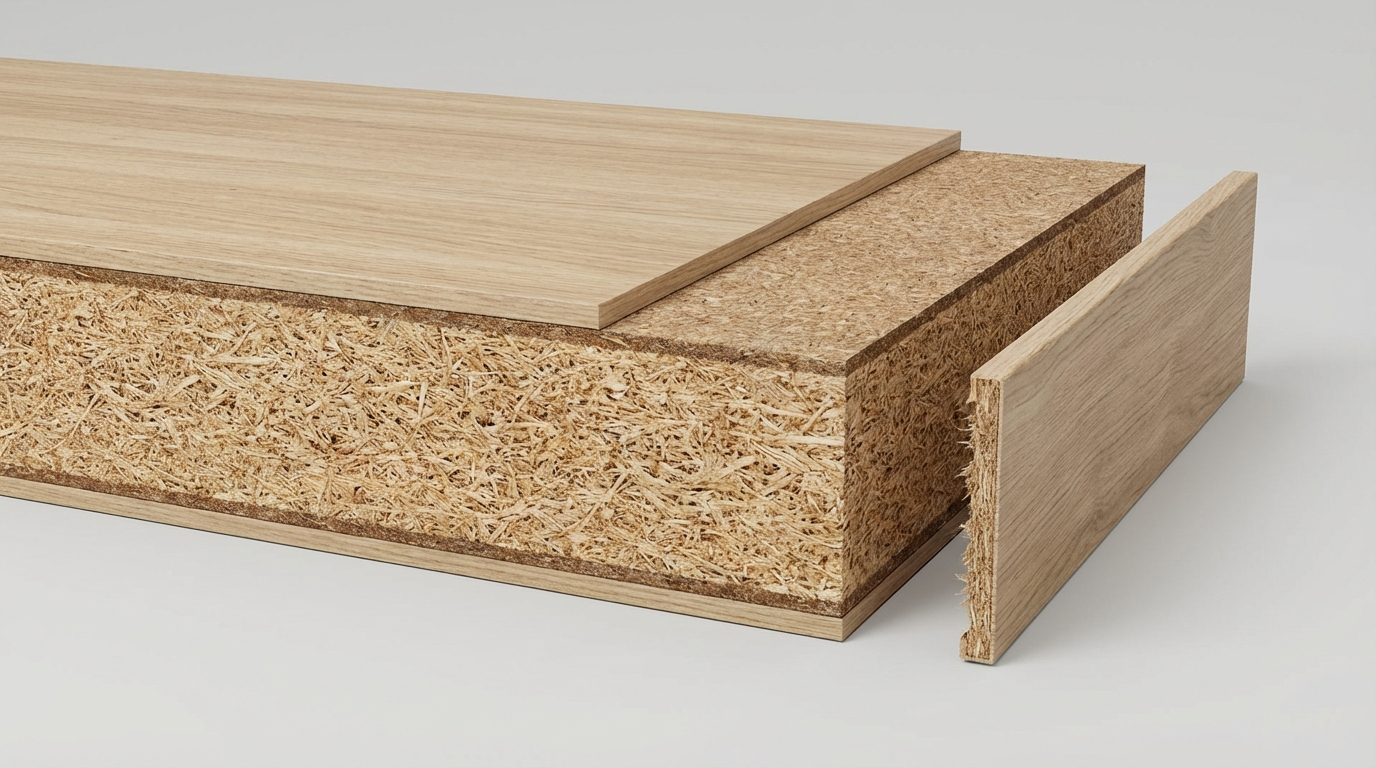
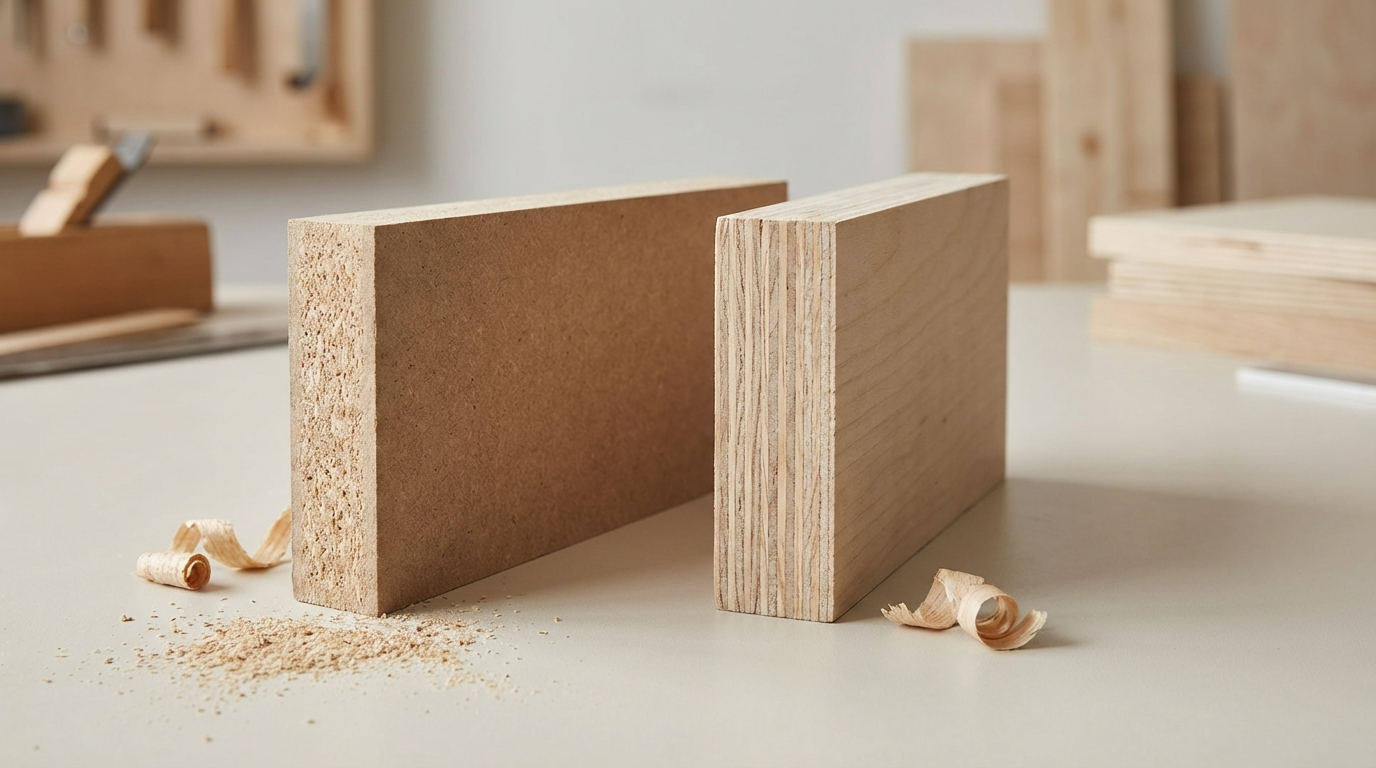
MDF, or medium-density fiberboard, is an engineered panel made by breaking down wood residuals like sawdust and chips into fibers, mixing with resins, and pressing under heat and pressure. It creates a uniform, smooth sheet ideal for painting or laminating. In India, standard MDF suits dry interiors, while moisture-resistant versions add waxes for humid spots.
Plywood layers thin wood veneers (typically 3–13 plies) glued cross-grain for strength, using softwoods or hardwoods. It comes in commercial (MR) grades for general use or boiling-water resistant (BWR) for tougher conditions. Indian plywood often uses eucalyptus or poplar, balancing cost and availability.
Both are wood-based composites, but MDF homogenizes scraps (sustainability plus), while plywood requires larger logs or veneers (more structured sourcing).
Why Sustainability Matters in Indian Homes and Sites
In India, sustainability goes beyond tree-saving—it's about boards surviving monsoons, coastal salt air, and poor storage without quick failure. Humid godowns cause delamination in plywood or swelling in MDF, leading to replacements that spike waste and transport emissions.
Site realities like uneven ventilation, carpenter handling, and frequent wiping amplify issues. A board lasting 10 years vs. 5 cuts resource pull and landfill load. Coastal areas demand low-emission resins to avoid health impacts in unventilated kitchens.
Practical angle: Choose based on real lifespan under local humidity (60–90% monsoon peaks), not factory claims. This reduces hidden costs like rework and new purchases.
Resource Efficiency: Wood Use and Sourcing
MDF shines here by using small wood particles, sawmill waste, and plantation thinnings—often 90%+ recycled fibers. This cuts pressure on virgin forests compared to plywood's veneer peeling from logs.
Plywood, however, uses fast-growing Indian species like eucalyptus, which replant quickly. But peeling generates more offcuts unless factories optimize.
Does MDF really save more trees than plywood?
Yes, typically—MDF repurposes scraps that might burn or landfill, using up to 20% less raw wood per volume. In India, where sawmills produce tons of dust, MDF turns waste into panels. Nuance: Poorly sourced MDF with imported fibers loses this edge; plywood from certified plantations (check FSC-like labels yourself) balances. Next step: Ask suppliers for fiber origin breakdown and reject vague answers.
Manufacturing Emissions and Chemical Use
Both rely on urea-formaldehyde resins, emitting VOCs during production and off-gassing post-install. MDF presses denser (600–800 kg/m³), using more resin and energy (hot-pressing fibers).
Plywood glues veneers with less pressure but potential phenol-formaldehyde in waterproof grades, varying by batch. Indian factories often ventilate poorly, raising local air concerns.
Sustainability tip: Low-formaldehyde options exist in both—smell-test boards (sharp odor flags high emissions).
Which has lower formaldehyde emissions: MDF or plywood?
Plywood usually emits less over time due to open veneer structure allowing faster off-gassing, while MDF's density traps it longer. In Indian homes, this matters for kids' rooms. Conditions: MR plywood beats standard MDF; always air out 48–72 hours pre-install. Check: Press nail into edge—if powdery crumble, low density means uneven resin.
Durability and Lifespan: The Real Sustainability Driver
Durability defines sustainability—short-life boards mean repeat buys, more trees, emissions. Plywood's cross-ply strength resists warping better in India's 30–40°C swings, lasting 8–15 years in furniture.
MDF, smooth but brittle, suits low-stress panels (5–10 years). In monsoons, unprotected MDF swells 10–15% at edges; plywood delams if glue fails.
Is plywood more durable in humid Indian kitchens?
Yes, BWR plywood holds up 2–3x longer than standard MDF under steam and spills. Trade-off: Heavier (25–30% more), raising transport carbon. Verify: Tap board—solid thud good, hollow weak plies bad. For MDF, use HDFWR variants with edge sealing.
Finishing, Installation Waste, and On-Site Impact
CNC routing MDF produces fine dust (health hazard, more waste), but zero voids mean less filler. Plywood splinters edges, needing sanding/banding, but reuses offcuts easier.
In Indian workflows, carpenters waste 10–20% on cuts—plywood's stability cuts errors. Laminating both adds plastic waste, but MDF accepts thin films better.
How much waste from cutting MDF vs plywood?
MDF generates 15–25% more dust volume, clogging tools in dusty sites, but precise CNC yields less kerf loss. Plywood chips reusable as filler. India tip: Wet-cut MDF to bind dust during monsoons. Check post-cut: Clean edges signal good density.
End-of-Life: Disposal and Recyclability
Both landfill-bound mostly, but MDF fibers shred easier for particleboard remake; plywood's glue hinders. India's informal recycling burns wood waste—emissions nightmare.
Practical: Design for disassembly (screw, not glue) to reuse. Coastal sites corrode fixings faster, shortening life.
Can you recycle MDF or plywood easily in India?
Limited—urban scrap yards take clean plywood for fuel; MDF too resin-heavy. Sustainability win: Buy local to cut transport, plan 15-year life. Step: Strip laminates first, sort fibers—local carpenters buy offcuts cheap.
MDF vs Plywood: Sustainability Side-by-Side
| Factor | MDF | Plywood | Winner for India |
|---|---|---|---|
| Wood Efficiency | High (scraps) | Medium (logs) | MDF |
| Emissions (Production) | Higher energy | Lower pressure | Plywood |
| Durability (Monsoon) | Fair (sealed) | Good (BWR) | Plywood |
| Install Waste | Dust-heavy | Chips reusable | Plywood |
| Recyclability | Better fibers | Glue issue | MDF |
| Overall Score | 6/10 | 8/10 | Plywood (most cases) |
Decision Framework: Match to Your Conditions
| Condition | Recommended Choice | What to Verify |
|---|---|---|
| Wet zone (kitchen sink) | BWR Plywood (12mm+) | Boil test sample: no separation |
| Coastal humidity | Moisture-resist MDF or marine ply | Density >700kg/m³; edge wax |
| Heavy use (wardrobe doors) | Plywood (18mm) | Screw hold: no crumble |
| Tight budget, dry interiors | Standard MDF (6–12mm) | Smooth cut, no voids |
| Fast CNC production | MDF | No tear-out on router pass |
| High scratch risk (kids' room) | Laminate plywood | Hardwood face veneer |
Failure Modes and Fixes
- Symptom: Edge swelling—Root: Moisture ingress. Prevention: Seal all edges pre-install. Fix: Sand, re-seal; replace if >5% warp.
- Symptom: Delamination—Root: Poor glue in plywood. Prevention: MR/BWR grade. Fix: Clamp dry 24hrs; discard core-split.
- Symptom: Screw pull-out—Root: Low density. Prevention: Pilot holes, edge distance 5x screw dia. Fix: Larger screws or inserts.
- Symptom: Surface scratches—Root: Soft face. Prevention: Laminate/prelam. Fix: Buff minor; repaint deep.
- Symptom: Warping post-monsoon—Root: Uneven storage. Prevention: Flat stack, cover. Fix: Re-level if minor; new sheet if bowed.
- Symptom: Off-gassing odor—Root: High resin. Prevention: E0/E1 grade sniff-test. Fix: Ventilate 1 week; carbon filter air.
8 Common Mistakes and How to Avoid Them
- Mistake 1: Ignoring humidity—buy dry-zone boards for coastal. Avoid: Map ISO zones, add 20% moisture spec.
- Mistake 2: Skipping edge sealing on MDF. Avoid: PVC tape all cuts Day 1.
- Mistake 3: Overloading thin plywood. Avoid: Load chart—18mm min shelves.
- Mistake 4: No pilot holes. Avoid: 70% dia drill for screws.
- Mistake 5: Poor storage—stack vertical. Avoid: Pallet horizontal, 150mm air gap.
- Mistake 6: Cheap laminates peeling. Avoid: Match thickness 0.6–1mm, heat-press.
- Mistake 7: CNC wrong feed—chipping. Avoid: Upcut bits, dust extraction.
- Mistake 8: No wipe test post-install. Avoid: Damp cloth only, no abrasives first month.
Quality Checks You Can Do Without Lab Tests
Before buying: Weigh sample (heavy = dense), drop test (no crack), moisture meter if avail (<12%). Ask: Resin type? Fiber source? Reject hollow knocks.
After cutting: Inspect edges—no voids/cracks. Router test: Smooth pass? Sand easily?
After install: Load test shelf (2x expected), humidity expose corner 48hrs. Check screw hold post-month.
Tips by User Type
Homeowners: Durability Do’s and Don’ts
Do: Wipe spills immediately, use coasters. Don’t: Drag cleaners, expose direct steam. In monsoons, dehumidify rooms. Expect 7–12 years with care—sustainability from use, not replace.
Carpenters: Workflow Smarts
Cut MDF wet to cut dust; plywood dry. Band edges same day. Fasten 40mm from edge. India heat: Acclimate boards 3 days site.
Architects/Designers: Spec Right
Detail 10mm edge returns for MDF. Spec BWR plywood wet zones. Draw ventilation gaps. Balance aesthetics vs. life—laminates hide ply grain flaws.
OEM Makers: QC for Scale
Batch-test density every 50 sheets. Track return reasons (swell top). Standardize scraps for MDF runs—cuts costs 15%.
FAQs
Is MDF eco-friendlier than plywood overall?
Not outright—MDF wins on scrap use, but plywood's longevity often makes it greener long-term, especially in durable Indian furniture. Weigh project life: Short decorative? MDF. Structural lasting 10+ years? Plywood. Always factor local wood sourcing—plantation eucalyptus plywood competes well. Verify by calculating total lifecycle replacements for your build.
Which is better for monsoon-heavy areas?
BWR plywood typically outperforms standard MDF, resisting delam better amid 80%+ humidity. MDF needs HDFWR + full sealing to match. Coastal twist: Salt accelerates both failures—opt thicker ply. Test: Soak scrap 24hrs; minimal change wins. Pair with site dehumidifiers for max sustainability.
Does laminating affect sustainability?
Yes, adds plastic waste—but thin melamine on either extends life, netting positive. MDF takes it smoother, less bubbles. Avoid thick PVC in heat (off-gases). India tip: Local heat-press scraps reduce transport. Lifecycle: Laminate once, lasts double plain wood.
How to spot low-sustainability boards?
Lightweight, rough faces, strong chemical smell signal poor fibers/high resin. Plywood: Uneven plies. MDF: Bubbly core. Avoid: Demand density cert (self-check weight). Sustainable choice: Local-sourced, low-VOC—cuts emissions 20–30%.
Is imported vs local more sustainable?
Local wins—lower truck emissions, fresher stock (less preservatives). Imported MDF often denser but resin-heavy. Check: Origin stamp, no warp from sea humidity. For plywood, Indian poplar beats tropical imports on replant speed.
Can I make either more sustainable at home?
Yes—seal edges religiously, screw not nail, design modular for reuse. Use offcuts as fillers. Monsoon prep: Elevate storage. Extends life 30%, slashing waste. Track: Photo log first-year issues for tweaks.
What about termite resistance and sustainability?
Treated versions add chemicals—trade-off vs. natural plywood heartwood. MDF rarely termite-prone if sealed. Sustainable path: Borate treatments (low tox). India: Elevate off-floor, ventilate—prevents without extras.
Which for wardrobes: MDF or plywood?
Plywood for frames/doors (strength), MDF shelves if laminated (smooth, cheap). Sustainability: Mix maximizes scraps, durability. Verify: Hinge zones plywood—no sag over 50kg.
Impact of thickness on sustainability?
Thicker (18mm) lasts longer, less waste overall—but more material upfront. Optimize: 12mm most cases. India logistics: Thinner stacks easier, less breakage en route.
Future trends in sustainable panels?
Bio-resins, zero-formaldehyde rising—test smell. Recycled content up. Practical: Spec E0 now, watch density holds. India push: Plantation fibers dominant.
Disclaimer: This content is provided for general informational purposes based on industry practices and publicly available information. Product specifications, standards, prices, and availability may vary by manufacturer, region, and time. Readers should independently verify details with manufacturers, dealers, or qualified professionals before making purchase or construction decisions.Want Plywood Suggestions?
Share a few details and a VIR MDF specialist will suggest suitable brands and connect you to responsive dealers.