How to Read an MDF Price List: Grades, Thickness, “Per Sheet” vs “Per Sq Ft”
Stop overpaying. Learn how MDF price lists work, what each column means, and how to convert per‑sheet rates into per‑sq‑ft costs.
Quick Decision Summary
Decode MDF price lists by matching grade to moisture needs, thickness to load, and converting sheet prices to sq ft for apples-to-apples quotes.
If you’re in a hurry: Focus on 18mm MR grade for most wardrobes/kitchens (typically Rs 60-100 per sq ft). Standard sheet is 8x4 ft (32 sq ft), so divide sheet price by 32 for per sq ft rate. Prioritize density over rock-bottom price to avoid swelling in monsoons. Ask for samples to tap edges—crisp snap means good quality. Skip commercial grades in coastal areas; verify no warping after 24-hour humidity test at site.
- Choose per sq ft pricing if comparing suppliers or calculating total project wastage.
- Avoid per sheet quotes without size confirmation—some use 6x3 ft sheets that inflate costs.
What an MDF Price List Actually Contains
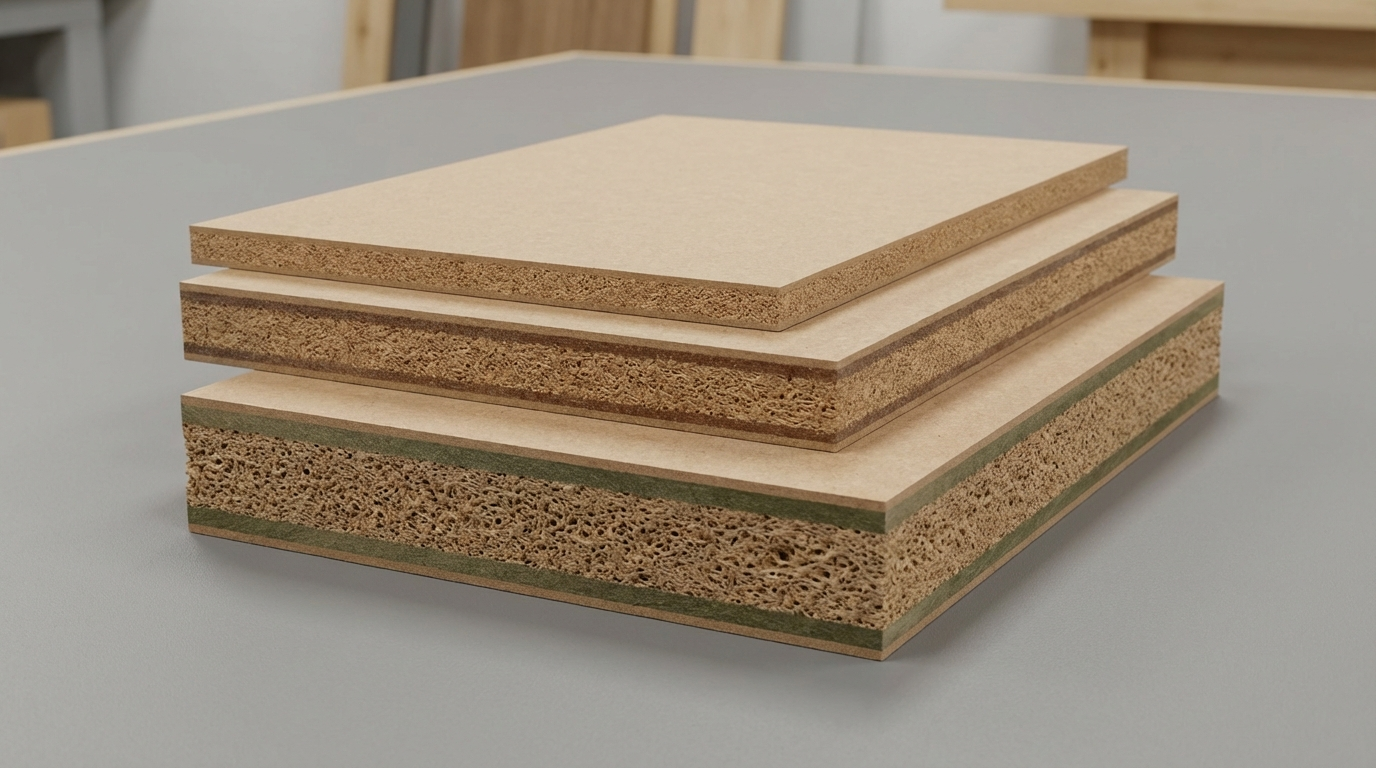
MDF price lists summarize options in rows and columns for quick supplier quotes. Typical columns include thickness (3mm to 25mm), grade (commercial, MR, BWR), size (mostly 8x4 ft), and price unit (per sheet or per sq ft). Rows list variants like raw vs pre-laminated. Sizes are nominal—actual might be 2440x1220mm (about 8x4 ft). Denser boards (700-850 kg/cum) appear in premium rows. Units matter: per sheet assumes full 32 sq ft coverage; per sq ft scales for cuts or bulk.
Lists often group by finish: raw for lamination, prelam for direct use. Edge treatment (pre-sealed) adds 10-20% cost. Indian lists note density or IS standards loosely, but verify via weight (18mm sheet ~40-50kg). No list guarantees performance—use as starting point for negotiation.
What Are the Standard Columns in an MDF Price List?
Core columns: Thickness first (e.g., 12mm, 18mm), then grade (MR for moisture), size, quantity discounts, and price. Thickness dictates 60% of cost; grade adds 20-50%. Check footnotes for exclusions like transport or GST (18%). Per sq ft simplifies bulk buys; per sheet suits whole panels. Next step: Calculate your sqm need (e.g., 10 sqm wardrobe = ~320 sq ft, or 10 sheets).
Why It Matters in Indian Homes and Sites
In humid monsoons or coastal zones, wrong grade from a misread list leads to edge swelling within months. Commercial MDF suits dry bedrooms but fails in kitchens without MR resin. Thickness under 16mm buckles under shelves; 18-19mm holds 20-30kg loads. Site storage exposes sheets to rain—warped boards waste 15-20% material. Carpenters cut 10-15% wastage, so sq ft pricing reveals true cost. Metro prices 20% higher due to logistics; tier-2 offers deals but check batch density.
Practical impact: Delaminated edges from poor screw hold in humid cabinets. Pre-lam finishes scratch easier in kids' rooms. Reading lists prevents overpaying Rs 500-1000 per sheet on unneeded BWP grades.
Why Do Thickness Choices Fail in Monsoon Conditions?
Thin 12mm bows under humidity without MR; opt 16-18mm MR (Rs 70-110/sq ft). Coastal salt accelerates delam—seal edges immediately. Test: Leave sample in 80% RH for 48 hours; no swell means site-ready. Check list for "HDFMR" rows—higher density resists better.
Price Range and Cost Drivers
Basic commercial MDF ranges Rs 40-70 per sq ft (12-18mm); MR grades Rs 60-110; premium HDFWR Rs 90-150. Thicker 25mm adds 30-50%; pre-lam +20%. Per sheet: Rs 1300-2200 for 18mm commercial (32 sq ft basis). Drivers: Thickness (primary), resin (MR/BWR +30%), density (800kg/cum premium), finish (lam +25%), city (Mumbai +20% vs Lucknow), volume (10+ sheets -10%). Wastage inflates 15% for odd cuts.
| Driver | Impact on Price per Sq Ft | Example |
|---|---|---|
| Thickness | +20-50% per 6mm step | 12mm Rs 50 → 18mm Rs 75 |
| Grade | Commercial to MR +25-40% | Rs 50 → Rs 70 |
| Finish | Raw to Prelam +15-30% | Rs 60 → Rs 80 |
| Location/Volume | ±10-25% | Bulk tier-2: Rs 55 vs metro Rs 75 |
Budget example: 20-sheet 18mm MR wardrobe (640 sq ft): Rs 45,000-65,000 total. Checklist for quote: Specify thickness/grade/size/unit/GST/transport/wastage allowance.
How to Read an MDF Price List in 5 Steps
- Confirm units: Per sheet? Divide by 32 sq ft. Note size in footnotes.
- Match thickness: Wardrobe carcass 18mm; doors 16mm; shelves 19mm.
- Pick grade: Dry: commercial; kitchen: MR; bath: BWR.
- Calculate total: Sq ft need x rate x 1.15 (wastage).
- Verify extras: Density, edge seal, discounts.
Failure point: Ignoring density column—low 650kg/cum swells fast. Prevention: Weigh sample sheet.
How Do I Convert Per Sheet to Per Sq Ft?
Divide sheet price by 32 (8x4 ft standard). Rs 2000/sheet = Rs 62.5/sq ft. Confirm size—some 7x3.5 ft = 24.5 sq ft, inflating 30%. Use for project totals: 100 sq ft kitchen = 3.125 sheets + wastage. Always ask actual dimensions.
Per Sheet vs Per Sq Ft: Real Comparison
Per sheet suits full panels (less math); per sq ft for custom cuts/wastage calc. Table compares:
| Scenario | Per Sheet (Rs 2000) | Per Sq Ft (Rs 62.5) | Best For |
|---|---|---|---|
| 10 full sheets | Rs 20,000 | Rs 20,000 (320 sq ft) | Both |
| 200 sq ft (6.25 sheets) | Rs 12,500 | Rs 12,500 | Sq ft easier |
| +15% wastage | Rs 14,375 (7.2 sheets) | Rs 14,375 (230 sq ft) | Sq ft precise |
Trade-off: Sheet pricing hides size variance; sq ft standardizes.
Common Buyer Mistakes and How to Avoid Them
- Mistake 1: Assuming all sheets 8x4—ask dimensions; avoid 30% overpay.
- 2: Picking cheapest without grade—commercial fails monsoons; specify MR.
- 3: Ignoring thickness tolerance (±0.5mm chipping)—tap for uniform sound.
- 4: Forgetting GST/transport (20% extra)—include in quote.
- 5: Bulk without density check—low density delams; weigh sample.
- 6: Per sq ft without wastage—add 10-20% for cuts.
- 7: Prelam as raw price—finishes +25%; clarify.
- 8: No sample—site-test humidity exposure first.
- 9: Metro quote for tier-2—shop local for 15-20% savings.
- 10: Skipping edge notes—unsealed swells; demand pre-seal.
Failure Modes from Misreading Price Lists
- Symptom: Edge swelling. Cause: Commercial grade in humid site. Prevent: MR row. Fix: Sand + epoxy seal.
- Delamination. Low resin/density. Prevent: 750+ kg/cum. Fix: Discard affected.
- Screw pull-out. Thin/thin edges. Prevent: 18mm min. Fix: Plug + rescrew.
- Surface chip during CNC. Low density. Prevent: HDF row. Fix: Laminate over.
- Warping post-storage. Poor handling. Prevent: Flat stack, covered. Fix: Flatten under weight 48hrs.
- Overbudget 20%. No sq ft calc. Prevent: Convert + wastage. Fix: Negotiate bulk.
Quality Checks You Can Do Without Lab Tests
Before buying: Visual—uniform color, no knots/cracks. Tap—consistent thud (no hollow). Weigh—18mm ~45kg. Edge—smooth, no fuzz. Questions: "Density? Tolerance? Batch date?" Red flags: Damp storage, mismatched sizes.
After cutting: Edges crisp, no tear-out. Dust low density. Workmanship: Even screw hold.
Post-install: No gaps, edges sealed. Clean with damp cloth—MR resists marks.
Decision Framework Table
| Site Condition | Recommended Grade/Thickness | Verify Checklist |
|---|---|---|
| Monsoon humidity | MR/HDFMR, 18mm | Humidity test sample; edge seal |
| Coastal/salt | BWR, 19mm | Density 800kg; resin type |
| Heavy load shelves | Commercial/HDF, 19-25mm | Load test sample; screw hold |
| Tight budget dry room | Commercial, 16mm | Full sheet price /32 sq ft |
| Fast CNC modular | Prelam HDFMR, 18mm | Smooth cut sample; tolerance |
| High scratch kids' area | Prelam MR, 18mm | Finish thickness; abrasion tap |
Practical Tips by Buyer Persona
Homeowners: Durability: Seal edges yourself; clean dry. Don’t overload thin shelves. Budget: Sq ft calc total before approve.
Carpenters: Cutting: CNC 18mm MR; edge band 2mm PVC. Fastening: Pre-drill hinges. Handling: Vertical stack avoids warp.
Architects: Specs: Detail MR for wet zones; 18mm carcass. Finish: Lam for speed. Precautions: Ventilation drawings.
OEM/Modular: Repeatability: Fixed density spec; QC weigh each. Reduce complaints: Humidity pre-condition factory.
What Thickness for Wardrobe Carcass?
18mm standard for strength (holds 25kg shelf). 16mm saves 15% cost but risks sag in humid sites. 19mm for heavy. Check: Load sample horizontally 48hrs. Next: Match to grade on list.
Is MR Grade Enough for Kitchen?
Yes for shutters/carcass in moderate humidity; BWR for sinks. MR resists 70-80% RH monsoons. Nuance: Pair with PVC edge. Check: Wipe sample with water— no swell after 24hrs.
How Much Wastage in MDF Cuts?
10-20% typical for wardrobes (curves/strips). Use sq ft pricing. Reduce: Nest patterns on CNC. Step: Measure openings first, add buffer.
FAQs
What does "commercial grade" mean on MDF lists?
Commercial grade uses urea resin for dry interiors like bedrooms/TV units. It offers smooth CNC finish at lowest cost (Rs 40-70/sq ft) but swells in 60%+ RH without sealing. Ideal for laminated wardrobes away from water. In Indian sites, store flat and edge-band immediately to prevent moisture ingress during monsoons. Verify by tapping—no soft spots. Avoid for kitchens; upgrade to MR for Rs 20 extra/sq ft and longer life.
Why are prices higher for 18mm vs 12mm?
18mm uses 50% more fibre/resin, boosting screw hold and load (20kg vs 10kg). Cost jumps Rs 20-40/sq ft due to material volume. For carcasses, 18mm prevents sagging; 12mm suits doors/back panels. In coastal areas, thicker resists warp better. Weigh to confirm—18mm ~45kg/sheet. Calculate project: Wardrobe needs 18mm bulk, mix thicknesses to save 10%.
Can I negotiate below list price?
Yes, 10-20% off for 20+ sheets, especially tier-2 cities. Mention competitor sq ft rates and bulk. Include transport/GST. Avoid cutting quality—focus density. Monsoon season suppliers discount slow stock. Get written specs. Homeowners: Bundle with edge bands. Track total sq ft landed cost.
What if list shows "per running ft"?
Rare for sheets; for cut strips (e.g., 300mm wide). Multiply width x length for sq ft equivalent. Clarify: Full sheet or pre-cut? Converts poorly for bulk—switch to sq ft. Useful for linear shelves. Check width tolerance to avoid gaps. In workflows, pair with CNC quotes.
Does pre-laminated cost more than raw?
Yes, +15-30% (Rs 15-40/sq ft) for factory melamine/PVC skin. Saves lamination time but scratches easier. Good for modular speed; raw better for custom veneers. In humid sites, prelam seals better. Test: Scratch with key—no mark. Avoid overpay if site-laminating.
How to spot fake MR grade?
MR has phenolic resin—water test: No delam after 24hrs soak edge. Commercial softens. Weigh: Higher density. Ask batch moisture content (<10%). Indian sites: Expose sample to steam. If swells, downgrade list grade. Prevention: Multiple suppliers compare.
Is 8x4 the only size?
Standard 2440x1220mm (32 sq ft); variants 6x3 ft (18 sq ft), 8x3 ft. List footnotes specify. Smaller inflates per sq ft 20-70%. Confirm before calc. For exports/OEM, custom ok but +price. Cut-to-size adds labour—buy full, cut site.
Why density matters in price lists?
Density (650-850 kg/cum) drives strength/machinability. Low: Chips easy, poor hold. High HDFMR: CNC crisp, Rs 20+ premium. Lists rarely note—ask/weigh (18mm: 40kg low, 55kg high). Humid India: 750+ min. Trade-off: Cost vs durability.
Per sq m or sq ft—which to use?
Sq ft common India (lists/suppliers). Sq m = sq ft /10.4; use for international. Consistent for wastage (e.g., 15% on 100 sq ft). Carpenters prefer sq ft. Convert sheet: Rs 2000/32=62.5/sq ft. Project total: Accurate bids win jobs.
Disclaimer: This content is provided for general informational purposes based on industry practices and publicly available information. Product specifications, standards, prices, and availability may vary by manufacturer, region, and time. Readers should independently verify details with manufacturers, dealers, or qualified professionals before making purchase or construction decisions.Want Plywood Suggestions?
Share a few details and a VIR MDF specialist will suggest suitable brands and connect you to responsive dealers.