Is MDF Waterproof? Short Answer + What to Use Instead in Wet Areas
No—standard MDF isn’t waterproof. Here’s what to use instead in wet areas, plus how to protect MDF in moisture-prone rooms.
Quick Decision Summary
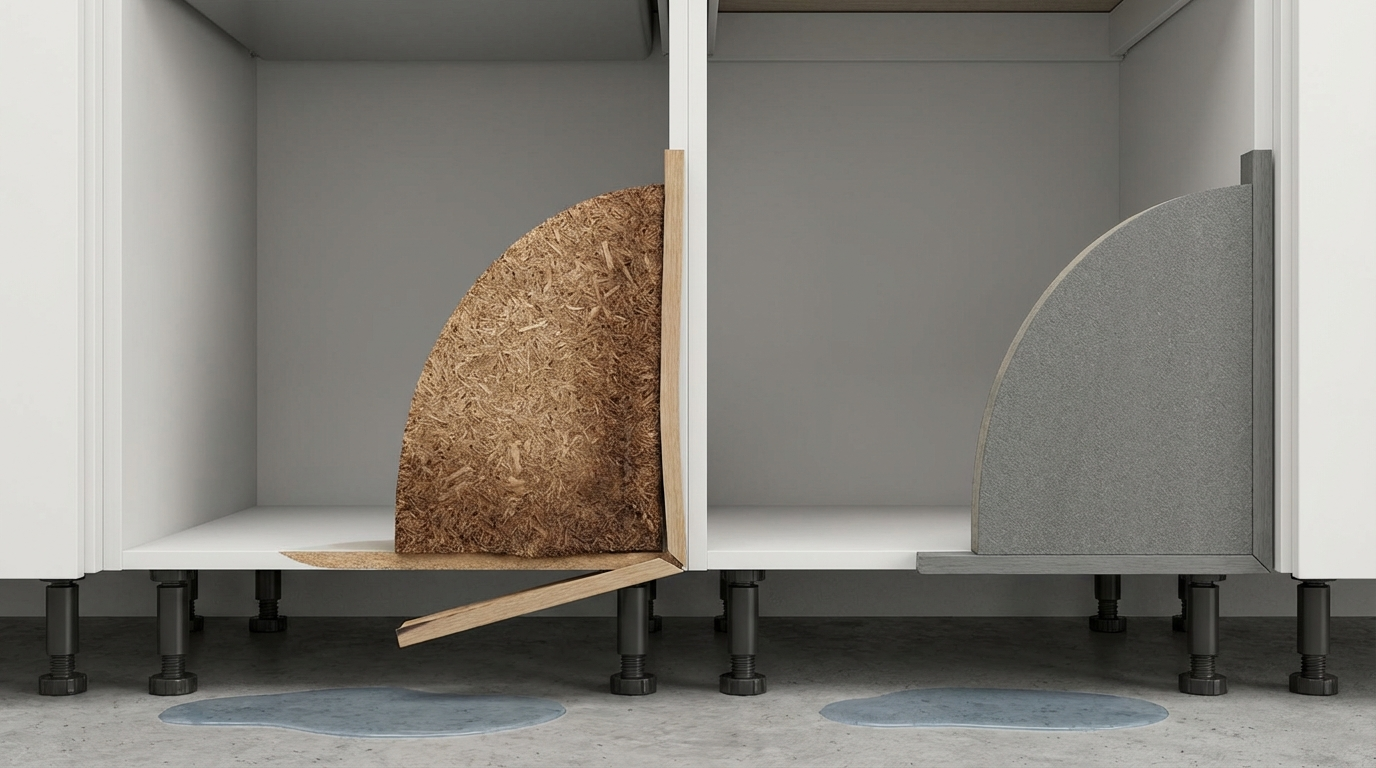
No, standard MDF is not waterproof—it swells and delaminates in direct water contact.
If you’re in a hurry: Skip standard MDF for bathrooms, kitchens sinks, or coastal laundry zones. Opt for HDFWR (high-density moisture-resistant), PVC boards, or WPC in fully wet areas. In semi-wet spots like moisture-prone wardrobes, seal edges heavily with PU or epoxy and use moisture-resistant grades. Always verify density (750+ kg/m³) and test edges before bulk buy. This avoids costly replacements during monsoons when humidity spikes to 90%+ in Indian cities.
- Choose this if… your project is in dry interiors like bedrooms or offices with good ventilation.
- Avoid this if… direct splashes, steam, or high humidity exceed 70% regularly, like bathrooms or coastal kitchens.
What This Material/Option Actually Is
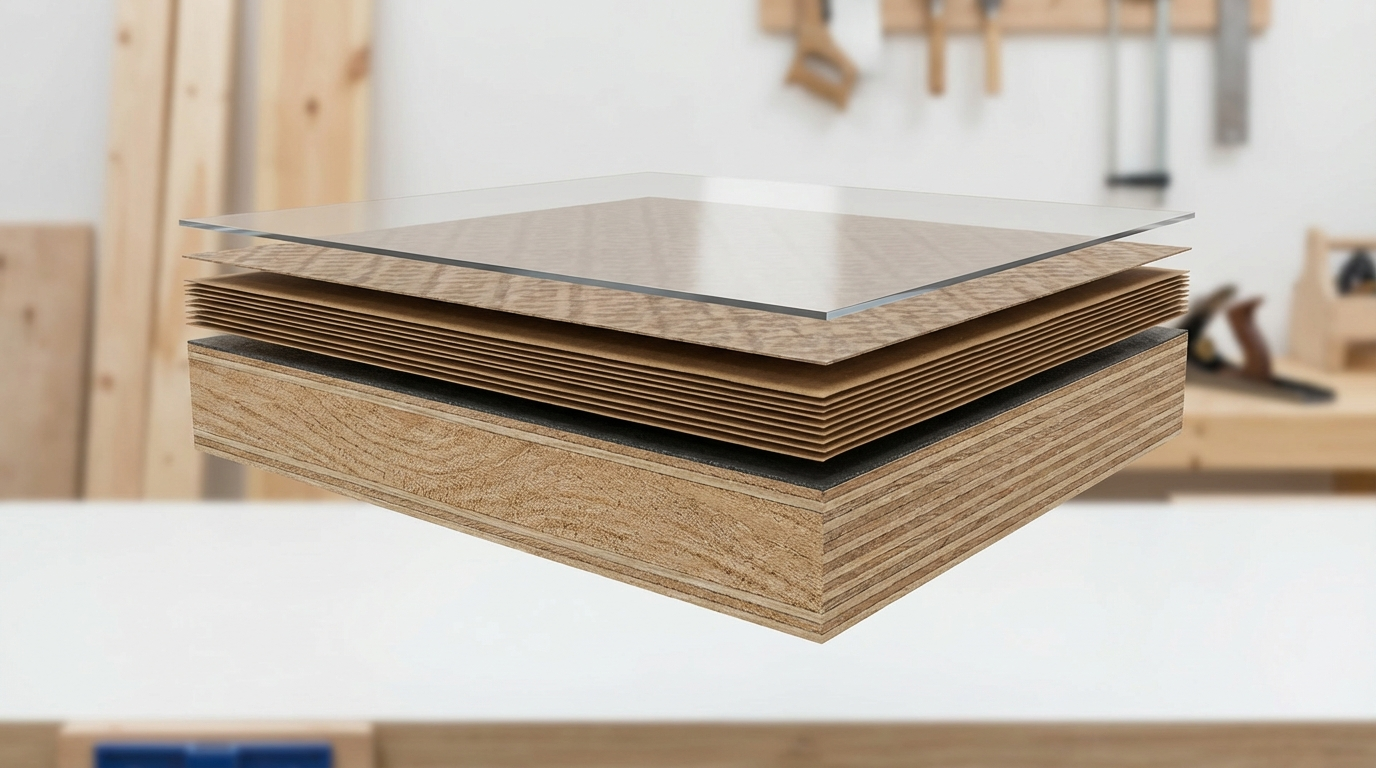
MDF stands for Medium Density Fiberboard, an engineered panel made by breaking down wood fibers, mixing with resins like urea-formaldehyde, and pressing under heat and pressure. It creates a smooth, uniform sheet ideal for painting, laminating, or CNC shaping. Standard MDF has density around 700-750 kg/m³, making it machinable but absorbent at edges.
In wet contexts, confusion arises with variants: Moisture-Resistant (MR) MDF uses better resins for humidity up to 65-70%, while HDFWR (High-Density Fiberboard Water Resistant) pushes to 800+ kg/m³ with hydrophobic additives. None qualify as "waterproof"—they resist but don't repel standing water indefinitely. PVC and WPC offer true non-porous alternatives for submerged risks.
Why It Matters in Indian Homes and Sites
India's monsoon season (June-September) brings 80-95% humidity, causing standard MDF edges to swell 10-20% in days if unsealed. Coastal areas like Mumbai or Chennai add salt-laden air, accelerating resin breakdown. Poor site storage—stacked outdoors or in unventilated godowns—leads to surface warping before installation.
Real consequences: Weak screw holds in cabinets (pull-out after 6 months), delaminating laminates in kitchens, and mold in wardrobes. Workmanship gaps, like skipping edge sealing during humid installs, amplify issues. Choosing wisely saves 20-30% on rework in high-moisture zones.
Meaning, Types, and Where People Get Confused
Waterproof means zero absorption even under prolonged submersion—MDF doesn't qualify. "Water-resistant" implies short-term splash tolerance with sealing; fully waterproof panels like PVC block water entirely.
- Confusion 1: MR MDF as "bathroom-safe"—it handles steam but fails direct water.
- Confusion 2: All HDF is WR—only HDFWR variants with special resins qualify.
- Confusion 3: Laminates make MDF waterproof—surface protects, but edges/core absorb.
- Confusion 4: Term "BWR" (boiling water resistant) misused—rare in panels, more for plywood.
- Confusion 5: Density alone proves resistance—needs resin type verification.
- Confusion 6: Indian "MR grade" varies by maker—always check IB values (>40 preferred).
Is standard MDF really not suitable for bathrooms?
Direct answer: No, standard MDF fails quickly in bathrooms due to steam and splashes causing edge swelling and core breakdown. It absorbs 15-25% moisture in 24 hours unsealed.
Nuance: In ventilated guest bathrooms with minimal use, sealed MR MDF might last 1-2 years. But Indian family bathrooms with daily showers demand HDFWR or PVC. Coastal humidity worsens it—salt accelerates delamination.
Next step: Drop a small edge piece in water for 30 minutes; if it darkens/swells, reject the batch. Seal all cuts with wax or PU before install.
Can I use MDF in kitchens if I seal it well?
Direct answer: Possibly for dry zones like uppers, but avoid near sinks—sealing buys time, not immunity.
Nuance: Monsoon steam + oil splashes penetrate micro-cracks in seals over months. MR/HDFMR holds better than standard, but WPC shines for modular shutters.
Next step: Apply 2-3 coats of edge sealer, test with wet cloth overnight. Verify carpenter uses water-based PU, not cheap alternatives.
Two-Minute Comparison (What Changes in Real Life)
Standard MDF suits dry, cost-sensitive work; alternatives trade cost for wet durability. Key shifts: machinability drops slightly, but longevity jumps in humid India.
| Material | Moisture Tolerance | Machinability | Cost Driver | India Wet-Zone Fit |
|---|---|---|---|---|
| Standard MDF | Low (dry only) | Excellent | Low (Rs 50-80/sqft 18mm) | Poor—monsoon edges swell |
| HDFMR/WR | Medium-High | Good | Medium (Rs 70-120/sqft) | Fair—sealed for kitchens |
| PVC Board | High (splash-proof) | Fair (pre-cut limits) | Medium-High (Rs 80-150/sqft) | Good—bathroom vanities |
| WPC | High (termite + water) | Good | High (Rs 100-180/sqft) | Best—coastal laundry |
Choose based on zone: Dry= MDF; Semi-wet= HDFWR; Full-wet= PVC/WPC. Verify density and resin via supplier questions.
How to Decide or Do This in 5 Steps
- Map wet zones: Mark splash/steam areas (sinks 1m radius, showers). Dry= OK for MDF.
- Pick grade: Dry: Standard; Humidity: MR/HDFWR; Submerged risk: PVC/WPC.
- Spec thickness: 16-18mm cabinets; seal all edges post-cut.
- Test sample: Wet edge 1 hour—minimal swell OK for semi-wet.
- Install smart: Use SS screws, silicone gaps, ventilate site during monsoon.
Failure point: Skipping step 4—10% projects rework. Prevention: Buy 5% extra for tests.
Failure Modes and Fixes
1. Edge Swelling: Symptom: Bulging 2-5mm post-monsoon. Cause: Unsealed cuts absorb humidity. Prevention: Wax/PU all edges immediately. Fix: Sand + reseal if minor; replace if core soft.
2. Delamination: Symptom: Layers separate near water. Cause: Inferior resin in standard MDF. Prevention: HDFWR only. Fix: Spot epoxy; full panel swap.
3. Screw Pull-Out: Symptom: Hinges loose after 6 months. Cause: Swollen core weakens hold. Prevention: Pilot holes + anchors. Fix: Reinforce with inserts.
4. Surface Blistering: Symptom: Bubbles under laminate. Cause: Steam trapped. Prevention: Vent gaps. Fix: Scrape + relaminate.
5. Mold Growth: Symptom: Black spots in humid wardrobes. Cause: Poor storage. Prevention: Elevate stacks. Fix: Clean with vinegar; dry fully.
6. Chipping at Edges: Symptom: Crumbles during CNC. Cause: Low density in moist stock. Prevention: Acclimatize 48hrs. Fix: PVC tape pre-cut.
Practical Decision Framework
| Condition | Recommended Material/Finish | What to Verify |
|---|---|---|
| Wet zone (bathroom vanity) | PVC or WPC + no laminate | Non-porous surface; density 900+ kg/m³ |
| Coastal high humidity | HDFWR + epoxy edges | Salt resistance claim; IB >45 |
| Heavy use kitchen | HDFMR + melamine | Scratch test; thickness uniform |
| Tight budget dry interiors | Standard MDF + laminate | Edge seal quality; no warp |
| Fast delivery modular | Pre-lam HDFMR | Factory edges sealed; batch consistency |
| High scratch risk (kids) | WPC + textured finish | Impact test sample |
Quality Checks You Can Do Without Lab Tests
Before buying:
- Tap edges—dull thud means low density.
- Weigh sample: 18mm should feel heavy (2kg+ per sqft).
- Ask: Resin type? IB value? Storage since?
- Red flag: Warped stacks or dusty surfaces.
After cutting: Wet edge 30min—no darkening. Smooth CNC without tear-out.
After install: Check gaps sealed; wipe daily. Torque screws evenly.
Does HDFWR make MDF fully waterproof?
Direct answer: No, HDFWR resists better but prolonged water still penetrates unsealed edges.
Nuance: Ideal for Indian kitchens (tolerates 70% humidity), but bathrooms need PVC. Higher density slows absorption 3x vs standard.
Next step: Compare samples—immerse edges; pick minimal swell.
What's better for monsoon wardrobes: MDF or plywood?
Direct answer: Sealed MR MDF for cost/smoothness; plywood for natural strength.
Nuance: MDF laminates easier but swells faster unsealed. Plywood edges need teak beading in humid Delhi-NCR.
Next step: Acclimatize both 72hrs; check flatness.
Common Buyer Mistakes and How to Avoid Them
- Mistake 1: Ignoring zones—using MDF near AC drips. Avoid: Map humidity map first.
- 2: Cheap sealers—peels in weeks. Avoid: PU or wax only.
- 3: Bulk buy without samples. Avoid: Test 1 sheet per 50.
- 4: Coastal storage outdoors. Avoid: Indoor covered stacks.
- 5: Skipping pilot holes. Avoid: 70% screw diameter.
- 6: Laminating post-cut without sealing. Avoid: Seal then lam.
- 7: Monsoon installs without dehumidifiers. Avoid: Delay or fans.
- 8: No edge banding on shelves. Avoid: Full perimeter PVC tape.
- 9: Assuming MR=WR. Avoid: Verify specs verbally.
Tips for Homeowners
Do: Wipe spills instantly; use ventilated cabinets. Don’t: Heavy cleaners or standing pots. Expect 5-7 years sealed in semi-wet.
Tips for Carpenters
Cut with fine blade; seal edges same day. Use SS fasteners in humid zones; pre-drill hinges.
Tips for Architects/Designers
Spec HDFWR min for elevations; detail 2mm gaps. Logic: Balance aesthetics with site reality.
Tips for OEM/Modular Makers
QC: Batch density checks; seal automation. Reduces 15% returns via wet-test protocols.
How to seal MDF edges for moisture protection?
Direct answer: Apply 2-3 thin PU coats or wax; dry 24hrs between.
Nuance: Best post-cut; epoxy for high-risk. India tip: Reapply yearly in monsoons.
Next step: Sand lightly; test wet resistance.
Is PVC board a good MDF replacement for bathrooms?
Direct answer: Yes, fully non-porous and lightweight.
Nuance: Less CNC-friendly; good for flat panels. Coastal win: No salt corrosion.
Next step: Check thickness uniformity for alignment.
Practical Use Cases (What Works, What Fails)
| Use Case | Recommended Thickness | Finish Notes | Risk Notes |
|---|---|---|---|
| Bathroom vanity | 16-19mm PVC | Glossy wipeable | Zero MDF—direct water |
| Kitchen upper cabinet | 18mm HDFWR | Melamine sealed | Avoid standard near sink |
| Wardrobe (humid) | 18mm MR MDF | Laminate + edge band | Seal internals |
| TV unit (dry) | 16mm standard MDF | Painted | OK if ventilated |
FAQs
Can MDF be made waterproof with coatings?
Coatings like PU or epoxy provide temporary resistance, extending life 2-3x in semi-wet areas, but they crack over time, allowing water ingress. In Indian homes, reapply annually during dry season for wardrobes. Not a full substitute for PVC in showers—core eventually saturates if exposed repeatedly. Test by soaking sealed sample; if it holds flat, viable for low-risk.
What's the difference between MR MDF and HDFWR?
MR MDF resists up to 65% humidity with modified resins, suiting moisture-prone bedrooms. HDFWR adds higher density (800+ kg/m³) and wax additives for 75%+ tolerance, better for kitchens. Trade-off: HDFWR costs 20-30% more but machines similarly. In coastal India, prefer HDFWR to counter salt air; always seal edges regardless.
Is WPC better than MDF for wet areas?
WPC (Wood Plastic Composite) excels with plastic content blocking water and termites, ideal for laundry or outdoor cabinets in humid regions. Unlike MDF, no swelling even unsealed. Downside: Higher cost and slightly rougher finish needing skilled sanding. For monsoons, WPC reduces failures by 50%; verify extrusion quality for uniformity.
How long does sealed MDF last in bathrooms?
Sealed MR MDF might endure 1-3 years in light-use bathrooms with exhaust fans, but family setups shorten to months due to steam. Failures start at edges. Better: Limit to dry walls; use PVC for cabinets. India reality—poor ventilation halves lifespan; install dehumidifiers for extension.
Does laminate protect MDF from water?
Laminate shields the face from splashes but leaves vulnerable edges and core exposed. In kitchens, it blisters if steam penetrates. Solution: Full edge banding + sealer. Not for bathrooms; opt for pre-lam HDFWR. Common error: Over-relying on top layer without perimeter protection.
Can I use MDF outdoors in India?
No—even sealed, UV and rain degrade resins fast, leading to warp in 6 months. Coastal corrosion worsens. Use treated WPC or aluminum composites. Indoor shaded patios: HDFWR max, fully sealed. Always elevate from ground moisture.
What's the best thickness for wet-area MDF alternatives?
18mm balances strength and weight for cabinets; 12-16mm shelves. Thicker adds cost without proportional gain. For PVC/WPC, match project load—test sag with weights. India tip: Factor transport warp in humid trucks; buy local.
How to store MDF sheets before installation?
Stack flat indoors, elevated 15cm off floor, covered loosely for air. Avoid godowns over 70% humidity. Acclimatize 48-72hrs on-site. Monsoon prep: Plastic wrap ends only. Prevents 80% pre-install warps.
Does density affect MDF water resistance?
Higher density (750+ kg/m³) slows absorption but doesn't waterproof—needs resins. Standard 700kg absorbs fast; HDF 850kg buys time. Check by hefting: Heavy=better. Pair with sealing for India climates.
Can carpenters fix swollen MDF edges?
Minor swelling: Dry fully, sand, reseal—works 50% cases. Severe: Core weak, replace section. Prevention trumps: Always seal cuts. In rushed sites, this adds 20% labor; plan ahead.
Disclaimer: This content is provided for general informational purposes based on industry practices and publicly available information. Product specifications, standards, prices, and availability may vary by manufacturer, region, and time. Readers should independently verify details with manufacturers, dealers, or qualified professionals before making purchase or construction decisions.Want Plywood Suggestions?
Share a few details and a VIR MDF specialist will suggest suitable brands and connect you to responsive dealers.