What Is Sunmica – Meaning, Differences & Buying Clarity
Clear, research-backed explanation of what is sunmica with examples, FAQs, and practical tips for Indian homes and furniture work.
Note: This is independent informational content and is not affiliated with any manufacturer.
Quick Decision Summary
One-line answer: Sunmica is a brand name that has become the generic Indian term for decorative laminate sheets used to finish furniture and surfaces.
If you're in a hurry: When someone in India says "sunmica," they almost always mean decorative laminates—thin, durable sheets bonded onto plywood, MDF, or particle board to create attractive, easy-to-clean furniture surfaces. The term originated from an early laminate brand but now refers to the entire product category regardless of manufacturer. For most furniture projects, you need to specify thickness, finish type, and application area rather than just asking for "sunmica."
- Choose laminates (sunmica) if: You want affordable, scratch-resistant, easy-to-maintain surfaces for furniture, kitchen cabinets, wardrobes, or wall panels in dry to moderately humid conditions.
- Avoid laminates if: Your application involves direct water exposure, extreme heat contact, outdoor installations, or you need seamless curved surfaces without visible edge joints.
What Sunmica Actually Is – Definition and Market Reality
Sunmica is one of the earliest decorative laminate brands introduced in India. Over decades, the brand name became so widely used that Indians now use "sunmica" interchangeably with "laminate" or "mica sheet"—similar to how "xerox" means photocopying or "fevicol" means adhesive regardless of actual brand.
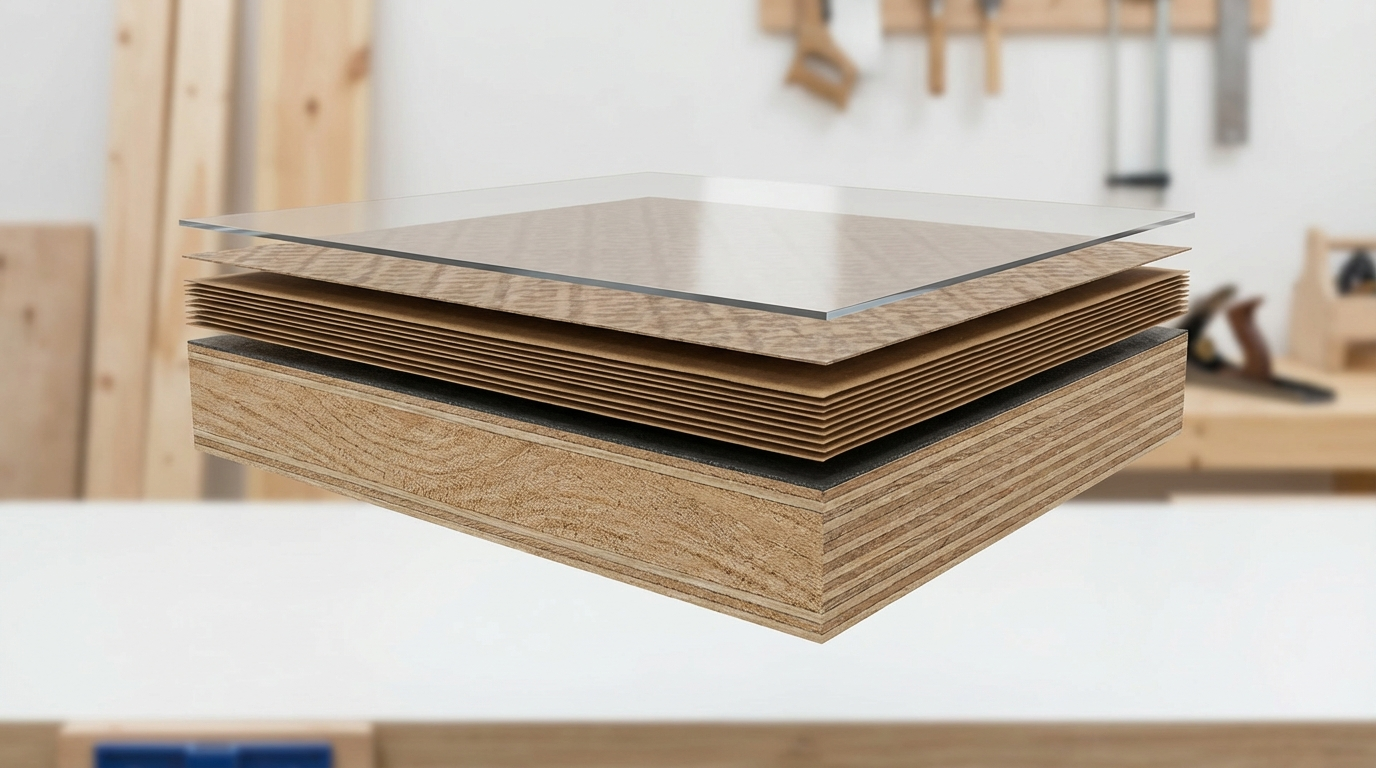
The actual product is a High-Pressure Laminate (HPL) or Low-Pressure Laminate (LPL) sheet manufactured by compressing layers of kraft paper saturated with phenolic resin, topped with a decorative paper layer and a protective melamine overlay. This compression under high temperature and pressure creates a hard, dense surface material typically 0.6mm to 1.5mm thick.
When applied to substrates like commercial plywood, BWR plywood, MDF, or particle board using contact adhesive, laminates create the finished surface you see on most Indian furniture—from kitchen shutters to office desks to bedroom wardrobes.
Is Sunmica Different From Laminate?
No functional difference exists between what people call "sunmica" and decorative laminates. The confusion arises because Sunmica was among the first laminate brands marketed extensively in India, and the name stuck in common vocabulary. Whether you purchase from any laminate manufacturer, the product category, manufacturing process, and application method remain identical. When specifying materials for your project, always refer to technical parameters—thickness, finish type, grade—rather than brand-generic terms to avoid miscommunication with contractors.
Why This Distinction Matters for Indian Homes and Sites
Understanding that sunmica means laminate prevents costly specification errors. Indian construction sites frequently see miscommunication where homeowners request "good quality sunmica" without specifying thickness, finish, or substrate compatibility. This vague specification leads to contractors using whatever stock is available, often resulting in premature failures.
How Does Indian Climate Affect Laminate Performance?
Indian monsoon humidity, coastal salt air, and temperature variations significantly impact laminate durability. In cities like Mumbai, Chennai, or Kolkata, ambient humidity regularly exceeds 80% during monsoons. Laminates themselves resist moisture well, but the bonding adhesive and substrate underneath are vulnerable. Improper storage before installation—sheets left in open sites absorbing moisture—leads to bubbling, edge lifting, and delamination within months. Coastal areas face additional challenges from salt-laden air corroding metal edging and affecting adhesive bonds. Always verify that sheets were stored in covered, dry conditions before accepting delivery.
Transport damage is another Indian reality. Laminate sheets are brittle and prone to edge chipping if handled roughly. Inspect every sheet for corner damage, surface scratches, and edge chips before signing delivery receipts. Rejecting damaged sheets at delivery saves significant rework costs later.
Meaning, Types, and Where People Get Confused
The term "sunmica" creates confusion because it sounds like a specific material rather than a product category. Here's the technical breakdown:
What Are the Main Types of Decorative Laminates?
High-Pressure Laminates (HPL) are manufactured at pressures exceeding 1000 PSI, creating dense, durable sheets typically 0.8mm to 1.5mm thick. These suit high-abuse surfaces like kitchen countertops and commercial furniture. Low-Pressure Laminates (LPL) use lower compression and are thinner, typically 0.6mm to 0.8mm, suitable for light-use furniture and wall panels. Within these categories, you'll find glossy, matte, textured, metallic, and anti-bacterial finish variants. Each serves different aesthetic and functional purposes.
Common misunderstandings people have:
- Assuming all "sunmica" sheets have identical quality regardless of brand or grade
- Believing thicker laminates are always better (they're harder to form around curves)
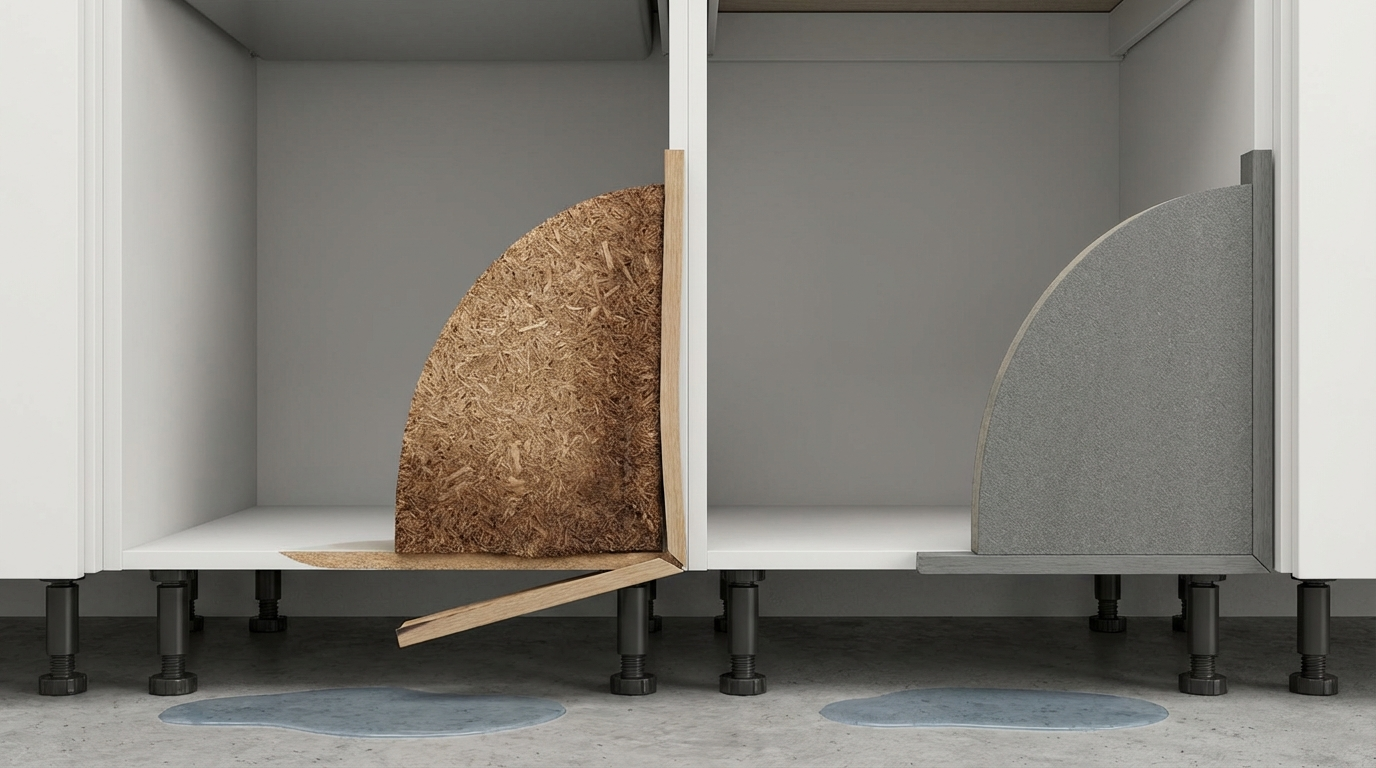
- Thinking laminates are waterproof (the substrate underneath is not)
- Confusing laminates with veneers (veneers are real wood slices, laminates are synthetic)
- Using interior-grade laminates in wet zones expecting them to survive
- Assuming glossy finishes are more durable than matte (often the opposite)
- Believing post-forming laminates work on all curves (minimum bend radius applies)
- Thinking laminate colour in small samples matches large installed surfaces perfectly
Price Range and Cost Drivers
Laminate pricing in India varies significantly based on multiple factors. Understanding these helps you budget realistically and avoid overpaying for features you don't need.
| Laminate Type | Typical Price Range (₹ per sq ft) | Best Application |
|---|---|---|
| Standard 0.8mm matte/glossy | ₹45 – ₹90 | Wardrobes, bedroom furniture |
| Premium 1mm textured | ₹85 – ₹150 | Living room panels, office furniture |
| High-gloss 1mm acrylic-finish | ₹180 – ₹350 | Modular kitchens, display units |
| Anti-bacterial/specialty | ₹200 – ₹400 | Hospital furniture, commercial kitchens |
| Compact laminate (solid core) | ₹350 – ₹600 | Toilet partitions, outdoor cladding |
What Drives Laminate Costs Beyond Thickness?
Several factors beyond thickness influence pricing. Finish complexity matters—metallic, synchronized texture, or realistic woodgrain patterns cost more than solid colours. Import duties affect premium ranges significantly. Location impacts logistics; northern Indian cities often pay more for brands manufactured in southern states. Wastage during cutting typically runs 8-15% depending on cabinet sizes, which contractors should factor into quotes. Volume discounts apply for orders exceeding 50-100 sheets. Always request itemized quotes showing base material cost, adhesive, edge banding, labour, and wastage separately.
Two-Minute Comparison: Laminate vs Other Surface Options
Homeowners frequently confuse laminates with other surface finishing materials. This comparison clarifies when each makes sense.
| Parameter | Laminate (Sunmica) | Veneer | Acrylic Panels | PU/Lacquer Paint |
|---|---|---|---|---|
| Material nature | Synthetic resin-paper composite | Real wood slice | Solid acrylic sheet | Painted finish |
| Scratch resistance | High | Low-medium | Medium | Low |
| Moisture tolerance | Good (surface only) | Poor | Excellent | Medium |
| Heat resistance | Moderate | Poor | Poor | Medium |
| Repairability | Difficult (replace sheet) | Can refinish | Cannot repair | Can repaint |
| Cost range | Budget to mid | Premium | Premium | Variable |
| Installation skill | Moderate | High | High | High |
Choose based on conditions: For high-traffic areas with scratch risk (children's rooms, rental properties), laminates excel. For heritage or luxury aesthetics where maintenance is acceptable, veneers provide authentic warmth. Acrylic suits high-gloss modern kitchens but shows scratches immediately. PU paint offers colour flexibility but requires controlled workshop conditions for quality results.
Practical Use Cases – What Works, What Fails
Not every laminate type suits every application. This breakdown helps you specify correctly.
| Application | Recommended Thickness | Finish Notes | Risk Factors |
|---|---|---|---|
| Kitchen cabinets | 0.8mm – 1mm | Matte or textured; avoid high-gloss near cooking | Steam exposure, grease accumulation |
| Wardrobe shutters | 0.8mm | Any finish; matte hides fingerprints | Hinge stress on panel edges |
| Study tables | 1mm | Matte preferred; textured hides wear | Pencil/pen pressure marks |
| TV unit back panels | 0.6mm – 0.8mm | Glossy for reflective depth | Low abuse; mainly aesthetic |
| Bathroom vanity | 1mm marine-grade | Compact or post-forming | High humidity; edge sealing critical |
| Commercial reception | 1mm – 1.5mm | Premium textured or metallic | High touch traffic; needs durability |
Can Laminate Be Used in Bathrooms?
Standard decorative laminates are not suitable for direct wet zones like shower areas. However, for bathroom vanity units, medicine cabinets, and dry-zone storage, marine-grade or compact laminates work when installed correctly. The critical factor is edge sealing—exposed substrate edges absorb moisture and swell rapidly. Use waterproof MDF or marine plywood as substrate, apply PU-based edge sealant on all cuts, and consider ABS edge banding with proper adhesive. Never install laminate furniture directly touching wet floors; maintain a 50-100mm gap using adjustable legs.
Decision Framework for Indian Conditions
Use this framework to match your specific situation with appropriate specifications.
| Your Condition | Recommended Choice | What to Verify |
|---|---|---|
| Coastal city (high salt + humidity) | 1mm HPL on BWR plywood; ABS edge banding | Substrate certification; adhesive type; edge seal quality |
| Monsoon-prone area storage issues | Marine plywood substrate; extra edge sealing | Storage history of sheets; delivery packaging condition |
| High-abuse rental property | Textured matte 1mm; avoid glossy | Scratch resistance rating; repairability options |
| Tight budget, basic furniture | 0.8mm standard on commercial ply | Visual inspection for defects; thickness verification |
| Fast project delivery needed | Pre-laminated boards (factory-applied) | Available colours/sizes; minimum order quantities |
| Kitchen near gas stove | Fire-retardant grade if available; post-forming for curved edges | FR certification; minimum safe distance from flame |
| Children's furniture | Matte finish; anti-bacterial optional | VOC emission levels; rounded edge treatment |
Failure Modes and Fixes
Understanding how laminates fail helps you prevent problems and address them early.
Why Do Laminate Edges Swell and Lift?
Symptom: Edges turning white, swelling, or lifting away from substrate within months of installation.
Root cause: Moisture infiltration through unsealed edges, often from cleaning water seeping in or high ambient humidity. Poor-quality adhesive failing under humid conditions compounds the problem.
Prevention: Seal all cut edges with PU sealant before edge banding. Use proper edge banding with heat-activated or PUR adhesive. Avoid excessive water during cleaning; use damp cloth only.
If already happening: For minor lifting, carefully apply fresh contact adhesive under lifted portion, press firmly, and seal edge. For severe swelling, the affected section usually requires replacement—the swollen MDF/particle board cannot be restored.
Surface Bubbling or Blistering
Symptom: Raised bubble-like areas appearing on laminate surface weeks or months after installation.
Root cause: Adhesive failure due to improper application (insufficient coverage, wrong adhesive type), substrate moisture releasing gases, or extreme temperature exposure.
Prevention: Use correct adhesive for your climate. Ensure substrate is moisture-equilibrated before lamination. Allow proper flash-off time for contact adhesive before pressing. Avoid installing near heat sources.
If already happening: Small bubbles can sometimes be addressed by slitting with a sharp blade, injecting fresh adhesive, and pressing under weight. Large blistered areas typically require re-lamination of the entire panel.
Delamination at Corners and Stress Points
Symptom: Laminate peeling away at corners, especially around hinges and handles.
Root cause: Mechanical stress from repeated opening/closing combined with inadequate adhesive coverage at edges. Heavy hinges on thin substrates accelerate this.
Prevention: Use appropriate hinge types with proper reinforcement. Apply extra adhesive attention at stress zones. Consider post-forming laminates for curved edges that wrap around and eliminate vulnerable edge joints.
Colour Fading or Yellowing
Symptom: Laminate colour changing, especially whites turning yellow or colours fading in sun-exposed areas.
Root cause: UV exposure degrading surface resins. Low-quality laminates or improper storage before installation (sheets left in sunlight) accelerate this.
Prevention: Specify UV-stabilized grades for sun-exposed furniture. Keep windows shaded or use UV-filtering glass. Avoid storing laminate sheets in direct sunlight before installation.
Surface Scratching and Wear Patterns
Symptom: Visible scratch marks, especially on glossy surfaces; high-traffic areas showing dull wear patterns.
Root cause: Abrasive cleaning materials, dragging objects across surface, or simply choosing inappropriate finish for the abuse level.
Prevention: Match finish to application—use matte/textured for high-abuse surfaces. Use soft cloths for cleaning. Install felt pads under decorative objects.
Chipping During Cutting or Installation
Symptom: Laminate edges chipping or fracturing during carpentry work.
Root cause: Incorrect cutting tools (wrong blade type or worn blades), cutting too fast, or not supporting the sheet properly during cutting.
Prevention: Use fine-toothed carbide blades designed for laminates. Cut with laminate face up on table saws, face down on circular saws. Support sheet fully; don't let cut-off pieces fall freely. Score cut line with utility knife first for critical visible edges.
Quality Checks You Can Do Without Lab Tests
These practical verification methods help you assess quality without specialized equipment.
Before Buying – What to Check at the Shop
- Visual inspection: Examine multiple sheets under good lighting. Look for surface pinholes, colour inconsistencies, scratches, or edge chips.
- Thickness verification: Carry a vernier caliper and measure at multiple points. Thickness should be consistent within 0.05mm across the sheet.
- Pattern registration: For woodgrain or textured patterns, check that the texture aligns with the printed pattern (synchronized texture costs more but looks better).
- Storage conditions: Ask how long sheets have been in stock and where stored. Sheets stored in open, humid conditions may have absorbed moisture.
- Batch matching: For multiple sheets, verify same batch number to ensure colour consistency.
After Cutting – Workmanship Indicators
- Edge cleanliness: Cut edge should be smooth without fracturing or delamination. Frayed edges indicate dull blades or improper technique.
- Core inspection: Look at the laminate's core layers visible at the cut edge. Uniform colour and density suggest quality manufacturing.
- Flexibility test: Gently flex a small offcut piece. Quality laminates flex slightly before breaking; brittle sheets snap immediately and may indicate aged or poorly made material.
After Installation – Ongoing Quality Signs
- Adhesion test: After 24 hours, tap across the surface listening for hollow sounds indicating poor adhesive contact.
- Edge seal check: Run your finger along all edges; any roughness or gaps invite moisture infiltration.
- Alignment inspection: Check that pattern alignment is consistent across adjacent panels and that edge banding colour matches.
- Cleaning protocol: Use only damp soft cloth. If water beads up uniformly, surface seal is intact. Absorption at specific spots indicates damage.
Common Buyer Mistakes and How to Avoid Them
These errors repeatedly cause project failures and buyer dissatisfaction in Indian contexts.
Mistake 1: Specifying by Brand Name Alone
Asking for "Sunmica" or any brand without specifying thickness, finish, and grade leaves decisions to whoever supplies cheapest available stock. Always specify: thickness (e.g., 1mm), finish type (matte/gloss/textured), colour code, and intended application.
Mistake 2: Ignoring Substrate Quality
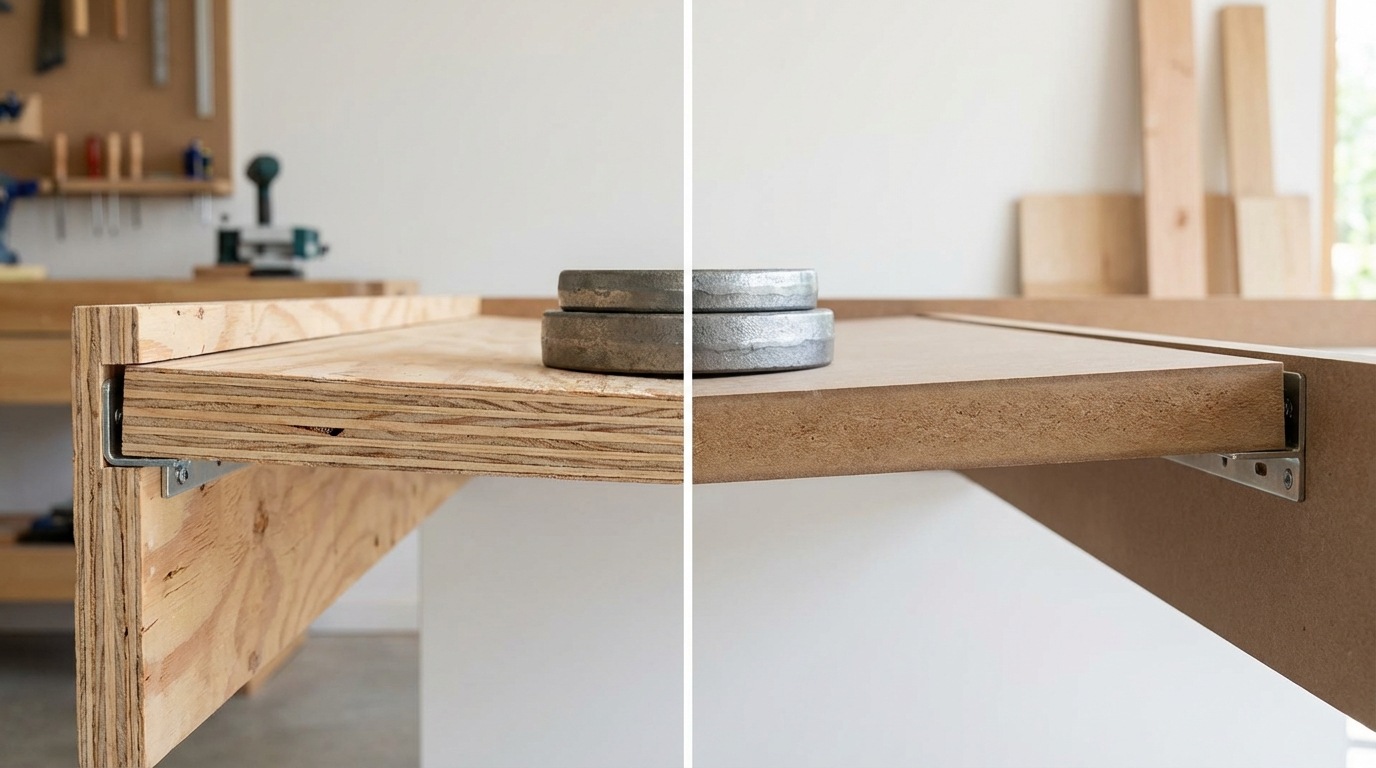
Premium laminate on poor-quality substrate fails faster than budget laminate on quality substrate. Ensure your plywood or MDF is appropriate for the application—BWR grade for wet zones, adequate thickness for structural loads.
Mistake 3: Assuming All Glossy Finishes Are Equal
High-gloss acrylic finishes differ vastly from standard glossy laminates in durability, appearance depth, and price. Clarify exactly what "glossy" means in your quote and get samples.
Mistake 4: Neglecting Edge Treatment Budget
Edge banding often gets budgeted as an afterthought. Quality ABS or PVC edge banding with proper adhesive adds 15-25% to material costs but dramatically extends furniture life, especially in humid climates.
Mistake 5: Choosing Colour from Small Samples
A 4-inch sample looks different from a full wardrobe door. Request larger samples or visit showrooms with full-panel displays. Colours also look different under showroom versus home lighting.
Mistake 6: Not Accounting for Wastage
Standard laminate sheets come in 8x4 feet or 10x4 feet sizes. Your cabinet dimensions rarely optimize these perfectly. Budget 10-15% wastage; complex designs may need 20%.
Mistake 7: Accepting Delivery Without Inspection
Laminate sheets can be damaged in transit. Check every sheet for chips, scratches, and warping before accepting. Document damage immediately; claims later are difficult.
Mistake 8: Using Wrong Adhesive Type
Standard contact cement fails in high-humidity environments. For kitchen and bathroom applications, specify PUR (polyurethane reactive) adhesive or appropriate moisture-resistant alternatives.
Mistake 9: Rushing Installation Timeline
Adhesive needs proper flash-off time before pressing laminate. Rushing this step causes bubbling later. Allow the time your adhesive manufacturer specifies.
Mistake 10: Ignoring Post-Installation Curing
Freshly laminated surfaces shouldn't be stressed or heavily cleaned for 24-48 hours. Inform homeowners to avoid placing heavy items or aggressive cleaning during this period.
Persona-Specific Guidance
For Homeowners: Durability and Maintenance
Do:
- Clean with slightly damp soft cloth; wipe dry immediately
- Use coasters and mats under hot or wet items
- Install felt pads under decorative objects
- Address edge lifting immediately before moisture penetrates
- Keep laminate furniture away from direct sunlight
Don't:
- Use abrasive scrubbers or scouring pads
- Pour water directly on surface (wipe with damp cloth instead)
- Place hot vessels directly on laminate (use trivets)
- Drag heavy objects across the surface
- Use harsh chemicals like bleach or acetone for cleaning
For Carpenters: Cutting and Installation Best Practices
Cut laminate sheets face-up on table saws and face-down on handheld circular saws to minimize chipping on the visible surface. Use 60-80 tooth carbide blades specifically designed for laminates. Score the cut line first with a sharp utility knife for critical edges.
Apply contact adhesive evenly to both surfaces using a short-nap roller. Allow proper flash-off time—adhesive should be tacky but not wet to touch before joining. Once aligned, press from center outward using a J-roller or rubber mallet with wood block to avoid air pockets.
For edge banding, ensure cut edges are clean and dust-free. Pre-heat edge banding if using hot-melt adhesive strips. Apply sufficient pressure during cooling for proper bond. Trim excess with sharp edge trimmer at slight angle to prevent delamination.
At hinge locations, consider reinforcement plates or use appropriate substrate thickness to prevent screw pullout and edge stress.
For Architects and Interior Designers: Specification and Detailing
Specify laminates by: thickness (mm), finish type, pattern/colour code, manufacturer (or equivalent), and application location. Include substrate specifications in your BOQ—don't leave this to contractor discretion.
For wet-zone applications, detail edge sealing requirements explicitly. Specify minimum substrate clearance from floor (typically 50-100mm) for bathroom furniture. Include expansion gap requirements for large laminated panels.
Document finish expectations clearly—glossy surfaces show fingerprints and minor scratches prominently; matte and textured finishes are more forgiving but may look duller in small spaces.
For high-design applications, verify synchronized texture availability (where surface texture aligns with printed pattern) and budget accordingly—these cost significantly more.
For Modular Kitchen and Furniture Manufacturers: Quality Control
Establish incoming inspection protocols: measure thickness at five points per sheet, visual inspection under consistent lighting, moisture content check of substrates before lamination.
Standardize adhesive application parameters: roller nap length, adhesive spread rate (grams per square meter), flash-off time for your climate conditions. Document and train operators on these specifications.
Implement QC checkpoints: pre-lamination substrate inspection, post-lamination adhesion verification, edge banding quality check, final visual inspection before dispatch.
Track customer complaints by failure mode to identify systemic issues. Edge-related failures usually indicate adhesive or edge-banding process problems. Surface bubbling suggests substrate moisture or adhesive application issues.
FAQs
What is the full form of sunmica?
Sunmica does not have a full form—it is simply a brand name that became a generic term in Indian vocabulary. The brand was among the first to popularize decorative laminates in India, and over time, the word came to represent the entire product category. Technically, the product is called "decorative laminate" or "high-pressure laminate (HPL)" in industry terminology. When discussing your project with suppliers, using correct technical terms along with specifications ensures clarity.
What is the difference between sunmica and laminate?
There is no functional difference between sunmica and laminate. Sunmica is a brand name that became so popular in India that people use it generically for all decorative laminates, similar to how "xerox" is used for photocopying regardless of the actual brand. All laminates—whether called sunmica, formica, or any other term—are manufactured using similar processes involving kraft paper, decorative paper, and resin compression. The key differentiators between products are thickness, finish quality, and grade rather than the name used.
Is sunmica waterproof?
The laminate surface itself is highly water-resistant and will not absorb water under normal conditions. However, the complete furniture assembly is not waterproof because the substrate (plywood, MDF, or particle board) underneath absorbs moisture through exposed edges and cut surfaces. Water infiltrating through unsealed edges causes the substrate to swell, leading to laminate lifting and delamination. For wet-zone applications, use moisture-resistant substrates, seal all edges thoroughly, and avoid direct water contact on joints.
How long does sunmica last on furniture?
Well-installed laminates on quality substrate typically last 15-25 years under normal household use. Longevity depends heavily on installation quality (especially adhesive and edge sealing), substrate condition, ambient humidity levels, and maintenance practices. Kitchen cabinets near cooking zones may show wear earlier due to heat and grease exposure. Furniture in coastal humid climates needs more attention to edge sealing. Regular cleaning with appropriate methods and promptly addressing any edge lifting significantly extends service life.
Can damaged laminate be repaired?
Minor repairs are possible for small chips and edge lifting. Surface chips can be disguised using colour-matched laminate repair paste or wax sticks, though results vary. Lifted edges can sometimes be re-adhered by carefully applying fresh contact adhesive and pressing down. However, significant damage like large bubbles, severe edge swelling, or widespread delamination typically requires replacing the affected panel entirely. Unlike painted surfaces that can be repainted or veneers that can be refinished, laminates do not offer restoration options for major damage.
What thickness of laminate should I choose?
For most furniture applications in Indian homes, 0.8mm thickness works well for wardrobes, bedroom furniture, and low-traffic areas. Kitchen cabinets and surfaces experiencing regular contact benefit from 1mm thickness for added durability. Commercial applications and high-abuse areas should consider 1mm to 1.5mm options. Thicker is not always better—1mm+ laminates are stiffer and harder to form around curves. Post-forming applications requiring bends need specifically designated grades regardless of thickness. Match thickness to abuse level rather than defaulting to maximum.
Why does laminate show white edges after some time?
White edges appearing on laminate surfaces indicate moisture infiltration into the substrate. When water enters through unsealed edges—from cleaning, spills, or ambient humidity—the MDF or particle board absorbs it and swells. This expansion stresses the laminate bond, causing visible whitening at edges before eventual lifting. Prevention requires thorough edge sealing using PU sealant and proper edge banding. If whitening has started, the process may be irreversible; early intervention involves removing moisture source and sealing exposed edges to prevent further damage.
Is glossy or matte finish better for kitchens?
Matte and textured finishes are generally better for kitchen applications. Glossy surfaces show fingerprints, water spots, and cooking residue prominently, requiring constant cleaning to maintain appearance. They also scratch more visibly. Matte finishes hide fingerprints and minor wear while being easier to maintain. However, glossy finishes in high-gloss acrylic versions offer a premium modern aesthetic that some homeowners prefer despite maintenance demands. Consider your cleaning habits and tolerance for visible marks when deciding; rental properties and busy households typically fare better with matte options.
What adhesive should be used for laminate installation?
Standard contact cement (rubber-based) works for dry-zone applications in moderate climates. For kitchen, bathroom, or humid-climate installations, specify PUR (polyurethane reactive) adhesive or other moisture-resistant formulations. The adhesive must be applied evenly to both surfaces—substrate and laminate back—using appropriate rollers for consistent coverage. Flash-off time varies by product and climate; follow manufacturer specifications rather than rushing. Using wrong adhesive type is a common cause of laminate failure within the first few years, especially in coastal and monsoon-prone regions.
How do I match laminate colour to existing furniture?
Exact colour matching between different batches or manufacturers is extremely difficult. Even same-manufacturer sheets from different batches may show slight variation. For additions to existing furniture, try to source sheets from the same batch or manufacturer's colour code as the original. Request physical samples and compare under the same lighting conditions where furniture will be installed. If exact match is impossible, consider deliberate contrast as a design choice rather than attempting a close match that highlights differences. Finishes (matte vs glossy) also affect colour perception significantly.
Can laminate be applied on old furniture?
Yes, laminate can be applied over existing furniture if the substrate is structurally sound and the surface is properly prepared. Remove old laminate completely or sand existing surfaces to create adhesive-friendly texture. Fill any dents or holes with appropriate wood filler and sand smooth. Ensure the surface is clean, dry, and dust-free before applying adhesive. Old furniture with moisture damage, insect infestation, or structural weakness should not be re-laminated as problems will recur. The quality of substrate preparation directly determines how long the new laminate will last.
What is the difference between HPL and LPL?
HPL (High-Pressure Laminate) is manufactured at pressures exceeding 1000 PSI with multiple kraft paper layers, creating a denser, more durable product typically 0.8mm-1.5mm thick. LPL (Low-Pressure Laminate) uses lower compression and fewer layers, resulting in thinner (0.6mm-0.8mm) and less durable sheets at lower cost. HPL suits high-abuse applications like kitchen countertops and commercial furniture. LPL works adequately for light-use furniture and decorative panels. Most quality Indian furniture uses HPL; LPL appears more commonly in budget segments and pre-laminated boards.
Disclaimer: This content is provided for general informational purposes based on industry practices and publicly available information. Product specifications, standards, prices, and availability may vary by manufacturer, region, and time. Readers should independently verify details with manufacturers, dealers, or qualified professionals before making purchase or construction decisions.
Want Plywood Suggestions?
Share a few details and a VIR MDF specialist will suggest suitable brands and connect you to responsive dealers.