MDF Cut List Template (Free): How to Plan Sheets, Reduce Waste & Save Money
Download a cut-list template and learn a simple workflow to plan MDF sheets, reduce wastage, and keep carpentry costs under control.
Quick Decision Summary
Use this free MDF cut list template to map parts onto standard 8x4 ft sheets, slashing waste from 25% to under 10% and cutting material costs by 15-30% per project.
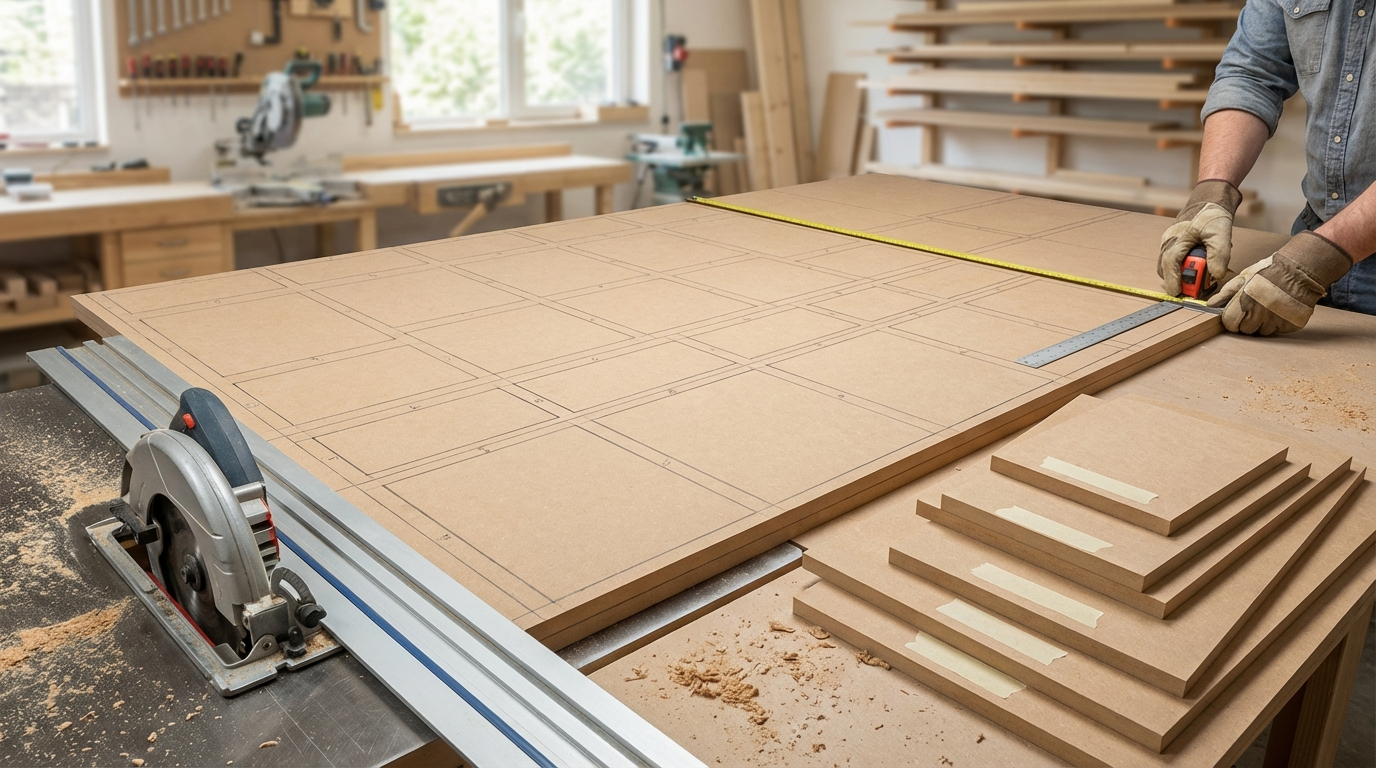
If you're in a hurry, list all wardrobe or kitchen parts with dimensions first, group by size and thickness, then sketch layouts on 2440x1220mm sheets accounting for 4mm saw kerf. Recreate the template below in a notebook or spreadsheet—fit maximum pieces per sheet without overlaps. In Indian sites, this prevents monsoon-delayed shortages and overbuys from humid storage warping measurements. Verify totals against supplier sheet stock for same-day pickup.
- Choose this if: Building modular kitchens, wardrobes, or TV units with 10+ sheets; tight budgets in tier-2 cities; CNC or panel saw workflows.
- Avoid this if: Single-sheet prototypes or hand-sawn irregular shapes—measure direct instead.
What Is an MDF Cut List Template?
An MDF cut list template is a simple planning sheet that lists every part needed for a project, with exact lengths, widths, quantities, and thicknesses. It then shows how to nest those parts onto full MDF sheets (typically 8 ft x 4 ft or 2440x1220mm) to minimize offcuts.
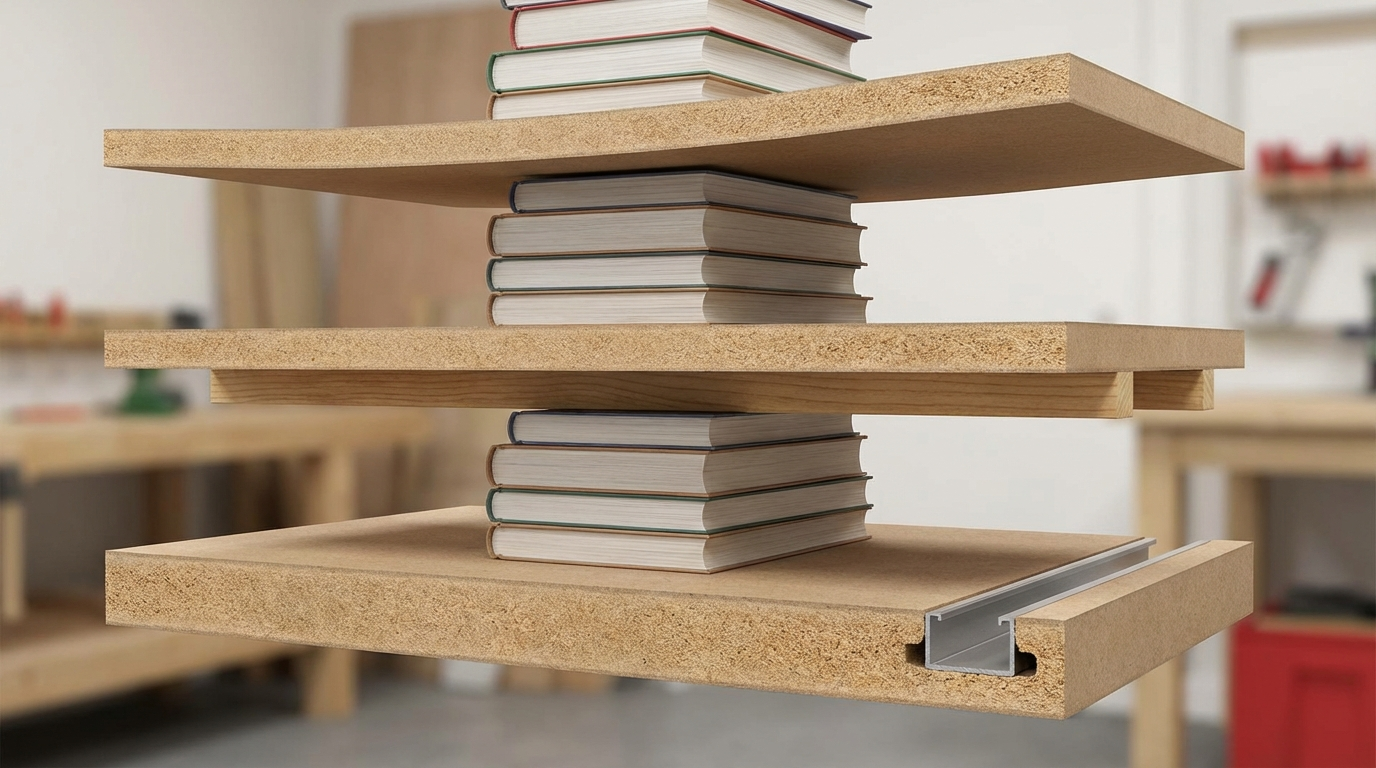
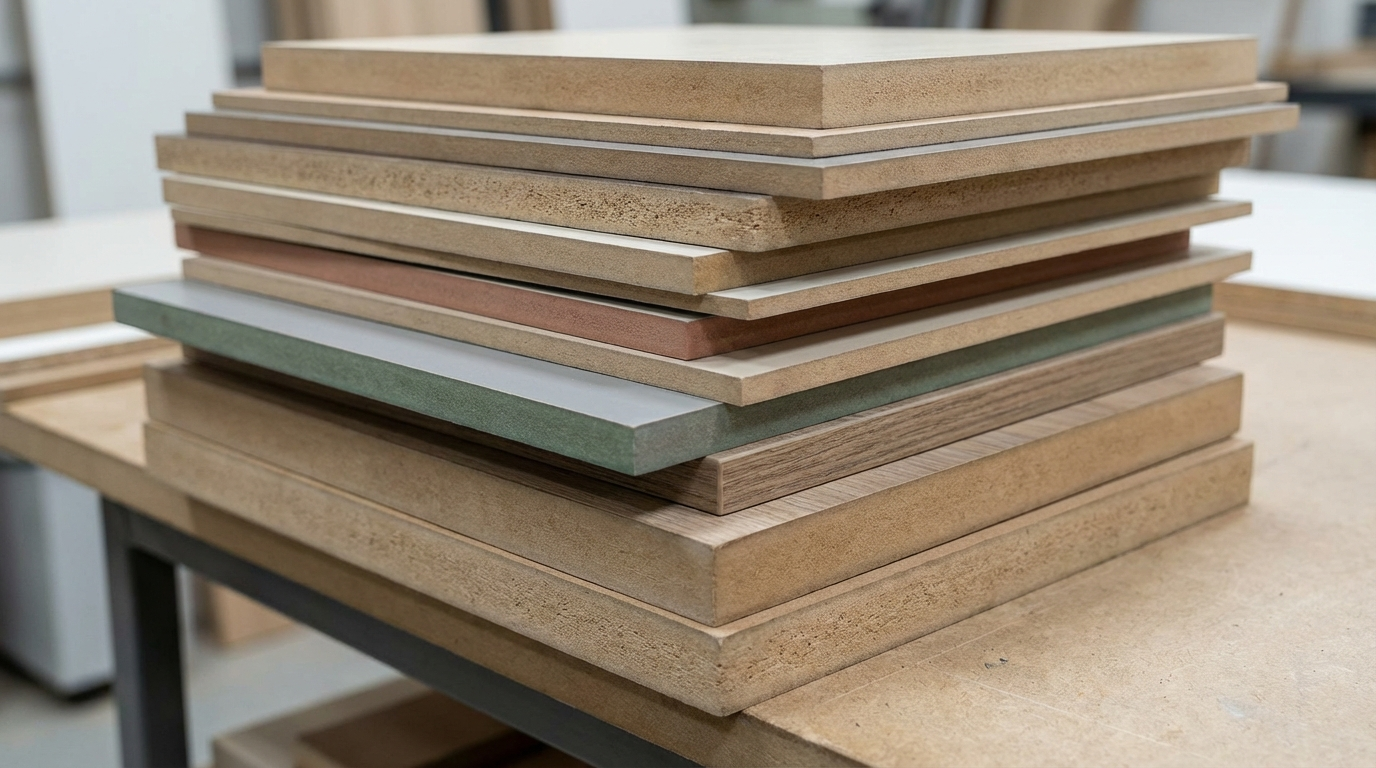
This tool fits standard MDF boards used in Indian carpentry for shutters, shelves, partitions, and cabinets. Unlike plywood, MDF cuts cleanly with no grain tear-out, but planning prevents edge chipping from poor nesting. Templates handle variations like 16mm for shelves or 6mm for backs, grouping similar sizes for efficiency.
It's not software— just a table you recreate on paper, Excel, or phone notes. Core columns: Part Name, Qty, LxW (mm), Thickness, Sheet Assignment, Notes (e.g., grain direction if laminated).
Why Cut List Planning Matters in Indian Homes and Sites
In India, MDF sheets cost vary by city and thickness, but waste adds 20-40% to bills—critical during monsoons when logistics spike and storage humidity warps unprotected boards. Poor planning leads to rushed cuts, mismatched parts, and extra trips to suppliers in humid coastal areas like Mumbai or Chennai.
Site realities amplify issues: dust from cutting clogs panel saws, carpenters overlook kerf (3-5mm per cut), and coastal salt air accelerates swelling on exposed edges. A good cut list ensures exact sheet buys, reduces transport loads, and fits modular workflows for wardrobes in high-rise apartments.
Practical payoff: A 20-sheet wardrobe project drops from Rs 25,000+ material to under Rs 20,000 by nesting efficiently, leaving scraps for fillers instead of landfill.
How much MDF waste is normal without a cut list?
Without planning, expect 25-40% waste on MDF projects—offcuts too small for reuse pile up fast. This jumps to 50% in sloppy hand-sawing or ungrouped parts. With a template, drop to 5-15% by nesting rectangles tightly.
Nuance: Thicker 18-25mm boards waste more value per sq ft, so prioritize them. In monsoons, wet offcuts swell uselessly. Check by totaling part area vs sheet area: aim for 85%+ utilization. Next, measure twice before marking sheets.
What's the standard MDF sheet size in India?
Standard is 8x4 ft (2440x1220mm), available in thicknesses from 3mm to 25mm. Variations like 6x4 ft exist for exports, but local suppliers stock 8x4 primarily.
Conditions: Coastal depots may warp slimmer 3-6mm sheets; verify flatness on-site. For CNC, confirm exact dimensions as tolerances vary (±2mm common). Step: Ask supplier for "IS:12406 compliant" sizing and stack height limits for transport.
How to Create an MDF Cut List in 5 Steps
- List All Parts: From design drawings, note every piece: e.g., 2 wardrobe shutters at 2000x600x18mm. Include allowances: +2mm for edge banding.
- Group by Size/Thickness: Sort identical parts together. Separate laminated vs plain MDF.
- Calculate Total Area: Parts area ÷ sheet area (2.44x1.22=2.98 sqm) = sheets needed +20% buffer for kerf/errors.
- Nest on Sheets: Sketch rectangles on paper grid (scale 1:50). Rotate for fit, leave 20mm borders. Use 4mm kerf gaps.
- Verify and Buy: Double-check quantities, add 1-2 extra sheets. Label sheets A/B for cutting sequence.
Common failure: Skipping kerf leads to 10cm short parts. Prevent by dry-running saw settings.
Free MDF Cut List Template
Copy this table into Excel or a notebook. Fill for your project, then use column G to assign sheets.
| Part Name | Qty | Length (mm) | Width (mm) | Thickness (mm) | Area per pc (sqm) | Sheet # | Notes |
|---|---|---|---|---|---|---|---|
| Wardrobe Side | 2 | 2000 | 450 | 18 | 0.90 | A | Vertical grain if lam |
| Shelf | 4 | 900 | 400 | 18 | 0.36 | A,B | Edge band all sides |
| Door | 4 | 1900 | 550 | 18 | 1.045 | B,C | CNC routed profile |
Example total for above: 3 sheets at 85% use. Adjust for your kitchen/TV unit.
Price Impact: How Waste Drives Up MDF Costs
MDF runs typically Rs 800-2500 per 8x4 sheet, varying by thickness (3mm low, 25mm high), density (700-850 kg/m3), moisture resistance, city (Delhi cheaper than Mumbai), and logistics. Waste amplifies: 20% offcut on 10 sheets adds cost of 2 full sheets.
Cost drivers: Thicker boards pricier per sqm; laminated adds 20-30%; edge treatments extra. In monsoons, rushed buys hike 15%. Budget example: Wardrobe (20 sqm parts) needs 8 sheets base—poor nesting buys 11 (+37%).
Quote checklist: Specify "16mm MR grade, 2440x1220, no warp"; ask sheet/sqm rate + cut waste estimate; compare 2 suppliers.
How to estimate sheets needed for a wardrobe?
Sum part areas, divide by 2.98 sqm/sheet, round up +15% buffer. E.g., 25 sqm parts = 11 sheets.
India nuance: Coastal humidity demands MR grade; add buffer for warped arrivals. Verify: Physically stack parts on floor to mock sheet fit. Next, factor kerf: each cut loses 4mm x length.
Common Mistakes in MDF Cut List Planning (and Fixes)
- Mistake 1: Forgetting saw kerf—parts come short. Fix: Add 4mm per cut in layout.
- Mistake 2: No thickness grouping—forces mixed-sheet cuts. Fix: Sort first, buy per batch.
- Mistake 3: Ignoring edge banding allowance—gaps show. Fix: +1-2mm on edges.
- Mistake 4: Overlooking transport damage in humid routes. Fix: Buy local, inspect on arrival.
- Mistake 5: Linear measuring only—no area totals. Fix: Calculate sqm to predict sheets.
- Mistake 6: No buffer sheets—monsoon delays kill timelines. Fix: +10% extras.
- Mistake 7: Hand-sketching without scale—overlaps hidden. Fix: Grid paper at 1:20.
- Mistake 8: Post-cut adjustments ignored (e.g., hinge recesses). Fix: Note in template.
- Mistake 9: Coastal storage without cover—warps list accuracy. Fix: Flat stack under tarps.
Failure Modes and Fixes
- Symptom: Short parts mid-project. Cause: Kerf unaccounted. Prevent: Test cut scrap. Fix: Trim fillers from offcuts.
- Symptom: Sheet shortage Day 2. Cause: Poor nesting. Prevent: 90% utilization goal. Fix: Redesign or buy half-sheets.
- Symptom: Chipped edges on cuts. Cause: Dull blade/dust. Prevent: Clean saw, score first. Fix: Extra edge banding.
- Symptom: Warped measurements. Cause: Monsoon humidity. Prevent: Acclimatize 48hrs. Fix: Sand and seal.
- Symptom: Mismatched thicknesses. Cause: Ungrouped list. Prevent: Color-code template. Fix: Shim or remake.
- Symptom: High waste scraps unusable. Cause: No rotation trials. Prevent: Try 90° flips. Fix: Use for blocks/packing.
- Symptom: Screw hold fails post-install. Cause: End-grain cuts. Prevent: Orient sides properly. Fix: Insert plugs.
Decision Framework Table
| Project Condition | Recommended Approach | What to Verify |
|---|---|---|
| Wet kitchen zone | HDFWR sheets, 18mm+, sealed edges | Moisture content <10%; MR label |
| Coastal high humidity | MR grade, nest tightly, cover stacks | Flatness test; recent batch |
| Heavy use wardrobe | 18-25mm, laminated faces | Density 750+kg/m3 feel; screw test scrap |
| Tight budget | 12-16mm plain, max nesting | Per sqm rate; waste under 10% |
| CNC workflow | Standard 2440x1220, vector export list | Tolerance ±1mm; dust extraction |
| Fast delivery site | Local supplier, pre-cut option | Stock check; 24hr turnaround |
| High scratch risk (kids) | Prem-lam, 1mm PVC edge | Scratch test with key; finish type |
Should I use software or manual template for cut lists?
Manual template suffices for under 20 sheets—free and site-ready. Software like CutList Optimizer shines for 50+ complex nests.
Trade-off: Apps auto-nest but need laptop; paper works offline in dusty sites. India tip: Monsoon power cuts favor notebooks. Start manual, upgrade if repeating projects. Check: Time a sample nest both ways.
Quality Checks You Can Do Without Lab Tests
Before Buying: Stack sheets flat—tap edges for hollow sounds (delam risk); press center for sag; sniff for chemical off-odors. Ask: Batch date? Storage cover? Return policy on warps.
After Cutting: Measure 5 parts vs list (±2mm ok); check edges perpendicular (90° square); no raised fibers means good blade.
After Install: Torque screws evenly—no pull-out; wipe edges daily first week; monitor swelling in humid corners.
Red flags: Surface scratches pre-cut, uneven thickness by caliper, dust clumps inside cuts.
Tips by User Type
Homeowners: Insist on seeing filled cut list pre-buy—verify sqm totals match quote. Durability: Seal all edges yourself; avoid wet mops near baseboards. Don't: Skip buffer sheets.
Carpenters: Mark sheets with chalk grid first; cut laminated face-up to avoid chips. Fastening: Pre-drill ends; use 35mm confirms. Handling: Carry vertical in monsoons to drain water.
Architects/Designers: Spec "nesting optimized per 2440x1220" in drawings; detail kerf in notes. Wet zones: HDFWR + full edge band. Logic: Balance 16mm strength vs 12mm weight savings.
OEM/Modular Makers: Template-ize per model for repeatability; QC: Weekly nest audits. Reduce complaints: Label parts A1/B2; train on acclimatization.
Can I reduce MDF waste below 5%?
Yes, under 5% possible with perfect nesting on uniform parts, but aim 8-12% realistically including kerf.
Conditions: Rectilinear designs excel; curves waste more. Coastal: Dry boards first. Check: Photo layouts pre-cut; track % per project. Next: Practice on scrap sheets.
Does edge banding affect cut list planning?
Yes—add 1-2mm width allowance per banded edge to avoid tight fits post-application.
Nuance: PVC bands swell in humidity; melamine thinner. India sites: Band after cutting to hide chips. Verify: Mock one part; measure swell after 24hrs humid exposure.
FAQs
What if my design has curved parts?
For curves, list as rectangles with +10% area buffer—cut rough large, trim precise. Straight parts first in nesting to fill corners. In Indian modulars, limit curves to doors; use router templates. Monsoon tip: Cut dry to avoid tear-out on softened edges. Always leave 50mm waste zones around curves for maneuvering.
How do I handle multiple thicknesses?
Dedicate full sheets per thickness to avoid mix-ups—group 18mm shelves on one, 6mm backs on another. Calculate separate sheet counts. Site reality: Carpenters err-swap; label boldly. Buffer: Buy odd thicknesses in halves if available locally.
Is there a difference for laminated vs plain MDF?
Laminated needs face-up cutting to prevent print damage; plan nests accordingly. Plain MDF chips easier—score lines first. Both use same template, but note "lam face" in columns. Coastal humidity lifts laminates faster—seal edges same day.
How many extra sheets for errors?
Add 1-2 extras (10-15%) for small projects, 20% for large/CNC. Monsoon sites: Double if transport >50km. Track past jobs: If your waste averages 12%, buffer covers it. Don't overuse—extras tie capital.
Can carpenters use this without Excel?
Yes—print or hand-draw the table on A3 paper. Use graph paper for nesting sketches. Indian workshops: Chalkboard version for teams. Verify fits by laying sticks on floor scaled 1:10.
What's kerf and why include it?
Kerf is material lost to saw blade width (3-5mm). Ignore it, parts shrink 10-20cm total. Measure your blade; add half-kerf per edge in dimensions. Panel saws thinner kerf than circular—test first.
Does this work for HDF or plywood too?
Yes—same template, adjust for plywood grain (align parts parallel). HDF denser, less chip but same nesting. India: Plywood warps more in humidity—nest tighter. Verify sheet size match.
How to store cut sheets on site?
Flat stack under tarps, elevated off ground, ventilated sides. Monsoon: Daily check for water; coastal salt—plastic wrap ends. Max 7 days pre-install to avoid warp.
Free template for kitchen cabinets?
Use the same table: List shutters, frames, toe kicks separately. Example: 4x 700x1800x18mm doors need 3 sheets nested with shelves. Prioritize tall parts vertically. Add column for hardware cutouts.
Disclaimer: This content is provided for general informational purposes based on industry practices and publicly available information. Product specifications, standards, prices, and availability may vary by manufacturer, region, and time. Readers should independently verify details with manufacturers, dealers, or qualified professionals before making purchase or construction decisions.Want Plywood Suggestions?
Share a few details and a VIR MDF specialist will suggest suitable brands and connect you to responsive dealers.