MDF Shelf Span Guide: How to Prevent Sagging (With Simple Rule-of-Thumb Table)
Prevent sagging MDF shelves with a simple span guide, thickness suggestions, and reinforcement options that don’t ruin the look.
Quick Decision Summary
For most Indian wardrobes and TV units, limit MDF shelf spans to 600-750mm at 18mm thickness under light loads to avoid sagging.
If you’re in a hurry: Opt for 18mm or thicker MR-grade MDF for spans up to 700mm with end supports and light loads like books or dishes (under 15kg per meter). Add a center cleat or metal bracket for spans over 600mm, especially in humid areas. Always edge-band fully and acclimatize boards on-site for 48 hours before cutting. This keeps shelves flat for 5+ years in typical monsoon conditions without visible deflection.
- Choose 18-25mm thickness if spans exceed 500mm or loads include kitchenware.
- Avoid spans over 800mm on standard MDF without reinforcement, even at 25mm.
What This Material/Option Actually Is
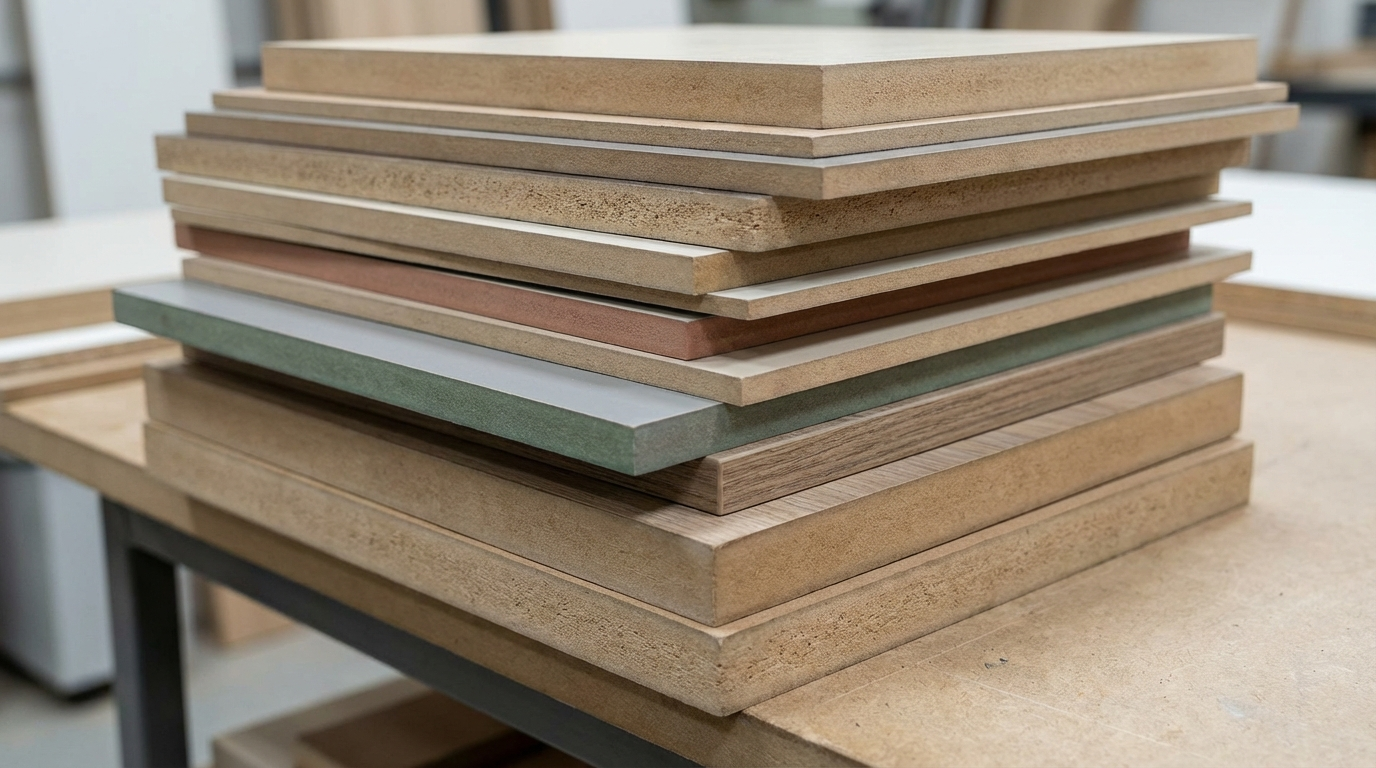
MDF shelves refer to horizontal supports cut from Medium Density Fiberboard, an engineered panel made by compressing wood fibers with resins under heat and pressure. Density typically ranges 650-800kg/m³, making it smooth for laminates or paint but prone to deflection under sustained loads without proper design.
In interior workflows, these appear in wardrobes, kitchen cabinets, bookshelves, and display units. Variations include moisture-resistant (MR) MDF for humid zones, high-density (HDF) for extra strength, or pre-laminated versions for quick finishes. Shelf depth usually 250-350mm, with spans between vertical supports determining sag risk.
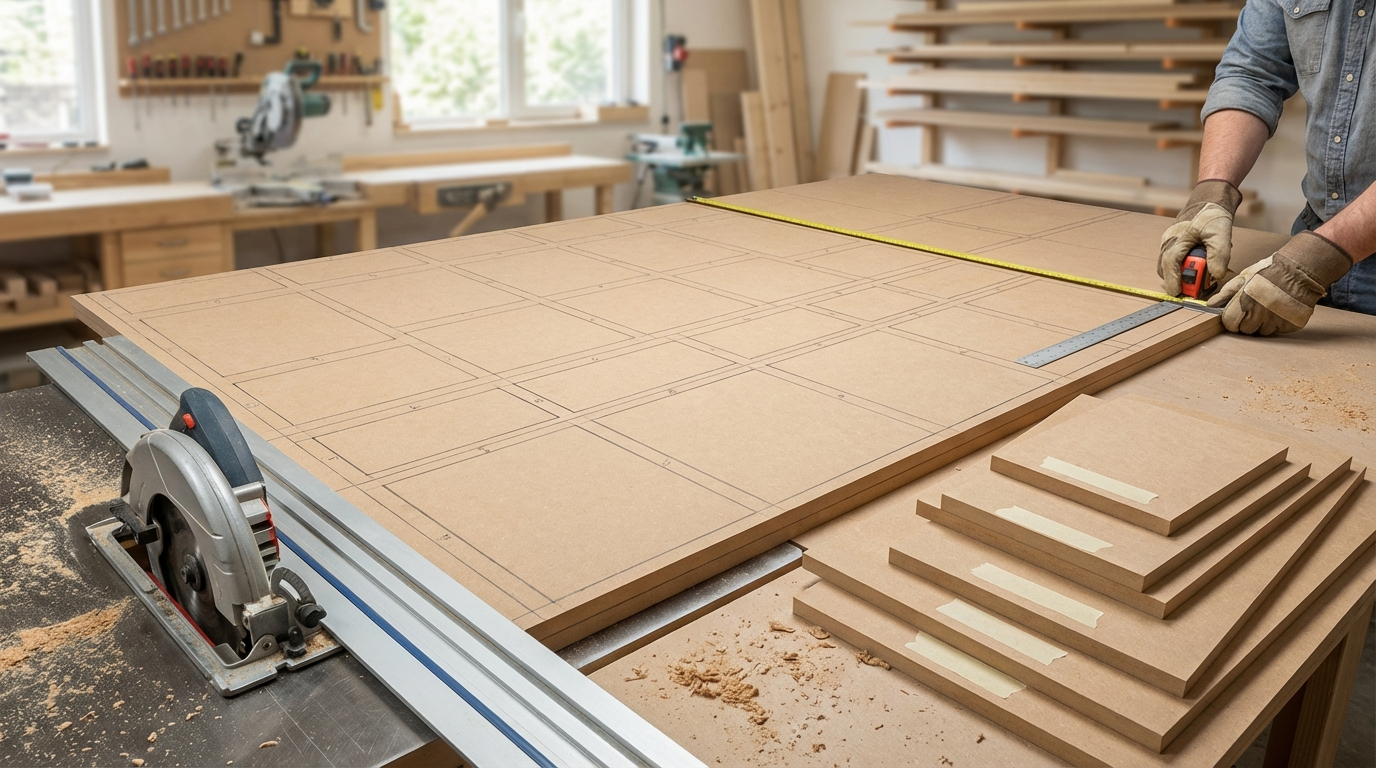
It fits modular setups where CNC routing creates precise notches, but demands edge banding to seal cut edges against moisture pickup.
Why It Matters in Indian Homes and Sites
In Indian climates, monsoon humidity (70-90% RH) and coastal salt air soften MDF fibers over time, accelerating sag by 20-30% compared to dry zones. Poor storage during transport—from godowns to sites—leads to warping before installation.
Site realities like uneven walls, hasty workmanship, or overloading with heavy utensils cause early failure. A sagging shelf not only looks poor but risks collapsing, damaging contents and requiring rework. In wardrobes, it misaligns doors; in kitchens, it endangers dishes.
Practical impact: unchecked spans lead to 5-10mm deflection in 2-3 years, visible as a "smile" curve. Proper spans ensure level storage for family heirlooms or daily use.
How to Decide or Do This in 5 Steps
- Measure your span and load: Note distance between supports; estimate load (light: clothes/books <10kg/m; medium: dishes 15-25kg/m; heavy: tools >30kg/m).
- Select thickness by table: Use the rule-of-thumb below; go thicker for humidity or heavy use.
- Check supports: Ensure vertical panels or brackets are plumb; add center support for >600mm.
- Prep and finish: Acclimatize 48hrs, edge-band all cuts, laminate or paint for moisture barrier.
- Install and test: Level shelves, load gradually; monitor after monsoon for 1 month.
Common pitfall: skipping step 2 leads to 50% of complaints. Always prioritize MR-grade in coastal or basement sites.
What thickness of MDF is best for wardrobe shelves?
For standard wardrobes (300mm deep, light clothes load), 18mm thickness works for spans up to 650mm. It balances cost and strength in dry interiors. In humid Mumbai flats, upgrade to 19-22mm MR-MDF to counter moisture-induced softening.
Nuance: thinner 16mm suits kids' rooms with short spans (<500mm), but test screw hold near edges. Next step: measure your carcass width, divide by shelves needed, and cross-check the span table below.
Can 12mm MDF handle bookshelf spans?
12mm MDF limits to 400mm spans under very light loads like decor items. It deflects quickly beyond that. Use only with frequent supports in low-use areas.
Conditions: dry climates, no books over 5kg. For real bookshelves, 18mm minimum. Verify by pressing center after mock-up; if it bows >2mm, shorten span or thicken.
Simple Rule-of-Thumb Span Table
This table gives maximum unsupported spans for typical Indian MDF (700kg/m³ density, MR-grade where noted) at uniform loads. Deflection target: <L/360 (imperceptible). Reduce by 20% for heavy loads or humidity.
| Thickness | Light Load (<15kg/m) | Medium Load (15-25kg/m) | Reinforcement Needed Over |
|---|---|---|---|
| 12mm | 400-500mm | 300-400mm | 400mm |
| 16mm | 500-600mm | 400-500mm | 500mm |
| 18mm | 600-750mm | 500-650mm | 650mm |
| 22-25mm | 750-900mm | 650-800mm | 800mm |
Notes: End supports required; floating shelves halve these. HDF adds 20-30% span capacity.
Practical Use Cases (What Works, What Fails)
| Use Case | Recommended Thickness/Span | Finish Notes | Risk Notes (India-Specific) |
|---|---|---|---|
| Wardrobe shelves | 18mm / 600mm | Pre-lam or PVC foil | Monsoon humidity; use MR |
| Kitchen uppers | 18-22mm / 500mm | Laminate + edge band | Steam/spills; seal edges tight |
| TV unit open shelves | 16-18mm / 700mm | Paint or veneer | Dust accumulation; clean dry |
| Bookshelf | 22mm / 650mm | Melamine | Heavy books; center cleat |
| Display partitions | 12mm / 400mm | Digital print | Low load only; avoid coastal |
How far can shelves span in a kitchen cabinet?
In Indian kitchens, limit to 500-600mm at 18mm for medium loads like spices/plates. Shorter prevents grease-induced sag.
Coastal tweaks: HDFWR for Goa sites. Check: load a sample shelf with 20kg cans; measure deflection after 24hrs.
Shelf Span Decision Framework
Use this table to match conditions to choices. Verify supplier density >700kg/m³.
| Condition | Recommended Spec | What to Verify |
|---|---|---|
| Wet zone (kitchen) | 18mm MR-MDF, 500mm span | Edge seal quality, resin type |
| Coastal humidity | 22mm HDF, center support | WR certification feel (no crumbling) |
| Heavy use (books/tools) | 25mm, brackets every 600mm | Screw hold test on sample |
| Tight budget | 16mm standard, short spans | Density stamp, flatness |
| Fast delivery | Pre-lam 18mm | Acclimatization time |
| High scratch risk | Laminated HDF, 18mm | Surface hardness scratch test |
Failure Modes and Fixes
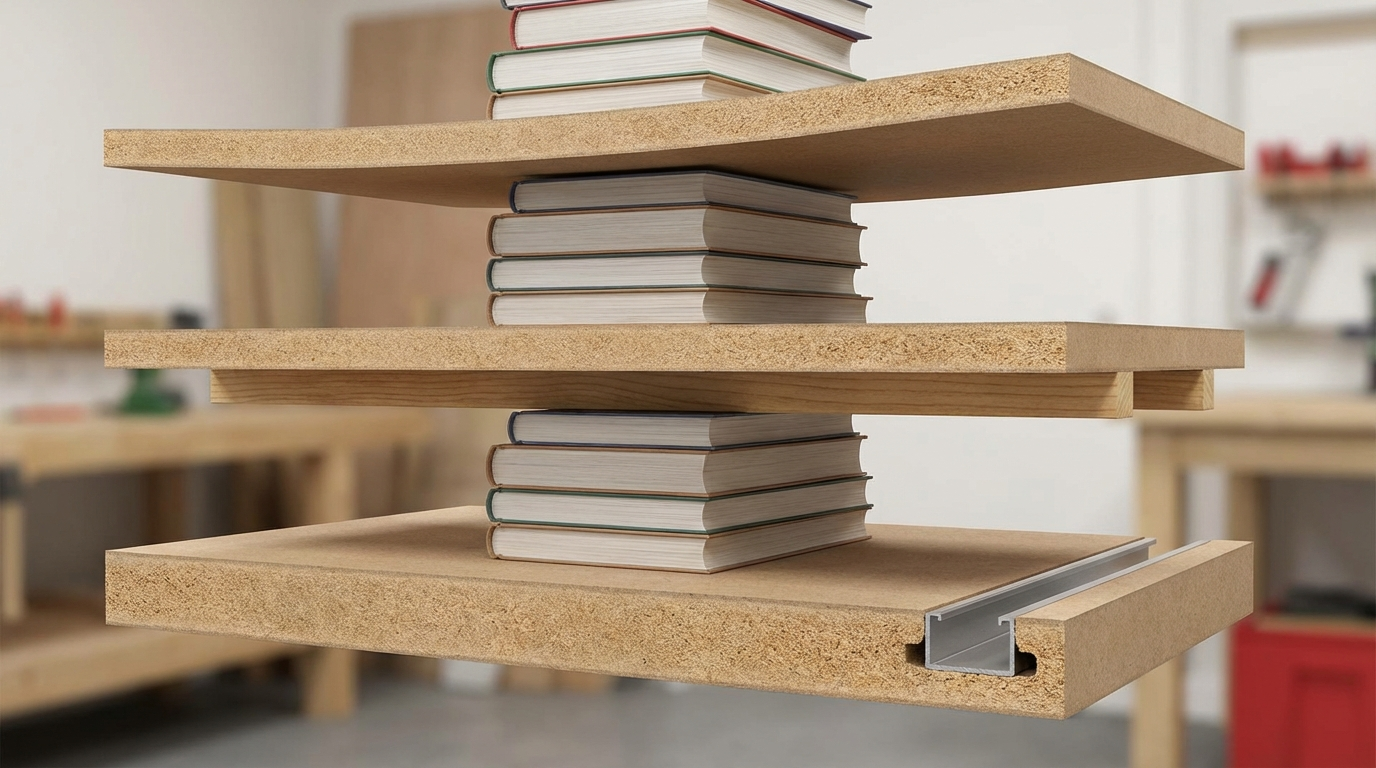
- Sagging center: Symptom: U-shape after 6 months. Cause: span too long/thin board. Prevention: follow table. Fix: add metal cleat underneath.
- Edge swelling: Symptom: wavy ends. Cause: monsoon moisture on cuts. Prevention: full edge banding pre-install. Fix: sand, reseal if minor.
- Screw pull-out: Symptom: loose fittings. Cause: overload near edge. Prevention: use inserts 25mm in. Fix: replace with cam locks.
- Delamination: Symptom: bubbles. Cause: poor resin/humidity. Prevention: MR-grade only. Fix: dismantle, dry, reglue.
- Chipping on load: Symptom: cracks at supports. Cause: impact. Prevention: round edges. Fix: filler + repaint.
- Uneven sag: Symptom: tilt. Cause: wall not plumb. Prevention: level checks. Fix: shim supports.
Why do MDF shelves sag faster in monsoon?
Humidity above 75% RH softens resins, reducing stiffness by 25%. Direct answer: spans shorten 15-20% in wet season.
Conditions: worse on unbanded edges. Next: store vertically covered; install post-monsoon if possible.
Common Buyer Mistakes and How to Avoid Them
- Mistake 1: Choosing 12mm for 800mm spans. Avoid: mock-up test with weights.
- Mistake 2: Ignoring humidity grade in Kerala homes. Avoid: specify MR/HDFWR.
- Mistake 3: No edge banding on cuts. Avoid: band immediately post-CNC.
- Mistake 4: Overloading day 1. Avoid: label max load.
- Mistake 5: Skipping acclimatization. Avoid: 48hrs on-site.
- Mistake 6: Uneven bracket spacing. Avoid: measure twice.
- Mistake 7: Thin boards in coastal godowns. Avoid: inspect storage.
- Mistake 8: No center support for books. Avoid: plan cleats in design.
Quality Checks You Can Do Without Lab Tests
Before buying: Press center of sample board; minimal flex. Ask density, resin %, MR additives. Red flag: visible voids, rough surface.
After cutting: Check edges straight, no fuzz; tap for hollow sounds (bad).
After installation: Level with spirit; load test 1.5x expected; wipe spills immediately.
In India sites: check for termite traces, moisture meter if available (<12%).
How do I test if my MDF shelf will sag?
Load sample with 1.5x expected weight (e.g., 20kg bricks on 600mm span); measure center drop after 24hrs (<1mm ok).
Nuance: repeat in humid box (wet cloth cover). Next: adjust span if over.
Tips for Homeowners, Carpenters, Architects, and OEMs
Homeowners: Do: dust dry, avoid water spills, distribute load evenly. Don’t: stack heavy on one end, overload kids' shelves.
Carpenters: Cut with fine blade, edge-band hot-melt, fasten 40mm from edge, notch hinges deep.
Architects/Designers: Spec spans per table, detail cleats in drawings, insist on MR for wet zones, match finishes to traffic.
OEM/Modular makers: QC every 10th board for flatness, standardize cleat positions, track returns by span/load for tweaks.
Should I use HDF instead of MDF for shelves?
HDF (density >800kg/m³) allows 20% longer spans or thinner boards due to higher stiffness. Direct: yes for heavy/coastal.
Trade-off: costlier, harder to CNC. Verify: compare flex on samples side-by-side.
FAQs
What is the ideal shelf depth for MDF in wardrobes?
250-300mm depth suits most Indian wardrobes, balancing reach and stability. Deeper risks tip-over; shallower wastes space. In humid sites, shallower reduces moisture trap. Pair with 18mm thickness and edge banding for clean lines. Test by stacking clothes; adjust if unstable.
How much weight can an 18mm MDF shelf hold?
Typically 15-25kg uniformly over 600mm span before noticeable sag. Varies by density and supports. Kitchen shelves cap at 20kg/m; exceed needs thicker boards. Always distribute evenly to avoid point loads near edges, common in rushed installs.
Do floating MDF shelves sag more?
Yes, cantilever design multiplies deflection 4-5x vs supported. Limit to 400-500mm at 22mm thickness. Reinforce with hidden brackets. In India, avoid in high-humidity without WR grade, as edge exposure worsens.
Is edge banding enough to prevent moisture sag?
It seals cuts effectively but pair with MR resins for full protection. Apply 2mm PVC or ABS fully around. Monsoon test: expose banded sample to humidity; no swelling ideal. Reapply if chips occur.
What if my shelf starts sagging after installation?
Assess load/span first; add underside cleat or brackets if minor. For severe, replace section. Prevention beats fix—always prototype. Coastal users: check for salt-induced softening.
Can I use 25mm MDF for all shelves to be safe?
25mm handles 800mm+ spans reliably but raises weight/cost 30-40%. Reserve for heavy-duty; 18mm suffices most. Weigh carcass stability too—too heavy strains hinges.
How does CNC routing affect shelf strength?
CNC with 6-8mm bits minimizes fiber damage vs manual saws. Post-route, band edges promptly. Weakens screw hold 10% if not sealed; test pilot holes first.
Are there reinforcements that don't show?
Hidden aluminum channels or plywood ribs under laminate blend seamlessly. Paint-matched cleats work too. Avoid visible brackets in modern designs; recess them.
Does laminate finish add strength to shelves?
Laminate protects surface but adds negligible span strength; rely on core thickness. Thicker paper (0.8mm+) resists scratches better in kids' rooms. Seal joints to block steam entry.
Disclaimer: This content is provided for general informational purposes based on industry practices and publicly available information. Product specifications, standards, prices, and availability may vary by manufacturer, region, and time. Readers should independently verify details with manufacturers, dealers, or qualified professionals before making purchase or construction decisions.Want Plywood Suggestions?
Share a few details and a VIR MDF specialist will suggest suitable brands and connect you to responsive dealers.