MDF Glossary: 50 Terms Carpenters Use (MR, FR, Prelam, Calibration & More)
A practical MDF glossary of terms you’ll hear from dealers and carpenters—MR, FR, calibration, edge banding, density, and more.
Quick Decision Summary
This MDF glossary decodes 50 terms carpenters and dealers use daily, helping you spot quality and avoid site failures.
If you’re in a hurry, focus on these top 10: MR (moisture resistant for humid zones), FR (fire retardant for safety), Prelam (pre-laminated for speed), Calibration (thickness check), Density (board strength clue), Edge Banding (moisture seal), CNC (precise cutting), HDF (denser upgrade), BWR (boiling water resistant), Termite Resistant (pest protection). Use this list to question suppliers on monsoon suitability and screw hold.
- Master these if buying for kitchens or wardrobes in coastal India—prioritize MR grades and edge seals.
- Avoid confusion if new to modular work—check calibration and density first to cut wastage.
What MDF Actually Is
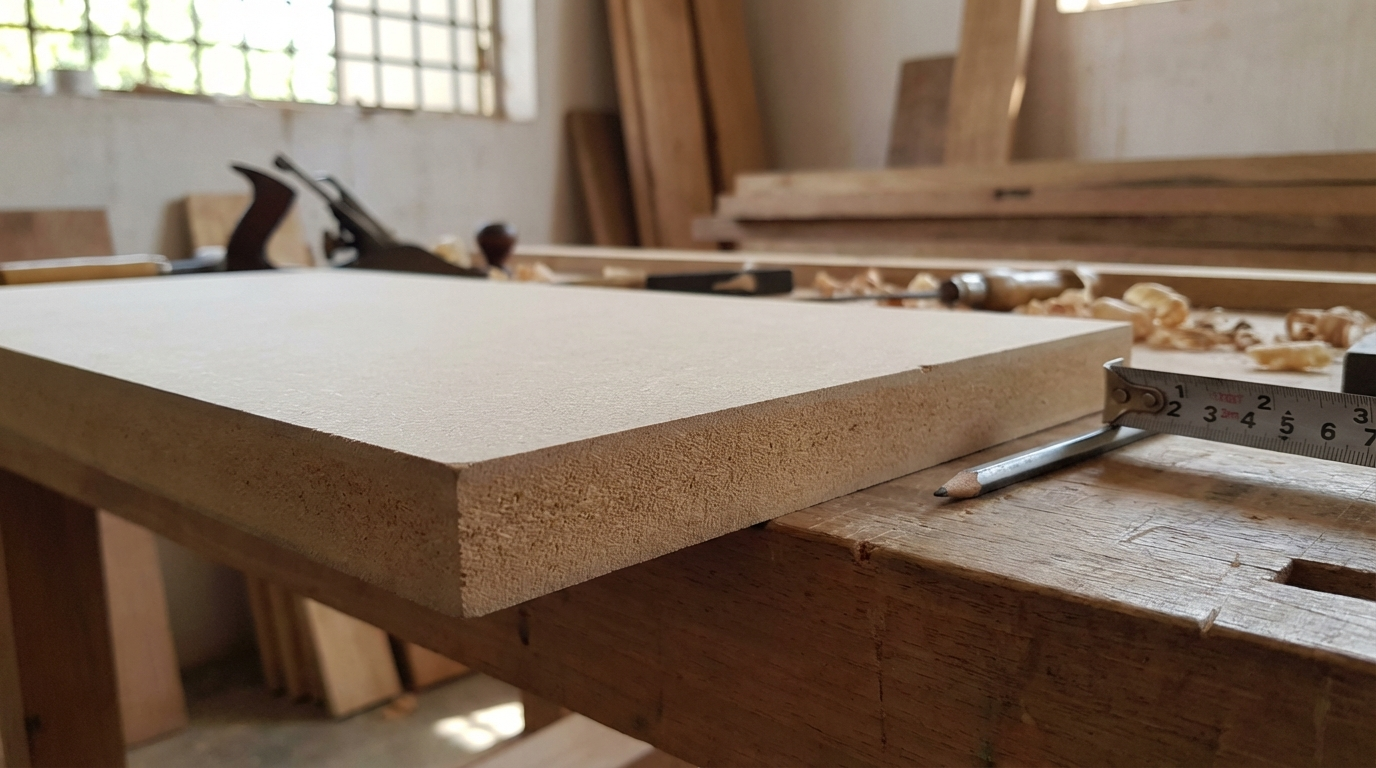
MDF stands for Medium Density Fiberboard, an engineered panel made by breaking wood into fibers, mixing with resin and wax, then pressing under heat and pressure. Density typically ranges 650-850 kg/m³, smoother than plywood for finishes.
It fits wardrobes, cabinets, and partitions where flatness matters. In India, standard thicknesses are 3mm to 25mm, with upgrades like HDF for higher density. Not solid wood, so needs edge protection against moisture.
What is the Difference Between MDF and Particle Board?
MDF uses finer fibers for uniform density and smoother surfaces, ideal for laminates. Particle board has coarser chips, cheaper but rougher and weaker in screw hold. In Indian sites, MDF holds better in humid storage. Check by feeling the edge—smooth means MDF. Next, verify for your project: kitchens need MDF; shelves can use particle board if budget tight.
Why It Matters in Indian Homes and Sites
Monsoon humidity swells unprotected MDF edges by 10-20%, causing delamination in coastal areas like Mumbai or Chennai. Termites attack untreated boards in rural sites. Carpenters use these terms to spec boards that survive transport stacking and site delays.
Practical impact: poor calibration leads to wavy cabinets; low density fails under heavy shelves. Knowing terms helps demand acclimatization—store boards flat, 25-30% humidity for 48 hours before cutting.
Top 10 Terms Everyone Asks About
These frequent queries cover basics carpenters drop casually. Each includes definition, India-use tip, and quick check.
What Does MR MDF Mean?
MR means Moisture Resistant MDF, with extra wax/resin to limit swelling in humid conditions. Use in kitchens or bathrooms, not fully wet zones. In monsoons, it outperforms plain MDF by holding shape better. Confusion: not waterproof—edges still need sealing. Check: ask for thickness swell under 12% after 24-hour soak; tap edge for solid feel.
What is FR Grade in MDF?
FR is Fire Retardant, treated to slow flame spread (often zero-rated). Mandatory near cooking areas or offices. Indian building codes push it for safety. Trade-off: slightly costlier, dustier to cut. Verify: char test—hold flame, no sustained burn. Use with exhaust in workshops.
What is Prelam MDF?
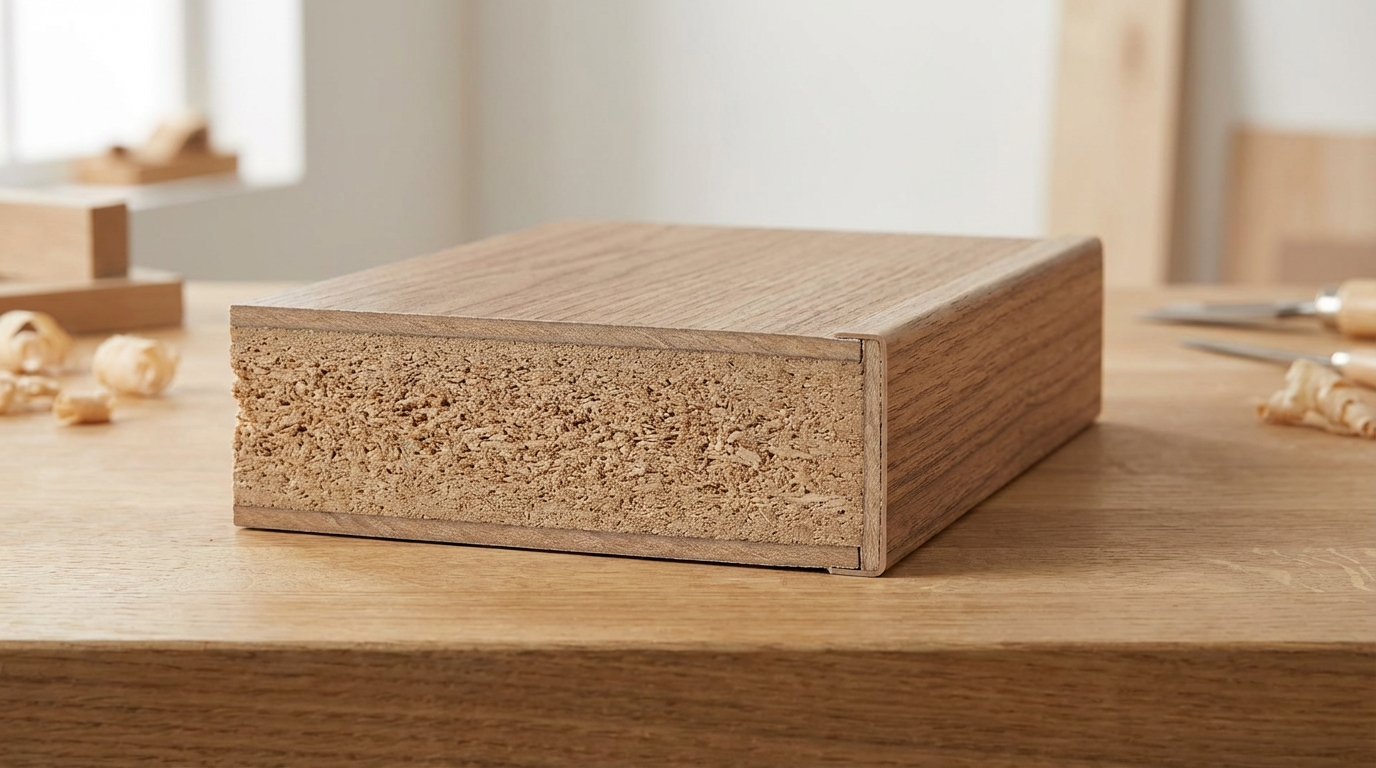
Prelam is Pre-laminated MDF, factory-applied melamine or paper finish on one/both sides. Speeds wardrobes by skipping lamination. In dusty sites, it resists scratches better initially. Pitfall: poor glue delams in heat. Check: scratch with key—minimal mark; peel corners gently.
What Does Calibration Mean for MDF Sheets?
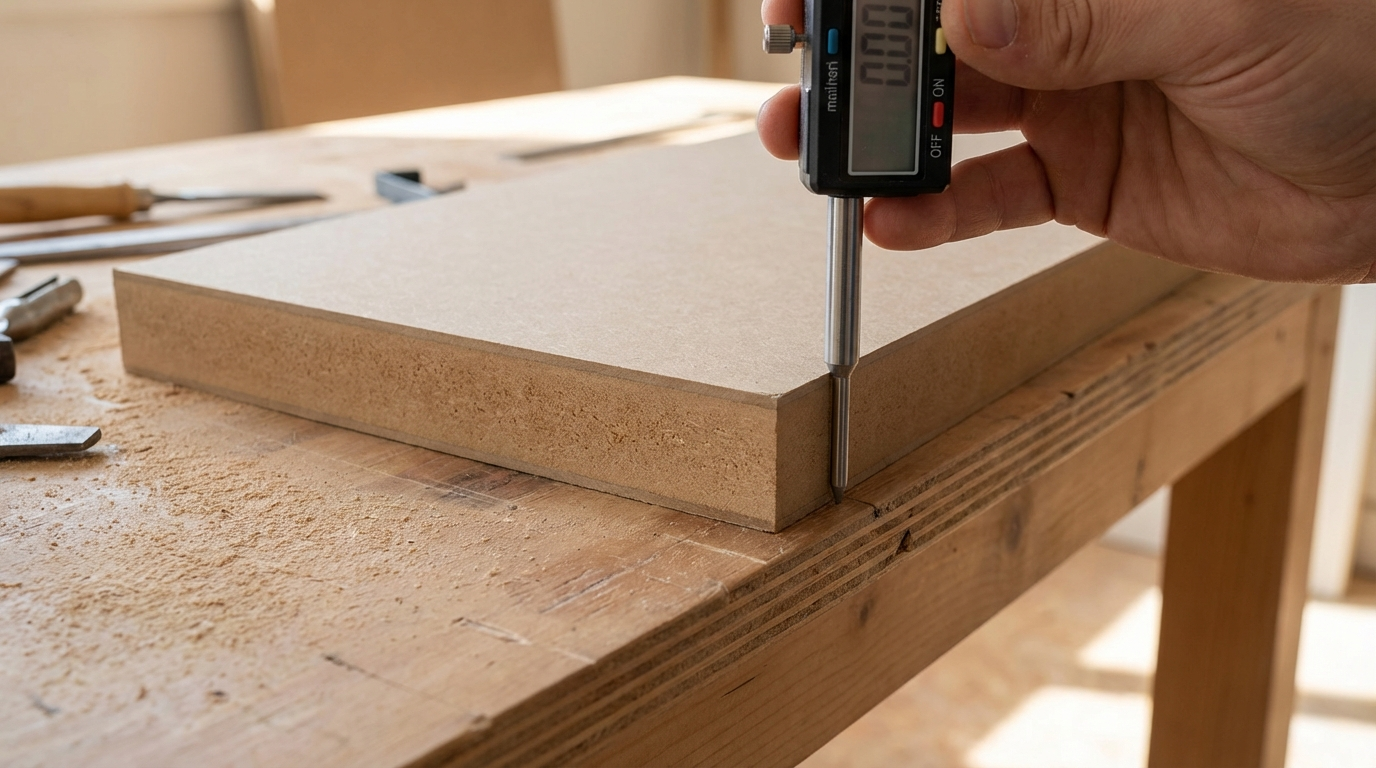
Calibration checks thickness uniformity across the sheet, vital for CNC flatness. Varies ±0.2-0.5mm typically. Uneven causes routing errors in modular kitchens. India tip: insist on calibrated for multi-sheet jobs. Test: stack two sheets, shine light for gaps.
What is Edge Banding?
Edge banding applies PVC/ABS tape to seal cut edges against moisture and aesthetics. 0.8-2mm thick, straight or curved. Essential in humid India to prevent swelling. Hot air/membrane methods common. Check: pull tape—no lift after 24 hours.
Core MDF Types and Grades (Terms 1-10)
- MDF: Medium Density Fiberboard (650-850 kg/m³), base for most interiors.
- HDF: High Density Fiberboard (>850 kg/m³), stronger screw hold for shelves.
- HDFWR: HDF Water Resistant, for semi-wet zones like utility cabinets.
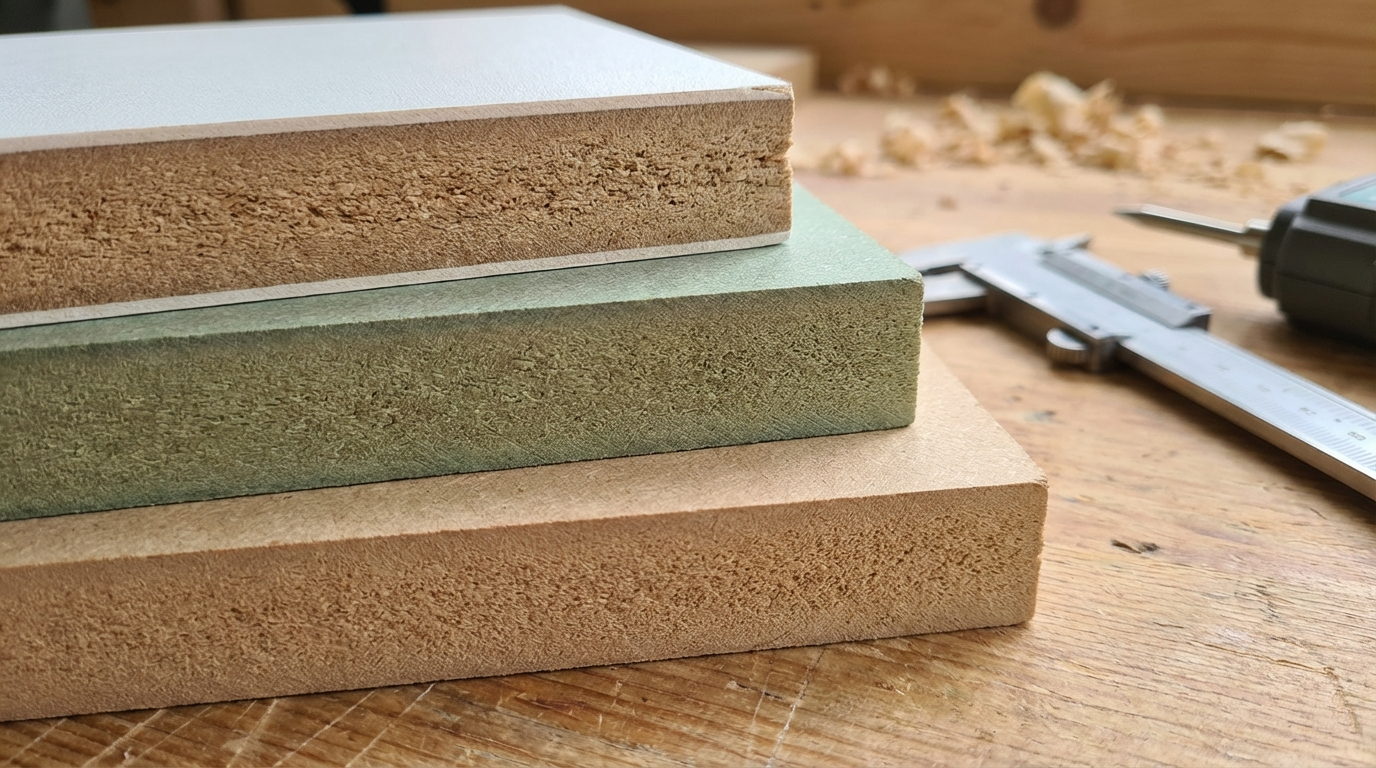
- MR: Moisture Resistant, handles 70-90% humidity without warp.
- BWR: Boiling Water Resistant, survives short boils, for coastal kitchens.
- FR: Fire Retardant, limits burn rate.
- Prelam: Pre-laminated, ready-to-assemble finish.
- Density: Mass per volume; higher resists sagging.
- CNC: Computer Numerical Control for precise cuts.
- Laminate: HPL sheets glued post-factory.
In Indian workflows, stack MR/HDF for monsoon sites; calibrate before CNC.
Why is Density Important for Wardrobes?
Density above 750 kg/m³ ensures shelves don’t sag under 20-30kg loads. Low density chips easily in handling. Coastal carpenters prefer 800+ for screw hold. Weigh a corner piece—feels heavy. Next: match to span length, add supports if over 60cm.
Moisture, Fire, and Resistance Terms (11-20)
- Swell: Thickness increase from water (aim <10%).
- Delamination: Layers separate from moisture/heat.
- Termite Resistant: Chemical-treated against pests.
- BWP: Boiling Water Proof, top wet-zone grade.
- Formaldehyde Emission: E0/E1 for low VOCs, health-safe.
- Thickness Swell: Lab test metric, real-world proxy for MR.
- Acclimatization: Condition boards on-site 48 hours.
- Sealer: Liquid edge coat pre-banding.
- Monsoon Grade: Informal for MR+sealed.
- Coastal Spec: BWR with double edge band.
Monsoon failure: unsealed swells 2x; always acclimatize.
Surface Finishes and Textures (21-30)
- Melamine: Thin paper-resin face, budget finish.
- Veneer: Real wood slice, premium look.
- Texture: Embossed grain feel.
- Gloss: Matte/semi/high shine levels.
- Post-Forming: Wraps curved edges.
- Sanding: Smooths for paint/laminate.
- Anti-Scratch: Nano-coated surfaces.
- PU Finish: Polyurethane topcoat for durability.
- Membrane Press: Vacuum-applied PVC foil.
- HPL: High Pressure Laminate, 0.6-1.5mm thick.
What Finish Works Best for High-Traffic TV Units?
HPL or PU over Prelam resists scratches from remotes/keys. Matte texture hides fingerprints in humid homes. Avoid gloss in kitchens—shows grease. India tip: test rub with cloth dampened in water. Apply extra sealer near hinges.
Edge and Processing Terms (31-40)
- Edge Banding: Tape application (repeat for emphasis).
- Chipping: Tear-out on cuts, use sharp bits.
- Router Bit: Spindle tool for profiles.
- Hinge Boring: Pre-drill for soft-close hinges.
- Dust Extraction: Vacuum during cuts.
- CAD/CAM: Design-to-cut software.
- Tolerance: ±0.5mm cut accuracy.
- Flatness: No bow over 1m.
- Squareness: 90° corners.
- Batch Variation: Sheet consistency check.
CNC tolerances save 20% wastage in modular factories.
Quality, Strength, and Installation Terms (41-50)
- Screw Holding: Strength in fasteners.
- MOR: Modulus of Rupture, bend strength.
- MOE: Modulus of Elasticity, stiffness.
- IB: Internal Bond, glue strength.
- Carcass: Cabinet box frame.
- Shutter: Door panel.
- Modular: Factory-premade units.
- Wastage: Cut-off losses, plan nesting.
- Logistics: Flat-pack handling.
- Shuttering: Formwork panels (MDF variant).
How Do You Check Screw Holding Before Buying?
Push a screw 20mm into edge—resists pull-out. HDF best for repeated door slams. In India, low density fails after 6 months. Test scrap; specify zones in carcass. Next: use inserts for heavy loads.
Decision Framework: Match Specs to Conditions
Use this table to pick terms/grades for your site. Columns guide verification.
| Site Condition | Recommended Terms/Grades | Verify Checklist |
|---|---|---|
| Monsoon humidity (80%+) | MR, BWR, HDFWR, double edge banding | Acclimatize 72hrs; swell test scrap; sealed edges |
| Coastal salt air | Termite Resistant, FR, sealer + banding | Flatness check; no white efflorescence |
| Heavy use kitchen | HDF (800+ density), HPL finish, screw hold zones | CNC tolerance ±0.3mm; MOR proxy bend test |
| Tight budget wardrobe | Prelam MR, melamine, single banding | Calibration uniform; batch match colors |
| Fast modular delivery | CAD/CAM, prelam carcass/shutters | Squareness gauge; dust-free cuts |
| Scratch-prone kids' room | Anti-scratch PU, matte texture, PU sealer | Key scratch test; easy clean |
Two-Minute Comparison: Key MDF Upgrades
| Grade | Strength Gain | Cost Driver | Best For |
|---|---|---|---|
| Plain MDF | Baseline screw hold | Thickness | Dry storage units |
| MR | 50% less swell | Resin add | Monsoon wardrobes |
| HDF | 30% denser | Density | Sagging shelves |
| BWR | Boil resistant | Premium resin | Coastal sinks |
| FR | Fire slow | Chemical | Office partitions |
Choose MR for most India homes; upgrade HDF if spans long.
Common Mistakes and How to Avoid (8 Key Ones)
- Mistake: Skipping acclimatization—boards warp. Avoid: 48hrs site storage, fans if humid.
- Mistake: No edge banding—swells in monsoon. Avoid: Band all cuts same day.
- Mistake: Ignoring density—shelves sag. Avoid: Weigh sample, aim 750+.
- Mistake: Dull CNC bits—chipping. Avoid: Clean bits daily, upcut for laminates.
- Mistake: Mixing batches—color mismatch. Avoid: Tag sheets, check calibration.
- Mistake: Over-screwing—cracks. Avoid: Pilot holes, zones marked.
- Mistake: Gloss in kitchens—sticky. Avoid: Matte for grease zones.
- Mistake: No dust extraction—health risk. Avoid: Mask + vacuum always.
Failure Modes and Fixes
- Symptom: Edge swell. Root: No banding/moisture. Prevent: Seal + band. Fix: Sand, re-band; replace if >5mm.
- Symptom: Delamination. Root: Poor resin/humidity. Prevent: MR grade. Fix: Glue clamp; often scrap.
- Symptom: Screw pull-out. Root: Low density. Prevent: HDF + inserts. Fix: Larger screws or plugs.
- Symptom: Chipping. Root: Dull tools. Prevent: Sharp bits, tape edges. Fix: Fill + sand.
- Symptom: Warp/flatness loss. Root: Uneven storage. Prevent: Calibration check. Fix: Brace or discard.
- Symptom: Finish scratch. Root: Abrasion. Prevent: PU coat. Fix: Polish mild; re-lam severe.
Quality Checks You Can Do Without Lab Tests
Before buying: Visual—uniform color, no dark spots; tap—no hollow; stack for flatness; ask density/MR cert words.
After cutting: Edges clean, no fuzz; measure thickness ±0.3mm; bend test—no crack.
After install: Doors align, no gaps; wipe damp— no swell; slam test screw hold.
Red flags: Soft corners, color variance, sticky surface.
Can You Test MDF Water Resistance at Home?
Drip water on edge 30min—minimal dark spot good. Soak scrap 24hrs, measure swell <10%. Not lab-precise but flags bad batches. In India, do this post-monsoon buy. Next: Reject if swells; demand MR proof.
Tips by Persona
Homeowners: Durability—wipe dry daily, no direct water; avoid gloss near cooking; check hinges yearly.
Carpenters: Cutting—sharp 12mm bits, upcut laminates; edge prep—sand 220 grit; fasten—pilot 3mm holes; handle stacked flat.
Architects/Designers: Spec MR for <30% dry zones; detail 2mm band; wet precaution—HDFWR + post-form; finish matte high-touch.
OEM/Modular Makers: QC—calibrate daily, nest optimize 5% wastage; checkpoints—post-CNC measure; reduce returns via batch tags.
What Should Architects Specify for Coastal Projects?
BWR or HDFWR, full edge banding, termite treatment, E1 emission. Add ventilation gaps. Matches humidity without over-spec. Check: Supplier batch tests. Next: Draw sealed edges in CAD.
FAQs
What is the Full Form of Prelam?
Prelam means Pre-laminated MDF, where finish like melamine comes factory-applied, saving time for carpenters. Ideal for fast wardrobes in urban India. It cuts like plain MDF but resists minor scratches. Trade-off: harder to repair bubbles. Always band edges post-cut to match site humidity.
Is MR MDF Good for Bathrooms?
MR handles splashes but not constant wet—use with sealed edges and ventilation. Better than plain for coastal bathrooms. Pair with PVC shutters if direct shower. Homeowners note: dry after use. Carpenters: acclimatize fully.
What Does Calibration Do in MDF?
Calibration ensures even thickness for flawless CNC and assembly. Prevents wavy doors in kitchens. Indian factories vary; check by micrometer. Saves rework in modular lines. Ask during quote.
How Thick is Standard MDF for Wardrobes?
18mm carcass, 16mm shutters typically, but 12mm saves cost for light use. Thicker resists sag in humid storage. Verify flatness stacks. CNC nests optimize.
What is HDF vs MDF Difference?
HDF denser (850+ kg/m³), better for heavy shelves or curves. MDF smoother for paint. Use HDF where strength matters, like kids' beds. Both need banding.
Can MDF Be Used Outdoors?
No, untreated swells/delams fast. Indoor only, even MR. Alternatives: WPC/PVC for semi-exterior. Protect overhangs.
What Causes MDF Edge Swelling?
Moisture via unsealed fibers. Monsoon accelerates. Prevent: immediate banding/sealer. Fix early with sand/refinish.
Is FR MDF More Expensive?
Typically 20-40% higher from treatments. Worth for codes/offices. Balance with MR for dual needs.
How to Cut Prelam Without Chipping?
Score line first, use scoring blade or tape edge. Sharp 60-tooth blade. Vacuum dust. Practice on scrap.
What Density MDF for Kitchen Cabinets?
750+ kg/m³ prevents sag. Test by weight. HDF upgrade for deep drawers. Acclimatize key. Disclaimer: This content is provided for general informational purposes based on industry practices and publicly available information. Product specifications, standards, prices, and availability may vary by manufacturer, region, and time. Readers should independently verify details with manufacturers, dealers, or qualified professionals before making purchase or construction decisions.
Want Plywood Suggestions?
Share a few details and a VIR MDF specialist will suggest suitable brands and connect you to responsive dealers.