Mdf Products – Complete Guide for Indian Buyers
Research-backed mdf products breakdown with pros/cons, tables, and a clear decision checklist for Indian buyers and carpenters.
Quick Decision Summary
Best answer in one line: MDF products range from standard interior-grade boards to moisture-resistant, fire-retardant, and pre-laminated variants—each suited to specific Indian climate conditions and application demands.
If you're in a hurry: For dry interior furniture like wardrobes and TV units in non-coastal cities, standard MDF works well and costs less. For kitchens, bathrooms, or coastal/humid regions, choose HDFWR or moisture-resistant MDF. Pre-laminated MDF saves finishing time but limits design flexibility. Always check edge density, surface smoothness, and storage conditions before purchase. Budget ₹35–120 per square foot depending on grade and thickness.
- Choose MDF products if: You need smooth paintable surfaces, intricate CNC routing, cost-effective furniture, or uniform panel consistency.
- Avoid MDF products if: The application involves direct water contact, heavy structural loads, outdoor exposure without proper sealing, or areas with persistent high humidity without moisture-resistant grades.
What MDF Products Actually Are
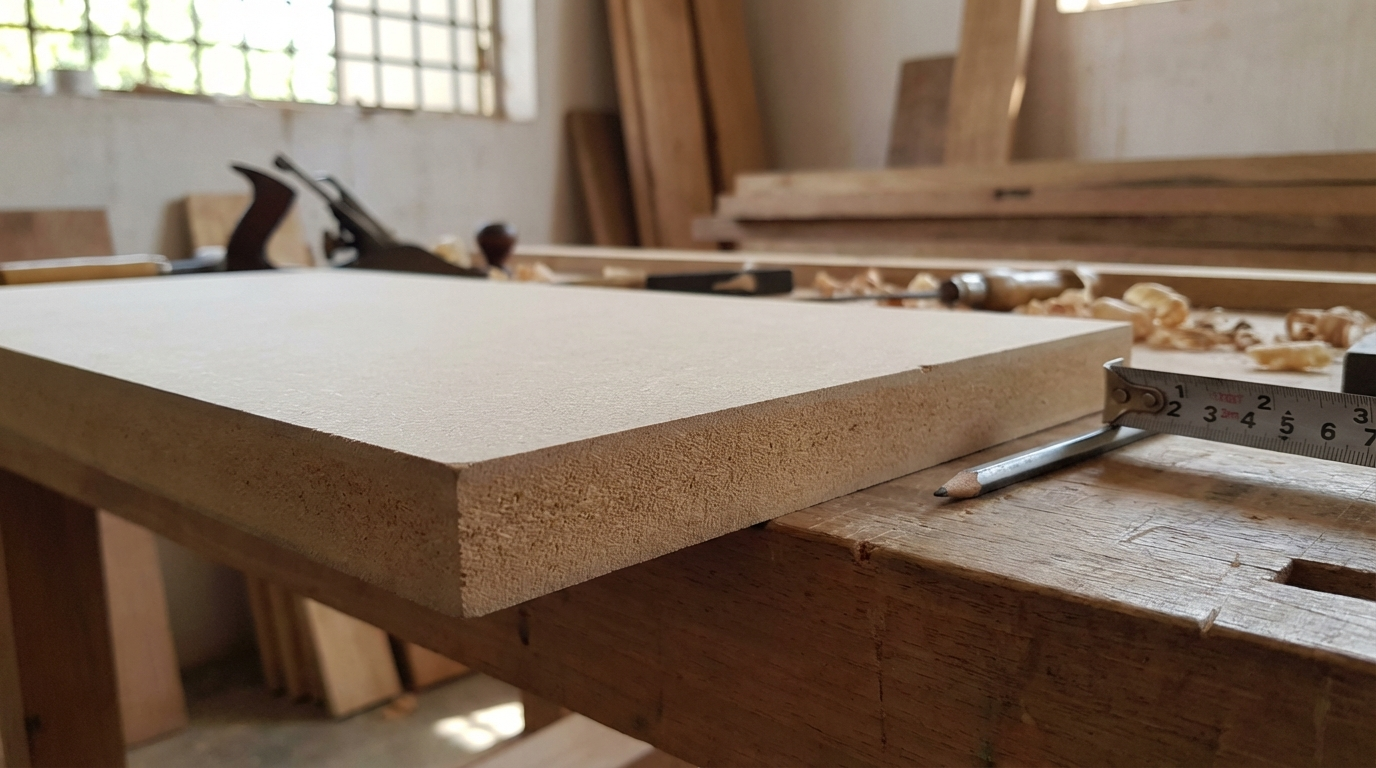
Medium Density Fibreboard (MDF) is an engineered wood panel made by breaking down hardwood or softwood residuals into fine fibres, combining them with wax and resin binders, and forming panels under high temperature and pressure. The result is a dense, uniform board without the grain patterns, knots, or directional strength variations found in natural wood or plywood.
MDF products in the Indian market span several categories based on density, moisture handling, and surface treatment:
- Standard MDF: Basic interior-grade panels for furniture, shelving, and decorative applications in dry environments.
- High-Density Fibreboard (HDF): Denser than standard MDF, used for flooring underlays, door skins, and high-wear applications.
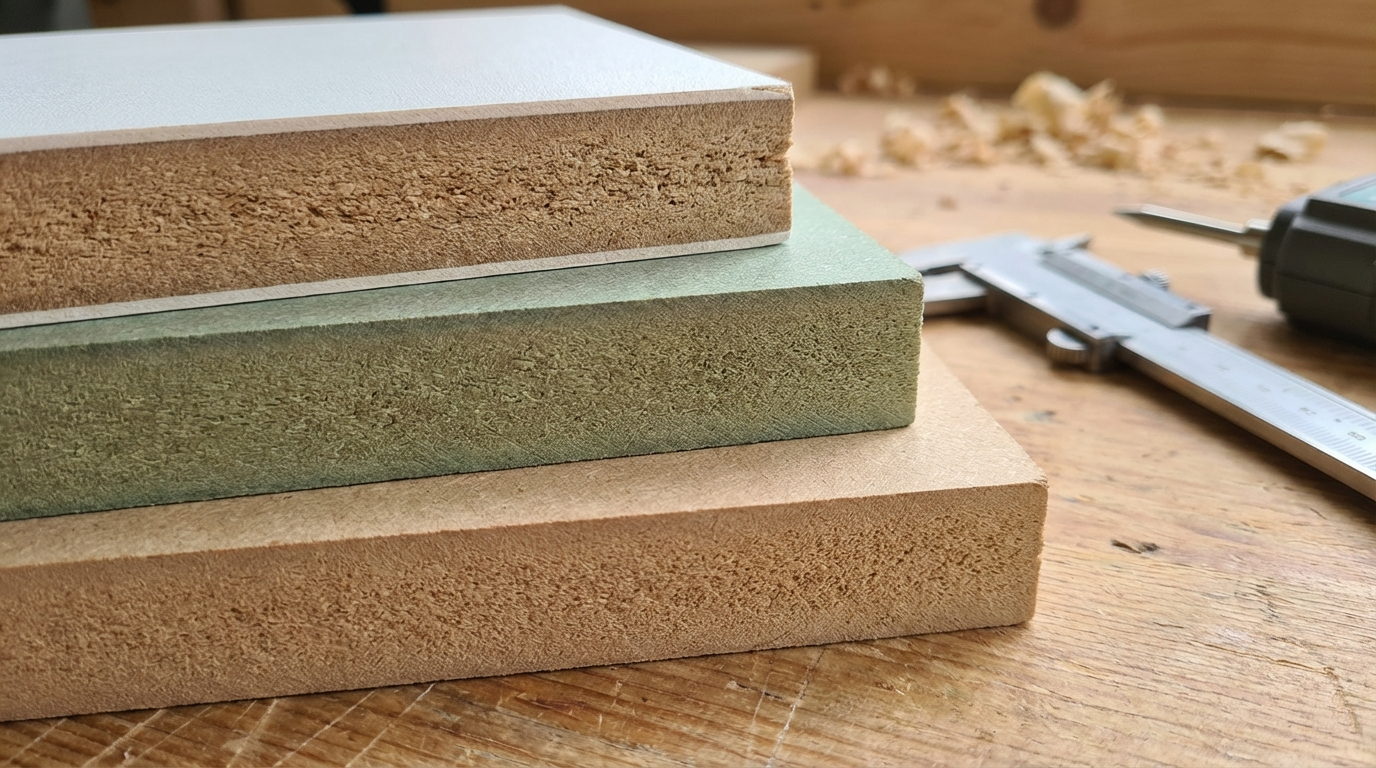
- HDFWR (High-Density Fibreboard Water Resistant): Moisture-resistant variant using water-repellent resins—suitable for kitchens, bathrooms, and humid coastal areas.
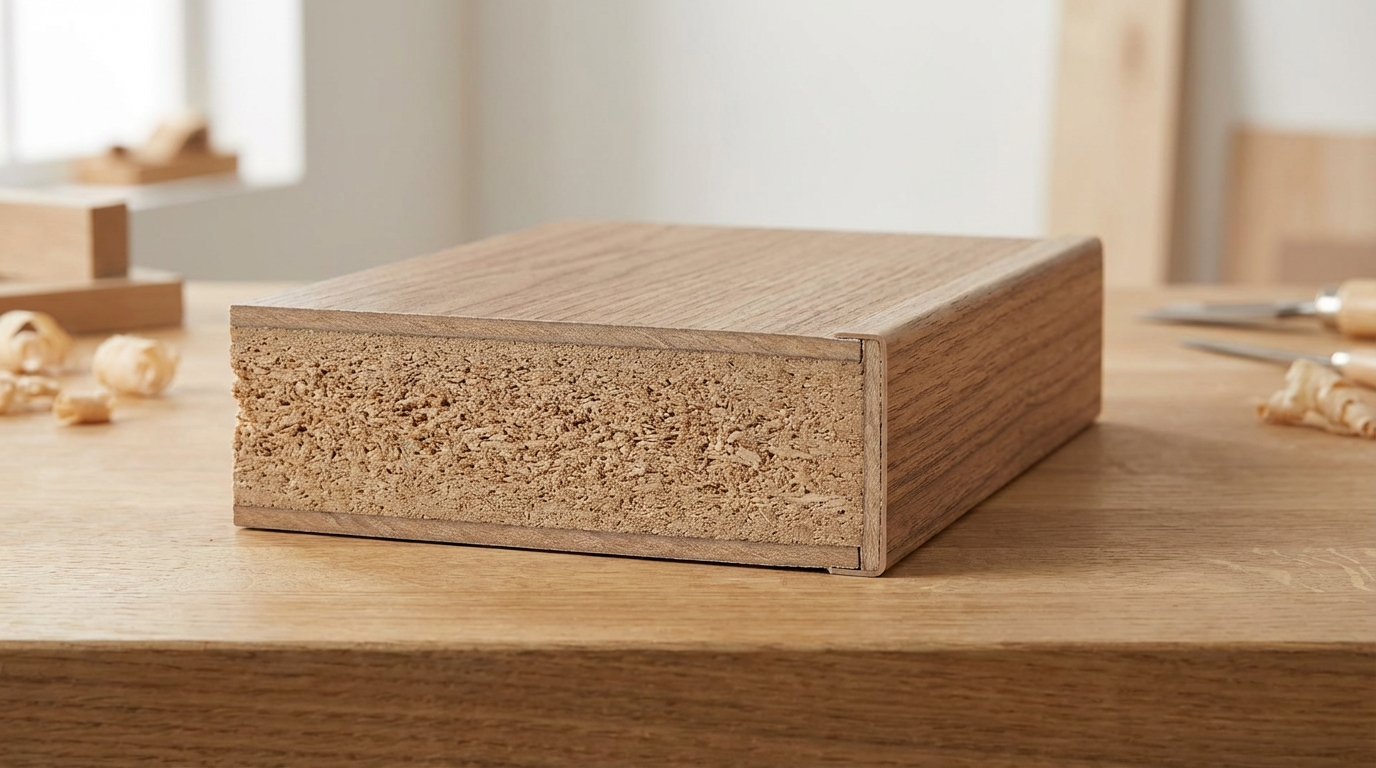
- Pre-laminated MDF (Prelam): Factory-applied melamine or decorative paper finish—ready to use without additional painting or lamination.
- Exterior-grade MDF: Enhanced moisture and fungal resistance for semi-outdoor or covered outdoor applications.
- Fire-retardant MDF: Treated with fire-inhibiting chemicals for commercial spaces requiring fire safety compliance.
What is the difference between MDF, HDF, and HDHMR?
MDF has a density typically between 600–800 kg/m³, making it suitable for general furniture and decorative work. HDF is compressed further, reaching densities of 800–1000 kg/m³, which provides better screw-holding strength and impact resistance—ideal for door panels and flooring. HDHMR (High-Density High Moisture Resistant) combines HDF density with moisture-resistant resin treatment, making it the preferred choice for kitchen cabinets, bathroom vanities, and laundry areas where humidity is constant. The practical difference shows up in edge swelling behaviour: standard MDF edges will swell noticeably within weeks of humidity exposure, while HDHMR edges remain stable for years under the same conditions. Always verify moisture resistance by checking the green or blue core colour typically used by manufacturers to indicate treatment.
Why MDF Products Matter in Indian Homes and Sites
Indian conditions present unique challenges that directly affect how MDF performs. Understanding these realities helps buyers make decisions that prevent costly failures.
Monsoon and Humidity Impact
During monsoon months, relative humidity in many Indian cities exceeds 80–90%. Standard MDF absorbs ambient moisture through exposed edges and unsealed surfaces, leading to gradual swelling, warping, and eventual delamination. Coastal cities like Mumbai, Chennai, Kochi, and Kolkata face year-round humidity that makes moisture-resistant grades essential rather than optional.
Storage and Transport Risks
MDF boards often spend days or weeks in open warehouses, on trucks during transit, or at construction sites without proper protection. Boards stacked directly on damp floors or exposed to rain splashes during unloading can absorb moisture before installation even begins. This hidden damage manifests later as edge swelling or surface bubbling after the furniture is installed.
Site Workmanship Realities
Many carpenters in India work at the customer's home or in small workshops without climate control. Cutting, edge treatment, and assembly happen in variable humidity conditions. If edges are not sealed immediately after cutting—especially during monsoon—moisture ingress begins within hours. Poor edge banding adhesion, visible gaps, and premature peeling are common complaints that trace back to workmanship gaps combined with unsuitable material choices.
Types of MDF Products Available in India
The Indian market offers a wide variety of MDF products, each designed for specific performance requirements. Understanding what each type delivers helps match the product to your project needs.
| MDF Type | Typical Density | Moisture Handling | Best Applications | Key Limitation |
|---|---|---|---|---|
| Standard Interior MDF | 650–750 kg/m³ | Low | Dry-area furniture, shelving, wall panels | Swells in humid conditions |
| HDF | 850–950 kg/m³ | Low to moderate | Door skins, flooring, high-wear surfaces | Heavier, harder to work |
| HDFWR / Moisture Resistant | 800–900 kg/m³ | High | Kitchens, bathrooms, coastal furniture | Higher cost, still not waterproof |
| Pre-laminated MDF | 700–800 kg/m³ | Depends on base | Ready-made shutters, partitions, quick projects | Limited finish options, edge exposure |
| Exterior Grade MDF | 750–850 kg/m³ | High | Covered outdoor areas, signage, soffits | Not for direct rain exposure |
| Fire Retardant MDF | 700–800 kg/m³ | Low to moderate | Commercial interiors, hospitality, offices | Premium pricing, specific codes |
Which MDF thickness should I use for different furniture?
Thickness selection depends on structural requirements and visual proportions. For wardrobe shutters and cabinet doors, 18mm is the most common choice—providing adequate rigidity without excessive weight. Carcass sides and shelves typically use 18mm for standard spans up to 600mm; longer shelves benefit from 25mm to prevent sagging. TV unit tops and work surfaces often use 25mm for durability and premium feel. Decorative wall panels and false ceiling applications work well with 8–12mm sheets where structural load is minimal. Back panels for wardrobes and cabinets commonly use 6–8mm MDF. For CNC-routed decorative panels, 12–18mm provides the best balance between routing depth capability and panel stability. Always factor in the weight of items the surface will hold—books, for instance, require thicker shelving than display items.
Price Range and Cost Drivers for MDF Products
MDF pricing in India varies significantly based on grade, thickness, finish, and regional factors. Understanding these drivers helps buyers budget accurately and negotiate effectively.
Typical Price Ranges (2024-2025)
| MDF Type | Thickness Range | Price Range (₹ per sq ft) |
|---|---|---|
| Standard Interior MDF | 6mm–25mm | ₹18–₹55 |
| HDF | 3mm–8mm | ₹25–₹50 |
| HDFWR / Moisture Resistant | 8mm–25mm | ₹45–₹90 |
| Pre-laminated MDF | 8mm–18mm | ₹55–₹120 |
| Exterior Grade MDF | 12mm–25mm | ₹60–₹100 |
What Drives MDF Costs Up or Down?
- Thickness: Every additional millimetre adds material cost—25mm boards cost roughly 40–50% more than 12mm of the same grade.
- Density and resin type: Higher density requires more fibre and compression; moisture-resistant resins add 15–25% to base cost.
- Surface finish: Pre-laminated boards include factory-applied decorative surfaces, adding ₹25–₹45 per sq ft over plain MDF.
- Logistics: Freight costs vary by distance from manufacturing hubs (Gujarat, South India, North India). Remote locations pay ₹3–₹8 more per sq ft.
- Wastage factor: Standard sheet sizes (8x4 ft, 8x6 ft) mean cutting waste. Poor planning can add 10–15% material cost.
- City variation: Metro cities have competitive pricing due to dealer density; Tier-2/3 cities may pay 8–12% premium.
Budget Estimator Example: 6-Door Wardrobe
For a standard 8ft wide × 7ft tall × 2ft deep wardrobe with 6 shutter doors:
- Carcass (sides, top, bottom, partitions): ~110 sq ft of 18mm MDF
- Shutters (6 doors): ~48 sq ft of 18mm MDF
- Back panel: ~56 sq ft of 6mm MDF
- Shelves and accessories: ~35 sq ft of 18mm MDF
Total MDF: ~250 sq ft. Using standard MDF at ₹40/sq ft = ₹10,000 material cost. Using HDFWR at ₹65/sq ft = ₹16,250. Add 12–15% for cutting waste, edge banding, hardware, and finishing.
How to Ask for a Quote: Checklist
- Specify exact grade (interior MDF, HDFWR, pre-lam)
- Mention thickness for each component
- Confirm sheet size availability (8×4, 8×6, or custom)
- Ask about cutting charges (flat fee or per cut)
- Clarify edge banding cost (per running metre, material type)
- Request delivery timeline and storage conditions at dealer
- Ask for batch consistency if ordering multiple sheets
Practical Use Cases: What Works and What Fails
Different applications demand different MDF grades. This use-case table helps match your project requirements to the right product specification.
| Application | Recommended MDF Type | Thickness | Finish Notes | Risk to Watch |
|---|---|---|---|---|
| Wardrobe shutters (bedroom) | Standard MDF | 18mm | Lacquer, laminate, or veneer | Handle area stress, edge chips |
| Kitchen cabinet shutters | HDFWR | 18mm | PU paint or acrylic laminate | Steam exposure, grease buildup |
| Bathroom vanity | HDFWR | 18mm–25mm | Waterproof laminate, sealed edges | Splash zones, sink cutout sealing |
| TV unit | Standard or HDF | 18mm–25mm | Veneer, laminate, or paint | Cable cutout edges, cleaning scratches |
| Wall panelling | Standard MDF | 8mm–12mm | Paint, wallpaper, or fabric wrap | Wall moisture migration |
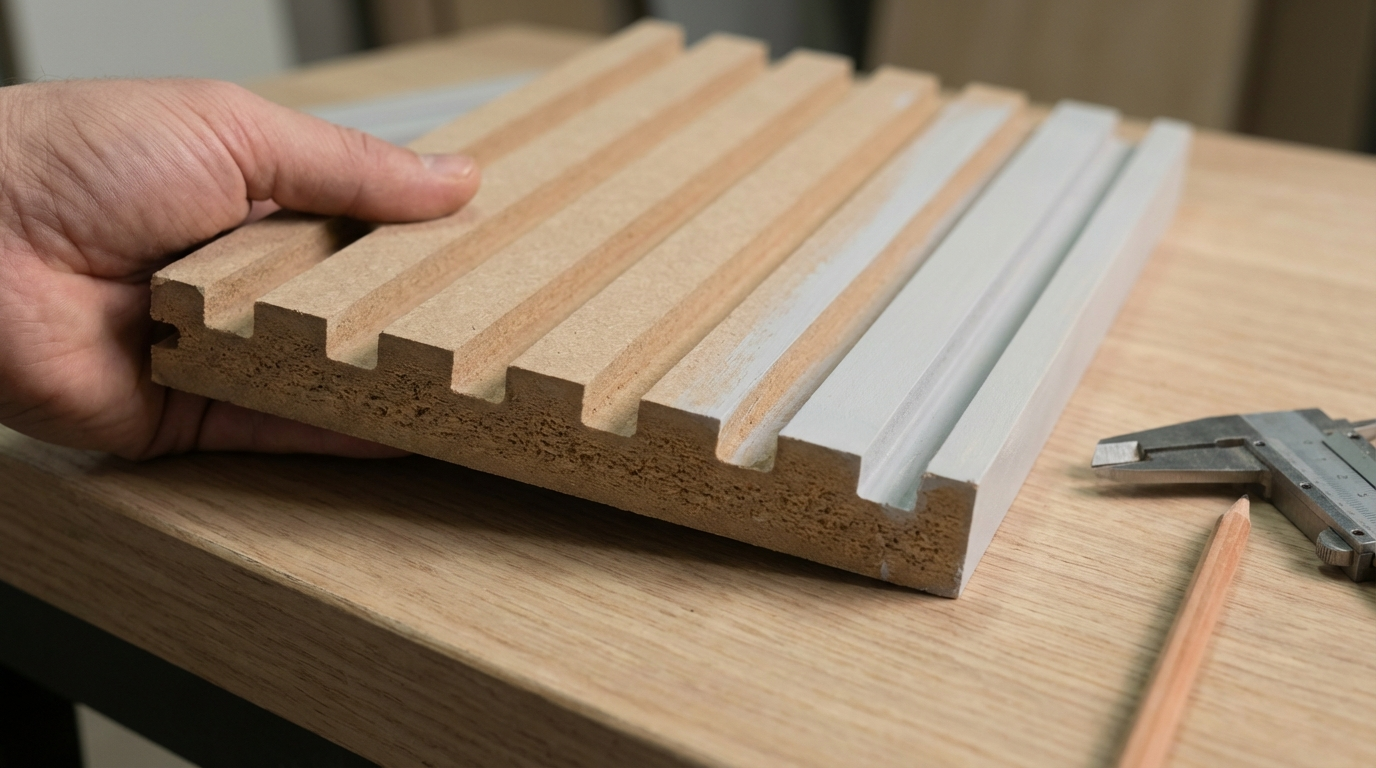
| CNC jali/decorative screens | Standard MDF | 12mm–18mm | Paint or duco finish | Thin sections breaking |
| Office workstations | Pre-lam MDF | 18mm–25mm | Factory laminate | Edge wear, cable management holes |
| Modular kitchen carcass | HDFWR | 18mm | Interior laminate or paint | Plumbing leaks, under-sink humidity |
Can MDF be used for kitchen cabinets in Indian conditions?
Yes, but only with moisture-resistant grades like HDFWR or HDHMR. Standard MDF will fail within 2–3 years in Indian kitchens due to steam from cooking, water splashes near sinks, and general humidity. For kitchen applications, insist on HDFWR with properly sealed edges using PVC edge banding or painted edges. The area under sinks requires extra attention—use waterproof sealant around all cutouts for plumbing and drainage. Avoid placing standard MDF near gas hobs where steam concentration is highest. Even with HDFWR, ensure the kitchen has adequate ventilation through exhaust fans or windows to reduce sustained humidity levels. Check edge banding adhesion quality before installation—loose edges are the primary failure point in kitchen cabinets.
Decision Framework: Choosing the Right MDF Product
This framework helps match your specific conditions to the appropriate MDF grade and finish, with verification steps to ensure quality.
| Your Condition | Recommended Product | What to Verify Before Buying |
|---|---|---|
| Dry interior, non-coastal city | Standard MDF | Surface smoothness, edge density, storage dryness |
| Wet zone (kitchen/bathroom) | HDFWR | Green/blue core indicator, edge seal quality |
| Coastal city (Mumbai, Chennai, etc.) | HDFWR minimum | Moisture-resistant grade confirmation, dealer storage |
| High-abuse area (kids room, commercial) | HDF or high-density MDF | Density rating, surface hardness |
| Tight budget, short-term use | Standard MDF with paint finish | Edge sealing plan, humidity control |
| Fast delivery requirement | Pre-laminated MDF | Colour/finish consistency across sheets |
| High scratch risk (heavy daily use) | HDF with scratch-resistant laminate | Laminate specification (HPL vs LPL) |
| CNC routing/intricate designs | Standard MDF (consistent density) | Uniform core density, no voids |
| Fire safety compliance needed | Fire-retardant MDF | Test certificate, compliance markings |
Common Buyer Mistakes and How to Avoid Them
These mistakes account for the majority of MDF-related complaints and project failures in India. Learning from others' errors saves money and frustration.
Mistake 1: Using Standard MDF in Kitchens
Many buyers choose standard MDF for kitchen shutters to save costs. Within 1–2 monsoon seasons, edges swell and finishes peel. Prevention: Always use HDFWR for any kitchen application, even if it costs 30–40% more upfront.
Mistake 2: Ignoring Storage Conditions at Dealer
Boards stored in open or poorly ventilated warehouses absorb moisture before reaching your site. Prevention: Visit the dealer's storage area, check for covered dry storage, and request boards from recent stock.
Mistake 3: Not Sealing Edges Immediately After Cutting
Cut edges are highly porous and begin absorbing moisture within hours. Prevention: Apply edge banding or temporary sealant within the same day of cutting, especially during monsoon.
Mistake 4: Choosing Pre-lam Without Checking Edge Exposure
Pre-laminated MDF has exposed raw edges that require separate edge banding. Buyers assume the board is ready-to-use. Prevention: Factor in edge banding costs and ensure colour-matched edge tape is available.
Mistake 5: Overloading Thin Shelves
Using 12mm MDF for long bookshelves leads to visible sagging within months. Prevention: Use 18mm minimum for shelves up to 600mm span; 25mm for longer spans or heavy loads.
Mistake 6: Ignoring Acclimatization
Installing MDF immediately after delivery in a different climate zone causes warping. Prevention: Store boards flat in the installation environment for 48–72 hours before cutting.
Mistake 7: Using Wrong Screws and Fastening Techniques
Regular wood screws split MDF edges; screwing too close to edges causes cracking. Prevention: Use MDF-specific screws, pre-drill all holes, maintain minimum 25mm edge distance.
Mistake 8: Assuming All MDF is the Same
Buying the cheapest available board without checking grade leads to mismatched performance. Prevention: Specify exact grade (interior, HDFWR, HDF) and verify through visual inspection of core colour and density.
Mistake 9: Skipping Primer Before Painting
Painting directly on MDF leads to uneven absorption, blotchy finish, and poor adhesion. Prevention: Apply MDF-specific primer, sand lightly, then apply topcoat.
Mistake 10: Not Planning for Cutout Sealing
Holes for cables, plumbing, or hardware create moisture entry points if left unsealed. Prevention: Seal all cutouts with appropriate sealant or edge tape before installation.
Failure Modes and Fixes
Understanding why MDF fails helps prevent problems and address issues before they worsen.
Edge Swelling
Symptom: Edges become puffy, soft, and discoloured. Root cause: Moisture absorption through unsealed or poorly sealed edges. Prevention: Use quality edge banding with proper adhesive; seal all cutouts. Fix if happening: Sand affected area, apply wood hardener, re-seal with waterproof coating. Severe swelling requires panel replacement.
Surface Bubbling or Delamination
Symptom: Laminate or paint lifts from MDF surface in bubbles. Root cause: Moisture trapped under finish, or poor surface preparation before lamination. Prevention: Ensure MDF is dry before finishing; use appropriate adhesive; apply pressure during lamination. Fix if happening: Puncture bubble, inject adhesive, apply pressure until dry. Large areas need re-lamination.
Screw Pullout
Symptom: Screws become loose; hinges or handles wobble. Root cause: Screwing into MDF edge (weak zone), wrong screw type, or overdriving. Prevention: Use cam locks or dowels for edge joints; pre-drill; use MDF screws. Fix if happening: Fill hole with wood filler mixed with sawdust, re-drill, or relocate hardware.
Warping or Bowing
Symptom: Panel curves or twists out of flat. Root cause: Uneven moisture absorption (one side sealed, other exposed), or storage on uneven surface. Prevention: Seal both faces; store flat on level surface; acclimatize before installation. Fix if happening: Apply moisture to convex side, weight down, allow to flatten gradually. Severe warping requires replacement.
Chipping During Cutting
Symptom: Rough, chipped edges after saw cuts. Root cause: Dull blade, wrong blade type, incorrect feed speed. Prevention: Use sharp carbide-tipped blade with fine teeth; score line with knife before cutting; support panel properly. Fix if happening: Sand edges, apply wood filler, finish with edge banding.
Paint Peeling
Symptom: Paint flakes off in sheets or patches. Root cause: No primer used, incompatible paint type, painting over dust or moisture. Prevention: Clean surface, apply MDF primer, sand lightly, use compatible topcoat. Fix if happening: Strip paint, sand smooth, start fresh with proper preparation.
Quality Checks You Can Do Without Lab Tests
Before Buying
- Visual surface check: Look for smooth, uniform surface without dents, scratches, or rough patches.
- Edge density test: Press thumbnail into edge—quality MDF resists indentation; soft edges indicate low density.
- Core colour verification: For moisture-resistant grades, ask to see a cut edge. Green or blue core indicates treatment.
- Smell test: Fresh MDF has mild wood-resin smell. Strong chemical odour may indicate excess formaldehyde or recent production (needs more off-gassing time).
- Weight comparison: Compare similar-sized sheets—heavier typically means higher density.
- Storage inspection: Check if boards are stored flat, covered, and off the ground in a dry area.
- Batch consistency: When buying multiple sheets, ensure they're from the same batch for colour and density consistency.
After Cutting
- Edge uniformity: Cut edge should show consistent density throughout—no voids, gaps, or layers.
- Cutting ease: Quality MDF cuts smoothly with minimal resistance; excessive blade resistance suggests density issues.
- Dust colour: Consistent fine dust indicates uniform composition; varying dust colours suggest inconsistent raw material.
- Edge absorption test: Place water drop on cut edge—quality HDFWR absorbs slowly or beads; standard MDF absorbs within seconds.
After Installation
- Alignment check: Panels should remain flat and aligned after installation; immediate warping indicates moisture content issues.
- Edge banding adhesion: Press firmly along all edges—properly bonded tape doesn't lift or show gaps.
- Hinge and hardware: Open/close doors multiple times—screws should hold firm without wobble.
- Surface finish: Paint or laminate should be uniform without bubbles, rough spots, or visible seams.
Tips by User Type
For Homeowners
Durability expectations: Well-made MDF furniture in dry environments lasts 8–12 years with proper care. In humid areas with appropriate grade selection, expect 10–15 years.
Cleaning do's:
- Wipe spills immediately with dry cloth
- Use slightly damp cloth for regular cleaning
- Dry surfaces after cleaning
- Use coasters under wet items
Cleaning don'ts:
- Never use soaking wet cloths
- Avoid abrasive cleaners or scrubbers
- Don't let water pool on surfaces
- Skip harsh chemical cleaners
Maintenance tips: Check edge banding annually for lifting. Re-seal any exposed edges showing wear. Maintain room ventilation to reduce humidity buildup.
For Carpenters
Cutting best practices:
- Use 80-tooth carbide-tipped blade for clean cuts
- Score laminated surfaces before cutting to prevent chipping
- Support large sheets to prevent breakage
- Cut with good side up on table saw, good side down on circular saw
Edge preparation:
- Sand cut edges lightly (150 grit) before edge banding
- Remove all dust before applying adhesive
- Apply edge banding within 24 hours of cutting during monsoon
- Use PVC edge tape 0.8mm–2mm depending on application
Fastening zones:
- Never screw into edges—use cam locks, dowels, or biscuits
- Pre-drill all screw holes with bit slightly smaller than screw diameter
- Maintain minimum 25mm from edges for face screwing
- Use coarse-thread MDF screws, not fine-thread wood screws
Hinge areas:
- Use cup hinges with mounting plates—better load distribution
- Reinforce heavy door hinge areas with hardwood blocks if needed
- Apply thread-locking compound on hardware screws in high-use doors
For Architects and Designers
Specification writing:
- Always specify grade (interior, HDFWR, HDF, exterior)
- Include thickness tolerance (typically ±0.2mm acceptable)
- Specify surface quality (sanded one side, both sides)
- Note edge treatment requirements
- Include formaldehyde emission class if required (E1 preferred)
Wet-zone detailing:
- Specify HDFWR minimum for any area within 1m of water source
- Detail edge sealing requirements at all cutouts
- Include ventilation requirements to reduce sustained humidity
- Consider raised legs for base units to allow air circulation and prevent floor water contact
Finish logic:
- Lacquer/duco: best for CNC work, requires skilled application
- Laminate: durable, consistent, limited to flat surfaces
- Veneer: natural look, requires edge treatment consideration
- PU paint: excellent for kitchens, cleanable, moisture-resistant surface
For OEM and Modular Furniture Makers
Repeatability factors:
- Source from single manufacturer for batch consistency
- Maintain controlled storage environment (40–60% RH)
- Implement incoming inspection for density and moisture content
- Use CNC programming that accounts for material tolerances
QC checkpoints:
- Incoming: surface quality, thickness consistency, moisture meter reading
- Post-cutting: edge quality, dimensional accuracy
- Post-finishing: adhesion test, colour consistency
- Pre-dispatch: hardware function, alignment, edge seal integrity
Reducing returns and complaints:
- Document material grade on invoices
- Provide care instructions to customers
- Use moisture-resistant grade for any product sold in coastal areas
- Over-engineer edge sealing—it's the primary failure point
- Include installation guidelines emphasizing acclimatization
Is MDF better than plywood for furniture?
This depends entirely on the application. MDF offers superior surface smoothness, making it ideal for painted finishes and CNC routing where intricate patterns are needed. It's also more affordable than comparable-quality plywood. However, plywood has better screw-holding strength, especially at edges, and performs better in humid conditions even without special treatment. For wardrobes and kitchen shutters in dry areas, MDF with proper finishing works well and costs less. For structural elements, drawer boxes, and anywhere edges will bear hardware stress, plywood remains preferable. For moisture-prone areas, HDFWR MDF competes with BWR plywood—both require proper edge sealing. The best approach is often combining both: plywood for carcass and structural parts, MDF for shutters and visible surfaces where smooth finish matters.
How long does MDF furniture last in India?
MDF furniture lifespan varies dramatically based on grade selection, installation quality, and environment. Standard MDF in controlled dry environments lasts 8–12 years with normal use. HDFWR in kitchens and bathrooms, properly installed with sealed edges, lasts 10–15 years. In coastal cities or poorly ventilated spaces, even moisture-resistant grades may show edge deterioration within 5–7 years if edges aren't properly sealed. The weakest point is always exposed or poorly sealed edges—these fail first. Hardware mounting points are secondary failure zones. With proper grade selection, professional installation, immediate edge sealing, and regular maintenance, MDF furniture can match plywood furniture lifespan at lower cost. The key is matching the material to the environment and not cutting corners on edge treatment.
Can MDF be used outdoors in India?
Standard MDF should never be used outdoors. Even exterior-grade MDF is designed only for covered outdoor applications like soffits, covered balcony furniture, or signage protected from direct rain. Direct water exposure—including rain, garden sprinklers, or pooling water—will damage even exterior-grade MDF over time. For truly outdoor applications in Indian conditions, consider WPC (Wood Plastic Composite), treated solid wood, or marine-grade plywood with appropriate finishing. If using exterior MDF in covered outdoor areas, ensure all edges are sealed, provide adequate ventilation to prevent moisture buildup, and plan for periodic maintenance and re-sealing every 2–3 years. Coastal locations present additional challenges from salt-laden air, requiring more frequent inspection and maintenance.
What is the best finish for MDF in humid conditions?
For humid Indian conditions, PU (Polyurethane) paint provides the best protection—it creates a moisture-resistant film that seals the surface effectively. Acrylic lacquer is the next best option, offering good moisture resistance with easier application. Lamination with HPL (High-Pressure Laminate) provides excellent surface protection, but edge sealing remains critical. Melamine finishes on pre-laminated boards offer moderate protection. Avoid water-based paints in humid areas—they don't provide adequate moisture barrier. Regardless of surface finish, edge treatment is equally important. Use PVC edge banding with hot-melt adhesive rated for humid conditions, or apply multiple coats of sealant on all exposed edges. For kitchen shutters, combination of HDFWR base with PU paint and PVC edge banding provides optimal protection against cooking steam and water splashes.
FAQs
What is the full form of MDF and how is it made?
MDF stands for Medium Density Fibreboard. It is manufactured by breaking down hardwood or softwood into fine fibres, which are then combined with wax and resin binders—typically urea-formaldehyde or melamine-formaldehyde. This mixture is formed into panels and compressed under high temperature (around 200°C) and pressure. The resulting board has uniform density throughout, no grain direction, and a smooth surface suitable for various finishes. Different grades are created by varying the resin type (moisture-resistant resins for HDFWR), compression level (higher for HDF), and additives (fire retardants, fungicides). Indian manufacturers typically produce boards in standard sizes of 8×4 feet and 8×6 feet, with thicknesses ranging from 2.5mm to 35mm depending on the manufacturer and grade.
Is MDF safe for home use considering formaldehyde emissions?
Modern MDF boards manufactured by reputable companies meet international emission standards, typically E1 or E0 classification, which limits formaldehyde release to safe levels for indoor use. The concern about formaldehyde is valid but manageable. During cutting and machining, wear a dust mask as MDF dust can carry formaldehyde particles. Ensure adequate ventilation when working with MDF. Once installed and finished (painted, laminated, or sealed), emissions are minimal. New MDF has higher off-gassing initially, so allowing boards to acclimatize in ventilated areas for a few days before installation helps. For sensitive environments like children's rooms, look for E0-rated or CARB Phase 2 compliant boards, which have the lowest emissions. Sealing all surfaces with paint or laminate further reduces any emission concerns.
Can MDF be repaired if it gets damaged?
Minor MDF damage can be repaired, but the success depends on damage type and extent. Surface scratches on painted MDF can be filled with wood filler, sanded, primed, and repainted. Small edge chips can be built up with automotive body filler or specialized MDF repair compounds, then sanded and refinished. Water-damaged areas that have swollen cannot be restored to original density—the affected section needs cutting out and patching with new material, or complete panel replacement. Loose screws can sometimes be rescued by filling the hole with wood filler mixed with sawdust, re-drilling once cured, or relocating the hardware. Delaminated laminate can occasionally be re-adhered with contact cement and pressure, but often requires professional re-lamination. Prevention through proper grade selection and edge sealing is far easier than repair.
What tools and blades are best for cutting MDF cleanly?
Clean MDF cutting requires specific blade selection and technique. For table saws and circular saws, use 80-tooth carbide-tipped blades designed for composite materials—fine teeth create smoother cuts with less chipping. Standard wood blades with fewer teeth cause rough edges and excessive dust. For jigsaws, use fine-tooth blades (20+ TPI) and cut slowly to prevent chipping. Router bits should be carbide-tipped and kept sharp; dull bits burn MDF and create rough edges. Always support MDF sheets fully during cutting to prevent breakage. When cutting laminated MDF, score the laminate surface first with a sharp knife to prevent chipping. Use downward blade pressure on the good face. A sacrificial backing board beneath prevents chip-out on the bottom face. Expect blade wear to be higher than with natural wood—MDF's resin content dulls blades faster.
How do I know if MDF is genuinely moisture-resistant or just painted green?
Genuine moisture-resistant MDF (HDFWR) has moisture-resistant resin throughout its composition, not just surface treatment. To verify: First, examine a freshly cut edge—the core colour should be consistently green or blue throughout, not just on the surface. Second, perform a simple water drop test on a cut edge—genuine HDFWR will absorb water slowly (several minutes) or bead on the surface, while standard MDF darkens and absorbs within seconds. Third, the board should feel denser and heavier than standard MDF of the same thickness. Fourth, check the board's markings or ask the dealer for the manufacturer's grade designation—reputable manufacturers clearly mark moisture-resistant grades. Be cautious of unusually cheap "moisture-resistant" boards, as some low-quality products simply add green dye without actual moisture-resistant resin, providing no real protection.
What is the ideal thickness for different MDF applications?
Thickness selection balances structural requirements, weight, and cost. For wardrobe and kitchen shutters, 18mm is the standard—it provides adequate rigidity for typical 400-600mm wide doors without excessive weight. Cabinet carcasses (sides, tops, bottoms) typically use 18mm; very large spans may need 25mm. Shelving depends on span and load: 18mm works for shelves up to 600mm supporting light items; 25mm for longer spans or heavy loads like books. TV unit tops and desks benefit from 25mm for durability and premium feel. Wall panelling uses 8-12mm where structural load is minimal. CNC decorative panels work best in 12-18mm—thinner panels may warp after routing, thicker ones add unnecessary weight. Back panels for furniture use 6-8mm. Drawer bottoms typically use 6mm. False ceiling applications use 8-12mm depending on panel span and support spacing.
Why does MDF warp and how can I prevent it?
MDF warps primarily due to uneven moisture absorption. When one face absorbs moisture while the other remains dry, differential expansion causes the panel to curve. Common causes include: storing boards vertically (bottom absorbs floor moisture), finishing only one side (sealed side stays stable, raw side absorbs), exposure to humidity after cutting (cut edges absorb quickly), and installing in environments with significant humidity differences between front and back faces. Prevention strategies include: storing boards flat on level surfaces with spacers for air circulation, sealing all faces and edges before installation, allowing boards to acclimatize in the installation environment for 48-72 hours, and ensuring finished furniture has similar conditions on both faces (avoid placing against cold walls that cause condensation). For wall panels, use proper moisture barriers between the wall and panel to prevent wall moisture migration.
Can MDF hold screws well enough for furniture hinges and handles?
MDF holds face screws reasonably well but is weak at edges. For furniture hardware, technique matters significantly. On faces (flat surfaces), pre-drill pilot holes slightly smaller than the screw's core diameter to prevent splitting. Use coarse-thread screws designed for particle board or MDF—fine-thread wood screws don't grip well. For heavy-duty applications like door hinges, use longer screws (at least 30mm) and consider adding thread-locking compound. Edge screwing should be avoided—MDF's edge density is lower and prone to splitting. Instead, use cam locks, wooden dowels, or biscuit joints for edge connections. For hinge mounting on door edges, use cup hinges with mounting plates that distribute load across the face rather than edge screws. If edge screwing is unavoidable, use specialized MDF edge screws with coarse threads and blunt tips, and pre-drill carefully. Heavy handles benefit from through-bolts rather than screws alone.
How does MDF compare to particle board and HDF for furniture?
MDF offers higher density and strength than particle board, with a smoother surface that accepts paint and laminate better. Particle board costs less but has lower screw-holding capacity and rough surfaces that show through thin laminates. MDF is the better choice for visible furniture components requiring quality finish. HDF (High-Density Fibreboard) is denser and harder than MDF—better for high-wear applications like flooring, door skins, and furniture in commercial spaces, but more expensive and harder to work with due to its density. For most residential furniture, standard MDF provides adequate performance at reasonable cost. Choose particle board only for hidden components where cost matters most and loads are light. Choose HDF where impact resistance and screw-holding matter—like commercial office furniture or heavy-use children's furniture. HDFWR combines HDF's density with moisture resistance for kitchen and bathroom applications.
Disclaimer: This content is provided for general informational purposes based on industry practices and publicly available information. Product specifications, standards, prices, and availability may vary by manufacturer, region, and time. Readers should independently verify details with manufacturers, dealers, or qualified professionals before making purchase or construction decisions.
Want Plywood Suggestions?
Share a few details and a VIR MDF specialist will suggest suitable brands and connect you to responsive dealers.