Melamine Board – Complete Guide for Indian Buyers
Research-backed melamine board breakdown with pros/cons, tables, and a clear decision checklist for Indian buyers and carpenters.
Quick Decision Summary
Best answer in one line: Melamine board is pre-finished MDF with a decorative, scratch-resistant surface that saves painting time and costs for furniture, cabinets, and partitions.
If you're in a hurry: Melamine board works best for dry interior applications like wardrobes, office furniture, retail fixtures, and kitchen cabinet carcasses. It comes ready-to-use with no painting required, offers decent scratch and stain resistance, and costs less than post-laminated alternatives. However, edges remain vulnerable to moisture and chipping, requiring proper edge banding. Avoid using standard melamine board in wet zones without moisture-resistant cores.
- Choose this if: You need factory-finished panels for wardrobes, shelving, modular furniture, or office interiors in dry environments with tight timelines.
- Avoid this if: Your project involves high-moisture areas (bathrooms, outdoor), heavy impact zones, or you need highly customized paint finishes.
What Melamine Board Actually Is
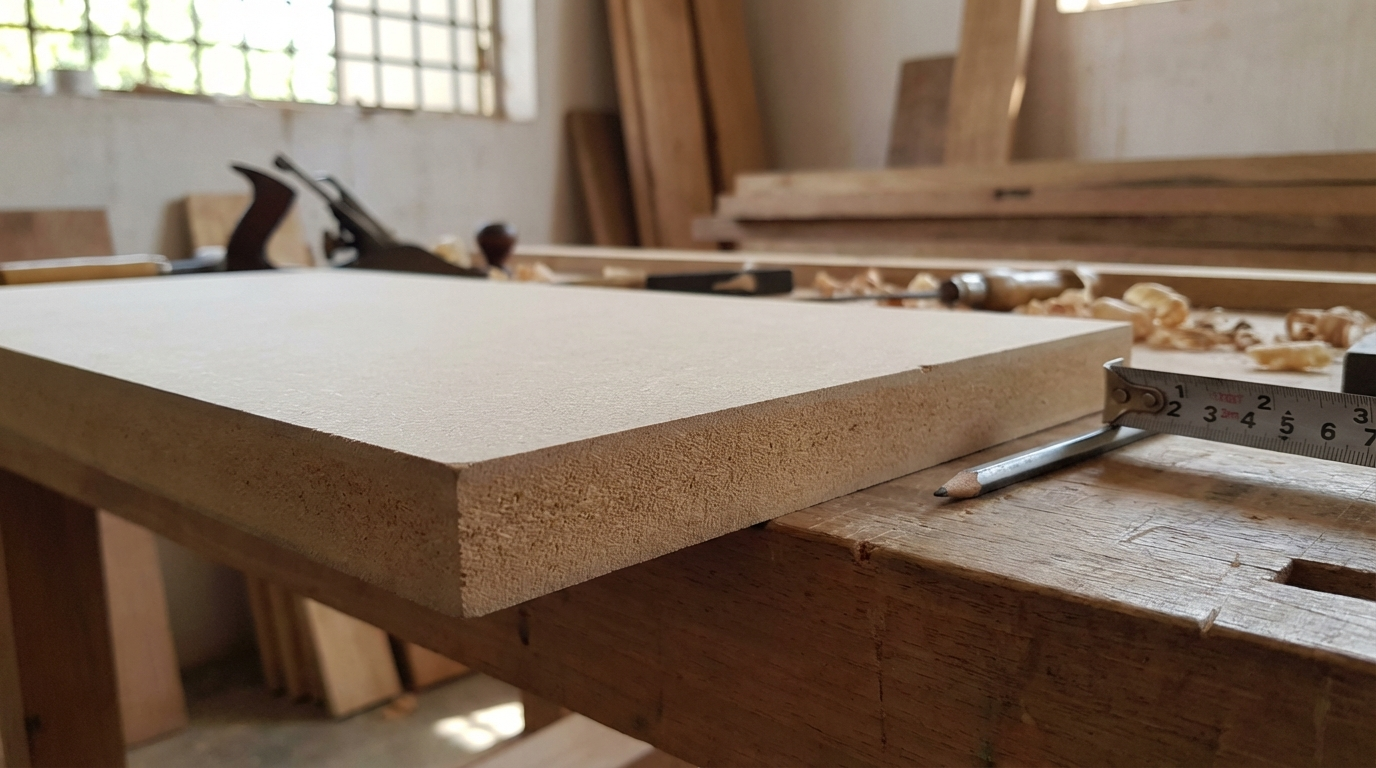
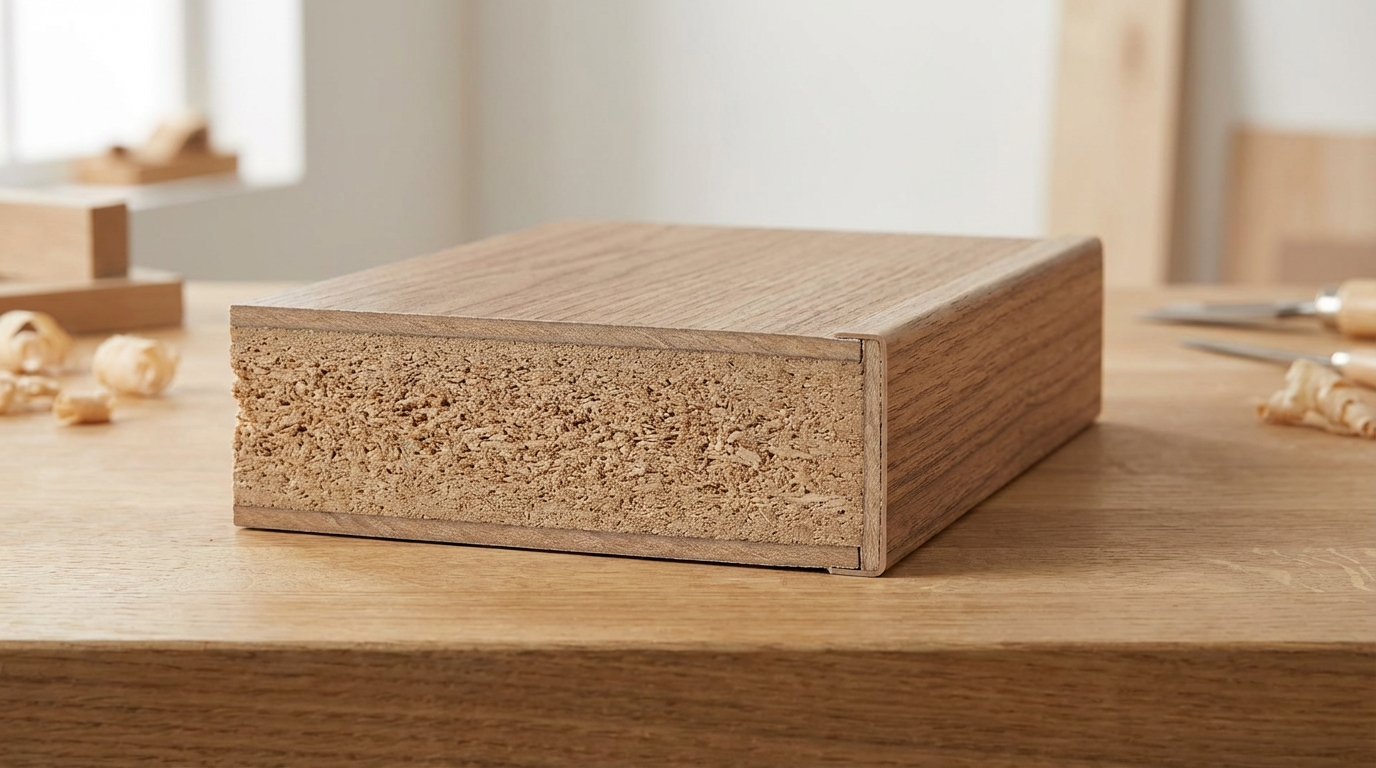
Melamine board is an engineered wood panel—typically MDF (Medium Density Fibreboard)—with a melamine-impregnated decorative paper bonded to one or both surfaces under controlled heat and pressure. The melamine resin creates a hard, sealed surface that resists light scratches, stains, and surface moisture penetration.
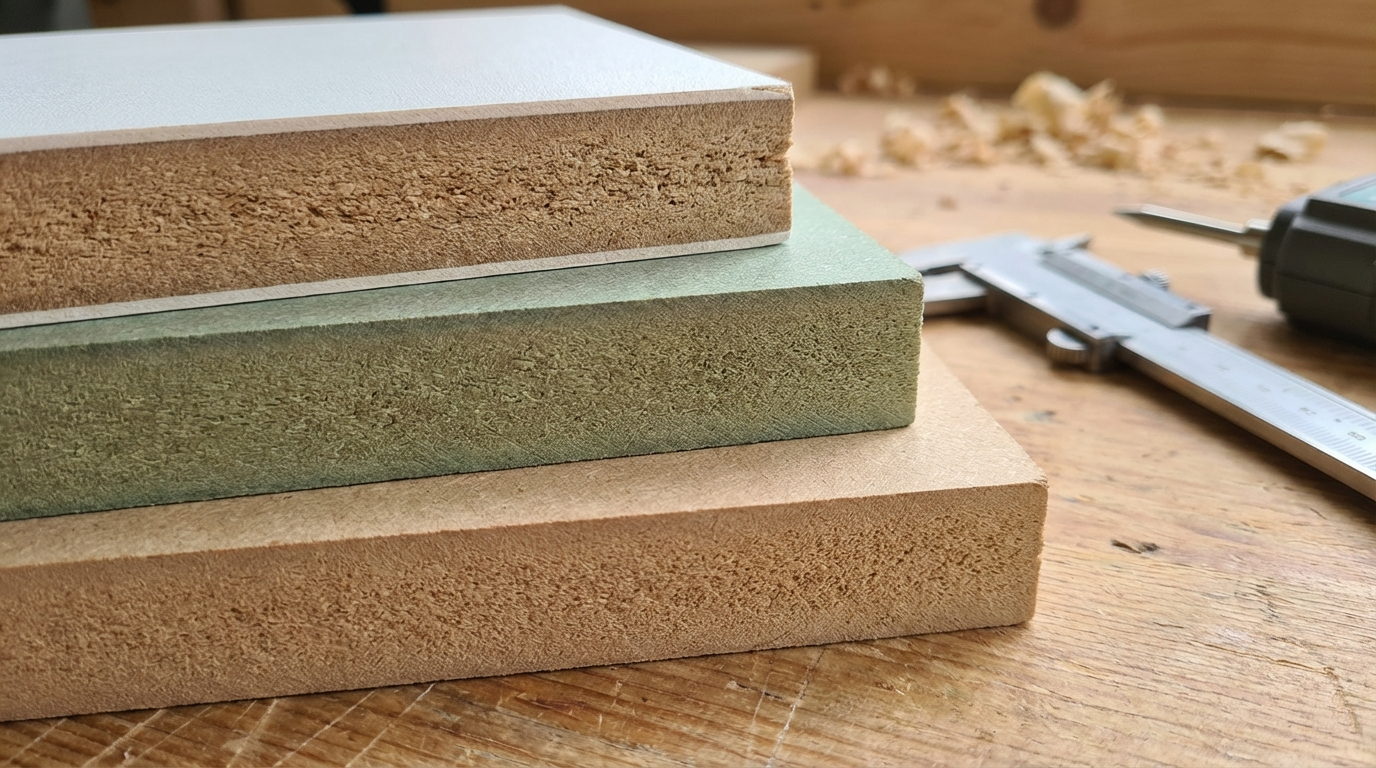
The core remains standard MDF unless specifically manufactured with moisture-resistant (MR) or high-density fibreboard water-resistant (HDFWR) substrates. The decorative paper layer can replicate wood grains, solid colours, matte textures, or glossy finishes, eliminating the need for additional painting or laminating on-site.
How is melamine board different from prelam MDF?
In the Indian market, "melamine MDF" and "prelam MDF" (pre-laminated MDF) are often used interchangeably, though technically they refer to the same product category. Both involve factory-bonded decorative surfaces on MDF cores. The key distinction lies in surface quality grades and the specific resin formulations used during pressing. Premium melamine boards typically offer better scratch resistance and more consistent colour matching across batches. When purchasing, focus on surface hardness specifications, core density, and edge stability rather than getting caught up in naming conventions.
What makes melamine different from high-pressure laminate (HPL)?
Melamine boards use low-pressure lamination where the decorative paper bonds directly during the board manufacturing process. High-pressure laminates (HPL) are separate sheets manufactured independently and then glued onto substrates at the fabrication stage. HPL offers superior impact resistance, heat tolerance, and durability but requires additional adhesive application and skilled workmanship. Melamine boards arrive ready-to-cut, making them faster and more economical for standard furniture applications where extreme durability is not critical.
Why Melamine Board Matters in Indian Homes and Sites
India's climate presents unique challenges for interior materials. Monsoon humidity, coastal salt air, poorly ventilated storage conditions during transport, and variable site management all affect how materials perform after installation.
Monsoon and humidity considerations
Standard melamine MDF cores absorb atmospheric moisture through exposed edges and any surface damage. During monsoon months, panels stored in open sites or poorly covered trucks can absorb moisture before installation even begins. This pre-installation moisture content often manifests as edge swelling, surface bubbling, or warping weeks after the furniture is delivered to clients.
Site workmanship realities
Indian fabrication workshops vary significantly in quality control practices. Cut edges often remain unsealed for days, hinge boring creates moisture entry points, and panels may rest directly on damp floors. These conditions accelerate core damage in standard melamine boards. Specifying moisture-resistant core variants and enforcing edge-sealing protocols becomes essential for projects in humid cities like Mumbai, Chennai, Kolkata, or Kerala.
Practical consequences to anticipate
- Edge swelling: Unsealed edges absorb humidity, causing the MDF core to expand and push against the melamine surface
- Screw-hold degradation: Moisture-weakened cores lose grip on hardware, leading to loose hinges and shelf brackets
- Surface delamination: Extreme humidity cycles can cause the melamine layer to separate from compromised cores
- Finish discolouration: Trapped moisture under the sealed surface creates dark patches or bubbling
Price Range and Cost Drivers
Melamine board pricing in India varies significantly based on core type, thickness, finish quality, and regional availability. Understanding cost drivers helps you budget accurately and avoid surprise escalations.
Typical price ranges (indicative only)
| Thickness | Standard Core (₹/sq ft) | Moisture-Resistant Core (₹/sq ft) |
|---|---|---|
| 6mm | 28–42 | 38–55 |
| 9mm | 35–52 | 48–68 |
| 12mm | 45–65 | 58–82 |
| 18mm | 58–85 | 75–110 |
| 25mm | 78–115 | 95–140 |
Note: Prices vary by city, supplier, finish type, and order volume. Textured, high-gloss, or woodgrain finishes typically cost 8–15% more than solid colours.
What drives melamine board costs?
- Core density: Higher-density MDF cores cost more but offer better screw retention and edge stability
- Moisture-resistant resin: MR or HDFWR cores add 25–35% to base pricing
- Surface finish type: Glossy, textured, or synchronised woodgrain surfaces cost more than basic matte solids
- Thickness: Material costs scale roughly linearly with thickness
- Logistics: Remote locations add freight charges; coastal storage may require climate-controlled warehousing
- Wastage allowance: Complex designs with many small parts generate more offcuts, increasing effective per-piece cost
- Edge banding: Factory-applied edge banding costs more but improves durability significantly
Budget estimator example: 8x4 wardrobe
For a standard 8-foot-tall, 4-foot-wide two-door wardrobe with internal shelves and drawers:
- Approximate melamine board requirement: 90–110 sq ft (including wastage)
- 18mm moisture-resistant melamine @ ₹85/sq ft: ₹7,650–9,350 for boards alone
- Edge banding, hardware, and fabrication add 40–60% to material cost
- Total material estimate: ₹12,000–16,000 (excluding labour and installation)
How to ask for a quote: checklist
- Specify exact thickness required for each component
- Mention core type: standard, MR, or HDFWR
- State finish: matte, gloss, textured, woodgrain (include finish code if known)
- Clarify if pricing is per sq ft of board or per sq ft of finished furniture
- Ask whether edge banding is included and what type (PVC, ABS, matching melamine tape)
- Confirm delivery charges, minimum order quantity, and lead time
- Request sample pieces to verify colour match and surface quality
Two-Minute Comparison: Melamine Board vs Alternatives
Choosing between melamine board and other panel options depends on your specific application, budget, and performance requirements. Here's a practical comparison:
| Factor | Melamine MDF | Plain MDF + Paint | Plain MDF + HPL | Plywood + Laminate |
|---|---|---|---|---|
| Surface finish | Factory-applied, consistent | Dependent on painter skill | Excellent, customizable | Excellent, customizable |
| Scratch resistance | Moderate | Low to moderate | High | High |
| Moisture resistance (core) | Poor (standard) / Good (MR) | Poor (standard) | Poor (standard) | Moderate to good |
| Edge vulnerability | High | High | High | Moderate |
| Fabrication speed | Fast (no finishing) | Slow (painting time) | Moderate (gluing) | Moderate |
| Cost (relative) | Low to moderate | Low + labour | Moderate to high | High |
| Best for | Standard furniture, cabinets | Custom colours | High-traffic surfaces | Wet zones, structural |
When should you choose melamine over other options?
Select melamine board when project timelines are tight, budgets are constrained, and the application involves dry interior spaces. The pre-finished surface eliminates painting delays and reduces site dust and odour. For high-abuse surfaces like kitchen countertops or commercial reception desks, consider HPL over melamine. For bathroom vanities or sink cabinets, insist on HDFWR cores with proper edge sealing regardless of surface type.
Meaning, Types, and Where People Get Confused
Understanding melamine board terminology prevents specification errors and purchasing mistakes.
Core definitions
- Melamine board: MDF or particleboard with melamine-resin-impregnated paper heat-pressed onto the surface
- Prelam MDF: Pre-laminated MDF; essentially identical to melamine MDF in most Indian market contexts
- Melamine paper: Decorative paper saturated with melamine-formaldehyde resin before pressing
- Substrate/core: The underlying board (MDF, particleboard, HDFWR) that provides structural strength
Common misunderstandings (at least 5)
- "Melamine is waterproof": False. Only the surface resists water; edges and cores absorb moisture readily unless specifically moisture-resistant
- "All melamine boards are the same": False. Core density, moisture resistance, surface hardness, and finish quality vary significantly across products
- "Melamine can replace HPL anywhere": False. HPL offers superior impact and heat resistance for demanding applications
- "Thicker melamine is always better": Not always. Thickness should match structural requirements; excessive thickness wastes money and adds weight
- "Melamine doesn't need edge treatment": Completely false. Exposed edges are the primary failure point and must be sealed with edge banding
- "Prelam MDF and laminated MDF are the same": Not quite. Laminated MDF may refer to HPL-applied boards, while prelam specifically means factory-bonded melamine
- "Melamine boards are formaldehyde-free": False. MDF cores contain formaldehyde-based resins, though emissions are typically low in quality products
Practical Use Cases: What Works and What Fails
Melamine board excels in certain applications but fails in others. This table provides application-specific guidance:
| Application | Recommended Thickness | Finish Notes | Risk Notes |
|---|---|---|---|
| Wardrobe carcass | 18mm | Matte or woodgrain interior-safe | Seal all edges; avoid floor contact |
| Wardrobe shutters | 18mm | Gloss or textured for durability | Hinge zones need reinforcement |
| Kitchen wall cabinets | 18mm (MR core) | Easy-clean matte or gloss | Steam exposure requires MR core |
| Kitchen base cabinets | 18mm (HDFWR) | Moisture-resistant finish | High risk zone; prefer HDFWR |
| Office furniture | 18–25mm | Solid colours or woodgrain | Standard core acceptable |
| Retail display fixtures | 12–18mm | White or brand colours | Edge chipping from customer contact |
| TV unit | 18mm | Matte to reduce glare | Cable management holes need sealing |
| Shoe rack | 12–18mm (MR) | Dark colours hide dirt | Moisture from wet shoes; use MR |
| Bathroom vanity | 18mm HDFWR only | Water-resistant finish essential | High failure rate with standard cores |
| False ceiling panels | 6–9mm | White matte typical | Ensure proper support grid |
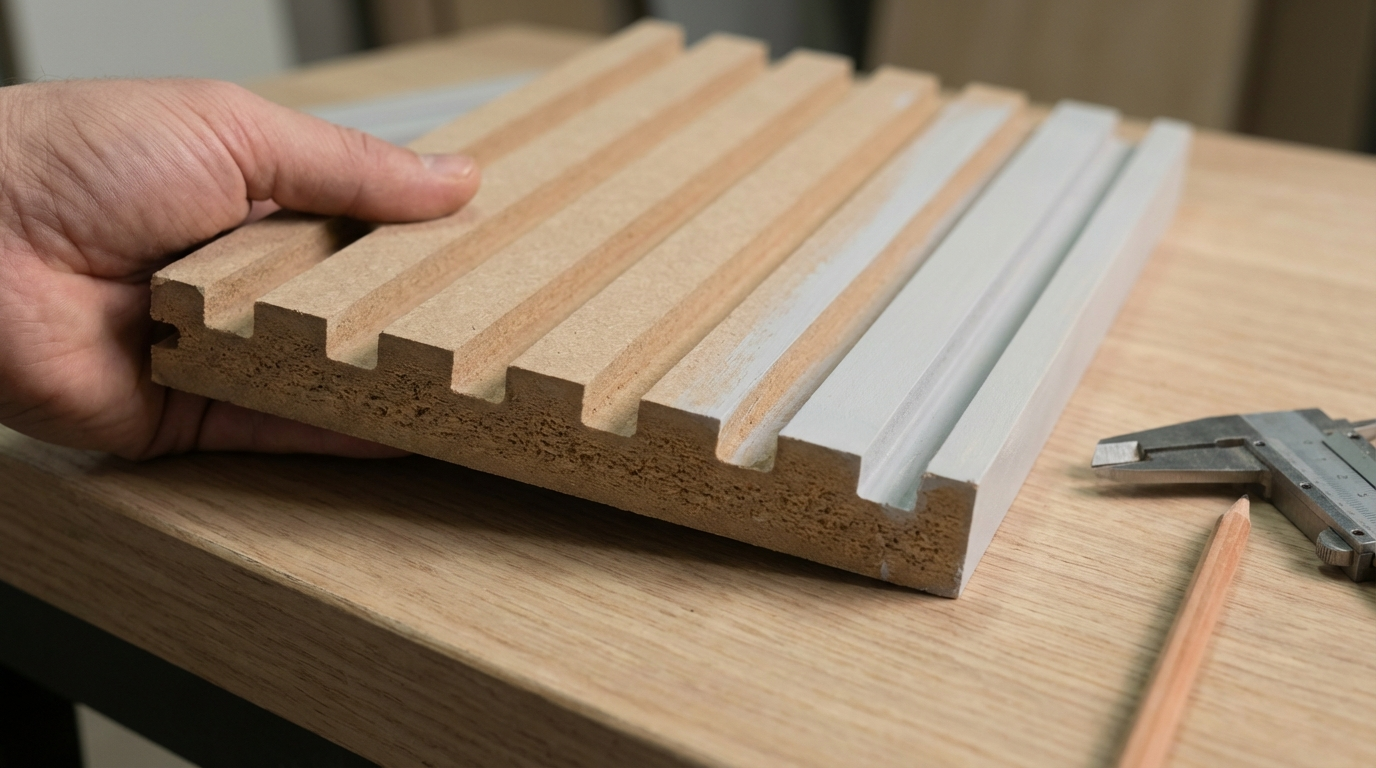
| Wall panelling | 6–12mm | Textured or woodgrain | Adhesive quality critical |
Decision Framework: Which Variant for Which Condition
Use this framework to specify the right melamine board variant based on your project conditions:
| Condition | Recommended Variant | What to Verify |
|---|---|---|
| Dry interior, low abuse | Standard melamine MDF, 18mm | Core density ≥700 kg/m³ |
| Wet zone adjacent (near sink) | Moisture-resistant (MR) core | Green/blue core colour indicator |
| Direct water exposure risk | HDFWR core + sealed edges | Manufacturer moisture rating |
| Coastal/high humidity city | MR or HDFWR core minimum | Storage conditions before delivery |
| High scratch/impact zone | Consider HPL over melamine | Surface hardness specification |
| Tight budget, dry area | Standard melamine, proper edge band | Edge banding quality and adhesion |
| Fast delivery needed | Stock melamine colours/sizes | Actual stock availability |
| CNC routing required | Higher density core (≥750 kg/m³) | Clean routing test on sample |
| Heavy load shelving | 25mm or reinforced 18mm | Span calculations for sag prevention |
Common Buyer Mistakes and How to Avoid Them
Melamine board purchases frequently go wrong due to avoidable errors. Here are the most common mistakes and practical prevention strategies:
Mistake 1: Ignoring core moisture resistance for kitchen use
Problem: Standard cores swell when exposed to steam and splashes near sinks. Solution: Always specify MR or HDFWR cores for any kitchen cabinet, especially base units.
Mistake 2: Skipping edge banding to save costs
Problem: Exposed edges absorb moisture within weeks, leading to irreversible swelling. Solution: Budget for quality PVC or ABS edge banding on all exposed edges without exception.
Mistake 3: Not checking panel storage conditions
Problem: Panels stored in damp warehouses or transported in open trucks arrive pre-damaged. Solution: Visit supplier storage or request climate-controlled storage confirmation.
Mistake 4: Ordering without physical samples
Problem: Screen colours differ from actual finishes; batch variations cause mismatches. Solution: Obtain physical samples and order entire project requirement from same batch.
Mistake 5: Using standard thickness for long shelves
Problem: 18mm melamine sags over spans exceeding 600mm under load. Solution: Use 25mm for longer spans or add intermediate supports.
Mistake 6: Drilling without pilot holes
Problem: MDF cores split or crumble when screws are driven directly. Solution: Always pre-drill pilot holes slightly smaller than screw diameter.
Mistake 7: Ignoring hinge zone reinforcement
Problem: Repeated door opening loosens hinges in MDF over time. Solution: Use hinge mounting plates or specify HDFWR for shutter panels.
Mistake 8: Assuming all white melamine matches
Problem: Different manufacturers produce slightly different white shades. Solution: Source all visible white panels from single manufacturer and batch.
Mistake 9: Cutting without proper blade selection
Problem: Wrong blades cause surface chipping and rough edges. Solution: Use high-tooth-count TCT blades designed for laminated boards.
Mistake 10: Installing against damp walls
Problem: Newly plastered or seepage-prone walls transfer moisture to panel backs. Solution: Ensure walls are fully cured; maintain 10–15mm gap from wall with ventilation.
Failure Modes and Fixes
Understanding how melamine boards fail helps you prevent problems and address them if they occur:
Failure 1: Edge swelling
Symptom: Edges become puffy, soft, or visibly expanded. Root cause: Moisture absorption through unsealed or poorly sealed edges. Prevention: Apply quality edge banding immediately after cutting; avoid floor storage. If already happening: Damaged sections cannot be reversed; replace affected panels and seal properly.
Failure 2: Surface delamination
Symptom: Melamine layer peels or bubbles away from core. Root cause: Manufacturing defect, extreme heat exposure, or moisture penetration from underneath. Prevention: Source from reputable suppliers; keep away from heat sources. If already happening: Small areas can sometimes be re-adhered with contact adhesive; large areas require panel replacement.
Failure 3: Screw pull-out
Symptom: Screws become loose; hardware wobbles or falls off. Root cause: Low core density, over-tightening, or moisture-weakened core. Prevention: Use pilot holes; specify higher-density cores; avoid over-torquing. If already happening: Fill hole with wood filler mixed with sawdust, let cure, re-drill; or relocate hardware slightly.
Failure 4: Surface scratching
Symptom: Visible scratch marks, especially on dark or glossy surfaces. Root cause: Insufficient surface hardness for application; abrasive cleaning. Prevention: Choose appropriate hardness grade; use soft cloths for cleaning. If already happening: Light scratches can be masked with colour-matched wax; deep scratches require professional refinishing or panel replacement.
Failure 5: Warping or bowing
Symptom: Panel curves or twists out of flat plane. Root cause: Uneven moisture exposure (one side sealed, other exposed); improper storage. Prevention: Store flat with uniform support; seal both faces if possible. If already happening: Minor warps may flatten under weight over time; severe warping requires replacement.
Failure 6: Edge chipping during cutting
Symptom: Ragged, chipped edges after saw cuts. Root cause: Wrong blade type, worn blade, or incorrect feed speed. Prevention: Use sharp TCT blades with 80+ teeth; score melamine surface first on table saws. If already happening: Hide with edge banding; prevent by improving cutting technique.
Failure 7: Colour fading
Symptom: Surface colour becomes lighter or yellowed over time. Root cause: UV exposure from direct sunlight. Prevention: Avoid placing melamine furniture in direct sunlight; use curtains or UV-film on windows. If already happening: Fading is irreversible; replace visible panels or reposition furniture.
Quality Checks You Can Do Without Lab Tests
Verify melamine board quality using practical field checks at different stages:
Before buying: visual and tactile inspection
- Surface uniformity: Run your palm across the surface; it should feel consistently smooth without bumps or depressions
- Edge inspection: Look at raw edges for consistent density; avoid boards with visible voids, loose particles, or uneven layers
- Colour consistency: Compare multiple sheets from the same batch; reject if noticeable shade variations exist
- Weight check: Heavier boards of same thickness indicate higher density and typically better quality
- Flex test: Gently flex a corner; quality boards resist bending; avoid boards that feel flimsy
- Red flags: Warped stacks, water stains on packaging, musty smell (indicates moisture damage)
Questions to ask suppliers
- What is the core density (kg/m³)?
- Is this standard, MR, or HDFWR core?
- What is the surface hardness rating?
- How long has this batch been in storage?
- Can I get all panels from the same production batch?
- What is the return policy for defective sheets?
After cutting: edge quality assessment
- Clean edge: Cut edge should be smooth without tearing or chunking
- Core visibility: Uniform fibre distribution visible; no voids or inconsistent patches
- Surface-core bond: Melamine layer should not lift or separate at cut edge
- Chipping: Minimal to no surface chipping along cut line indicates proper blade and technique
After installation: ongoing quality verification
- Edge band adhesion: Press firmly along edge bands; they should not lift or feel hollow
- Panel alignment: Doors and drawers should close flush without catching
- Hardware tightness: Check hinges and handles after one week; retighten if needed
- Surface condition: Clean with damp cloth; water should not soak in; surface should not show marks
Persona-Specific Tips
For homeowners: durability and maintenance
- Do: Wipe spills immediately with soft, damp cloth
- Do: Use coasters under hot vessels; melamine can discolour from heat
- Do: Keep furniture away from direct sunlight to prevent fading
- Do: Ensure good ventilation behind wardrobes on external walls
- Don't: Use abrasive scrubbers or steel wool for cleaning
- Don't: Drag heavy objects across melamine surfaces
- Don't: Allow water to pool near edges or joints
- Don't: Use harsh chemical cleaners; mild soap solution is sufficient
For carpenters: fabrication best practices
- Cutting: Use 80-tooth or higher TCT blades; feed slowly to reduce chipping
- Edge preparation: Clean dust from edges before applying edge banding; ensure edges are perfectly square
- Drilling: Always use pilot holes; position screws at least 25mm from edges to prevent splitting
- Hinge mounting: Use cup hinges with appropriate boring; consider hinge mounting plates for heavy doors
- Handling: Store panels flat on level surface; lift with two people to prevent flexing
- Edge banding: Heat-apply or use quality adhesive; trim excess carefully without scratching surface
- Fastening zones: Reinforce screw zones with wooden blocks or use cam-lock fittings for knock-down furniture
For architects and designers: specification guidance
- Specify core type explicitly: "18mm MR-grade melamine MDF" not just "melamine board"
- Include density requirement: Minimum 700 kg/m³ for standard applications; 750+ for CNC work
- Wet zone protocols: Mandate HDFWR cores for all base cabinets; MR minimum for wall cabinets
- Edge treatment specification: Call out edge banding type, thickness (1mm or 2mm), and colour matching
- Finish consistency: Specify single-batch procurement for visible surfaces
- Detail junction conditions: Show edge-sealing requirements at drawings stage
- Ventilation notes: Specify gaps behind panels on external walls
For OEM and modular furniture makers: production quality
- Incoming QC: Check each lot for density, moisture content, and surface defects before accepting
- Storage protocols: Climate-controlled or covered storage; stack flat on pallets
- Cutting batch management: Cut panels from same lot for each project to ensure colour consistency
- Edge banding station: Dedicated temperature-controlled area; regular adhesive quality checks
- Assembly checkpoints: Verify edge seal before packing; test hardware tightness
- Reducing returns: Document storage and handling conditions; photograph before dispatch
- Customer education: Include maintenance card with delivered furniture
CNC and Edge-Banding Workflow Tips
Does melamine board work well with CNC routing?
Melamine MDF is widely used for CNC machining due to its uniform density and consistent surface. However, results depend on core density and proper tooling. Higher-density cores (750+ kg/m³) produce cleaner cuts with less fuzzing. Use sharp, quality carbide bits specifically designed for MDF; dull bits cause surface chipping and edge burning. Set appropriate feed rates—too fast causes chipping, too slow causes burning. Vacuum hold-down works well; spoilboards should be flat and regularly surfaced. Clean dust extraction is essential as melamine dust is fine and pervasive.
What edge banding works best with melamine boards?
PVC edge banding (0.8mm to 2mm) is the most common choice for melamine furniture in India, offering good durability and moisture resistance at reasonable cost. ABS edge banding is a premium alternative with better impact resistance and environmental profile. Matching melamine tape provides seamless appearance but offers less protection than PVC/ABS. For best results, use hot-air or laser edge banding machines rather than manual iron-on methods. Ensure clean, dust-free edges before application; contamination causes adhesion failure. Trim and buff edges carefully to avoid surface scratches.
FAQs
Is melamine board suitable for kitchen cabinets?
Melamine board works well for kitchen cabinet carcasses and shutters when you select the correct core type. Wall cabinets can use moisture-resistant (MR) cores since they face less direct water exposure. Base cabinets near sinks and dishwashers require HDFWR cores because they encounter splashes, leaks, and higher humidity levels. Standard melamine cores should never be used in kitchens as they swell and deteriorate rapidly. Ensure all edges are properly sealed with PVC edge banding, and maintain ventilation inside cabinets to reduce trapped humidity.
How long does melamine furniture typically last?
Well-made melamine furniture with properly sealed edges and appropriate core types typically lasts 8–15 years in normal residential use. Longevity depends heavily on installation quality, edge treatment, and usage conditions. Furniture in dry environments with careful handling outlasts pieces in humid areas or heavy-use zones. The most common failure point is edge swelling from moisture ingress, which can occur within months if edges are left unsealed. Regular maintenance, avoiding excessive moisture, and protecting from direct sunlight extend service life significantly.
Can melamine board be painted or refinished?
Melamine surfaces can be painted, but the smooth, non-porous surface requires proper preparation for paint adhesion. Lightly sand the surface with fine-grit sandpaper (220-grit) to create mechanical tooth, then apply a bonding primer specifically designed for laminated surfaces. Allow primer to cure fully before applying quality acrylic or enamel paint. Results vary—factory-applied finishes generally outperform paint jobs in durability and consistency. Consider whether painting is cost-effective compared to replacing panels with the desired colour from the start.
What thickness should I use for wardrobe shutters?
18mm is the standard and recommended thickness for wardrobe shutters in most Indian residential applications. This thickness provides adequate rigidity to prevent bowing, sufficient material for hinge cup boring, and appropriate weight for smooth door operation. Taller shutters (above 2.1 meters) may benefit from 25mm to prevent flexing, though this increases weight and requires stronger hinges. Using thinner material (12mm) for cost savings is not advisable for shutters as they flex, cause hinge problems, and look flimsy.
How do I prevent melamine edge chipping during cutting?
Edge chipping occurs due to blade selection, blade condition, and cutting technique. Use TCT (tungsten carbide tipped) blades with 80 or more teeth for clean cuts. Ensure the blade is sharp—dull blades drag rather than cut, causing chips. On table saws, position the panel with the finished side facing up (toward the blade's downward rotation) and use a zero-clearance insert. For hand-held circular saws, cut with the finished side facing down. Score the cut line with a utility knife before sawing, and apply masking tape along the cut line for additional protection.
Is melamine board termite-resistant?
MDF cores used in melamine boards offer inherent resistance to termites because the high-temperature pressing process and resin content make the material less attractive to termites than natural solid wood. However, this is not absolute immunity. In termite-prone areas, additional precautions are advisable: treat the installation area with termite repellent, ensure no direct ground contact, and maintain dry conditions. Some manufacturers offer melamine boards with enhanced termite-resistant additives in the resin formulation—verify this specification if your location has significant termite risk.
Can melamine board be used for outdoor furniture?
Standard melamine board is strictly an interior material and should never be used outdoors. Even brief exposure to rain, dew, or sustained humidity causes rapid deterioration—edges swell within days, cores weaken, and surfaces delaminate. Exterior-grade MDF products exist with enhanced moisture resistance and weather-resistant treatments, but even these are intended for covered outdoor areas rather than direct weather exposure. For true outdoor furniture, consider marine-grade plywood, treated timber, or materials specifically rated for exterior use.
What is the difference between melamine MDF and particle board-based melamine?
The primary difference lies in the core material. MDF-based melamine uses medium-density fibreboard, which has uniform density throughout, smoother edges after cutting, and better screw-holding capacity. Particle board-based melamine uses coarser wood particles, resulting in rougher cut edges, lower screw retention, and generally lower durability. MDF-based products cost more but perform better for furniture applications. Particle board-based melamine is sometimes used for inexpensive, non-structural applications like back panels or cheap retail fixtures. For quality furniture, always specify MDF-based cores.
How should I clean melamine surfaces?
Clean melamine surfaces with a soft, damp cloth and mild soap solution for routine cleaning. Wipe in the direction of any grain pattern if present. For stubborn stains, a mixture of warm water with small amounts of vinegar or baking soda paste can help. Avoid abrasive cleaners, scouring pads, steel wool, or harsh chemical solvents—these scratch or discolour the surface. Never use excessive water that could seep into edges or joints. Dry the surface after cleaning to prevent water spots. For kitchen cabinets, regular cleaning prevents grease buildup that becomes difficult to remove over time.
Does melamine board emit harmful fumes?
MDF cores in melamine boards contain formaldehyde-based resins used during manufacturing. Quality products emit very low levels of formaldehyde, well within safe limits established by regulatory standards. The melamine surface layer actually helps seal in any emissions from the core. Newly manufactured boards may have a slight odour that dissipates over a few weeks. For sensitive individuals or spaces requiring stringent air quality, look for products with E1 or E0 emission ratings, which indicate very low formaldehyde release. Ensure good ventilation in rooms with new melamine furniture during the first few weeks.
Can I repair a damaged melamine surface?
Minor repairs are possible depending on damage type. Small chips can be filled with colour-matched melamine repair paste or wax sticks, blended carefully to match the surrounding surface. Light scratches on dark surfaces can be minimized with furniture markers in matching shades. However, deep gouges, delamination, and water damage typically cannot be satisfactorily repaired—the affected panel usually needs replacement. For edge damage, removing and reapplying edge banding may restore appearance if the core underneath is intact. Prevention through proper handling and maintenance is always preferable to repair attempts.
What factors affect melamine board price most significantly?
Core type has the largest impact—moisture-resistant and HDFWR cores cost 25–40% more than standard cores. Core density matters next; higher-density boards cost more but perform better. Surface finish affects pricing, with textured, high-gloss, and synchronized woodgrain finishes commanding premiums over basic matte solids. Thickness scales pricing roughly proportionally. Brand reputation adds cost but often correlates with quality consistency. Location-based logistics, minimum order quantities, and market demand fluctuations also influence final pricing. Buying in bulk typically yields better rates than small quantities, but requires proper storage facilities.
Disclaimer: This content is provided for general informational purposes based on industry practices and publicly available information. Product specifications, standards, prices, and availability may vary by manufacturer, region, and time. Readers should independently verify details with manufacturers, dealers, or qualified professionals before making purchase or construction decisions.
Want Plywood Suggestions?
Share a few details and a VIR MDF specialist will suggest suitable brands and connect you to responsive dealers.