MDF Price vs Plywood Price: Real Cost Comparison for Wardrobes & Kitchens
Compare MDF vs plywood costs beyond the sheet price—finishing, labour, durability, and where each material makes financial sense.
Quick Decision Summary
MDF usually beats plywood on upfront sheet costs and total project savings for wardrobes and dry kitchens, but plywood pulls ahead in moist areas when factoring longevity.
If you’re in a hurry: For a standard 8x4 ft 18mm wardrobe or kitchen shutter in low-humidity interiors like bedrooms or living rooms, MDF cuts total costs by 20-30% through cheaper sheets, easier machining, and quicker lamination—ideal for modular setups. Switch to plywood for coastal or monsoon-exposed kitchens where water splashes demand better screw-hold and edge stability, even if it adds 15-25% to the bill. Always verify density and moisture content on-site before cutting.
- Choose MDF if: budget-tight, smooth finishes needed, dry zones, CNC-heavy workflow, fast turnaround.
- Choose plywood if: wet kitchens, heavy hardware loads, termite-prone storage, long-term abuse expected.
- Avoid MDF if: direct water contact or poor ventilation sites.
- Avoid plywood if: ultra-smooth laminates required or labour costs must stay minimal.
What MDF and Plywood Actually Are
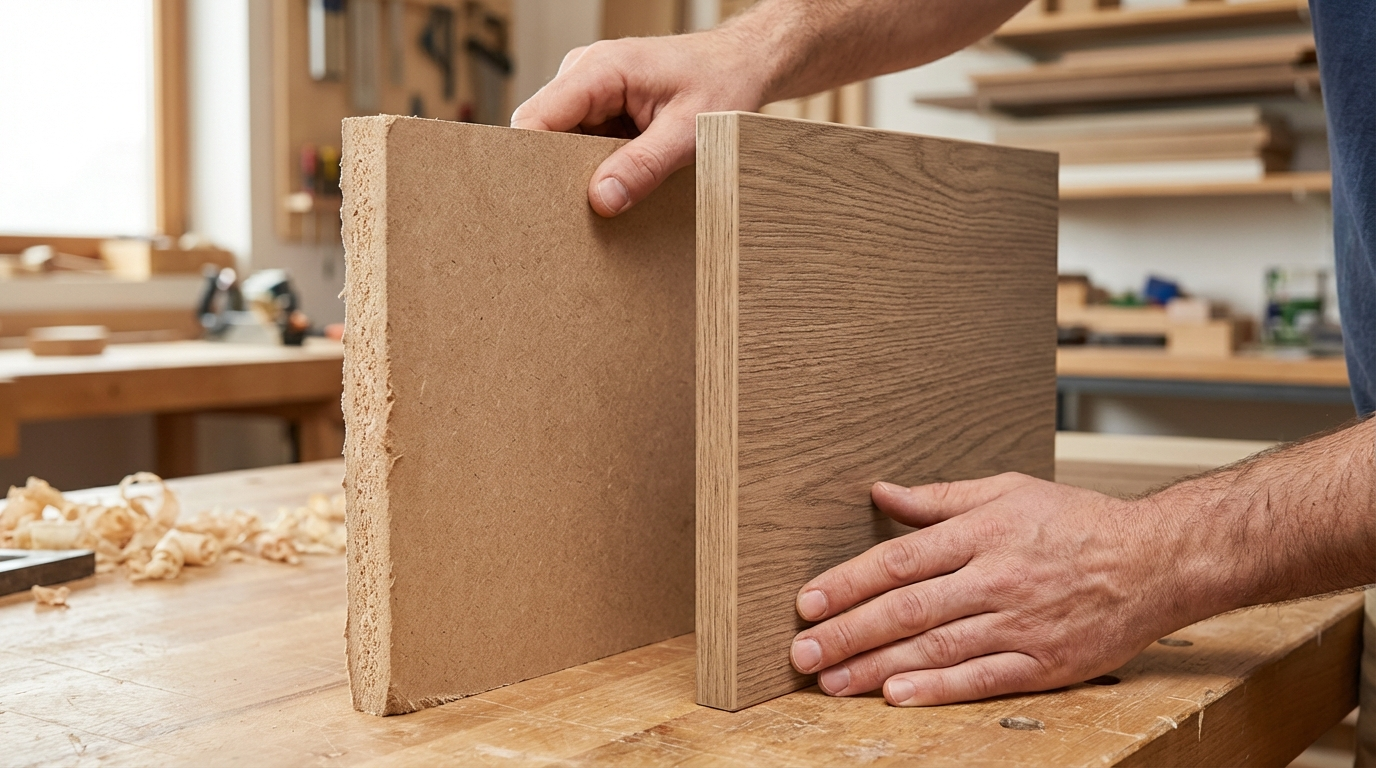
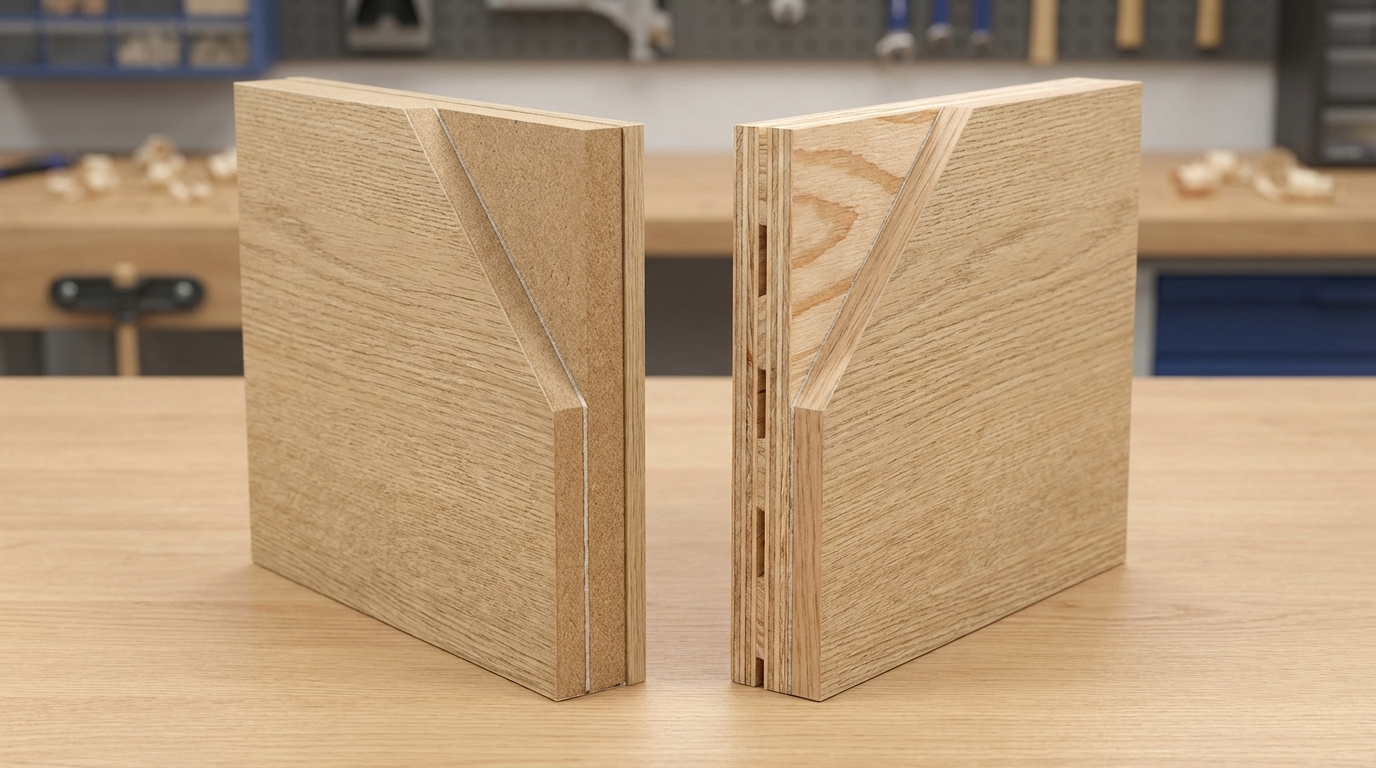
MDF, or Medium Density Fiberboard, starts as wood fibers mixed with resin, pressed into uniform sheets. This creates a smooth, consistent surface perfect for paints, laminates, or veneers, with no knots or voids. Available in standard, moisture-resistant (MR), or high-density variants, it suits flat panels in wardrobes and cabinets.
Plywood layers thin wood veneers cross-glued for strength, forming sheets with a core and face veneers. It offers natural wood grain options but rougher surfaces needing more prep. Grades like BWR (boiling water resistant) target wet areas, while commercial types fit dry uses. Both come in thicknesses from 3mm to 25mm, but handling differs sharply in Indian workflows.
In wardrobes, MDF enables seamless modular designs; in kitchens, plywood handles hardware stresses better. Key difference: MDF machines evenly for CNC routing, while plywood risks splintering on edges.
Why It Matters in Indian Homes and Sites
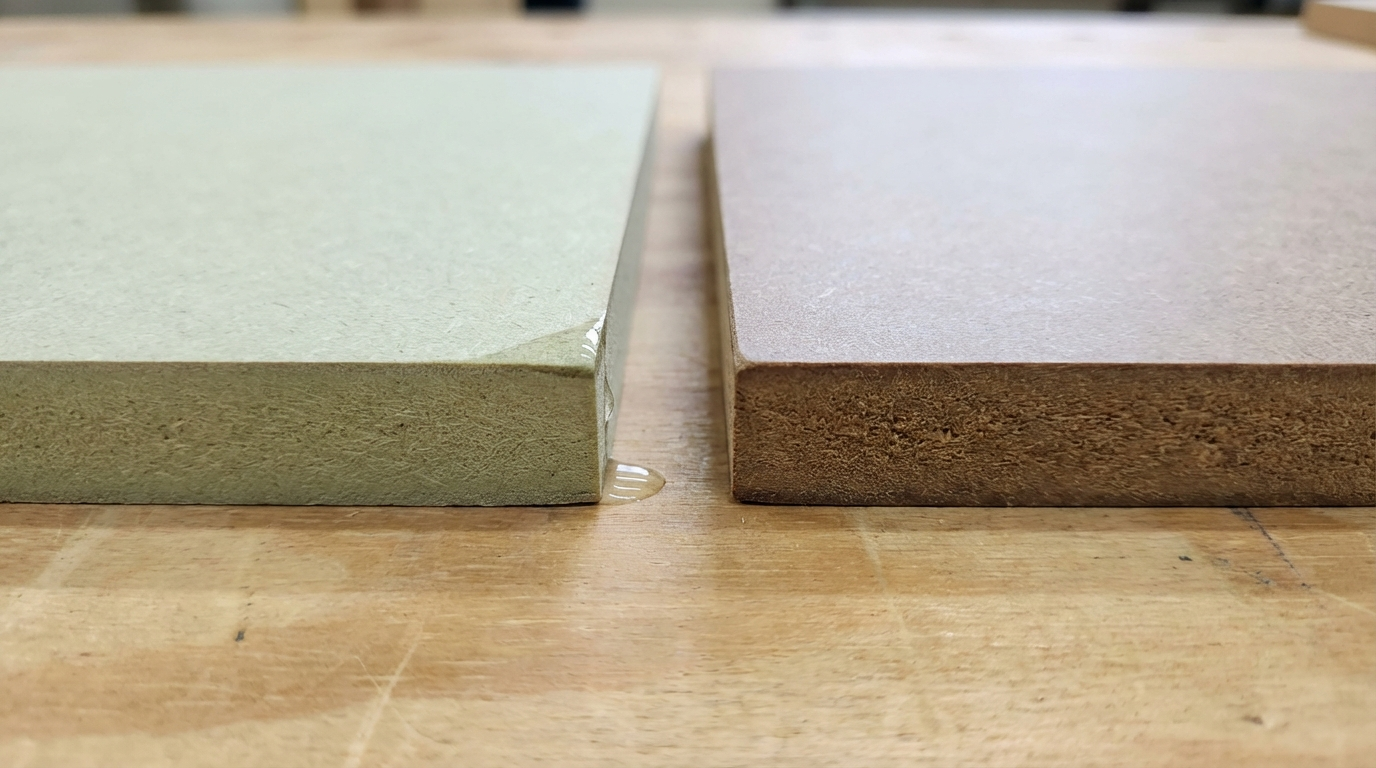
Monsoon humidity (70-90% in coastal cities like Mumbai or Chennai) swells MDF edges if unsealed, leading to delamination under laminates. Plywood fares better with its layered resistance but invites termites without treatment. Site realities—dusty storage yards, truck transport moisture, and variable carpenter skills—amplify risks.
For wardrobes in apartments, MDF's uniformity resists warping in AC-cooled rooms. Kitchens face spills and steam; untreated plywood absorbs faster, but sealed BWR holds up. Poor ventilation in Indian high-rises traps moisture, hiking failure rates 2-3x. Labour varies: city carpenters charge less for MDF finishing, but rural ones struggle with plywood veneers.
Practical fallout: Swollen wardrobe doors misalign hinges; kitchen cabinets sag under utensils. Always factor local climate—dry Delhi interiors suit MDF savings, humid Kerala demands plywood durability.
Price Range and Cost Drivers
Sheet prices fluctuate widely: 18mm MDF typically runs Rs 80-140 per sq ft, while plywood sits at Rs 100-200 per sq ft, varying by tier-1 cities (higher logistics) vs tier-2 (lower). Thickness drives 40% of cost—12mm saves 20-30% over 18mm for shutters. Density matters: higher in HDF variants adds 15-25% for better screw-hold.
Finishes multiply expenses: plain MDF needs lamination (Rs 20-50/sq ft extra), pre-laminated skips this but costs 10-20% more upfront. Plywood demands sanding and edge banding (Rs 15-40/sq ft), plus veneer matching hikes 30%. Resin type (MR vs standard) adds Rs 10-30/sq ft for moisture resistance.
Logistics, wastage (5-15% from cuts), and city variation (Mumbai 20% pricier than Lucknow) push totals. Labour: MDF routing 20% faster/cheaper. Example: 100 sq ft wardrobe—MDF total Rs 15,000-25,000; plywood Rs 20,000-35,000.
How much does 18mm MDF cost per sheet?
A standard 8x4 ft 18mm MDF sheet typically costs Rs 2,500-5,000, depending on density and MR grade. Factor in transport (Rs 200-500/sheet) and 10% wastage for custom cuts. Coastal areas add 10-15% for humidity-proof packing. To estimate: multiply sq footage by Rs 90-130/sq ft base, then add 20% for finishes. Check quotes by specifying "18mm MR MDF, 750+ density, no delam guarantee asked." This beats plywood's Rs 3,200-6,500/sheet range for similar specs. Next step: compare 3 local suppliers' thickness-wise quotes on-site.
Why is plywood more expensive than MDF?
Plywood's veneer layers and glue lines demand premium hardwood faces, pushing costs 20-50% higher than MDF's fiber blend. Thicker cores for strength add bulk. In India, BWR plywood resists boiling water tests better, justifying Rs 20-40/sq ft premium. Labour for sanding rough faces doubles time vs MDF's smooth start. Verify by weighing samples—plywood feels heavier. If budget-capped, MDF hybrids close the gap. Always ask for core density specs to avoid lightweight fakes. Test: tap edges for hollow sounds in cheap plywood.
Two-Minute Comparison (What Changes in Real Life)
Beyond sheet price, total costs hinge on finishing, labour, durability, and site fit. MDF shines in speed and smoothness; plywood in robustness. Here's a quick table:
| Aspect | MDF | Plywood | Cost Impact |
|---|---|---|---|
| Sheet Price (18mm/sq ft) | Rs 80-140 | Rs 100-200 | MDF saves 20-30% |
| Finishing Labour | Low (smooth base) | High (sanding needed) | MDF -15-25% |
| Edge Banding | Easy, thin tape | Thicker, splinter risk | MDF -10% |
| Durability (Dry) | Good | Good | Even |
| Durability (Wet) | Fair (MR needed) | Excellent (BWR) | Plywood + longevity |
| Screw Hold | Average | Strong | Plywood for hardware |
| Total Wardrobe Cost | Lower | Higher | MDF wins dry |
Choose MDF for 80% of urban wardrobes; plywood for kitchens with sinks.
Is MDF cheaper overall for wardrobes?
Yes, MDF totals 20-35% less for wardrobes due to lower sheet rates, minimal sanding, and CNC compatibility reducing labour by 1-2 days. A 10x6 ft unit: MDF Rs 18,000-28,000 vs plywood Rs 24,000-40,000. Nuances: add edge banding uniformly. In dry zones, no durability trade-off. Check: cut a sample—clean MDF edges tape perfectly. Homeowners save on maintenance too. Next: list your panel count, multiply by Rs 100/sq ft average, adjust for city.
Practical Use Cases (What Works, What Fails)
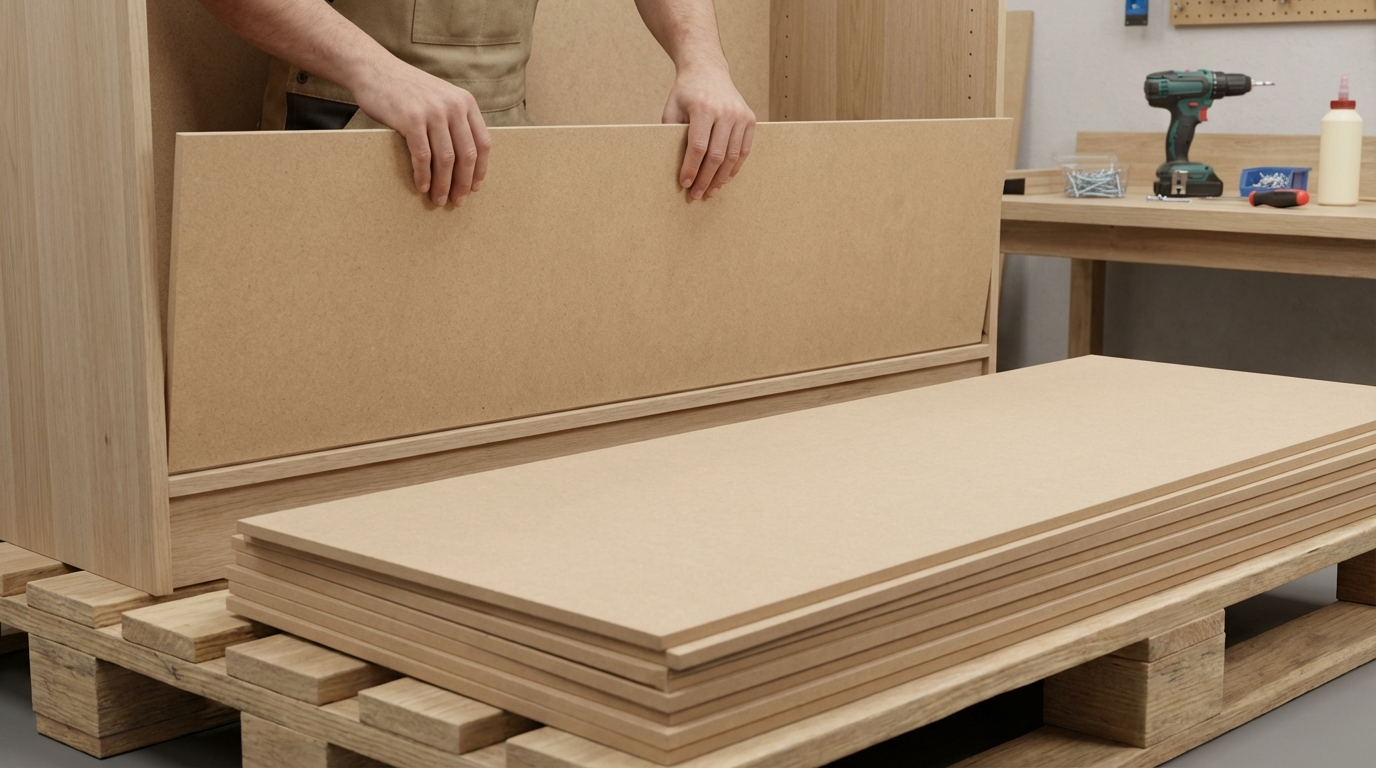
For wardrobes: MDF 18mm with laminate for shutters—cost-effective, seamless. Fails if basement storage swells. Kitchens: plywood 18mm BWR under sinks, MDF elsewhere.
| Use Case | Recommended Material | Thickness | Finish Notes | Risk Notes (India) |
|---|---|---|---|---|
| Wardrobe Shutters (Dry Room) | MDF | 18mm | Laminate + PVC edge | Low humidity ok; seal edges |
| Kitchen Base Cabinets | Plywood BWR | 18-19mm | Veneer or Laminate | Monsoon splashes—MR essential |
| TV Unit Partitions | MDF | 12mm | Pre-lam | Dry AC rooms only |
| Wet Wall Panels | Plywood | 12mm | High gloss + sealant | Coastal ventilation key |
Which is better for modular kitchens?
Plywood edges out for modular kitchens with heavy drawers and sinks, as its screw-hold prevents sagging over 5-10 years—vital in steamy Indian cooking zones. MDF works for uppers if MR grade and sealed. Total cost: plywood 15% higher but fewer repairs. Condition: pair with SS hardware. Check: load-test sample shelves with 20kg. Architects spec 750kg/m3 density minimum. Next step: map wet/dry zones in your layout.
How to Decide in 5 Steps
- Map site risks: Note humidity (monsoon? coastal?), water exposure, load (utensils? clothes?). Dry wardrobe? MDF. Wet kitchen? Plywood.
- List project specs: Sq ft, thickness, finishes. Calculate rough budget: MDF base Rs 120/sq ft totalled.
- Sample check: Tap for density, cut edge for uniformity. Weigh vs specs.
- Get 3 quotes: Specify "18mm MR, density 700+, edge-seal ready." Compare labour inclusive.
- Verify post-cut: No swelling after 24hr humidity test. Adjust if needed.
Failure point: skipping step 1 leads to kitchen delams. Prevention: use hygrometer on-site.
Common Buyer Mistakes and How to Avoid Them
- Mistake 1: Buying cheapest sheet ignoring density. Avoid: insist on 700kg/m3+ for screw zones.
- Mistake 2: No edge sealing on MDF. Avoid: PVC tape full perimeter pre-install.
- Mistake 3: Storage in open yards (monsoon soak). Avoid: plastic wrap, elevated stacks.
- Mistake 4: Wrong thickness for loads. Avoid: 18mm min for cabinets; test deflection.
- Mistake 5: Skipping MR in humid cities. Avoid: check boiling test history verbally.
- Mistake 6: Poor CNC feeds on plywood (splinters). Avoid: sharp bits, slow passes.
- Mistake 7: Overlooking wastage. Avoid: optimize cuts via software.
- Mistake 8: Ignoring labour variance. Avoid: time carpenters on samples.
- Mistake 9: No ventilation planning. Avoid: gaps in designs for airflow.
- Mistake 10: Hardware mismatch. Avoid: pilot holes sized for material.
Failure Modes and Fixes
- Symptom: Edge swelling. Root: Humidity on unsealed MDF. Prevention: Immediate PVC banding. Fix: Sand, re-band; replace if delam.
- Symptom: Screw pull-out. Root: Low density core. Prevention: 700kg/m3 min, inserts. Fix: Glue + redrill.
- Symptom: Delamination. Root: Poor resin in plywood. Prevention: BWR grade. Fix: Clamp, epoxy; often replace.
- Symptom: Surface scratches. Root: Laminate thinness. Prevention: 0.8mm+ thick. Fix: Polish minor; repaint.
- Symptom: Warping post-install. Root: Uneven moisture. Prevention: Acclimatize 48hrs. Fix: Shim hinges.
- Symptom: Termite tracks. Root: Untreated plywood. Prevention: Pre-treated sheets. Fix: Fumigate, monitor.
- Symptom: Chipping on cuts. Root: Dull tools on plywood. Prevention: Carbide blades. Fix: Band over chips.
Does MDF warp more than plywood?
MDF warps more in humidity if not MR-sealed, as fibers absorb evenly but swell uniformly. Plywood resists via cross-layers but twists if veneers delam. In Indian monsoons, acclimatize both 3 days in site humidity. Check: measure diagonal post-cut. MDF suits sealed dry uses; plywood open shelves. Next: use moisture meter (<12% ideal). Architects add backer boards for stability.
Quality Checks You Can Do Without Lab Tests
Before buying: Visual—uniform colour, no lumps; tap—no hollow; smell—fresh resin. Ask: density figure? MR proof? Reject soft edges.
After cutting: Edges straight, no fuzz on MDF, minimal tear-out on plywood. Screw-test: 3 holds firm. Humidity expose 24hrs—no swell.
After install: Hinges align, no gaps; clean with damp cloth— no peel. Load shelves 15kg/sq m.
How to check MDF quality on-site?
Drop-test: firm thud, no dent. Cut sample: smooth dust, straight kerf. Screw 5x: no crumble. Density proxy: weighs 30-35kg for 8x4x18mm. Red flags: visible fibers, soft corners. In India, reject post-rain stored stock. Next: compare vs plywood sample side-by-side. Carpenters note: machine same day.
Your Decision Framework
| Condition | MDF Recommendation | Plywood Recommendation | Verify This |
|---|---|---|---|
| Wet Zone (Kitchen Sink) | Avoid or MR only | BWR 18mm | Boil test verbal |
| Coastal Humidity | HDFMR + seal | Pre-treated | Moisture <10% |
| Heavy Use (Kids) | With inserts | 19mm thick | Screw hold test |
| Tight Budget | Standard 18mm | Commercial grade | Labour quote incl |
| Fast Delivery | Pre-lam stocked | Standard ply | Stock check |
| High Scratch Risk | Thick laminate | Veneer + polish | 0.8mm face thick |
| CNC Workflow | Preferred | With care | No voids |
Tips by Buyer Type
Homeowners: Clean dry only; avoid spills on MDF edges. Durability: laminate > paint. Don't overload shelves sans bracing.
Carpenters: MDF: 6000rpm cuts, pilot holes. Plywood: tape edges pre-cut. Fasten 40mm from ends. Handle flat to avoid bows.
Architects/Designers: Spec density/thickness per zone. Detail edge returns for humidity. Logic: MDF for curves, plywood straights.
OEM/Modular Makers: QC: batch weigh, cut-test 5%. Reduce returns: pre-band all. Repeatability high with MDF jigs.
Which saves more for carpenters' labour?
MDF slashes labour 20-30% via smooth routing and no sanding, key for high-volume wardrobe jobs. Plywood needs extra passes for splinters. In India, daily output doubles. Condition: skilled CNC ops. Check: time a 10-panel set. Next: train on feedspeeds. Architects bundle specs for efficiency.
FAQs
Is MDF price lower than plywood for 18mm sheets?
MDF 18mm sheets generally cost 20-40% less per sq ft due to simpler fiber production vs plywood's veneers. However, add-ons like moisture resistance narrow the gap to 10-20%. In tier-1 cities, transport evens it somewhat. Total project view: MDF wins on labour speed. Homeowners factor full quotes; carpenters note faster turnaround boosts jobs per day. Always specify density to compare apples-to-apples, as low-grade plywood undercuts temporarily.
Can MDF be used for kitchen cabinets in India?
MR or HDFWR MDF works for upper kitchen cabinets away from water, saving costs in ventilated spaces. Avoid base units near sinks—opt plywood there. Monsoon prep: full sealing and exhaust fans cut risks. Many urban projects mix: MDF uppers, plywood lowers. Check post-install moisture; acclimatize sheets. This hybrid balances price and durability effectively for Indian homes.
How does plywood hold up better in wardrobes?
Plywood's layered strength excels for heavy clothing loads and hardware in walk-ins, resisting sags better than MDF without inserts. Termite treatment adds longevity in ground floors. Cost trade-off: higher initial but fewer fixes. Verify core quality; pair with soft-close hinges. Ideal for humid wardrobes with poor AC—prevents hinge misalignment over years.
What thickness for wardrobe shutters: MDF or plywood?
18mm standard for both ensures rigidity; 16mm risks flex in larger doors. MDF lighter aids handling; plywood sturdier for pivots. India tip: add stiffeners in humid zones. Cost: 18mm MDF saves Rs 10-20/sq ft vs plywood. Test swing a sample door. Spec it in drawings for quotes.
Does finishing cost more on plywood?
Yes, plywood requires extra sanding and thicker edge bands, hiking finishing 15-30% over MDF's ready surface. Laminates adhere easier on MDF too. Total: choose based on design—glossy kitchens suit MDF polish. Coastal projects double-seal plywood. Labourers save time on MDF batches.
Is MR MDF worth the extra price vs standard?
In humid/coastal India, yes—MR adds 10-20% sheet cost but prevents 80% of swelling failures. Standard MDF suits AC bedrooms only. Compare: soak samples overnight. Wardrobe ROI: longer life offsets premium. Always band edges regardless.
How to calculate total cost for a full kitchen?
Measure sq ft (carcass + shutters), multiply by material rate (MDF Rs 120-180 totalled; plywood Rs 150-250), add 15% wastage/labour, 10% finishes. Example: 150 sq ft—MDF Rs 22k-35k. Adjust for city, zones. Get itemized quotes. Factor durability savings long-term.
Which has better screw holding for hinges?
Plywood typically holds screws 20-50% tighter due to grain layers, crucial for repeated door slams. MDF needs longer screws or inserts in high-use spots. Test: cycle 100x on samples. India kitchens benefit plywood here; wardrobes MDF ok with prep.
Can you mix MDF and plywood in one project?
Absolutely—common in India for cost optimization: MDF for visible laminates, plywood for load-bearing. Transition edges carefully to avoid visual mismatch. Architects detail zones; carpenters note handling diffs. Saves 15-25% overall without compromises.
Disclaimer: This content is provided for general informational purposes based on industry practices and publicly available information. Product specifications, standards, prices, and availability may vary by manufacturer, region, and time. Readers should independently verify details with manufacturers, dealers, or qualified professionals before making purchase or construction decisions.Want Plywood Suggestions?
Share a few details and a VIR MDF specialist will suggest suitable brands and connect you to responsive dealers.