MDF vs HDHMR Board Price: Which Gives Better Value for Kitchens?
Compare MDF and HDHMR on price, moisture behavior, machining, and finish quality—so you pick the right board for kitchen shutters and cabinets.

Quick Decision Summary
HDHMR boards deliver better value for kitchen cabinets and shutters in India, thanks to superior moisture resistance that offsets the typical 20-40% higher upfront cost.
If you’re in a hurry: Opt for HDHMR (High Density High Moisture Resistant) over standard MDF for any kitchen exposed to spills, steam, or monsoon humidity—common in Indian homes. It holds up longer without swelling or delaminating, saving rework costs over 5-10 years. MDF suits dry zones or tight budgets but risks early failure near sinks or stoves. Factor in your location: coastal or high-humidity areas demand HDHMR; inland dry spots allow MDF with good sealing.
- Choose HDHMR if: kitchen has wet zones, heavy daily use, or monsoon-prone area; prioritize longevity.
- Choose MDF if: strictly dry storage cabinets, ultra-low budget, or non-kitchen use; seal edges extra well.
- Avoid MDF if: direct water exposure expected; poor storage before install.
- Avoid HDHMR if: overkill for small dry projects; handling heavy boards strains carpenters.
What This Material/Option Actually Is
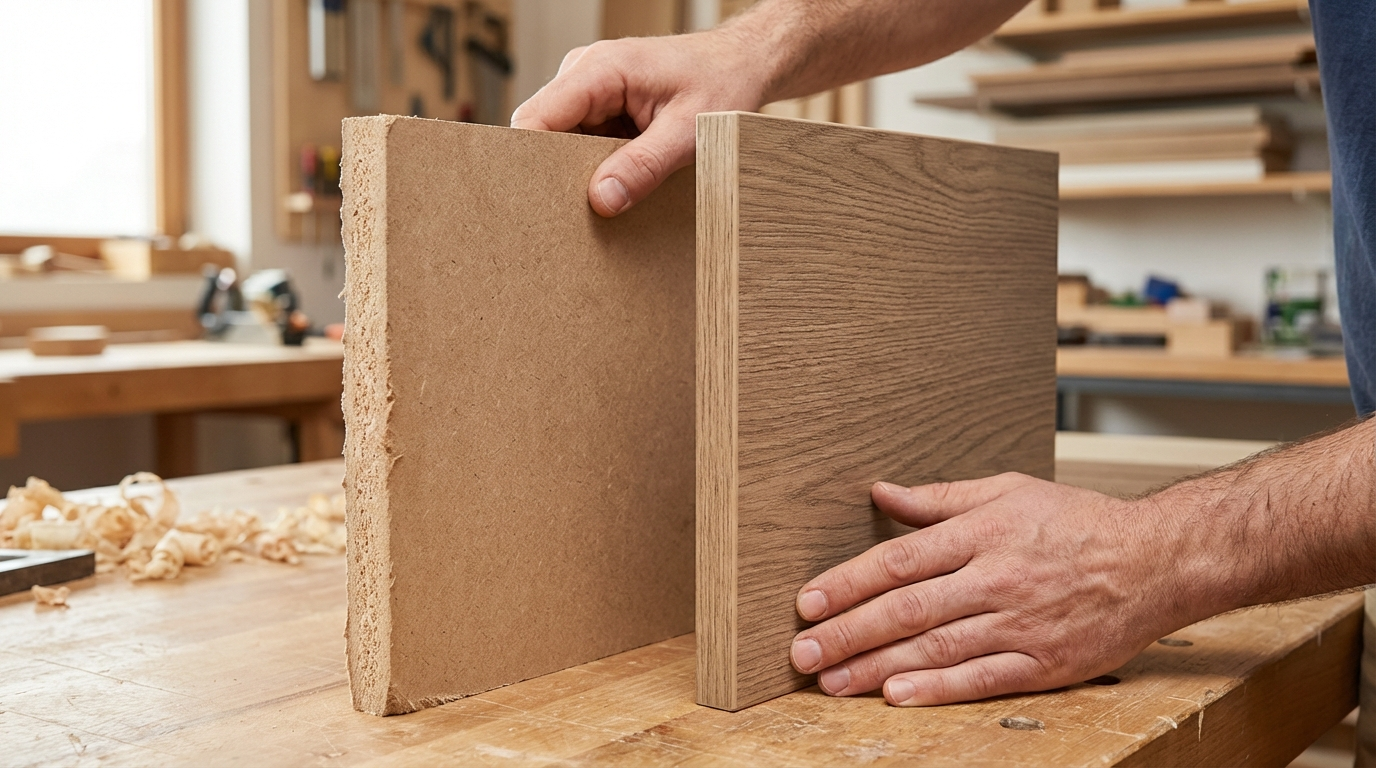
MDF (Medium Density Fiberboard) is engineered wood made from wood fibers mixed with resins, pressed at medium density (typically 650-750 kg/m³). It offers smooth surfaces ideal for laminates, paints, or veneers, and machines cleanly for modular designs.
HDHMR (High Density High Moisture Resistant board) is a denser variant (typically 800-950 kg/m³), using specialized moisture-repellent resins and higher pressing pressure. It builds on MDF tech but adds barriers against humidity, making it suitable for semi-wet areas like kitchens.
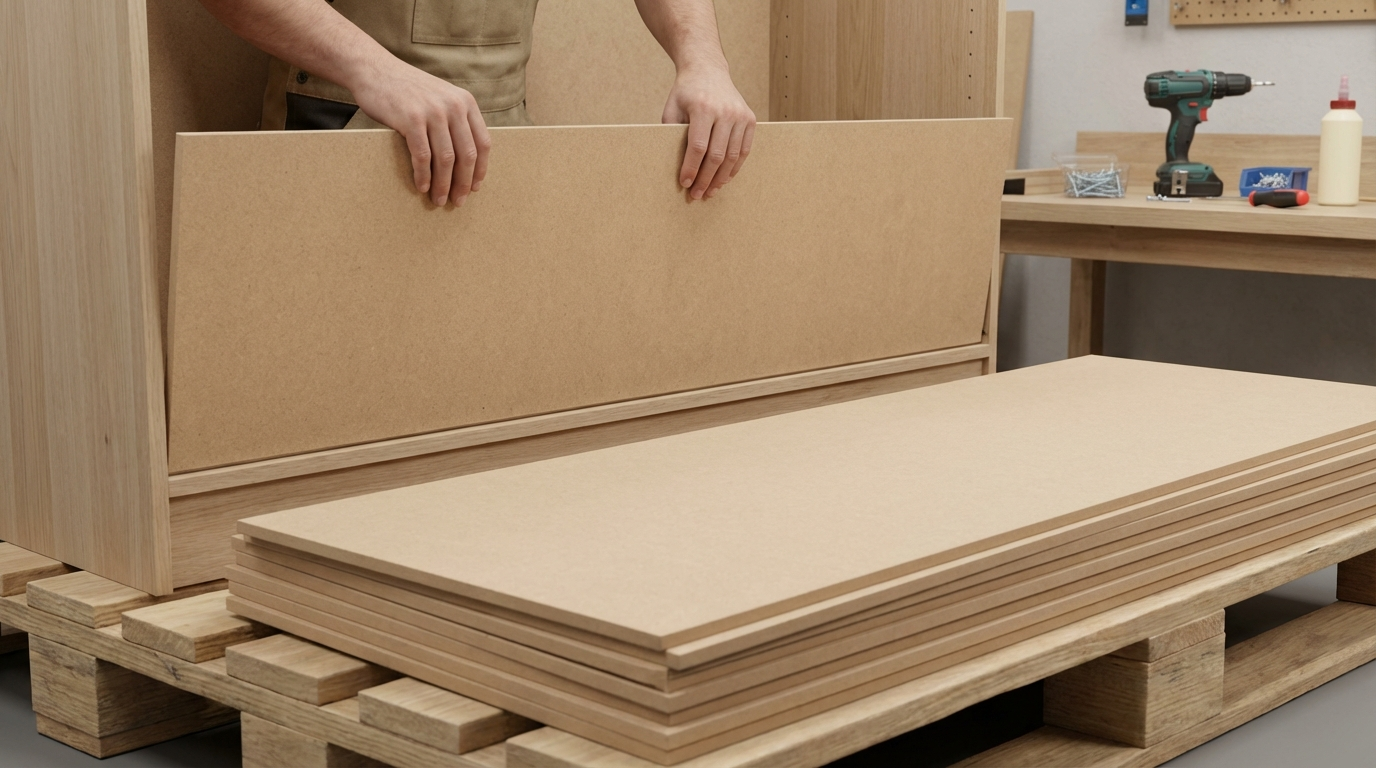
Both come plain or pre-laminated, in standard 8x4 ft sheets, thicknesses like 16mm or 18mm for shutters/carcasses. HDHMR feels heavier and more solid, signaling better internal strength.
Why It Matters in Indian Homes and Sites
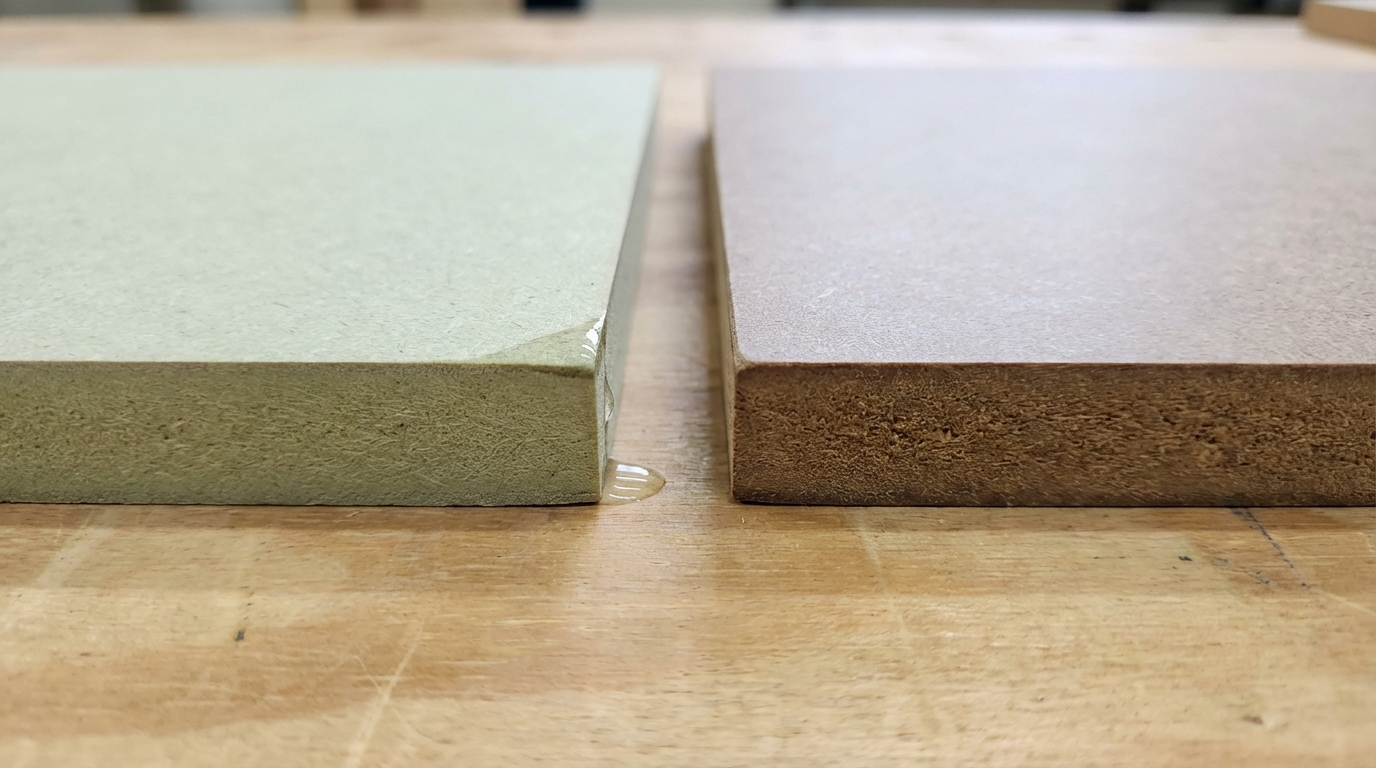
Indian kitchens face unique stresses: monsoon humidity (70-90% RH), cooking steam, spills near sinks, and coastal salt air in places like Mumbai or Chennai. Standard MDF absorbs moisture at edges, leading to swelling up to 10-15% in volume within months if unsealed.
HDHMR resists this better, with swelling often under 5% in lab-like tests, holding shape during site storage (common 2-4 week delays). Screw holding stays strong longer, vital for heavy utensils or hinges. Poor workmanship—like skipping edge banding—amplifies failures in both, but HDHMR forgives minor lapses.
Site realities: boards arrive damp from transport; coastal sites add salt corrosion risks. Choosing wrong material hikes rework by 20-30%, as swollen shutters misalign or delaminate finishes.
Price Range and Cost Drivers
For plain 16-18mm boards in major Indian cities, MDF typically ranges ₹40-75 per sq ft, while HDHMR falls ₹70-110 per sq ft. Pre-laminated versions add ₹20-40 per sq ft for both. Thicker 18mm costs 10-15% more than 16mm; metros like Delhi-Mumbai push prices 15-25% higher than Tier-2 cities due to logistics.
Key drivers: density/moisture grade (HDHMR's resins inflate cost), finish (plain cheapest; melamine/prelam next), sheet quality (E0/E1 emission grades pricier), edge treatment needs, and wastage (10-15% in CNC cutting). Bulk buys drop 5-10%; monsoon-season transport adds 5%.
| Thickness | MDF Plain (₹/sq ft) | HDHMR Plain (₹/sq ft) | Pre-lam Add-on |
|---|---|---|---|
| 16mm | 40-65 | 70-95 | +20-35 |
| 18mm | 50-75 | 80-110 | +25-40 |
Budget example: 25 sqm L-shaped kitchen shutters (16mm prelam). MDF: ₹1.8-2.5 lakh total (material only). HDHMR: ₹2.3-3.2 lakh. HDHMR pays back via fewer repairs.
How to Ask for a Quote: Checklist
- Specify: "16mm HDHMR plain/prelam white, 8x4 sheets, E1 grade."
- Ask: "Current moisture content? Density test report? Swell test data?"
- Negotiate: Bulk discount, transport to site, cut-to-size fee.
- Compare: Get 3 quotes; verify GST-inclusive landed cost.
Two-Minute Comparison (What Changes in Real Life)
MDF excels in cost and easy machining but falters in wet kitchens. HDHMR trades price for humidity-proofing, ideal for Indian modular setups.
| Factor | MDF | HDHMR | Kitchen Impact |
|---|---|---|---|
| Price (16mm plain) | ₹40-75/sq ft | ₹70-110/sq ft | HDHMR 25-40% more; value in durability |
| Moisture Resistance | Low (swells fast) | High (<8% swell) | HDHMR wins sinks/steam |
| Machining/CNC | Excellent, soft cut | Good, needs sharp bits | Both fine; HDHMR denser hold |
| Finish Quality | Smooth base | Smooth, stronger laminate bond | Equal post-lam; HDHMR less chip |
| Screw Hold | Medium | High | HDHMR for heavy loads |
| Weight | Lighter | Heavier (20%+) | MDF easier handle |
Choose by conditions: wet/high-use → HDHMR; dry/budget → MDF + seals.
Which is Better for Moisture in Monsoon Kitchens?
HDHMR resists swelling far better during India's humid monsoons, where RH hits 90%. MDF edges absorb water quickly, bulging 1-2cm in weeks if unsealed. HDHMR's resins limit this to minimal, keeping cabinets aligned. Nuance: both need edge banding; HDHMR handles poor storage better. Check: tap edge post-cut—if soft/resonant, poor quality. Next: spec HDHMR for sink-adjacent shutters, MDF for top dry cabinets.
Does HDHMR Machine as Well as MDF on CNC?
Both machine cleanly, but HDHMR's density requires 10-20% sharper tools to avoid chipping. MDF cuts silkier for intricate designs. In practice, HDHMR holds finer details longer under humidity. Condition: use carbide bits, slow feeds for HDHMR. Verify: test-cut scrap; clean edges signal good run. Step: program CNC with material density adjustment for best finish.
Failure Modes and Fixes
- Symptom: Edge swelling/bulging. Root: Moisture ingress at cut edges. MDF worse; HDHMR milder. Prevent: Immediate edge banding (PVC 1-2mm). Fix: Sand, re-band if minor; replace if core delams.
- Symptom: Screw pull-out in hinges. Root: Weak fiber grip post-humidity. HDHMR stronger. Prevent: Pilot holes, confirmers. Fix: Epoxy + larger screws; reinforce backs.
- Symptom: Laminate bubbling/peeling. Root: Steam/vapors trapped. Prevent: Quality glue, vented install. Fix: Re-lam if early; live with if cosmetic.
- Symptom: Surface scratches/chips. Root: HDHMR density causes tool tear-out. Prevent: Sharp CNC bits. Fix: Fill, repaint minor.
- Symptom: Delamination in carcass. Root: Factory resin failure + humidity. Prevent: Density/moisture cert check. Fix: Full replacement.
- Symptom: Sagging shelves. Root: Under-spec thickness for loads. Prevent: 18mm min, supports. Fix: Add brackets.
Quality Checks You Can Do Without Lab Tests
Before Buying
- Visual: Uniform color, no lumps/swirls; flat sheet (bow <2mm).
- Tap test: Solid thud, no hollow ring.
- Weight: HDHMR noticeably heavier per sheet.
- Questions: "Moisture % now? Density kg/m³? Swell after 24hr soak?" Red flag: Vague answers.
After Cutting
- Edges: Smooth, no fuzz; dust minimal.
- Core: Consistent fibers, no voids.
- Bend test: Slight flex, no crack.
After Install
- Alignment: Gaps <1mm; no warp.
- Seals: Edges fully banded, silicone at sinks.
- Clean test: Wipe spills immediately; no mark.
Decision Framework Table
| Condition | Recommended | Verify/Notes |
|---|---|---|
| Wet zone (sink/stove) | HDHMR 18mm + PVC edge | Swelling <5%; silicone seal joints |
| Coastal/monsoon humidity | HDHMR prelam | Store flat, covered; density >800kg/m³ |
| Heavy use (kids/utensils) | HDHMR 18mm | Screw hold test; confirmers |
| Tight budget (<₹2L kitchen) | MDF 16mm + double seal | Dry zone only; extra banding |
| Fast delivery/project | MDF (readier stock) | Check stock moisture <10% |
| High scratch risk | HDHMR + thick melamine | 0.8mm+ overlay; matte finish |
Practical Use Cases (What Works, What Fails)
| Use Case | Recommended Thickness | Finish/Edge Notes | Risk Notes (India) |
|---|---|---|---|
| Sink shutters | HDHMR 18mm | Prelam + 2mm PVC | Spills/monsoon: swelling high on MDF |
| Wall cabinets (dry) | MDF 16mm | Melamine + 1mm ABS | Low risk; budget win |
| Base carcasses | HDHMR 18mm | Laminate inside too | Steam/floor moisture |
| Tall unit doors | HDHMR 16mm | Gloss + edge lip | Heavy load screw fail on MDF |
Common Buyer Mistakes (and How to Avoid)
- Mistake: Ignoring humidity—picking MDF for Chennai kitchens. Avoid: Map wet zones; spec HDHMR there.
- Mistake: Skipping edge banding. Avoid: Budget 10% extra for PVC/ABS.
- Mistake: Buying thin (12mm) for shutters. Avoid: Min 16mm; load calc.
- Mistake: Poor storage—stacking outdoors. Avoid: Cover, elevate during monsoon.
- Mistake: Cheap prelam peels fast. Avoid: Check overlay thickness 0.6mm+.
- Mistake: No pilot holes—splits MDF. Avoid: 70% screw dia hole.
- Mistake: Gloss finish in kitchens. Avoid: Matte/satin for fingerprints.
- Mistake: Solo carpenter quotes—no verify. Avoid: 3 quotes, check past work.
Tips by Buyer Persona
Homeowners: Durability and Cleaning
Do: Wipe spills instantly, use mild soap; ventilate post-cooking. Don’t: Abrasive cleaners, direct hose. HDHMR lasts 8-12 years; inspect edges yearly.
Carpenters: Cutting and Handling
Use sharp 12mm bits for HDHMR; pilot all screws. Handle HDHMR with help—slippery when wet. Edge band pre-cut; use confirmers in hinges.
Architects/Designers: Specs and Detailing
Spec: "HDHMR E1, density 850+, 18mm sink side." Detail lips/backs for water runoff; matte finishes. Wet-zone precautions: silicone all joints.
OEM/Modular Makers: QC and Repeatability
QC: Weigh sheets, tap test batches. Reduce returns: Pre-seal edges factory; track complaints by zone. HDHMR cuts rework 30%.
Is HDHMR Worth the Extra Cost for Small Kitchens?
Yes, for 10-15 sqm kitchens—the 25% premium (₹20-40k) avoids ₹50k+ rework from swelling. Small spaces amplify failures (tight fits warp easy). Nuance: inland dry climates stretch MDF longer. Check: Calc total project cost incl labor (20% material). Next: Prioritize HDHMR for lowers, MDF uppers.
Can MDF Work in Kitchens with Good Sealing?
Yes, in low-humidity inland areas with double edge banding and silicone seals—but expect 3-5 year lifespan vs HDHMR's 8+. Failures spike if seals crack. Check: After 6 months, measure edge thickness. Step: Budget extra ₹10/sqft for premium seals; monitor first monsoon.
FAQs
Which is cheaper, MDF or HDHMR?
MDF runs lower at ₹40-75 per sq ft for 16mm plain, versus HDHMR's ₹70-110, a 20-50% gap. This stems from simpler resins and lower density in MDF. In kitchen projects, HDHMR's edge often evens out via durability—fewer callbacks mean stable long-term spend. Always tally full project: material + labor + wastage, as HDHMR cuts chipping losses.
Is HDHMR fully waterproof?
No, HDHMR offers high moisture resistance (swell <8% in tests) but not waterproof like marine ply. It handles spills/steam well in kitchens if edges sealed, outperforming MDF in monsoons. Prolonged submersion delams any engineered board. Seal joints with silicone; avoid direct flooding for 10+ year life.
How thick for kitchen shutters: 16mm or 18mm?
18mm HDHMR for base/door heaviness; 16mm suffices for uppers. Thicker resists sag under utensils, vital in Indian homes with brassware. Trade-off: 10-15% costlier, heavier install. Verify load: 10kg/shelf? Go 18mm. CNC wastage similar both.
Does density affect screw holding in kitchens?
Yes, HDHMR's higher density boosts grip 20-30%, holding heavy hinges/handles longer amid humidity softening. MDF loosens faster near sinks. Prevent pull-outs: Pilot holes, threaded inserts in high-stress spots. Test: Load prototype shelf 1 week.
Pre-laminated or plain boards better for value?
Pre-laminated saves 20% labor/time on-site, ideal for fast modular kitchens—but pick quality to avoid peeling. Plain allows custom laminates. In humid India, prelam HDHMR bonds tighter. Cost: +₹25/sqft. Check sample adhesion by scratch test.
Impact of city on MDF/HDHMR prices?
Metros (Mumbai, Bangalore) 15-25% higher due to freight/taxes; Tier-2 like Lucknow closer to base. Monsoon logistics add 5-10%. Quote landed cost; bulk offsets. HDHMR premium consistent nationwide.
Edge banding: PVC or ABS for kitchens?
2mm PVC for budget moisture block; ABS for premium match/flex. Both vital—unsealed edges swell first. Kitchen steam tests PVC durability. Apply heat-activated; overlap corners. Cost: ₹5-10/meter.
Can I mix MDF and HDHMR in one kitchen?
Yes: HDHMR wet zones (sink/base), MDF dry uppers—saves 15-20% overall. Match thicknesses/finishes for alignment. Risk: Differential swelling if humidity spikes. Seal all transitions.
Storage tips before kitchen install?
Stack flat, covered, off-ground in dry shade; max 2-3 weeks. Monsoon: Plastic wrap ends. High moisture % (>12%) risks warp. Acclimatize site 48hrs pre-cut.
Disclaimer: This content is provided for general informational purposes based on industry practices and publicly available information. Product specifications, standards, prices, and availability may vary by manufacturer, region, and time. Readers should independently verify details with manufacturers, dealers, or qualified professionals before making purchase or construction decisions.Want Plywood Suggestions?
Share a few details and a VIR MDF specialist will suggest suitable brands and connect you to responsive dealers.