What is MDF Board? Meaning, Uses, Types & Benefits Explained
What is MDF board? Learn MDF meaning, types (MR, FR, HDF), uses in furniture & interiors. Discover why VIR MDF boards are India's preferred choice.
Quick Decision Summary
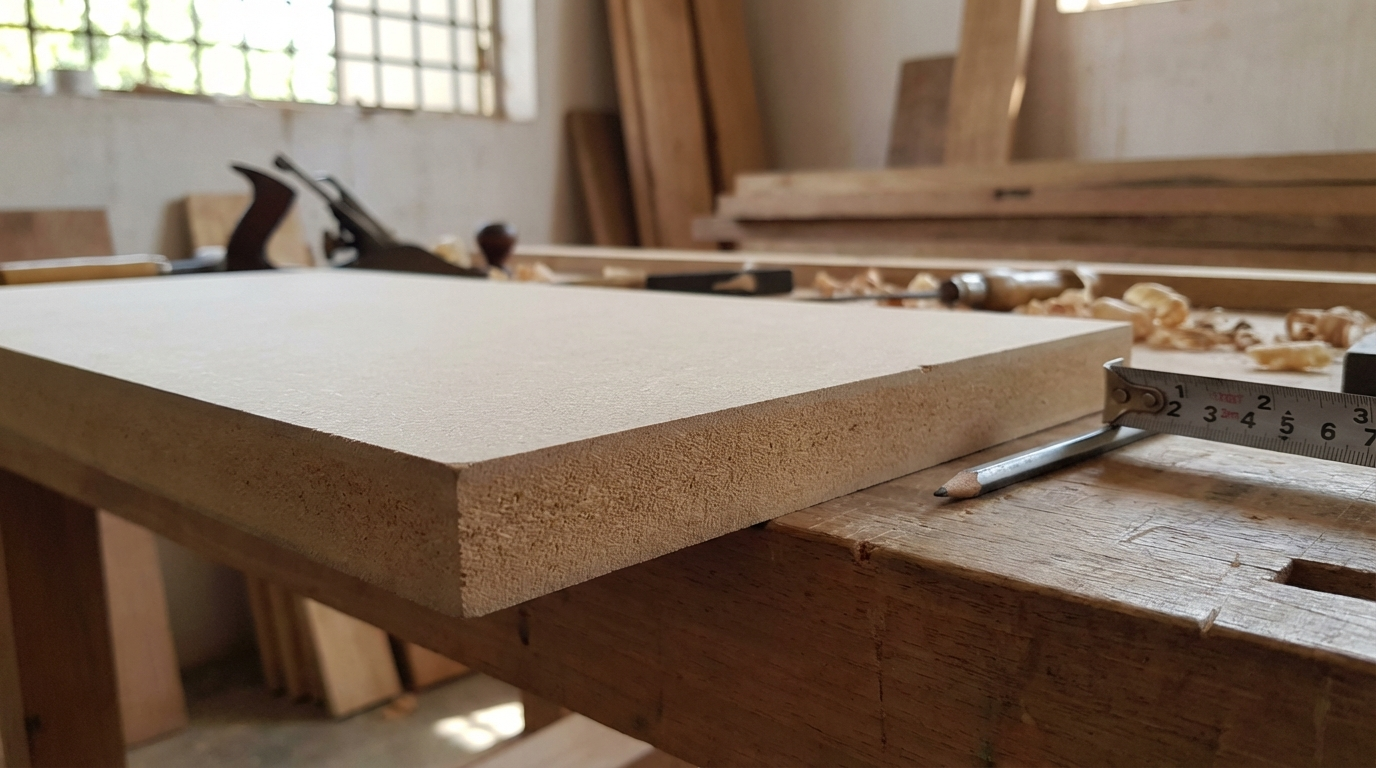
Quick Answer: MDF board (Medium Density Fibreboard) is an engineered wood panel made from wood fibres bonded with resin under high heat and pressure, creating a smooth, uniform surface ideal for furniture, cabinets, and interior applications across Indian homes and commercial spaces.
If you're in a hurry: MDF is your go-to material when you need a smooth, paintable surface for wardrobes, kitchen shutters, TV units, or wall panelling. It costs significantly less than solid wood, machines beautifully for CNC designs, and comes in specialised grades for moisture-prone areas like kitchens and bathrooms. For standard dry interior applications, regular MDF works perfectly; for humid zones, choose MR-MDF or HDFWR variants.
Choose MDF board if:
- You want a flawless painted or laminated finish without wood grain showing through
- Your project involves CNC routing, intricate profiles, or detailed mouldings
- Budget constraints rule out solid wood or premium plywood
- You need consistent thickness and density across large surface areas
Avoid MDF board if:
- The application involves direct water contact or outdoor exposure
- You need high load-bearing capacity for heavy structural elements
- Edge screwing is critical and you cannot use proper hardware
- The installation area lacks proper ventilation during monsoon months
What MDF Board Actually Means
MDF stands for Medium Density Fibreboard—an engineered wood product manufactured by breaking down hardwood or softwood residuals into fine wood fibres, combining them with wax and resin binders, then forming panels under high temperature and pressure. The density typically ranges between 600-800 kg/m³, placing it between particleboard (lower density) and HDF or High Density Fibreboard (higher density).
The manufacturing process involves several critical stages: wood chipping, defibration (breaking wood into individual fibres using steam and mechanical pressure), blending with urea-formaldehyde or other resins, mat forming, hot pressing, cooling, sanding, and cutting to standard sizes. This controlled process eliminates the natural defects found in solid wood—no knots, no grain direction issues, no splits.
Where MDF fits in the material hierarchy:
- Above particleboard: Denser, stronger, smoother surface, better screw holding
- Below plywood: Less tensile strength, lower moisture resistance in standard grades
- Alternative to solid wood: More affordable, more uniform, easier to machine, but heavier and less durable in humid conditions
Common Confusions About MDF Clarified
MDF vs Plywood: Many buyers use these terms interchangeably, but they're fundamentally different. Plywood consists of cross-laminated wood veneers bonded together, giving it directional strength. MDF has no grain direction—its properties are uniform in all directions. Plywood handles moisture better in standard grades; MDF provides a smoother surface for finishing.
MDF vs Particle Board: Particle board uses larger wood chips and has a coarser, less uniform structure. MDF uses fine wood fibres, resulting in a denser, smoother, stronger panel. MDF holds screws better, machines cleaner, and accepts finishes more uniformly than particle board.
MDF vs HDF: HDF (High Density Fibreboard) is essentially the same product but pressed to higher density (above 800 kg/m³). HDF is harder, more durable, and often used for laminate flooring substrates. The trade-off: HDF costs more and is heavier.
Why MDF Matters for Indian Homes
India's climate presents unique challenges that every homeowner and contractor must understand before selecting interior materials. The combination of monsoon humidity, coastal salt air, temperature fluctuations, and dust exposure creates conditions that test any material's durability.
Monsoon and Humidity Impact
During June through September, relative humidity in many Indian cities exceeds 80-90%. Standard MDF absorbs moisture from the air, and while it won't swell dramatically in normal indoor conditions, prolonged exposure to high humidity without adequate ventilation causes gradual thickness swelling. In coastal cities like Mumbai, Chennai, or Kochi, this effect is amplified by year-round humidity and salt-laden air.
Real consequences of ignoring moisture conditions:
- Wardrobe shutters that no longer close properly after two monsoons
- Kitchen cabinet edges swelling where water splashes occur
- Wall panel joints opening up as boards expand
- Laminate delamination starting from edges
- Soft, crumbly edges where screws no longer hold
Site Handling Realities in India
The journey from manufacturer to installed furniture involves multiple risk points that Indian site conditions amplify:
- Storage during construction: MDF sheets often sit at construction sites for weeks, exposed to dust, occasional rain splash through windows, and humidity fluctuations
- Transport damage: Rough handling during transport can chip edges and corners
- Carpenter skill variations: Edge sealing quality depends entirely on the carpenter's technique and the workshop's equipment
- AC vs non-AC environments: Rooms with air conditioning maintain lower humidity, extending MDF life significantly compared to naturally ventilated spaces
Types of MDF Board Explained
Understanding MDF variants helps you match the right grade to your specific application. Each type addresses particular performance requirements, and selecting correctly prevents premature failure and costly replacements.
| MDF Type | Density Range | Key Feature | Best Applications | Price Range (₹/sq ft)* |
|---|---|---|---|---|
| Standard MDF | 600-750 kg/m³ | Smooth surface, easy machining | Dry interior furniture, TV units, bedroom wardrobes | 25-60 |
| MR-MDF (Moisture Resistant) | 650-780 kg/m³ | Enhanced moisture resistance | Kitchens, bathrooms, coastal areas | 40-85 |
| HDF (High Density Fibreboard) | 800-1040 kg/m³ | Superior hardness and durability | Flooring substrates, high-wear surfaces | 55-110 |
| HDFWR (HDF Water Resistant) | 850-1000 kg/m³ | High density + water resistance | Kitchen cabinets, bathroom vanities | 65-130 |
| FR-MDF (Fire Retardant) | 650-780 kg/m³ | Reduced flame spread | Commercial spaces, public buildings | 70-150 |
| Pre-laminated MDF | 600-780 kg/m³ | Factory-applied decorative surface | Quick installations, modular furniture | 50-120 |
| Ultralight MDF | 450-550 kg/m³ | 30% lighter weight | Non-structural decorative elements, wall art | 35-70 |
*Prices are indicative ranges for 2026 and vary by thickness, brand, and location
How to Identify MDF Types Visually
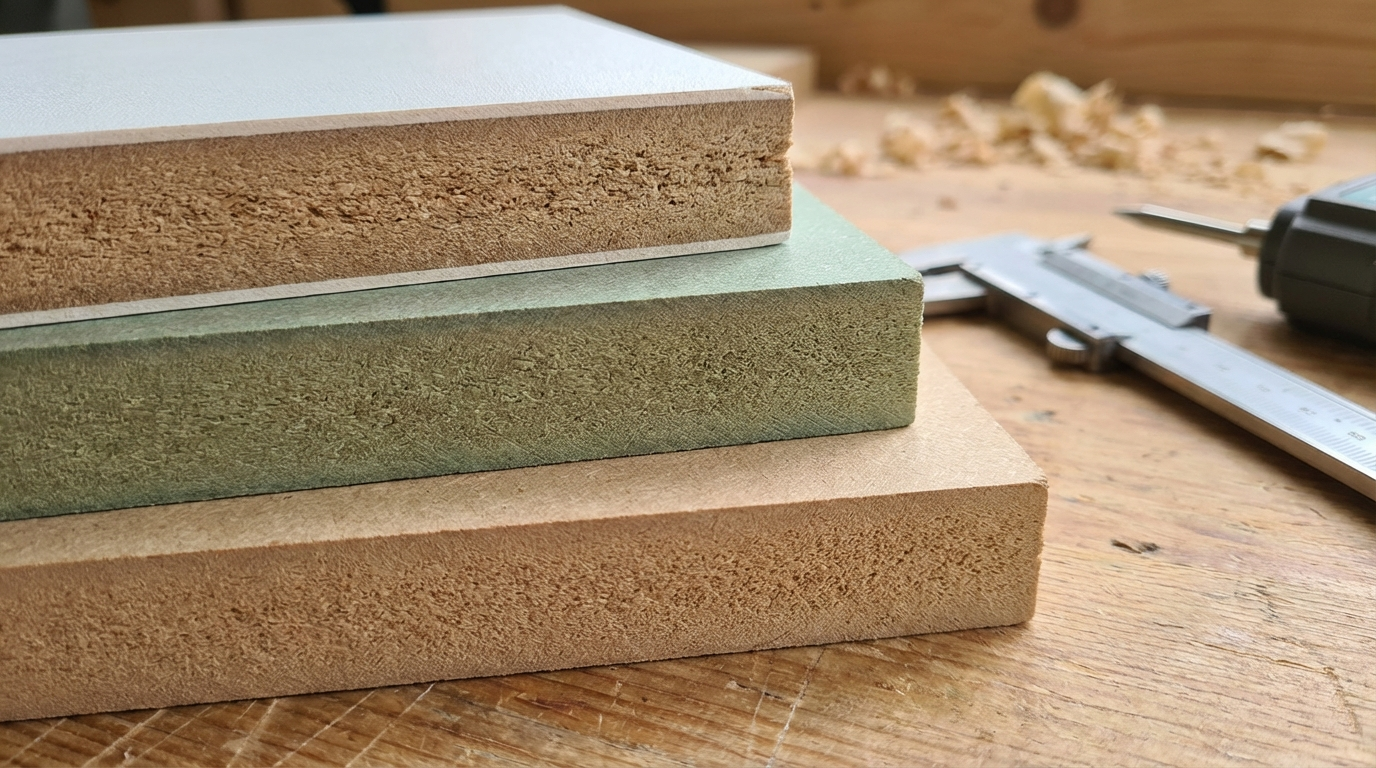
Manufacturers often use colour coding to differentiate MDF grades, though this varies by brand:
- Green core/tint: Usually indicates moisture-resistant grade
- Red core/tint: Typically fire-retardant grade
- Natural brown: Standard interior grade
Important: The colour itself provides no functional benefit—it's purely for identification. Always verify specifications from the manufacturer's technical datasheet rather than relying on colour alone.
Common Misunderstandings About MDF Types
- "MR-MDF is waterproof" — Incorrect. Moisture-resistant means it handles humidity better, not that it can withstand water immersion
- "HDF is just thicker MDF" — Incorrect. HDF is denser at any given thickness, not just thicker
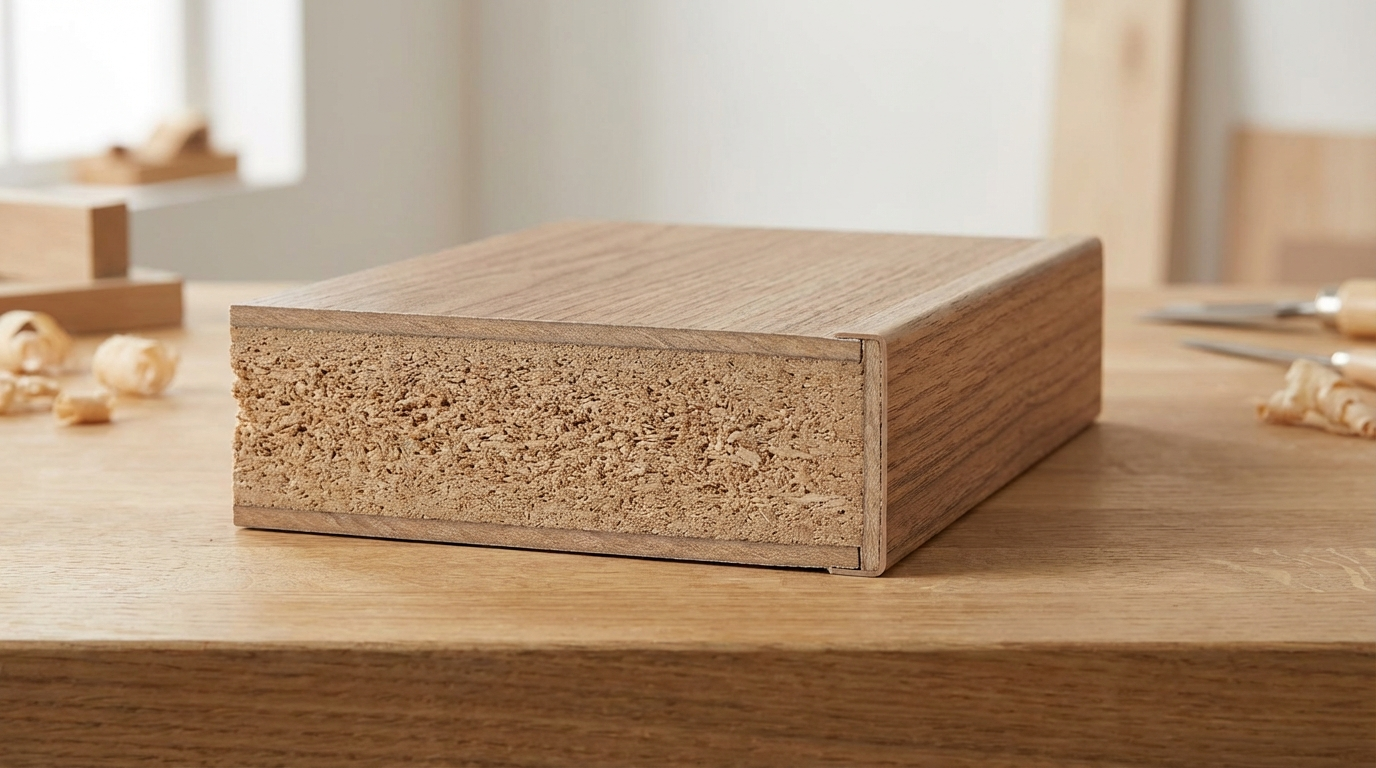
- "Pre-laminated MDF doesn't need edge banding" — Incorrect. The laminate only covers faces; edges still need sealing
- "All green-coloured boards are equally water-resistant" — Incorrect. Actual water resistance varies significantly by manufacturer and resin system
- "FR-MDF is fireproof" — Incorrect. Fire-retardant means reduced flame spread, not complete fire immunity
Properties and Performance Characteristics
Understanding MDF's mechanical and physical properties helps predict its behaviour in real-world applications and set appropriate expectations.
Mechanical Properties
Internal Bond Strength: Measures resistance to splitting apart internally. Standard MDF typically achieves 0.60-0.80 N/mm². This property is critical for applications involving laminating or veneering, where the bond between MDF and the decorative surface must remain intact.
Bending Strength (MOR - Modulus of Rupture): The maximum stress MDF withstands before breaking under bending load. Ranges from 20-45 N/mm² depending on grade and thickness. Important for shelving and spans where bending loads occur.
Stiffness (MOE - Modulus of Elasticity): Indicates how much a panel will sag under weight. MDF typically achieves 2200-4000 N/mm², which is lower than plywood. This means MDF shelves need shorter spans or greater thickness compared to plywood for the same load.
Screw Holding Capacity:
- Face screwing: 1000-1200 N (good performance)
- Edge screwing: 400-600 N (significantly weaker)
This face-versus-edge difference is why proper hardware selection and pre-drilling are essential, especially for hinges and handles attached to MDF edges.
Physical Characteristics
Dimensional Stability: MDF expands and contracts uniformly in all directions with humidity changes (unlike solid wood's anisotropic movement). Typical linear expansion ranges 0.3%-0.4% for significant humidity shifts. This uniformity is an advantage for painted finishes, which are less likely to crack compared to solid wood.
Moisture Behaviour: Standard MDF shows 10-15% thickness swelling after 24-hour water immersion (per EN 317 testing). MR grades perform better at 7-12% swelling. Neither is waterproof—all MDF requires proper edge sealing and surface finishing for maximum moisture protection.
Thermal Properties: Thermal conductivity of 0.12-0.15 W/(m·K) makes MDF a moderate insulator—better than glass or concrete, but not a substitute for dedicated insulation materials.
Acoustic Properties: MDF's dense surface reflects sound rather than absorbing it. However, its mass helps with sound insulation between spaces. When combined with perforations and backing material, MDF becomes an excellent substrate for acoustic panels.
MDF Board Uses and Applications
MDF's unique combination of smooth surface, uniform density, and excellent machinability makes it suitable for numerous applications across residential and commercial projects.
Furniture Manufacturing
MDF dominates the modular and ready-made furniture segment in India due to its cost-effectiveness and finishing properties:
- Wardrobes and closets: Carcass construction, shutter faces, internal shelving
- Kitchen cabinets: Shutter faces (with MR grade), drawer fronts, decorative panels
- TV units and entertainment centres: Flat surfaces ideal for cable management cutouts
- Study tables and desks: Smooth writing surfaces, integrated storage
- Bookshelves and display units: Clean lines, paintable surfaces
- Bed headboards: CNC-routed decorative patterns
Interior Architectural Applications
- Wall panelling and wainscoting: Creates textured or geometric patterns easily
- False ceiling components: Decorative coffers, trim elements
- Door shutters: Interior doors with routed designs
- Skirting boards and architraves: Consistent profiles across long runs
- Window frames and surrounds: Interior finishing elements
- Room partitions: Non-load-bearing dividers
Commercial and Retail Applications
- Shop displays and fixtures: Product shelving, display stands
- Reception desks and counters: Large, seamless surfaces
- Exhibition stands: Temporary structures requiring quick finishing
- Office furniture: Workstations, storage units, meeting room tables
- Signage substrates: Painted or vinyl-wrapped directional signs
Speciality Applications
- Speaker enclosures: Dense, non-resonant properties suit audio applications
- Craft and hobby projects: Laser cutting, model making
- Templates and jigs: Stable reference surfaces for repetitive work
Benefits of Using MDF Board
MDF offers distinct advantages that explain its widespread adoption across furniture manufacturing and interior finishing industries.
Superior Surface Quality
MDF's smooth, uniform surface accepts paint, laminate, and veneer finishes without the telegraphing of grain patterns or defects. This makes it the preferred substrate for high-gloss lacquered finishes, solid-colour painted surfaces, and printed laminates where any surface irregularity would be visible.
Exceptional Machinability
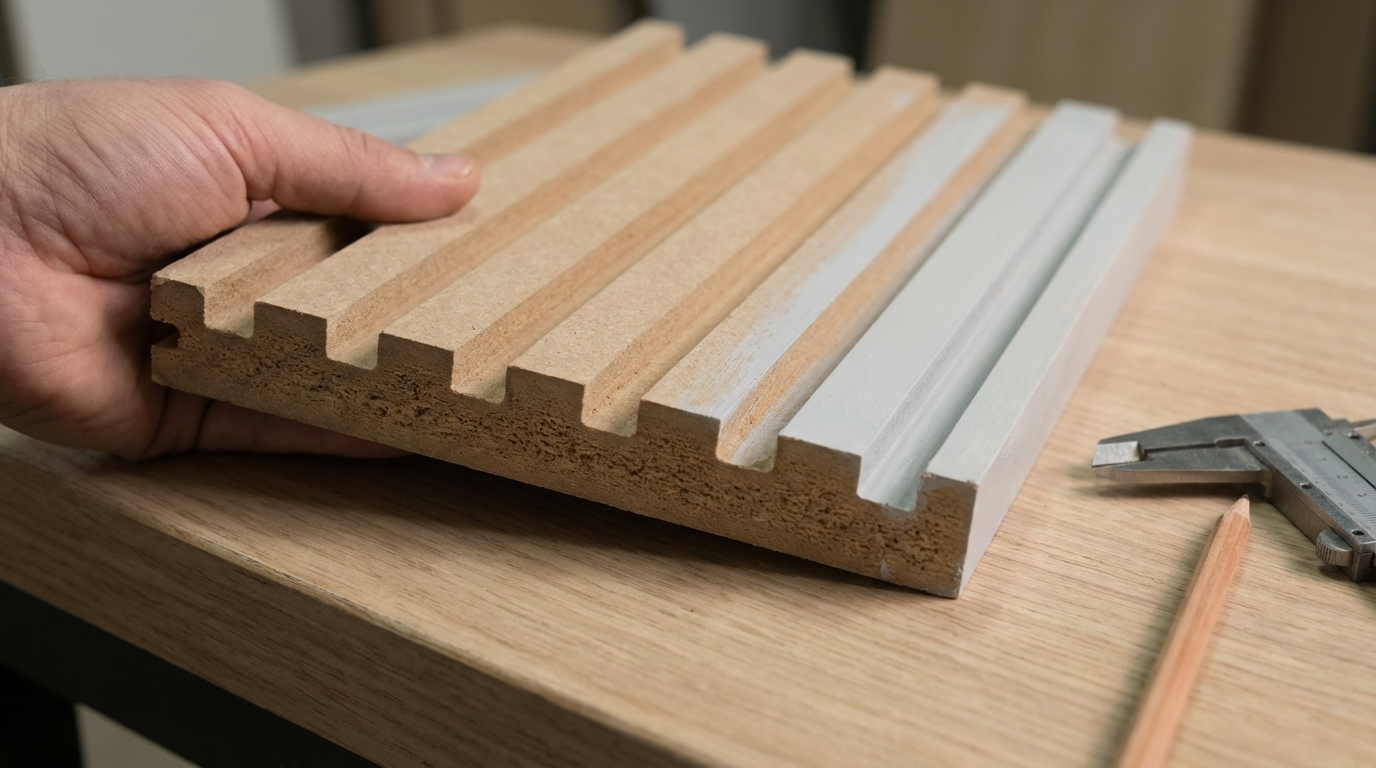
The absence of grain direction means MDF can be cut, routed, and shaped in any direction without splintering or tear-out. CNC machines produce intricate patterns with crisp, clean edges. This property has enabled the decorative panel and jali work industry to flourish using MDF as the primary material.
Cost Efficiency
MDF typically costs 30-50% less than equivalent plywood and a fraction of solid hardwood prices. For large furniture projects where surface area is significant, this cost advantage translates to substantial savings without compromising appearance when properly finished.
Dimensional Consistency
Factory manufacturing ensures consistent thickness across the entire sheet and between sheets in a batch. This uniformity is critical for modular furniture systems where components must fit precisely together.
Environmental Considerations
MDF utilises wood residuals—chips, sawdust, and shavings—from other wood processing industries. This efficient use of wood resources means no additional trees need to be cut specifically for MDF production. Many manufacturers now offer FSC or PEFC certified products from responsibly managed sources.
Pest Resistance
Unlike solid wood, MDF does not attract termites or wood borers in the same way. The resin binders and manufacturing process create a material that resists common wood pests, though severe infestations in surrounding areas can still cause problems.
Limitations and Challenges
Understanding MDF's limitations is equally important for making informed material choices and setting appropriate expectations.
Moisture Vulnerability
Standard MDF swells when exposed to moisture, and the damage is often irreversible. Once the fibres expand and the bond weakens, drying does not restore original properties. Even MR grades have limits—they handle humidity better but are not suitable for direct water contact or outdoor use.
Weight Concerns
MDF is significantly heavier than plywood of the same thickness. An 18mm MDF sheet (8x4 feet) typically weighs 45-55 kg, making handling and installation more labour-intensive. Wall-mounted applications require robust fixing systems to handle this weight.
Edge Weakness
MDF edges are porous and absorb moisture more readily than faces. They also hold screws less effectively than face surfaces. All edges must be sealed—whether through edge banding, paint, or other finishing—to ensure durability.
Formaldehyde Content
Traditional MDF uses urea-formaldehyde resins that can emit formaldehyde gas, particularly when freshly manufactured or when cut. Modern products meeting E1 or E0 emission standards significantly reduce this concern. Look for CARB Phase 2 compliant or NAF (No Added Formaldehyde) products for sensitive applications.
Dust Generation
Cutting and machining MDF produces very fine dust that poses respiratory hazards. Professional workshops require dust extraction systems, and workers should use appropriate respiratory protection. This is particularly important in enclosed Indian workshops where ventilation is often inadequate.
Repair Limitations
Unlike solid wood, damaged MDF is difficult to repair. Dents, chips, and water damage typically require panel replacement rather than restoration. This makes proper handling and installation critical.
Decision Framework: Which MDF Grade for Which Condition
| Condition/Application | Recommended MDF Grade | What to Verify Before Buying |
|---|---|---|
| AC-cooled bedroom wardrobe | Standard MDF (Interior Grade) | Thickness uniformity, surface smoothness, E1 certification |
| Kitchen cabinet shutters | HDFWR or MR-MDF | Moisture resistance rating, edge density, laminate adhesion quality |
| Bathroom vanity (away from direct splash) | HDFWR with proper sealing | Water resistance test results, edge sealing completeness |
| Coastal city installation | MR-MDF minimum, HDFWR preferred | Humidity resistance specifications, warranty terms for coastal use |
| Commercial office with heavy use | HDF for high-wear surfaces | Surface hardness rating, scratch resistance |
| Budget-conscious dry interior | Standard MDF | Core consistency, no voids, proper storage at dealer |
| Hospital or school project | NAF or E0 grade + FR if required | Emission certifications, fire rating documentation |
| Intricate CNC jali work | Standard MDF (fine fibre grade) | Fibre consistency, edge crispness after test cut |
| Wall-mounted heavy display | Standard MDF with proper mounting | Internal bond strength, mounting hardware specifications |
| Modular furniture manufacturing | Pre-laminated MDF | Laminate adhesion, colour consistency across batches |
Common Buyer Mistakes (And How to Avoid Them)
Years of industry experience reveal recurring mistakes that lead to premature failure, customer complaints, and unnecessary replacement costs.
Mistake 1: Using Standard MDF in Kitchens
Consequence: Swelling starts within 6-12 months, particularly around sinks and near cooking areas where steam accumulates.
Prevention: Always specify MR-MDF or HDFWR for kitchen applications, regardless of laminate quality.
Mistake 2: Skipping Edge Sealing
Consequence: Exposed edges absorb moisture first, leading to localised swelling, laminate lifting, and screw failure at hinges.
Prevention: Insist on PVC edge banding, ABS edge banding, or at minimum, primer sealing on all exposed edges.
Mistake 3: Ignoring Storage Conditions at Site
Consequence: MDF stored flat on concrete floors absorbs ground moisture. Sheets stored vertically without support warp. Extended exposure to construction dust affects finish adhesion.
Prevention: Store on raised platforms, keep wrapped until use, and ensure covered storage away from water sources.
Mistake 4: Overloading Shelves Without Adequate Support
Consequence: Visible sagging within months, especially for book storage or display of heavy items.
Prevention: Use 18mm or thicker MDF for shelving, limit unsupported spans to 600-700mm for loaded shelves, add centre supports for longer runs.
Mistake 5: Direct Screwing Without Pre-Drilling
Consequence: Surface bulging, edge splitting, weak screw purchase leading to hinge failure.
Prevention: Always pre-drill pilot holes slightly smaller than screw diameter. Use proper MDF screws with coarse threads.
Mistake 6: Assuming All "Green" MDF is Equal
Consequence: Budget MR-MDF fails earlier than expected because actual moisture resistance varies significantly by manufacturer.
Prevention: Request technical datasheets, compare swelling percentages, choose established brands with consistent quality records.
Mistake 7: Installing Before Acclimatisation
Consequence: Dimensional changes after installation cause joint gaps or buckling.
Prevention: Allow MDF to acclimatise in the installation environment for 48-72 hours before cutting and fitting.
Mistake 8: Using Plywood Hardware on MDF
Consequence: Standard wood screws pull out from MDF edges. Hinges designed for solid wood fail prematurely.
Prevention: Use MDF-specific hardware, consider cam locks and dowels for joints, use larger-diameter screws with coarse threads.
Failure Modes and How to Prevent Them
Failure Mode 1: Edge Swelling
Symptom: Edges become soft, spongy, and visibly thicker than the rest of the panel.
Root Cause: Moisture ingress through unsealed or poorly sealed edges.
Prevention: Complete edge sealing with PVC/ABS banding, ensure no gaps in laminate termination at edges.
Fix if already happening: If minor, sand, seal with waterproof primer, and apply fresh edge banding. If severe, replacement is the only option.
Failure Mode 2: Laminate Delamination
Symptom: Laminate bubbles, lifts at edges, or peels away from MDF substrate.
Root Cause: Moisture penetrating between laminate and MDF, inadequate pressing during lamination, temperature extremes.
Prevention: Use quality adhesives, ensure proper pressing time and pressure, maintain consistent temperature during bonding.
Fix if already happening: Minor bubbles can be injected with adhesive and re-pressed. Large delamination requires panel replacement.
Failure Mode 3: Hinge Screw Pull-Out
Symptom: Cabinet doors sag, hinges become loose despite tightening.
Root Cause: Screws placed too close to edge, wrong screw type, repeated door slamming, moisture weakening edge fibres.
Prevention: Use proper hinge plates that distribute load, pre-drill accurately, use euro hinges with larger mounting plates, install soft-close mechanisms.
Fix if already happening: Fill old holes with wood filler mixed with sawdust, re-drill, use longer screws or relocate hinge position.
Failure Mode 4: Surface Scratching
Symptom: Visible scratches through paint or laminate revealing MDF core.
Root Cause: Insufficient surface hardness, inadequate paint/laminate thickness, abrasive cleaning methods.
Prevention: Use HDF for high-wear surfaces, apply adequate paint coats with proper primer, choose scratch-resistant laminates for heavy-use areas.
Fix if already happening: Touch-up paint for minor scratches, sand and repaint for larger areas, panel replacement for severe damage.
Failure Mode 5: Warping
Symptom: Panel bows, cups, or twists from original flat plane.
Root Cause: Uneven moisture exposure (one side exposed, other sealed), improper storage, single-sided lamination.
Prevention: Apply finish to both faces of panels, store flat on level surfaces, balance laminate or veneer on both sides.
Fix if already happening: Minor warping may self-correct with balanced moisture exposure. Severe warping requires replacement.
Failure Mode 6: Joint Opening
Symptom: Gaps appear at panel joints that were originally tight.
Root Cause: Seasonal humidity changes causing expansion/contraction, inadequate allowance for movement.
Prevention: Allow 2-3mm expansion gaps at wall junctions, use flexible sealants at joints in humid areas.
Fix if already happening: Fill gaps with colour-matched flexible filler, not rigid wood filler.
Quality Checks Without Lab Tests
Before Buying: Visual and Physical Checks
Visual inspection:
- Surface should be uniformly smooth with no visible fibres, dents, or scratches
- Edges should be dense and consistent, not crumbly or showing voids
- Colour should be uniform across the sheet—variations indicate inconsistent manufacturing
- No delamination or separation visible at edges or corners
Physical checks at dealer:
- Tap the surface—should sound solid, not hollow
- Check thickness at multiple points with a caliper—variation should be within 0.3mm
- Bend test (gently)—quality MDF has some flex without cracking sounds
- Scratch test with fingernail on edge—should not crumble easily
Questions to ask:
- What is the emission class (E1, E0, NAF)?
- Is this interior grade or moisture-resistant?
- How long has this batch been in storage?
- Can you provide the manufacturer's technical datasheet?
Red flags to watch for:
- Dealer unable to identify manufacturer or grade
- Significant price below market average (often indicates quality compromise)
- Sheets stored directly on ground or exposed to elements
- Visible moisture damage, staining, or musty smell
- Edges that crumble when pressed
After Cutting: Quality Verification
- Cut edge should be smooth with no tear-out or fuzzy fibres
- Core should be uniform in colour and density throughout thickness
- No voids, gaps, or foreign material visible in cross-section
- Edge should hold a screw without excessive crumbling when pre-drilled
After Installation: Ongoing Checks
- Check alignment of doors and drawers monthly for first monsoon season
- Inspect edges near water sources for early signs of swelling
- Verify screw tightness at hinges and handles after 3-6 months
- Look for joint gaps that may indicate moisture cycling
Tips by User Type
For Homeowners
Durability expectations: Properly specified and installed MDF furniture in dry interior areas should last 10-15 years or more. Kitchen and bathroom installations with appropriate moisture-resistant grades typically last 7-10 years with proper care. Failures within 2-3 years almost always indicate incorrect grade selection or installation defects.
Cleaning do's and don'ts:
- DO use slightly damp (not wet) cloth for regular dusting
- DO wipe spills immediately, especially near edges
- DO use mild soap solution for stubborn marks
- DON'T use abrasive cleaners or scrubbing pads
- DON'T let water pool on surfaces or drip down edges
- DON'T use steam cleaners on MDF surfaces
When to worry:
- Edges feeling soft or spongy—moisture damage has begun
- Doors not closing properly after monsoon—swelling occurring
- Laminate lifting at corners—adhesion failing, likely moisture-related
- Screws loosening repeatedly at same location—edge degradation
For Carpenters and Fabricators
Cutting tips:
- Use carbide-tipped blades—standard steel blades dull quickly
- Higher tooth count (60-80 teeth on 10" blade) gives cleaner cuts
- Support sheet fully to prevent vibration and binding
- Cut at moderate speed—too fast causes burning, too slow causes tear-out
Edge preparation:
- Sand edges to 180-220 grit before edge banding
- Apply edge banding immediately after cutting—exposed edges absorb moisture quickly
- For painted edges, apply two coats of primer before paint
- PVC edge banding should overlap slightly, then trim flush
Screw zones:
- Keep screws minimum 25mm from edges to prevent splitting
- Pre-drill pilot holes 60-70% of screw diameter
- Use coarse-thread screws designed for MDF
- Consider cam locks and dowels for repeated assembly/disassembly joints
Hinge areas:
- Use cup hinges (35mm) with proper mounting plates
- Reinforce high-use hinge areas with hardwood inserts if possible
- Always use soft-close mechanisms to reduce impact stress
Handling:
- Carry sheets vertically with two people—horizontal carrying causes flex and potential breakage
- Store flat on level, raised surface
- Keep wrapped until ready to use
For Architects and Interior Designers
Specification language:
- Specify grade clearly: "18mm MR-MDF conforming to IS 12406" or equivalent
- Include emission requirements: "E1 emission class minimum"
- Define finish requirements: "Pre-laminated with 0.8mm HPL" or "Ready for site painting"
- Note edge treatment: "All exposed edges to be sealed with 1mm PVC edge band"
Wet-zone detailing:
- Specify HDFWR minimum for any element within 600mm of water source
- Call for waterproof membrane backing on wall-mounted units near showers
- Require plinth with waterproof protection in kitchen base units
- Detail edge sealing requirements in drawings, not just specifications
Finish selection guidance:
- High-gloss lacquer: Requires perfectly prepared substrate—MDF excels here
- Matte paint: More forgiving, shows less imperfection
- Laminate: Specify adhesive type and pressing requirements
- Veneer: Consider movement differences between veneer and MDF—balance both sides
For Modular Furniture Manufacturers
QC checkpoints:
- Incoming material inspection: thickness, density, moisture content, surface quality
- Post-cutting inspection: edge quality, dimensional accuracy
- Post-lamination inspection: adhesion quality, bubble-free surface
- Final assembly inspection: alignment, hardware function, finish quality
Reducing customer complaints:
- Never use standard MDF for kitchen or bathroom installations
- Document grade and batch for warranty claims
- Include care instructions with every delivery
- Photograph installations for dispute resolution
Batch consistency:
- Source from consistent manufacturers—switching suppliers causes colour and density variations
- Store same-batch sheets together for projects requiring matched appearance
- Test each new batch before production run
MDF Board Price Factors in India
MDF pricing varies based on multiple factors. Understanding these helps in budgeting and avoiding quality compromises.
Thickness-Wise Price Ranges (2026 Indicative)
| Thickness | Standard MDF (₹/sq ft) | MR-MDF (₹/sq ft) | HDFWR (₹/sq ft) |
|---|---|---|---|
| 6mm | 18-30 | 28-45 | 40-60 |
| 9mm | 25-40 | 38-55 | 50-75 |
| 12mm | 32-50 | 48-70 | 65-95 |
| 18mm | 45-65 | 65-90 | 85-120 |
| 25mm | 60-85 | 85-120 | 110-150 |
*Prices vary by brand, location, and market conditions. Pre-laminated variants cost additional ₹15-40/sq ft depending on laminate quality.
Factors Affecting MDF Prices
- Density and grade: Higher density and speciality grades (MR, FR, HDF) command premium pricing
- Brand reputation: Established manufacturers with quality certifications price higher than unknown brands
- Thickness: Thicker boards use more material and cost proportionally more
- Finish: Pre-laminated or pre-finished boards include additional processing cost
- Location: Transport costs add significantly in areas far from manufacturing facilities
- Volume: Bulk purchases typically attract 5-15% discounts
- Market conditions: Raw material costs, import duties, and demand fluctuations affect pricing
Budget Estimation Example
Project: 3-door wardrobe with loft (approximately 80 sq ft MDF requirement)
- Standard MDF option: ₹4,500-5,500 (material only)
- MR-MDF option: ₹6,500-8,000 (material only)
- Add edge banding: ₹800-1,200
- Add laminate (if applicable): ₹2,000-4,000
- Hardware (hinges, handles, channels): ₹2,500-5,000
- Labour and installation: ₹5,000-10,000
Total estimate: ₹15,000-35,000 depending on specifications and finish quality
Frequently Asked Questions
What is MDF board made of and how is it manufactured?
MDF board is manufactured from wood fibres derived from hardwood and softwood residuals—including sawmill chips, sawdust, and shavings. These fibres are combined with synthetic resin binders (typically urea-formaldehyde) and wax, then formed into mats and pressed under high heat (approximately 200°C) and pressure to create dense, uniform panels. The process eliminates natural wood defects like knots and grain variations, resulting in a smooth, consistent material ideal for furniture and interior applications. Standard MDF composition is approximately 80% wood fibres, 9-10% resin, 8-9% water, and up to 2% wax.
Is MDF board waterproof or water-resistant?
Standard MDF is neither waterproof nor water-resistant—it absorbs moisture readily and swells when exposed to water. Moisture-Resistant MDF (MR-MDF) and HDFWR are engineered with enhanced resins and higher wax content to handle humid environments better, but even these grades are not waterproof. They can withstand humidity fluctuations in kitchens and bathrooms but will still be damaged by direct water contact or prolonged immersion. For any MDF application, proper edge sealing and surface finishing are essential to minimise moisture absorption, regardless of the grade used.
Which is better for kitchen cabinets: MDF or plywood?
For kitchen cabinet shutters (doors), HDFWR or high-quality MR-MDF provides excellent results due to its smooth surface that accepts laminates and paint beautifully. For cabinet carcasses (boxes), many manufacturers prefer plywood for its superior structural strength and moisture tolerance. The optimal approach combines both: plywood carcasses for durability and MDF shutters for aesthetic finish. If using MDF in kitchens, always choose moisture-resistant grades, ensure complete edge sealing, and maintain good ventilation to prevent humidity buildup that accelerates deterioration.
How long does MDF furniture typically last in Indian conditions?
In dry interior spaces with climate control (AC rooms), properly made MDF furniture can last 12-15 years or longer. In naturally ventilated spaces, expect 8-12 years of service life. Kitchen and bathroom installations using appropriate MR or HDFWR grades typically last 7-10 years with proper care. Coastal area installations face accelerated wear due to year-round humidity and may require replacement 20-30% sooner. Premature failure within 2-3 years almost always indicates incorrect grade selection, poor edge sealing, or installation defects rather than inherent material failure.
Can MDF be used for CNC routing and intricate designs?
MDF is excellent for CNC routing and intricate designs—arguably the best engineered wood material for this purpose. Its homogeneous composition without grain direction allows clean cuts in any direction without tear-out or splintering. Fine fibre grades produce crisp edges ideal for decorative jali work, geometric patterns, and detailed mouldings. Use sharp carbide tools, appropriate feed rates, and proper dust extraction. The resulting pieces require sealing (primer or edge treatment) before finishing to prevent moisture absorption through the newly exposed surfaces.
What thickness of MDF should I use for wardrobes and shelving?
For wardrobe carcasses and sides, 18mm MDF provides adequate strength and screw holding. Wardrobe shutters typically use 18mm for stability, though 16mm works for smaller doors. Internal shelves bearing light loads can use 12mm, but shelves holding books or heavy items should be 18mm with spans limited to 600-700mm or supported at centres for longer runs. Back panels commonly use 6mm or 8mm MDF. TV unit surfaces and desk tops benefit from 18-25mm thickness depending on span and expected load. Always err toward thicker material for unsupported horizontal surfaces.
How do I prevent MDF from swelling during monsoon season?
Prevention starts with grade selection—use MR-MDF or HDFWR for any application exposed to humidity. Ensure complete edge sealing with PVC or ABS edge banding, leaving no exposed core. Apply proper primer and paint coats to all surfaces, including back panels often skipped by contractors. Maintain adequate room ventilation or use dehumidifiers during peak monsoon months. Avoid placing MDF furniture directly against external walls where condensation occurs. In kitchens, ensure exhaust fans are functional and used during cooking. Wipe any water splashes immediately rather than letting them sit.
Is MDF safe for use in homes, especially with children?
Modern MDF manufactured to E1 or E0 emission standards releases minimal formaldehyde and is considered safe for residential use. For extra sensitivity—children's rooms, schools, or individuals with chemical sensitivities—choose CARB Phase 2 compliant or NAF (No Added Formaldehyde) products. Once installed and finished (painted or laminated), formaldehyde emissions drop significantly. During cutting and installation, ensure good ventilation and use respiratory protection. Fully finished MDF furniture poses no greater risk than other interior materials and is widely used in homes, schools, and hospitals globally.
What is the difference between MDF and HDF boards?
HDF (High Density Fibreboard) is manufactured using the same process as MDF but pressed to higher density—typically above 800 kg/m³ compared to MDF's 600-800 kg/m³ range. This higher density gives HDF superior hardness, better scratch resistance, improved screw holding, and greater structural strength. HDF is commonly used for laminate flooring substrates, high-wear furniture surfaces, and applications requiring enhanced durability. The trade-offs are higher cost (typically 40-70% more than equivalent MDF) and increased weight. For most furniture applications, quality MDF performs adequately; HDF is justified for high-wear or demanding applications.
Can I paint MDF directly without primer?
Painting MDF without primer produces poor results—the porous surface absorbs paint unevenly, requiring multiple coats while still showing inconsistencies. MDF edges are especially absorbent and will appear different from faces without proper preparation. Always apply a quality primer (water-based acrylic or shellac-based for faster drying) as the first step. Sand lightly between primer coats with 220-320 grit. Edges may require two or three primer coats before they match face absorption. Once properly primed, MDF accepts paint beautifully, producing smooth finishes that can rival lacquered surfaces when done correctly.
How do I identify good quality MDF at the dealer?
Quality MDF shows uniform colour throughout the sheet without visible fibres, dents, or surface irregularities. Edges should appear dense and consistent—crumbly or porous edges indicate lower density or manufacturing issues. Check thickness at multiple points; variations beyond 0.3mm suggest inconsistent pressing. Tap the surface; it should sound solid, not hollow. Request the manufacturer's name and technical specifications; reputable dealers can provide this information. Avoid sheets showing signs of moisture exposure (staining, warping, musty smell) or stored directly on floors. Significantly underpriced material often indicates quality compromises that will surface during use.
What screws and hardware work best with MDF?
MDF requires specific hardware considerations due to its composition. Use coarse-thread screws designed for MDF or particle board—these grip fibres better than fine-thread wood screws. Pre-drill pilot holes approximately 60-70% of screw diameter to prevent surface bulging. For edge screwing, consider cam locks and dowels instead of screws for better holding power. Euro hinges (35mm cup hinges) with proper mounting plates distribute load better than traditional hinges. Always use soft-close mechanisms to reduce impact stress on hinge screws. For wall mounting, ensure fixings penetrate into wall structure, not just MDF.
Note: This is independent informational content and is not affiliated with any manufacturer. Always verify specific product specifications with the manufacturer before purchase.
Disclaimer: This content is provided for general informational purposes based on industry practices and publicly available information. Product specifications, standards, prices, and availability may vary by manufacturer, region, and time. Readers should independently verify details with manufacturers, dealers, or qualified professionals before making purchase or construction decisions.Want Plywood Suggestions?
Share a few details and a VIR MDF specialist will suggest suitable brands and connect you to responsive dealers.