Pre-Laminated MDF: What It Is, Benefits, and When It’s Better Than Laminate
Pre-laminated MDF explained with real use cases, limitations, and a simple checklist to choose the right shade, thickness, and core grade.
Quick Decision Summary
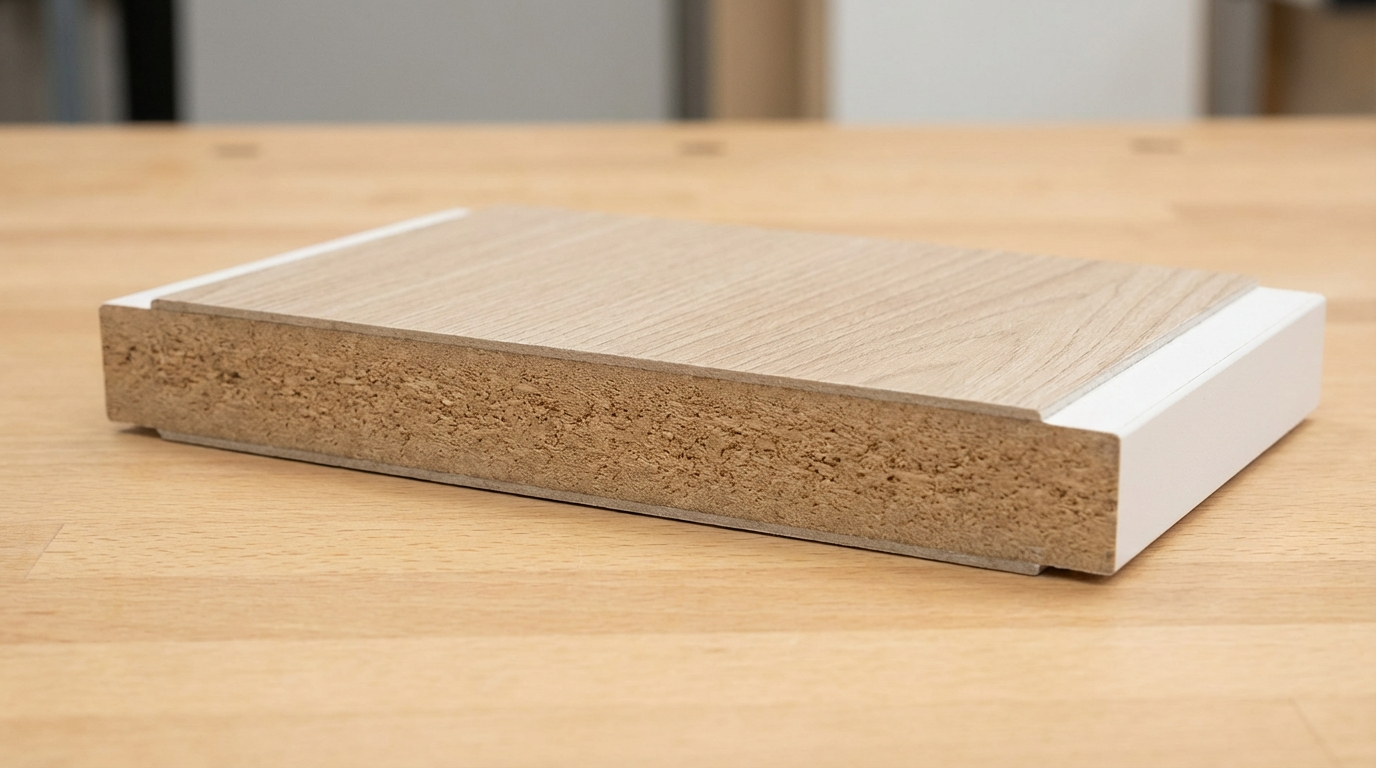
Pre-laminated MDF combines a dense fiberboard core with a factory-applied melamine finish for ready-to-use panels in modular interiors.
If you’re in a hurry: Opt for pre-laminated MDF when site speed matters more than custom thicknesses or ultra-high moisture zones. It skips on-site gluing mess, cuts delamination risks from poor workmanship, and delivers uniform woodgrain or plain shades ideal for wardrobes and cabinets in dry interiors. Expect seamless edges after banding, but verify core density for screw hold in monsoon-prone areas. Avoid in kitchens unless paired with edge seals; choose HDFWR alternatives there. Typical thickness 16-18mm suits most carpentry workflows.
- Choose this if… you need fast assembly, consistent finish across large panels, or budget-friendly uniformity in bedrooms/offices.
- Avoid this if… facing direct water exposure, needing heavy-duty scratch resistance, or requiring non-standard sizes.
What This Material/Option Actually Is
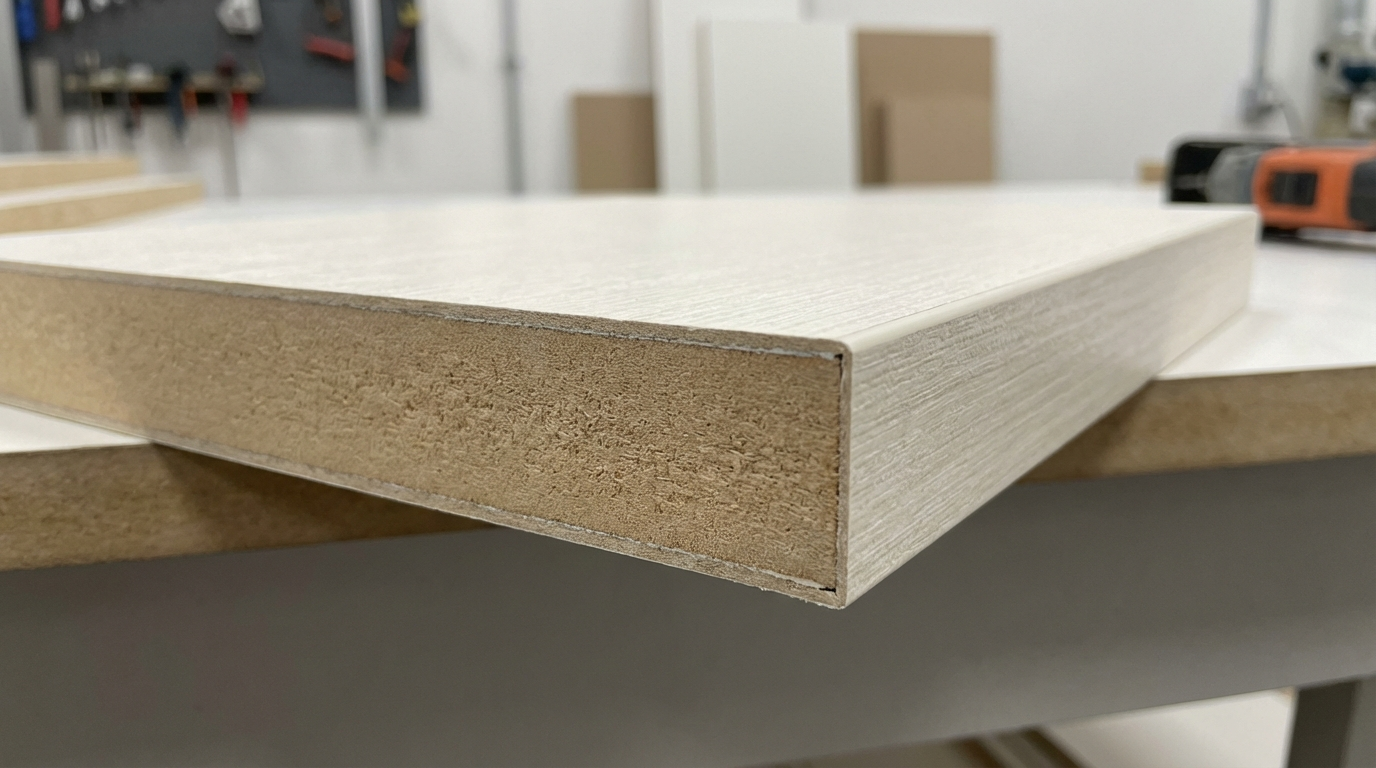
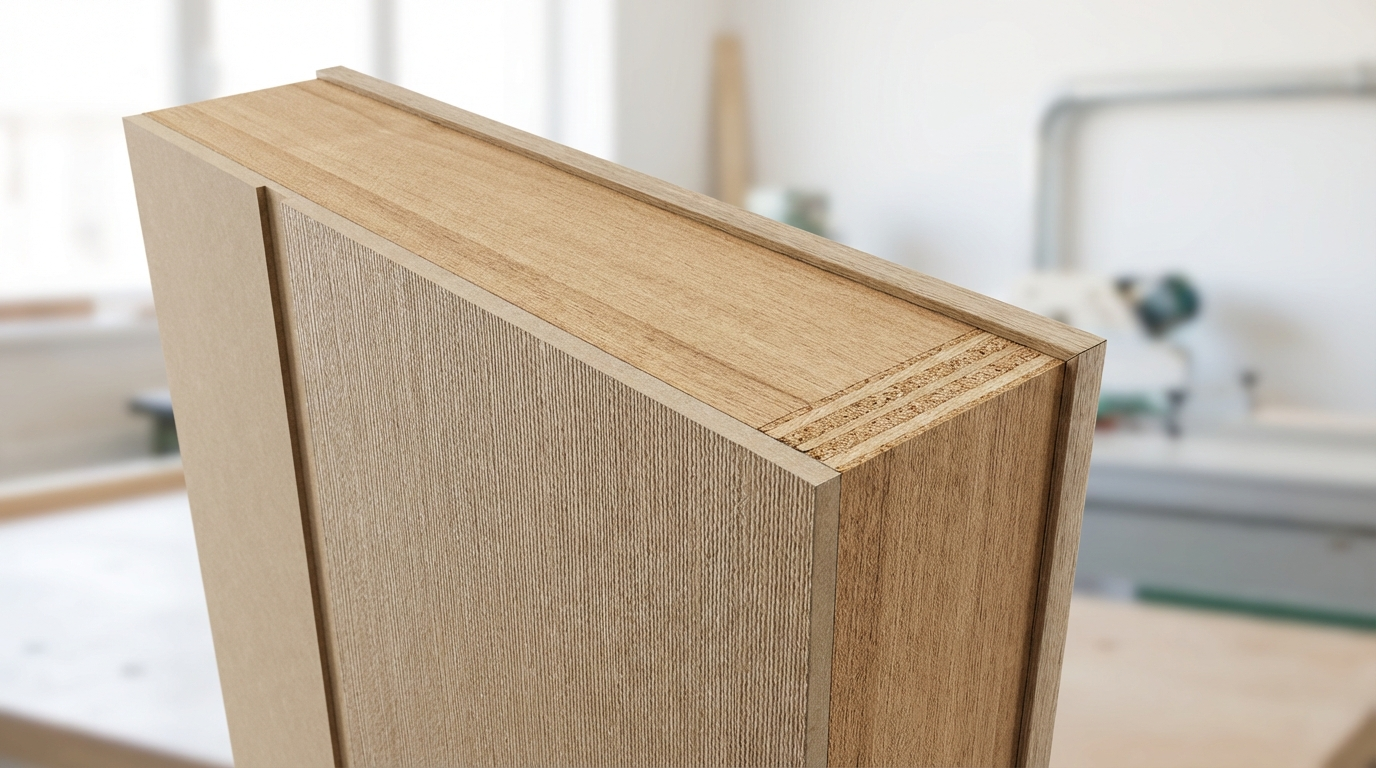
Pre-laminated MDF starts with medium-density fiberboard (MDF), made from wood fibers bonded under heat and pressure. A decorative paper, soaked in melamine resin, gets pressed onto both faces in a factory. This creates a hard, sealed surface ready for cutting and assembly without extra lamination steps.
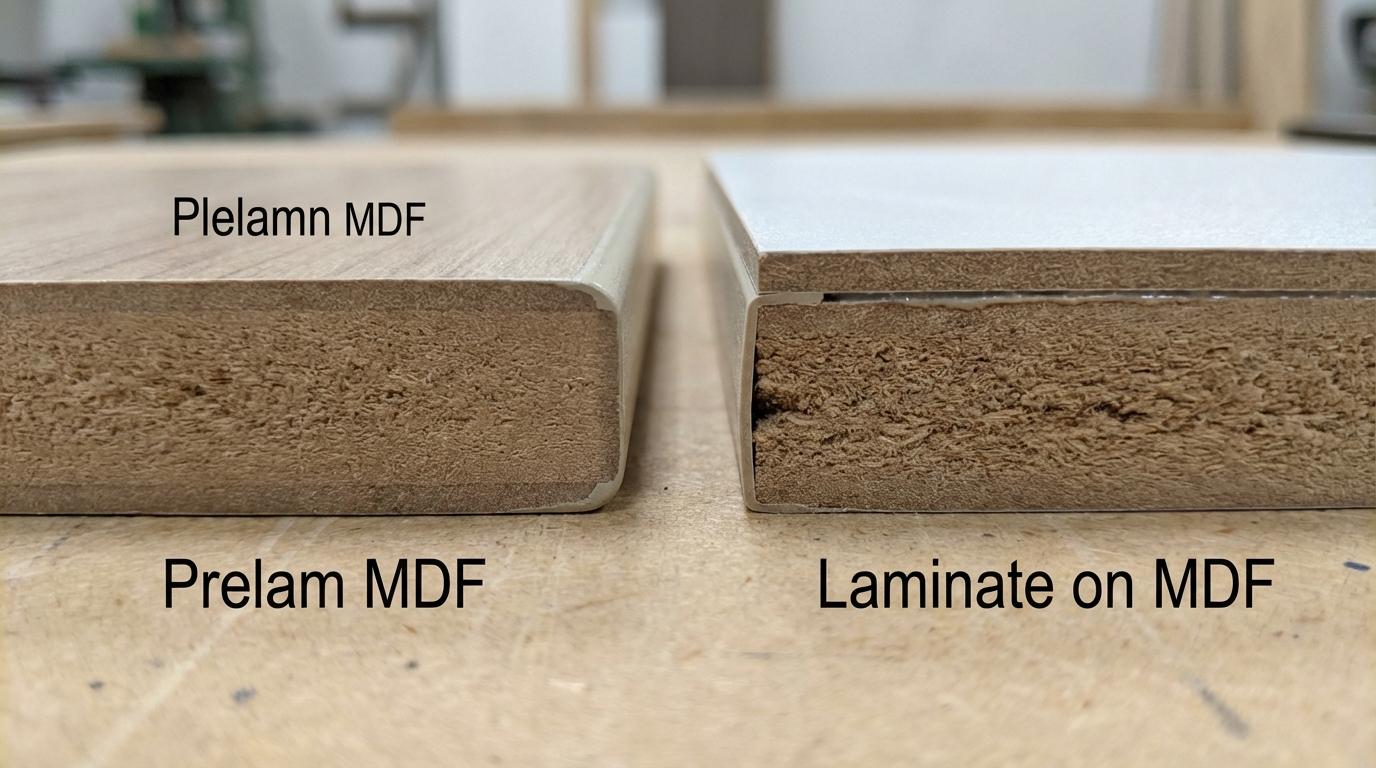
It differs from raw MDF, which needs separate veneers or laminates applied on-site. The pre-lam process embeds the finish directly, making panels thinner-profile yet durable for shelves and shutters. Common shades mimic teak, oak, or white, with textures from matte to gloss.
In workflows, it slots between basic MDF and full plywood laminates—faster for CNC shops but less flexible for curves.
What exactly is pre-laminated MDF made of?
At its core, pre-laminated MDF uses recycled wood fibers mixed with urea-formaldehyde resin, compressed to 700-850 kg/m³ density. The surface layer is kraft paper printed with patterns, impregnated with melamine-formaldehyde for heat-cured bonding. This sandwich structure gives a 0.1-0.2mm thick finish over 3-25mm board thickness. In Indian manufacturing, E1/E0 emission grades handle indoor VOC limits. Nuance: Core quality varies—check for uniform edges without telegraphing fibers. Next step: Tap a sample; a solid thud signals good density, hollow means weak bonding. Always pair with PVC edge bands for exposed cuts.
Is pre-laminated MDF the same as melamine MDF?
Yes, the terms often overlap—both describe MDF with factory-melamine facing. Pre-laminated emphasizes the ready-to-use state, while melamine highlights the resin type. It’s not PVC-wrapped or foil-laminated, which use different adhesives. Conditions: Fine for dry zones, but melamine scratches easier than PVC in high-traffic kids’ rooms. Practical check: Scratch test lightly with a key—minimal marks mean quality resin. If buying, ask for post-forming grade if planning curves, though rare in standard sheets.
Why It Matters in Indian Homes and Sites
Monsoon humidity spikes to 90% warp unprotected boards, but pre-laminated MDF’s sealed surfaces resist surface swelling better than raw sheets. Coastal salt air accelerates edge corrosion on metal fittings, so sealed edges prevent moisture wicking. Site realities like poor ventilation during storage lead to delamination if stacks touch wet floors.
In practice, screw holding drops 20-30% in humid batches, causing wardrobe sagging. Urban sites with dust favor its wipeable finish over fabric-veneers. Trade-off: Factory sealing skips glue fumes but limits post-site refinishing.
Meaning, Types, and Where People Get Confused
Pre-laminated means "pre-applied laminate" at factory scale, using short-cycle presses for high-volume output. Types split by core: standard MDF (dry interiors), MR-grade (moderate humidity), and BWR variants (boiling water resistant for edges). Finishes range from single-color to synchronized textures matching real wood pores.
- Confusion 1: Thinking it’s fully waterproof—surface resists spills, but cut edges absorb if unsealed.
- Confusion 2: Assuming same thickness options as loose laminates—pre-lam sticks to 5.5mm, 8mm, 16-18mm standards.
- Confusion 3: Mixing with PVC boards—pre-lam is paper-based, less rigid but cheaper.
- Confusion 4: Believing it’s paintable—no, melamine repels most paints without primer etch.
- Confusion 5: Expecting plywood strength—lower screw pull-out in repeated use.
- Confusion 6: Overlooking emission grades—cheaper imports may off-gas in sealed rooms.
How thick is pre-laminated MDF usually available?
Typically 16mm or 18mm for shutters/carcasses, 5-6mm for back panels, 8-12mm for shelves. Nuance: Thinner suits modular kits, thicker handles overhangs but raises weight. In India, 18mm dominates wardrobes for carpenter familiarity. Check: Measure sample edges—consistent thickness avoids CNC recalibration. Next: Match to load; 12mm max for 60cm spans without sag.
Two-Minute Comparison (What Changes in Real Life)
Pre-laminated MDF shines in speed and seamlessness over site-applied laminates, but trades flexibility. Laminates (loose sheets glued post-factory) allow mixing patterns but risk bubbles from uneven pressing.
| Aspect | Pre-Laminated MDF | Site-Applied Laminate |
|---|---|---|
| Finish Application | Factory-sealed, uniform | Manual glue + press, variable |
| Assembly Time | 30% faster, no drying | Slower, glue cure 24hrs |
| Moisture Risk (Monsoon) | Low surface, edges need seal | High delam if glue weak |
| Scratch Resistance | Medium, melamine layer | Varies by grade/overlay |
| Cost per sqm (18mm) | Lower upfront, less waste | Higher labor/tools |
| Best For | Large uniform panels | Custom patterns/curves |
Choose pre-lam for dry, repetitive jobs like TV units; laminate for wet kitchens with premium faces.
Price Range and Cost Drivers
Ranges span Rs 800-1600 per sheet (8x4ft, 18mm), varying by city—higher in Mumbai/Delhi from logistics. Drivers: Thickness (16mm cheaper than 18mm), density (800+ kg/m³ premium), finish (woodgrain > plain), resin grade (MR adds 10-15%). Edge treatment, sheet size, and batch quantity sway quotes; wastage hits curved cuts.
Budget example: Wardrobe (20 sheets 18mm) totals Rs 20,000-35,000 core, plus 20% edges/screws. Coastal adds 5-10% for MR.
- Ask quote with: “18mm MR pre-lam teak shade, E1 grade, FOB price per 8x4 sheet.”
- Verify: No hidden transport; negotiate bulk 10% off.
Why does pre-laminated MDF cost less than expected?
Factory scale drops per-unit resin use, skipping site labor (Rs 50-100/sqm saved). Nuance: Import duties inflate plains, local mills undercut woodgrains. India factor: Monsoon stockpiles crash prices post-season. Check: Compare sheet weight—1.5kg/sqft signals value density. Next: Factor 15% wastage for angles; buy 10% extra.
Practical Use Cases (What Works, What Fails)
| Use Case | Recommended Thickness | Finish Notes | Risk Notes (India) |
|---|---|---|---|
| Wardrobe Shutters | 16-18mm | Teak/oak sync texture | Edge seal for humidity; hinge zones reinforce |
| TV Unit Shelves | 12-18mm | Matte white/plain | Low sag if <50cm span; dust wipe ok |
| Office Partitions | 8-12mm | Fabric-look | AC zones only; screw hold test |
| Kitchen Cabinets | 18mm MR | Dark shades hide stains | Seal all cuts; avoid sinks |
| Wall Panels | 6-8mm | Gloss white | Ventilate during install; coastal salt etch |
Works: Uniform bedroom cabinets. Fails: Unsealed bathroom vanities swell in steam.
Failure Modes and Fixes
- Symptom: Edge swelling post-monsoon. Cause: Unsealed cut fibers absorb humidity. Prevent: Immediate PVC banding >1.5mm thick. Fix: Sand + re-band; replace if core bloated.
- Symptom: Surface scratches from utensils. Cause: Thin melamine in high-abuse spots. Prevent: Felt pads under items. Fix: Light polish; deep marks need overlay.
- Symptom: Delamination bubbles. Cause: Factory defect or heat exposure. Prevent: Store flat, shaded. Fix: Press + clamp; discard large areas.
- Symptom: Screw pull-out in doors. Cause: Low density near edges. Prevent: Use inserts or double-screw. Fix: Plug + re-drill.
- Symptom: Color fade in sunlight. Cause: UV on gloss finishes. Prevent: Curtains/sheer shades. Fix: Minimal; switch matte next time.
- Symptom: Chipping during CNC. Cause: Dull tools or high feed. Prevent: Upcut bits, slow RPM. Fix: Fill + band.
- Symptom: Telegraphing core texture. Cause: Uneven pressing. Prevent: Inspect pre-buy. Fix: Sand lightly before banding.
Can pre-laminated MDF handle Indian monsoon humidity?
Typically yes for interiors if edges sealed promptly—MR grades absorb 10-15% less than standard. Nuance: Coastal sites need <80% RH storage; stacks elevate off floors. Check: Weigh sample pre/post-damp cloth (no >5% gain). Next: Install with 2mm expansion gaps; ventilate 48hrs pre-use.
Quality Checks You Can Do Without Lab Tests
Before buying: Visual—flat sheet, no waves; tap test—uniform sound; edge scratch—no paper peel; shade match under daylight.
After cutting: Check perpendicularity; no fuzz on melamine; density by knife probe (resists 3mm).
After install: Wipe test—clean dry; torque hinges (no spin); humidity expose corner (no warp week 1).
- Red flags: Warped stack, color variance sheet-to-sheet, soft core thud.
Decision Framework: Matching Conditions to Choices
| Site Condition | Recommended Spec | What to Verify |
|---|---|---|
| Wet zone (kitchen) | MR 18mm + thick edge band | Boil edge test (no split) |
| Coastal humidity | High-density core, matte finish | Sample weight >1.4kg/sqft |
| Heavy use (kids) | Textured melamine, reinforcements | Key scratch resistance |
| Tight budget | 16mm plain shade, local source | Sheet flatness, no defects |
| Fast delivery | Stock sizes 8x4ft | Batch uniformity |
| High scratch risk | Double-layer melamine or hybrid | Coin drag test |
| CNC workflow | Stable 18mm, post-form grade | Cut sample flatness |
Common Buyer Mistakes and How to Avoid Them
- Mistake: Skipping edge banding. Avoid: Band same day; use hot-melt for speed.
- Mistake: Ignoring core grade in humid areas. Avoid: Specify MR/BWR upfront.
- Mistake: Overloading thin shelves. Avoid: Calc span/load; brace >60cm.
- Mistake: Poor storage pre-cut. Avoid: Vertical racks, cover plastic.
- Mistake: Mixing shades without samples. Avoid: Buy from one batch.
- Mistake: Using standard screws. Avoid: Confirm pull-out specs; use wood-thread.
- Mistake: Wet cleaning habits. Avoid: Microfiber dry wipe; mild soap rare.
- Mistake: No expansion gaps. Avoid: 1-2mm joints in humid installs.
- Mistake: Dull CNC bits. Avoid: Dedicated upcut for melamine.
Persona-Specific Tips
Homeowners: Clean with damp cloth weekly—avoid abrasives. Durability: Lasts 8-10yrs bedrooms; reinforce kids’ units. Don’t drag heavy pots.
Carpenters: Cut oversize 2mm, band immediately. Fasten 38mm screws 100mm apart. Handle by edges; hinge 35mm from top/bottom.
Architects/Designers: Spec 18mm min for spans; detail sealed reveals. Wet zones: Shift to HDFWR. Finish logic: Matte hides fingerprints.
OEM/Modular Makers: QC tap test every 10 sheets. Reduce returns: Pre-band samples. Repeatability: Fixed CNC paths.
Is pre-laminated MDF better than laminate for wardrobes?
Often yes for speed—factory finish skips glue errors, uniform in multi-door units. Nuance: Laminates flex for curves; pre-lam rigid for flats. India: Monsoon favors pre-lam sealed edges. Check: Mock assembly time (pre-lam 40% faster). Next: Budget labor savings offset any premium.
Does pre-laminated MDF chip easily during handling?
Medium risk on corners—melamine brittle vs PVC flex. Nuance: Factory edges tougher; site cuts vulnerable. Prevent with corner protectors. Check: Drop test sample 1m (minor chips ok). Next: Strap bundles tight; use trolleys site-side.
FAQs
What is the main benefit of pre-laminated MDF over regular MDF?
The key advantage lies in its ready-applied protective finish, eliminating on-site lamination steps that often lead to uneven glue or air bubbles. This speeds up workflows by days in projects like office cabins, while providing a consistent, wipeable surface suited to dusty Indian sites. However, it limits customization—stick to stocked shades. For verification, handle a sample: smooth everywhere, no raw fiber exposure. In practice, carpenters report 25% less rework, especially in repetitive wardrobe builds where uniformity prevents client complaints.
Can pre-laminated MDF be used in bathrooms?
Not ideal standalone—while surface repels splashes, unsealed edges swell in steam-heavy environments common in Indian homes. Pair with full sealing and ventilation, or opt for HDFWR cores in MR grades. Trade-off: Cheaper than PVC but shorter life near showers. Homeowners note success in powder rooms with exhaust fans, but coastal humidity accelerates issues. Always mock a small panel: expose to steam 24hrs, check warp. If proceeding, elevate off floors and use silicone seals at joints.
How do you cut pre-laminated MDF without chipping?
Use a fine-tooth scoring blade or CNC upcut bits at low feed rates to shear cleanly without tear-out. Tape cut lines first for hand saws, common in site carpentry. In humid storage, boards soften slightly, worsening chips—dry 48hrs pre-cut. Pros avoid table saws without zero-clearance inserts. Test on scrap: clean edge means good setup. Post-cut, band within hours to lock fibers, preventing monsoon ingress and maintaining screw hold in cabinets.
Is pre-laminated MDF termite resistant?
Core treatments vary—many include boric additives, but verify by asking for specs as it’s not universal. Surface melamine deters surface chew but not deep burrows. In termite-hot Indian suburbs, pair with soil barriers. Not as robust as plywood, but sufficient for elevated furniture. Check: Probe edges for hardness; soft signals poor treatment. Avoid ground contact; annual inspections catch early signs like frass.
What edge banding works best with pre-laminated MDF?
PVC 1.5-2mm thick in matching shades, applied hot-melt for gap-free seal—essential for humidity protection. Avoid paper bands; they delam fast. CNC shops prefer pre-glued rolls for speed. Nuance: Over-band 0.2mm for flush trim. In practice, unsealed edges fail first in wardrobes. Match texture too—gloss on matte shows. Test adhesion: Peel after 24hrs cool; strong pull means quality.
Can you paint over pre-laminated MDF?
Possible but tricky—roughen with 220-grit, prime with adhesion promoter, then PU paint. Melamine resists direct coats, leading to peels in humid conditions. Better for spot repairs than full recolor. Architects use it for accents, but expect 50% less durability. Dry sand thoroughly; test small area. Alternative: Choose neutral base shades upfront to avoid.
How long does pre-laminated MDF last in home use?
Typically 7-12 years in dry interiors with proper care—shorter in kitchens (5-8yrs) from grease. Factors: Usage, cleaning, climate. Coastal homes see fade faster; ventilate well. Unlike plywood, no core rot but edges wear. Track via annual photos; reinforce sags early. Many report TV units pristine decade-plus with microfiber wipes.
Is pre-laminated MDF eco-friendly?
Depends on sourcing—recycled fibers reduce trees, E0 resins cut VOCs for indoor air. However, urea-formaldehyde emissions concern in poor ventilation. India mills shift to E1 standards. Weigh: Less waste than site-lam. Check labels for CARB compliance hints. Recycle scraps; it crushes well for fillers. Overall, greener than solid wood for mass furniture.
What’s the best thickness for wardrobe carcasses?
18mm strikes balance—strong screw hold for hinges, minimal sag on 60cm depths. 16mm saves cost for sliders; 12mm risky for heavy loads. India carpenters favor 18mm for familiarity. Calc: 40kg uniform load max per shelf. Verify flatness post-cut; bow means reject. Pair with 16mm shutters for weight trim.
Disclaimer: This content is provided for general informational purposes based on industry practices and publicly available information. Product specifications, standards, prices, and availability may vary by manufacturer, region, and time. Readers should independently verify details with manufacturers, dealers, or qualified professionals before making purchase or construction decisions.Want Plywood Suggestions?
Share a few details and a VIR MDF specialist will suggest suitable brands and connect you to responsive dealers.