Prelam Board: Types, Benefits & Application Guide for India
Prelam board guide: types, finishes, benefits & applications. Discover VIR Pre-laminated MDF range with 100+ colors for Indian interiors.
Quick Decision Summary
Quick Answer: Prelam board is factory-finished MDF with decorative melamine paper already bonded to its surface, eliminating the need for separate lamination, painting, or polishing—making it a ready-to-use solution for Indian furniture and interior applications.
If you're in a hurry: Prelam boards save 40-60% fabrication time compared to raw MDF because they arrive pre-finished. Available in interior grade, exterior grade (MR), and HDFWR variants, they suit everything from bedroom wardrobes to modular kitchens. For humid Indian conditions, choose exterior-grade prelam for kitchens and HDFWR grade for areas near water sources.
- Choose prelam board if: You need consistent factory-finished surfaces, want faster project completion, prefer a wide range of colors and textures, or require scratch-resistant furniture.
- Choose prelam board if: You're working with modular furniture manufacturers, need uniform aesthetics across multiple pieces, or want to avoid on-site lamination dust and delays.
- Avoid prelam board if: You need highly customized veneer finishes, require curved surfaces (raw MDF is more flexible), or plan extensive on-site cutting without proper edge-banding equipment.
- Avoid prelam board if: The application requires extreme structural load-bearing (use plywood instead) or you need thicknesses beyond 25mm for specific industrial applications.
What Prelam Board Actually Means
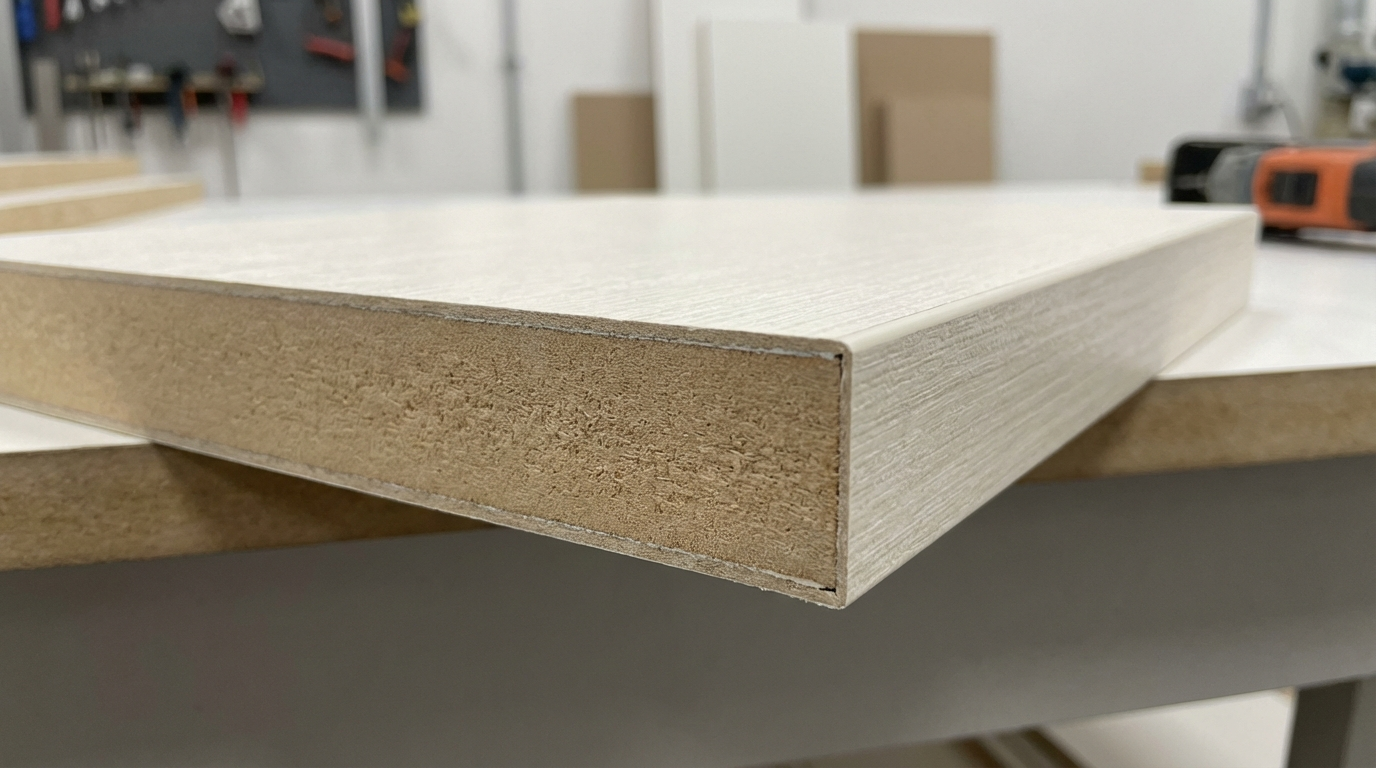
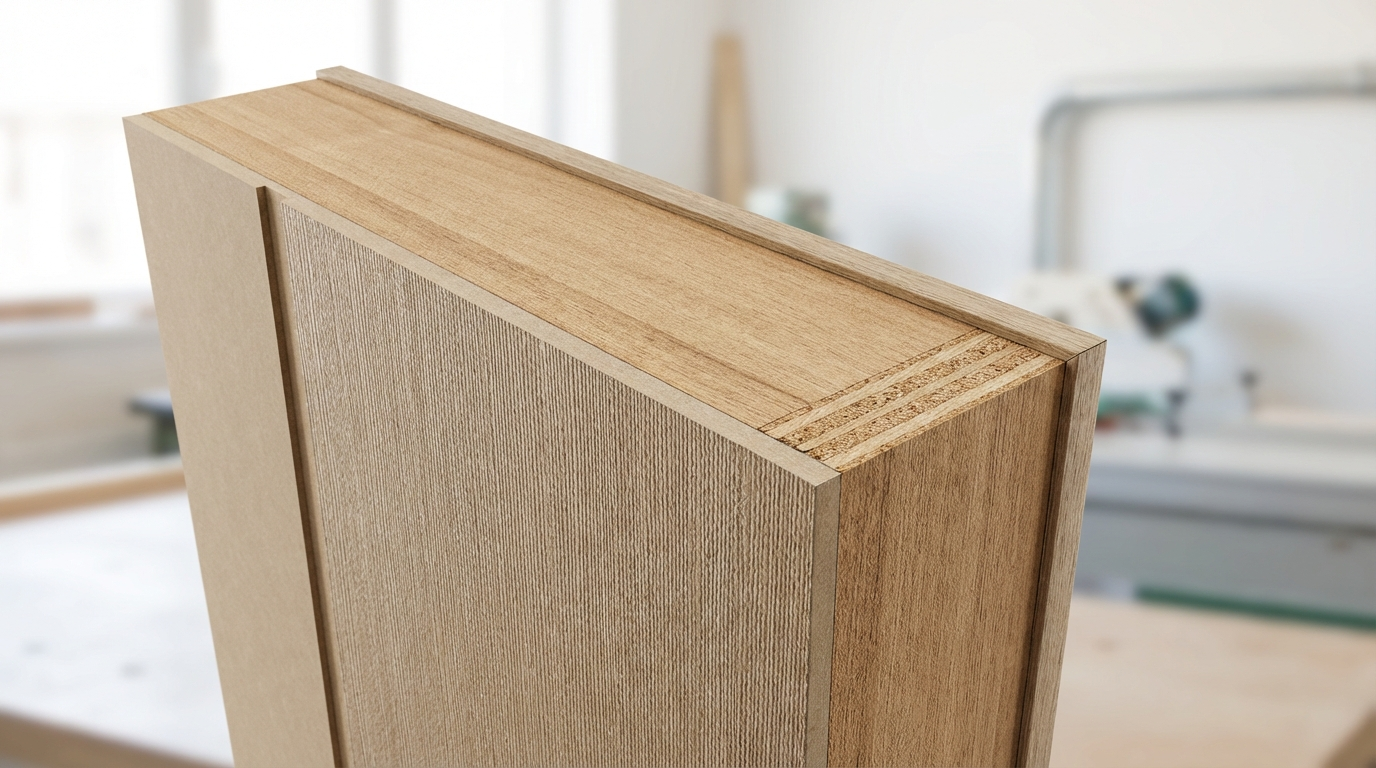
Prelam board—short for pre-laminated MDF board—is medium-density fibreboard that comes with a decorative surface layer already applied during manufacturing. This surface layer consists of melamine-impregnated decorative paper that is bonded to the MDF core under controlled heat and pressure, typically ranging from 180-220°C and 25-35 kg/cm² pressure.
In the Indian market hierarchy of engineered wood panels, prelam board sits between raw MDF (which requires finishing) and high-pressure laminate (HPL) applications. The pre-applied finish provides a ready-to-install surface that eliminates the traditional workflow of applying separate laminates or paints after fabrication.
Common Confusions Clarified
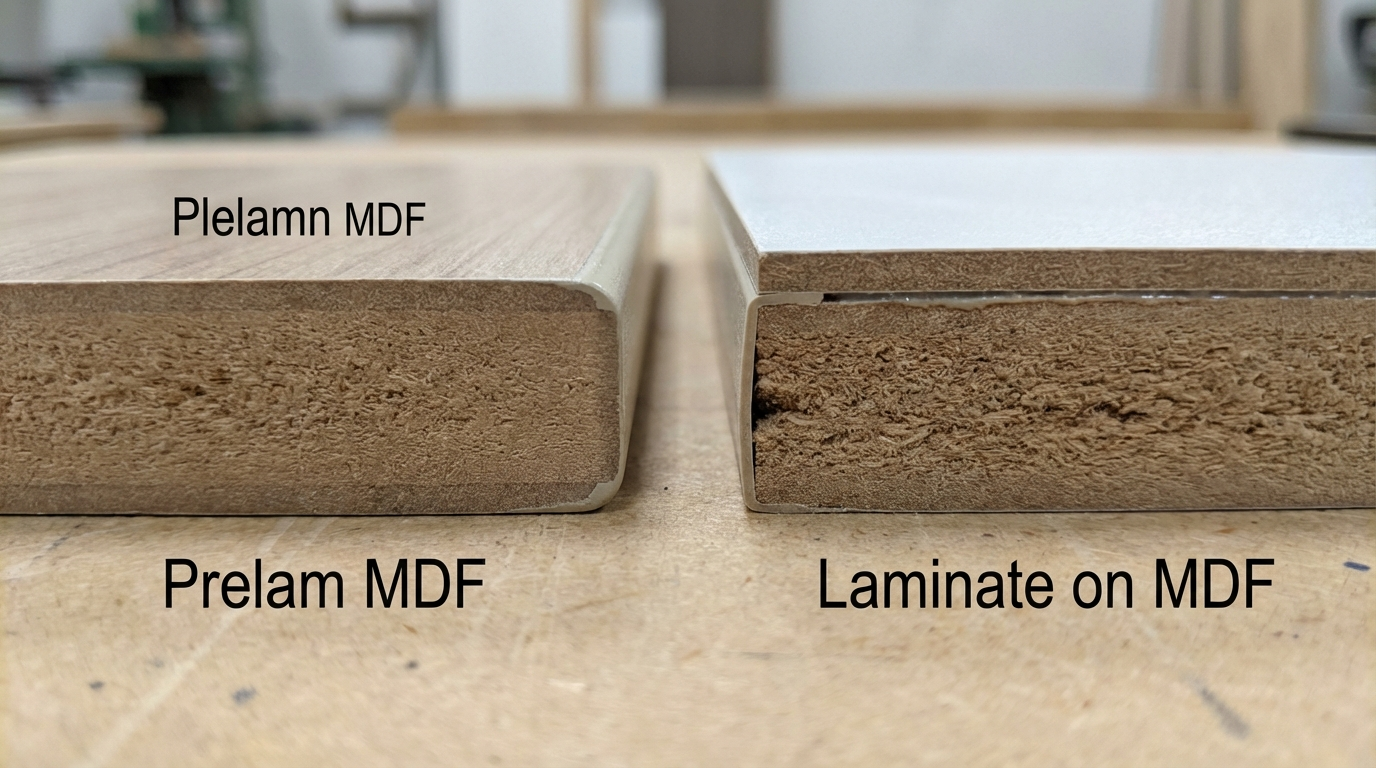
Prelam vs Laminated MDF: Prelam boards are factory-finished during manufacturing itself. Laminated MDF refers to raw MDF boards where laminate sheets are applied afterward at the workshop or site. Prelam offers better consistency; laminated MDF offers more finish customization.
Prelam vs Melamine MDF: These terms are often used interchangeably in India. Both refer to MDF with melamine-resin paper bonded to the surface. The difference lies primarily in marketing terminology rather than technical specification.
Prelam vs Veneered MDF: Veneer uses actual wood slices for the surface layer, while prelam uses printed decorative paper. Veneer provides natural wood grain variations; prelam offers consistent patterns and a wider color range.
Why Prelam Board Matters for Indian Homes
Indian climatic conditions present unique challenges that make material selection critical. Prelam boards address several India-specific concerns that affect furniture longevity and performance.
Monsoon and Humidity Impact
During the June-September monsoon season, relative humidity in most Indian cities exceeds 80-90%. Standard interior-grade prelam boards can experience edge swelling if exposed to prolonged moisture. This is why the Indian market has developed specific grades—exterior-grade (MR) prelam and HDFWR prelam—that resist moisture penetration more effectively.
The factory-sealed surface of prelam boards provides an advantage over on-site lamination because the bonding is more uniform and complete, leaving fewer microscopic gaps for moisture entry.
Real Consequences of Wrong Selection
- Edge swelling: Interior-grade prelam used in kitchen sink areas can swell 2-5mm within one monsoon season
- Surface bubbling: Poor-quality prelam in non-AC rooms with temperature fluctuations may show bubble formation
- Delamination: Coastal areas with salt-laden air require HDFWR grade; interior grade may show surface peeling within 2-3 years
- Screw loosening: Repeated moisture cycling weakens screw-holding capacity, causing hinges and handles to become loose
Site Handling Realities in India
Indian construction sites present storage challenges that affect prelam board performance. Boards often sit exposed during construction—exposed to dust, cement particles, and moisture. The pre-finished surface of prelam boards is more resilient to site dust than freshly painted or laminated surfaces, but proper storage remains essential. Stacking should be flat, covered, and elevated from floor contact.
Types of Prelam Boards Available in India
The Indian market categorizes prelam boards primarily by their core composition and moisture resistance levels. Understanding these categories helps match the right product to specific applications.
| Grade Type | Core Composition | Density Range | Moisture Resistance | Best Applications | Price Range (₹/sq ft) |
|---|---|---|---|---|---|
| Interior Grade Prelam | Standard MDF | 680-750 kg/m³ | Basic (not for wet areas) | Bedrooms, living rooms, offices | ₹35-55 |
| Exterior Grade (MR) Prelam | Moisture-resistant MDF | 720-780 kg/m³ | Moderate (humid areas) | Kitchens, utility areas | ₹50-75 |
| HDFWR Grade Prelam | High-density fibreboard | 850-950 kg/m³ | High (near water sources) | Bathroom vanities, sink units | ₹70-100 |
| Fire-Retardant Prelam | FR-treated MDF | 700-780 kg/m³ | Moderate | Commercial, hospitality | ₹80-120 |
Available Thicknesses in India
Indian prelam boards are typically manufactured in the following thicknesses, each suited for specific applications:
- 4.6mm - 5.5mm: Back panels, drawer bottoms, partition inserts
- 7.3mm - 9.5mm: Shelving, TV unit backs, light-duty applications
- 11mm - 14.5mm: Wardrobe shelves, medium-duty furniture
- 16mm - 18mm: Most common for shutters, cabinet bodies, modular furniture (industry standard)
- 25mm: Heavy-duty applications, table tops, commercial fixtures
The standard sheet size in India is 8 feet × 4 feet (2440mm × 1220mm), which optimizes cutting efficiency for standard Indian furniture dimensions.
Surface Finishes and Design Options
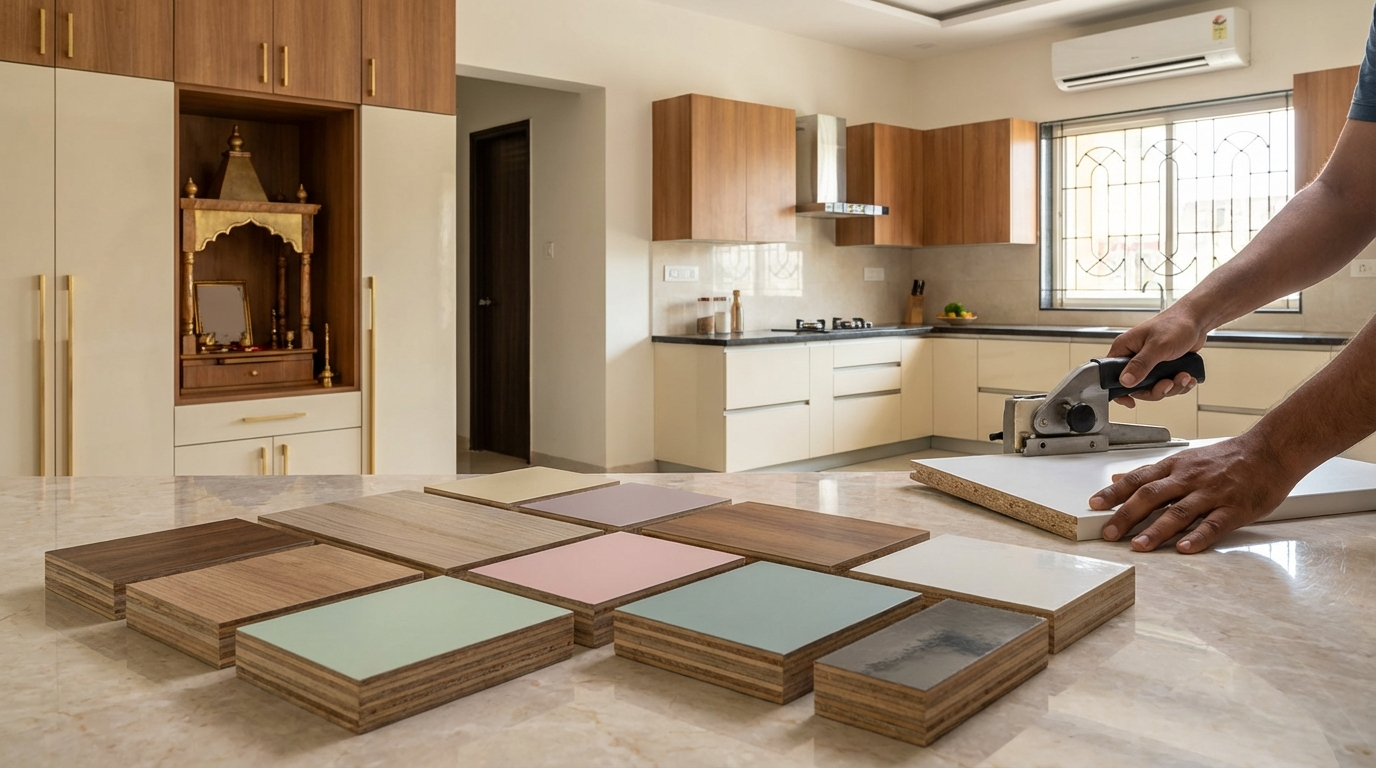
Prelam boards offer extensive design flexibility through various surface finishes. The decorative paper layer can replicate wood grains, solid colors, textures, and abstract patterns with remarkable consistency.
Finish Categories Available
Solid Colors: Matte and gloss finishes in whites, grays, blacks, and trending colors. Popular for modern minimalist interiors and modular kitchens. Over 100 shades are typically available from major manufacturers.
Wood Grain Textures: Replicate oak, walnut, teak, maple, and other popular wood species. Synchronized texture technology creates embossed surfaces that feel like real wood grain. These remain the most popular choice for residential wardrobes and traditional-style furniture.
High-Gloss Finishes: Mirror-like reflective surfaces for contemporary aesthetics. Commonly used in kitchen shutters and TV units. Require careful handling to avoid visible fingerprints and scratches.
Matte and Super-Matte: Anti-fingerprint surfaces that hide daily wear better than gloss. Increasingly popular for high-traffic furniture in homes with children.
Textured and Embossed: Leather textures, fabric patterns, concrete effects, and stone finishes. Used for accent pieces and feature panels.
Surface Quality Indicators
Quality prelam surfaces should exhibit:
- Uniform color without streaks or patches
- Consistent texture across the entire sheet
- No bubbles, pinholes, or surface defects
- Clean edges without chipping or delamination
- Proper pattern alignment (for wood grains)
Decision Framework: Which Prelam Grade for Which Condition
Selecting the right prelam grade prevents costly failures and ensures furniture longevity. Use this decision framework based on installation conditions.
| Installation Condition | Recommended Grade | What to Verify Before Buying |
|---|---|---|
| Air-conditioned bedrooms | Interior Grade Prelam | Consistent AC usage; no direct water exposure |
| Non-AC living rooms | Interior or Exterior Grade | Humidity levels in monsoon; cross-ventilation patterns |
| Modular kitchen (dry zones) | Exterior Grade (MR) Prelam | Distance from sink; steam exposure from cooking |
| Kitchen sink unit/under-counter | HDFWR Grade Prelam | Plumbing quality; potential leakage risk |
| Bathroom vanity | HDFWR Grade Prelam | Ventilation; direct water splash frequency |
| Coastal area (within 5km of sea) | HDFWR Grade Prelam | Salt air exposure; corrosion on hardware |
| Commercial/high-traffic areas | HDFWR or FR Grade | Fire compliance requirements; wear expectations |
| Outdoor covered applications | HDFWR Grade (with edge sealing) | Rain splash; temperature variations |
Practical Applications of Prelam Boards
Prelam boards serve diverse applications across residential, commercial, and institutional projects. Their consistent finish and ease of fabrication make them suitable for both mass production and custom furniture.
Residential Applications
- Wardrobes and closets: 18mm prelam for carcass; 18mm for shutters; interior-grade typically sufficient for bedrooms
- Modular kitchens: MR-grade prelam for cabinet bodies; HDFWR for sink units; 18mm standard thickness
- TV units and entertainment centers: 18mm interior-grade with wood grain or matte finishes
- Study tables and home offices: 25mm for tabletops; 18mm for storage units
- Shoe racks and utility furniture: 12-18mm; MR-grade recommended for entryway exposure
- Children's furniture: Matte or textured finishes (hide scratches better); interior-grade typically adequate
- Wall paneling and wainscoting: 8-12mm prelam; texture and pattern options enhance visual appeal
- False ceiling panels: Lightweight 6-9mm prelam; requires proper structural support
Commercial Applications
- Office workstations: 25mm tops; 18mm partitions; matte finishes for professional aesthetics
- Retail display fixtures: High-gloss or branded color prelam; 18mm standard
- Reception counters: 25mm with edge banding; HDFWR for durability
- Hotel room furniture: FR-grade prelam for fire compliance; synchronized wood textures popular
- Restaurant seating: HDFWR grade; scratch-resistant matte finishes
- Hospital and clinic furniture: Antibacterial laminate options; easy-clean surfaces
Design Ideas by Room
Living Room: Wood-grain prelam TV units with concealed storage; matte gray accent wall panels; floating shelves in contrasting colors; media consoles with wire management cutouts.
Bedroom: Full-height wardrobes with mirror integration; bedside tables with soft-close drawers; study corners with matching desk and shelving; loft storage with lift-up mechanisms.
Kitchen: Handle-less high-gloss shutters; wood-grain tall units; breakfast counter with waterfall edges; pantry pull-outs with interior-grade prelam.
Bathroom: HDFWR vanity units with vessel sinks; mirror cabinets with internal lighting; wall-mounted storage towers; laundry hamper enclosures.
Benefits of Using Prelam Boards
Prelam boards offer measurable advantages over alternative materials, making them a preferred choice for modern Indian interiors.
Time and Cost Efficiency
Factory-finished surfaces eliminate on-site lamination, reducing project timelines by 40-60%. A standard bedroom wardrobe that takes 7-10 days with raw MDF and separate lamination can be completed in 3-5 days with prelam boards. Labor costs reduce correspondingly since skilled lamination work is unnecessary.
Consistency and Quality
Factory conditions—controlled temperature, precise pressure, uniform adhesive application—produce surfaces that are difficult to replicate on-site. Every sheet from a batch matches exactly, ensuring large projects maintain visual uniformity across multiple furniture pieces.
Durability Features
- Scratch resistance: Melamine surfaces resist daily wear better than painted MDF
- Stain resistance: Non-porous surface prevents liquid absorption and staining
- UV stability: Quality prelam resists color fading from sunlight exposure
- Termite resistance: The dense core and sealed surface deter termite attack
- Easy maintenance: Wipe-clean surface requires no polishing or special care
Design Flexibility
With 100+ colors and textures available from major manufacturers, prelam boards accommodate virtually any design vision. The ability to mix and match—wood grain carcass with solid color shutters, for example—creates layered design aesthetics.
Environmental Considerations
Quality prelam boards use E1 or E0 grade adhesives with low formaldehyde emissions. The MDF core utilizes wood fibers from sustainable plantations, making it a more environmentally responsible choice than solid hardwood for most furniture applications.
Common Buyer Mistakes (And How to Avoid Them)
Understanding common errors helps ensure successful prelam board selection and installation.
- Using interior-grade prelam in kitchens: The most frequent mistake. Interior-grade boards absorb moisture through edges, causing swelling within months. Always use MR-grade minimum for any kitchen application.
- Ignoring edge treatment: Exposed MDF edges act as moisture entry points. Every cut edge must receive proper edge banding—PVC tape, ABS edging, or acrylic strips. Skipping this step voids any moisture-resistance advantage.
- Selecting gloss finishes for high-traffic areas: High-gloss prelam shows fingerprints, scratches, and dust prominently. For kitchen shutters handled multiple times daily, matte or textured finishes are more practical.
- Not checking batch consistency: Different production batches may show slight color variations. For large projects, order all sheets from the same batch and verify color matching before fabrication.
- Overloading thin shelves: A 12mm prelam shelf spanning 600mm will sag under heavy loads. Use 18mm minimum for shelving; add intermediate supports for spans exceeding 800mm.
- Using standard screws without pilot holes: MDF requires pilot holes 70-80% of screw diameter. Direct screwing splits the board. Pre-drilling is mandatory for all screw placements.
- Storing boards vertically: Vertical storage causes warping. Always store prelam boards flat, stacked with support across the entire surface, in a dry covered area.
- Choosing based on lowest price alone: Budget prelam boards may have thinner decorative layers that wear through faster, inconsistent core density, or poor adhesive quality. Verify manufacturer reputation and check surface thickness.
- Not accounting for wood grain direction: Random orientation of wood-grain patterns creates visual discontinuity. Plan cutting layouts to maintain consistent grain direction across cabinet doors and drawer fronts.
- Ignoring hardware compatibility: Heavy soft-close hinges require adequate screw purchase. For high-use applications, consider HDFWR grade or use hinge mounting plates to distribute load.
Failure Modes and How to Prevent Them
Understanding how prelam boards fail helps prevent problems before they occur.
Edge Swelling
Symptom: Edges expand, become soft, and show visible swelling at cut surfaces.
Root Cause: Moisture absorption through unsealed edges; wrong grade selection for humid conditions.
Prevention: Apply edge banding immediately after cutting; use MR/HDFWR grade in humid areas; seal all edges including hidden ones.
Fix if Already Happening: Cut back swollen edge by 5-10mm, dry thoroughly, apply waterproof edge banding, and consider laminate overlay if surface is affected.
Surface Bubbling
Symptom: Raised bubbles or blisters appear on the laminate surface.
Root Cause: Heat exposure (placing hot objects directly), poor original lamination, moisture trapped under surface.
Prevention: Use trivets for hot items; verify quality before purchase; avoid installation in direct sunlight zones without UV-resistant grades.
Fix if Already Happening: Small bubbles can sometimes be flattened with controlled heat and pressure; large areas require surface replacement or overlay.
Delamination
Symptom: Decorative surface separates from MDF core, often starting at edges or corners.
Root Cause: Poor manufacturing quality; prolonged moisture exposure; adhesive failure.
Prevention: Purchase from reputable manufacturers; ensure proper grade for application; maintain edge sealing.
Fix if Already Happening: Cannot be reliably repaired; replacement is typically necessary.
Screw Pullout
Symptom: Screws become loose; hinges and handles wobble; doors sag.
Root Cause: Repeated stress on screw holes; moisture cycling weakening core; screws too close to edges; incorrect pilot hole size.
Prevention: Use proper pilot holes; position screws minimum 25mm from edges; use HDFWR for high-stress joints; consider cam locks for knock-down furniture.
Fix if Already Happening: Fill hole with wood glue and toothpicks, let cure, re-drill pilot hole; or relocate screw position; or use larger diameter screws.
Surface Scratching
Symptom: Visible scratches, particularly on high-gloss surfaces.
Root Cause: Abrasive cleaning; sharp objects dragged across surface; low-quality decorative paper.
Prevention: Choose matte/textured finishes for high-use areas; use soft cloths for cleaning; apply protective films during installation.
Fix if Already Happening: Minor scratches on matte surfaces can be minimized with color-matched touch-up markers; deep scratches are permanent.
Warping and Bowing
Symptom: Board develops curve or twist; doors don't close flat.
Root Cause: Uneven moisture absorption (one side exposed, other sealed); improper storage; single-sided prelam.
Prevention: Use double-sided prelam or balance single-sided with backing material; store flat with uniform support; allow acclimatization before installation.
Fix if Already Happening: Mild warps may self-correct if stored flat under weight; severe warping requires replacement.
Quality Checks Without Lab Tests
Practical methods to verify prelam board quality without specialized equipment.
Before Buying (At Dealer/Warehouse)
- Visual inspection: Check surface for bubbles, scratches, color inconsistency, or debris trapped under laminate
- Edge examination: Look for delamination at sheet edges; press thumbnail against laminate edge—should not lift
- Core check: View cut edge to verify uniform density without voids or large particle inclusions
- Thickness verification: Use caliper or measure at multiple points; should be within ±0.3mm of stated thickness
- Weight comparison: Heavier sheets (same size/thickness) indicate denser, stronger core
- Smell test: Strong chemical odor indicates high formaldehyde; quality boards have minimal smell
Questions to Ask the Dealer
- What is the core grade (standard MDF, MR, or HDFWR)?
- What is the decorative paper thickness (GSM rating)?
- What is the formaldehyde emission class (E0, E1, E2)?
- Is this single-sided or double-sided prelam?
- What batch is this from? Can you supply matching sheets for reorders?
- What is the manufacturer's warranty coverage?
Red Flags to Watch For
- Prices significantly below market range (likely compromised quality)
- Reluctance to show cut edges or core
- Mixed batches with visible color variations
- Damaged packaging or signs of moisture exposure during storage
- No manufacturer branding or traceability
After Cutting (During Fabrication)
- Edge quality: Clean cuts should show uniform core without crumbling or excessive dust
- Core consistency: No voids, dark spots, or density variations visible in cross-section
- Laminate adhesion: Cutting should not cause laminate to lift or chip at cut line
- Screw test: Properly drilled pilot hole should hold screw firmly without spinning or splitting
After Installation (Verification)
- Alignment: Doors should hang straight and close flush
- Gap consistency: Uniform gaps between adjacent doors (typically 2-3mm)
- Edge banding adhesion: No lifting or gaps at edge banding joints
- Hardware function: Hinges operate smoothly; soft-close mechanisms work correctly
Tips by User Type
For Homeowners
Durability expectations: Quality prelam furniture should last 10-15 years with proper care in appropriate conditions. Expect some wear on high-use areas like kitchen drawer fronts and wardrobe handles.
Cleaning guidelines: Use soft damp cloth for daily cleaning. Mild soap solution for stubborn stains. Never use abrasive scrubbers, steel wool, or harsh chemicals. Avoid excess water—wipe dry immediately.
When to worry: Edge swelling is the earliest warning sign of moisture problems. If you notice any edge expansion, identify and eliminate the moisture source immediately, and consider upgrading to higher-grade boards in that area.
Maintenance schedule: Check hinge screws annually and tighten if loose. Inspect edge banding for lifting. Clean soft-close mechanisms of debris. Lubricate drawer slides annually.
For Carpenters and Fabricators
Cutting tips: Use carbide-tipped blades with 60+ teeth for clean cuts. Score the laminate side first to prevent chipping. Support the offcut to prevent tear-out. Maintain consistent feed rate.
Edge preparation: Apply edge banding immediately after cutting to minimize moisture absorption during fabrication. Use proper edge banding machines or high-quality adhesive for manual application.
Screw zones: Minimum 25mm from any edge. Pre-drill pilot holes at 70-80% of screw diameter. For hinges, use 3.5-4mm screws with proper length for board thickness. Consider cam locks for frequently disassembled furniture.
Hinge areas: Mark and drill hinge cups precisely—there's no room for adjustment. For heavy doors, use 35mm hinges with three screws per mounting plate. Position hinges 80-100mm from top and bottom edges.
Handling: Always carry sheets vertically with two people for 8×4 sheets. Never drag sheets—lift completely. Protect finished surfaces during transport and storage.
For Architects and Interior Designers
Specification language: Specify complete details: "Pre-laminated MDF board, 18mm thickness, HDFWR grade, double-sided, [specific color code], E1 emission class, from [approved manufacturers list]."
Wet-zone detailing: Specify HDFWR grade within 1 meter of water sources. Require silicone sealing at floor contact points. Specify stainless steel or coated hardware to prevent rust staining.
Finish selection criteria: High-gloss for low-touch display areas; matte/textured for functional furniture; synchronized textures for premium wood-look applications; solid colors for contemporary schemes.
Drawing annotations: Include edge banding specifications, grain direction for wood-grain finishes, hardware mounting details, and moisture-grade requirements on all furniture drawings.
For Modular Furniture and OEM Manufacturers
QC checkpoints: Incoming inspection for color matching, thickness consistency, surface defects. In-process checks for cut quality, edge banding adhesion, hardware alignment. Final inspection for overall finish and function.
Reducing customer complaints: Most complaints stem from edge swelling (use correct grade), color mismatch (single-batch ordering), and hardware failure (proper pilot holes). Address these three and complaints reduce significantly.
Batch consistency: Establish supply agreements for batch reservation. Maintain color reference samples for each project. Inspect each incoming shipment against reference before cutting.
Documentation: Maintain records of supplier, batch number, and grade for each project. This enables accurate troubleshooting if issues arise and builds quality traceability.
Prelam Board vs Other Materials
Understanding how prelam boards compare to alternatives helps in material selection.
| Parameter | Prelam MDF | Raw MDF + Laminate | Plywood + Laminate | Particle Board |
|---|---|---|---|---|
| Surface Consistency | Excellent (factory finish) | Good (depends on skill) | Good (depends on skill) | Moderate |
| Screw Holding | Good (with pilot holes) | Good (with pilot holes) | Excellent | Poor |
| Moisture Resistance | Grade-dependent | Grade-dependent | Better (marine grades) | Poor |
| Fabrication Time | Fast (no finishing) | Slower (lamination needed) | Slower (lamination needed) | Moderate |
| Cost (₹/sq ft, 18mm) | ₹45-90 | ₹55-100 | ₹90-150 | ₹25-40 |
| CNC Machinability | Excellent | Excellent | Good | Poor |
| Weight | Heavy | Heavy | Moderate | Light |
| Design Options | 100+ colors/textures | Unlimited (separate laminate) | Unlimited (separate laminate) | Limited |
When to Choose Prelam Over Alternatives
Choose prelam over raw MDF + laminate when: Project timeline is tight; consistent factory finish is priority; labor costs need reduction; multiple identical pieces required.
Choose prelam over plywood when: Budget is constrained; smooth paintable/laminatable surface needed; intricate CNC routing planned; warping-free flatness required.
Choose plywood over prelam when: Structural strength critical; very humid/wet conditions; heavy load-bearing required; exposed edges acceptable.
Frequently Asked Questions
What is prelam board made of?
Prelam board consists of a medium-density fibreboard (MDF) core with decorative melamine-impregnated paper bonded to one or both surfaces. The MDF core is manufactured from wood fibers combined with resin binders, compressed under heat and pressure. The decorative paper layer is then factory-applied using temperatures of 180-220°C and pressure of 25-35 kg/cm², creating a permanent bond. This process produces a ready-to-use board that doesn't require additional surface finishing.
Is prelam board waterproof for kitchen use?
Standard interior-grade prelam board is not waterproof and will swell if exposed to water. For kitchen applications, you must use exterior-grade (MR) prelam or HDFWR-grade prelam. Even moisture-resistant grades require proper edge sealing—all cut edges must be covered with PVC or ABS edge banding. For areas directly exposed to water, such as under-sink cabinets, HDFWR grade with complete edge sealing is mandatory. No prelam board should be submerged or continuously wet.
What is the difference between prelam and laminated MDF?
Prelam MDF comes with the decorative surface already applied during manufacturing—you receive a finished board ready for fabrication. Laminated MDF refers to raw MDF boards where laminate sheets are applied afterward at the workshop using separate adhesives and pressing. Prelam offers superior consistency because factory conditions are controlled, while laminated MDF allows greater customization since you can choose any laminate design. Prelam is faster to work with; laminated MDF offers more finish flexibility.
How long does prelam board furniture last in Indian conditions?
With proper grade selection and installation, prelam board furniture typically lasts 10-15 years in Indian conditions. The key factors affecting longevity are: using appropriate moisture-resistant grades for humid areas, complete edge sealing, proper hardware installation, and regular maintenance. Air-conditioned spaces extend lifespan; coastal areas and non-AC humid rooms reduce it. Kitchen furniture may show wear earlier due to heat and moisture exposure. Quality of the original board significantly impacts durability.
Can prelam board be painted or refinished?
Prelam board surfaces are designed to be used as-is and do not accept paint well. The melamine surface is non-porous, so paint adhesion is poor without extensive preparation including sanding and primer application. Even then, painted prelam tends to chip and peel. If you need paintable surfaces, raw MDF is more appropriate. For changing the look of existing prelam furniture, overlay with new laminate sheets or wrap-around vinyl films rather than painting.
What thickness of prelam board should I use for wardrobes?
For wardrobe construction, use 18mm prelam board for the carcass (sides, top, bottom) and shutter doors—this is the industry standard in India. Internal shelves can use 18mm for heavy loads or 12mm for light items like clothing. Back panels typically use 6mm or 8mm prelam. The partition dividers within wardrobes can be 12mm. For loft areas, 18mm is recommended for structural integrity. Always ensure hardware is rated for the board thickness being used.
Is prelam board termite resistant?
Prelam boards offer inherent resistance to termite attack because the dense MDF core and sealed melamine surface provide no entry points for termites. Unlike natural wood, there is no grain structure for termites to follow. However, exposed edges (unsealed cuts) can potentially be attacked. For complete protection, ensure all edges are properly banded, and consider using termite-treated MDF grades for applications in termite-prone areas. The sealed surface also resists borer attack and fungal growth.
How do I clean and maintain prelam board furniture?
Clean prelam surfaces with a soft, slightly damp cloth for daily maintenance. For stubborn stains, use mild soap solution or diluted dish detergent, then wipe dry immediately—never leave moisture standing on the surface. Avoid abrasive scrubbers, steel wool, or harsh chemicals like bleach or acetone that can damage the melamine surface. High-gloss finishes show fingerprints more; use microfiber cloths for streak-free cleaning. Check and tighten hardware annually, and inspect edge banding for any lifting.
What is the price range of prelam boards in India?
Prelam board prices in India vary by grade, thickness, and finish quality. Interior-grade prelam (18mm) typically ranges from ₹35-55 per square foot. Exterior-grade (MR) prelam costs ₹50-75 per square foot. HDFWR-grade prelam ranges from ₹70-100 per square foot. Premium finishes, synchronized textures, and high-gloss options command higher prices. Prices also vary by manufacturer, region, and order quantity. These ranges are indicative and fluctuate with raw material costs and market conditions.
Can prelam board be used for outdoor applications?
Prelam board is primarily designed for interior applications. However, exterior-grade and HDFWR-grade prelam can be used in covered outdoor areas where direct rain and sunlight exposure is minimal—such as covered balconies, semi-enclosed patios, or outdoor kitchens under roofs. Complete edge sealing is mandatory. Even moisture-resistant grades are not designed for continuous outdoor exposure. For true exterior applications, consider alternatives like WPC (wood-plastic composite) or exterior-grade plywood with appropriate coatings.
What are the standard sizes of prelam boards available in India?
The standard prelam board size in India is 8 feet × 4 feet (2440mm × 1220mm). This dimension optimizes material usage for standard Indian furniture designs. Thickness options range from 4.6mm to 25mm, with 18mm being the most commonly used for furniture applications. Some manufacturers offer custom sizes for large orders, and smaller pre-cut panels may be available for specific applications. International sizes are available from some suppliers for export-oriented furniture manufacturing.
How does prelam board compare to plywood for modular kitchens?
For modular kitchen carcasses, plywood offers superior screw-holding strength and moisture resistance, making it the traditional premium choice. However, HDFWR-grade prelam provides adequate performance at lower cost with the advantage of factory-finished surfaces. Plywood typically costs 50-80% more than equivalent prelam. Many manufacturers now use prelam for cabinet bodies with plywood reserved for high-stress areas like hinge mounting zones. For shutters, prelam's consistent finish often makes it the preferred choice over plywood requiring separate lamination.
Note: This is independent informational content and is not affiliated with any manufacturer. Product availability, specifications, and prices should be verified with local dealers.
Disclaimer: This content is provided for general informational purposes based on industry practices and publicly available information. Product specifications, standards, prices, and availability may vary by manufacturer, region, and time. Readers should independently verify details with manufacturers, dealers, or qualified professionals before making purchase or construction decisions.Want Plywood Suggestions?
Share a few details and a VIR MDF specialist will suggest suitable brands and connect you to responsive dealers.