Termite Proof Board: How to Protect Your Furniture from Termites
Termite proof board options for Indian homes: treated MDF, boron treatment & alternatives. Protect furniture with VIR termite-resistant solutions.
Quick Decision Summary
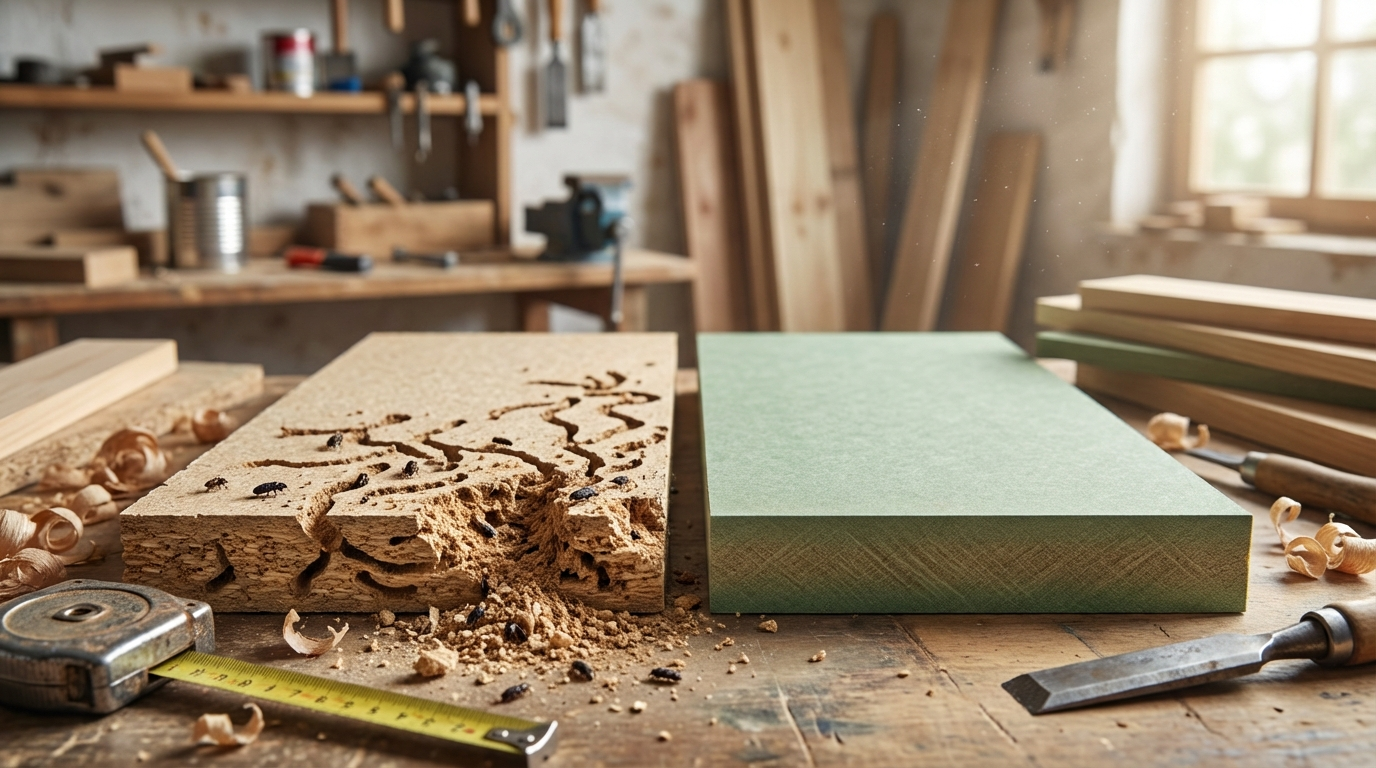
Quick Answer: Termite proof board is engineered wood panel treated with boron or chemical preservatives that prevents termite and borer infestation, making it essential for Indian homes where humidity and pest risks are high year-round.
If you're in a hurry: For furniture in Indian homes, choose boron-treated MDF or HDHMR boards with BWR (Boiling Water Resistant) grade for wet areas and MR (Moisture Resistant) grade for dry areas. Always verify the treatment certificate, check for ISI marking, and ensure proper edge sealing during installation. Termite-resistant boards typically cost 15-25% more than standard boards but eliminate recurring pest control expenses and furniture replacement costs.
Choose termite proof board if:
- You live in coastal, humid, or monsoon-prone regions of India
- Your home has ground-floor furniture in direct contact with walls
- Previous furniture has suffered termite damage
- You're building kitchen cabinets, wardrobes, or bathroom vanities
Consider alternatives if:
- You need only temporary furniture lasting under 3 years
- Budget is extremely tight and pest risk is genuinely low
- You're using the board for purely decorative wall panels with no structural load
- The installation area is completely sealed and climate-controlled
What Termite Proof Board Actually Means
Termite proof board refers to engineered wood panels—typically MDF (Medium Density Fibreboard), HDF (High Density Fibreboard), or HDHMR (High Density High Moisture Resistant)—that have been chemically treated to resist termite and borer attacks. The treatment penetrates the wood fibres, creating an environment that termites find toxic or indigestible.
Where it fits in the material hierarchy:
- Solid wood: Natural but highly vulnerable to termites without treatment
- Plywood: Available in termite-resistant variants (IS 303 certified)
- Termite proof MDF/HDF: Factory-treated during manufacturing for consistent protection
- HDHMR boards: Highest density with built-in termite and moisture resistance
Common confusions clarified:
- "Termite proof" vs "Termite resistant": No board is 100% termite-proof indefinitely. "Termite resistant" is the more accurate term—these boards significantly reduce infestation risk but require proper installation and maintenance.
- "BWR" vs "Termite treatment": BWR (Boiling Water Resistant) addresses moisture resistance, not termite protection. A board should be both BWR and termite-treated for wet-zone applications.
- "Pre-laminated" vs "Treated": Pre-laminated surfaces don't provide termite protection—the core board must be treated.
Why Termite Protection Matters for Indian Homes
India's climate creates ideal conditions for termite colonies. With annual property damage from termites estimated in thousands of crores, understanding regional risks is essential for protecting your furniture investment.
Monsoon and Humidity Impact
During June-September monsoons, relative humidity in cities like Mumbai, Chennai, Kolkata, and Kochi regularly exceeds 80-90%. This moisture softens untreated wood fibres, making them easier for termites to digest. Subterranean termites—the most common type in India—build mud tubes along walls during monsoons to reach wooden furniture, especially pieces touching or near walls.
Coastal and Regional Variations
Coastal areas face compounded risks: salt-laden air accelerates wood degradation while high humidity supports larger termite populations. Cities like Visakhapatnam, Mangalore, and Goa require BWR-grade termite-resistant boards as standard, not premium upgrades. Even northern cities like Delhi face dry-wood termite risks during post-monsoon months when temperature and humidity create breeding conditions.
Real Consequences of Ignoring Termite Protection
- Structural weakening: Termites hollow out board cores, causing wardrobe shelves to sag and cabinet doors to detach from hinges
- Screw failure: Hollowed cores cannot grip screws, leading to hardware loosening within 2-3 years
- Delamination: Laminate surfaces bubble and peel when the underlying board is compromised
- Cross-contamination: One infested piece can spread termites to adjacent furniture within months
- Health concerns: Termite frass (droppings) and damaged wood particles can trigger respiratory issues
Site Handling Realities in India
Even treated boards can become vulnerable due to poor site practices:
- Storage during construction: Boards left exposed to rain or stored directly on cement floors absorb ground moisture
- Unsealed edges: Cut edges expose untreated core, creating entry points for termites
- Wall contact: Furniture touching external walls or bathroom walls provides moisture bridges
- Delayed installation: Boards stored for months in humid warehouses before use may already have compromised treatment
Types of Termite Proof Boards Explained
Understanding the different termite-resistant board options helps you match the right material to your specific application and budget.
| Board Type | Density (kg/m³) | Termite Treatment | Moisture Grade | Best Applications | Price Range (₹/sq.ft) |
|---|---|---|---|---|---|
| MR-MDF (Termite Treated) | 650-750 | Boron-based | Moisture Resistant | Wardrobes, TV units, bedroom furniture | 35-55 |
| BWR-MDF (Termite Treated) | 700-780 | Boron + resin | Boiling Water Resistant | Kitchen cabinets, bathroom vanities | 50-75 |
| HDF (Termite Resistant) | 800-900 | Integrated chemical treatment | High moisture resistance | Flooring, high-traffic furniture | 60-85 |
| HDHMR | 850-950 | Factory-integrated | BWR equivalent | Modular kitchens, wet-zone furniture | 75-110 |
| BWP Plywood (IS 303) | 550-650 | Pressure treatment | Boiling Water Proof | Structural applications, exterior use | 85-140 |
Boron Treatment vs Chemical-Resin Treatment
Boron-based treatment: Uses borate compounds that are eco-friendly and safe for indoor use. Effective against termites and borers but can leach out with prolonged water exposure. Best for dry-zone furniture with MR-grade boards.
Chemical-resin treatment: Uses synthetic preservatives mixed into the binding resin during manufacturing. More durable in wet conditions but may have higher VOC emissions initially. Preferred for kitchen and bathroom applications.
Common Misunderstandings About Termite Proof Boards
- Myth: "All MDF is termite-resistant" — Standard MDF has no termite protection; only specifically treated variants offer resistance
- Myth: "Laminate surface protects against termites" — Termites attack from edges and back; surface laminate provides zero termite protection
- Myth: "Termite treatment lasts forever" — Treatment efficacy typically ranges 10-15 years depending on exposure conditions
- Myth: "Higher density means better termite resistance" — Density addresses strength, not pest resistance; treatment is separate
- Myth: "Plywood is always safer than MDF for termites" — Untreated plywood is equally vulnerable; treatment matters more than board type
Decision Framework: Which Termite Proof Board for Which Condition
Use this framework to select the right termite-resistant board based on your specific situation, location, and application requirements.
| Condition/Scenario | Recommended Board | What to Verify Before Buying |
|---|---|---|
| Kitchen cabinets (sink area) | BWR-grade HDHMR or BWR-MDF with termite treatment | BWR certification, termite treatment certificate, edge-banding quality |
| Bedroom wardrobes (dry zone) | MR-MDF with boron treatment | Boron treatment documentation, uniform core density on cut sample |
| Bathroom vanity units | HDHMR or marine-grade plywood (IS 710) | BWR/marine grade marking, factory edge sealing |
| Coastal city homes (Mumbai, Chennai, Kochi) | BWR-grade minimum for all furniture | Double-check termite treatment; consider HDHMR for all wet-adjacent zones |
| Ground floor apartments | Termite-treated MDF + raised furniture legs | Gap between furniture and floor, wall standoff installation |
| Rental property (budget priority) | MR-MDF with termite treatment, pre-laminated | ISI marking, basic treatment certificate |
| Premium modular kitchen | HDHMR with factory-integrated treatment | Brand reputation, warranty terms, installation support |
| Children's room furniture | Boron-treated MDF (low VOC) | E1 or E0 emission certification, boron (not chemical) treatment |
Practical Applications of Termite Proof Boards
Termite-resistant boards suit nearly every furniture application in Indian homes. Here's how to match the right board to specific use cases.
Kitchen Applications
- Base cabinets: HDHMR or BWR-MDF essential due to floor moisture and plumbing proximity
- Wall cabinets: MR-MDF with termite treatment usually sufficient
- Sink cabinet: HDHMR mandatory; consider stainless steel carcase as alternative
- Pantry units: Termite-treated MR-MDF with proper ventilation slots
Bedroom and Living Room
- Wardrobes: Termite-treated MR-MDF for carcase; consider plywood for load-bearing shelves
- TV units: Standard termite-treated MDF; ensure back panel is also treated
- Study tables: MR-MDF with laminate; focus on edge sealing
- Bed frames: Termite-treated plywood or HDHMR for structural members
Bathroom and Utility Areas
- Vanity cabinets: HDHMR or marine plywood only; never use MR-grade
- Utility storage: BWR-MDF minimum; ensure raised installation off floor
- Laundry cabinets: HDHMR recommended due to moisture cycling
Commercial and Office Use
- Reception counters: Termite-treated MDF with commercial-grade laminate
- Workstations: MR-MDF sufficient for AC environments
- Storage rooms: Consider pest risk based on building age and maintenance
Common Buyer Mistakes (And How to Avoid Them)
These errors lead to premature furniture failure, unexpected costs, and termite damage despite using "termite proof" boards.
- Assuming all branded boards are termite-treated: Many manufacturers sell both treated and untreated variants. Always specifically request and verify termite-resistant grade with documentation.
- Ignoring edge sealing: Cut edges expose untreated core material. Ensure your carpenter applies edge banding on all exposed edges, including back panel edges and shelf undersides.
- Choosing BWR for termite protection: BWR addresses water resistance, not termite resistance. You need both specifications for wet-zone furniture. Verify the board carries both certifications.
- Storing boards improperly before installation: Boards stored on cement floors or in open construction sites absorb moisture and may attract termites before installation. Insist on elevated, covered storage.
- Placing furniture directly against external walls: External walls conduct moisture, especially during monsoons. Maintain 25-50mm gap between furniture backs and walls, particularly bathroom-adjacent walls.
- Skipping back panels or using cheap substitutes: Thin hardboard back panels are often untreated and become termite entry points. Use the same termite-treated material for back panels, even if thinner gauge.
- Ignoring floor contact: Ground-floor furniture touching cement or tile floors can wick moisture. Use adjustable legs or plinth with proper moisture barrier.
- Trusting verbal assurances without documentation: Get written confirmation of termite treatment type, certification, and warranty terms. Reputable manufacturers provide treatment certificates.
- Overlooking ventilation in closed cabinets: Stagnant air inside wardrobes creates humidity pockets. Include ventilation grilles or gaps, especially in coastal cities.
- Choosing the cheapest "termite proof" option: Low-cost boards may have surface-only treatment that wears off quickly. Check treatment penetration—reputable boards have treatment integrated during manufacturing.
Failure Modes and How to Prevent Them
Even termite-resistant boards can fail under specific conditions. Understanding these failure modes helps prevent problems before they occur.
1. Edge Infestation
Symptom: Termite damage starting from cut edges, visible mud tubes along edges, powdery residue near edge banding
Root cause: Cut edges expose untreated core; inadequate edge banding allows termite access
Prevention: Apply PVC or ABS edge banding on all cut edges; use edge sealant before banding; avoid paper-based edge tape
Fix if already happening: Remove affected sections, treat exposed areas with borate solution, replace edge banding with proper sealing
2. Moisture-Compromised Treatment
Symptom: Termite activity despite using treated boards, swelling at base, soft spots when pressed
Root cause: Prolonged water exposure leached boron treatment from MR-grade boards used in wet zones
Prevention: Use BWR-grade or HDHMR in moisture-prone areas; ensure proper waterproofing around sinks and plumbing
Fix if already happening: Replace affected boards with appropriate grade; address water source; improve drainage
3. Wall-Contact Infestation
Symptom: Termite damage on furniture backs touching walls, mud tubes behind wardrobes
Root cause: Direct contact with walls allows termites to bridge from wall to furniture
Prevention: Maintain 25-50mm wall gap; treat walls with anti-termite solution before installation; use treated back panels
Fix if already happening: Move furniture away from wall, treat wall surface, replace damaged back panels, install spacer blocks
4. Floor-Level Damage
Symptom: Base of furniture swelling or showing termite damage, particularly on ground floors
Root cause: Ground moisture and subterranean termite access through floor contact
Prevention: Use adjustable legs or raised plinth; apply termite barrier during construction; avoid built-in floor-touching furniture
Fix if already happening: Replace damaged base panels, install raised legs, apply floor-level termite treatment
5. Treatment Degradation Over Time
Symptom: Termite damage appearing after 8-12 years on previously protected furniture
Root cause: Chemical treatment efficacy naturally degrades over time, especially with heat and humidity exposure
Prevention: Consider treatment refresh every 10 years for valuable furniture; maintain good ventilation to slow degradation
Fix if already happening: Apply surface borate treatment to accessible areas; consider replacing high-risk components
6. Cross-Contamination from Untreated Elements
Symptom: Termite damage spreading from one furniture piece to adjacent treated furniture
Root cause: Termites established in untreated wooden items (picture frames, decorative pieces) spread to nearby furniture
Prevention: Ensure all wooden items in the room are treated; regular inspection of decorative wooden elements
Fix if already happening: Remove and treat/dispose of infested items; professional fumigation if severe; create barriers between pieces
Quality Checks Without Lab Tests
You don't need a laboratory to verify termite-resistant board quality. Use these practical checks at different stages.
Before Buying: Verification Steps
- Request documentation: Ask for termite treatment certificate, ISI marking details, and manufacturer warranty card
- Check board markings: Genuine termite-treated boards usually have treatment type printed/stamped on the surface or edge
- Examine cut sample: Ask dealer to show a cut piece; treated boards often show slight color variation in core indicating treatment penetration
- Smell test: Boron-treated boards have minimal odor; strong chemical smell may indicate surface-only treatment or high VOC content
- Weight comparison: For same thickness, HDHMR should feel noticeably heavier than standard MDF
- Surface hardness: Press thumbnail into edge; quality treated boards resist indentation better than untreated variants
Red Flags to Watch For
- Dealer unable to provide any documentation for termite treatment claims
- Significantly lower price than market rate for termite-resistant grade
- Visible core inconsistency—gaps, voids, or layering in cut edges
- Boards stored in damp conditions or directly on floor
- No brand marking or ISI stamp visible anywhere on board
- Dealer mixing treated and untreated boards in same stack
After Cutting: Quality Indicators
- Edge quality: Clean cuts without excessive dust or fiber pull-out indicate good density and bonding
- Core uniformity: Consistent color and density through the thickness; no visible layers or voids
- Screw holding: Test screws should grip firmly without spinning or pulling out easily
- Drilling behavior: Board should drill cleanly without burning or excessive dust
After Installation: Ongoing Monitoring
- Monthly visual check: Look for mud tubes on furniture backs, walls near furniture, and along baseboards
- Tap test: Hollow sound when tapping previously solid areas indicates possible internal damage
- Edge inspection: Check edge banding adhesion; peeling edges expose vulnerable core
- Seasonal attention: Increase monitoring frequency during and after monsoon season
Tips by User Type
For Homeowners
Durability expectations: Quality termite-treated furniture should last 15-20 years with proper care. Budget for treatment refresh or replacement around year 12-15 for high-value pieces.
Cleaning do's and don'ts:
- Use damp (not wet) cloth for cleaning; excess water can compromise treatment over time
- Avoid harsh chemical cleaners that may react with treatment compounds
- Dry any water spills immediately, especially near edges and joints
- Use furniture polish sparingly; buildup can trap moisture
When to worry:
- Seeing any mud tubes or tunnels on or near furniture
- Finding fine powdery residue (frass) near furniture bases
- Noticing hollow sounds when tapping solid areas
- Observing swarming winged insects near windows during monsoon (termite reproductive stage)
For Carpenters and Contractors
Cutting tips:
- Use carbide-tipped blades; treated boards may be slightly more abrasive
- Minimize dust exposure—treated wood dust should not be inhaled
- Cut all pieces before edge banding to ensure all edges are sealed
Edge preparation:
- Apply PVC edge banding minimum 0.8mm thickness on all visible edges
- Use hot-melt adhesive rated for humidity resistance
- Seal hidden edges with edge sealer or PU-based wood glue
- Don't skip back panel edges—these are common termite entry points
Installation best practices:
- Pre-drill for screws in HDHMR to prevent splitting
- Maintain wall gaps using spacer blocks or hidden brackets
- Apply silicone sealant around plumbing penetrations in kitchen cabinets
- Use adjustable legs rather than fixed plinths where possible
For Architects and Interior Designers
Specification language:
- Specify "Termite and borer treated MDF/HDHMR conforming to relevant BIS standards"
- Include treatment type requirement: "Boron-based treatment for dry zones, resin-integrated treatment for wet zones"
- Mandate documentation: "Manufacturer's termite treatment certificate required before installation approval"
Wet-zone detailing:
- Specify HDHMR or marine plywood for all cabinetry within 1 meter of water sources
- Include waterproofing membrane requirement below cabinet bases in bathrooms
- Detail ventilation requirements for enclosed cabinet spaces
- Specify edge-banding type and thickness in finish schedule
Finish selection considerations:
- High-pressure laminates (HPL) provide better moisture barrier than melamine
- Acrylic finishes offer superior edge sealing when properly applied
- Specify seamless back panels to eliminate termite entry points
For Modular Kitchen and Furniture Manufacturers
QC checkpoints:
- Incoming inspection: Verify treatment certificates match physical board markings
- Storage audit: Check storage conditions; reject boards showing moisture damage
- Process control: Ensure edge sealing on all cut edges, including internal components
- Final inspection: Verify wall-gap provisions and adjustable leg functionality
Reducing customer complaints:
- Provide written care instructions with every installation
- Include termite treatment certificate copy in handover documentation
- Offer annual inspection service as value-add
- Train installation teams on proper wall-gap and ventilation requirements
Batch consistency:
- Source from single manufacturer for color and treatment consistency
- Maintain batch records linking customer orders to board batches for warranty tracking
- Periodically verify treatment efficacy through third-party testing
Price Ranges and Cost Factors
Termite-proof board pricing varies by type, thickness, brand, and regional availability. These ranges reflect January 2026 market conditions and may vary by location.
Thickness-Wise Price Ranges (per sq. ft.)
| Board Type | 6mm | 12mm | 18mm | 25mm |
|---|---|---|---|---|
| MR-MDF (Termite Treated) | ₹18-25 | ₹32-45 | ₹45-60 | ₹55-75 |
| BWR-MDF (Termite Treated) | ₹25-35 | ₹45-60 | ₹60-80 | ₹75-100 |
| HDHMR | ₹35-45 | ₹55-75 | ₹75-100 | ₹95-130 |
| Termite-Proof Plywood (IS 303) | ₹40-55 | ₹70-95 | ₹95-130 | ₹120-160 |
Cost Drivers to Consider
- Treatment type: Chemical-resin integrated treatment costs 10-15% more than boron surface treatment
- Brand premium: Established brands may cost 15-25% more but offer better consistency and warranty support
- Regional availability: Prices in tier-2/3 cities may be higher due to transportation costs
- Bulk purchasing: Project quantities (50+ sheets) typically qualify for 5-10% dealer discounts
- Pre-laminated vs raw: Pre-laminated termite-treated boards cost 30-50% more but save lamination time and cost
Budget Estimation Example
For a 3BHK apartment's complete furniture (wardrobes, kitchen, TV units, study):
- Approximate board requirement: 80-120 sheets (8x4 ft)
- Using MR-MDF termite-treated (18mm) at ₹55/sq.ft average: ₹1,40,800 - ₹2,11,200 for boards only
- Upgrading kitchen (20-30 sheets) to HDHMR: Additional ₹15,000 - ₹30,000
- Edge banding, hardware, laminate, labour: Additional 60-80% of board cost
Long-term value calculation: Spending ₹20,000-30,000 extra on termite-treated boards saves potential ₹50,000-100,000 in replacement costs over 10-15 years, plus eliminates recurring pest control expenses (typically ₹3,000-8,000 annually).
Frequently Asked Questions
What is termite proof board made of and how does it work?
Termite proof board is typically made from wood fibres bonded with synthetic resins to create MDF, HDF, or HDHMR panels. The termite resistance comes from chemical treatment—usually boron compounds or synthetic preservatives—applied during or after manufacturing. These chemicals penetrate the wood fibres and create an environment that's toxic to termites when they attempt to consume the material. The treatment doesn't change the board's appearance or workability but provides long-lasting protection typically rated for 10-15 years under normal conditions.
Is termite proof MDF better than termite proof plywood?
Neither is universally better—the choice depends on application. Termite-treated MDF offers uniform density, smoother surfaces for lamination, and better machinability for detailed work like CNC routing. Termite-treated plywood provides superior screw-holding strength, better structural rigidity, and higher impact resistance. For furniture carcases and decorative elements, MDF is often preferred. For load-bearing shelves, structural components, and areas requiring frequent hardware attachment, plywood performs better. Many quality projects use both: plywood for structure, MDF for surfaces.
How long does termite treatment last in MDF boards?
Factory-integrated termite treatment in MDF boards typically remains effective for 10-15 years under normal indoor conditions. However, effectiveness depends on several factors: exposure to water (which can leach boron-based treatments), humidity levels, edge sealing quality, and proximity to active termite colonies. Boards in coastal or high-humidity regions may experience faster treatment degradation. For maximum longevity, ensure proper edge sealing, avoid water exposure, and maintain adequate ventilation around furniture.
Can termites still attack termite proof board?
While significantly reduced, the risk isn't zero. Termite-resistant boards can still be attacked if: treatment has degraded over time, edges are left unsealed exposing untreated core, boards are constantly exposed to moisture that leaches treatment, or severe infestations overwhelm the treatment's deterrent effect. The term "termite resistant" is more accurate than "termite proof." Proper installation, edge sealing, and maintenance dramatically reduce attack probability—most quality installations see zero termite issues over their 15-20 year lifespan.
What is the difference between BWR board and termite proof board?
BWR (Boiling Water Resistant) and termite resistance address different problems and are independent specifications. BWR refers to the board's ability to withstand moisture and humidity without swelling or delaminating—tested by boiling water immersion. Termite resistance refers to chemical treatment that deters termite attack. A board can be BWR but not termite-treated, or termite-treated but only MR (Moisture Resistant) grade. For wet-zone furniture like kitchen cabinets, you need both specifications: BWR-grade with termite treatment, or HDHMR which typically includes both properties.
Is HDHMR board termite proof?
Most HDHMR (High Density High Moisture Resistant) boards include integrated termite and borer resistance as a standard feature, though this varies by manufacturer. HDHMR's high-density construction (850-950 kg/m³) itself provides some natural resistance as termites find it difficult to penetrate. Combined with factory-applied treatments, quality HDHMR offers excellent protection. However, always verify with the manufacturer—don't assume termite resistance; check product specifications and request documentation confirming termite treatment is included in that particular HDHMR variant.
How do I identify if a board is genuinely termite treated?
Look for these indicators: manufacturer's printed marking on board surface or edge indicating treatment type, treatment certificate from manufacturer, ISI marking with relevant standard number, slight color variation in core (some treatments cause this), and brand-specific authenticity features. At the dealer level, request to see a cut sample—treated boards often show visible treatment penetration. Be suspicious of unusually low prices, missing documentation, or boards without any manufacturer markings. Established brands provide QR codes or batch numbers for authenticity verification.
What is the price difference between normal MDF and termite proof MDF?
Termite-treated MDF typically costs 15-25% more than standard untreated MDF of the same thickness and grade. For example, if standard 18mm MR-MDF costs ₹40/sq.ft, the termite-treated variant might cost ₹48-52/sq.ft. The premium covers treatment chemicals, additional processing, and quality certification. While this increases upfront cost for a typical wardrobe by ₹1,500-3,000, it eliminates potential replacement costs of ₹15,000-40,000 and annual pest control expenses of ₹3,000-8,000, making it highly cost-effective over the furniture's 15-20 year lifespan.
Can I apply termite treatment to regular MDF after purchase?
Surface-applied termite treatments on regular MDF provide limited protection compared to factory-treated boards. Factory treatment is integrated during manufacturing, penetrating throughout the board thickness. Post-purchase surface treatments only protect the outer layer—any cuts or drilling expose the untreated core. If you must use untreated MDF, you can improve protection by: applying borate solution to all surfaces and cut edges before lamination, ensuring comprehensive edge banding, and keeping furniture away from walls and floors. However, for termite-prone areas, factory-treated boards remain the recommended choice.
Which areas in a home need termite proof board most urgently?
Prioritize termite-resistant boards for: kitchen cabinets (moisture plus food particles attract pests), ground-floor furniture (closer to subterranean termite colonies), wardrobes and furniture against external walls (moisture bridging), bathroom-adjacent furniture, storage units in less-ventilated areas, and any furniture in buildings with previous termite history. In coastal cities and humid regions, consider termite-treated boards standard for all furniture. Air-conditioned bedrooms with well-sealed windows in upper floors of newer buildings represent the lowest risk, where standard treated boards suffice.
Does pre-laminated termite proof board offer better protection?
Pre-lamination doesn't enhance termite resistance—it addresses aesthetics and surface durability. The laminate surface does provide a barrier on the visible face, but termites attack from edges, backs, and undersides where the core is exposed. Pre-laminated termite-treated boards offer convenience (no separate lamination needed) and the laminate does protect against surface moisture that could degrade treatment over time. However, the primary termite protection comes from the core treatment, not the laminate. Ensure edge banding quality remains high regardless of whether boards are pre-laminated.
How should termite proof boards be stored before installation?
Store termite-treated boards in a dry, covered area elevated at least 100mm off the ground on wooden battens or plastic pallets. Never store directly on cement floors, which transfer ground moisture. Avoid outdoor storage or areas exposed to rain, even if covered. Store flat, not leaning, to prevent warping. Keep away from active construction areas with cement work or plastering, as airborne moisture affects board conditioning. Ideal storage duration is under 4 weeks; longer storage in humid conditions can affect both board conditioning and treatment efficacy. Cover with breathable material, not plastic sheets that trap moisture.
Note: This is independent informational content and is not affiliated with any manufacturer.
Last Updated: January 2026
Disclaimer: This content is provided for general informational purposes based on industry practices and publicly available information. Product specifications, standards, prices, and availability may vary by manufacturer, region, and time. Readers should independently verify details with manufacturers, dealers, or qualified professionals before making purchase or construction decisions.Want Plywood Suggestions?
Share a few details and a VIR MDF specialist will suggest suitable brands and connect you to responsive dealers.