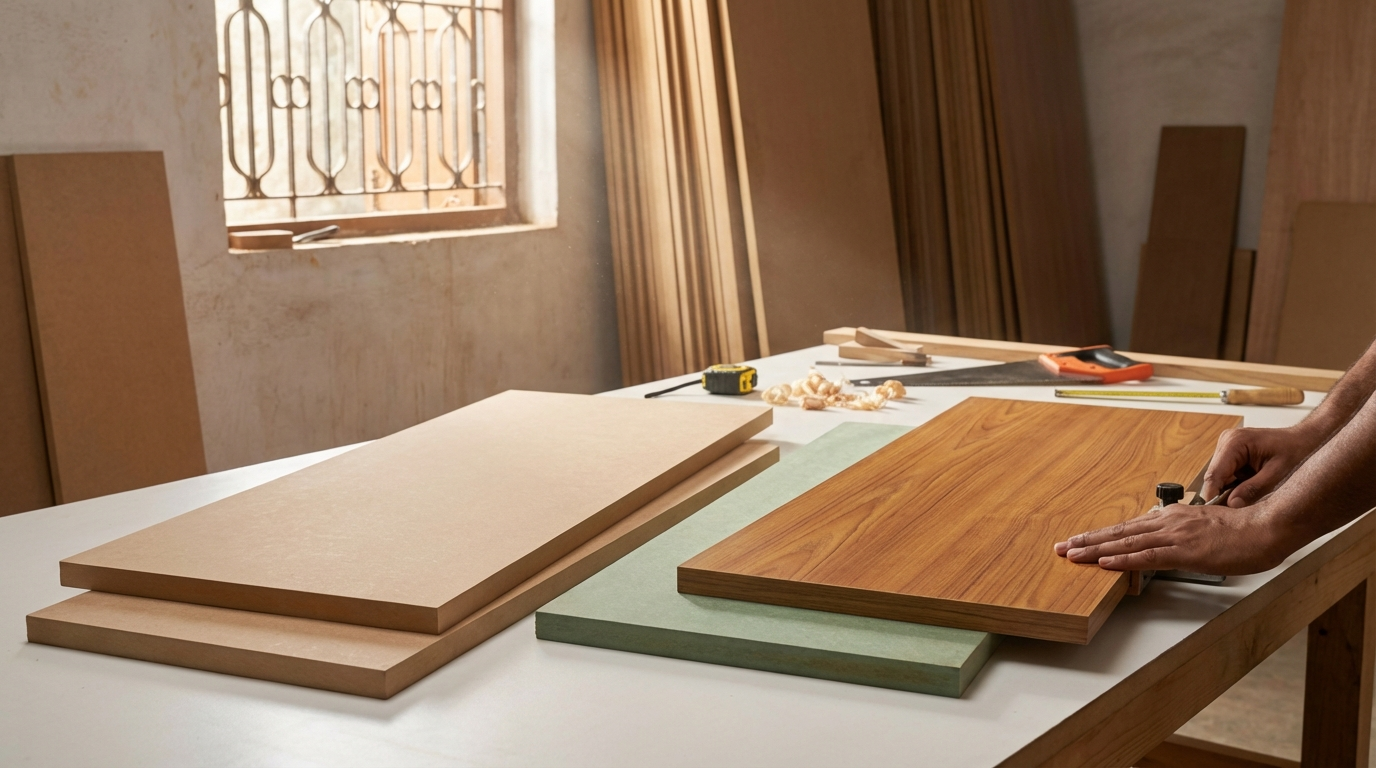
VIR Laminates Price List vs Prelam MDF: Which One Should You Buy (and Why)?
Not sure whether to choose laminates or prelam MDF? Compare cost, finish, durability, and installation to choose the right surface for your project.
Quick Decision Summary
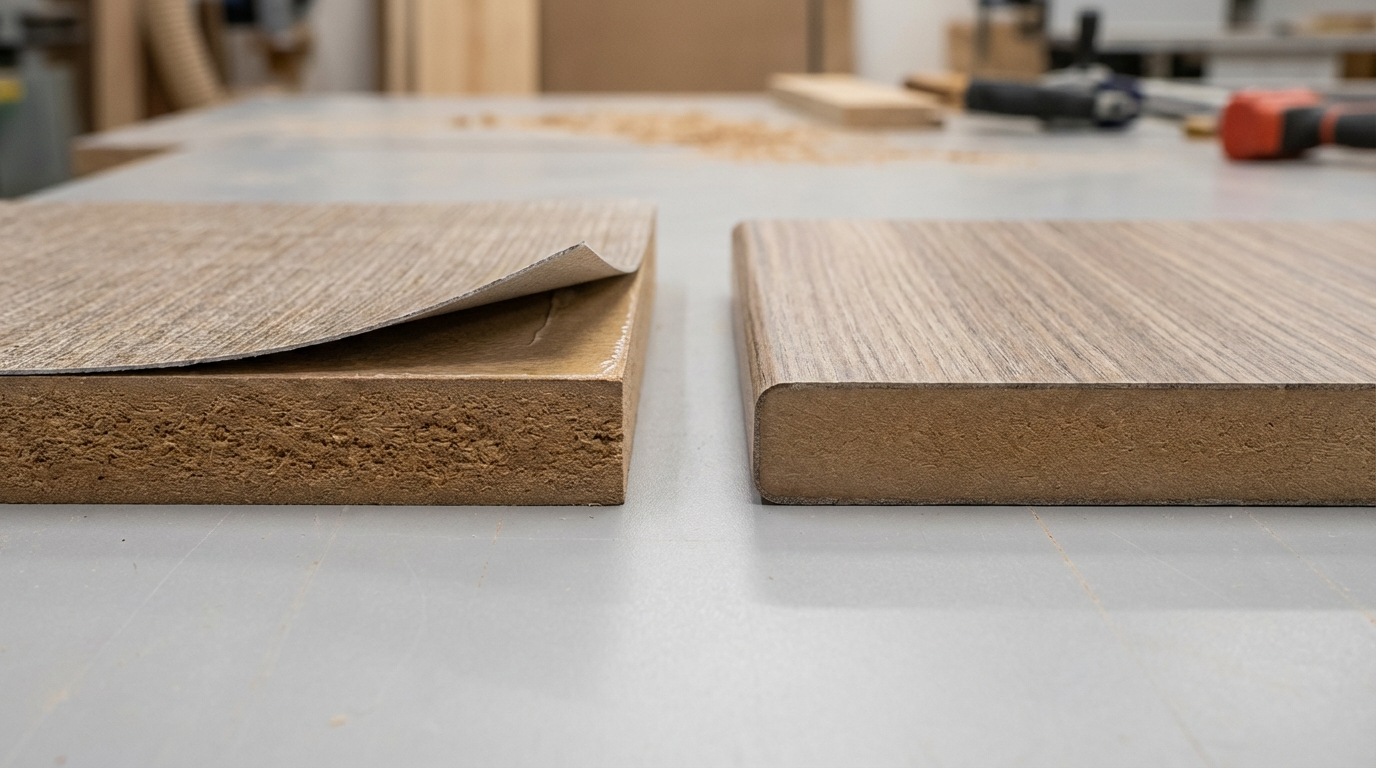
Pick prelam MDF for fast, factory-ready panels in budget dry interiors; choose separate laminates applied on MDF for better customization and moisture handling in kitchens or coastal homes.
If you’re in a hurry: Prelam MDF suits simple wardrobes or TV units where speed trumps variety—sheets arrive ready with uniform finish, cutting down carpenter time. Laminates offer more design options and seamless edges but add application steps. Factor your site conditions: high humidity favors laminates with moisture-resistant substrates. Budget tip—prelam often undercuts total cost for small jobs, while laminates shine in large or detailed projects. Check thickness and edge sealing first.
- Choose prelam MDF if: tight timeline, dry room, uniform color needed, carpenter handles basics.
- Choose laminates if: custom designs, wet zones, full-face coverage, premium feel required.
- Avoid prelam if: exposed edges common or humidity above 70% without WR grade.
- Avoid laminates if: no skilled applicator or budget under Rs 100/sqft total.
Note: This is independent informational content and is not affiliated with any manufacturer.
What Are Laminates?
Laminates are thin decorative sheets, typically 0.6mm to 1.2mm thick, made from resin-impregnated paper layers pressed under heat. They stick to a base like MDF, particleboard, or plywood using adhesive. Options like VIR represent one market choice with various prints and textures.
Key fit: Surface upgrade for cabinets, doors, or walls. Post-forming types wrap curves; standard ones stay flat. Thickness grades—1mm for heavy use, 0.8mm standard—affect scratch resistance.
What is Prelam MDF?
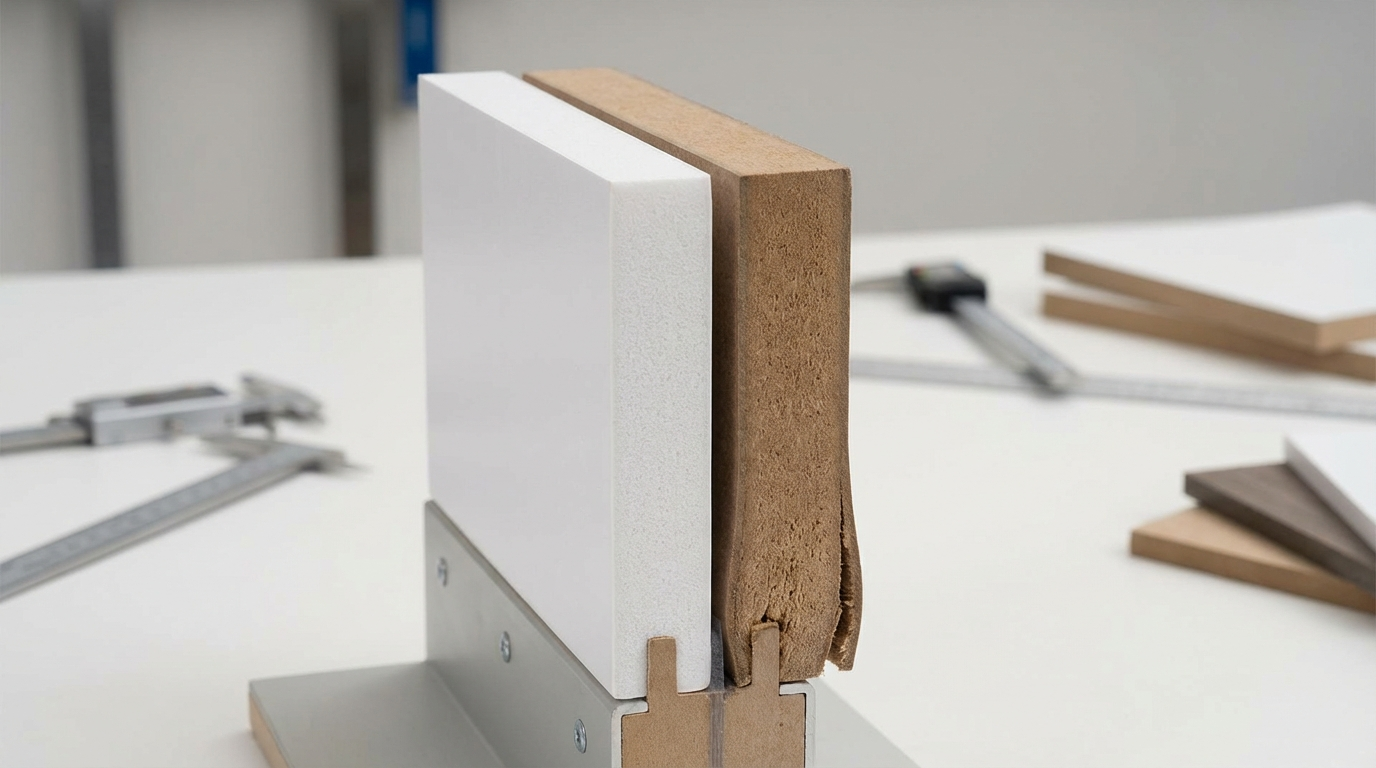
Prelam MDF means medium-density fiberboard (MDF) with laminate pre-applied at the factory, usually on one or both faces. Thickness ranges 5.5mm to 19mm, with melamine or decorative paper finishes baked in.
Key fit: Ready-to-cut panels for shutters, partitions, or shelves. Balances cost and finish without separate lamination. Moisture-resistant (MR) or water-resistant (WR) variants use special resins for humid areas.
Why It Matters in Indian Homes and Sites
Monsoon humidity (70-90%) and coastal salt air swell untreated edges, causing delamination or screw-pullout. Site realities—dusty godowns, open truck transport, uneven AC—demand sealed edges and dense cores.
Prelam risks factory finish mismatches on curves; laminates allow site-specific glues. In Mumbai or Chennai projects, WR grades prevent warping; dry Delhi favors standard. Poor storage leads to 20% wastage from bubbling.
Price Range and Cost Drivers
Expect laminate sheets at Rs 40-150 per sqft (0.8-1.2mm), varying by print complexity, post-forming ability, and city (metros 20% higher). Prelam MDF runs Rs 80-220 per sqft (16-18mm thick), driven by density (700-850 kg/m³), face finish, and sheet size (8x4 ft standard).
Cost drivers: Thickness adds 30-50%; WR resins 20%; edge treatment 10-15%; logistics from north to south doubles in peaks. Wastage hits 10-15% on curves. Example wardrobe (20 sqm): Prelam ~Rs 25,000-40,000; laminates + MDF ~Rs 30,000-55,000.
How much does VIR laminates cost per sheet?
Typical VIR-style laminates range Rs 800-2,500 per 8x4 ft sheet, but verify with specs like grade and texture. Direct answer: Budget prints start lower, premium wood-grains higher. Nuance: City surcharges and bulk cuts reduce unit cost. Check: Ask for per-sqft rate excluding GST/transport; compare 1mm vs 0.7mm for your load.
Prelam MDF price per sq ft in India?
Around Rs 90-200/sqft for 18mm standard, higher for HDFWR. Direct: Thickness and finish dictate—plain melamine lowest. Conditions: North mills cheaper; monsoon delivery adds protection costs. Next step: Quote with "18mm BWR prelam, teak finish, 8x4 sheets, FOT Mumbai."
Two-Minute Comparison (What Changes in Real Life)
| Factor | Laminates (on MDF) | Prelam MDF |
|---|---|---|
| Cost per sqm | Rs 400-1,600 + substrate | Rs 850-2,200 all-in |
| Finish Variety | High (1000+ designs) | Medium (50-100 stocks) |
| Durability (Dry) | Good if thick glue | Excellent factory bond |
| Humidity Hold | Better with WR base | Factory MR limits |
| Install Speed | 2-3 days extra | Cut-assemble same day |
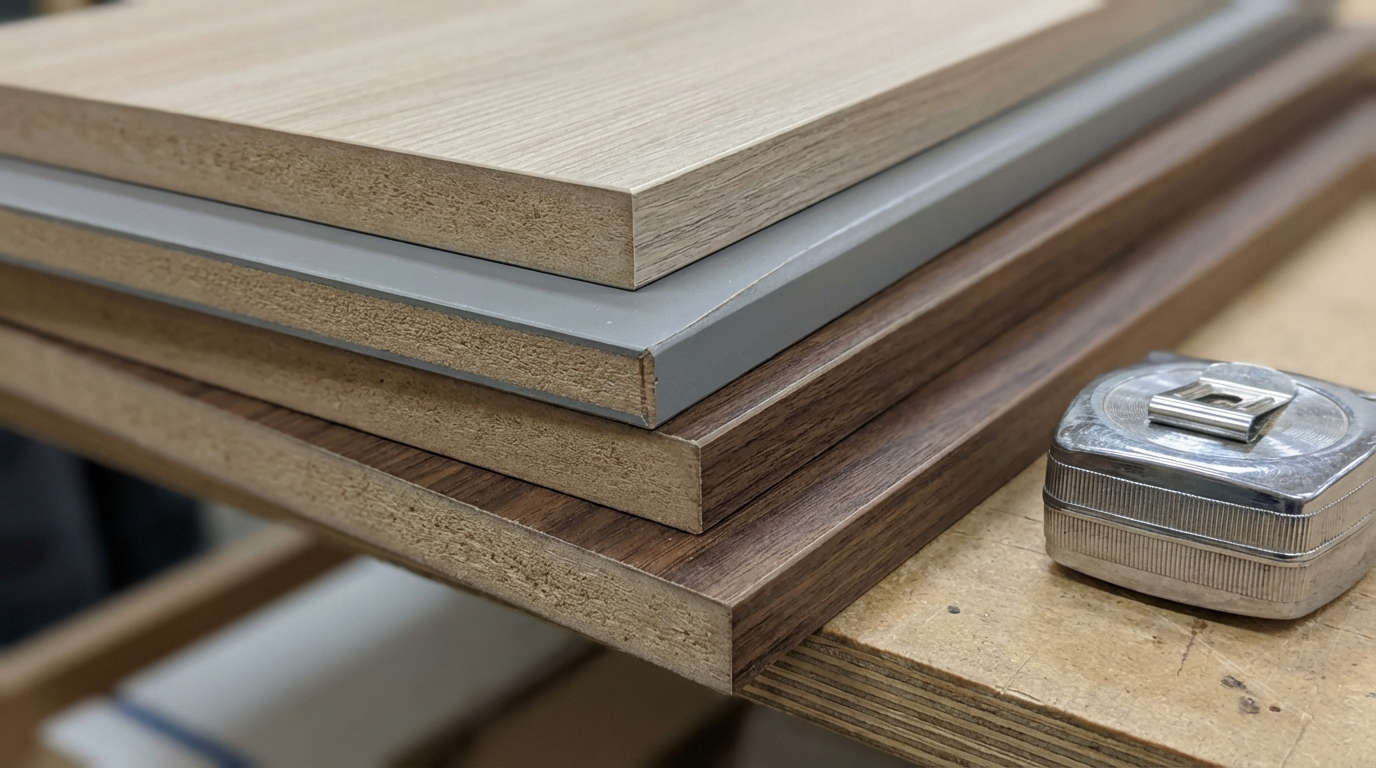
| Edge Finish | Seamless possible | Banding always needed |
Choose based on wet zone (laminates win), high abuse (prelam uniform), speed (prelam), or finish (laminates). Trade-off: Laminates flex for curves; prelam rigid but chip-prone on cuts.
How to Decide in 5 Steps
- Assess site: Humidity gauge? Coastal=WR needed; dry=standard ok.
- Map project: Curves/custom? Laminates. Flat panels? Prelam.
- Budget calc: Include 15% wastage, edge band Rs 10-20/m.
- Check carpenter skill: Glue press access? Laminates need pro.
- Verify samples: Scratch test, bend check, humidity expose overnight.
Failure point: Skipping step 1 leads to monsoon swells. Prevention: Always mock a corner joint.
Practical Use Cases (What Works, What Fails)
| Application | Recommended | Thickness | Risk Notes |
|---|---|---|---|
| Kitchen Shutter | Laminates on HDFWR | 18mm | Steam swells prelam edges |
| Wardrobe Door | Prelam MDF | 16mm | Dry closet safe |
| TV Unit | Prelam | 12mm | Low load ok |
| Wall Panel | Laminates | 6-8mm | Custom prints flex |
| Office Partition | Prelam | 18mm | Fire-retardant add-on |
Common Buyer Mistakes (and Fixes)
- Mistake 1: Ignoring thickness—thin 12mm sags under weight. Fix: Min 16mm for shutters; load-test sample.
- Mistake 2: No edge banding on prelam—exposes core to termites. Fix: PVC 1-2mm lipping pre-cut.
- Mistake 3: Storing sheets flat in humid godown—bubbles form. Fix: Vertical racks, 75% RH max.
- Mistake 4: Cheap glue for laminates—peels in AC flux. Fix: Urea-formaldehyde BWR, 120g/sqm.
- Mistake 5: Curves without post-form—cracks on bend. Fix: Specify post-form grade.
- Mistake 6: Metro quotes for tier-2 site—overpay 25%. Fix: Local mill rates + transport calc.
- Mistake 7: No screw pilot holes—splits MDF. Fix: 3mm bit, 40mm screws max.
- Mistake 8: Cleaning with harsh chemicals—etches finish. Fix: Microfiber + pH-neutral soap.
Failure Modes and Fixes
- Symptom: Edge swelling. Cause: Moisture ingress post-cut. Prevention: Immediate PVC banding. Fix: Sand, re-band, monitor.
- Symptom: Delamination bubbles. Cause: Poor factory press or site glue. Prevention: Density check (tap test). Fix: Spot-press or replace sheet.
- Symptom: Screw pullout. Cause: Low density zones. Prevention: Reinforce with inserts. Fix: Epoxy fill, re-drill.
- Symptom: Surface scratches. Cause: Abrasive cleaners. Prevention: Felt pads on hardware. Fix: Light polish, avoid deep gouges.
- Symptom: Color fade. Cause: Direct sun. Prevention: UV-grade finish. Fix: Overlay strips.
- Symptom: Chipping on CNC cuts. Cause: Dull tools. Prevention: Upcut bits, 18k RPM. Fix: Fill with putty, re-finish.
Quality Checks You Can Do Without Lab Tests
Before buying: Tap sheet—solid thud means uniform density. Flex corner—no crack. Smell: No chemical off-odor. Ask: Resin type? WR cert process?
After cutting: Edge smooth, no fiber pull. Screw test: Holds 50N without spin. Humidity box: Damp cloth overnight, check warp.
After install: Joint gaps <1mm. Edge seal intact. Wipe test: No smear.
Which is better for coastal homes?
Laminates on HDFWR outperform standard prelam. Direct: WR substrate + thick glue resists salt air. Nuance: Prelam MR caps at 90% RH; laminates customizable. Check: Expose sample to salted damp for 48hrs; no swell wins.
Decision Framework for Your Project
| Condition | Recommended Choice | Verify This |
|---|---|---|
| Wet zone (kitchen) | Laminates on HDFWR | Resin % >10%, post-form |
| Coastal/high humidity | Laminates + MR MDF | Edge seal demo, density tap |
| Heavy use/abuse | Prelam HDF 18mm | Scratch with key—no mark |
| Tight budget | Prelam standard | Per-sqft under 120, no extras |
| Fast delivery | Prelam stock | Local stock check |
| High scratch risk | 1mm laminates | Hardness rub test |
| CNC heavy | Prelam flat | Cut sample no chip |
Tips for Homeowners, Carpenters, Architects, and OEMs
Homeowners: Durability do: Felt glides, neutral wipe. Don’t: Abrasive scrub, wet mop direct.
Carpenters: Cutting: Zero-clearance blade, edge tape pre-cut. Fastening: Pilot holes, 50mm zones from edge. Hinge areas: Reinforce blocks.
Architects/Designers: Specs: "18mm HDFWR prelam, 1mm PVC edge." Wet zones: Dado grooves sealed. Finish logic: Matte for fingerprints hide.
OEM/Modular Makers: QC: Batch tap-test 10%. Reduce returns: Pre-band edges. Repeatability: CNC programs with 0.5mm tolerance.
Is prelam MDF easier to install?
Yes, skips lamination step. Direct: Cut-assemble in hours vs days. Nuance: Edges always need banding; laminates seamless if pro-applied. Check: Time a sample wardrobe door.
Can laminates be used on curved surfaces?
Post-forming types yes, up to 12cm radius. Direct: Heat-bendable grades only. Conditions: Avoid standard on arches. Next: Test bend sample with hot air gun.
FAQs
Which costs less overall for a full wardrobe?
Prelam MDF typically edges out for small 10-sqm jobs due to no extra labor, landing 15-25% under laminates. However, if custom prints or repairs needed, laminates even out. Factor carpenter rates (Rs 100/sqft apply) and wastage—prelam minimizes cuts. In tier-2 cities, source local to trim logistics. Always tally substrate + finish + edges for true compare.
Does VIR laminates hold up in monsoons?
Options like VIR work if paired with WR MDF and proper glue, resisting 80% RH better than basic prelam. Key is substrate density and edge seal—unprotected swells regardless. Field test: Damp storage simulation. Varies by batch; check supplier moisture process.
What thickness for kitchen cabinets?
18mm minimum for both, with 19mm HDF preferred for steam exposure. Thinner 16mm suits uppers only. Trade-off: Heavier needs stronger frames. Indian sites: Account for uneven walls adding shims.
How to edge-band prelam MDF properly?
Apply 2mm PVC hot-melt post-cut, overlapping 1mm. Cool-set 30min before trim. Prevention: Pre-tape cuts. Coastal tip: Silicone seal joints. Common fail: Underheat peels in humidity.
Are laminates scratch-proof?
No absolute, but 1mm thick grades resist keys/nails better than prelam melamine. Nuance: Textured hides marks. Maintenance: Weekly microfiber. High-traffic: Add glass overlay.
Can I mix prelam and laminates in one project?
Yes, for zones—prelam dry shelves, laminates wet doors. Match tones via samples. Challenge: Edge transitions need fillers. Architects favor for budget layering.
What if prelam delaminates after install?
Root often factory void or moisture—sand affected, re-laminate patch. Prevention: Pre-install flex test. Returns rare if density checked. Monsoon installs: Acclimatize 72hrs.
Which for rental furniture—durability or cost?
Prelam for quick turnover, absorbs abuse without custom repair. Cost wins short-term. Homeowners shift to laminates for longevity. Verify: Impact drop-test sample.
Impact of CNC on these materials?
Prelam cuts cleanest with compression bits; laminates risk peel if not taped. Speed: 12m/min max. Wastage drops 5% with dust collection. OEMs standardize feeds.
Disclaimer: This content is provided for general informational purposes based on industry practices and publicly available information. Product specifications, standards, prices, and availability may vary by manufacturer, region, and time. Readers should independently verify details with manufacturers, dealers, or qualified professionals before making purchase or construction decisions.Want Plywood Suggestions?
Share a few details and a VIR MDF specialist will suggest suitable brands and connect you to responsive dealers.