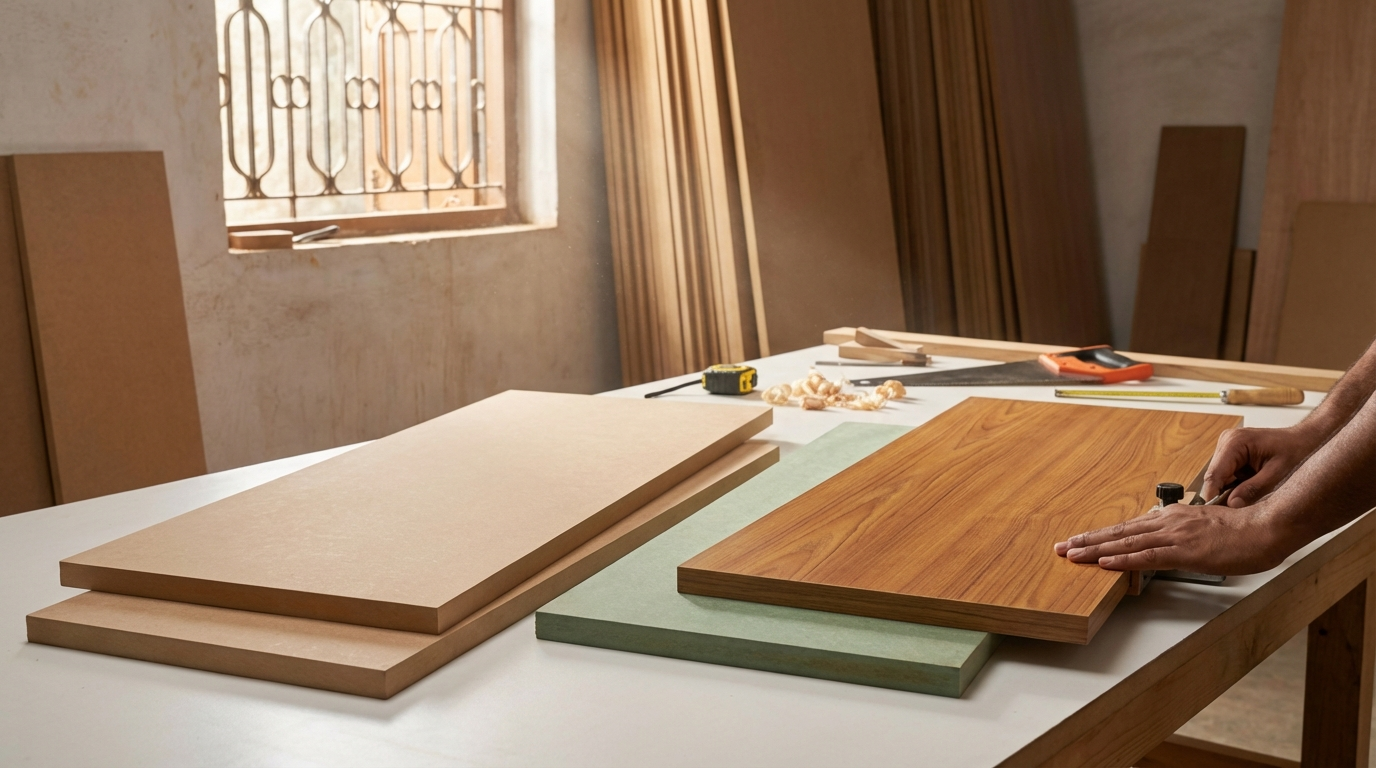
VIR PVC vs MDF: Quick Decision Guide for Kitchens, Bathrooms & Furniture
Choosing between PVC boards and MDF? Use this quick guide to compare water resistance, screw holding, finish options, and real‑world use cases.
Note: This is independent informational content and is not affiliated with any manufacturer.
Quick Decision Summary
Opt for PVC boards in high-moisture areas like kitchens and bathrooms; select MDF for dry indoor furniture where screw strength matters more than water resistance.
If you’re in a hurry, PVC boards excel in wet zones due to inherent waterproofing, handling monsoon splashes and coastal humidity without swelling. MDF suits budget dry projects like wardrobes with its superior screw-holding and smooth finish base, but needs edge sealing. Key trade-off: PVC lighter and termite-proof, MDF denser for heavy loads but moisture-sensitive. Check project humidity first—above 70% RH favors PVC.
- Choose PVC boards if: frequent water exposure, coastal location, easy cleaning priority, or modular fast installs.
- Choose MDF if: tight budget, high screw loads like shelves, premium laminate finishes, or fully dry interiors.
- Avoid PVC if: heavy hardware pulls or deep CNC carvings needed.
- Avoid MDF if: any moisture risk without full lamination and sealing.
What Are PVC Boards and MDF?
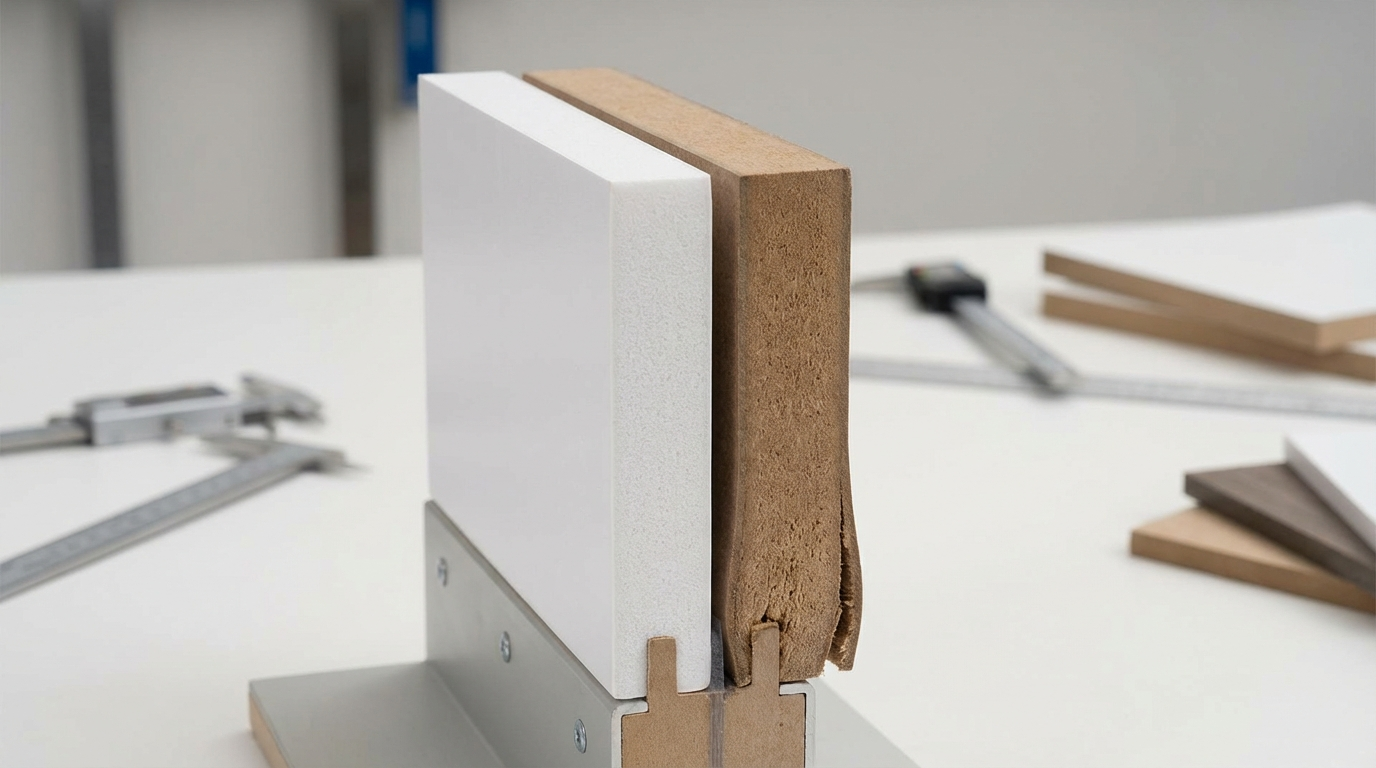
PVC boards, often called PVC foam boards or celuka sheets, are extruded from polyvinyl chloride with a foamed core for lightness. They come in thicknesses from 3mm to 25mm, typically 5-19mm for furniture. Closed-cell structure makes them naturally waterproof and lightweight (around 0.5-0.7 g/cc density), ideal for humid Indian sites.
MDF, or medium-density fiberboard, is compressed wood fibers with resin binders, density 650-800 kg/m³. Available in 3-25mm sheets, standard 18mm for shutters. Plain, pre-laminated, or moisture-resistant variants (MR grade) exist, but core remains absorbent unless fully sealed.
Both cut well on CNC, but PVC dust is finer and non-abrasive. MDF offers uniform surface for veneers; PVC accepts direct prints or laminates.
Why It Matters in Indian Homes and Sites
Monsoon humidity (80-95% RH) and coastal salt air hit unprotected boards hard—MDF edges swell 10-20% in weeks if stored poorly. Site realities like open godowns, delayed installs, and splash-prone kitchens amplify risks. PVC shrugs off water, preventing delamination in bathrooms.
Carpenters note MDF screw pull-out in humid wardrobes; PVC holds lighter loads fine. Transport in Mumbai rains or Chennai humidity warps MDF unless wrapped. Long-term: termite-free PVC vs MDF's need for treatment.
Does humidity affect PVC and MDF differently during storage?
Humidity warps MDF faster due to fiber absorption; PVC stays flat. Direct answer: store both vertically, covered, off ground—PVC for 6+ months outdoors ok, MDF max 1-2 months. Nuance: coastal areas add salt corrosion risk to fittings on MDF. Check: weigh sample sheets; uniform heft signals good MDF density. Next: insist on acclimation 48 hours pre-cut.
Price Range and Cost Drivers
Plain PVC boards (18mm) typically range Rs 60-140 per sq ft; laminated Rs 100-200. MDF plain 18mm Rs 35-80 per sq ft, pre-lam Rs 70-150. Varies 20-30% by metro (Delhi higher logistics) vs tier-2.
Drivers: thickness (doubles cost 12-18mm), density/grade (MR MDF +15%), finish (melamine +20-40%), sheet size (8x4 std), edge treatment, resin quality, batch variance. Add 10-20% wastage/CNC kerf, transport (Rs 5-15/sqft inter-state).
Budget example: 10 sqm kitchen shutter (18mm PVC lam) ~ Rs 1.2-2 lakh material; MDF ~ Rs 80k-1.5 lakh. Quote checklist: specify thickness/density/finish/MR grade, sheet qty, delivery terms, wastage allowance.
Two-Minute Comparison (What Changes in Real Life)
| Factor | PVC Boards | MDF |
|---|---|---|
| Water Resistance | Excellent (waterproof core) | Poor unless MR/lam (swells edges) |
| Screw Holding | Moderate (0.5-0.8mm pilot) | Strong (multiple screws ok) |
| Weight (18mm/sqmt) | 15-20 kg light | 30-40 kg dense |
| Machinability | Good CNC, clean cuts | Superior smooth finish |
| Finish Options | Direct print/lam | Best for veneer/lam |
| Cost (18mm/sqft) | Rs 60-140 | Rs 35-80 plain |
| Termite Resistance | Natural | Requires treatment |
Real life: PVC wins wet zones but chips on impacts; MDF budget king for dry but fails unsealed. Choose per condition.
Decision Framework for Kitchens, Bathrooms & Furniture
| Condition | Recommended Choice | Verify/Notes |
|---|---|---|
| Wet zone (kitchen sink) | PVC 18mm lam | Closed-cell test; seal edges |
| Coastal humidity | PVC or HDFWR | Salt spray resistance; acclimate |
| Heavy shelves/use | MDF 18mm MR | Screw test; double pilot holes |
| Tight budget dry | MDF plain + lam | Density >700kg/m3 |
| Fast modular | PVC prelam | Lightweight handling |
| High scratch risk | MDF thick lam | Hard surface overlay |
Use this for quick picks; adjust for site RH.
Practical Use Cases (What Works, What Fails)
| Application | Rec Thickness | Best Material | Risk Notes |
|---|---|---|---|
| Kitchen shutters | 18mm | PVC lam | MDF swells near hob |
| Bathroom vanity | 12-18mm | PVC | Steam delams MDF |
| Wardrobe carcass | 18mm | MDF | PVC too flex for tall |
| TV unit shelves | 18-25mm | MDF | PVC scratches TV remotes |
| Wall panels humid | 8-12mm | PVC | MDF molds coastal |
Is PVC suitable for heavy kitchen cabinets?
Yes for light-modular, no for loaded. PVC 18mm holds 20-30kg/shelf with anchors; add battens for 50kg+. Nuance: kitchens with gas leaks/hot pans—MDF denser safer if sealed. Check: load test sample vertically. Step: reinforce with aluminum channels in high-use.
How to Decide in 5 Steps
- Assess moisture: Map wet zones (sink+1m = PVC); dry = MDF option.
- Load check: Shelves >20kg/m? MDF; light = PVC.
- Budget map: Factor +20% sealing for MDF.
- Finish plan: Laminate? MDF base; direct? PVC.
- Verify samples: Cut/test screw/water drop 24hr.
Failure point: skipping step 5—always sample.
Can I mix PVC and MDF in one kitchen?
Yes, strategically: PVC wet shutters, MDF dry uppers. Direct: seals at joints critical. Nuance: expansion mismatch minor if acclimated. Check: align edges flush pre-install. Next: use silicone sealant transitions.
Common Buyer Mistakes to Avoid
- Buying plain MDF for kitchens—swells in first monsoon; seal fully.
- Ignoring density: light MDF crumbles screws; heft test.
- No acclimation: warps post-install; 72hr room RH.
- Thin PVC for shelves: flexes; min 18mm.
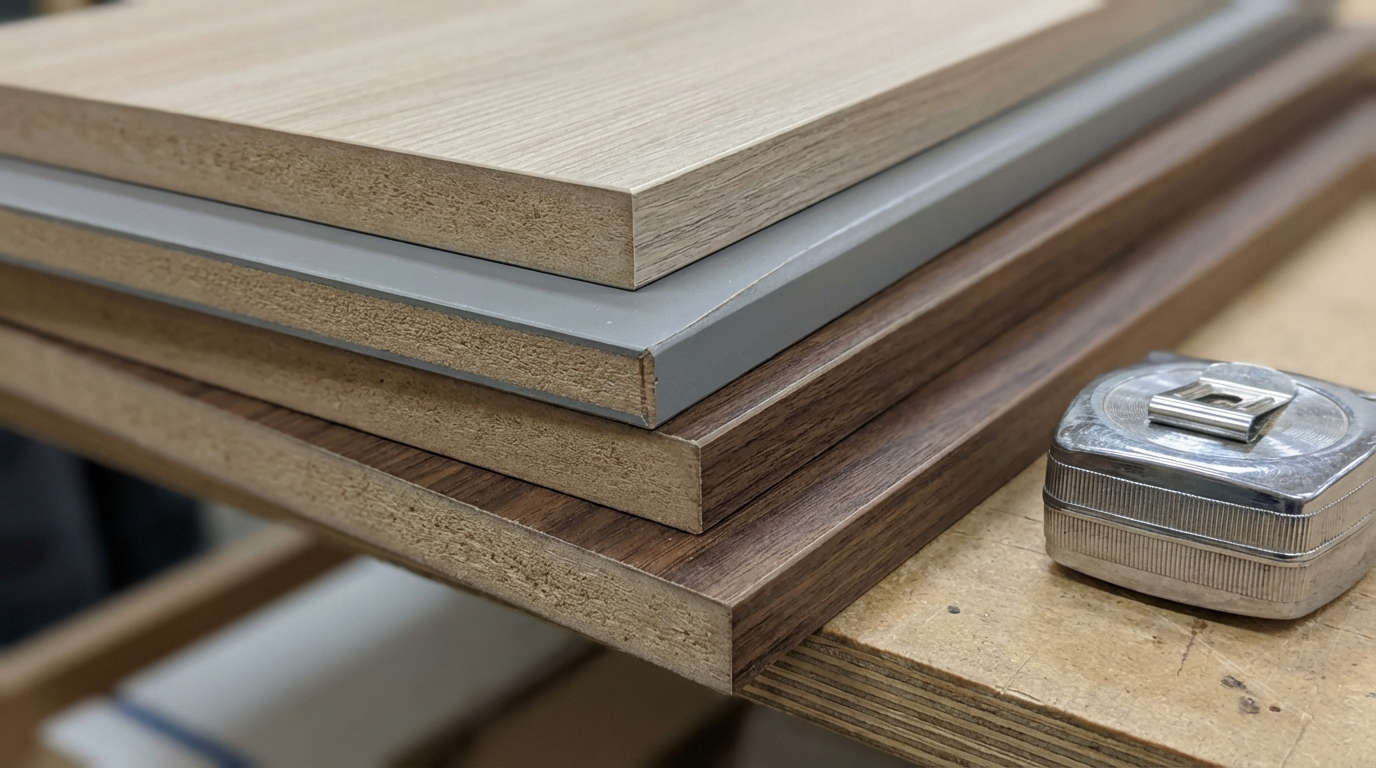
- Skipping edge band: absorbs via ends; 2mm PVC thick.
- Coastal no-treatment: salt accelerates MDF fail.
- Overlook finish match: PVC gloss vs MDF matte base.
- Quote vague: specify MR/thick; avoid surprises.
Failure Modes and Fixes
- Symptom: MDF edge swelling. Root: moisture ingress. Prevent: full lam + edge band. Fix: sand, reseal epoxy.
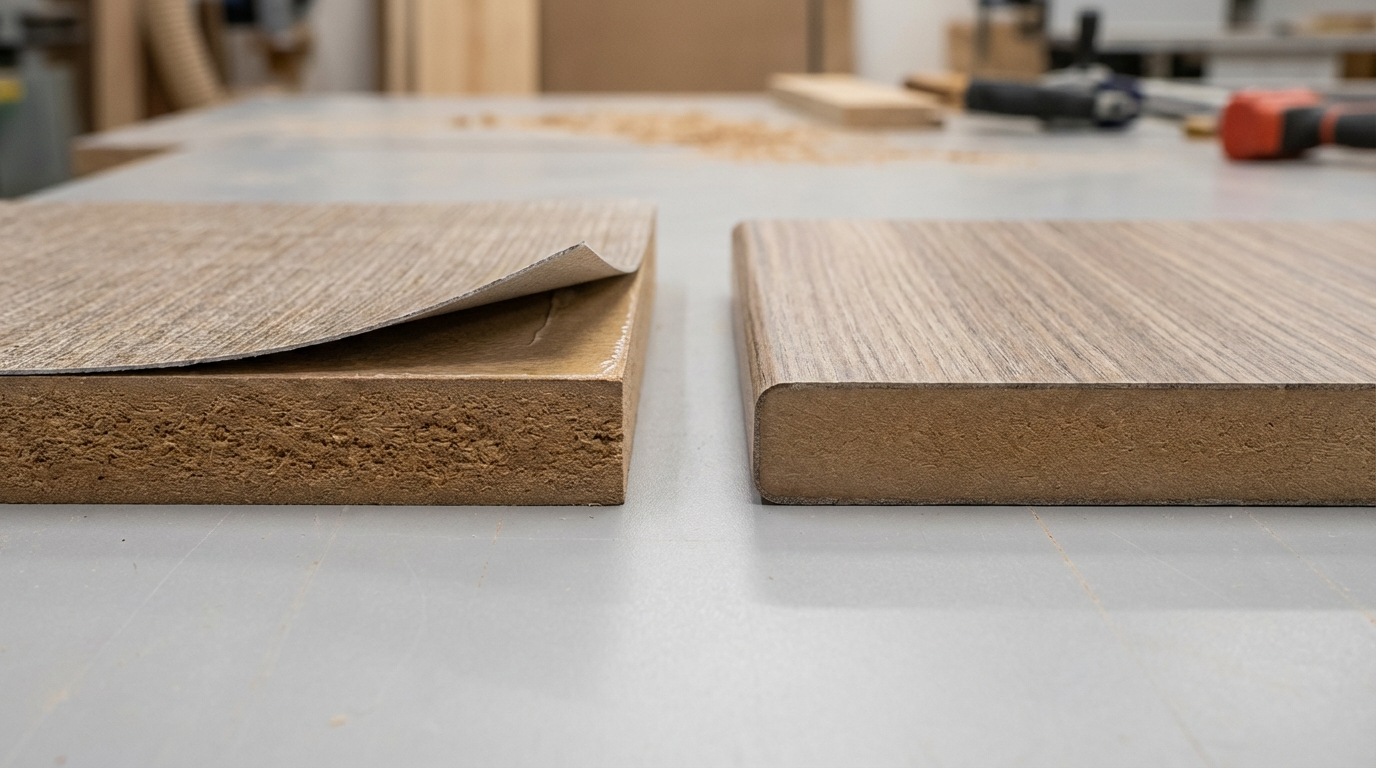
- Delamination laminate. Root: poor glue/humidity. Prevent: hot-melt edge band. Fix: strip, re-lam.
- PVC screw pull-out. Root: oversized holes. Prevent: 3mm pilot, anchors. Fix: filler plugs + redrill.
- Surface scratches (PVC). Root: abrasive cleaners. Prevent: microfiber wipe. Fix: light sand + reprint.
- MDF chipping cuts. Root: dull blade. Prevent: 60-tooth blade. Fix: filler + band.
- Edge band lift. Root: thin glue/temp swing. Prevent: 1.5mm PVC band, press 2min. Fix: scrape, reapply PUR glue.
Why does MDF swell only at edges?
Edges expose fibers max. Answer: unsealed ends suck water fastest. Nuance: Indian sites—rain delay worsens. Prevent: double edge band wet zones. Check: water drop test edges 24hr no dark. If happening: dry fully, epoxy coat.
Quality Checks You Can Do Without Lab Tests
Before buying: Heft for density (MDF heavy uniform), tap for solid tone no hollow, check edges straight/no delam, surface smooth no pits. Ask: MR grade? Resin urea vs phenolic? Cut scrap: MDF dust fine even, PVC no crumble.
After cutting: Edges clean? No tear-out. Screw test: 3 holds firm? Water drop: no absorb 30min.
Post-install: Flush joints, no gaps, clean test no marks.
How to test screw holding on site?
Pilot drill 3mm, #8 screw 25mm deep—twist firm no strip. PVC ok 2-3 pulls; MDF 5+. Nuance: pre-drill always. Check: vertical load hang 10kg. Next: space screws 100mm hinges.
Tips for Different Users
Homeowners: Durability—PVC wet easy wipe; MDF dry avoid water. Don’t: abrasives, overload shelves. Do: ventilate post-monsoon.
Carpenters: PVC: sharp blade low speed; MDF: vacuum dust. Fasten: confirmers PVC corners. Hinge: euro on MDF stronger.
Architects: Spec: PVC coastal bath 18mm lam 0.6mm; MDF dry 18mm 750kg/m3 urea resin. Detail: 5mm overhang sinks.
OEM makers: QC: batch density check, CNC program per material. Reduce returns: pre-seal samples ship.
Are PVC boards good for modular furniture makers?
Yes, lightweight repeatability. Direct: fast CNC no splinter. Nuance: calibrate feeds lower. Check: tolerance <0.2mm cuts. Step: stock 12/18mm prelam.
Which holds better for wardrobe sliders?
MDF for track loads. PVC flexes tall units. Nuance: reinforce PVC with ply backer. Check: slide 50kg test.
Does coastal humidity ruin MDF faster?
Yes, salt accelerates. PVC preferred. Nuance: MR MDF + vent ok short-term. Check: RH meter <65%.
FAQs
Is PVC completely waterproof for Indian bathrooms?
PVC foam boards resist water immersion without swelling, suiting steamy bathrooms and monsoon leaks. Core doesn't absorb like MDF, but joints need silicone seal. In coastal areas, it avoids mold better. Longevity 10+ years with proper edges. Verify by splashing sample overnight—no change signals quality. Pair with SS fittings to match.
Can MDF be used in kitchens if sealed properly?
MR-grade laminated MDF works in low-splash kitchens if edges fully banded and sealed. Avoid direct hob proximity. Indian sites demand extra ventilation post-cook. Trade-off: cheaper than PVC but monitor first monsoon. Test: seal sample, submerge 24hr. Success if no warp.
How much thicker should boards be for bathrooms?
Minimum 18mm for stability in humid baths; 12mm panels only. PVC 18mm standard prevents sag. Nuance: thinner flexes with cabinets. Coastal: +2mm buffer. Check supplier thickness caliper—tolerances vary. Install with leveling shims.
Does PVC scratch easier than laminated MDF?
PVC surfaces scratch from keys/utensils more than hard melamine on MDF. Use soft cloths. Nuance: matte finishes hide better. Prevention: co-ordinate with wall panels same material. Field test: drag coin lightly—no mark good.
What’s the screw spacing for PVC furniture?
100-150mm centers with pilots; use confirmat or anchors heavy. Less hold than MDF. Nuance: pre-drill always avoids cracks. For kitchens: double row shelves. Test on scrap first—firm twist no strip.
Can I paint PVC boards directly?
Yes, with PVC primer for adhesion; holds better than MDF raw. Nuance: flexible paints avoid cracks. India humidity: UV stable. Sand lightly first. Alternative: factory print cheaper long-term.
Is MDF cheaper overall for full wardrobes?
Often 20-40% less material cost for dry wardrobes; add sealing labor. PVC evens out with no extras. City variance: Mumbai MDF pricier logistics. Quote full project incl. fittings for true compare.
How to store boards before install in monsoon?
Vertical racks, plastic wrapped, off floor ventilated shed. PVC more forgiving. MDF: max 2 weeks exposed. Acclimate site 3 days. Prevents 90% warps.
Which is better for CNC routing intricate designs?
MDF smoother profiles, less vibration. PVC good straight but flex thin. Both need dust extract. Calibrate feeds: MDF faster. Test complex curve on scrap.
Do termites attack PVC?
No, non-organic. MDF needs Bora-Care treatment. Coastal: PVC full win. Verify: no wood dust residue in PVC.
Disclaimer: This content is provided for general informational purposes based on industry practices and publicly available information. Product specifications, standards, prices, and availability may vary by manufacturer, region, and time. Readers should independently verify details with manufacturers, dealers, or qualified professionals before making purchase or construction decisions.Want Plywood Suggestions?
Share a few details and a VIR MDF specialist will suggest suitable brands and connect you to responsive dealers.