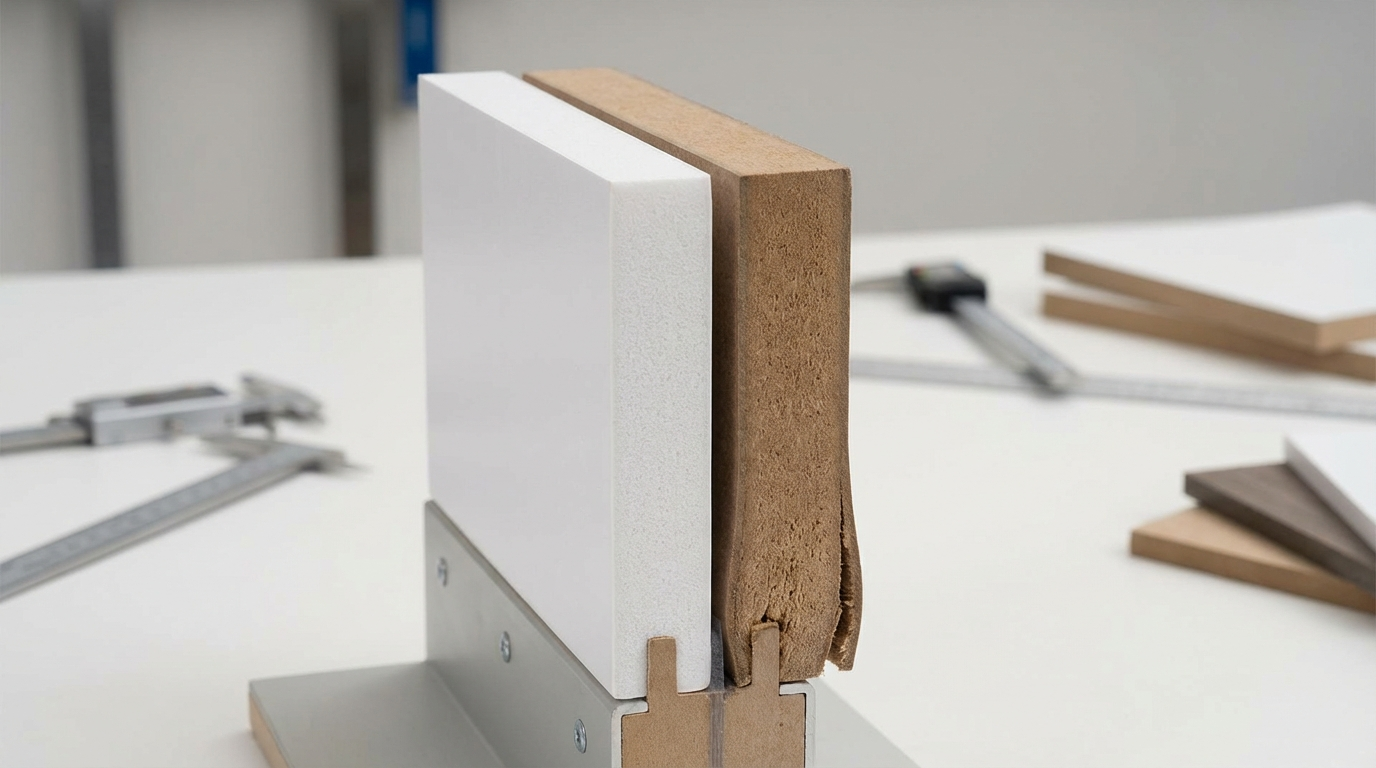
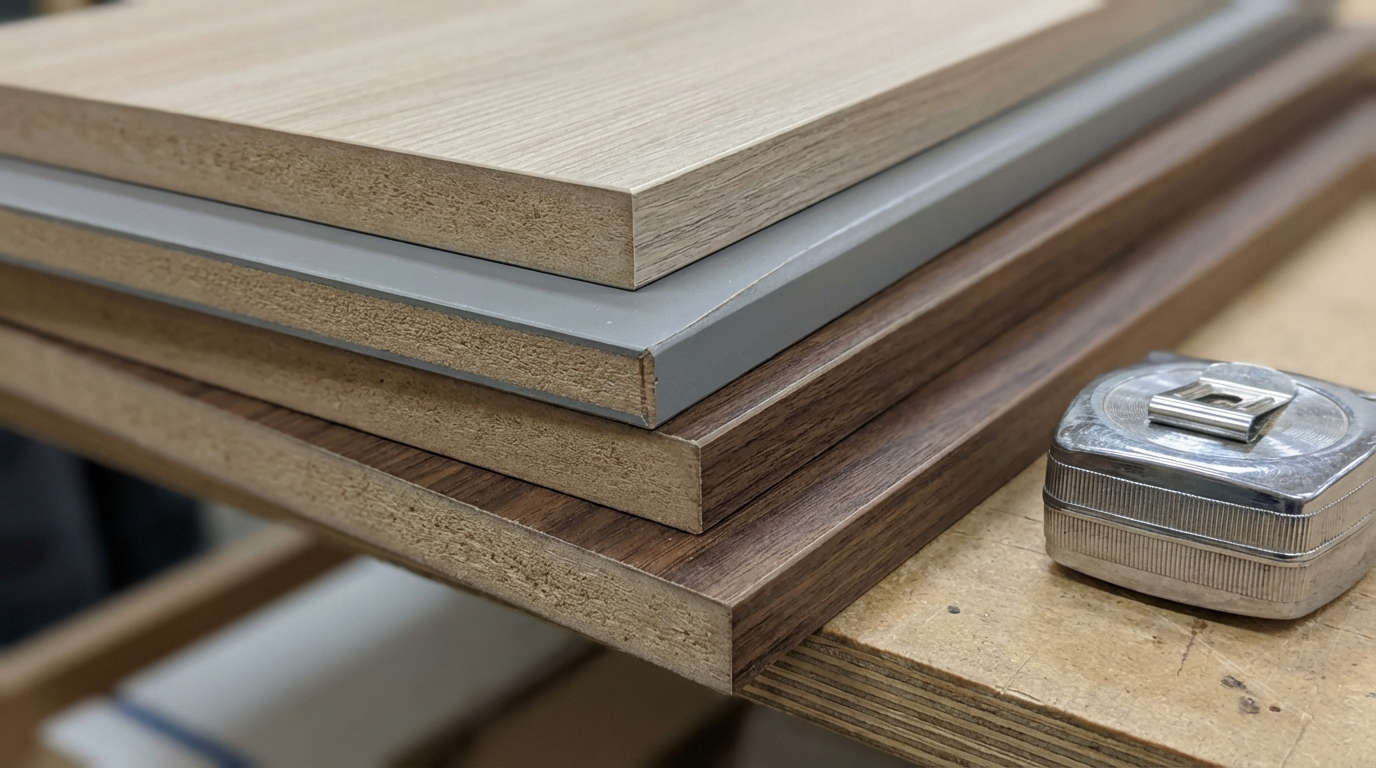
VIR MDF: Official Website | India's Premium MDF Board Manufacturer
VIR MDF official website: India's leading MDF board manufacturer. Explore our range of MR, FR, prelam boards. Find authorized dealers near you.
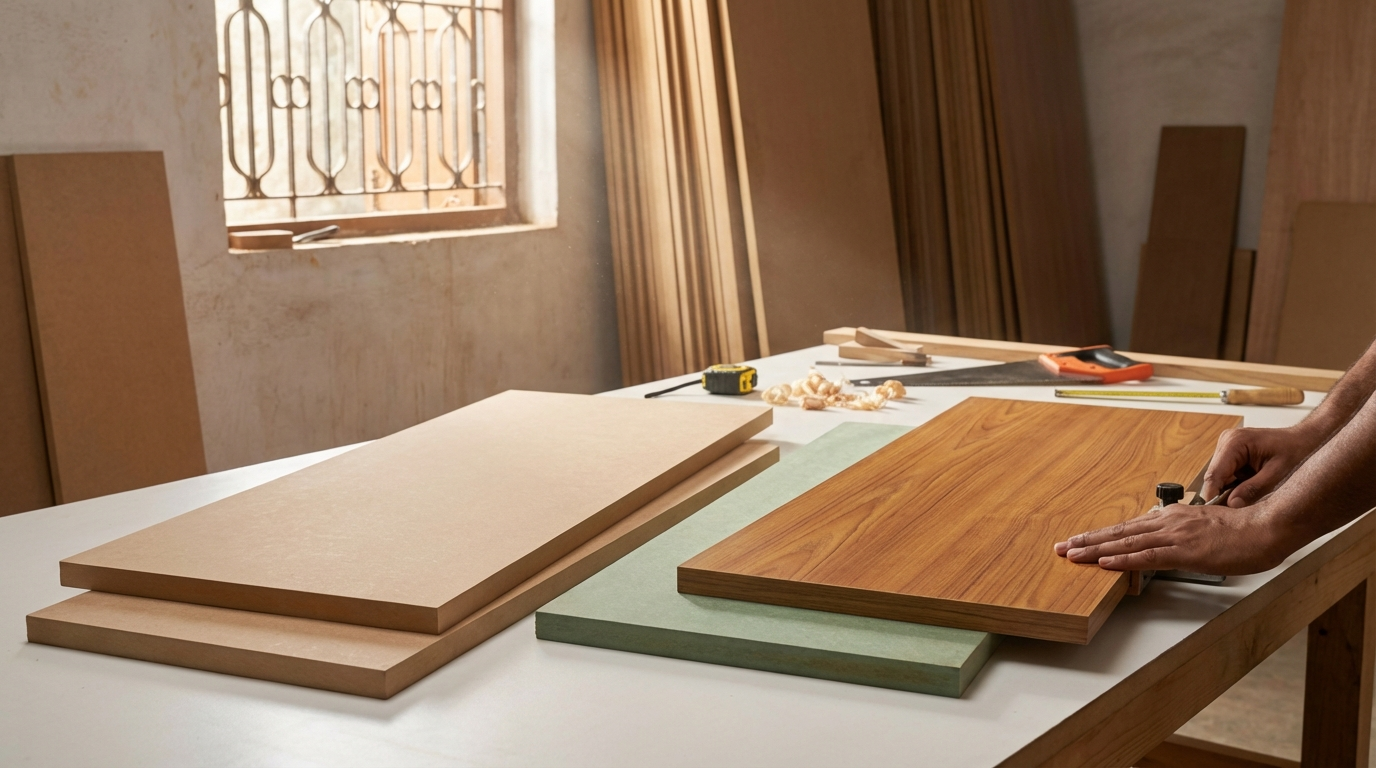
Note: This is independent informational content and is not affiliated with any manufacturer. VIRMDF.COM is an independent platform providing unbiased information about engineered wood panels.
Quick Decision Summary
Quick Answer: VIR MDF is a prominent Indian MDF board manufacturer from Gujarat, offering interior-grade, exterior-grade, water-resistant (HDFWR), and pre-laminated MDF boards in thicknesses ranging from 2mm to 30mm, primarily used for furniture, modular kitchens, and interior applications across India.
If you're in a hurry: VIR MDF, manufactured by Rushil Décor Limited, produces engineered wood panels at their Gujarat facility. Their product range includes VIR PRO (interior grade), VIR PROPLUS (exterior grade), VIR MAXPRO (HDFWR water-resistant), and pre-laminated variants. The brand is ISI-certified and widely available through dealer networks across major Indian cities. For January 2026, their boards remain competitive in the ₹30-90 per sq ft range depending on thickness and grade.
Choose VIR MDF if:
- You need consistent availability in Gujarat, Maharashtra, and Western India
- Your project requires ISI-certified MDF boards
- You want multiple grade options (interior, exterior, water-resistant) from one supplier
- You're working on modular furniture with CNC routing requirements
Consider alternatives if:
- You're in extreme coastal areas requiring marine-grade plywood instead
- Your project needs specialty boards not in their standard catalogue
- Local dealer network is limited in your specific region
- Budget constraints require exploring regional brands with lower logistics costs
What VIR MDF Actually Means in the Indian Market
VIR MDF refers to the Medium Density Fibreboard product line manufactured by Rushil Décor Limited, a Gujarat-based company with manufacturing facilities in India. The "VIR" prefix appears across their entire engineered wood panel range, distinguishing their products in a market crowded with both domestic and imported MDF options.
In the Indian MDF hierarchy, VIR positions itself as a mid-to-premium segment player. The company uses plantation-based eucalyptus and silver oak wood as raw materials, processing them through continuous press technology with thermosetting resins. This manufacturing approach results in boards with uniform density distribution—a critical factor for furniture applications requiring consistent machining.
Common confusions clarified:
- VIR MDF vs generic MDF: VIR is a brand name, not a type of MDF. Generic MDF refers to any Medium Density Fibreboard regardless of manufacturer
- VIR PRO vs VIR PROPLUS: PRO is interior-grade (E2 emission class typically), PROPLUS is exterior-grade with enhanced moisture resistance
- VIR MAXPRO vs water-resistant MDF: MAXPRO is their specific HDFWR (High Density Fibre Water Resistant) product line with higher density than standard MDF
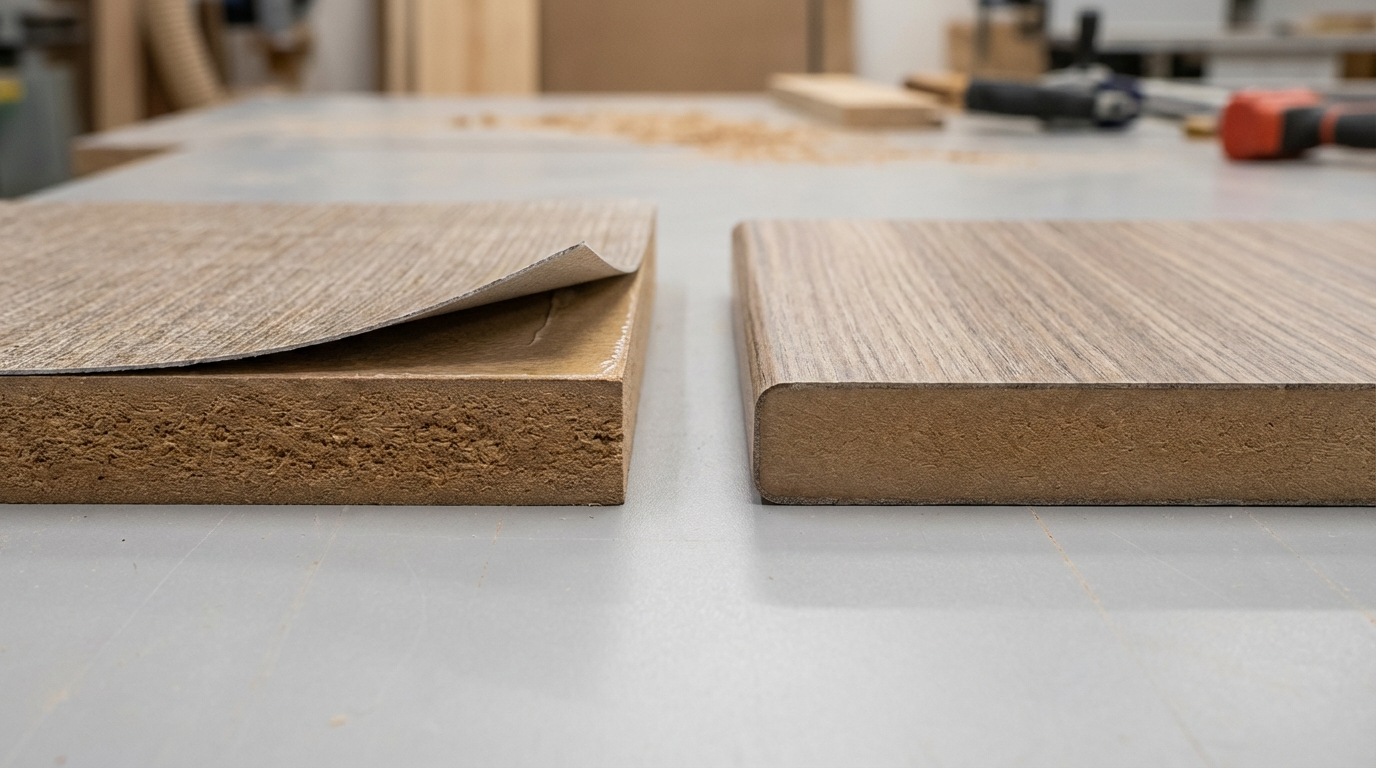
- Pre-laminated vs laminated: VIR PRELAM boards come factory-finished with decorative surfaces; laminated MDF refers to post-production laminate application
Why This Matters for Indian Homes
Selecting the right MDF board in India isn't simply about brand preference—it's about matching material properties to your specific environmental conditions. Indian homes face unique challenges that European or North American MDF specifications don't fully address.
Monsoon and Humidity Impact
Standard interior-grade MDF (including VIR PRO) swells when exposed to sustained humidity above 65-70%. During June-September monsoon months, even air-conditioned rooms in Mumbai, Chennai, or Kolkata experience humidity spikes when AC is switched off. This cycling causes gradual edge swelling in improperly sealed MDF furniture. VIR PROPLUS and MAXPRO grades offer better resistance, but no MDF is truly "waterproof"—water-resistant means delayed absorption, not immunity.
Coastal Conditions
Properties within 5-10 km of coastlines face salt-laden air that accelerates moisture absorption. In cities like Surat, Mangalore, or Visakhapatnam, even exterior-grade MDF requires additional edge sealing and surface protection. The salt doesn't damage MDF directly but creates hygroscopic conditions where moisture accumulates faster on surfaces.
Site Handling Realities
MDF boards in Indian construction sites often sit exposed for days or weeks during furniture installation. Dust accumulation on cut edges, water splashes during other construction activities, and rough handling during transport create damage points before furniture is even assembled. This is why board quality matters less than edge sealing quality in final durability outcomes.
Regional Temperature Variations
Hot-dry regions (Rajasthan, interior Maharashtra, parts of Karnataka) see minimal humidity issues but face thermal expansion challenges. Hot-humid regions (coastal areas, Kerala, Bengal) deal primarily with moisture. VIR's exterior and HDFWR grades perform better in humid zones, while their standard interior grade works adequately in dry climates with proper sealing.
VIR MDF Product Range Explained
Understanding VIR's product lineup helps you specify correctly for your application. Each grade serves distinct purposes, and using the wrong grade leads to premature failure regardless of installation quality.
| Product Name | Grade Type | Available Thicknesses | Best Applications | Moisture Handling |
|---|---|---|---|---|
| VIR PRO | Interior Grade | 2mm to 25mm (15 variants) | Bedroom furniture, TV units, dry-zone wardrobes | Standard (not for wet areas) |
| VIR PROPLUS | Exterior Grade | 3.3mm to 25mm (7 variants) | Balcony furniture, semi-exposed areas, high-humidity rooms | Enhanced resistance |
| VIR MAXPRO | HDFWR | 3mm to 25mm (8 variants) | Kitchen cabinets, bathroom vanities, wash area furniture | High water resistance |
| VIR PRELAM (PRO base) | Pre-laminated Interior | 4.6mm to 25mm | Quick-assembly furniture, ready shutters | Standard with surface protection |
| VIR PRELAM (PROPLUS base) | Pre-laminated Exterior | 5.5mm to 25mm | Commercial interiors, high-traffic furniture | Enhanced with surface protection |
| VIR PRELAM (MAXPRO base) | Pre-laminated HDFWR | 5.5mm to 25mm | Modular kitchens, institutional furniture | High with surface protection |
Standard Sizes Available
VIR MDF boards come in three standard sheet sizes commonly used in India:
- 8ft x 4ft (2440mm x 1220mm): Most common size, fits standard furniture cutting patterns
- 8ft x 6ft (2440mm x 1830mm): Larger sheets for reduced wastage in big projects
- 6ft x 4ft (1830mm x 1220mm): Smaller sheets for limited transport access or small jobs
Decision Framework: Which VIR Grade for Which Condition
Choosing the correct VIR MDF grade requires matching your specific conditions to board properties. This framework covers common Indian scenarios with verification steps.
| Condition | Recommended VIR Grade | What to Verify Before Buying |
|---|---|---|
| Bedroom wardrobe (AC room) | VIR PRO 18mm | Room humidity below 60% consistently; edge banding planned |
| Kitchen base cabinets | VIR MAXPRO 18mm | Sink area has waterproofing; countertop sealed properly |
| Kitchen wall cabinets | VIR PROPLUS 18mm or MAXPRO 16mm | Chimney placement won't cause direct heat exposure |
| Bathroom vanity | VIR MAXPRO 18mm | Not in direct water splash zone; proper ventilation exists |
| TV unit (living room) | VIR PRO 18mm or PRELAM | No water source nearby; room is climate-controlled |
| Balcony storage (covered) | VIR PROPLUS 18mm | Protected from direct rain; elevation prevents water logging |
| Office workstation | VIR PRO 18mm | Commercial AC running during work hours |
| Coastal area bedroom | VIR PROPLUS 18mm | Additional edge sealing budget allocated |
| Pooja room cabinet | VIR PRO 12mm or 18mm | Away from water used in rituals; proper ventilation |
| Children's study table | VIR PRELAM (PRO base) | Surface finish resists scratches; corners can be edge-banded |
Price Ranges and Cost Factors in January 2026
VIR MDF pricing varies significantly based on grade, thickness, and your location relative to their Gujarat manufacturing facility. These ranges represent typical dealer prices in major metros—actual prices may differ by 10-20% based on local factors.
Indicative Price Ranges by Grade
| Grade | Thickness | Price Range (per 8x4 sheet) | Per Sq Ft Approximate |
|---|---|---|---|
| VIR PRO | 8mm | ₹900 - ₹1,200 | ₹28 - ₹38 |
| VIR PRO | 12mm | ₹1,400 - ₹1,800 | ₹44 - ₹56 |
| VIR PRO | 18mm | ₹2,000 - ₹2,600 | ₹62 - ₹81 |
| VIR PROPLUS | 18mm | ₹2,400 - ₹3,200 | ₹75 - ₹100 |
| VIR MAXPRO | 18mm | ₹2,800 - ₹3,600 | ₹87 - ₹112 |
| VIR PRELAM | 18mm (PRO base) | ₹2,800 - ₹3,800 | ₹87 - ₹119 |
Factors Affecting Your Final Price
Location logistics: Gujarat, Maharashtra, and Rajasthan dealers typically offer better pricing due to proximity to manufacturing. Eastern and Southern India see 8-15% higher prices due to transport costs.
Order volume: Full-truck orders (typically 500+ sheets) receive better rates than small quantities. For residential projects, combining orders with other buyers through a dealer often reduces per-sheet costs.
Seasonal variations: Pre-Diwali and pre-wedding season (October-January) see higher demand and occasionally tighter supply, affecting pricing and availability.
Dealer margins: Authorized stockists maintain different margin structures. Getting quotes from 2-3 dealers in your city typically reveals a 5-10% price variation for identical products.
Budget Estimation Example
For a 2BHK modular furniture project (approximately 400 sq ft of board requirement):
- Economy option (VIR PRO throughout): ₹25,000 - ₹35,000 for boards only
- Recommended option (VIR MAXPRO for kitchen, VIR PRO elsewhere): ₹32,000 - ₹45,000
- Premium option (VIR MAXPRO for kitchen/bath, PRELAM for visible surfaces): ₹45,000 - ₹60,000
Note: These are board costs only. Add 40-60% for labour, hardware, laminates, and edge banding.
Common Buyer Mistakes (And How to Avoid Them)
Based on common issues reported across Indian furniture projects, these mistakes lead to premature board failure, disputes with carpenters, and costly replacements.
Mistake 1: Using Interior Grade in Kitchen Cabinets
Consequence: Base cabinet bottoms swell within 6-18 months from sink area moisture. Doors warp and hinges fail.
Prevention: Always specify VIR MAXPRO for any cabinet within 3 feet of water sources. The 15-25% price premium is far cheaper than replacement.
Mistake 2: Skipping Edge Banding
Consequence: Exposed MDF edges absorb moisture rapidly, even in dry zones. Swelling begins at edges and progresses inward.
Prevention: Budget for PVC or ABS edge banding on all exposed edges. Even paint-grade furniture needs edge sealing before painting.
Mistake 3: Storing Boards Flat on Floor
Consequence: Bottom sheets absorb ground moisture, warp, and become unusable. Even concrete floors transfer moisture.
Prevention: Store boards on wooden battens at least 4 inches off floor. Keep in covered, ventilated space.
Mistake 4: Ignoring Thickness Requirements
Consequence: 12mm used for wardrobe shelves sags under heavy loads. 8mm used for cabinet sides bows over time.
Prevention: Use 18mm minimum for structural elements. 12mm acceptable only for back panels and drawer bottoms.
Mistake 5: Not Verifying ISI Mark
Consequence: Substandard boards sold as branded products. Core density inconsistent, affecting screw holding.
Prevention: Check for ISI mark and manufacturer stamp on board edge. Authorized dealers provide tax invoices with brand details.
Mistake 6: Ordering Exact Quantities
Consequence: Cutting errors, transport damage, or design changes leave project short. Emergency orders cost more and delay work.
Prevention: Order 8-12% extra for any project. Leftover boards useful for future repairs or small additions.
Mistake 7: Choosing Prelam Without Checking Design Continuity
Consequence: Different production batches have slight colour variations. Adjacent panels look mismatched.
Prevention: Order all prelam boards from single batch for visible surfaces. Verify batch numbers before accepting delivery.
Mistake 8: Assuming Water-Resistant Means Waterproof
Consequence: MAXPRO boards installed in direct water exposure fail, leading to warranty disputes.
Prevention: Water-resistant grades handle humidity and occasional splashes. For direct water exposure, consider marine plywood or PVC alternatives.
Failure Modes and How to Prevent Them
Understanding how VIR MDF boards fail helps you design, specify, and maintain furniture correctly. Each failure mode has specific prevention strategies.
Failure: Edge Swelling
Symptom: Edges become soft, expand visibly, and edge banding peels off.
Root Cause: Moisture ingress through inadequately sealed edges or prolonged humidity exposure.
Prevention: Apply PVC edge banding with proper adhesive. Seal cut edges with primer before laminate application. Use MAXPRO grade in humid zones.
If already happening: Sand affected area, apply wood hardener, re-seal. Severe cases require panel replacement.
Failure: Surface Delamination
Symptom: Laminate or prelam surface bubbles, peels, or lifts from MDF core.
Root Cause: Poor lamination adhesive, heat exposure near cooktops, or moisture penetration from below.
Prevention: Ensure proper surface preparation before lamination. Keep minimum 12-inch gap from heat sources. Apply moisture barrier on bottom surfaces near sinks.
If already happening: Small bubbles can be injected with adhesive and pressed. Large areas need re-lamination or replacement.
Failure: Screw Pullout
Symptom: Screws become loose, hinges sag, shelves tilt.
Root Cause: Screws placed too close to edges, wrong screw type used, or low-density board zones.
Prevention: Keep screws minimum 25mm from edges. Use MDF-specific screws with coarse threads. Pre-drill pilot holes 70% of screw diameter.
If already happening: Fill hole with wood filler mixed with sawdust, let cure, re-drill. For hinges, relocate to fresh wood or use larger mounting plates.
Failure: Panel Warping
Symptom: Flat panels develop curves, doors won't close properly, drawers bind.
Root Cause: Unequal moisture exposure on opposite faces, improper storage before installation, or undersized thickness for span.
Prevention: Apply same finish to both faces of panel. Store boards vertically or on flat, elevated surface. Use 18mm minimum for doors over 600mm height.
If already happening: Minor warps sometimes correct when moisture equalizes. Severe warps require replacement.
Failure: Core Breakdown
Symptom: Board becomes soft internally, loses structural integrity, crumbles when cut.
Root Cause: Prolonged water exposure penetrating beyond surface, substandard board with inconsistent resin distribution.
Prevention: Use HDFWR grades for any moisture-prone location. Verify board quality at purchase—uniform colour and density when viewed from edge.
If already happening: No repair possible. Replace affected panels and address moisture source.
Failure: Joint Separation
Symptom: Glued joints open up, cabinet boxes become loose and wobbly.
Root Cause: Wrong adhesive used, insufficient clamping pressure during assembly, or wood movement from moisture cycling.
Prevention: Use PVA wood glue or polyurethane adhesive for MDF joints. Clamp joints for minimum 2 hours. Reinforce with mechanical fasteners where possible.
If already happening: Disassemble if possible, clean old adhesive, re-glue with proper clamping. Add corner brackets for permanent reinforcement.
Quality Checks Without Lab Tests
You don't need a testing laboratory to verify VIR MDF quality. These practical checks help you identify good boards and catch problems before they're built into your furniture.
Before Buying: Visual and Physical Checks
- Edge colour uniformity: Look at the board edge. Colour should be consistent throughout thickness. Dark spots or voids indicate poor fibre distribution.
- Surface smoothness: Run your hand across the face. Premium MDF feels uniformly smooth with no rough patches or undulations.
- Weight consistency: Lift multiple sheets of same thickness. Significant weight variation between sheets suggests inconsistent density.
- Thickness accuracy: Measure with caliper at multiple points. Variation beyond ±0.3mm indicates poor manufacturing control.
- ISI marking: Genuine VIR boards carry manufacturer stamp and ISI mark on the edge. Missing marks suggest counterfeit or B-grade stock.
Questions to Ask Your Dealer
- Is this current production or old stock? (MDF stored over 6 months may have absorbed moisture)
- Can you provide tax invoice with brand name and grade? (Protects against counterfeit claims)
- What's the return policy for damaged boards? (Good dealers accept returns within 7 days)
- Is this the same batch for my entire order? (Important for prelam colour consistency)
Red Flags to Watch
- Price significantly below market rate (likely B-grade or counterfeit)
- Boards stored outdoors or on ground without covering
- Dealer unable to provide manufacturer documentation
- Visible edge damage or swelling on stock boards
- Strong chemical smell (indicates improper resin curing)
After Cutting: Quality Verification
- Edge quality: Clean cuts should show uniform colour without tearout or void exposure
- Core consistency: When cutting, resistance should be uniform. Soft spots indicate density problems.
- Dust colour: Sawdust should be uniform light brown. Dark particles suggest contamination.
- Smell test: Fresh-cut MDF has mild wood smell. Acrid or chemical odours indicate excess formaldehyde.
After Installation: Ongoing Checks
- Monthly (first year): Check edge banding adhesion, door alignment, drawer operation
- Monsoon season: Inspect for any swelling, especially near windows and in bathrooms
- Annual: Tighten all hardware, check for any developing warps or joint issues
Tips by User Type
For Homeowners
Durability expectations: Properly installed VIR MDF furniture with good edge sealing lasts 8-15 years in typical Indian homes. Kitchen cabinets using MAXPRO grade may last longer than those using interior grade by 3-5 years.
Cleaning do's and don'ts:
- DO wipe with slightly damp cloth followed by dry cloth
- DO use mild soap solution for stubborn stains
- DON'T use abrasive scrubbers on laminate surfaces
- DON'T let water pool on horizontal surfaces
- DON'T use harsh chemicals or bleach-based cleaners
When to worry: Soft spots on surfaces, visible edge swelling, doors that suddenly won't close properly, or musty smell from cabinets all indicate moisture problems requiring immediate attention.
For Carpenters
Cutting tips: Use carbide-tipped blades with 60+ teeth for clean cuts. Feed rate should be moderate—too fast causes tearout, too slow burns the surface. Score line with knife before cutting thin boards to prevent chipping.
Edge preparation: Sand cut edges to 180 grit before edge banding. Apply contact adhesive evenly—thick spots create bubbles. Trim edge band with sharp blade, then sand edges at 45° to prevent peeling.
Screw zones: Pre-drill all screw holes. For 18mm board, use 35-40mm screws maximum. Keep screws minimum 25mm from edges. In high-stress areas (hinge mounting), use hanger bolts with threaded inserts instead of direct screws.
Hinge areas: For European hinges, use proper boring machine settings. Standard cup depth is 12-13mm for 35mm hinges. Don't overtighten—crushing the cup hole weakens holding power.
Handling: Always carry boards vertically with two people for 8x4 sheets. Never drag boards—surface scratches. Stack horizontally only on flat surface with supports every 600mm.
For Architects and Designers
Specification language: "MDF board conforming to IS 12406, Grade [specify], thickness [specify]mm, manufacturer [specify or 'approved equivalent'], with [PVC/ABS] edge banding on all exposed edges."
Wet-zone detailing: Always specify HDFWR grade within 1.5m of water sources. Include detail for waterproof membrane below base cabinets. Specify stainless steel legs (100mm) for all base units to isolate MDF from floor moisture.
Finish selection: For residential, high-pressure laminate (HPL) on VIR PRO works well. For commercial high-traffic, specify prelam boards or acrylic-laminated MDF for better scratch resistance. Always specify identical finish on back panels to prevent warping.
Documentation: Include clause requiring contractor to submit material test certificates and purchase invoices before installation. This creates accountability and prevents substitution.
For Modular/OEM Manufacturers
QC checkpoints:
- Incoming inspection: Check 5% of each shipment for thickness, density, and surface quality
- Pre-cutting: Verify board acclimatization (24-48 hours in production environment)
- Post-cutting: Inspect edge quality on first pieces before full production run
- Assembly: Check glue coverage and clamping pressure consistency
- Final: Door alignment, drawer function, hardware operation check
Reducing complaints: 80% of MDF furniture complaints relate to moisture damage. Implementing edge sealing on ALL edges (including hidden ones) reduces complaints by 40-60%. Using HDFWR grade for kitchen products eliminates most warranty claims.
Batch consistency: Order complete project requirements from single manufacturing batch. Document batch numbers for warranty traceability. Maintain small buffer stock from each batch for warranty replacements.
VIR MDF vs Alternatives: Objective Comparison
Understanding how VIR MDF compares to alternatives helps you decide when MDF is appropriate and when other materials serve better.
| Parameter | VIR MDF (Interior) | VIR MAXPRO (HDFWR) | Commercial Plywood | Marine Plywood | PVC Board |
|---|---|---|---|---|---|
| Water Resistance | Low | Moderate-High | Low-Moderate | High | Very High |
| Surface Smoothness | Excellent | Excellent | Good (needs prep) | Good (needs prep) | Good |
| CNC Machining | Excellent | Excellent | Moderate | Moderate | Good |
| Screw Holding (face) | Moderate | Good | Good | Very Good | Poor |
| Price (18mm, per sq ft) | ₹62-81 | ₹87-112 | ₹80-120 | ₹140-200 | ₹90-130 |
| Best Use Case | Dry interior furniture | Kitchen/bathroom cabinets | General furniture | Extreme moisture areas | Direct water exposure |
Choose VIR MDF when: Smooth painted finishes needed, CNC routing required, cost optimization important, indoor dry applications.
Choose plywood instead when: Heavy screw loads required, traditional carpentry preferred, extreme durability needed, outdoor applications.
Choose PVC/WPC instead when: Direct water exposure guaranteed, weight reduction critical, zero-maintenance priority.
Frequently Asked Questions
Is VIR MDF board good for kitchen cabinets in Indian climate?
VIR MDF offers specific grades designed for kitchen applications. For Indian kitchens with high humidity and water exposure near sinks, VIR MAXPRO (HDFWR) boards are recommended over standard VIR PRO interior grade. The HDFWR grade provides enhanced moisture resistance that handles cooking steam and occasional water splashes. However, no MDF including VIR MAXPRO is suitable for direct water contact—base cabinets should have waterproof membranes below, and all edges must be properly sealed with PVC edge banding to prevent moisture ingress during monsoon months.
What is the price difference between VIR PRO and VIR MAXPRO boards?
VIR MAXPRO (HDFWR grade) typically costs 25-40% more than VIR PRO (interior grade) in comparable thicknesses. For 18mm boards in January 2026, VIR PRO ranges from ₹2,000-2,600 per 8x4 sheet while VIR MAXPRO ranges from ₹2,800-3,600 per sheet depending on your location and dealer. The price premium reflects higher density, better moisture resistance, and improved screw holding capacity. For kitchen and bathroom applications, this premium investment prevents costly replacements within 2-3 years that often occur with interior-grade boards in humid conditions.
How do I identify genuine VIR MDF boards from duplicates?
Genuine VIR MDF boards carry manufacturer stamps and ISI certification marks on the board edge that remain visible even after cutting. When purchasing, request tax invoices that clearly mention the brand name, grade (VIR PRO, PROPLUS, or MAXPRO), and sheet dimensions. Authorized dealers can provide manufacturer documentation on request. Physical indicators include uniform edge colour without voids, consistent weight across sheets of same thickness, and smooth surface texture. Significantly below-market prices typically indicate B-grade or counterfeit stock—genuine VIR boards maintain consistent pricing within 10-15% across authorized dealers.
Can VIR MDF be used for exterior or outdoor furniture?
VIR PROPLUS (Exterior Grade MDF) is designed for semi-outdoor and high-humidity applications but is not suitable for direct weather exposure. It performs well in covered balconies, semi-open spaces, and areas with occasional moisture contact. For fully outdoor furniture exposed to rain and direct sunlight, MDF including VIR PROPLUS is not recommended—weather causes eventual degradation regardless of grade. Consider treated plywood, WPC (Wood Plastic Composite), or solid weather-resistant wood for permanent outdoor installations. VIR PROPLUS works well in covered outdoor kitchens, protected patio furniture, and similar applications where direct rain exposure is prevented.
What thickness of VIR MDF should I use for wardrobe shutters?
For wardrobe shutters (doors), 18mm VIR MDF is the standard recommendation for heights up to 2100mm. This thickness provides sufficient rigidity to prevent warping while accommodating standard European hinges with 35mm cups. For extra-tall shutters above 2100mm, consider using aluminium edge frames for additional rigidity rather than increasing MDF thickness. Shutters wider than 600mm should use soft-close hinges to reduce stress on the MDF. The 12mm thickness sometimes used for cost savings often results in warping within 1-2 years, especially in non-AC rooms with humidity cycling during monsoons.
How does VIR MDF perform with CNC routing and detailed carving?
VIR MDF excels in CNC machining applications due to its uniform density and absence of grain direction. Unlike plywood which can tear out along grain lines, MDF machines cleanly in any direction, making it ideal for intricate designs, 3D carving, and detailed edge profiles. For best results, use sharp carbide tooling, maintain moderate feed rates, and ensure proper dust extraction. VIR PRO and VIR MAXPRO both machine well, though MAXPRO's higher density produces slightly cleaner edges on detailed work. After CNC machining, seal all routed surfaces with primer before painting to prevent moisture absorption through newly exposed surfaces.
What is the warranty on VIR MDF boards and how do I claim it?
VIR MDF warranty terms should be verified directly with your dealer or the manufacturer's regional office, as warranty policies may vary and change over time. Generally, warranties cover manufacturing defects in the board itself—not damage from improper installation, moisture exposure beyond board ratings, or normal wear. To protect warranty eligibility, retain your purchase invoice with batch numbers, document proper grade usage for each application (MAXPRO for wet zones), and photograph installation showing proper edge sealing. Most warranty claims require inspection by manufacturer representatives, so maintaining dealer relationship and documentation simplifies the claims process if issues arise.
Is VIR MDF termite and borer resistant?
VIR MDF boards are manufactured with resin formulations that provide termite and borer resistance according to manufacturer specifications. The high-temperature, high-pressure manufacturing process and synthetic resin binders create an environment unsuitable for wood-boring insects. However, this resistance applies to the MDF itself—termites may still attack wooden battens, edge banding adhesives, or other wood components in furniture assembly. In high-termite-risk areas, combine VIR MDF with proper building treatment, use metal legs to isolate furniture from floors, and ensure no untreated wood contacts the ground. Periodic anti-termite treatment of the installation area provides additional protection.
How do I find authorized VIR MDF dealers in my city?
VIR MDF maintains dealer networks across major Indian cities, with stronger presence in Western and Northern India due to manufacturing proximity in Gujarat. To locate authorized dealers, check the official manufacturer website for dealer locator features, contact their regional sales offices for referrals, or ask at local building material markets for dealers carrying Rushil Décor products. Verify authorization by requesting dealer certificates and checking if they can provide proper tax invoices with manufacturer details. Authorized dealers typically maintain fresh stock, offer competitive pricing, and can facilitate warranty claims—advantages that justify any small premium over unauthorized sellers.
Can VIR PRELAM boards be edge-banded, or do they come finished?
VIR PRELAM boards come with decorative melamine or laminate surfaces factory-applied to both faces, but edges remain raw MDF requiring edge banding during fabrication. Matching edge bands in popular PRELAM colours are available from the same dealer network. For seamless appearance, order edge bands simultaneously with PRELAM boards to ensure colour matching from the same production batch. Edge banding PRELAM requires careful temperature control during application—excessive heat can damage the adjacent decorative surface. Some fabricators prefer applying contrasting aluminium or PVC edges as a design element rather than attempting exact colour matches.
What is the difference between VIR MDF and HDF boards?
VIR MDF (Medium Density Fibreboard) and HDF (High Density Fibreboard) differ primarily in density—HDF has density above 800 kg/m³ while MDF ranges from 600-800 kg/m³. VIR MAXPRO is actually an HDFWR (High Density Fibre Water Resistant) product, combining higher density with moisture resistance. Higher density provides better surface hardness, improved screw holding, and enhanced moisture resistance. Standard VIR PRO and PROPLUS are MDF-density products, while MAXPRO crosses into HDF territory. For applications requiring maximum durability like commercial high-traffic furniture or moisture-prone areas, MAXPRO's HDF-level density provides measurable performance advantages over standard MDF grades.
How should I store VIR MDF boards before installation?
Proper storage of VIR MDF boards before installation significantly impacts final furniture quality. Store boards horizontally on flat, elevated surfaces—never directly on concrete floors which transfer moisture. Support boards every 600mm maximum to prevent sagging. Keep in covered, ventilated areas away from direct sunlight and rain exposure. Allow boards to acclimatize to installation environment for 48-72 hours before cutting—this equalizes moisture content and reduces post-installation movement. During monsoon storage, ensure additional ventilation and consider using moisture-absorbing materials in storage area. Mark batches clearly and use oldest stock first to prevent extended storage degradation.
Disclaimer: This content is provided for general informational purposes based on industry practices and publicly available information. Product specifications, standards, prices, and availability may vary by manufacturer, region, and time. Readers should independently verify details with manufacturers, dealers, or qualified professionals before making purchase or construction decisions.Want Plywood Suggestions?
Share a few details and a VIR MDF specialist will suggest suitable brands and connect you to responsive dealers.