Best Adhesive for MDF: Fevicol/PU/Contact Adhesive — What to Use Where
Confused about MDF adhesives? Choose the right glue for joints, laminates, edge banding, and wall panels with a simple use-case chart.
Quick Decision Summary
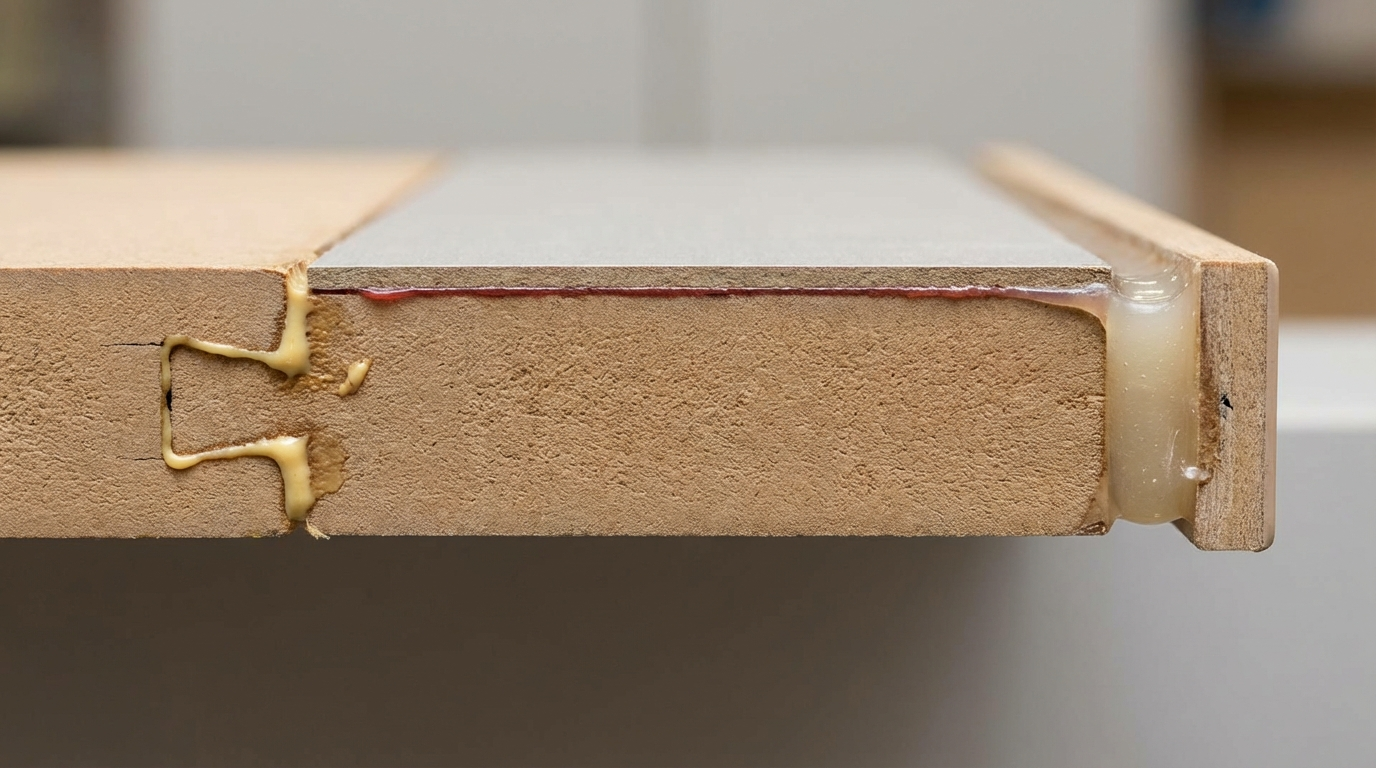
Use PVA adhesives for dry indoor joints and laminates, PU for moisture-exposed or structural bonds, and contact adhesives for edge banding and veneers.
If you’re in a hurry, scan your project: dry wardrobe assembly? PVA works fine and cleans easily. Kitchen or bathroom near water? Switch to PU for better hold in humid Indian monsoons. Laminating or edge banding? Contact adhesive grabs instantly without clamps. Always check surface prep—clean, dust-free MDF edges—and clamp for 30-60 minutes minimum. In coastal areas, prioritize moisture-resistant options to avoid delamination after 6 months.
- Choose PVA if budget-tight, low-moisture indoor use, easy cleanup needed.
- Choose PU if gaps present, high strength required, humid sites common.
- Choose contact if no-clamp application, flexible surfaces like laminates.
- Avoid PVA in wet zones; it softens over time.
- Avoid contact indoors; fumes linger in poor ventilation.
Note: This is independent informational content and is not affiliated with any manufacturer.
What Are the Main Adhesives Used with MDF?
PVA adhesives, often called white glues, form the base for many MDF joins. They spread easily on porous MDF surfaces and dry clear for painted or laminated finishes.
PU adhesives cure with ambient moisture, expanding slightly to fill gaps in uneven cuts—common in Indian carpentry workflows.
Contact adhesives apply to both surfaces, dry tacky, then bond on contact. Ideal for non-porous overlays on MDF.
These suit MDF, HDF, and pre-laminated boards. HDFWR variants pair best with PU in damp conditions due to their inherent resistance.
Why Adhesive Choice Matters in Indian Homes and Sites
Monsoon humidity (70-90% RH) slows PVA drying, risking weak bonds if clamped too soon. Coastal salt air accelerates corrosion on metal clamps, loosening holds.
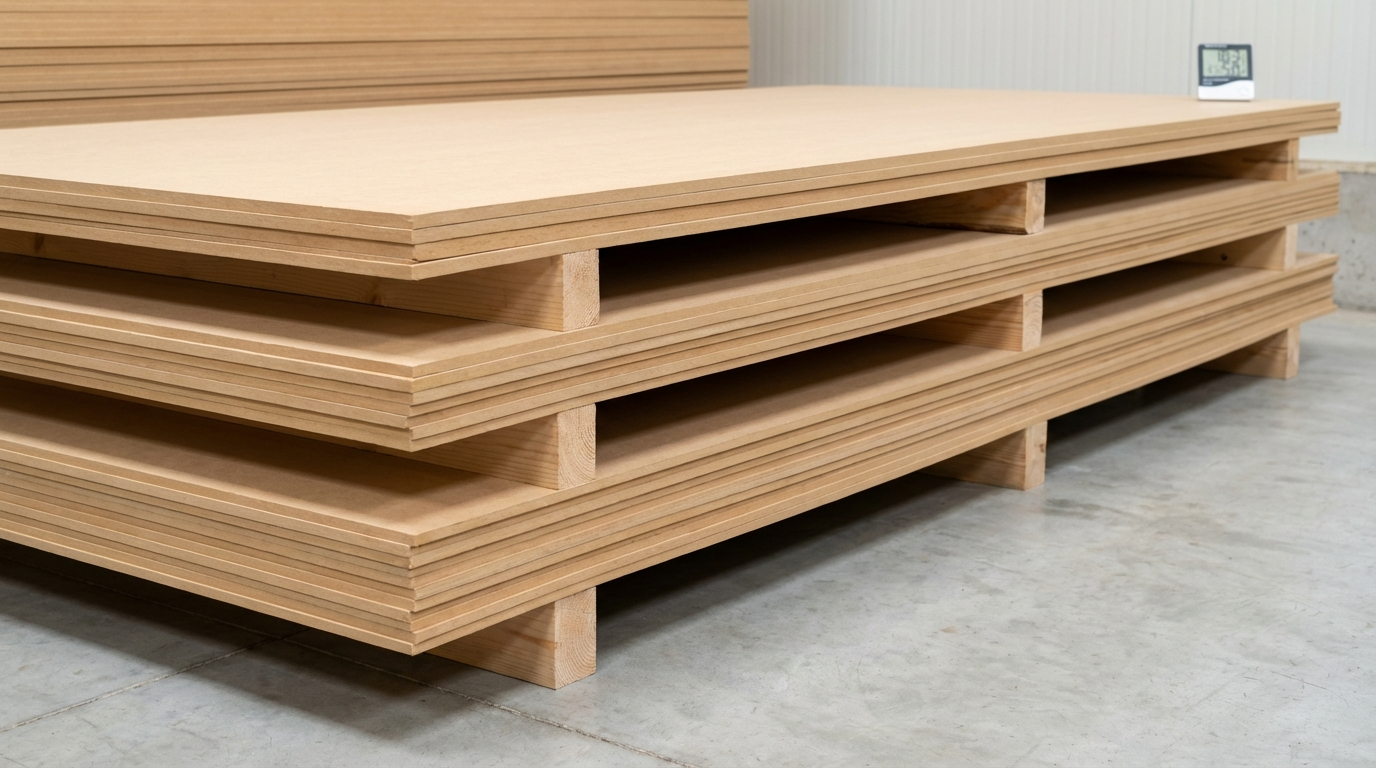
Site realities like dust from ongoing construction or poor storage (stacked sheets absorbing ground moisture) weaken glue lines. Delamination shows as bubbling edges after 3-6 months.
Screw holding drops 20-30% in humid bonds without proper adhesive backup. In kitchens, steam softens PVA joints, causing sagging shutters.
Two-Minute Comparison: PVA vs PU vs Contact Adhesives
| Feature | PVA (White Glue) | PU Adhesive | Contact Adhesive |
|---|---|---|---|
| Bond Strength | Medium (dry wood) | High (gap-filling) | Medium-High (instant) |
| Moisture Resistance | Low (indoor only) | High (wet zones) | Medium (sealed surfaces) |
| Open Time | 10-20 min | 5-15 min | 10 min (tacky) |
| Cleanup | Water (wet) | Hard (cured foam) | Solvent (fumes) |
| Best For | Joints, laminates | Structural, humid | Edge banding, veneers |
| India Risk | Monsoon swell | Over-expansion in high RH | Ventilation needed |
This table highlights real trade-offs. PVA suits tight budgets but fails in humidity; PU handles monsoons but needs precise dosing.
Which adhesive holds best for MDF edge banding?
Contact adhesives excel for edge banding. Apply thin to both MDF edge and tape, let tacky (10 mins), then roll firmly. No clamps needed, saving time in workshop rushes.
In India, pair with PVC edges in humid sites—PVA creeps under heat, PU foams too much for thin strips. Test on scrap: press and tug after 24 hours. Check for lift at corners, common if MDF edges sanded poorly.
Can PVA glue work for kitchen cabinets on MDF?
PVA handles dry cabinets but not steam-exposed ones. Use for assembly joints away from sinks. Clamp 45 mins, sand excess.
Monsoon storage tip: keep glue in sealed containers. If coastal, upgrade to PU for drawer slides. Verify bond by tapping—no hollow sound means good penetration into MDF pores.
How to Choose and Apply MDF Adhesives in 5 Steps
- Assess project conditions: Indoor dry (PVA), humid/kitchen (PU), overlay (contact). Note RH above 70%? Avoid PVA.
- Prep surfaces: Sand MDF edges to 180 grit, wipe dust with damp cloth, dry fully. Roughen laminates lightly.
- Select viscosity: Thin for flat bonds, thick/gel for verticals to prevent drip in hot sites.
- Apply and clamp: Spread even (notch trowel for laminates), assemble, clamp 30-60 mins. PU: mist water if dry air.
- Cure and test: 24 hours full strength. Tug test joints; refix if weak.
Failure point: skipping prep in dusty sites leads to 50% bond loss.
Decision Framework: Match Adhesive to Conditions
| Project Condition | Recommended Adhesive | Why + Verify |
|---|---|---|
| Wet zone (kitchen sink) | PU | Moisture cure resists steam. Check expansion: small bead ok. |
| Coastal humidity | PU or contact | No water softening. Test tack in salty air sample. |
| Heavy use (kids' room) | PU | Gap fill for impacts. Screw over glue line. |
| Tight budget | PVA | Low cost, easy. Indoor only; monitor swell. |
| Fast workflow (CNC shop) | Contact | Instant bond, no clamp. Ventilate well. |
| High scratch risk (tabletop) | Contact + laminate | Seals pores. Trim excess flush. |
Practical Use Cases for MDF Adhesives
| Use Case | Adhesive | Thickness Notes | Risk + Tip |
|---|---|---|---|
| Wardrobe carcass joints | PVA | 18mm MDF | Dry storage; clamp parallel. |
| Kitchen shutter lamination | Contact | 16-18mm | Steam: seal edges extra. |
| Edge banding TV unit | Contact | Any | Heat gun for corners; no bubbles. |
| Wall panel assembly | PU | 8-12mm | Monsoon: mist for cure. |
What adhesive for MDF to laminate bonding?
Contact adhesive bonds laminates best to MDF. Apply to both, dry to tacky, align precisely—misalignment hard to fix.
For Indian sites, use in ventilated areas; solvents evaporate slowly in humidity. Press with roller for air escape. After 24 hours, trim edges. If bubbling occurs (poor prep), sand and reapply. Ideal for modular kitchens where speed matters.
Is PU glue safe for indoor MDF furniture?
PU works indoors if ventilated during application. Low VOC types cure fast without strong odor.
In homes, apply near open windows—fumes irritate in closed AC rooms. Coastal tip: cures better in humid air. Test strength by overloading scrap joint. Full cure in 24 hours prevents early flex.
Common Mistakes with MDF Adhesives (and Fixes)
- Mistake 1: Using PVA in bathrooms—fix: switch to PU, seal joints.
- Mistake 2: No surface sanding—fix: 180 grit always, vacuum dust.
- Mistake 3: Short clamping in heat—fix: 60 mins min, use wedges.
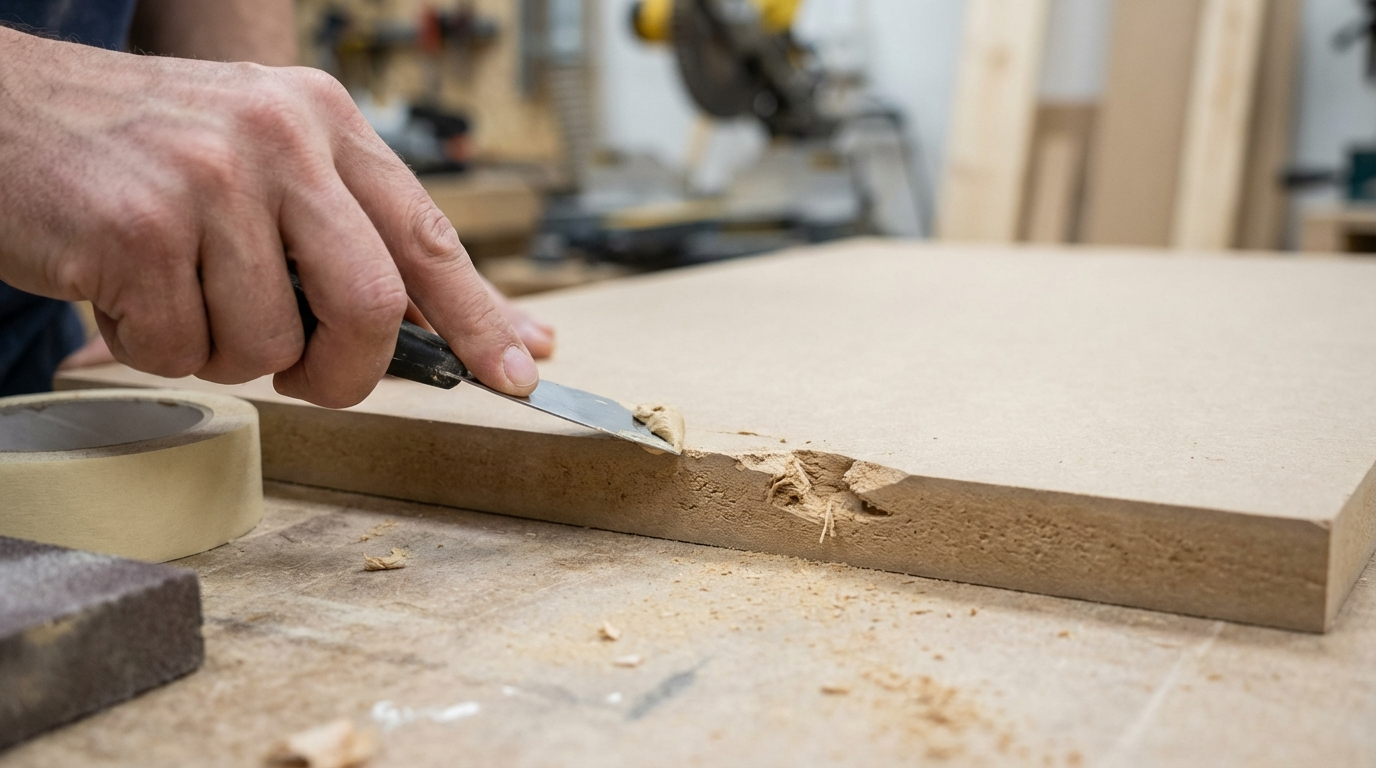
- Mistake 4: Thick glue beads on edges—fix: thin spread, wipe excess.
- Mistake 5: Storing glue in site heat—fix: cool, dry place; check expiry.
- Mistake 6: Ignoring RH for PU—fix: mist dry surfaces.
- Mistake 7: Contact without tack test—fix: finger-touch dry film.
- Mistake 8: Skipping screws in stress areas—fix: glue + screw hybrid.
- Mistake 9: Wet cleanup on cured PU—fix: scrape first, solvent spot.
Failure Modes and Fixes
- Symptom: Edge delamination. Cause: PVA in humidity. Prevent: PU for wet. Fix: Sand, re-glue with PU.
- Symptom: Joint creep/sag. Cause: Poor clamp pressure. Prevent: Even clamps 30 mins. Fix: Disassemble, reapply.
- Symptom: Bubbles under laminate. Cause: Trapped air. Prevent: Roller press. Fix: Slit, inject contact.
- Symptom: White foam overflow. Cause: Excess PU. Prevent: Bead size match gaps. Fix: Trim post-cure.
- Symptom: Weak screw hold. Cause: Glue not penetrated. Prevent: Pre-drill, glue first. Fix: Plug and redrill.
- Symptom: Fume residue indoors. Cause: Contact in closed space. Prevent: Ventilate 2 hours. Fix: Air out, wipe surfaces.
- Symptom: Slow cure in AC. Cause: Dry air for PU. Prevent: Humidity spray. Fix: Wait 48 hours.
Quality Checks You Can Do Without Lab Tests
Before buying: Squeeze tube—smooth flow, no lumps. Smell: fresh, not rancid. Ask viscosity type for your use.
After cutting MDF: Run finger on edge—smooth absorption. Test glue spread: soaks in evenly, no puddles.
During application: Even coverage, no strings. Clamp test: snug, no slip.
After install: Tap test—no dull thud. Tug corners after 24h. Heat gun on edge: no soften.
How to store adhesives in monsoon season?
Store in airtight containers above ground, cool shade (under 30°C). PVA freezes risk in AC transit—thaw slowly.
Coastal: plastic wrap tubes. Check monthly: skin formation means discard. Workshop tip: FIFO rotation. Prevents 80% weak bonds from old glue.
Does thickness of MDF change adhesive needs?
Thinner 6-12mm MDF needs thinner glue to avoid sag; 18mm+ thicker ok. Porous thin boards absorb more.
Vertical panels: gel types prevent run. Test: apply vertical scrap, check drip after 5 mins. Kitchen shutters (16mm): contact for overlays.
Tips for Homeowners Using MDF Adhesives
Focus on durability: clean spills wet, avoid water near PVA joints. Use coasters on tabletops. Monsoon: dehumidifier near furniture.
Don't overload shelves early—wait 48 hours. Check hinges monthly for looseness.
Carpenter Workflow Tips for MDF Gluing
Cut all pieces first, sand batches. Use jig for clamps. PU for uneven CNC cuts. Edge band before assembly.
Site handling: cover stacks, avoid floor moisture. Hybrid: glue + screws in hinge zones.
Architect and Designer Specs for Adhesives
Specify "PVA for dry, PU MR for kitchens" in drawings. Detail clamp times, RH notes. Finish logic: contact under laminates.
Wet-zone: PU + HDFWR combo. QC: photo bonds pre-install.
OEM and Modular Factory Tips
Repeatability: automated dispensers for even spread. QC: pull tests on samples daily. Reduce returns: PU in humid export zones.
Batch test: 10% joints destruct. Logistics: seal packed units.
Can I mix adhesives for MDF projects?
Avoid mixing—PVA dilutes PU strength. Use one type per joint. Hybrid layers ok: PVA base, PU top for strength.
Exceptions: contact over PVA for overlays. Test combo on scrap 24h. In fast shops, saves time but verify no reactions.
FAQs
How long to clamp PVA on MDF joints?
Clamp PVA-glued MDF joints for at least 30-45 minutes, longer in high humidity. Use bar clamps or wedges for even pressure across panels. In Indian monsoons, extend to 60 minutes as moisture slows drying. Release slowly to avoid spring-back. Full strength comes at 24 hours, so avoid loading. Common error: rushing leads to misalignment in wardrobes.
Why does PU foam out on MDF edges?
PU expands with moisture, foaming if excess applied or gaps large. In humid sites, reaction speeds up. Use half bead for tight fits, full for gaps over 2mm. Wipe foam immediately with wet cloth before cure. Trim cured foam smooth. Prevention: practice on scrap, dose precisely for CNC-routed edges.
Is contact adhesive flexible enough for MDF drawers?
Contact adhesive flexes with drawer movement if thin coat used. Thick layers crack over time. Ideal for banding drawers, not carcass. Apply two thin coats, roll firmly. In kitchens, pairs with PU interiors. Test flex by opening/closing mock-up 100 times. Ensures no peel in daily use.
What if MDF warps after gluing?
Warping happens from uneven moisture or one-sided glue. Balance by gluing both sides or weighting flat. Store sheets horizontally pre-cut. In coastal areas, acclimate 48 hours. Fix: steam bend back if minor, or recut. Always check flatness with straightedge before assembly.
Can adhesives affect MDF screw holding?
Quality adhesives enhance screw hold by filling pores, but poor ones weaken if not cured. Drill pilot holes, add glue, screw while wet. PVA boosts 20% in dry; PU in humid. Test: pull-out force on samples. Avoid over-tightening, strips fibers.
How to clean excess adhesive from finished MDF?
For PVA, wet cloth before dry. PU: scrape, solvent spot. Contact: mineral spirits immediately. Post-trim: fine sand. Protect nearby laminate with tape. Workshop tip: dedicated scrapes prevent finish scratches in TV units.
Does temperature affect adhesive choice for MDF?
Above 30°C, PVA skins fast—shorten open time. PU cures slower in dry heat. Ideal 20-25°C. Summer sites: shade glue, mist PU. Winter AC: humidity boost. Always note on job sheets for consistency.
Are there eco-friendly adhesives for MDF?
Low-VOC PVA and water-based contacts reduce fumes. Formaldehyde-free options available. Check labels for green certifications visually. In homes, prioritize for kids' rooms. Trade-off: slightly less strength, test accordingly. India trend: rising for modular factories.
What adhesive for MDF wall panels in monsoons?
PU for panel-to-frame bonds—resists humidity swell. Thin spread prevents drip on verticals. Acclimate panels 2 days. Seal edges post-install. Alternative: contact for fabric overlays. Monitor for mold if ventilation poor.
Disclaimer: This content is provided for general informational purposes based on industry practices and publicly available information. Product specifications, standards, prices, and availability may vary by manufacturer, region, and time. Readers should independently verify details with manufacturers, dealers, or qualified professionals before making purchase or construction decisions.Want Plywood Suggestions?
Share a few details and a VIR MDF specialist will suggest suitable brands and connect you to responsive dealers.