How to Route MDF Without Burning: Speed, Bits & Edge Prep Tips
Get smooth routed edges in MDF without burning or fuzz. Learn tool setup basics, bit considerations, and edge-prep steps for paint/laminate.
Quick Decision Summary
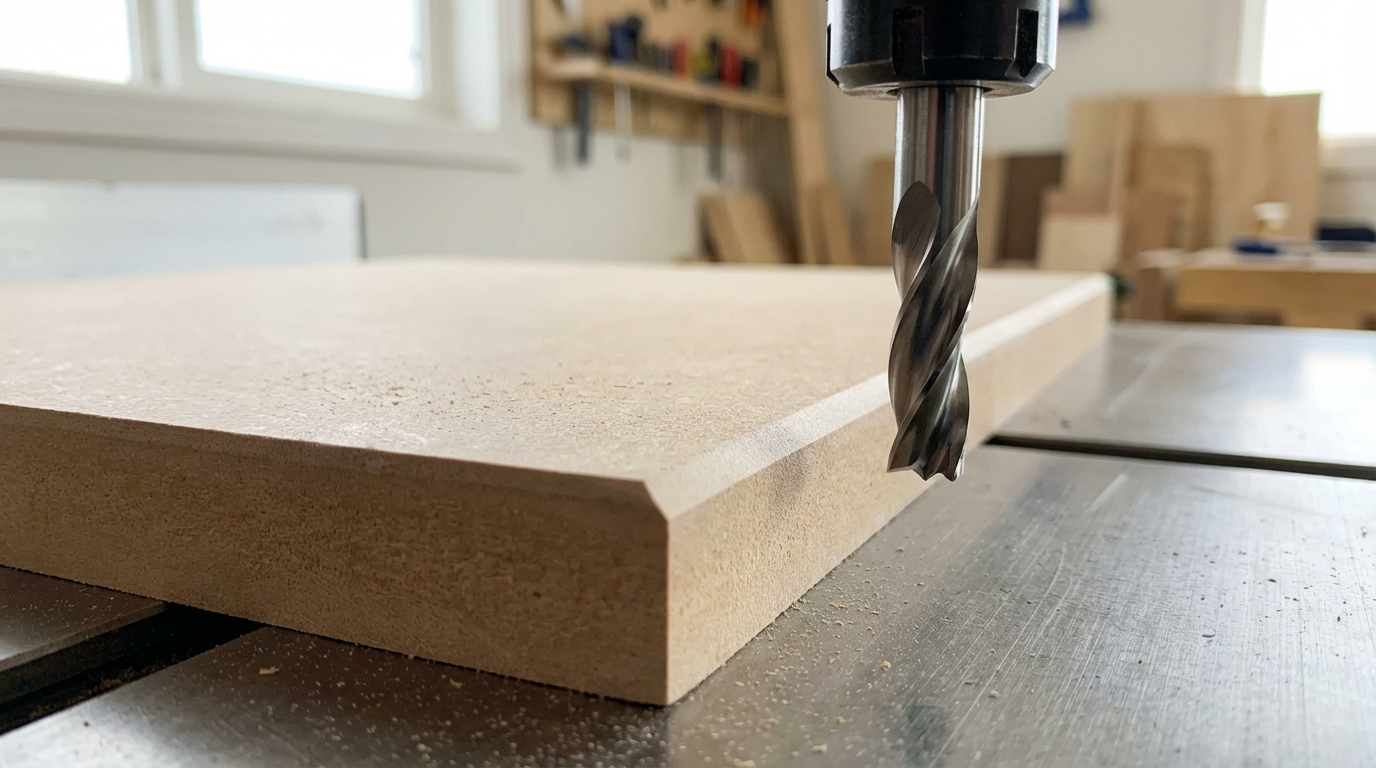
Use sharp 2-flute upcut spiral bits at 16,000-18,000 RPM with 120-160 IPM feeds and strong dust extraction to route MDF cleanly without burning.
If you’re in a hurry, start with a test cut on scrap MDF: set spindle to 17,000 RPM, feed at 140 IPM, depth of cut 6-8mm per pass, ramp entry, and vacuum chips immediately. This combo typically prevents heat buildup in standard Indian workshop conditions. Adjust up 10-20% if edges stay cool and clean; slow down if fuzz appears. Always wear a mask for MDF dust, common in humid sites where poor ventilation worsens issues.
- Choose this setup if cutting modular wardrobe panels or kitchen shutters for paint/laminate finishes in dry interiors.
- Avoid high RPM over 20,000 or deep single passes if your machine lacks rigid hold-downs, as common in small carpentry shops.
What This Material/Option Actually Is
Routing MDF means shaping edges or profiles on medium-density fiberboard using a handheld router or CNC machine. MDF consists of fine wood fibers bonded with resins under heat and pressure, creating a smooth, uniform sheet ideal for furniture like wardrobes, TV units, and partitions.
This process involves spinning bits to remove material precisely, often for curved edges, dadoes, or rebates before edge banding or painting. In Indian workflows, it's standard for pre-laminated or raw MDF boards in 16-18mm thicknesses, but requires care due to MDF's density causing heat friction if settings mismatch.
Routing fits into finishing workflows: cut full sheets on panel saws, route details on CNC, then laminate or paint. Unlike plywood, MDF lacks grain tear-out but generates fine dust that clogs bits, risking burns.
What Causes Burning When Routing MDF?
Burning happens from excessive friction heat when bits dwell too long or chips don't evacuate. Direct answer: dull bits, low feeds under 100 IPM, or poor dust collection trap fibers, melting resins. In Indian monsoon prep, stored MDF absorbs humidity, softening fibers and worsening heat.
Nuance: single-flute bits burn less than multi-flute if feeds match; test on 300x300mm scrap. Prevention: aim 0.004-0.006mm chip load. Next step: check bit sharpness by feel—dull edges snag paper. Slow RPM below 12,000 also scorches; ramp speeds gradually in software.
Why It Matters in Indian Homes and Sites
Clean routed edges seal against monsoon humidity, preventing swelling in coastal cities like Mumbai or Chennai where 80%+ RH softens exposed fibers. Poor routes lead to fuzz under paint, cracking finishes in 6-12 months.
In sites, dusty workshops without extractors cause bit clogging, burning panels mid-job and delaying modular installs. Good routing ensures strong edge banding adhesion for kitchens, holding screws better in humid wardrobes. Trade-off: slower speeds for perfection vs faster rough cuts needing extra sanding.
For TV units or partitions, precise routes allow flush hinges, vital in space-tight urban homes.
Understanding the Causes of Burning and Fuzz in MDF Routing
Burning stems from localized heat exceeding 200°C, melting urea-formaldehyde resins. Fuzz arises when cut fibers lift in humid air post-routing. Typically, 70% of issues trace to mismatched speeds/feeds in under-ventilated Indian shops.
Chip load too low (under 0.004mm/tooth) rubs fibers; too high chips poorly. Dust buildup insulates bits, common without 1000m³/h vacuums.
Why Does MDF Fuzz After Routing?
Fuzz forms as loose fibers swell from ambient moisture after cuts expose ends. Direct: unsealed routes in 60%+ RH lift 0.5-1mm hairs, ruining paint. India-specific: post-monsoon storage without covers worsens it 2x.
Conditions: thinner 12mm boards fuzz more than 18mm. Check: wet finger test post-cut—if sticks, seal immediately. Step: apply thin PVA before sanding.
Choosing the Right Router Bits for MDF
Opt for solid carbide 2-flute spirals: upcut evacuates chips upward, preventing bottom burn; downcut cleans top surfaces. Compression bits blend both for laminate-faced MDF.
Avoid HSS or 4+ flutes—they clog fast. Bit diameter 6-12mm suits most edges; polish-coated reduce friction 20%. Replace every 50-100m routing in dusty sites.
| Bit Type | Best For | Pros | Cons | India Site Fit |
|---|---|---|---|---|
| 2-Flute Upcut Spiral | Roughing pockets | Fast chip removal, cool cuts | Top fuzz possible | High dust shops |
| 2-Flute Downcut | Surface profiling | Clean top edge | Bottom receding | Visible faces |
| Compression | Laminate MDF through-cuts | Clean both sides | Slower feeds | Factory modular |
| Straight Flute | Basic rebates | Cheap | Clogs easy | Avoid humid sites |
Which Bit Diameter Works Best for MDF Edges?
For 18mm wardrobe edges, 8-10mm diameter balances speed and control. Direct: smaller 6mm for details prevents deflection; larger 12mm roughs faster but risks vibration on entry-level CNCs.
Nuance: match to spindle power—under 2.2kW needs finer bits. Verify: run finger along shank post-cut; heat means resize down. In coastal areas, coated bits last 30% longer.
Optimal Speed, Feed Rates, and Depths for Burn-Free Routing
Target 16,000-18,000 RPM for 8-12mm bits; feeds 120-160 IPM (300-400 cm/min); plunge 50-80 IPM. Chip load 0.005-0.007mm/tooth keeps heat low. Multiple shallow passes (max 1x bit dia depth).
In India, test lower if voltage dips; ramp entries avoid plunge shock. Dust hood mandatory—without, reduce feeds 20%.
| Bit Dia (mm) | RPM | Feed IPM | Plunge IPM | Depth/Pass mm |
|---|---|---|---|---|
| 6 | 18,000 | 140 | 60 | 4-6 |
| 8 | 17,000 | 150 | 70 | 6-8 |
| 12 | 16,000 | 120 | 50 | 8-10 |
How Do I Calculate Chip Load for My MDF Cuts?
Chip load = Feed Rate / (RPM x Flutes). Direct: for 17,000 RPM, 2 flutes, 150 IPM (3810 mm/min), load ~0.006mm—ideal no-burn zone.
Nuance: Indian power fluctuations drop RPM 10%; recalculate. Check: listen for whining (too low load) or bogging (too high). Next: use scrap matrix tests, vary one param.
Edge Preparation Before and After Routing
Pre-route: sand sawn edges 180-grit to remove fuzz from panel saws, acclimate boards 48hrs in site humidity. Post: blow dust, 220-grit sand, PVA seal for paint; acetone wipe for laminates.
In humid zones, double-seal edges—prevents 50% moisture uptake.
Should I Seal MDF Edges Before or After Routing?
After: routing exposes fresh fibers needing immediate seal. Direct: route first, sand within 1hr, apply thin PVA or shellac, dry 2hrs, re-sand 320-grit.
Conditions: skip pre-seal if laminating soon; essential for paint in kitchens. Check: spray water mist—unsealed absorbs in seconds. Coastal tip: add fungicide to sealer.
How to Route MDF Without Burning: 5-Step Process
- Prep Material: Acclimatize MDF 24-48hrs, secure flat with vacuums/clamps. Sand sawn edges lightly.
- Select & Check Bit: Install sharp 2-flute upcut, verify runout <0.05mm.
- Set Parameters: Input RPM/feed from table, ramp 5-10° entry, enable dust extract 80%+ power.
- Test Cut: Scrap piece full profile; inspect for heat/discolor. Tweak feed +10% if cool.
- Full Run & Finish: Monitor first pass, sand/seal edges same day.
Failure point: skip test—burns 20% jobs. India reality: pause for power checks.
Decision Framework for MDF Routing
Use this table for quick specs matching site conditions.
| Condition | Recommended Bit/Type | Key Settings | Verify/Check |
|---|---|---|---|
| Monsoon humidity >70% RH | Upcut 2-flute | High feed 160 IPM, seal post | Edge water test |
| Coastal salt air | Coated compression | 18k RPM, shallow passes | Bit polish intact |
| Heavy use kitchen | Downcut for profiles | Chip load 0.006mm | Screw hold post-seal |
| Tight budget/small shop | Straight 2-flute | 140 IPM, manual dust | Daily sharpen |
| High speed production | 1-flute O-flute | 200 IPM max | Chip evacuation |
| Scratch-prone kids' room | Compression | Multi-pass finish | Smooth sand test |
8 Common Mistakes When Routing MDF (and Fixes)
- Dull bits: Fix—hone or replace every 50m.
- No dust collection: Fix—use shop vac min 500m³/h.
- Plunge cuts: Fix—ramp always.
- Deep single passes: Fix—max 8mm depth.
- Ignoring acclimation: Fix—site-condition 48hrs.
- Wrong chip load: Fix—calculate per bit.
- Skipping post-sand: Fix—220-grit immediate.
- Low voltage run: Fix—stabilizer for steady RPM.
Failure Modes and Fixes
1. Edge Burning: Symptom: black scorch. Cause: low feed/dull bit. Prevent: 140+ IPM sharp tools. Fix: sand out, re-route slow.
2. Fuzzy Edges: Symptom: raised fibers. Cause: humidity post-cut. Prevent: seal within hrs. Fix: 180-grit wet sand.
3. Bit Deflection: Symptom: wavy profiles. Cause: deep/fast. Prevent: rigid hold, shallow passes. Fix: re-zero, lighter cuts.
4. Chip Clogging: Symptom: bogging heat. Cause: poor extract. Prevent: hood+vaccum. Fix: pause, clean mid-job.
5. Top Tear: Symptom: splinter top. Cause: upcut on finish pass. Prevent: downcut last. Fix: sand plane.
6. Bottom Recess: Symptom: scooped bottom. Cause: downcut through. Prevent: upcut or backing. Fix: flip sand.
Can I Route MDF on a Handheld Router Without Burning?
Yes, but slower: 14,000 RPM, hand-feed 80-100 IPM equivalent. Direct: use templates, light pressure, frequent pauses for cool-down.
Nuance: less control than CNC; ideal small jobs. Check: mark progress lines. India tip: avoid humid outdoors.
Quality Checks You Can Do Without Lab Tests
Before Buying MDF: Tap edges—hollow sound means low density. Ask density 700-800kg/m³, MR grade for wet.
Pre-Routing: Flatness <1mm/meter, no fuzz from saw.
Post-Cut: Edge cool to touch, no black; sand test smooth. Water bead test for seal.
Installed: No gaps at bands, firm screw hold.
Tips Tailored for Different Users
Homeowners: Insist carpenters seal routed edges same day; clean dry cloth only, no wet wipes on raw MDF to avoid swelling.
Carpenters: Always ramp on CNC, edge-band within 24hrs; mark fastening zones pre-route to avoid weak holds.
Architects/Designers: Spec 18mm HDFMR for kitchens, downcut profiles visible; detail 2mm radius min to ease banding.
OEM/Modular Makers: QC matrix cuts daily; standardize feeds for repeatability, track bit life to cut returns 30%.
How Does Humidity Affect Routed MDF Edges?
High RH swells fibers 5-10% in 24hrs unsealed. Direct: coastal projects need MR boards + double PVA.
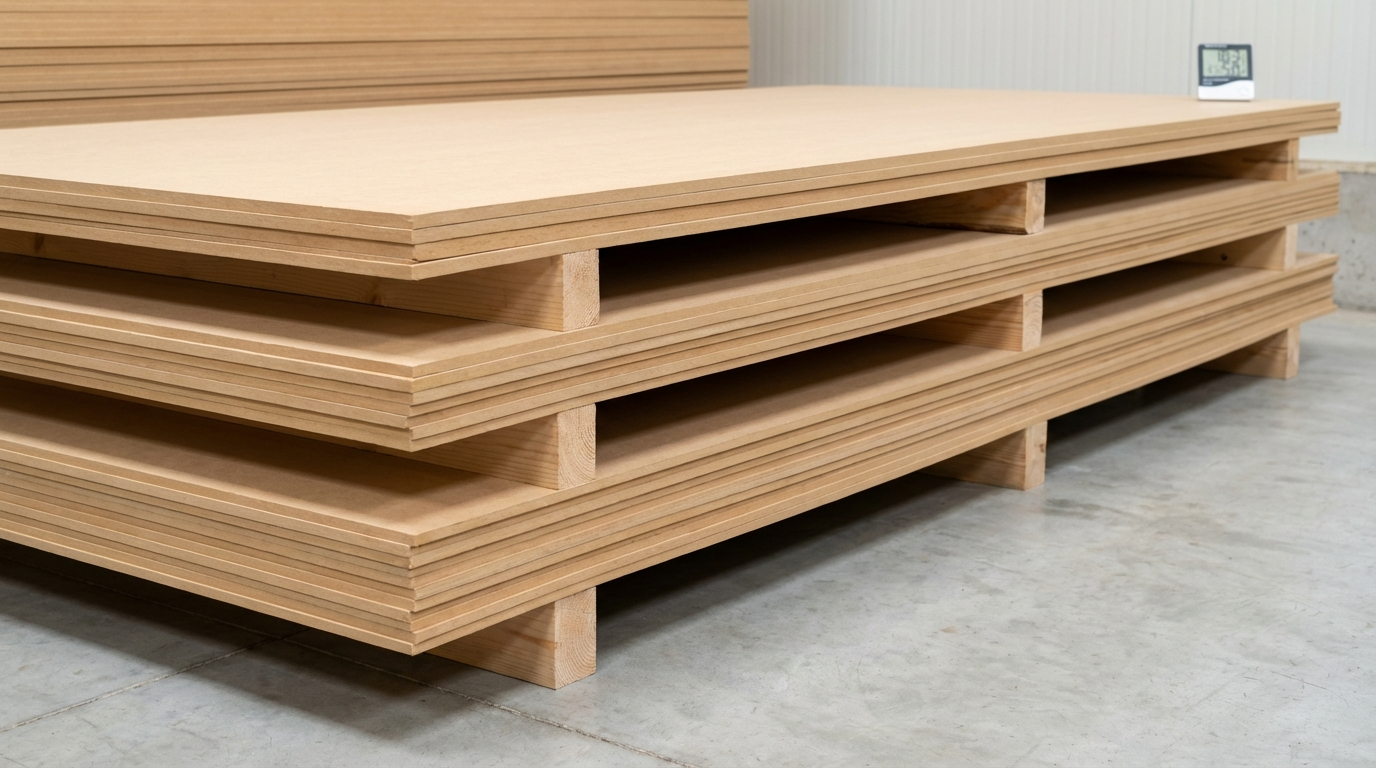
Nuance: 12mm thinner risks more. Check: humidity meter <65% shop. Next: cover stacks post-cut.
What's the Trade-Off Between Speed and Finish Quality?
Faster feeds (160 IPM) rougher but cooler; slower (100 IPM) smoother but risks burn. Direct: balance at 140 IPM for most.
Nuance: production favors speed + sand; custom slower. Verify: sample panels paint-tested.
FAQs
Can beginners route MDF on entry-level CNCs?
Yes, with basic setup: start conservative at 16k RPM/120 IPM on 12mm boards. Indian small shops succeed by testing scraps first, using free software ramps. Avoid overconfidence—deflection warps profiles in soft-hold jigs. Build experience with 10x10cm tests, noting voltage dips common in tier-2 cities that slow spindles 15%. Pair with 1HP extract for dust-free ops, extending bit life double.
Does MDF type (standard vs MR) change routing settings?
MR grades route similar but generate stickier chips from extra resins, needing 10% higher feeds. Standard suits dry wardrobes; MR for kitchens. In monsoon-prone areas, MR prevents post-cut warp but demands sharper bits. Always verify board label—low-density fakes burn easier. Test: cut sample, check chip color (brown=hot, white=cool).
How often should I replace router bits for MDF?
Every 50-100 linear meters in dusty sites, sooner if polishing fades. Signs: edge drag, heat rise. Indian carpenters save by honing carbide edges lightly. Track usage per job; coated bits last 1.5x uncoated in humid shops. Dull bits waste 20% time in reworks—inspect visually post-shift.
Is air cooling needed besides dust extraction?
Often yes for prolonged runs: compressed air nozzle clears chips extra. Basic vac suffices short jobs; add air in hot coastal factories. Prevents 80% clogs. Setup tip: angle 45° trailing bit. Without, reduce feeds 15%.
What grit sandpaper for post-routing MDF edges?
Start 180-220 for fuzz removal, finish 320 for paint. Hand-block orbital motions prevent swirls. Wet-sand sealed edges for ultra-smooth. In humid sites, dry fully between grits. Avoid power sanders initially—they lift fibers. Pro finish: three grits progressive.
Can I route pre-laminated MDF without damage?
Yes, using compression bits slow feeds to shear laminate clean. Upcut risks peel; test corner first. Ideal for factory TV units. Post: wipe residue fast. Trade-off: 20% slower than raw.
How to handle MDF dust safely in Indian workshops?
Mandatory N95 masks, eye gear; wet mop floors daily. Static buildup sparks in dry winters—ground machines. Ventilate cross-breeze; health risk high for lungs. Shops without extract see 2x rework from clogged bits.
Does board thickness affect anti-burn settings?
Yes: thicker 18mm needs shallower passes (6mm max), slower plunge. Thinner 12mm faster overall but flexes easy. Scale feeds proportional. Test per thickness batch.
What if my CNC lacks auto-ramp—manual workaround?
Hand-jog arc entry slow, then accelerate. Software plugins free for most. Prevents 90% plunge cracks. Practice on waste for muscle memory. Disclaimer: This content is provided for general informational purposes based on industry practices and publicly available information. Product specifications, standards, prices, and availability may vary by manufacturer, region, and time. Readers should independently verify details with manufacturers, dealers, or qualified professionals before making purchase or construction decisions.
Want Plywood Suggestions?
Share a few details and a VIR MDF specialist will suggest suitable brands and connect you to responsive dealers.