How to Store MDF Sheets: Prevent Warping, Swelling & Corner Damage
Storage mistakes ruin MDF before it’s used. Learn stacking, spacing, humidity control, and transport tips to keep sheets flat and clean.
Quick Decision Summary
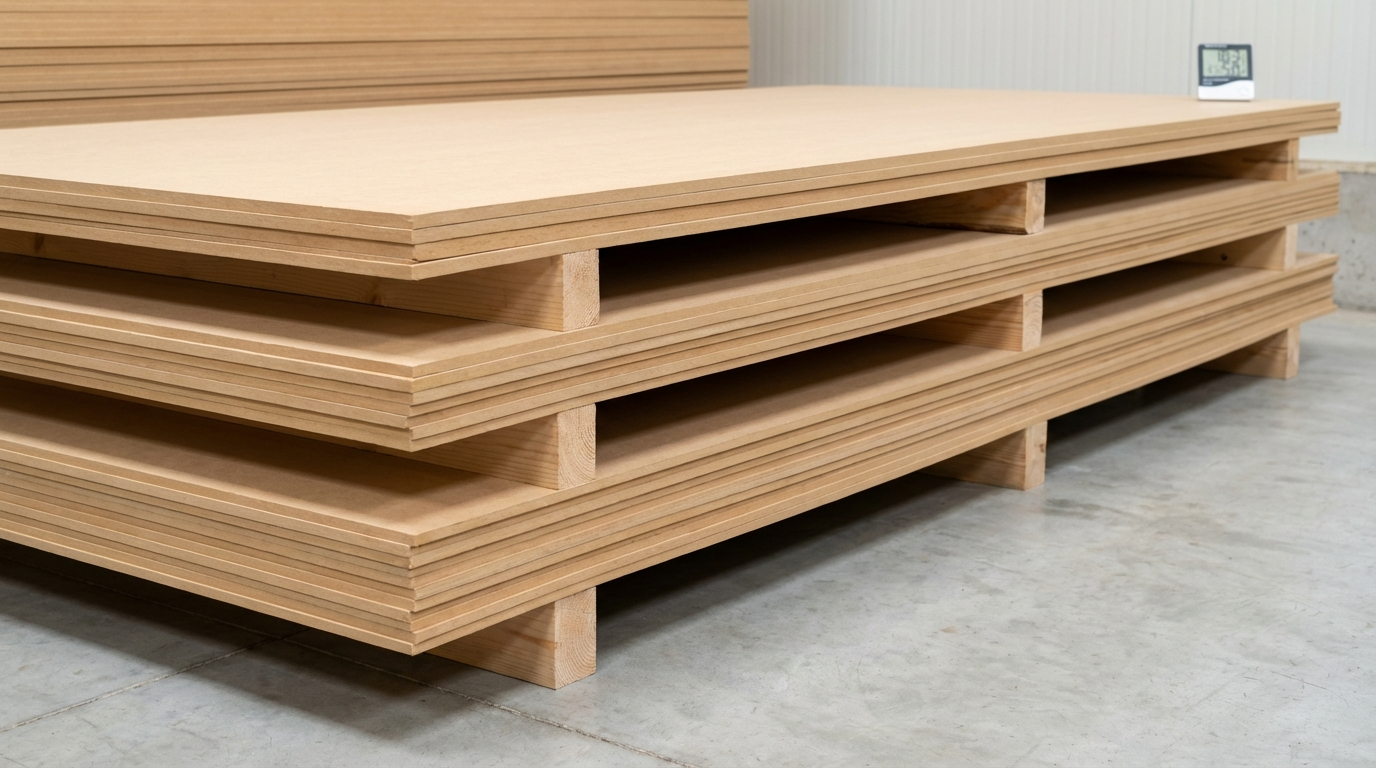
Store MDF sheets flat on pallets in a dry, ventilated shed with even stacking, spacers every 600mm, and covers to block humidity and dust.
If you’re in a hurry, prioritize a covered, shaded space away from ground moisture. Stack no more than 8-10 sheets high with 20-25mm wooden spacers between packs to allow air flow. Cover with tarps but not airtight plastic. In monsoon-prone areas, elevate pallets 150-200mm off the floor and monitor relative humidity below 65%. This prevents 90% of warping and swelling issues seen in Indian sites.
- Choose this if you have a godown or garage with ventilation and low foot traffic.
- Avoid this if sheets will sit over 3 months—opt for moisture-resistant variants or professional warehousing.
What This Material/Option Actually Is
MDF sheets are medium-density fiberboards made from wood fibers bonded with resins under heat and pressure. Standard sizes in India include 8x4 feet or 8x3 feet, with thicknesses from 3mm to 25mm. Plain MDF absorbs moisture easily due to its dense, uniform structure, making storage critical before cutting for cabinets, doors, or panels.
Unlike plywood, MDF has no voids or knots, offering smooth surfaces for lamination or painting. However, its edges are prone to swelling without sealing. Variations like moisture-resistant MDF use added waxes or resins, but all types demand careful handling to maintain flatness for CNC routing or modular assembly.
What Causes MDF Sheets to Warp During Storage?
MDF warps mainly from uneven moisture exposure, where one side absorbs humidity faster than the other. In Indian godowns, this happens from ground dampness or poor air circulation. Direct answer: Keep sheets flat and covered symmetrically. Nuance comes in coastal areas with salt-laden air accelerating fiber breakdown. Check flatness weekly by placing a straight edge across the sheet—if gaps exceed 2mm, restack immediately. Next step: Use fans for circulation during humid spells.
Why It Matters in Indian Homes and Sites
In India, monsoon humidity above 80% and coastal salt air turn MDF into a swelling risk within weeks if stored wrong. Warped sheets lead to poor screw holding in wardrobes, misaligned kitchen shutters, and chipped edges during transport. Site realities like dusty contractor yards or home garages with poor ventilation amplify corner damage from stacking pressure.
Proper storage saves rework costs—flat sheets cut accurately on CNC machines, reducing wastage by 15-20%. In wet zones like Mumbai or Kerala, untreated MDF swells 5-10% in thickness, ruining modular interiors before installation.
Does MDF Storage Affect Screw Holding Later?
Yes, swollen or warped MDF loses 30-50% screw grip due to softened fibers. Store dry to keep density uniform. In high-humidity sites, this causes loose hinges on TV units. Verify by tapping edges post-storage—dull thud means moisture ingress. Prevent with sealed packs; if swollen, dry slowly in shade before use.
How to Store MDF Sheets in 5 Steps
- Prepare the storage area: Choose a shed or covered garage with ventilation. Elevate pallets 150-300mm on bricks to block ground moisture, common in Indian monsoons.
- Inspect sheets on arrival: Reject bowed packs. Lay flat immediately, avoiding leaning which bows edges.
- Stack evenly: Limit 6-8 sheets per stack, max 1m high. Use 20mm wooden spacers crosswise every 600mm for airflow.
- Cover properly: Use breathable tarps or old bedsheets, not plastic sheeting that traps moisture.
- Monitor weekly: Check for condensation or flatness. Rotate stacks if uneven.
Follow these for sheets usable up to 6 months. Trade-off: Vertical racks save space but risk sagging in heat.
Can I Store MDF Sheets Vertically to Save Space?
Sometimes, but only short-term (under 2 weeks) in racks with full-height supports every 300mm. Flat stacking is safer for flatness. In cramped carpenter shops, vertical works if racks are shaded and dry, but expect minor edge curling in humidity. Check by sighting along the edge—waves over 3mm signal trouble. Switch to flat for longer holds.
Common Storage Mistakes to Avoid
Carpenters and homeowners repeat these, leading to 40% material loss in Indian projects:
- Stacking on bare floors—pulls moisture, swells bottoms. Elevate always.
- Overstacking beyond 10 sheets—corners crush. Limit height.
- Plastic wrapping tightly—traps humidity inside. Use loose, breathable covers.
- Direct sunlight exposure—UV fades and heats unevenly. Shade fully.
- Leaning against walls—bows from gravity. Keep flat.
- Ignoring ventilation—stagnant air breeds mold. Add fans.
- Mixing wet/dry sheets—transfers moisture. Isolate new arrivals.
- Storing near doors—dust and rain splashes damage surfaces. Relocate inward.
Failure Modes and Fixes
Spot these early to salvage sheets:
- Symptom: Bulging corners. Cause: Pressure from uneven stacks. Prevent: Spacers and level pallets. Fix: Flatten under weight for 48 hours.
- Symptom: Wavy surface. Cause: One-sided humidity. Prevent: Symmetric covers. Fix: Air-dry horizontally 3-5 days.
- Symptom: Edge swelling (2-5mm thick). Cause: Ground contact in monsoons. Prevent: Elevation. Fix: Plane edges before use.
- Symptom: Surface mold spots. Cause: Poor airflow above 70% RH. Prevent: Dehumidify. Fix: Sand lightly if superficial.
- Symptom: Delamination cracks. Cause: Extreme temp swings. Prevent: Insulate shed. Fix: Discard affected areas.
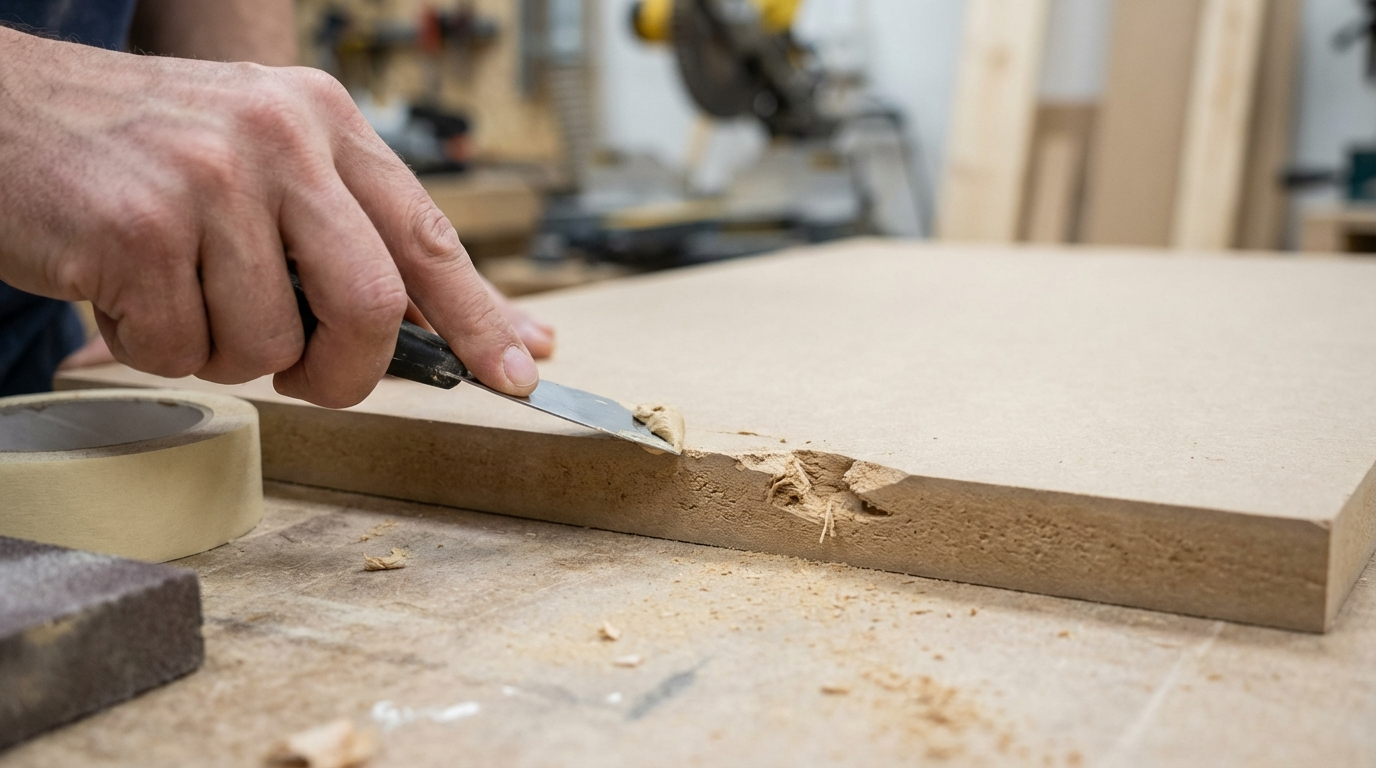
- Symptom: Scratches/chips. Cause: Rough handling. Prevent: Lift packs whole. Fix: Fill with putty for painted finishes.
How Do I Know If MDF Is Too Damp to Use?
Weigh a sample sheet against a known dry one—5% heavier signals excess moisture. Or tap: Wet MDF sounds dull. In coastal godowns, cut a test edge; fuzziness means dry first. Ideal moisture content stays under 10%. Next: Store in AC if possible, or use fans till stable.
Decision Framework for MDF Storage
| Storage Condition | Recommended Approach | What to Verify |
|---|---|---|
| Monsoon season (80%+ RH) | Elevated pallets, fans, silica packs between stacks | Condensation on covers? Add dehumidifier. |
| Coastal/salty air | Sealed shed, plastic edge wraps optional | White efflorescence on edges? Wipe and ventilate. |
| Small workshop/garage | Vertical racks short-term, flat preferred | Flatness with 2m ruler weekly. |
| Long-term (>3 months) | Climate-controlled or MR-grade MDF | Density test: No softness on edges. |
| High traffic site | Covered corners, marked no-walk zones | Dust buildup? Clean covers biweekly. |
| Tight budget | Breathable tarps, natural ventilation | Airflow: Paper test flutters in breeze. |
Quality Checks You Can Do Without Lab Tests
Before buying/storage:
- Visual: Flat stack, no bows when sighted.
- Tap test: Crisp sound, not muffled.
- Edge feel: Smooth, no fuzz.
Post-storage/cutting:
- Straight edge rule: Gaps <1mm across 1m.
- Weight check: Consistent heft.
- Cut test: Clean kerf, no crumbling.
Installed: Press edges—no give; clean with dry cloth only.
Should I Buy Moisture-Resistant MDF for Storage Ease?
Direct: Yes if storage exceeds 1 month in humid areas. MR types have wax additives, swelling 50% less. But costlier for dry zones. In Kerala homes, it pays off; in Delhi, plain suffices with good storage. Verify: Ask for resin type specs, test water drop absorption (beads up on MR). Use plain if sealed quickly post-storage.
Storage Tips for Different Personas
Homeowners: Garage storage? Elevate and cover; avoid under leaking roofs. Clean with microfiber—no water. Durability lasts if dry.
Carpenters: Workshop stacks: Spacers mandatory for quick access. Cut stored sheets first to check flatness. Fasten in dry zones only.
Architects/Designers: Spec storage in contracts: "Flat, ventilated, RH<65%". Detail edge sealing pre-storage.
OEM/Modular Makers: QC checkpoint: Weekly flatness logs. Reduces complaints by 25%. Batch-test moisture.
Transport and Handling Best Practices
During truck transit, strap packs flat, not vertical. Use corner protectors. In rains, tarpaulin fully. Unload with forks or multiple hands—no dragging. For site moves, trolley on edges only.
What’s the Best Way to Transport MDF Sheets in Monsoon?
Flat on roof racks covered doubly, or enclosed trailers. Avoid open trucks. Strap tight, elevate from bed. At site, rush to covered storage. Check for water beads on arrival—wipe dry. In Mumbai traffic, add silica sachets inside packs for extra protection.
Humidity Control Strategies
Target 40-65% RH. Use exhaust fans, open vents crosswise. Desiccant packs between top sheets. In coastal sheds, lime bags absorb moisture. Avoid AC direct blast—causes condensation.
FAQs
How long can MDF sheets be stored safely?
MDF stores well for 3-6 months in ideal conditions like ventilated sheds below 65% humidity. Beyond that, even moisture-resistant types risk subtle density loss affecting CNC cuts. In Indian dry seasons, extend to 9 months with checks; monsoons shorten to 1-2. Rotate stacks monthly and test flatness to catch issues early, ensuring sheets remain viable for wardrobe or kitchen projects without rework.
Can I store MDF in a regular home garage?
Yes, if elevated on pallets and covered loosely to allow air. Indian garages often face wall leaks, so position away from them. Limit stacks to 5 sheets high and use spacers. Monitor for musty smells signaling dampness. This setup works for homeowner DIY but add fans during humid months to mimic pro godowns.
What covers should I use for MDF stacks?
Breathable materials like tarpaulin, canvas, or cotton sheets prevent dust while allowing moisture escape. Tight plastic causes sweating inside, worsening swelling in humid climates. Tuck edges loosely and weight down. In dusty sites, double-layer for protection without trapping air, a common fix in contractor yards.
Is vertical storage okay for MDF?
Vertical racks suit short-term space-saving in busy shops, but support fully to prevent bowing. Flat is better for over 2 weeks, especially thicker 18mm sheets. In heat, vertical sags faster; check with a level. Indian carpenters use it for turnover stock but flatten before cutting.
How do I fix warped MDF sheets?
Restack flat under even weight for 3-7 days in shade, flipping daily. Minor warps recover; severe ones need sanding or discard. Prevent recurrence with proper spacers. In post-monsoon fixes, this salvages 70% of sheets if acted fast.
Does temperature affect MDF storage?
Keep 15-30°C; extremes cause resin softening or brittleness. Indian summers over 40°C warp stacks; winters below 10°C risk cracking. Ventilate to stabilize. In un-AC godowns, shade and fans suffice for most projects.
Can I stack different thicknesses together?
Avoid mixing—thinner sheets crush under thicker ones. Group same sizes with labels. Uneven pressure chips corners, a frequent site error. Uniform stacks ensure stability across humidity swings.
What if MDF gets wet during storage?
Dry horizontally in shade with fans, no heat. Swollen edges may need trimming. Discard if delaminated. Prevention via elevation beats fixes, cutting losses in rainy transits.
How much space do I need between MDF stacks?
At least 300-500mm aisles for air and access. Tight spacing stagnates humidity. In modular factories, this aids forklifts too. Plan godown layout for 10-15 stacks max without crowding.
Disclaimer: This content is provided for general informational purposes based on industry practices and publicly available information. Product specifications, standards, prices, and availability may vary by manufacturer, region, and time. Readers should independently verify details with manufacturers, dealers, or qualified professionals before making purchase or construction decisions.Want Plywood Suggestions?
Share a few details and a VIR MDF specialist will suggest suitable brands and connect you to responsive dealers.