How to Fix Chipped MDF Edges: Quick Repairs Before Laminate/Paint
Repair chipped MDF edges with simple fillers and sanding steps so the finish looks seamless. Includes when to replace vs repair.
Quick Decision Summary
Fill minor chips with solvent-based wood filler, sand flush, and prime for a seamless laminate or paint finish.
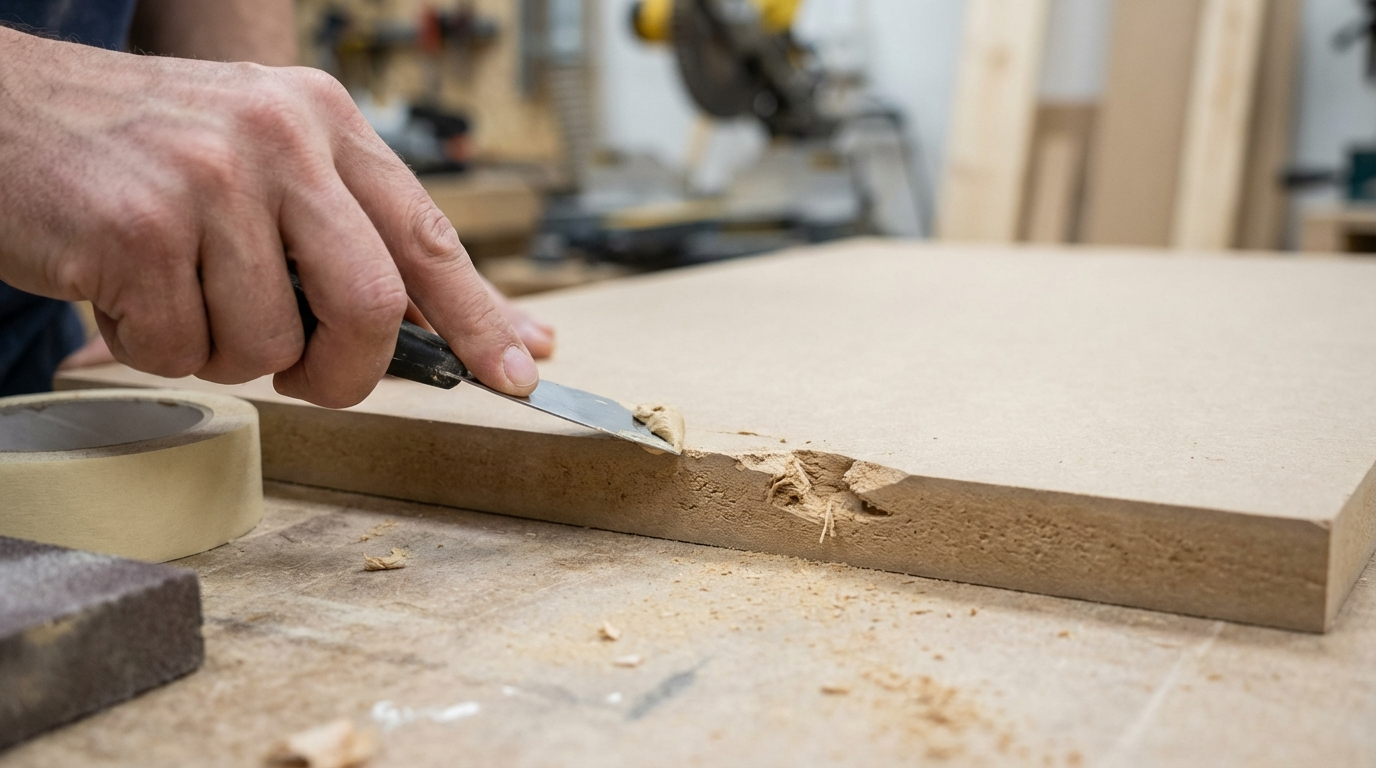
If you’re in a hurry, assess the chip: under 3mm deep and 5mm wide? Clean the area, apply filler, dry 1 hour, sand with 220-grit, wipe dust, and prime. This works for 80% of workshop chips before final finishing. Test on scrap first in humid conditions to check adhesion. Larger damage? Replace the piece to avoid future swelling in monsoons.
- Choose repair if chip is small, edge is straight-cut, and final finish hides minor imperfections.
- Avoid repair if chip exposes core fibers deeply, board has warped, or it's a high-wear edge like a shelf front.
What Chipped MDF Edges Actually Are
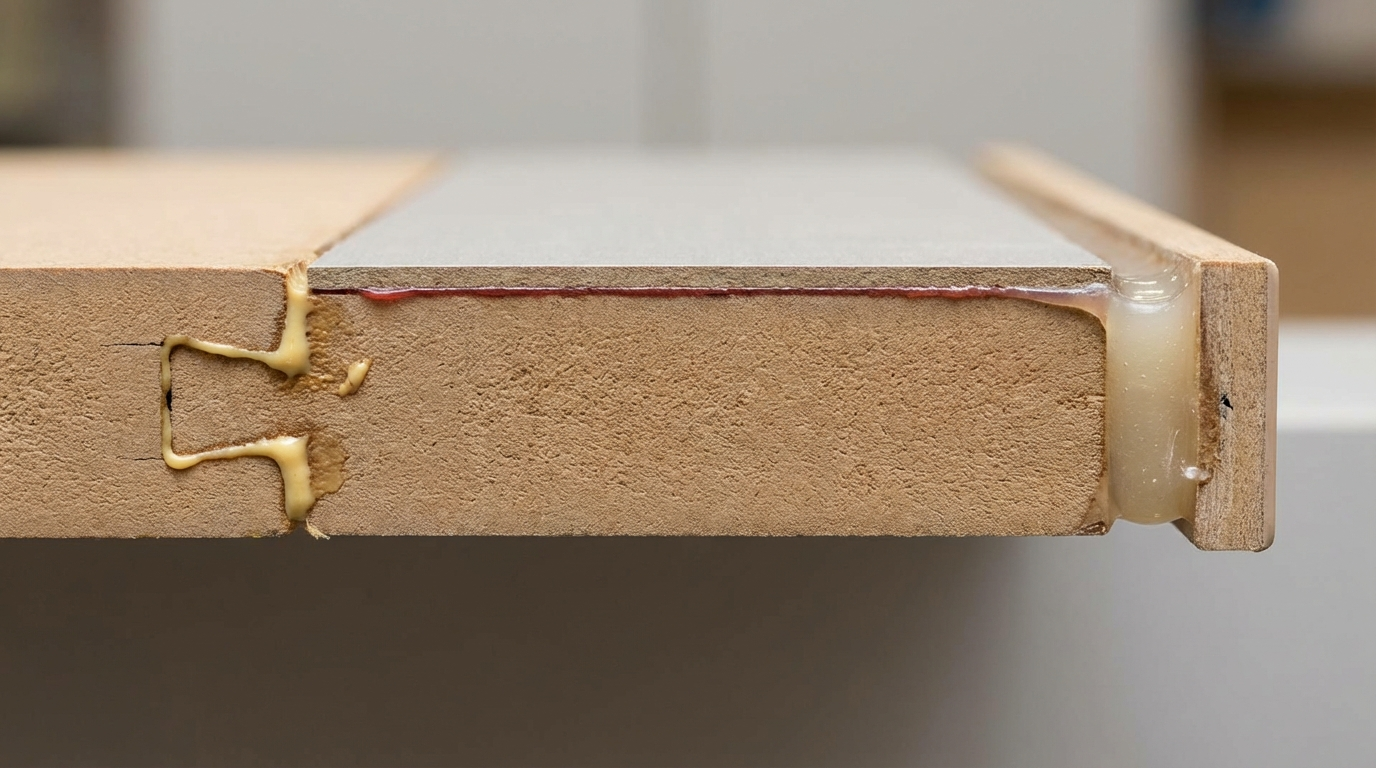
MDF, or medium-density fiberboard, consists of wood fibers compressed with resin under heat and pressure. Raw edges after cutting expose these fibers, making them porous and prone to chipping from saw teeth, handling knocks, or drops during transport. Chips appear as missing chunks, often 1-10mm wide, revealing the dense core.
In pre-finishing stages, these edges need smoothing before laminate application or painting. Chipped spots disrupt even edge banding or paint adhesion, leading to visible lumps or peeling later. Variations like HDF (high-density) chip less due to tighter fibers, but standard MDF in Indian workshops sees this daily from circular saws or routers.
Distinguish from surface scratches: chips go deeper into the edge profile, affecting screw hold or veneer wrap.
Why Chipped MDF Edges Matter in Indian Homes and Sites
In India, monsoon humidity (70-90%) and coastal salt air accelerate moisture uptake in chipped edges, causing swelling 2-3x faster than intact surfaces. Unrepaired chips trap water, leading to edge blowout under laminates in kitchens or wardrobes.
Site realities like poor storage in open godowns or bumpy transport from factories to Pune/Mumbai sites worsen micro-chips into cracks. Workmanship issues, such as rushed CNC cuts without clamps, compound this. Result: poor screw grip for hinges, delaminating paints in 6-12 months, and callbacks for carpenters.
Fixed edges ensure durability in humid bedrooms or office partitions, where edges face daily bumps from cleaning or use.
Common Causes of Chipped MDF Edges
What causes MDF edges to chip during cutting?
Circular saws without zero-clearance inserts or dull blades snag fibers, creating 2-5mm chips. In Indian workshops, vibration from old machines or unclamp boards amplifies tear-out. Direct answer: use scoring passes or tape edges pre-cut. Nuance: 18mm thickness chips more than 12mm due to leverage. Check by running a test cut on scrap; if chips exceed 1mm, switch to finer blade (80-tooth). Next: always cut with good side down.
Why do edges chip during handling and transport?
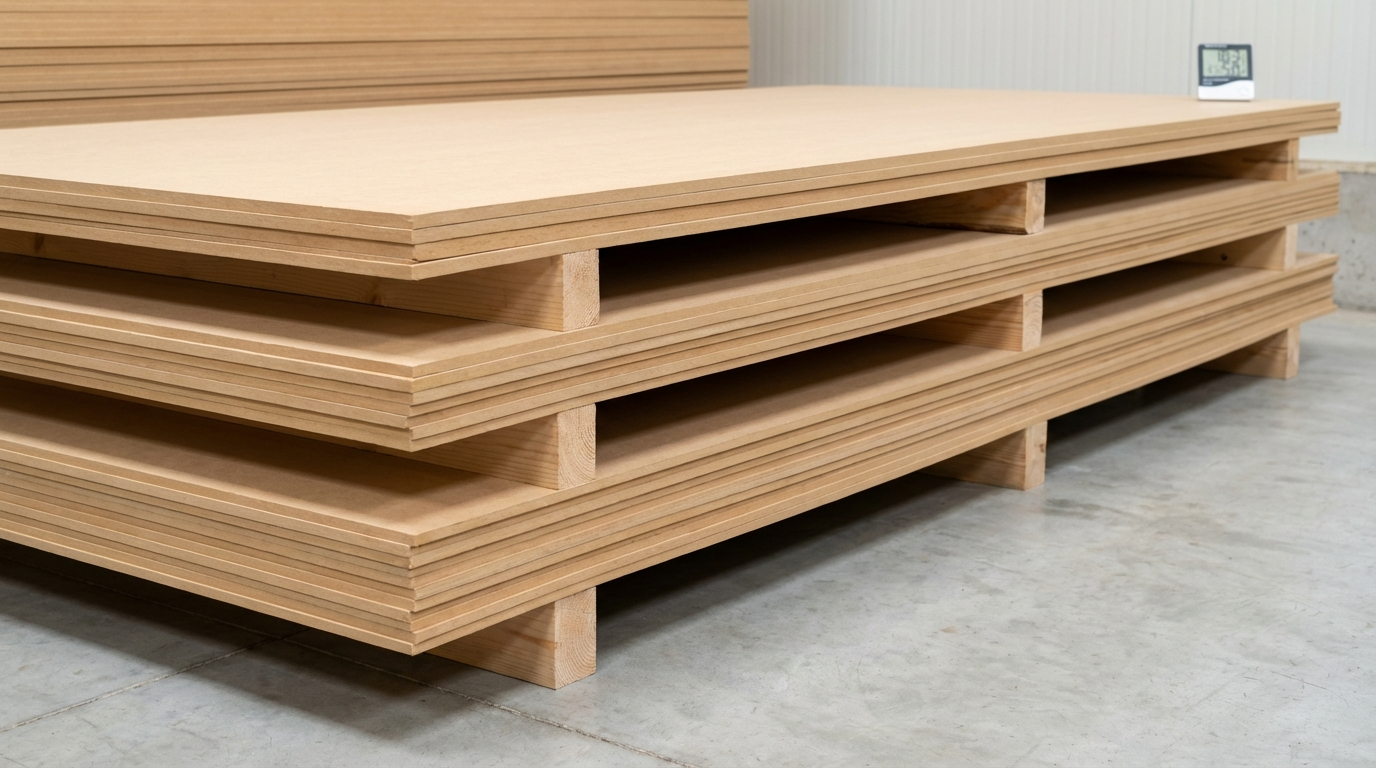
Bare edges knock against trolleys or stack unevenly, dislodging fibers softened by site humidity. Coastal areas see salt-weakened edges crumble faster. Fix: wrap edges in paper during moves. Test adhesion post-transport by pressing fingernail; dents mean pre-repair needed. In monsoons, delay handling wet boards.
Can router bits cause chipping on MDF?
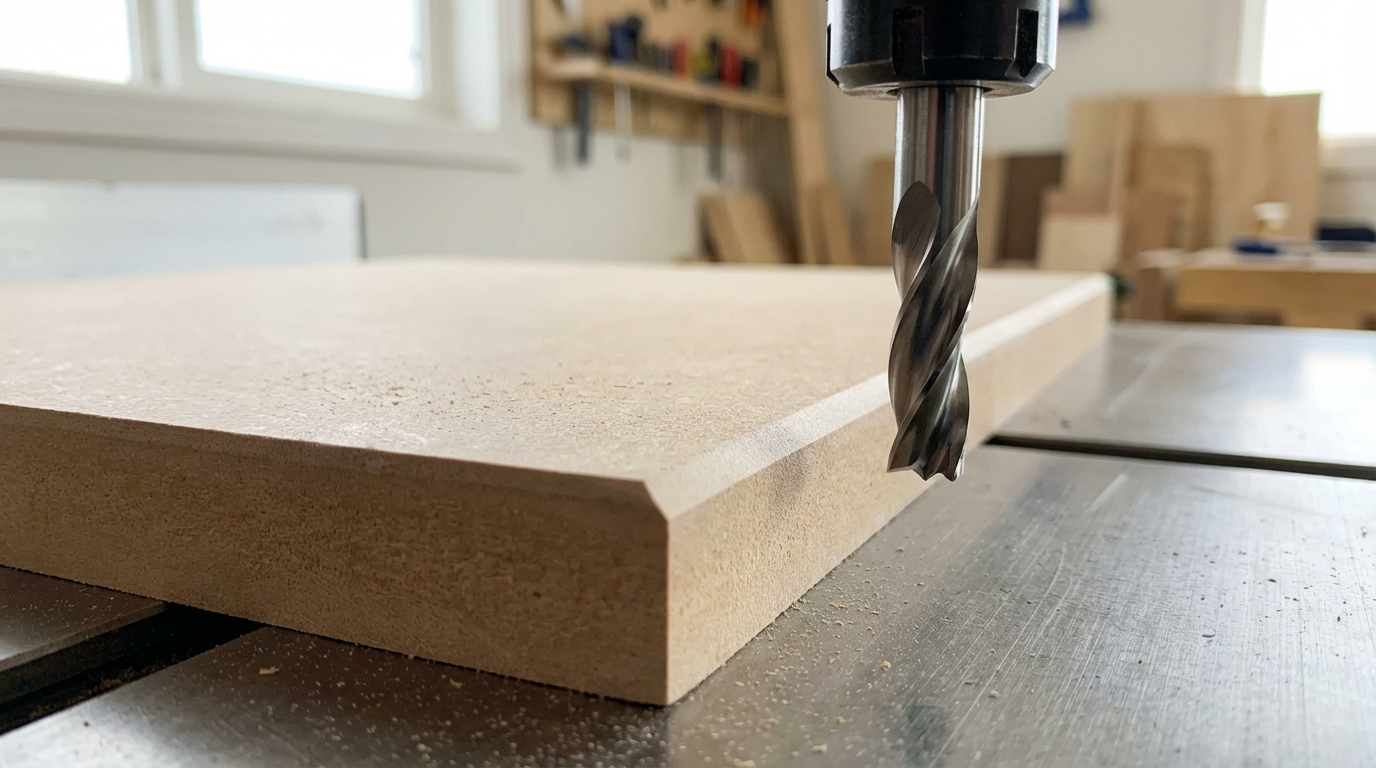
Yes, high-speed bits without downcut spirals lift fibers on exit. Common in wardrobe profiling. Use spiral upcut at low RPM. Verify: inspect after first pass; feather edges if chipped.
When to Repair vs Replace Chipped Edges
Repair saves time for minor damage; replace for structural risks. Decision hinges on chip size, location, and exposure.
| Condition | Repair | Replace |
|---|---|---|
| Chip <3mm deep, single edge | Yes, filler + sand | No |
| Multiple chips, >10% edge length | Maybe, if time allows | Preferred |
| Exposes >5mm core, warped board | No | Yes |
| High-wear like shelf lip | Borderline | Often better |
| Monsoon site, humid storage | Quick fix only | If swelling started |
Use this table on-site: measure with calipers, check flatness with straightedge.
Tools and Materials for Quick Edge Repairs
Essential: fine wood filler (solvent-based for MDF), 180-320 grit sandpaper, putty knife, tack cloth, primer/sealer. Optional: edge banding tape for temp protection, vacuum for dust.
In India, source from hardware shops; prefer fillers without water to avoid swelling. Cost drivers: filler tube size, grit variety. Test compatibility on scrap in ambient humidity.
How to Fix Chipped MDF Edges: 5-Step Process
- Clean and Assess: Vacuum loose fibers, wipe with mineral spirits. Measure depth; abort if > half thickness.
- Fill: Press filler into chip overfill by 1mm. Smooth with wet finger for monsoon-proof seal.
- Dry: 30-60 min; fan in humid shops. Poke test: hard surface.
- Sand: 220-grit block flush, then 320 for smoothness. Direction: along edge grain.
- Prime/Seal: Apply MDF sealer; dry 2 hours before laminate or paint.
Full process takes 2 hours per edge. Prevents 90% of finish failures.
Does wood filler work on all MDF types?
Yes for standard and moisture-resistant; HDF needs finer filler. Solvent types bond best without raising fibers. In coastal humidity, overfill and sand twice. Check: after 24 hours, sandpaper glides smooth, no gumminess. Avoid water-based in monsoons—they swell edges.
How do I sand without creating new chips?
Use block sander, light pressure, along fibers. Start coarse, finish fine. Wrap sandpaper around edge for profile match. Test on scrap: no dust balls mean good.
Decision Framework: Best Repair for Your Site Conditions
| Conditions | Recommended Repair | Verify Checklist |
|---|---|---|
| Wet zone (kitchen) | Waterproof filler + 2x prime | Water bead test post-seal |
| Coastal/high humidity | Solvent filler, immediate seal | 24hr humidity exposure test |
| Heavy use (wardrobe door) | Fill + edge band over | Screw hold after repair |
| Tight budget/fast job | Basic filler + paint | Visual smoothness only |
| CNC/routed edges | Fine filler + profile sand | Match router radius |
| Monsoon storage | Quick fill + plastic wrap | No softening post-dry |
Match your scenario; adjust for thickness (thicker MDF tolerates deeper chips).
Failure Modes and Fixes
- Symptom: Filler cracks post-sand. Cause: Underfilled or humidity swell. Prevent: Overfill, dry fully. Fix: Reapply thicker layer.
- Symptom: Paint bubbles on repaired edge. Cause: Moisture trapped. Prevent: Prime immediately. Fix: Sand back, re-prime.
- Symptom: Laminate lifts at chip site. Cause: Poor adhesion. Prevent: 2-coat sealer. Fix: Steam off, refill.
- Symptom: New chips during handling. Cause: Weak repair. Prevent: Edge tape post-fix. Fix: Repeat process.
- Symptom: Swelling in monsoon. Cause: Water-based filler. Prevent: Solvent only. Fix: Cut out, patch larger.
- Symptom: Uneven finish line. Cause: Sanding waves. Prevent: Block sand. Fix: Wet sand 400-grit.
Quality Checks You Can Do Without Lab Tests
Before buying MDF: Tap edge—dull thud means low density, chip-prone. Ask density spec (700+ kg/m3).
After cutting: Run finger along edge; gritty = needs scoring blade. Check squareness with try-square.
Post-repair: Shine light at angle—no shadows in fill. Press hard—no dents. Humidity test: mist water, no darkening after wipe.
After install: Check edge seal continuity, screw flushness. Clean with dry cloth only first week.
Tips for Different Users
Homeowners: Inspect edges pre-install; reject deep chips. Clean repaired areas with microfiber, avoid wet wipes near edges. Durability: Expect 5+ years if sealed.
Carpenters: Clamp boards during cuts, use sacrificial fence. Fasten 38mm from edge post-repair. Handle by flats, not edges. Hinge zones: Double-prime.
Architects/Designers: Spec "pre-sealed edges" in drawings. Detail rebates for edge protection. Wet zones: HDFWR over standard. Finish logic: Matte hides minor fills better.
OEM/Modular Makers: QC: Auto-inspect post-CNC. Reduce returns by filler kits at factories. Repeatability: Standardize sand grits.
Common Mistakes and How to Avoid Them
- Mistake 1: Using water-based filler—swells in humidity. Avoid: Solvent only.
- Mistake 2: Sanding across grain—raises fibers. Avoid: Longitudinal strokes.
- Mistake 3: Skipping prime—paint peels. Avoid: Always 1-2 coats.
- Mistake 4: Repairing deep chips—weak hold. Avoid: Replace if >4mm.
- Mistake 5: Handling wet repairs—smears. Avoid: Dry fully, tape protect.
- Mistake 6: No test scrap—wastes material. Avoid: Always prototype.
- Mistake 7: Rushed dry time in monsoon—cracks. Avoid: Extend 2x, use fans.
- Mistake 8: Ignoring edge profile—laminate gaps. Avoid: Sand to match router.
Will repaired edges hold screws like new?
Yes for shallow chips; filler restores 80-90% grip if primed. Deep repairs drop to 60%. Use pilot holes. Test: Screw in scrap, pull out—minimal fiber tear good. In humid sites, add washers.
Is epoxy better than wood filler for chips?
Epoxy for structural, filler for cosmetic. Filler sands easier pre-finish. Trade-off: Epoxy harder, costlier. Coastal: Epoxy resists salt better. Check: Flex test post-cure.
FAQs
How long does a repaired MDF edge last before painting?
A properly filled and sanded edge holds up to laminate or paint application immediately after priming, typically 2-4 hours dry time. In Indian summer heat, speed up with fans, but in monsoons extend to overnight to prevent moisture interference. The key is full cure of filler—test by scratching with fingernail; no mark means ready. Post-repair storage in plastic sheets protects from site dust, ensuring the finish bonds evenly without fish-eyes or lifting common in humid workshops.
Can I paint directly over filler without primer?
No, primer is essential as filler absorbs paint unevenly, causing blotches. MDF sealer blocks porosity, especially on repaired chips. Apply thin coat, sand lightly. In coastal areas, use moisture-blocking primer to counter salt air. Skipping leads to peel in 3-6 months; always verify even sheen before topcoat.
What if the chip is on a curved edge?
For curves like wardrobe profiles, use flexible filler or build up in layers. Sand with wrapped paper following contour. Avoid rigid epoxies—they crack on flex. Test curve match with template. Common in modular kitchens; prevents visible lumps under laminate.
Does humidity affect the repair process?
Yes, high humidity slows drying and weakens bonds. Use dehumidifiers or fans in Mumbai/Pune shops. Solvent fillers resist better than latex. Post-repair, seal within hours. Failure shows as soft spots; prevention beats rework in rainy seasons.
Can I use putty instead of wood filler?
Wall putty lacks density for edges; it crumbles under sand. Wood filler has fibers for strength. Match color if visible pre-finish. In India, hardware putty tempts for cost, but leads to rework—stick to dedicated products.
How to prevent chipping in the first place?
Tape edges pre-cut, use sharp scorer blades, clamp securely. For CNC, program ramp entry. Workshop tip: Stack cut with sacrificial sheet. Reduces chips by 70%; worth upfront time in high-volume jobs.
Is repairing worth it for pre-laminated MDF?
For minor chips yes, as lamination hides well. Deep ones show telegraphing. Sand lightly to avoid foil damage. In wardrobes, repair saves scrap costs; test adhesion on sample.
What filler for moisture-resistant MDF?
Same solvent wood filler, but check MR grade compatibility. Avoid over-thinning. Prime extra in wet zones. Ensures no differential swelling under finishes during monsoons.
Can I repair after edge banding?
Possible but tricky; sand band flush first. Better pre-band. If banded chips from transport, filler under band edge. Prevents moisture wicking in humid sites.
Disclaimer: This content is provided for general informational purposes based on industry practices and publicly available information. Product specifications, standards, prices, and availability may vary by manufacturer, region, and time. Readers should independently verify details with manufacturers, dealers, or qualified professionals before making purchase or construction decisions.Want Plywood Suggestions?
Share a few details and a VIR MDF specialist will suggest suitable brands and connect you to responsive dealers.