Can You Use MDF Outdoors? (Short Answer: Usually No) + Better Options
Outdoor MDF projects often fail. Learn why, which boards are better outdoors, and the minimum protection steps if you must use MDF.
Quick Decision Summary
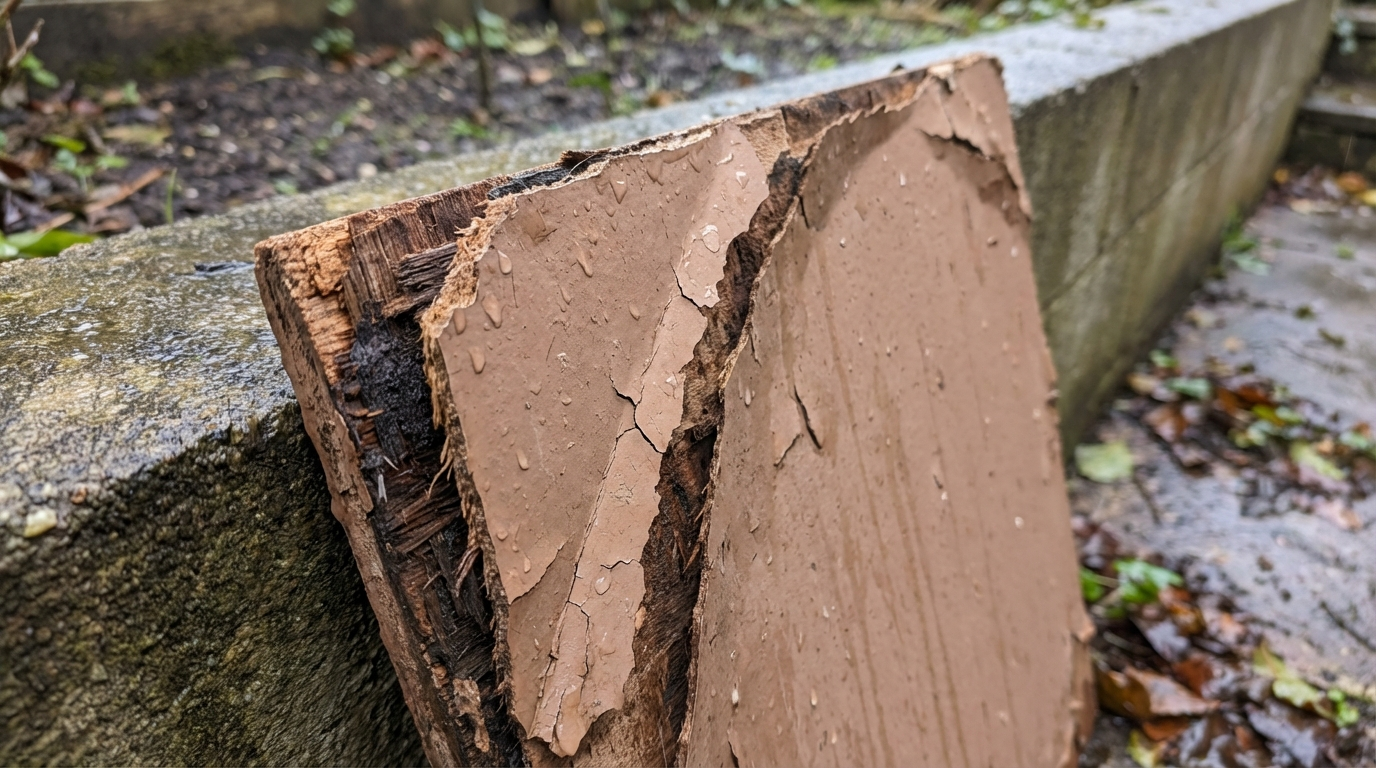
MDF usually fails outdoors due to moisture absorption causing swelling and delamination.
If you’re in a hurry: Skip standard MDF for any exposed outdoor use in India’s humid climates. Opt for HDFWR, marine plywood, or WPC/PVC boards instead. These handle monsoon rains and coastal humidity better. If budget forces MDF, seal all edges and surfaces multiple times, cover fully, and limit to very sheltered spots—but expect shorter life. Check site exposure first: direct rain or splash zones demand non-MDF alternatives.
- Choose MDF outdoors only if fully protected (overhangs, no splash) and heavily sealed.
- Avoid MDF if any rain exposure, high humidity, or poor ventilation—go for weather-resistant boards.
What This Material/Option Actually Is
MDF stands for Medium Density Fiberboard. It’s an engineered panel made by breaking down wood fibers, mixing with resins and wax, then pressing under heat and pressure into smooth, uniform sheets.
Available in thicknesses from 3mm to 25mm typically, with densities around 700-800 kg/m³. Standard MDF lacks water-resistant additives, making it porous. Variations like moisture-resistant (MR) MDF add more wax or hydrophobic resins, but even these aren’t fully waterproof.
It shines indoors for flat surfaces, CNC work, and laminates due to stability and screw-holding. Outdoors, unprotected fibers absorb water fast, leading to issues.
Is standard MDF the same as moisture-resistant MDF?
Standard MDF has basic resins for dry use; moisture-resistant versions use extra wax or PF (phenol-formaldehyde) resins for better humidity tolerance. Direct answer: No, MR MDF holds up briefly in damp storage but fails under rain.
Nuance: In Indian godowns during pre-monsoon, MR might survive if stacked properly, but prolonged exposure swells edges. Check by tapping: MR sounds denser, less hollow. Next step: Ask supplier for resin type and test a sample edge with water drops—untreated soaks in minutes.
What's inside MDF that makes it hate water?
The fiber-resin matrix traps moisture between particles. Direct answer: Wood fibers swell 2-3x volume when wet, cracking resins.
Conditions: Worse in India’s 80-90% monsoon humidity vs dry interiors. Prevention: Never leave cut edges exposed. Verify: Cut a scrap, wet one side overnight—measure swell with ruler. If over 5%, unsuitable outdoors.
Why It Matters in Indian Homes and Sites
India’s climate amplifies MDF weaknesses. Monsoon rains (June-September) bring 80-95% humidity, causing boards to absorb moisture from air alone. Coastal areas like Mumbai or Chennai add salt-laden winds that corrode unprotected surfaces.
Site realities: Poor storage in open yards leads to pre-install swelling. Carpenter handling often exposes cut edges without immediate sealing. Result: Wardrobe extensions on balconies fail in months—edges puff, laminates peel, screws loosen.
Consequences: Swollen panels warp furniture frames; delamination exposes fibers to termites. In wet zones like kitchens or bathrooms bleeding outdoors, failures multiply costs 2-3x via rework.
Does Indian monsoon ruin MDF even if covered?
Yes, high humidity penetrates covers over time. Direct answer: MDF gains 10-20% weight in saturated air, swelling irreversibly.
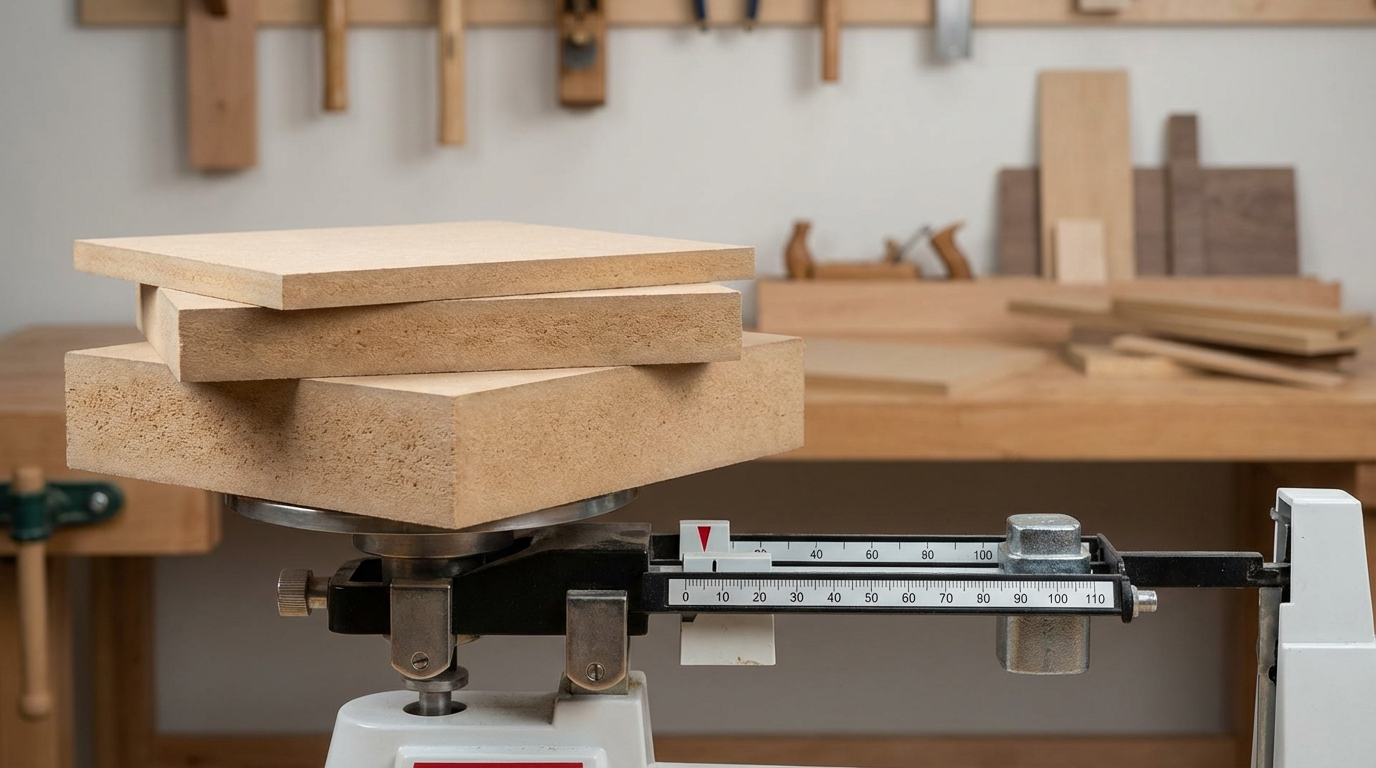
Nuance: Ventilated covers help, but coastal fog adds salt. Check: Weigh dry board, expose wrapped for a week in humid room, reweigh. Next: Prioritize boards with >0.5% wax content for marginal gains.
How to Decide If MDF Can Work Outdoors in 5 Steps
- Assess exposure: Rate site 1-10: 10=direct rain (no MDF), 1=sheltered overhang. Use splash test: Hose area, observe pooling.
- Pick variant: MR or HDFWR over standard. Tap for density; heavier resists better.
- Plan sealing: Minimum 3 coats polyurethane on all sides/edges. Dry 24hrs between.
- Choose covering: Full enclosure or 30cm overhang mandatory. Add ventilation gaps.
- Test small: Install 1 sqm sample first, monitor 1 month monsoon.
Failure point: Skipping edge sealing—80% issues start there. Prevention: Use 2mm PVC tape pre-cut.
Two-Minute Comparison (What Changes in Real Life)
Outdoor demands shift priorities: water resistance > smoothness. MDF loses to alternatives in wet conditions but wins on cost/speed indoors.
| Aspect | Standard MDF | MR MDF/HDFWR | WPC/PVC | Marine Plywood |
|---|---|---|---|---|
| Moisture Resistance | Poor (swells fast) | Fair (short-term damp) | Excellent (non-porous) | Good (sealed veneers) |
| Monsoon Durability | 1-3 months exposed | 6-12 months sheltered | 3+ years | 2+ years |
| Cost per sqm (12mm) | Low | Medium | Medium-High | High |
| CNC/Edge Finish | Excellent | Good | Fair (softer) | Good |
| Screw Hold Wet | Fails quick | Better initially | Stable | Strong |
Choose by conditions: Wet zones pick WPC; budget dry spots try sealed MR MDF.
Is HDFWR good enough for outdoor furniture?
HDFWR (High Density Fiberboard Water Resistant) handles humidity better than MDF. Direct answer: Marginal for sheltered patios, not open decks.
Nuance: Denser (900+ kg/m³) with PF resins resists coastal damp but swells under pooling. India tip: Pair with metal frames. Check: Drop water on edge 30min—no darkening. Next: Spec 12mm+ for tabletops.
Failure Modes and Fixes
- Symptom: Edge swelling (puffy 2-5mm). Cause: Exposed fibers absorb rain. Prevention: Seal with 2-3 epoxy coats pre-install. Fix: Sand, re-seal; replace if structural.
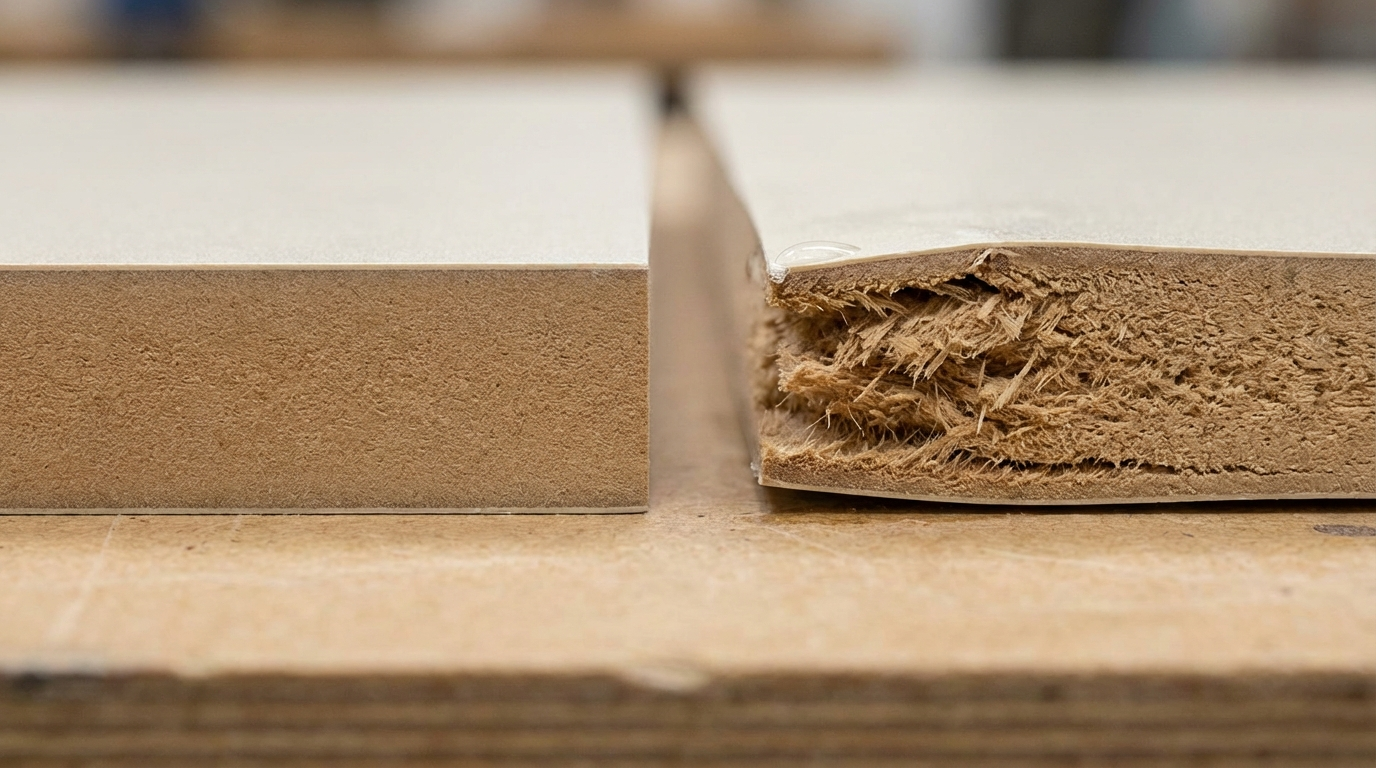
- Symptom: Delamination (layers separate). Cause: Resin breakdown in humidity. Prevention: Use HDFWR, avoid direct sun-rain cycles. Fix: Clamp dry, polyurethane fill; often full panel swap.
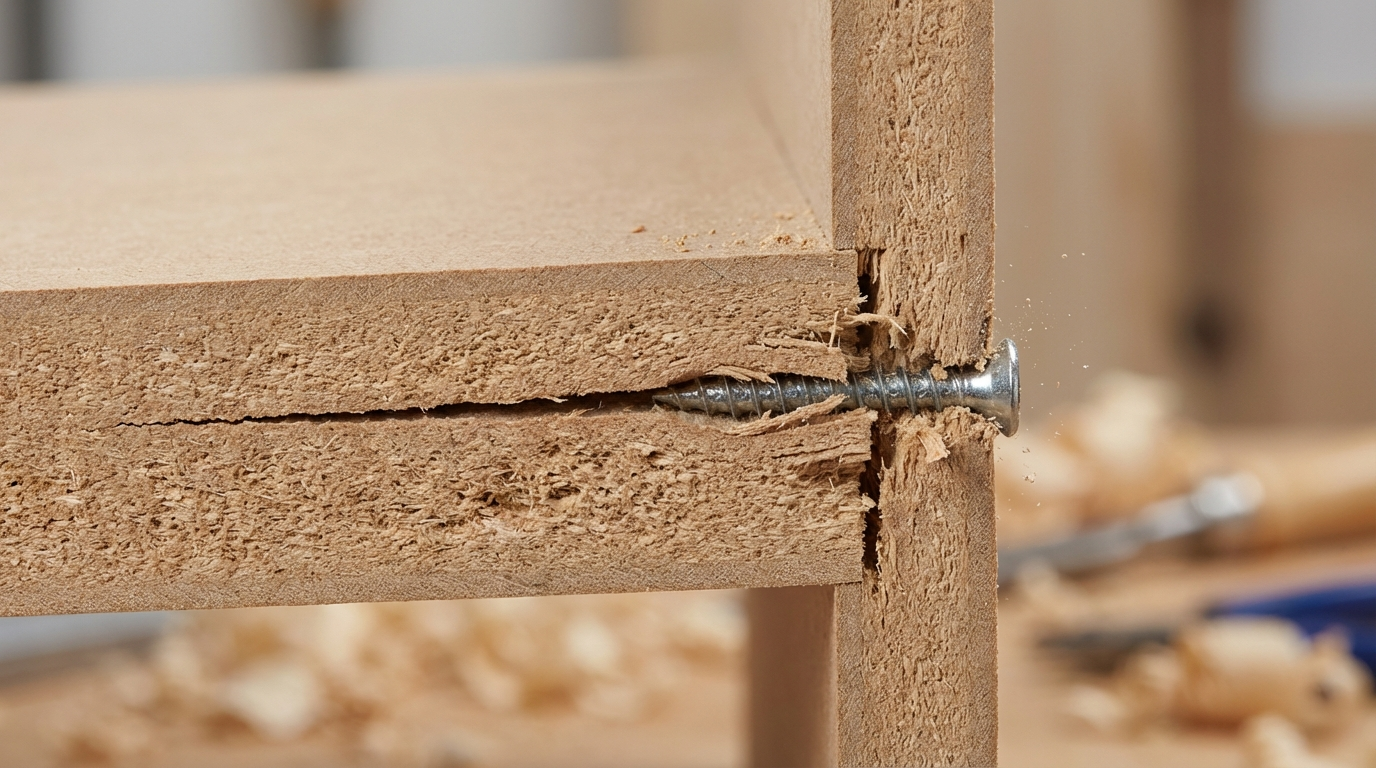
- Symptom: Screw holes enlarge/loosen. Cause: Swell pushes out anchors. Prevention: Pre-drill oversized, use wall plugs. Fix: Epoxy-fill holes, redrill.
- Symptom: Surface paint/laminate peels. Cause: Moisture under film. Prevention: Full immersion seal. Fix: Scrape, prime, repaint—temporary.
- Symptom: Warping/bowing. Cause: Uneven moisture. Prevention: Store flat, acclimatize 48hrs. Fix: Rarely salvageable; redesign flatter.
- Symptom: Termite entry post-swell. Cause: Exposed core. Prevention: Borate treatment + seal. Fix: Fumigate, but replace infested.
Why do outdoor MDF edges fail first in India?
Edges have highest surface-to-volume ratio for absorption. Direct answer: Cut ends expose raw fibers, soaking 5x faster than faces.
Nuance: Monsoon stacking without covers worsens. Check: Wet edge vs face—edge darkens instantly. Next: Always edge-band or tape immediately after cut.
Common Buyer Mistakes (and How to Avoid)
- Mistake 1: Using standard MDF for balcony cabinets. Avoid: Site-audit exposure first.
- Mistake 2: Single-coat paint only. Avoid: Minimum 3 polyurethane layers, edges too.
- Mistake 3: Storing sheets flat on damp ground. Avoid: Elevate on pallets, cover tarps with air flow.
- Mistake 4: Ignoring overhangs. Avoid: Ensure 45cm minimum roof projection.
- Mistake 5: Cutting onsite without sealing. Avoid: Pre-cut/seal in shop.
- Mistake 6: Coastal install without rinse prep. Avoid: Wash salt off frames first.
- Mistake 7: Skipping ventilation. Avoid: 5mm gaps in enclosures.
- Mistake 8: Budget-only choice. Avoid: Factor 2x rework cost.
- Mistake 9: No sample test. Avoid: Trial 0.5sqm first.
Quality Checks You Can Do Without Lab Tests
Before buying:
- Tap sheet: Uniform thud, no hollow spots.
- Edge water test: No soak after 10min.
- Ask: Resin type? Density? Storage history?
- Red flag: Warped stacks, surface stains.
After cutting:
- Check edges: Smooth, no fuzz—sand if crumbly.
- Weight scrap: Heavier = denser/better.
- Flex test: Minimal bend under hand pressure.
After install:
- Probe edges: No softness post-rain.
- Alignment: No gaps from swell.
- Clean: Mild soap only, no abrasion.
Decision Framework: Match Conditions to Best Options
| Site Condition | Recommended Material | Finish/Edge Treatment | Verify Checklist |
|---|---|---|---|
| Direct rain/splash (balconies) | WPC or PVC board | UV coat + PVC lipping | Float in water 24hrs—no swell |
| Monsoon humidity, sheltered | HDFWR or MR MDF (sealed) | 3x Polyurethane + edge band | Edge drop test: dry in 30min |
| Coastal high salt/humidity | Marine plywood | Epoxy seal + metal inserts | Salt spray mock: no corrosion |
| Heavy use/abuse (seating) | Alu-composite or WPC | Anti-scratch laminate | Scratch with key: no mark |
| Tight budget/fast project | Sealed MR MDF | Quick-dry varnish | Budget +20% for rework |
| High scratch risk (kids/pets) | PVC foam board | Textured vinyl wrap | Impact test: no dent |
Can sealed MDF last 2 years outdoors?
Possibly in very dry interiors bleeding out. Direct answer: Rarely beyond 1 year in humid India without full enclosure.
Nuance: Multiple epoxy coats add months, but cycles fatigue resins. Check: Annual probe for softness. Next: Plan phased replacement or switch to WPC.
Tips by User Type
For Homeowners: Durability Do’s and Don’ts
Do: Wipe spills instantly, ensure covers during rains. Don’t: Drag furniture or use abrasives. Focus sheltered spots like covered verandas. Monitor edges quarterly—soften means reseal.
For Carpenters: Workflow Smarts
Cut/seal same day. Pre-drill screws 10% oversized. Use Titebond III glue for joints. Handle with gloves to avoid oils weakening seals. Acclimatize 72hrs site humidity.
For Architects/Designers: Spec Right
Detail overhangs in drawings. Spec HDFWR min 12mm for spans. Avoid butt joints outdoors—lap or tongue-groove. Note wet-zone buffers in BOQ.
For OEM/Modular Makers: QC Focus
Batch-test 5% panels water drop. Standardize edge PVC taping. Track returns by site humidity. Offer 6-month visual warranty clause.
Practical Use Cases: What Works, What Fails
| Use Case | Recommended Thickness | Finish Notes | Risk/India Tip |
|---|---|---|---|
| Balcony partition | 16-18mm WPC | UV laminate | High rain: Seal joints extra |
| Outdoor kitchen shutter | 12mm PVC | Anti-fingerprint coat | Splash zone: No MDF |
| Covered patio bench | 18mm sealed HDFWR | Epoxy topcoat | Monsoon: Add skirt cover |
| Wall cladding (veranda) | 8mm PVC sheet | Grooved texture | Coastal: Rinse monthly |
| Planter box frame | Never MDF; use marine ply | Bitumen seal inside | Soil wet: Line fully |
Are there any outdoor projects where MDF succeeds?
Yes, ultra-sheltered like deep overhang signage. Direct answer: With perfect sealing and no splash, lasts 1-2 years.
Nuance: Fails if ventilation poor. India: Rare outside deserts. Check: Mockup in humid shed. Next: Budget alternatives for reliability.
FAQs
Can you paint MDF to make it outdoor-ready?
Painting adds protection but doesn’t solve core absorption. Multiple exterior-grade polyurethane or epoxy paints (3-4 coats) slow moisture entry, extending life 6-12 months in sheltered spots. However, edges remain vulnerable unless taped first. In Indian monsoons, painted faces hold while edges swell, cracking paint. Always prime first, sand between coats, and test in humidity. For longevity, combine with overhangs—but still prefer WPC for hassle-free use.
What's the best sealant for outdoor MDF?
Two-part epoxy or marine-grade polyurethane penetrates deepest. Apply to all surfaces, especially edges, with brush or spray. Dry 24-48 hours per coat, minimum three layers. India tip: Use low-VOC to avoid carpenter fumes. Reapply yearly. Effectiveness varies by humidity—coastal needs thicker builds. Test: Submerge sealed scrap 24 hours; minimal weight gain means good. Avoid cheap varnishes; they peel fast.
Is MR MDF safe for covered outdoor cabinets?
MR MDF works marginally under full covers with sealing. It resists storage damp better than standard, surviving 6-9 months in ventilated enclosures. But repeated humidity cycles cause screw loosening. In monsoon-heavy areas, pair with silica gel packs inside cabinets. Check density by weight; true MR feels hefty. Homeowners report edge issues after first rains—prevent by PVC edging. Still, WPC outperforms for zero worries.
How does coastal humidity affect MDF differently?
Salt accelerates resin breakdown beyond plain water. Humidity alone swells; salt corrodes fixings, hastening failure to 3-6 months. Rinse frames pre-install, use stainless screws. Sealed MR MDF buys time, but fibers eventually trap salt crystals. Architects: Spec salt-tolerant alternatives like PVC. Field check: White powdery residue on edges signals trouble—clean and reseal immediately.
Should you use MDF for outdoor false ceilings?
Avoid unless drip-proof and ventilated. Moisture condenses on undersides, dripping swells cores. Opt for PVC or fiber cement boards. If forced, use 6mm MR with full epoxy seal and 10cm side gaps. India sites: Roof leaks common, ruining panels fast. Test: Hang sample under fan mist. Failures show as sagging tiles—messy fixes.
Can edge banding save outdoor MDF?
Yes, PVC or ABS banding blocks edge absorption 70-80%. Apply heat-activated post-cut, full perimeter. Combine with face seals for best shot. Monsoon test: Bandaged edges hold weeks longer. Carpenter tip: Overlap corners, trim flush. Still vulnerable at joints—caulk those. Not foolproof; better for transitions to true weather boards.
What's the thickness sweet spot for outdoor panels?
12-18mm balances strength vs swell risk. Thinner warps easy; thicker costs more without proportional gain. For sealed MR, 16mm standard. CNC tip: Thicker machines easier without chip-out. India logistics: Thinner stacks better in trucks. Verify: Hand-flex; no bow under weight. Use case: 12mm shutters, 18mm tables.
Do termites attack outdoor MDF faster?
Yes, swelling exposes cellulose core. Damp + termites = rapid tunnels. Treat with borate spray pre-seal. Elevate off ground 15cm. Coastal mangroves worsen risk. Monitor: Powder dust near base. Prevention beats cure—choose naturally resistant WPC. If infested, cut out, treat surrounds.
Is WPC always better than MDF outdoors?
Typically yes for exposure; extruded wood-plastic resists water fully. No swelling, good screw hold. Trade-off: Softer for CNC, higher cost. India: Handles monsoons without seals. Verify: Torch test—melts not burns. Use for high-risk; MDF for ultra-dry backups.
Disclaimer: This content is provided for general informational purposes based on industry practices and publicly available information. Product specifications, standards, prices, and availability may vary by manufacturer, region, and time. Readers should independently verify details with manufacturers, dealers, or qualified professionals before making purchase or construction decisions.Want Plywood Suggestions?
Share a few details and a VIR MDF specialist will suggest suitable brands and connect you to responsive dealers.