Why MDF Cracks at the Edge: Causes, Fixes & Prevention for Tight Screws
Edge cracking in MDF is common but avoidable. Learn the causes (screws, nails, drops) and prevention steps for cleaner builds.
Quick Decision Summary
MDF edges crack mainly from tight screws crushing fibers, impacts, or moisture; prevent by drilling pilot holes, adding edge banding, and proper handling.
If you’re in a hurry: Stop over-tightening screws—drill pilot holes at 70-80% of screw diameter, pre-apply edge banding before fastening, and store sheets flat away from monsoon dampness. This cuts cracking risk by over 80% in typical Indian workshops. For fixes, sand cracks, fill with wood putty matching density, then re-band. Test screw hold on scrap first to match your MDF batch's edge strength.
- Choose this approach if: working in humid coastal areas like Mumbai or Chennai, building modular kitchens/wardrobes with frequent screw adjustments.
- Avoid direct edge screwing if: using standard MR-grade MDF under 18mm thick or sites with poor ventilation during monsoons.
What This Material/Option Actually Is
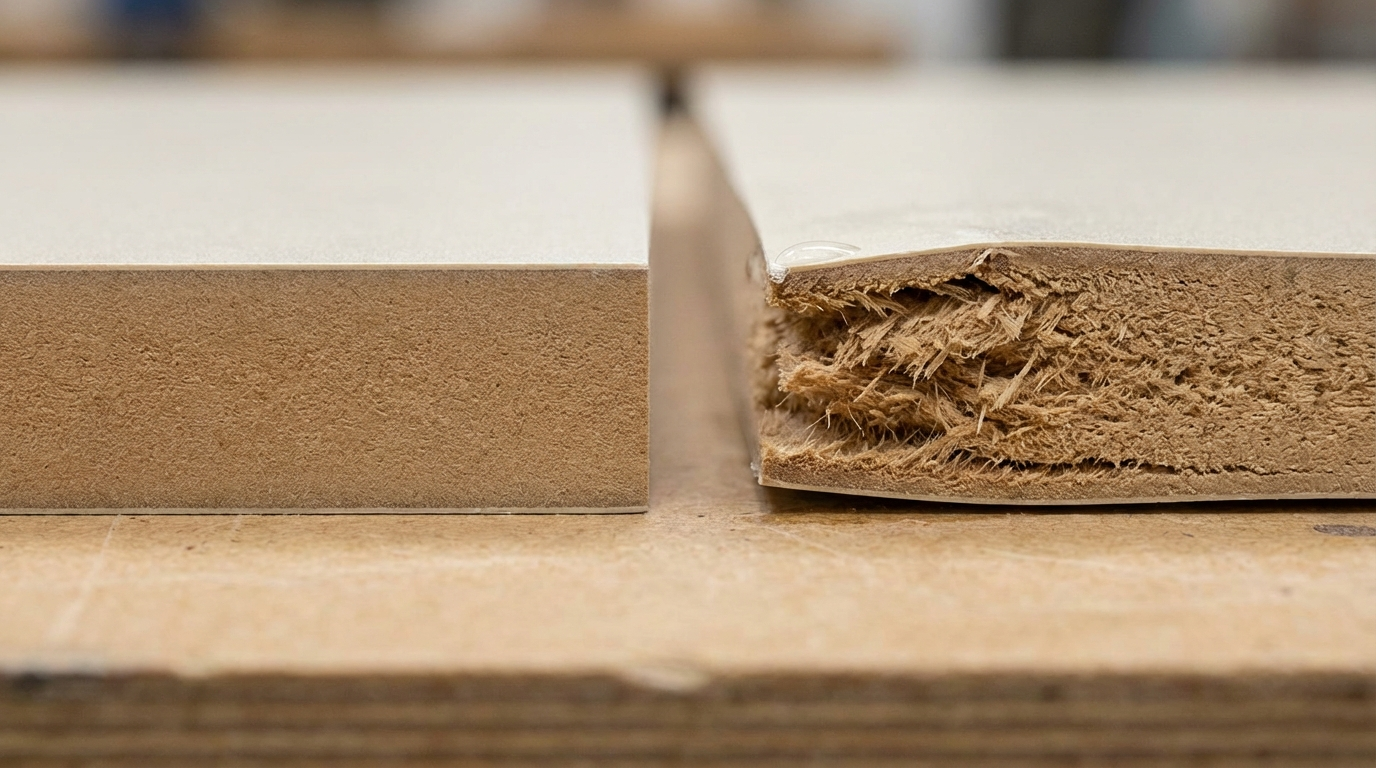
MDF, or medium-density fiberboard, is an engineered panel made by compressing wood fibers with resins under heat and pressure. Edges expose the raw fiber structure, which lacks the interlocking grain of solid wood, making them brittle and prone to cracking under point loads like screws or impacts.
Standard MDF comes in thicknesses from 3mm to 25mm, with edges typically unsealed unless pre-laminated or banded. Cracking refers to splits or chips along these edges, often 1-5mm deep, triggered by mechanical stress. In laminated variants, the surface holds but edges remain vulnerable if not treated. This issue stands out in workflows like CNC routing for cabinets, where edges face screws for hinges or handles.
Related options include HDF (higher density for better screw hold) or HDFWR (moisture-resistant for wet zones), but all share edge fragility without prep. Understanding this helps carpenters shift from solid wood habits to fiberboard-specific techniques.
Why It Matters in Indian Homes and Sites
In Indian homes, MDF edges face dual threats: high humidity during monsoons (60-90% RH) softens resins, weakening fiber bonds and amplifying screw-induced cracks. Coastal sites like Goa or Kerala add salt-laden air, accelerating edge swelling that turns minor chips into propagating splits.
Site realities compound this—stacked sheets in open godowns absorb ground moisture, while bumpy transport from inland factories loosens edges before installation. In wardrobes or TV units, cracked edges lead to poor screw retention, causing sagging doors over 6-12 months. Workmanship gaps, like skipping pilots in rushed contractor jobs, spike failures in urban apartments with tight deadlines.
Practical fallout: refinishing costs 20-30% extra, delays modular deliveries, and frustrates homeowners expecting 5+ year durability. Prioritizing edge prep aligns with India's variable climates, ensuring cleaner finishes in kitchens exposed to steam or partitions in poorly ventilated offices.
Common Causes of MDF Edge Cracking
Edge cracking stems from MDF's uniform fiber structure, which crumbles under localized pressure unlike plywood's layered strength. Primary culprits include mechanical overstress and environmental weakening.
| Cause | How It Happens | India-Specific Trigger |
|---|---|---|
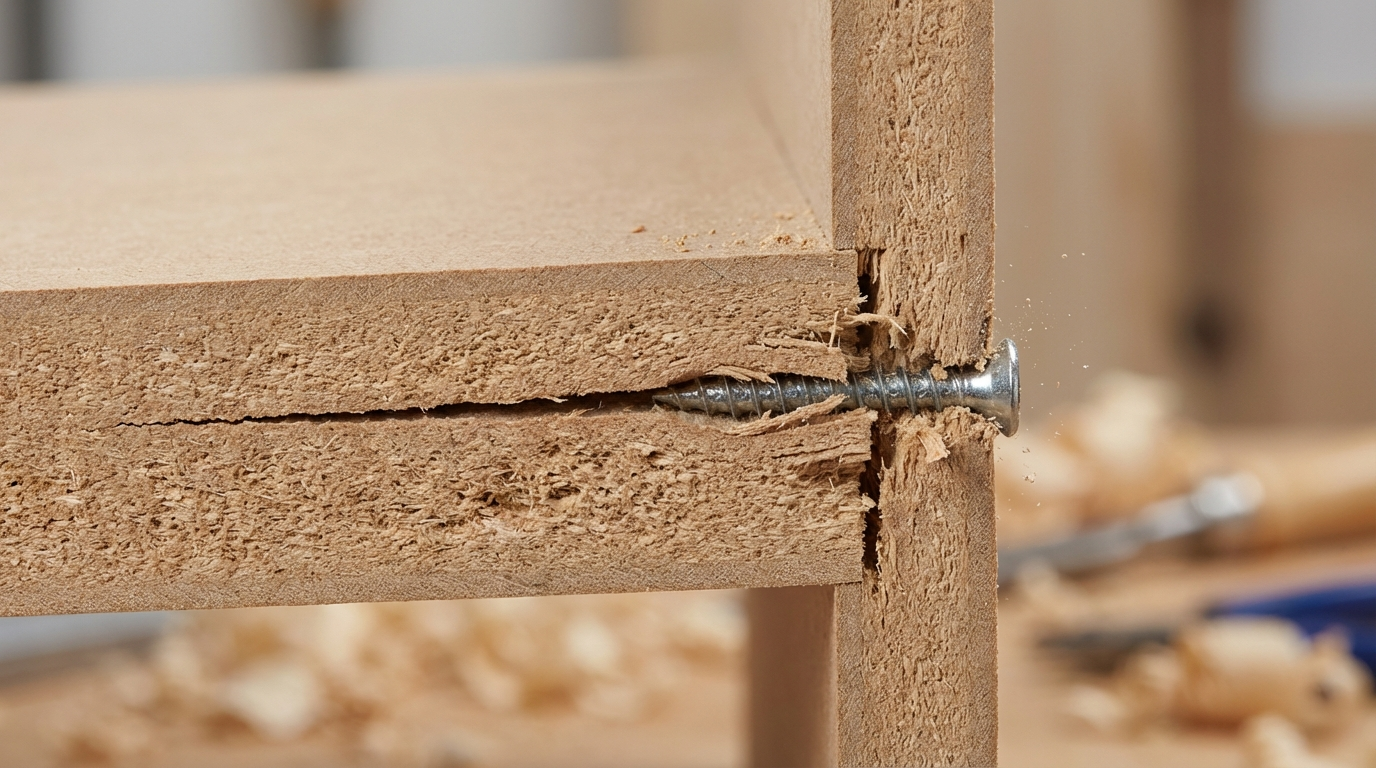
| Tight screws/nails | Screws larger than pilot crush fibers, creating star-shaped cracks. | Rushed carpentry skips pilots in humid shops. |
| Impact/drops | Sheets dropped from 1-2 feet chip porous edges. | Bumpy trucks during monsoon transport. |
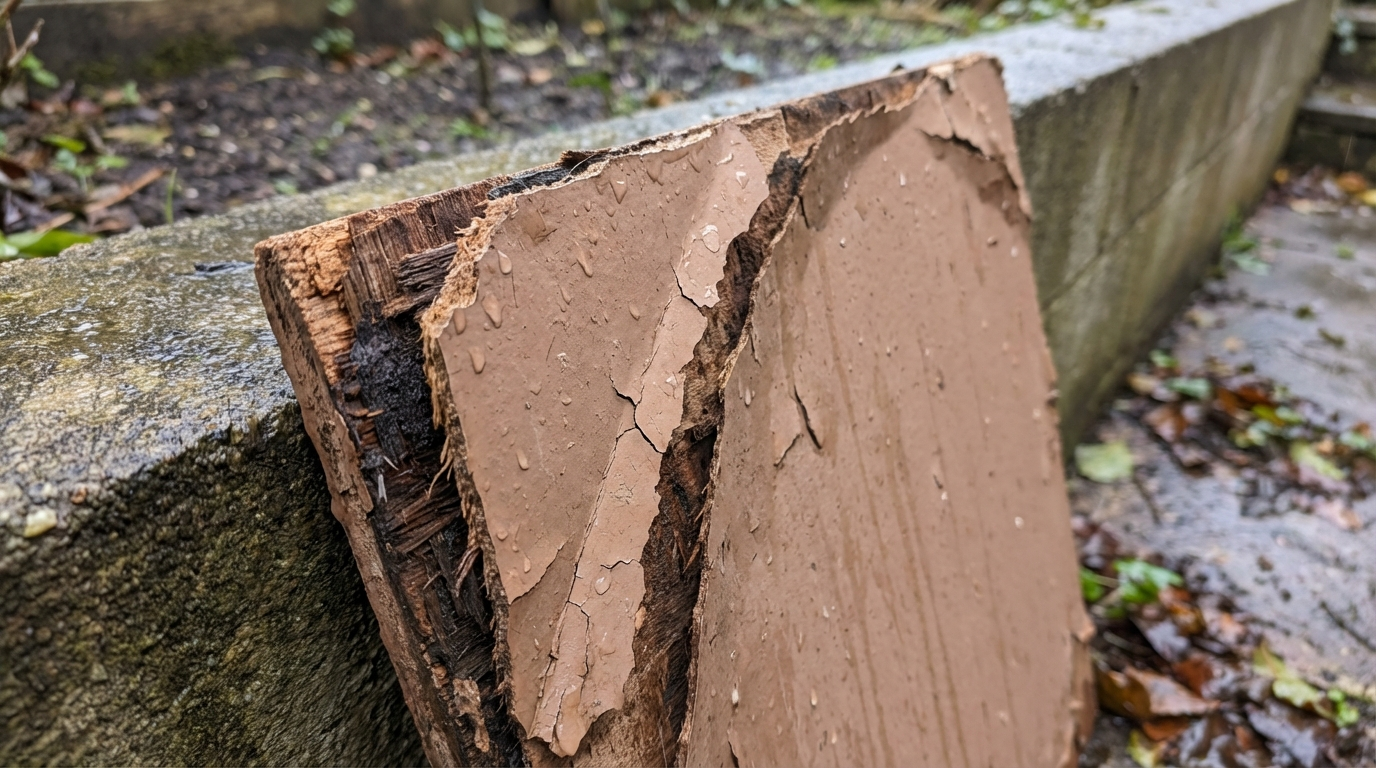
| Moisture exposure | Swelling (5-10%) from damp storage splits dried edges. | Coastal stacking without covers. |
| Thin edges (<18mm) | Less material resists routing/screwing stress. | Budget modular units prioritize thin boards. |
| Poor handling | Bent edges from clamps or stacking pressure. | Site storage on uneven floors. |
These interact: a moist edge cracks easier from a single screw turn. Field check: Tap edges lightly—dull thud signals weakened fibers.
Why Does MDF Crack More on Edges Than Faces?
MDF cracks more on edges because faces have compressed surface density, while edges expose loose fiber ends with 30-50% lower strength. Direct screws exploit this, stripping hold after 2-3 turns. In Indian sites, pre-cut edges absorb humidity faster, swelling unevenly.
Nuance: Post-laminated faces distribute stress, but raw edges fail first. For kitchens, this means hinge failures within months. Next step: Always measure edge density by pressing a nail—if it sinks easily, reinforce with banding before fastening. Test on scraps to confirm your batch.
Can Tight Screws Alone Cause MDF Edge Cracks?
Yes, overtightening screws (beyond 1-2 full turns post-seating) crushes MDF fibers, forming 2-10mm cracks radiating from the hole. Coarse threads worsen this on standard 700-800kg/m³ density boards.
Conditions matter: Dry interiors tolerate more torque, but monsoon-softened boards crack at half the force. Prevention: Use torque-limited drivers set low. Check by screwing into scrap—cracks signal switch to finer screws or glue assist. This saves rework in wardrobe builds.
How to Fix MDF Edge Cracks in 5 Steps
- Assess damage: Sand lightly to expose full crack depth; ignore hairlines under 1mm.
- Clean and fill: Vacuum dust, apply solvent-free wood filler matching MDF density; overfill slightly.
- Dry and sand: Wait 4-6 hours (longer in humidity), sand flush with 180-grit.
- Reinforce: Apply PVC/ABC edge band with hot-melt adhesive; clamp 30 mins.
- Test hold: Drill new pilot, screw in—ensure no new cracks.
India tip: Use fans for drying in humid bays; avoid fillers with high shrinkage in coastal heat. This restores 80-90% strength for non-structural uses like shelves.
Should You Use Nails Instead of Screws on MDF Edges?
No, nails offer poorer hold than screws on MDF edges due to minimal fiber grip, often pulling out under load. Thin nails (18-20 gauge) chip edges during hammering.
Exceptions: Pin nails with glue for temporary tacking. In Indian wardrobes, screws with pilots outperform nails by 2x in shear strength. Verify: Hammer test on scrap—if edge dents, avoid nails. Opt for 4mm wood screws instead.
Failure Modes and Fixes
MDF edge failures cascade from initial cracks, impacting entire assemblies. Here's a breakdown of six common modes.
| Failure Mode | Symptom | Root Cause | Prevention | Fix If Happening |
|---|---|---|---|---|
| Star cracks | Radial splits around fastener | No pilot or overtight | 70% pilot hole | Fill, re-pilot offset |
| Edge swelling-crack | Bulge then split post-moisture | Damp storage | Seal ends day-of-cut | Sand, apply resin sealer |
| Screw blowout | Hole enlarges, fastener loose | Thin edge, coarse screw | Use inserts/anchors | Epoxy anchor, new screw |
| Impact chip | Missing 5-20mm edge chunk | Drop during handling | Corner protectors | Build-up filler, band over |
| Delam post-crack | Laminate lifts along edge | Crack traps moisture | Band before lam | Scrape, re-laminate edge |
| Sag from poor hold | Door/shelf drops | Multiple edge cracks | Double screws + glue | Reinforce with battens |
In monsoons, swelling-cracks dominate; fix promptly to halt progression.
Quality Checks You Can Do Without Lab Tests
Before Buying
- Inspect edges for pre-cracks or fuzziness—smooth should feel dense.
- Press thumbnail into edge: resists = good density (>750kg/m³ feel).
- Ask for recent batch: Avoid monsoon-stored stock.
- Tap test: Clear ring = dry; dull = moist.
After Cutting
- Check kerf: Clean cuts, no burning (signals dull blade).
- Pilot drill test: No cracking = ready for screws.
- Flex edge lightly: No telegraphing cracks.
After Installation
- Torque test hinges: Steady hold post-10 open/closes.
- Humidity check: Wipe edges monthly in wet zones.
- Load test shelves: Even sag under 20kg.
These field cues spot 90% issues early, saving rework in Indian sites.
Decision Framework: Edge Prep by Conditions
| Site/Home Condition | Recommended Prep | What to Verify |
|---|---|---|
| Monsoon humidity (>70% RH) | HDFWR + full edge band + pilot holes | Resin type (urea vs PF), band adhesion |
| Coastal/salty air | Sealer coat pre-band, fine screws | Edge resists 24hr salt spray (DIY test) |
| Heavy use (kids/pets) | Thicker 18-25mm + metal inserts | Screw hold post-50 cycles |
| Tight budget | MR MDF + post-cut banding + glue pins | Cost per sqm under Rs150/sqm |
| Fast delivery | Pre-laminated + CNC pilots | Factory edge seal intact |
| High scratch risk | Thick band (2mm+) + rounded edges | Band flex without peel |
Use this to match prep to realities, minimizing cracks in diverse Indian projects.
Common Mistakes and How to Avoid Them
- No pilot holes: Crushes fibers—drill always.
- Overtightening: Use low-torque drivers in humidity.
- Raw edge screwing: Band first for 2x strength.
- Monsoon stacking: Elevate on pallets, cover.
- Thin screws on thick edges: Match diameter to load.
- Ignoring batch variation: Test scraps per sheet.
- Skipping glue: PVA boosts hold 50%.
- Post-cut delay: Seal within hours.
Carpenters often repeat #1-3 in rushed jobs; checklists prevent this.
Persona Tips for Edge Crack Prevention
Homeowners
Focus on maintenance: Wipe edges weekly with dry cloth, avoid dragging cleaners. Inspect hinges yearly for looseness. In monsoons, use dehumidifiers near wardrobes. Don't overload shelves beyond 15kg/m—distribute loads. Choose banded finishes for easy spot-fixes.
Carpenters
Cut with zero-clearance blades to minimize chipping. Prep zones: Drill pilots in fastening areas, round hinge edges. Clamp bands flat; heat gun for curves. Handle sheets vertically in shops to avoid floor dents. Glue + screw for cabinets.
Architects/Designers
Spec 18mm+ for edges, detail banding in drawings. Avoid butt joints—use miters. For wet zones, layer HDFWR under laminates. Balance aesthetics with 2mm band thickness. Include handling notes in BOQs.
OEM/Modular Makers
Standardize QC: Pilot test every 10 sheets. Automate banding pre-CNC. Track returns by batch—moist lots first. Use jigs for repeatable screw depth. Reduces complaints by 40%.
Why Do Edges Crack During CNC Routing?
Edges crack in CNC from high RPM feeds or dull bits compressing fibers. Downcut spirals pull chips out, chipping 1-3mm.
Nuance: Humidity dulls bits faster. Fix: 18000 RPM, 15m/min feed, upcut for finishes. Check: Route scrap strip—if clean, proceed. Vacuum chips immediately.
Does Edge Banding Completely Stop Cracking?
Edge banding reduces cracking by 70-90% by sealing and adding veneer strength, but overtight screws still penetrate.
Conditions: Thin bands (<1mm) fail in abuse. Verify adhesion by peeling test post-24hrs. Ideal for Indian offices; pair with pilots for kitchens.
Trade-Offs and Limitations
Edge banding adds 10-20% cost but cuts rework 50%; thin MDF saves upfront but fails faster. HDF edges hold better (20% more torque) yet costs 15-25% higher. Speed vs durability: Raw edges install fast but crack-prone. In dry Delhi homes, minimal prep suffices; coastal demands full sealing. Accept: No prep yields perfect holds—MDF needs workflow tweaks unlike plywood.
FAQs
Will MDF edges crack if I use self-tapping screws?
Self-tapping screws risk higher cracking on MDF edges without pilots, as their aggressive threads strip fibers faster than standard wood screws. In typical Indian workshop conditions, start with a 3mm pilot even for self-tappers to distribute stress. This prevents blowouts in hinge areas. Test on offcuts: If threads bite cleanly without cracking, proceed; otherwise, switch to fine-thread or add glue. For modular kitchens, this prep ensures doors stay aligned through humid seasons.
How long does it take for moisture to crack MDF edges?
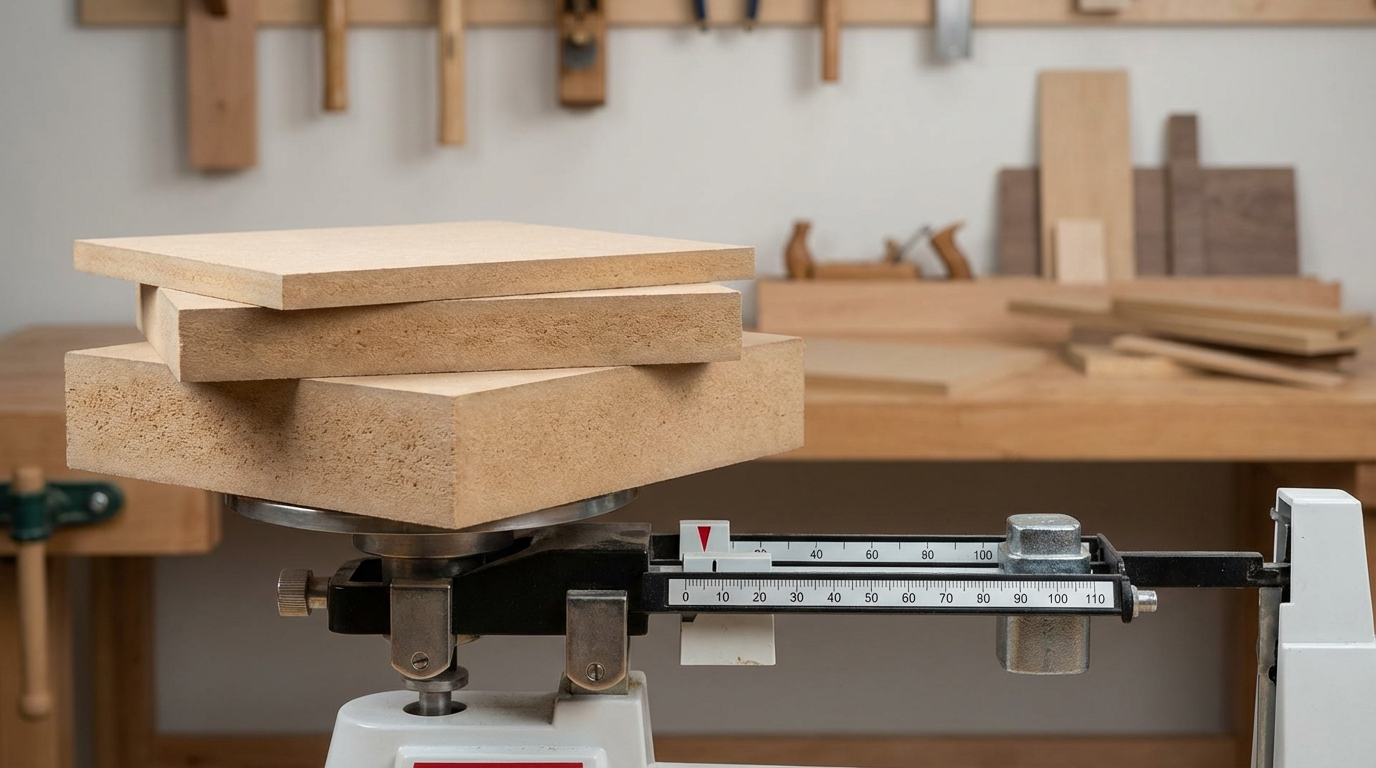
Exposed MDF edges can show swelling in 24-48 hours during monsoons, with cracks forming after 3-7 days of drying cycles. Coastal humidity accelerates to 12-24 hours if unsealed. Prevention hinges on immediate post-cut sealing with resin or tape. Homeowners should store cut pieces indoors; carpenters verify by weight gain (moist feels 5% heavier). If cracked, sand and re-seal promptly to halt delamination.
Can I repair cracked MDF edges for painting?
Yes, fill cracks with MDF-specific putty, sand to 220-grit, prime, then paint—but strength drops 20-30% without banding. In Indian apartments, this works for low-load TV units. Avoid flex zones. Steps: Fill, dry overnight, seal edges. Durability improves with 2-coat polyurethane topper resistant to humidity wipes.
Why do some MDF sheets crack less at edges?
Higher-density batches (850kg/m³+) or HDF variants resist better due to tighter fibers, handling screws 30% more torque. MR-grade often varies by resin quality. Check by screw test pre-buy. For wardrobes, spec density verbally; coastal projects favor these for fewer callbacks.
Is it okay to screw directly into laminated MDF edges?
Avoid direct screwing into laminated edges—threads delaminate the face while cracking fibers underneath. Drill through laminate first, then pilot. In humid sites, this preserves finish integrity. Alternative: Recess screws under band. Verifies long-term hold in kitchens.
How to prevent cracks when clamping MDF edges?
Use wide padded clamps to spread pressure, avoiding point dents that propagate to cracks. In shops, sequence clamps from center out. India tip: Humidity-soft edges dent easier—clamp dry stock only. Test: Clamp scrap overnight, check for impressions.
Do PVC boards crack less than MDF at edges?
PVC boards resist edge cracking better (foamed structure absorbs impact), but screw hold is 20-40% weaker without inserts. MDF suits load-bearing with prep; PVC for panels. Trade-off: PVC cheaper for walls, MDF for cabinets. Match to use.
What's the best screw size for MDF edges?
4-5mm diameter, fine thread, 25-40mm long for 18mm MDF—pairs with 3-3.5mm pilots. Avoid >6mm on thin boards. In monsoons, shorten 10% for swelling. Test pull-out on scraps for batch fit.
Can heat from iron-on banding cause edge cracks?
Excess heat (>180°C) scorches fibers, weakening edges for later cracks. Use 140-160°C, quick passes. Coastal heat demands calibrated irons. Check: Smooth band without bubbles means safe.
How to handle MDF sheets to avoid edge damage?
Lift vertically by ends, use trolleys for transport, store flat elevated off floors. Corner protectors prevent stacking chips. In bumpy Indian roads, secure loads; inspect on arrival.
Disclaimer: This content is provided for general informational purposes based on industry practices and publicly available information. Product specifications, standards, prices, and availability may vary by manufacturer, region, and time. Readers should independently verify details with manufacturers, dealers, or qualified professionals before making purchase or construction decisions.Want Plywood Suggestions?
Share a few details and a VIR MDF specialist will suggest suitable brands and connect you to responsive dealers.