MDF vs Water: What Happens if MDF Gets Wet (and What to Do Immediately)
If MDF gets wet, fast action matters. Here’s what happens, how to dry safely, when swelling is permanent, and how to prevent repeats.
Quick Decision Summary
MDF swells when wet but can often recover if dried fast—wipe immediately, air-dry flat, and monitor for 48 hours.
If you’re in a hurry: Surface moisture on MDF (like rain splash or spill) is usually fixable if you act within 1-2 hours by wiping dry, propping upright in a ventilated area away from direct sun or heat, and avoiding any weight or stacking. Full soaking leads to permanent swelling, especially edges. In Indian monsoons, switch to moisture-resistant (MR) grades for kitchens or coastal sites. Test recovery by pressing edges after drying—if soft, discard.
- Choose standard drying if exposure under 30 minutes and no pooling water.
- Avoid drying if submerged over 1 hour, visible core swelling, or delamination starts—replace affected parts.
What This Material/Option Actually Is
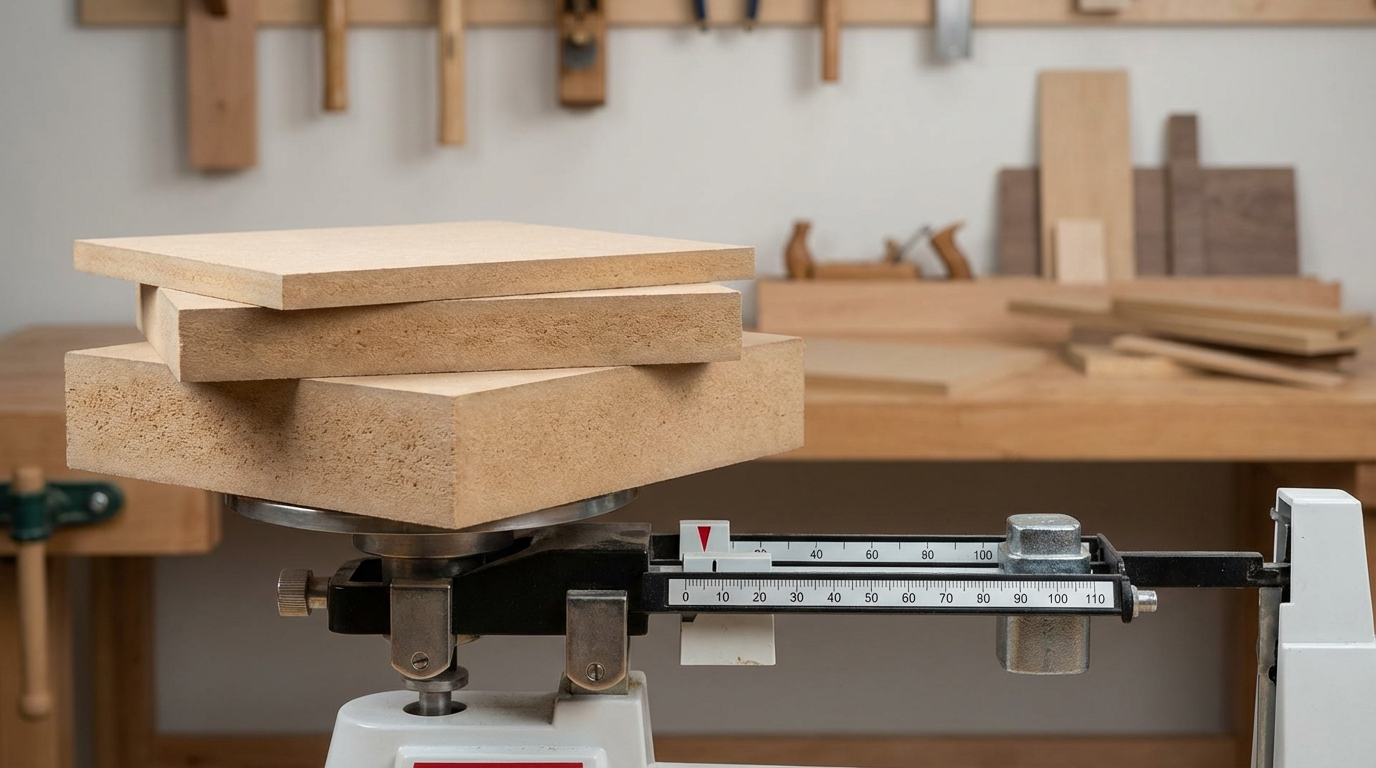
MDF, or Medium Density Fiberboard, is an engineered wood panel made by breaking down wood fibers, mixing with resin (usually urea-formaldehyde), and pressing under heat and pressure to form dense sheets. Typical density ranges from 700-850 kg/m³, with thicknesses from 3mm to 25mm common in India.
It comes unfinished (raw), pre-laminated, or with melamine faces. Standard MDF absorbs water easily due to its fiber structure, unlike plywood which has layers. Moisture-resistant (MR) variants use alternative resins or additives to slow absorption, but no MDF is fully waterproof—think of it as water-tolerant up to 20-30% humidity spikes.
In workflows, MDF suits flat-pack furniture, cabinets, and partitions because it machines well for CNC routing and holds screws decently in dry conditions.
Why It Matters in Indian Homes and Sites
India's climate amplifies MDF's water vulnerability: monsoons bring 80-90% humidity for months, coastal areas like Kerala or Gujarat add salt-laden air that worsens corrosion on fittings, and poor site storage (stacked on ground slabs) invites capillary rise from construction moisture.
Real consequences include edge swelling that ruins laminate adhesion, weakened screw holds in humid wardrobes leading to sagging doors, and mold growth in poorly ventilated TV units. In Mumbai high-rises, AC drip lines often hit MDF shelves first. Carpentry sites without covered godowns see 20-30% wastage from rain exposure during transport from North India mills.
Practical upside: cheap and smooth for finishes, but demands edge sealing and dry zones to last 5-7 years without issues.
How Water Affects MDF: Step-by-Step Breakdown
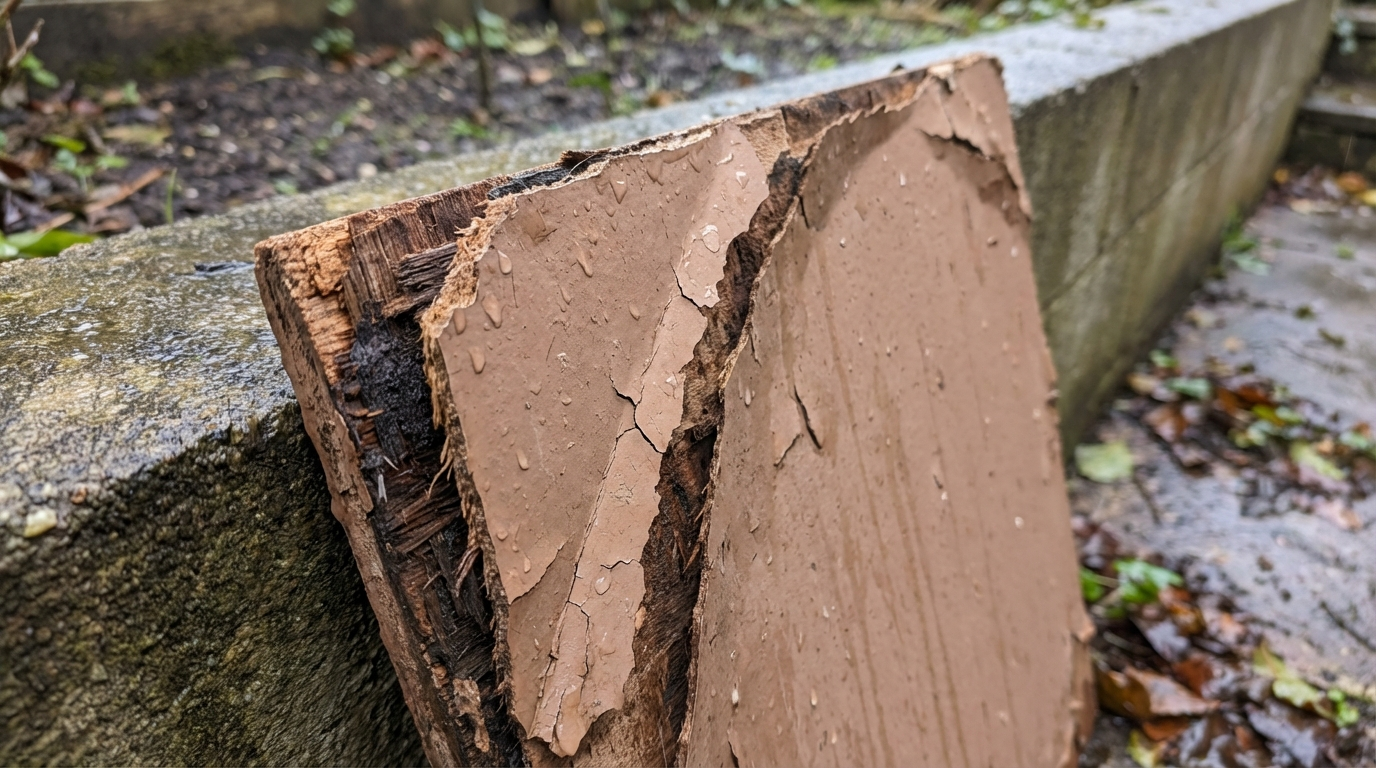
Water enters MDF's porous fibers rapidly, causing expansion as fibers swell. In minutes, surface darkens; within hours, core softens if not addressed. Unlike solid wood that dries back, MDF's resin bonds break under prolonged moisture, leading to irreversible damage.
What Does Wet MDF Look Like Right Away?
Wet MDF shows darkened patches, a spongy feel on touch, and water beading before soaking in. Edges darken fastest due to exposed fibers. In early stages (under 15 minutes), it's often just surface—press gently; if no give, good sign. After 30 minutes, edges may bow slightly. Check by weight: wet sheet feels heavier and cooler. Next step: wipe with dry cloth immediately, no rubbing to avoid fiber pull-out. In monsoon sites, this mimics splash from leaking roofs—act before it spreads.
How Long Before Swelling Becomes Permanent?
Swelling sets in after 1-4 hours of exposure, depending on water volume and humidity. Surface spills: recoverable in 48 hours if aired. Pooling or submersion: permanent core expansion of 10-20% thickness. Test post-dry: measure thickness with caliper; over 5% gain means discard. High humidity delays drying, so coastal carpenters fan-dry actively. Always flat-dry to prevent warping—stacking traps moisture.
Immediate Actions: 5 Steps If MDF Gets Wet
- Wipe excess water: Use absorbent cloths or sponges within 5 minutes—no soap or chemicals that penetrate deeper.
- Prop upright: Lean sheets against walls in cross-ventilated room; fans speed evaporation without heat.
- Avoid stacking/weight: Place on raised spacers; gravity pulls water deeper if compressed wet.
- Monitor 24-48 hours: Check edges daily—soft spots signal failure.
- Seal if recovered: Apply edge paint or band after full dry; discard if warped.
Common failure: using hair dryers—heat cooks resins, worsening cracks. In humid sites, add silica packs nearby.
MDF vs Moisture-Resistant Options: Comparison Table
| Aspect | Standard MDF | MR MDF | HDFWR (Water Resistant) |
|---|---|---|---|
| Water Absorption (24 hrs) | High (20-40% swell) | Medium (10-20% swell) | Low (5-15% swell) |
| Monsoon Suitability | Dry interiors only | Bathroom edges, kitchens | Wet zones, outdoors covered |
| Cost Driver | Base price | +20-30% resin | +40-60% density/resin |
| Screw Hold Post-Wet | Weakens 50% | Retains 70% | Retains 85% |
| Edge Sealing Need | Essential everywhere | Critical in humid | Recommended |
Choose based on zone: standard for bedrooms, MR for utility areas. Verify by soaking scrap overnight.
Failure Modes and Fixes
MDF water failures hit edges first, then core. Here's symptom-by-symptom fixes tailored to Indian sites.
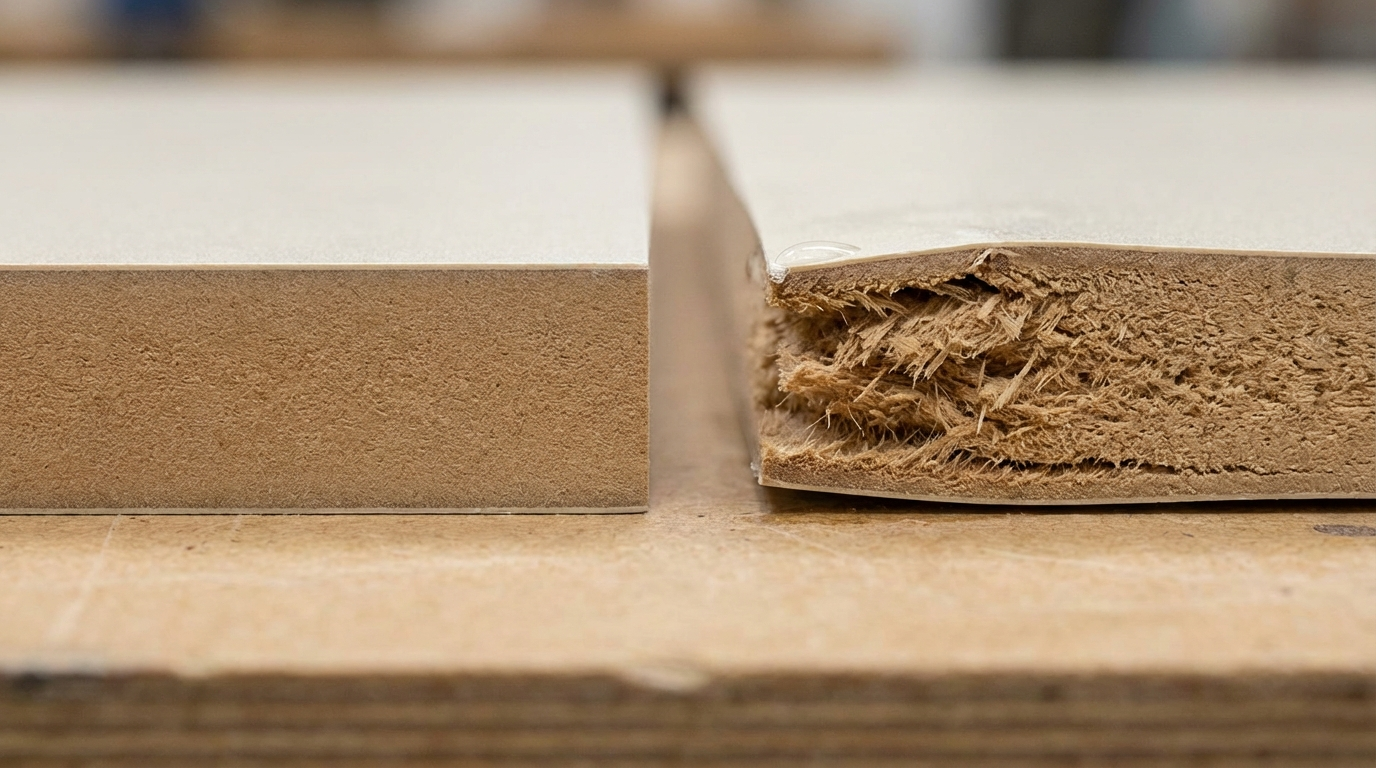
- Symptom: Edge swelling (fuzzy, thicker). Cause: Exposed fibers wick water. Prevent: Seal cuts same day. Fix: Trim 5-10mm if minor; replace if over 10% swell.
- Symptom: Core delamination (layers separate). Cause: Prolonged soak breaks resin. Prevent: Cover stacks during transport. Fix: Discard—can't reglue reliably.
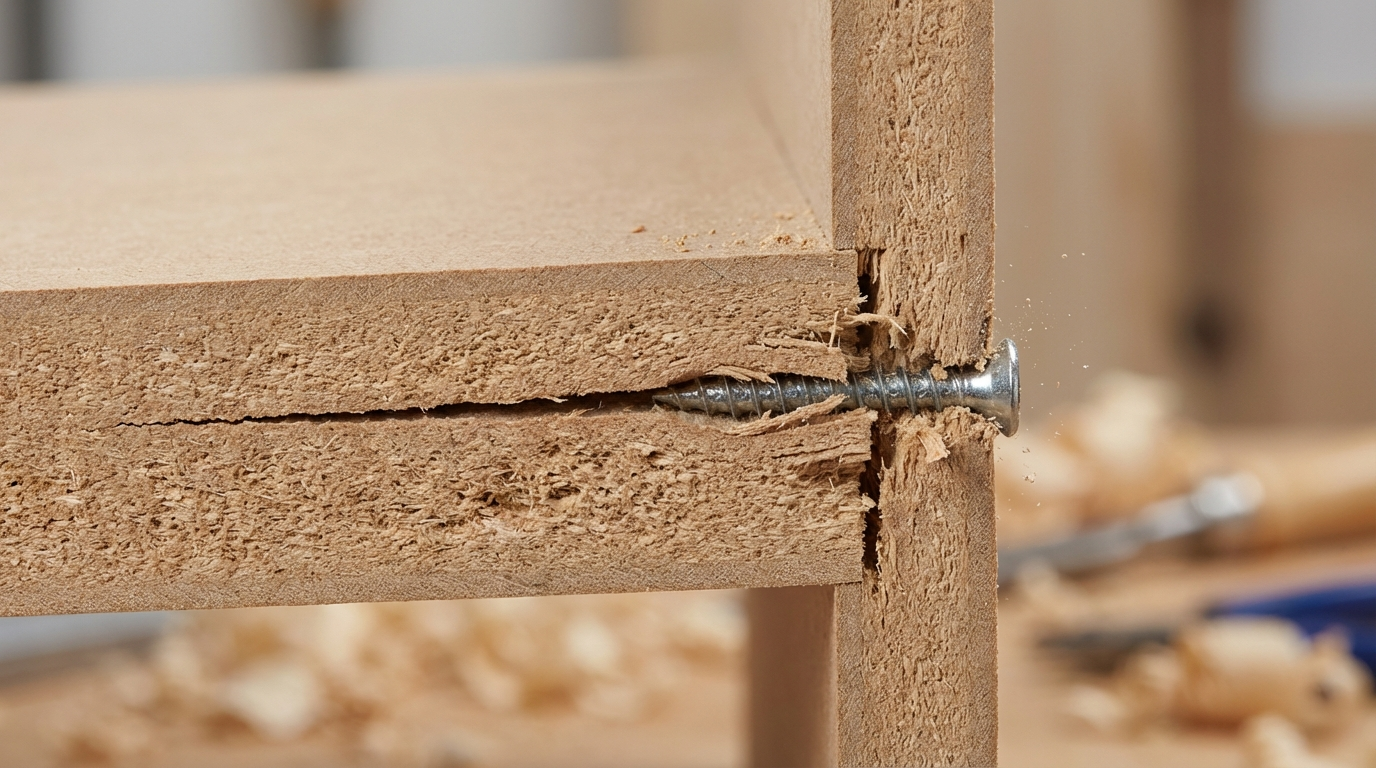
- Symptom: Screw holes loosen. Cause: Swell pushes out fibers. Prevent: Pre-drill oversized in MR grade. Fix: Fill with putty, redrill; test hold first.
- Symptom: Surface bubbling (laminate lifts). Cause: Moisture under film. Prevent: Acclimatize 48 hours pre-install. Fix: Scrape bubbles, re-laminate small areas.
- Symptom: Warping/bowing. Cause: Uneven drying. Prevent: Dry flat/upright. Fix: Clamp straight 24 hours; if not, cut usable straight sections.
- Symptom: Mold spots. Cause: Trapped humidity over 70%. Prevent: Ventilate storage. Fix: Sand off, antifungal wipe, dry fully—monitor recurrence.
Decision Framework: Match Conditions to Actions
| Site Condition | Recommended Material/Finish | Verify Checklist |
|---|---|---|
| Monsoon-prone (e.g., Mumbai, 4+ months rain) | MR MDF or HDFWR, full edge banding | Soak test scrap 2 hours; check swell under 10% |
| Coastal humidity (e.g., Chennai, salt air) | HDFWR + epoxy edge seal | Weight feel heavy; tap test solid sound |
| Heavy use kitchen (spills frequent) | MR prelam + PVC edge | Cut edge smooth, no crumbling |
| Tight budget bedroom wardrobe | Standard MDF + melamine, sealed edges | Flat surface, no voids on knock |
| Fast delivery site | Pre-laminated MR boards | Recent batch date; uniform color |
| High scratch risk (kids/pets) | HDF + thick laminate | Density over 800 kg/m³ feel; scratch test lightly |
Quality Checks You Can Do Without Lab Tests
Before buying: Lift corner—should feel uniformly heavy, no light spots. Tap surface: solid thud, not hollow. Check edges: straight, no chips. Ask supplier: resin type (PF for MR), storage since mill.
After cutting: Fresh edges crisp, not frayed—blow dust, inspect for loose fibers. Screw test on scrap: holds 5+ cycles without spin.
Post-install: Press edges after 7 days acclimatization; no give. Wipe test: dry cloth only, check darkening.
Is My MDF Moisture-Resistant Enough?
MR MDF resists surface water better, but test by dripping water 10 minutes—minimal darkening means good. Nuance: cheaper grades fake MR with surface coat only, failing on cuts. In India, verify by supplier batch humidity test claim, but do your soak: submerge edge 30 minutes, dry, measure swell. Under 8% passes for kitchens. Next: always edge-seal regardless.
Common Buyer Mistakes (and How to Avoid)
- Mistake 1: Storing sheets flat on site—water pools underneath. Avoid: Elevate on 4" spacers, cover tarps.
- Mistake 2: Installing unacclimatized boards. Avoid: 48 hours in site humidity.
- Mistake 3: Skipping edge sealing post-CNC. Avoid: Band or paint same shift.
- Mistake 4: Using standard MDF in wet zones. Avoid: MR minimum for sinks.
- Mistake 5: Drying with heat sources. Avoid: Air only, fans max.
- Mistake 6: Ignoring transport rain. Avoid: Plastic wrap ends.
- Mistake 7: Wet wiping for cleaning. Avoid: Microfiber dry, then damp.
- Mistake 8: Overloading wet shelves. Avoid: Wait 72 hours post-dry.
- Mistake 9: Coastal salt exposure without rinse. Avoid: Annual fresh-water wipe.
Tips for Homeowners, Carpenters, Architects, and OEMs
Homeowner Do's and Don'ts for Durability
For lasting MDF furniture, wipe spills instantly with dry cloth—never soak. Use coasters under plants, ensure wardrobe vents open in humid months. Avoid direct AC drips by routing pipes away. Clean weekly with dry microfiber; monthly damp cloth max, dry immediately. In monsoons, silica pouches inside cabinets absorb stray moisture. Don't overload shelves wet from unpacking—wait 24 hours. These habits extend life 2-3 years in average homes.
Carpenter Workflow: Cutting, Handling, Fixing
Acclimatize boards 24-48 hours before cuts. Use sharp CNC bits, zero clearance inserts to minimize tear-out. Seal raw edges with PVA or paint before assembly—critical for screw zones near hinges. In humid shops, fan-dry offcuts. For repairs, clamp swollen parts straight, fill voids with MDF dust + glue. Test fastenings double in wet-risk areas like kitchen bases.
Architect Specs and Detailing for Sites
Specify MR grade min 18mm for partitions, edge details with 2mm PVC. Detail drips away from panels, ventilation gaps 10mm. For coastal bids, mandate HDFWR quotes with density certs. Avoid butt joints in wet walls—use overlaps. Pre-plan modular kits with sealed hinges.
OEM QC to Cut Complaints
Batch-test 5% boards: soak edges, measure swell. Standardize edge banding full perimeter. Pack with desiccants, humidity labels. Track returns: 80% from poor sealing—automate post-lam seal. For repeats, use MR blanks only.
Prevention: Long-Term Strategies for Indian Conditions
Seal all edges pre-install—paint, tape, or band. Store vertical in godowns, off-ground. Acclimatize 72 hours in monsoons. Pair with vapor barriers in coastal walls. For kitchens, overhangs 5cm min. Annual checks: tap for hollowness signaling hidden moisture.
Will MDF Survive a Monsoon Leak?
Short leaks (under 1 hour) survivable if dried fast, but repeated exposure fatigues resins. Use MR with sealed joints for roofs. Nuance: North-East heavy rains demand HDFWR. Check: Post-leak, measure flatness with straightedge—if over 2mm bow, reinforce or replace. Prevent by silicone-sealing top edges.
FAQs
Can MDF get wet at all?
Standard MDF tolerates brief splashes if dried immediately, but prolonged contact causes swelling. MR grades handle humidity better, suiting Indian bathrooms with edge protection. Always prioritize dry zones; even treated variants need vigilance during monsoons. Test tolerance by exposing scrap to site conditions first for peace of mind.
How do you dry wet MDF safely?
Wipe excess, air-dry upright in shade with fans for 48 hours—no heat or stacking. Monitor edges for softness. In high humidity, use dehumidifiers. Full recovery possible if acted fast, but warped pieces may need trimming. This method preserves screw holds better than rushed fixes.
Is swollen MDF usable after drying?
Often yes for minor surface wet, but core soak means 10-20% permanent expansion, weakening structure. Measure thickness pre/post; under 5% change is safe for non-load areas. In wardrobes, test door alignment. Discard if hinges spin loose—better safe than sagging shelves later.
Does laminate protect MDF from water?
Laminate blocks surface spills but fails at edges or cuts where water wicks in. Sealing joints essential. In kitchens, it buys time during spills but not submersion. Coastal users add extra edge PVC for longevity amid humidity spikes.
What's better for wet areas: MDF or plywood?
MR MDF edges out for smooth finishes and machinability, but BWR plywood resists better in full wet without swelling. Trade-off: MDF cheaper, lighter. Choose MR MDF sealed for modulars; plywood for heavy-duty bases. Verify both with soak tests on samples.
How to store MDF during monsoons?
Vertical racks, elevated 6 inches, plastic-wrapped ends, in covered dry space. Rotate stock FIFO to avoid old humidity-trapped boards. Fans if over 70% RH. This cuts wastage 50% in rainy belts like Kerala.
Can you paint wet MDF to fix it?
No—paint traps moisture, causing bubbles later. Dry fully first, sand smooth, then edge-seal. Use oil-based paints for barriers. In repairs, this restores minor swells for painted partitions.
Why do MDF edges fail first in water?
Raw fibers exposed absorb fastest, swelling 2x core rate. Always band or paint cuts day-of. CNC workflows: program edge-first sealing. Prevents 70% of complaints in humid installs.
Is there fully waterproof MDF?
No true waterproof, but HDFWR with phenolic resins comes closest, swelling under 10% in tests. Suits exteriors covered. For homes, combine with silicone joints. Cost 50% more, worth it for repeats.
How to test MDF water resistance yourself?
Drip water on edge 30 minutes, wipe, check darkening/softness after 24 hours dry. No change: good MR. Do on scraps pre-buy. In sites, this flags fakes saving rework costs.
What if MDF gets wet during transport?
Inspect ends on arrival; minor wet: air-dry before cutting. Visible swell: negotiate credit, use inner dry parts. Wrap future loads fully—common pitfall in truck rains.
Disclaimer: This content is provided for general informational purposes based on industry practices and publicly available information. Product specifications, standards, prices, and availability may vary by manufacturer, region, and time. Readers should independently verify details with manufacturers, dealers, or qualified professionals before making purchase or construction decisions.Want Plywood Suggestions?
Share a few details and a VIR MDF specialist will suggest suitable brands and connect you to responsive dealers.