Edge Banding for MDF: PVC vs ABS vs Veneer + Which Thickness to Choose
Choose the right edge banding for MDF—PVC, ABS, or veneer—plus thickness recommendations for wardrobes, cabinets, and shelves.
Quick Decision Summary
For MDF edges in Indian wardrobes, cabinets, and shelves, pick PVC 1-2 mm thickness for most budgets and monsoon conditions; upgrade to ABS for high-wear areas or veneer for natural wood aesthetics if properly sealed.
If you’re in a hurry, assess your project: standard home use with moderate humidity favors PVC at 1 mm for cost-effective sealing against edge swelling. Coastal or kitchen zones need ABS 2 mm for better impact resistance. Veneer suits dry luxury interiors but demands extra moisture protection during monsoon storage and site handling. Prioritize adhesion strength over gloss, and always test a sample edge for color match and flexibility before bulk buy.
- Choose PVC if budget under tight control, fast installation needed, or low-to-medium traffic areas like bedroom shelves.
- Choose ABS if heavy daily use, like kitchen cabinets, or coastal humidity where impact matters more.
- Choose veneer if matching real-wood laminates, but only in air-conditioned spaces with pro sealing.
- Avoid veneer in wet zones; skip thin <0.8 mm bands on curved edges; don’t overlook glue compatibility.
What This Material/Option Actually Is
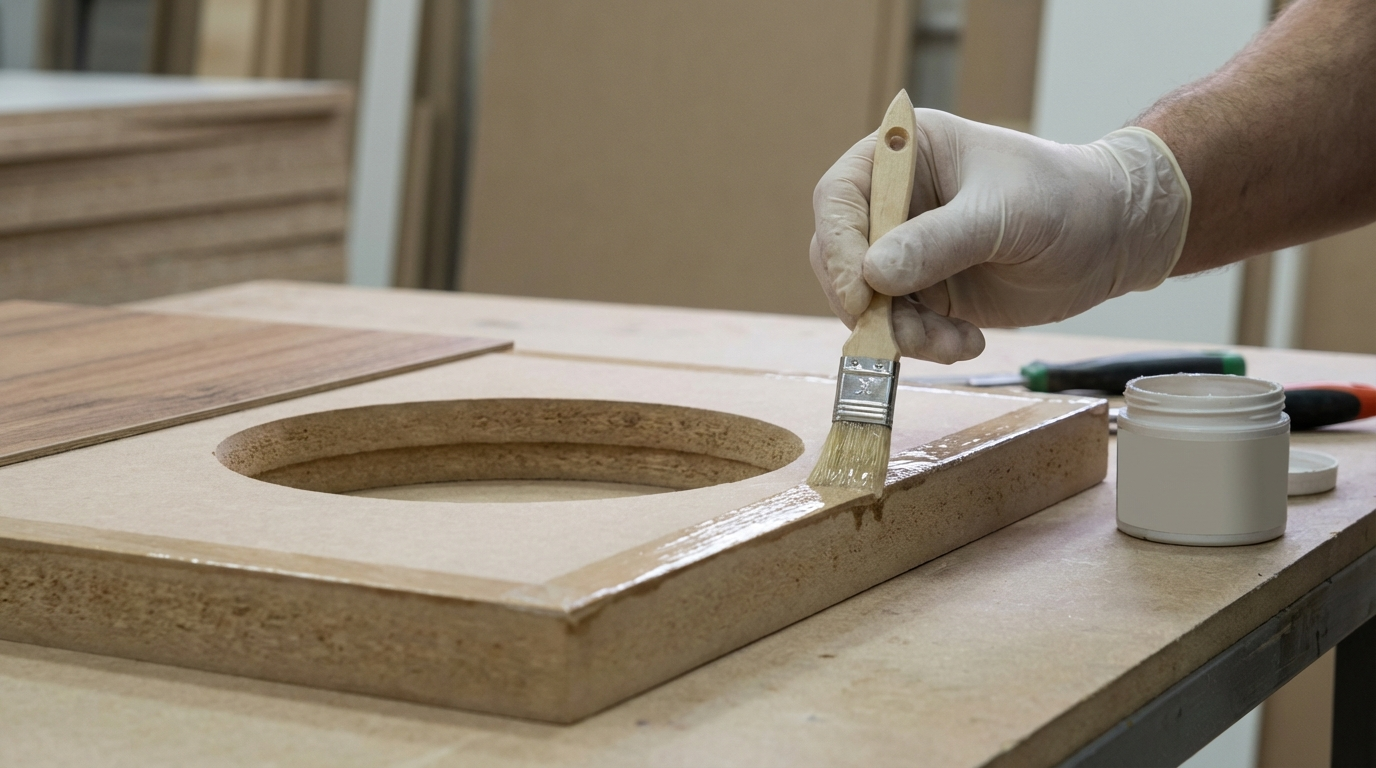
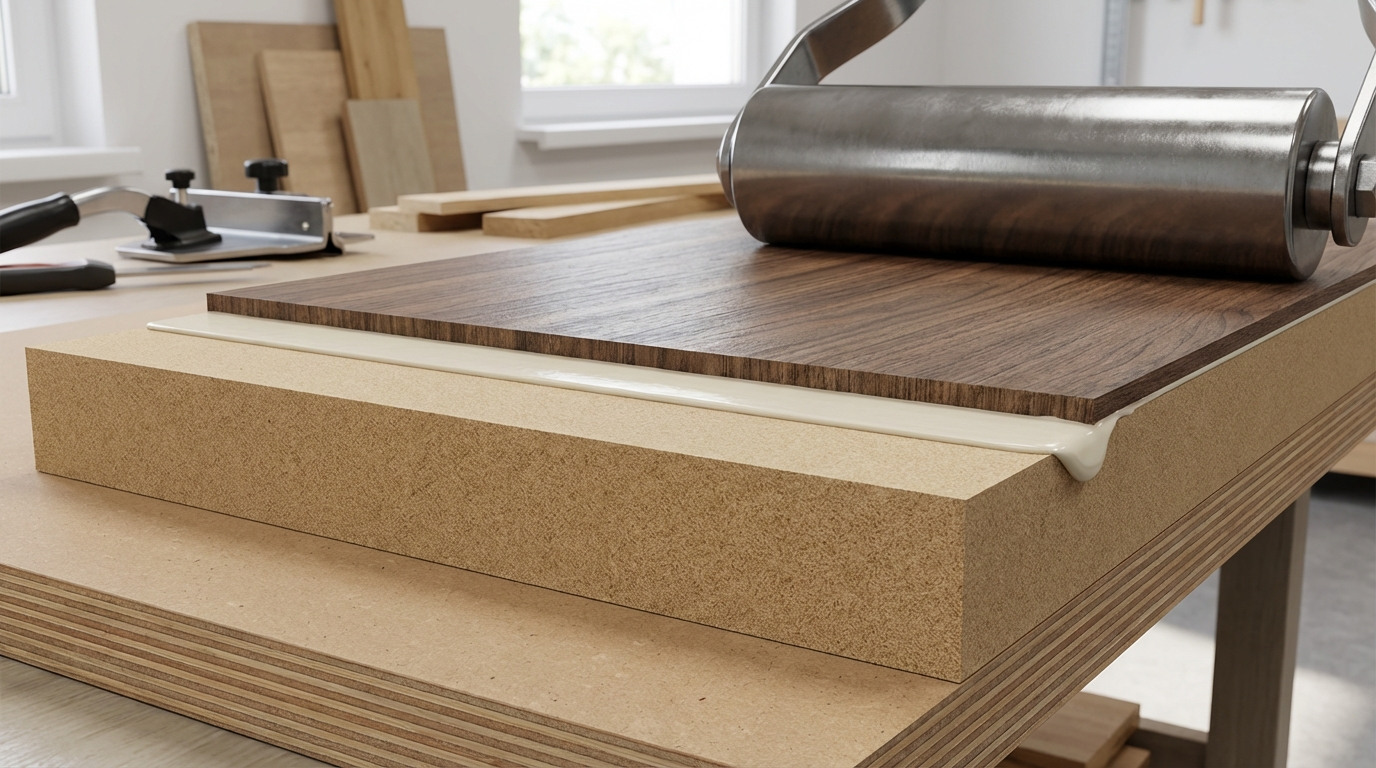
Edge banding seals exposed MDF core edges, preventing moisture ingress, chipping, and unsightly raw fibers while matching the panel face for seamless furniture looks. Applied via hot-melt glue on straight-line machines or CNC routers, it comes in rolls or strips tailored for MDF, HDF, or pre-laminated boards.
PVC edge banding uses polyvinyl chloride plastic: flexible, affordable, with smooth or textured finishes. ABS relies on acrylonitrile butadiene styrene: rigid, tougher against dents. Veneer involves thin real-wood slices (0.5-1 mm) glued on for organic grain, often pre-finished with PU lacquer.
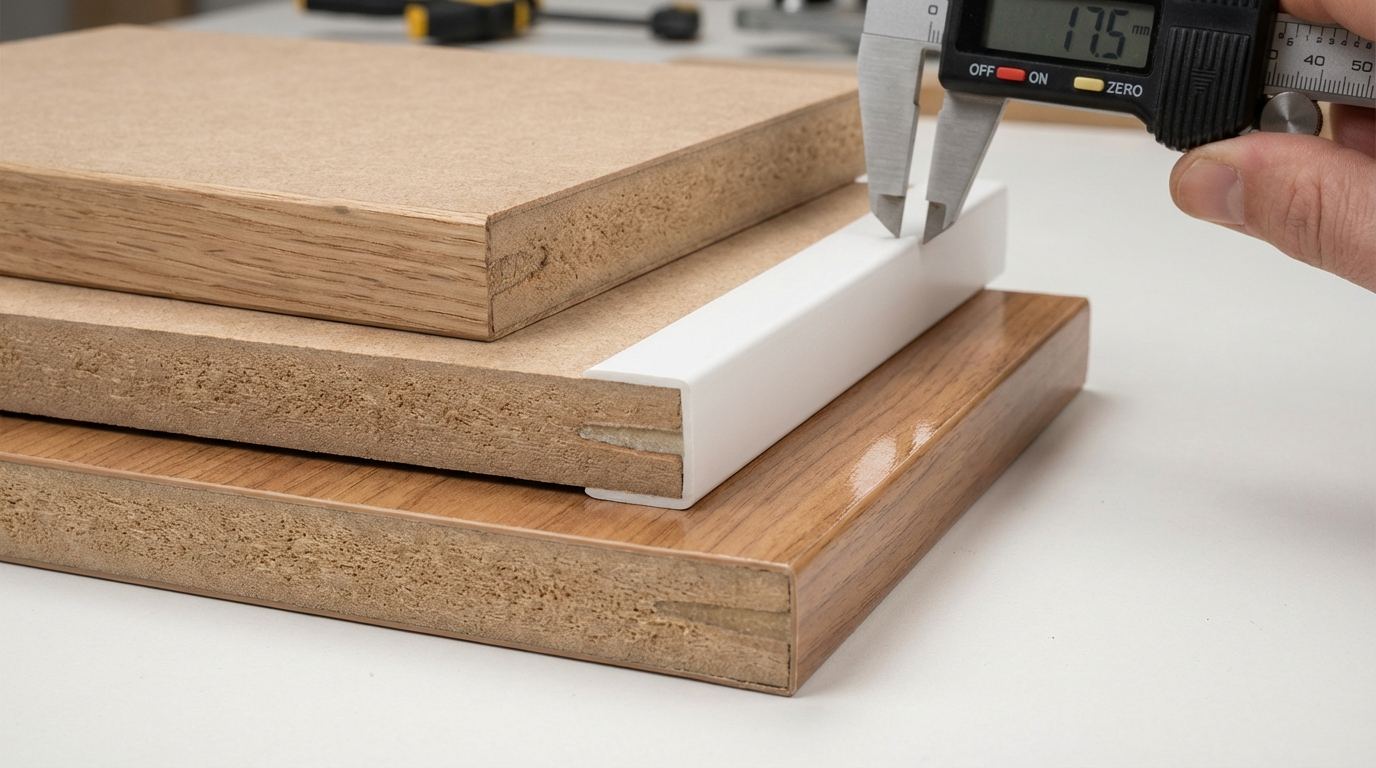
Thickness dictates use: 0.4-0.6 mm for thin rigid profiles on flat shelves; 1-2 mm flexible for wardrobe doors and curved CNC routes; 3 mm+ for thick profiles mimicking solid wood edges. In India, these pair with melamine-faced MDF for modular kitchens or laminates on cabinets.
Why It Matters in Indian Homes and Sites
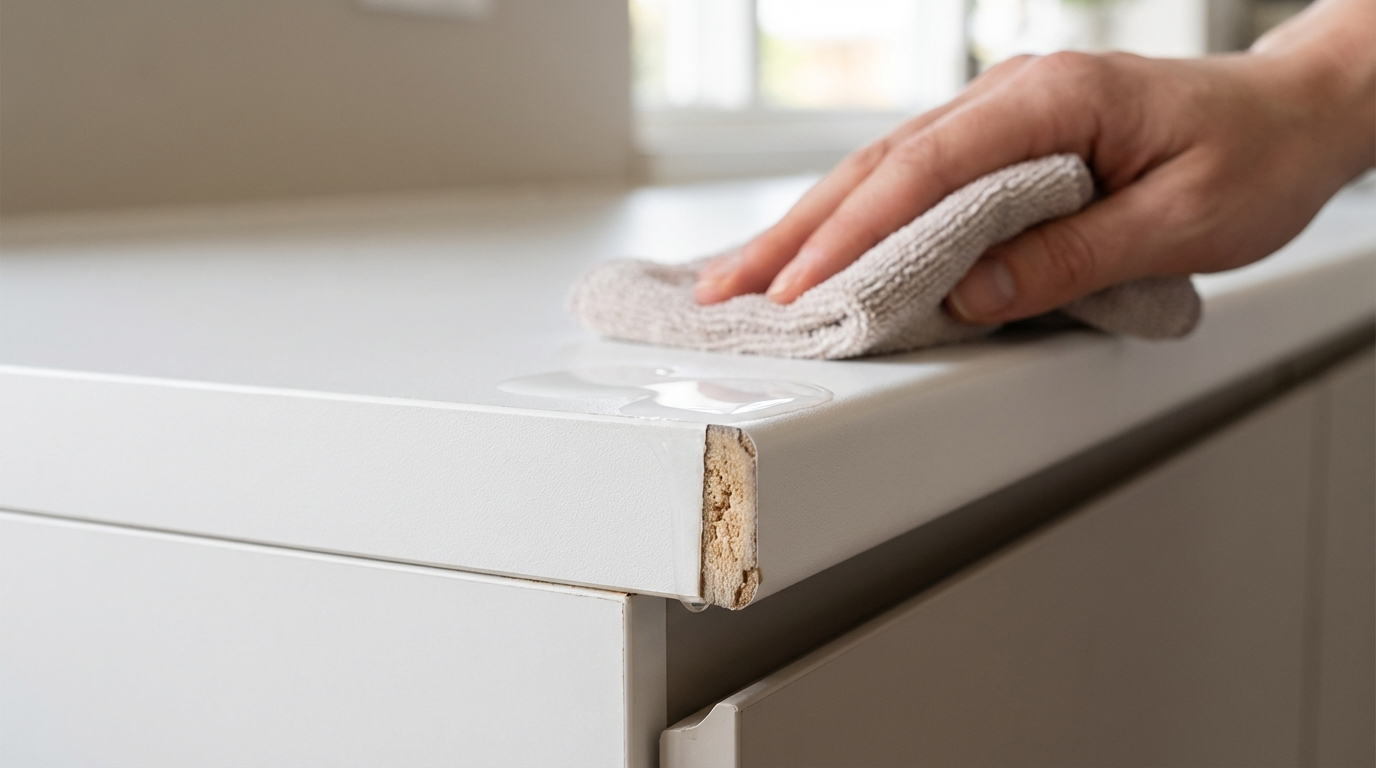
Monsoon humidity (70-90% RH) swells unprotected MDF edges 2-3x faster than faces, causing delamination or screw-pullout in wardrobes. Coastal areas add salt corrosion risks to glue lines, while godown storage without ventilation leads to pre-site warping.
Poor edge banding fails first: lifting in humid Bangalore apartments or chipping on Mumbai site transports. Good choices boost screw-holding by 30-50% in humid zones, extend life 5+ years, and hide MDF's fibrous weakness for pro finishes on TV units or partitions.
Site realities like carpenter heat guns or uneven CNC feeds demand flexible, glue-compatible bands to avoid gaps that trap dust and moisture during Diwali cleaning rushes.
Two-Minute Comparison (What Changes in Real Life)
PVC suits 80% of Indian projects for flexibility and price; ABS excels in durability trade-offs; veneer adds premium feel but lags in moisture handling. Key real-life shifts: PVC bends easily on CNC curves but scratches more; ABS resists impacts on kids' furniture; veneer matches wood laminates but swells if unsealed.
| Feature | PVC | ABS | Veneer |
|---|---|---|---|
| Cost per meter (typical range) | Low (Rs 10-25) | Medium (Rs 20-50) | High (Rs 40-100+) |
| Durability (impact/scratch) | Medium | High | Low-Medium (needs sealing) |
| Moisture Resistance (monsoon) | Good | Excellent | Poor unless lacquered |
| Flexibility (CNC curves) | High (1-2 mm) | Medium | Low (flat only) |
| Finish Match | Glossy/textured | Smooth matte | Natural wood grain |
| Best For | Wardrobes, shelves | Kitchens, offices | Luxury TV units |
What is the main difference between PVC and ABS edge banding for MDF?
PVC offers higher flexibility for curved edges and lower cost, ideal for standard wardrobe doors, while ABS provides superior impact resistance and longevity in high-abuse kitchen cabinets. In practice, PVC (1 mm) bends without cracking on CNC routers common in Indian workshops, but ABS holds up better to daily bangs from utensils or kids.
Nuance: ABS edges fewer fingerprints in humid Pune homes, yet PVC glues faster with standard hot-melt. Check by bending a sample: if it snaps under thumb pressure, skip for curved work. Next, match thickness to panel (18 mm MDF needs 1.5-2 mm for proportion).
How to Decide or Do This in 5 Steps
- Assess project zone: Dry bedroom? Any band works. Kitchen/coastal? ABS or thick PVC. List moisture exposure (monsoon direct? site delay?).
- Match thickness to use: Shelves: 0.45 mm rigid. Doors: 1-2 mm flexible. Verify panel thickness (e.g., 18 mm MDF pairs with 2 mm max).
- Test samples: Buy 5 m rolls of each type/color. Check glue adhesion on scrap MDF, flexibility, and color under room light.
- Select glue/machine: EVA hot-melt for PVC/veneer; PUR for ABS/moist zones. Confirm carpenter's machine pressure settings.
- Post-install check: Trim flush, sand lightly, inspect for lifts after 24 hrs humidity test (wet cloth overnight).
Failure point: Skipping step 3 leads to mismatch bubbles in humid installs.
Price Range and Cost Drivers
Edge banding costs Rs 10-100 per meter, varying by type (PVC lowest, veneer highest), thickness (0.45 mm cheapest, 3 mm priciest), finish (textured +20%), and city (Mumbai/Delhi +15-25% logistics). For a 6x4 ft wardrobe (20 m edges), expect Rs 300-1500 total, plus 10% wastage.
Drivers: Thicker bands for heavy doors add Rs 10-20/m; pre-glued rolls save labor but cost more; monsoon-grade PUR glue ups total 15%. Quote checklist: Specify "1 mm PVC pre-glued for 18 mm HDFWR, 50 m, color code match to laminate."
Which thickness of edge banding is best for MDF wardrobes?
1-2 mm flexible thickness works best for 18 mm MDF wardrobes, balancing seal strength and aesthetics without overpowering slim doors. Thinner 0.45 mm suits fixed shelves; thicker 3 mm for base cabinets mimicking solid wood.
Conditions: Curved shaker-style? Go 1.5 mm PVC. Straight modular? 2 mm ABS. In Chennai humidity, thicker seals better against swelling. Verify by measuring panel edge height post-CNC; band should cover 90-100% for full protection. Next, calculate: wardrobe perimeter x 1.1 (wastage).
Failure Modes and Fixes
- Symptom: Edge lifting/delamination. Root: Poor glue temp/humidity mismatch. Prevent: Use PUR glue in >70% RH; dry panels 48 hrs. Fix: Re-glue with clamp overnight.
- Symptom: Chipping on corners. Root: Thin band (<1 mm) or over-sanding. Prevent: 2 mm min for doors; light 220-grit sand. Fix: Fill epoxy, re-band.
- Symptom: Color mismatch/fading. Root: Light variance or UV exposure. Prevent: Sample under site lights; UV-stable finishes. Fix: Uniform repaint edges.
- Symptom: Screw holes weakening. Root: Unsealed core exposure. Prevent: Band before drilling; pilot holes. Fix: Plug + re-band.
- Symptom: Cracking on curves. Root: Rigid ABS/PVC on tight radii. Prevent: Flexible 1 mm PVC; heat gun pre-bend. Fix: Replace section.
- Symptom: Monsoon swelling bubbles. Root: Coastal storage moisture. Prevent: Plastic-wrap rolls; acclimatize 72 hrs. Fix: Sand + reapply sealant.
Can veneer edge banding be used on MDF in humid Indian kitchens?
No, avoid veneer in humid kitchens; opt for PVC/ABS instead due to veneer's swelling risk from steam and splashes. Veneer works in dry living rooms if lacquered twice.
Nuance: Post-monsoon, unsealed veneer absorbs 10-15% more moisture than plastic bands, lifting glue. Seal with PU topcoat + wax edges. Check: Press tape on sample, pull after 24 hrs wet—lifts mean swap. Next, specify "double-sealed oak veneer 1 mm" only for AC zones.
Quality Checks You Can Do Without Lab Tests
Before buying: Bend roll—should flex 90° without cracking. Scratch nail on face—no gouges. Ask: "Pre-glued? PUR compatible? Batch moisture test passed?" Red flag: Matte inconsistent or stiff thin rolls.
After cutting MDF: Clean edges dust-free; test glue stick on scrap (no residue). Ensure CNC feed even—no burns.
After install: Run thumb along seam—flush <0.1 mm gap. Wipe wet cloth, check lift next day. Clean with microfiber only; avoid abrasives.
Decision Framework: Matching Edge Banding to Your Project Needs
| Project Condition | Recommended Banding | Thickness | Verify Checklist |
|---|---|---|---|
| Wet zone (kitchen sink) | ABS | 2 mm | PUR glue, impact test, steam exposure |
| Coastal humidity | PVC or ABS | 1.5-2 mm | UV stable, flex test, salt wipe |
| Heavy use (kids/office) | ABS | 2 mm | Scratch resistance, thickness gauge |
| Tight budget/fast delivery | PVC | 1 mm | Color match sample, roll stock avail |
| High scratch risk (passage) | Textured ABS | 1.5 mm | Nail scratch test, matte finish |
| Luxury wood-look (AC room) | Veneer | 0.6-1 mm | Grain match, double lacquer |
| CNC curves/wardrobe doors | PVC | 1-1.5 mm | Heat bend test, radius compat |
Is 0.45 mm edge banding enough for MDF shelves?
Yes for fixed, low-load shelves in dry zones, but upgrade to 1 mm for adjustable ones or humid areas to prevent sagging edges. Thin bands seal basics but chip under weight.
Conditions: Bedroom shelves? Fine. Modular with frequent shifts? Thicker. In Kolkata monsoons, thin bands gap faster. Measure: Shelf span >1 m needs 1 mm min. Next, load-test scrap: 10 kg hang 48 hrs—no lift.
Practical Use Cases (What Works, What Fails)
| Use Case | Recommended Thickness | Finish Notes | Risk Notes (India Context) |
|---|---|---|---|
| Wardrobe shutters | 1-2 mm PVC | Gloss match laminate | Monsoon lift if thin |
| Kitchen cabinets | 2 mm ABS | Matte anti-finger | Steam delam low |
| TV unit shelves | 1 mm Veneer | Grain align | Dry room only |
| Office partitions | 1.5 mm PVC | Textured | Scratch resist good |
| Wall panels | 0.45 mm ABS | Smooth | Coastal ok if sealed |
Common Buyer Mistakes and How to Avoid Them
- Mistake 1: Picking gloss without light test. Avoid: View samples in room lighting.
- Mistake 2: Thin bands on thick panels. Avoid: Ratio rule—band 5-10% of panel thickness.
- Mistake 3: Ignoring glue type. Avoid: Specify PUR for humid sites.
- Mistake 4: Veneer in kitchens. Avoid: Plastic only near water.
- Mistake 5: No wastage buffer. Avoid: Order 15% extra for curves/mis-cuts.
- Mistake 6: Skipping acclimatization. Avoid: 72 hrs in site conditions.
- Mistake 7: Over-trimming post-glue. Avoid: Factory-trim machines.
- Mistake 8: Budget ABS but buy PVC. Avoid: Label check + flex test.
How do I choose edge banding thickness for curved MDF doors?
1-1.5 mm flexible PVC best for curves, as it stretches without cracking on CNC radii under 50 mm. Thicker 2 mm risks splits.
Nuance: Tight curves (<30 mm)? Heat-soften first. Hyderabad heat aids bending but monsoon cools glue. Check: Wrap sample around dowel matching radius—smooth? Good. Next, calc length: straight + 1.2x curve factor.
Tips for Homeowners, Carpenters, Architects, and OEMs
Homeowners: Clean edges weekly with damp cloth only—do reinforce with edge guards on kids' units; don’t use abrasives or hang wet wipes.
Carpenters: Prep edges: Sand 180-grit, vacuum dust. Fasten hinges 10 mm from band edge. Handle veneer with gloves to avoid oils.
Architects/Designers: Spec "2 mm ABS PUR-glued for wet zones, 1 mm PVC dry." Detail 2 mm overhang sanded flush. Wet-zone: Extra silicone seal.
OEM/Modular Makers: QC: 100% seam check post-line. Reduce returns: Color-code inventory by laminate batches. Repeatability: Fixed machine temps 180-200°C.
Does ABS edge banding cost more than PVC for MDF furniture?
Yes, ABS typically 1.5-2x PVC price per meter due to material toughness, but lasts longer in heavy-use setups like office shelves.
Conditions: Bulk wardrobe runs? PVC savings add up. Premium client kitchens? ABS justifies. Delhi logistics +10%. Quote: "Compare Rs/m for 1 mm both, factor life 3-5 yrs." Next, total project: Edges x rate x 1.15 wastage.
FAQs
What thickness edge banding for 18 mm MDF?
1.5-2 mm strikes the ideal balance for 18 mm MDF panels in wardrobes and cabinets, providing full edge coverage without bulkiness. Thinner suits shelves; thicker for bases. In Indian sites, this thickness resists monsoon swelling better when paired with pre-laminated faces, ensuring screw holds stay firm even after humidity spikes. Always scale to use: lighter doors can drop to 1 mm to save costs without risk.
Is PVC edge banding better than veneer for MDF?
PVC outperforms veneer for most MDF applications, especially in humid Indian climates, due to superior moisture sealing and flexibility. Veneer delivers natural aesthetics but demands meticulous lacquering and dry storage to avoid warping. Practical shift: PVC installs 2x faster on CNC lines, cutting carpenter delays during peak seasons. Choose veneer sparingly for exposed luxury edges in controlled environments.
Can ABS edge banding handle kitchen moisture?
ABS excels in kitchen moisture handling thanks to its dense structure and low water absorption, making it suitable for Indian homes with cooking steam and splashes. Pair with PUR glue for monsoon-proof bonds. Unlike PVC, it dents less from utensil knocks. Limitation: Higher cost, so reserve for high-contact cabinets. Test adhesion on humid scraps first for site confidence.
How to apply edge banding to MDF without bubbles?
Achieve bubble-free application by ensuring MDF edges are dust-free, glue at 180-200°C, and apply even machine pressure (0.2-0.4 MPa). Pre-heat band for curves. In humid godowns, dry panels 48 hours prior. Common fix: If bubbles appear, re-run through machine after cooling. Indian carpenters succeed by slowing feed on thick bands, preventing air traps.
Why does edge banding lift after monsoon?
Monsoon lifting stems from moisture trapped between band and MDF core, weakening hot-melt glue in 80% RH. Prevent by using moisture-cure PUR glue and sealing overhangs with silicone. Coastal salt accelerates this. Post-install, ventilate site 72 hours. If lifting occurs, clamp and re-glue affected sections—most recover fully with proper drying.
What is the best edge banding for curved wardrobe doors?
1 mm PVC provides the best flexibility for curved wardrobe doors, molding smoothly around CNC radii without cracks. ABS works for gentle curves but stiffens installation. Thickness under 1.5 mm prevents puckering. In hot Indian workshops, use heat gun assist. Verify by prototyping one door edge fully before production run.
Should I use pre-glued or loose edge banding for MDF?
Pre-glued suits small Indian workshops for speed and consistency, activating reliably on standard machines, while loose allows custom glues like PUR for monsoons. Pre-glued risks shelf-life expiry in humid storage (6-12 months). Choose based on volume: OEMs prefer loose for control. Test stick strength on both for your glue gun setup.
Does veneer edge banding need extra finishing on MDF?
Yes, veneer requires 2-3 coats of PU lacquer post-gluing to match MDF face durability and block moisture, especially vital in India's variable climates. Skip and it yellows or swells quickly. Sand lightly between coats for adhesion. Architects spec this for wood-effect luxury, but carpenters note extra drying time delays handover.
How much edge banding needed for a standard wardrobe?
A 6x4x2 ft wardrobe typically requires 20-25 linear meters, factoring 10-15% wastage for cuts and curves. Calculate precisely: Double perimeter of all panels minus faces. For modular flats, add 5 m buffer. In site installs, over-order prevents delays from transport damages common in tier-2 cities.
Disclaimer: This content is provided for general informational purposes based on industry practices and publicly available information. Product specifications, standards, prices, and availability may vary by manufacturer, region, and time. Readers should independently verify details with manufacturers, dealers, or qualified professionals before making purchase or construction decisions.Want Plywood Suggestions?
Share a few details and a VIR MDF specialist will suggest suitable brands and connect you to responsive dealers.