How to Waterproof MDF (Realistically): Sealing Edges, Joints & Cutouts
MDF isn’t waterproof—but you can make it moisture-tolerant. Learn sealing steps for edges, joints, sink cutouts, and long-term care.
Quick Decision Summary
MDF cannot be made fully waterproof, but targeted sealing of edges, joints, and cutouts with epoxy or polyurethane creates reliable moisture tolerance for Indian kitchens and vanities.
If you’re in a hurry: Select moisture-resistant MDF (MR grade if available), seal all cut edges immediately with 2-3 coats of epoxy resin, reinforce joints with PU glue, silicone caulk around sink cutouts, and top with laminated or painted surfaces. Allow 24-48 hours curing in low-humidity conditions. This setup handles splashes and monsoon humidity but avoids direct submersion. Test by wiping edges with wet cloth after curing—no swelling means success. Total process takes 2-3 days for a full cabinet.
- Choose this if: moderate wet zones like kitchen counters or vanities in humid cities like Mumbai or Chennai, with proper ventilation.
- Avoid this if: fully wet areas like showers or outdoor exposure—opt for marine plywood or PVC instead.
What This Material/Option Actually Is
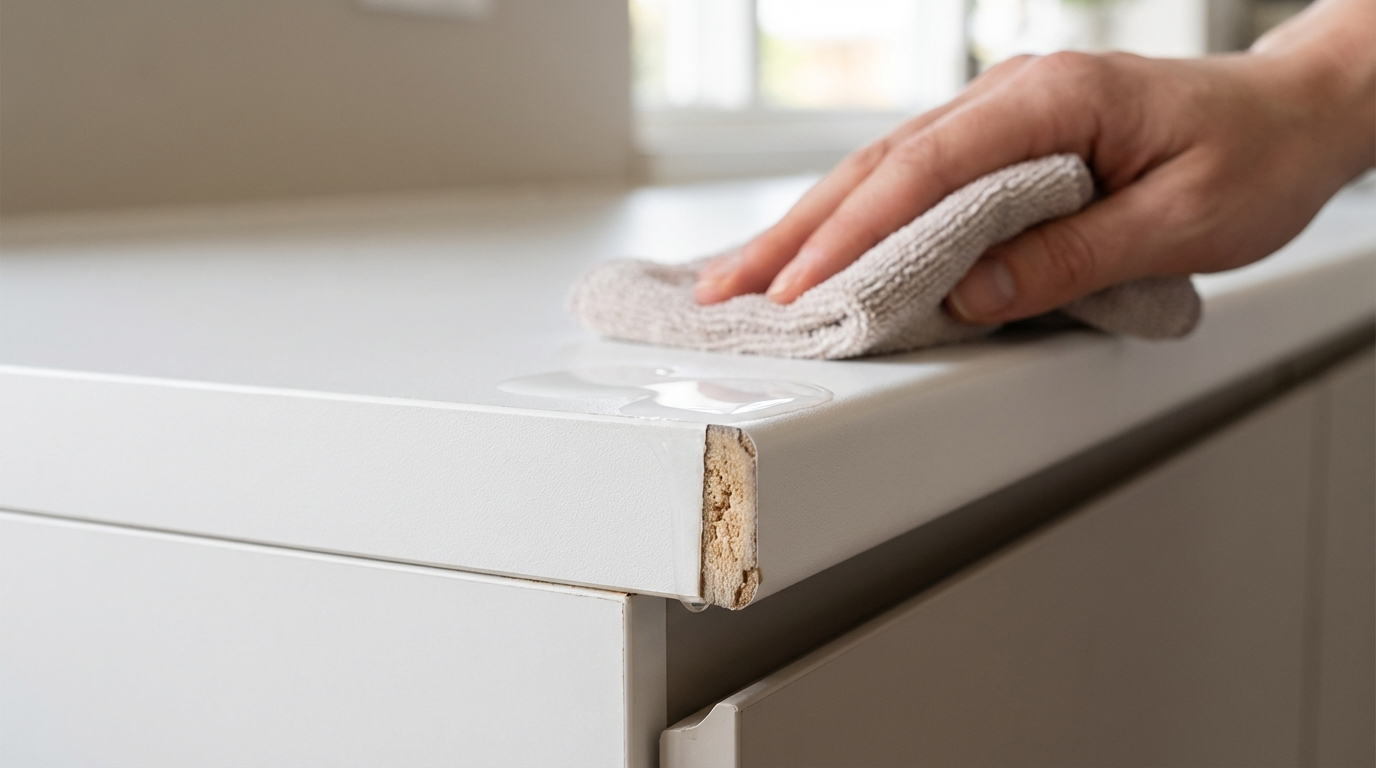
MDF, or medium-density fiberboard, consists of wood fibers bonded with urea-formaldehyde resin under heat and pressure. It forms a smooth, uniform panel ideal for furniture and interiors. Standard MDF absorbs moisture easily through its porous edges and machined surfaces, leading to swelling.
Waterproofing here means applying barrier sealants to block moisture ingress, not altering the core material. Common approaches include epoxy resin for edges, polyurethane (PU) sealants for joints, and silicone for cutouts. These create a protective skin, making panels moisture-tolerant rather than impervious. In laminated or pre-laminated MDF, factory-applied melamine faces add surface resistance, but unsealed edges remain vulnerable.
This fits workflows for modular kitchens, wardrobes, and TV units where aesthetics meet practicality. It extends to HDF variants, which have higher density for slightly better tolerance before sealing.
Why It Matters in Indian Homes and Sites
India’s monsoon season brings 80-90% humidity for months, especially in coastal areas like Kerala or Kolkata, causing unsealed MDF to swell 20-30% at edges within days of exposure. During transport or storage in open godowns, panels pick up moisture, leading to warped shutters or loose joints on site.
Site realities amplify risks: carpenters often cut panels in humid workshops without immediate sealing, and end-users splash water during cleaning. Consequences include weakened screw holds (pull-out force drops 40-50%), delamination in cabinets, and fungal growth in poorly ventilated homes. Proper sealing preserves flatness, maintains hinge alignment, and supports 5-10 years of service in typical urban apartments.
In dry interiors like bedrooms, basic edge painting suffices, but kitchens demand full epoxy treatment to handle steam and spills.
How to Decide or Do This in 5 Steps
- Assess project risks: Map wet zones (sink proximity, steam exposure). For coastal homes, prioritize MR-grade MDF; inland, standard works with sealing.
- Prep panels: Acclimate indoors 48 hours. Cut all shapes with CNC or table saw, sand edges lightly (180-grit) to remove fuzz.
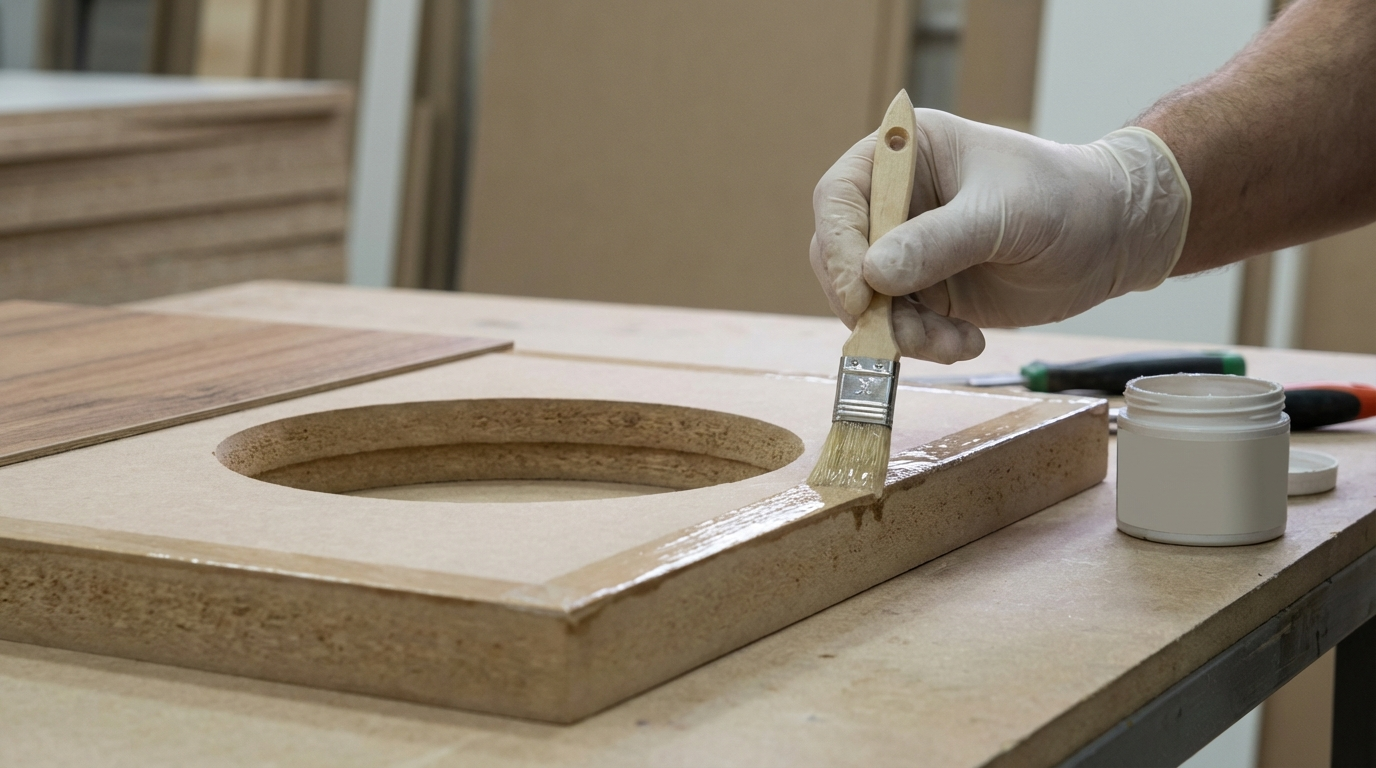
- Prime and seal edges: Apply epoxy resin (1:1 mix) via brush on all exposed edges/cutouts. 2-3 thin coats, 4-6 hours between. Use low-VOC for indoor safety.
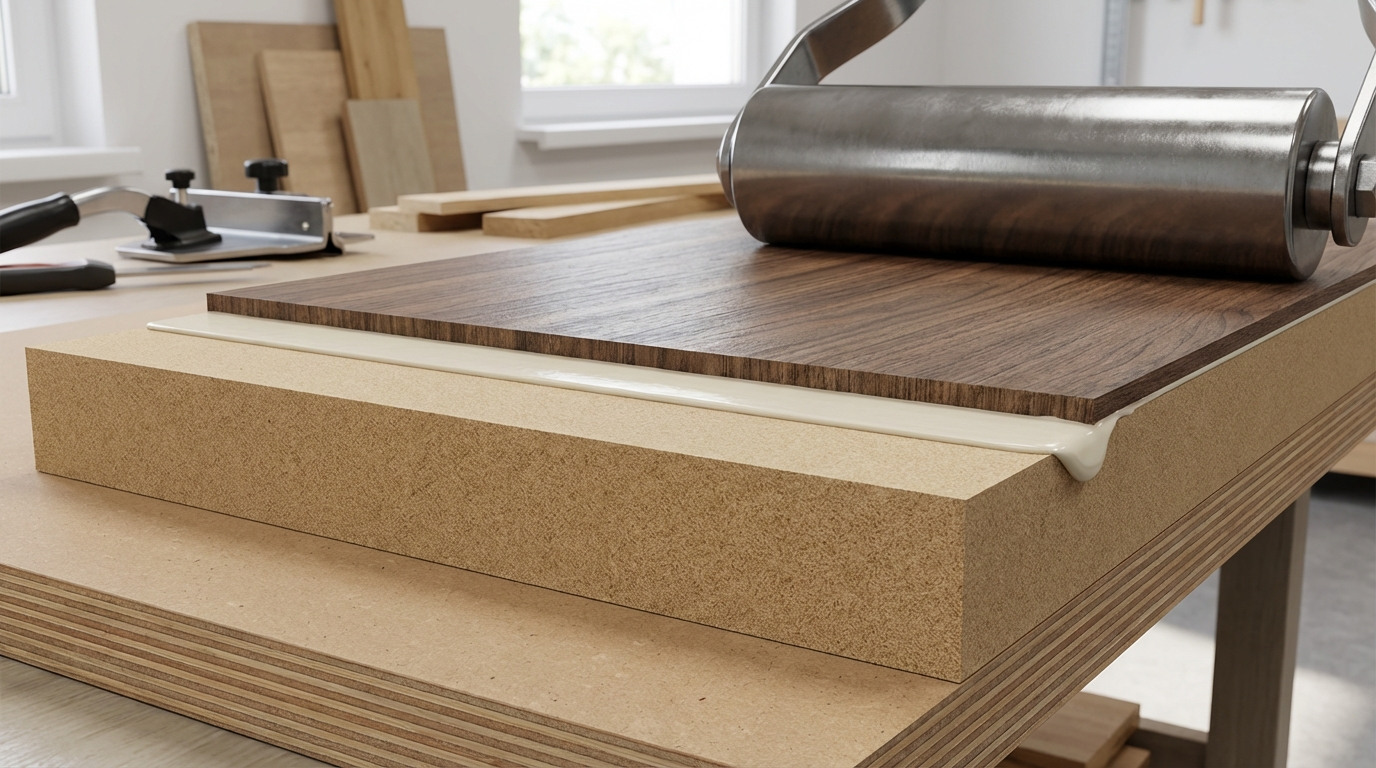
- Secure joints and gaps: Use PU adhesive for assemblies; overfill and wipe excess. Silicone sealant (neutral cure) for sink cutouts—tool smooth, cure 24 hours.
- Finish and test: Laminate or paint surfaces. Wipe test: soak edges 30 mins, check swelling. Re-seal if needed.
Common failure: skipping acclimation—panels bow post-install. Always work in <70% humidity.
Is MDF Truly Waterproof? Realistic Expectations
Can you make MDF completely waterproof like plywood?
No, MDF cannot match plywood’s inherent water resistance due to its fiber structure. Sealing achieves moisture tolerance for splashes and humidity, handling 10-20% moisture gain without failure in controlled tests. Full submersion causes core breakdown in weeks.
Nuance: In Indian kitchens, sealed edges endure daily wiping but fail under constant dripping. Check by pressing wet finger on sealed edge—if no darkening after 5 mins, it’s effective. Next: pair with upstands and exhaust fans for longevity.
Does HDF or HDFWR waterproof better than regular MDF?
HDF’s higher density (850+ kg/m³) slows moisture uptake versus standard MDF (700-750 kg/m³), buying sealing time. HDFWR adds water-repellent resins for marginal gains in humid storage.
Conditions: HDF suits high-traffic vanities; regular MDF fine for wardrobes with sealing. Verify density by weighing a known-size sample—heavier resists better. Step: always seal regardless of grade.
Decision Framework: Choose Sealing Based on Conditions
| Site Condition | Recommended Approach | Verification Check |
|---|---|---|
| Monsoon-heavy (Mumbai/Coastal) | Epoxy edges + silicone joints + MR MDF | Edge soak test: no swell after 1 hour |
| Moderate kitchen splashes | PU primer + 2 epoxy coats + lamination | Screw hold test post-seal: firm grip |
| High-use vanity (daily wet) | Full epoxy immersion + neutral silicone cutouts | 24-hour humidity chamber if possible |
| Tight budget/Dry interiors | Sanding sealer + paint edges | Visual: uniform coverage, no pinholes |
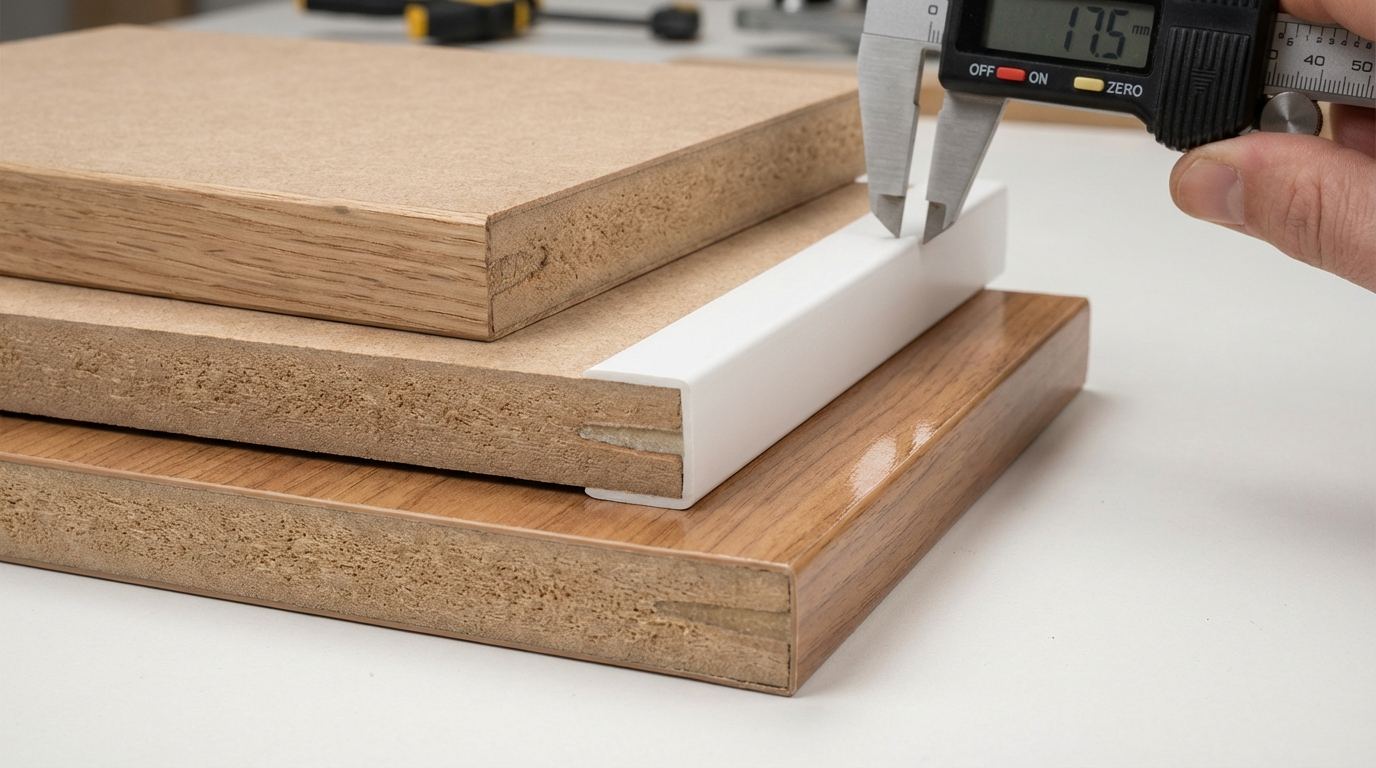
| CNC-heavy workflow | Automated edge primer pre-lamination | Measure edge thickness post-seal |
| Heavy scratch risk | PU topcoat over epoxy | Scratch test with coin: no penetration |
8 Common Mistakes to Avoid When Waterproofing MDF
- Mistake 1: Cutting panels outdoors—moisture enters instantly. Fix: Indoor CNC or covered area.
- Mistake 2: Single thin sealant coat. Fix: 2-3 coats, sand between.
- Mistake 3: Ignoring factory edges on prelam MDF. Fix: Wipe and re-prime all machined sides.
- Mistake 4: Using PVA glue for joints. Fix: PU adhesive only—expands to fill gaps.
- Mistake 5: No gap at sink cutouts. Fix: 3-5mm overhang, silicone fill.
- Mistake 6: Installing in high-humidity without cure. Fix: 48-hour dry time.
- Mistake 7: Overlooking screw holes. Fix: Seal pre-drilling, use coated screws.
- Mistake 8: Poor ventilation during application. Fix: Fans + masks, avoid rainy days.
Failure Modes and Fixes
- Symptom: Edge swelling (wavy surface). Root: Incomplete sealant penetration. Prevention: Thin coats, vacuum bubbles. Fix: Sand swollen area, re-seal twice.
- Symptom: Joint delamination (gaps open). Root: Moisture-wicking via glue line. Prevention: PU glue + clamped dry joints. Fix: Disassemble, clean, re-glue/seal.
- Symptom: Sink cutout leaks (stains below). Root: Silicone shrinkage. Prevention: Neutral-cure type, over-apply. Fix: Remove old, re-caulk fully.
- Symptom: Screw pull-out (loose hinges). Root: Swollen fibers lose grip. Prevention: Seal holes + insert plugs. Fix: Larger screws or epoxy anchors.
- Symptom: Surface blistering (bubbles under laminate). Root: Pre-seal moisture trapped. Prevention: Acclimate + dry cuts. Fix: Replace panel section.
- Symptom: Fungal spots (black mold). Root: Persistent damp in vents. Prevention: Exhaust fans + periodic wipe. Fix: Bleach clean, re-seal affected edges.
Quality Checks You Can Do Without Lab Tests
Before buying: Tap panel—dull thud means good density. Check edges for fuzz (poor pressing). Ask for MR grade proof via resin content mention.
After cutting: Run wet finger along edge—should bead up, not absorb. Inspect for voids under light. Measure flatness with straightedge.
After installation: Tug joints gently—no play. Wipe entire unit wet, dry immediately; check darkening next day. Monitor monsoon season for first signs.
Red flags: Yellowing sealant (wrong type), tacky finish (under-cured), or brittle edges (over-sanded).
Tips for Homeowners, Carpenters, Architects, and OEMs
What should homeowners do to maintain sealed MDF?
Wipe spills immediately with soft cloth—no soaking. Use mild soap monthly, avoid abrasives. Install exhaust fans near wet zones. In monsoons, run dehumidifier if possible. Expect touch-up sealing yearly on high-touch edges.
Nuance: Coastal homes need extra vigilance. Check: Press edges quarterly—if soft, re-seal. Next: Budget 5% extra for maintenance materials.
Carpenter tips for cutting and edge prep?
Cut with zero-clearance blade to minimize tear-out. Sand immediately post-cut. Apply sealant same day. Use clamps for joint gluing—24-hour set. Pre-drill sealed holes oversized for expansion.
Conditions: Humid workshops demand morning cuts only. Verify: Edge should feel glassy smooth. Workflow: Batch seal all edges before assembly.
Architect specs for wet-zone detailing?
Specify 18mm MR MDF, epoxy-sealed edges, 5mm silicone overhang at sinks. Detail upstands 100mm high. Call out acclimation and humidity limits (<65%).
Nuance: Modular projects need repeatable QC. Check: Sample board in office first. Next: Include in BOQ as line item.
OEM tips to reduce field complaints?
Automate edge priming post-CNC. QC 10% panels with drop test (water 30 mins). Package with silica packs. Train installers on silicone tooling.
India fit: Account for truck transit moisture. Verify: Customer feedback loop on swelling rates.
Practical Use Cases: What Works in Real Projects
| Use Case | Thickness | Sealing Method | Risk Notes (India) |
|---|---|---|---|
| Kitchen shutters | 18mm | Epoxy edges + PU joints | Steam ok, no submersion; monsoon check |
| Vanity cabinets | 16-18mm | Full epoxy + silicone cutouts | Daily splash tolerant if vented |
| Wardrobe internals | 12mm | Paint edges + lamination | Low risk, humidity storage key |
| TV unit shelves | 18mm | PU primer only | Dry zone fine, avoid drinks |
| Wall panels (partition) | 8-12mm | Edge tape + sealant | Coastal: extra coats |
FAQs
How long does sealed MDF last in a kitchen?
Properly sealed MDF typically lasts 7-12 years in Indian kitchens, depending on usage and maintenance. Factors like daily steam exposure shorten it to 5 years without fans, while dry counters extend to 15. The key is edge integrity—re-seal annually if wear shows. In practice, laminated surfaces chip first, but sealed cores resist swelling better than untreated.
What sealant is best for MDF edges?
Epoxy resin offers the strongest barrier for edges, penetrating fibers deeply for 2-3x better resistance than paints. Mix 1:1, apply thin. Alternatives like PU sealers work for budgets but crack easier in flex. In humid India, test cure time—full hardness in 24 hours prevents tackiness during lamination.
Can I use regular MDF in bathrooms?
Regular sealed MDF suits vanity tops but not shower walls—opt for PVC there. Sealing handles mirror-area splashes if joints are silicone-tight. Monsoon humidity demands extra coats and ventilation. Many coastal projects succeed with this hybrid, but expect touch-ups every 2 years.
Does painting edges suffice, or need epoxy?
Oil-based paints provide basic protection for dry uses but fail fast in wet zones—water penetrates pinholes. Epoxy is essential for kitchens, blocking 90% uptake. Trade-off: paint dries faster for speed. Always topcoat for scratch resistance in homes.
What if MDF swells after sealing?
Sand the swollen edge flat (220-grit), clean dust, re-apply 3 epoxy coats. Root often poor initial coverage. Prevent by acclimating panels. In field fixes, clamp flat during cure to restore shape—works 80% of cases if caught early.
Neutral silicone vs acetic for cutouts?
Neutral silicone prevents corrosion on metals and odors in homes—mandatory for sinks. Acetic cures faster but etches surfaces. Tool smooth for watertight seal; re-apply if gaps form post-shrinkage. India tip: Buy food-grade for hygiene.
How to seal CNC-routed profiles?
Spray or brush epoxy into grooves immediately post-cut—vacuum excess. Multiple passes fill voids. For intricate designs, dilute first coat 10% thinner. This preserves detail while protecting against humidity wicking in wardrobes.
Impact of monsoon on unsealed vs sealed?
Unsealed MDF swells 25% in 70% humidity over weeks; sealed holds under 5% gain. Store vertically, wrapped. Post-monsoon, inspect edges—darkening signals re-seal need. Ventilated godowns cut risks 50%.
Pre-laminated MDF: Still need edge sealing?
Yes—melamine faces protect tops, but raw edges absorb fast. Wipe clean, epoxy over. Factory edges may have primer; test absorbency. This combo shines in modular factories for quick turnaround.
Disclaimer: This content is provided for general informational purposes based on industry practices and publicly available information. Product specifications, standards, prices, and availability may vary by manufacturer, region, and time. Readers should independently verify details with manufacturers, dealers, or qualified professionals before making purchase or construction decisions.Want Plywood Suggestions?
Share a few details and a VIR MDF specialist will suggest suitable brands and connect you to responsive dealers.