Fire Retardant MDF (FR MDF): Where It’s Required & How to Specify It Correctly
Fire retardant MDF explained—where it’s used (commercial interiors), what to ask for in a spec sheet, and common pitfalls to avoid.
Quick Decision Summary
Fire Retardant MDF (FR MDF) is essential for commercial interiors like offices, malls, and hospitals where building codes demand low flame spread; always specify Class 1 fire rating.
If you’re in a hurry: Opt for FR MDF only in regulated commercial spaces or high-occupancy areas to meet fire safety norms—typically 12-18mm thick, red-tinted boards treated with retardants that promote charring over rapid burning. Skip it for standard homes unless local rules apply. Key spec: demand flame spread index under 30 per BS 476 tests. Expect 20-40% higher cost than regular MDF due to treatments. Store flat in dry conditions to avoid humidity warping during Indian monsoons. Verify supplier test data before bulk order.
- Choose this if… project is commercial (IT parks, hotels), public buildings, or corridors/stairwells needing fire compliance.
- Avoid this if… residential dry zones, low-risk areas, or tight budgets where standard MDF with laminates suffices.
What This Material/Option Actually Is
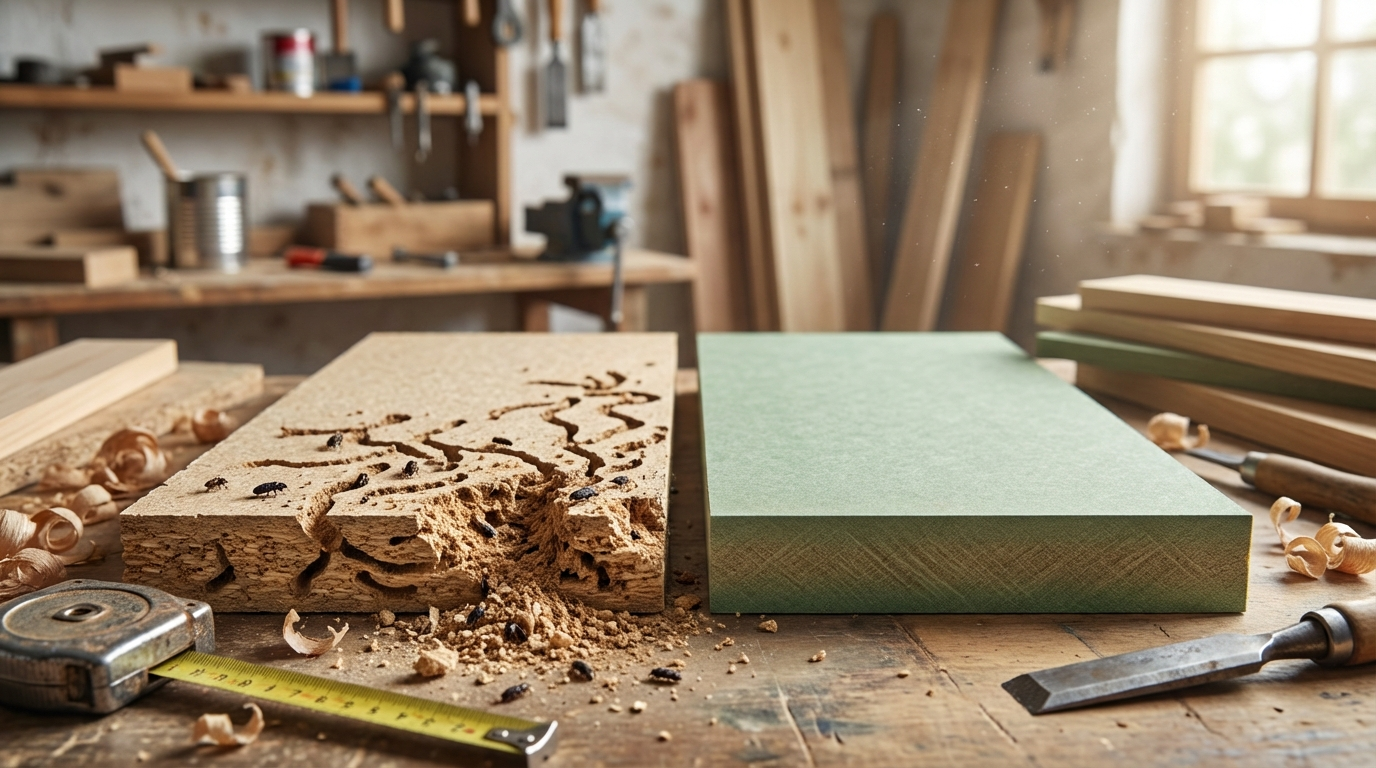
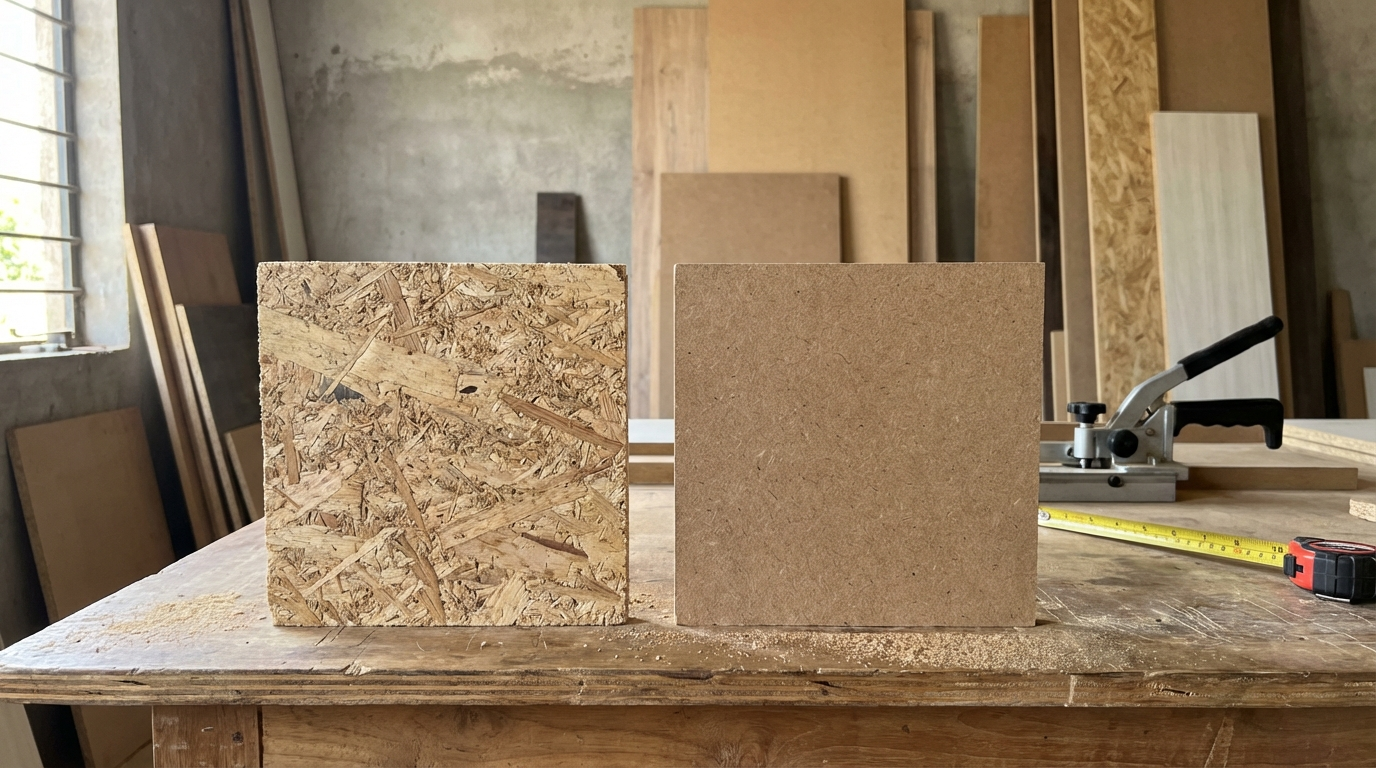
Fire Retardant MDF, or FR MDF, starts as standard Medium Density Fiberboard—a composite of wood fibers, resins, and wax pressed under heat and pressure. The difference lies in added fire-retardant chemicals during manufacturing, which release water or form a char layer when exposed to flames, slowing spread and reducing smoke.
Typically reddish or pink to distinguish it visually, FR MDF maintains MDF's smooth machinability for CNC routing and edge banding. It fits into engineered wood workflows alongside HDF or pre-laminated boards but targets fire-prone applications. Densities range 650-750 kg/m³, similar to regular MDF, but treatments can slightly alter screw-holding or sanding.
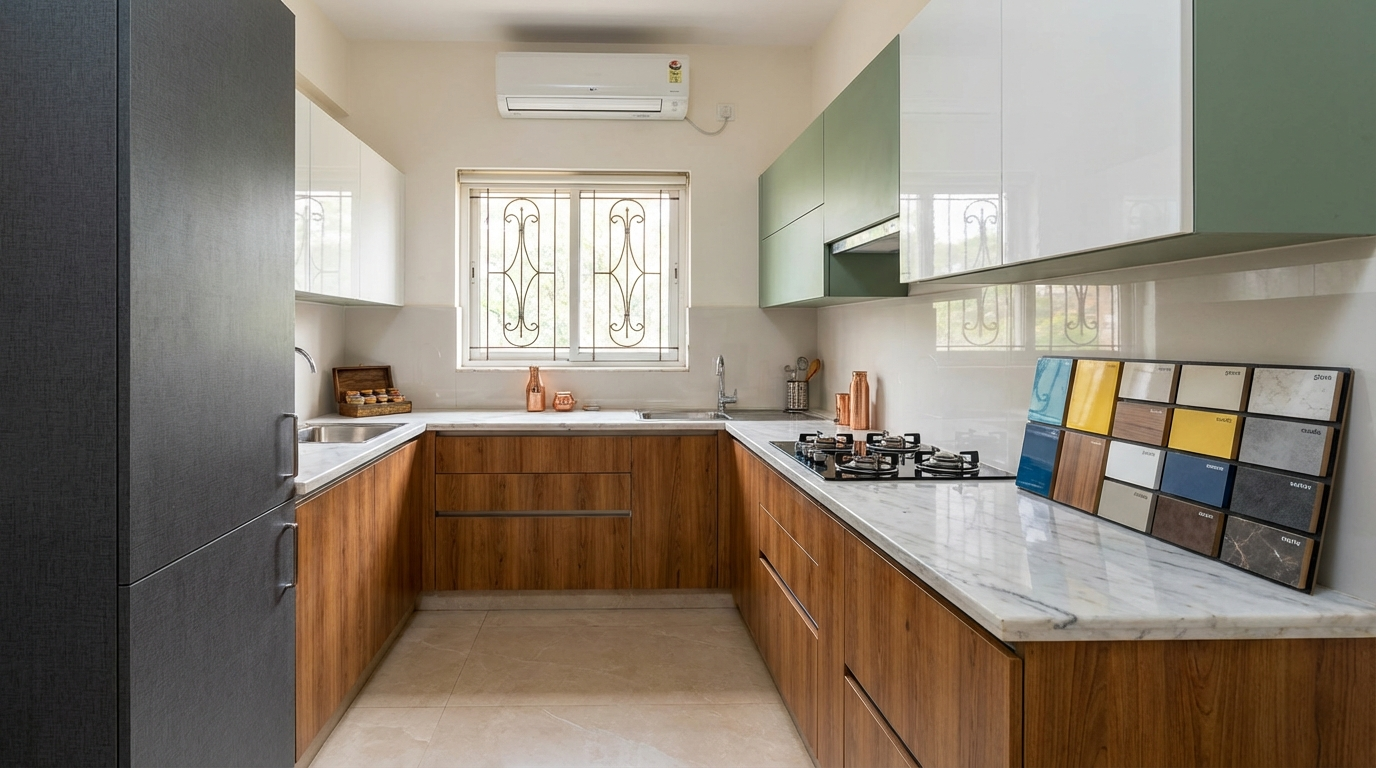
In Indian projects, it's often 12-18mm thick for partitions or cabinets, paired with melamine or laminates for finishes. Not fireproof—it burns eventually—but buys critical evacuation time.
Why It Matters in Indian Homes and Sites
In India, commercial interiors face strict fire oversight due to crowded offices, malls, and high-rises. National Building Code guidelines push for low-flame-spread materials in escape routes, ceilings, and walls to curb rapid fire growth seen in past incidents.
Monsoon humidity (70-90% RH) and coastal salt air complicate handling—untreated storage leads to edge swelling or delamination, weakening fire performance. Site realities like poor ventilation during installation amplify risks: dust from cutting FR MDF carries irritants, needing masks.
Practical fallout: standard MDF ignites fast in electrical shorts common in Indian wiring overloads, spreading via laminates. FR versions char slowly, aiding safety in high-footfall zones. Yet, over-specifying inflates costs without gains in homes.
What fire rating does FR MDF typically achieve?
FR MDF usually hits Class 1 per BS 476 Part 7 (flame spread ≤30) or Euroclass B-s1,d0, meaning limited flame growth and low smoke. This outperforms standard MDF's Class 3-4 ratings.
Nuance: ratings vary by treatment depth and board thickness—thinner boards may underperform. In humid Indian sites, verify post-exposure stability.
Next step: Ask suppliers for independent lab sheets showing test conditions matching your use (e.g., vertical exposure for walls). Cross-check with project architect's NBC compliance needs.[[1]](https://www.greenpanel.com/fire-retardant-mdf-boards/)[[2]](https://www.kronospan.com/en_GR/products/view/kronobuild/fiberboard/fire-retardant-mdf/fire-retardant-mdf-705/)
Is FR MDF the same as fireproof MDF?
No—FR MDF retards fire by charring and slowing spread but eventually burns; true fireproof materials don't exist in wood panels.
Conditions: Effective up to 30-60 minutes depending on thickness, ideal for evacuation not containment. Pair with sprinklers for best results.
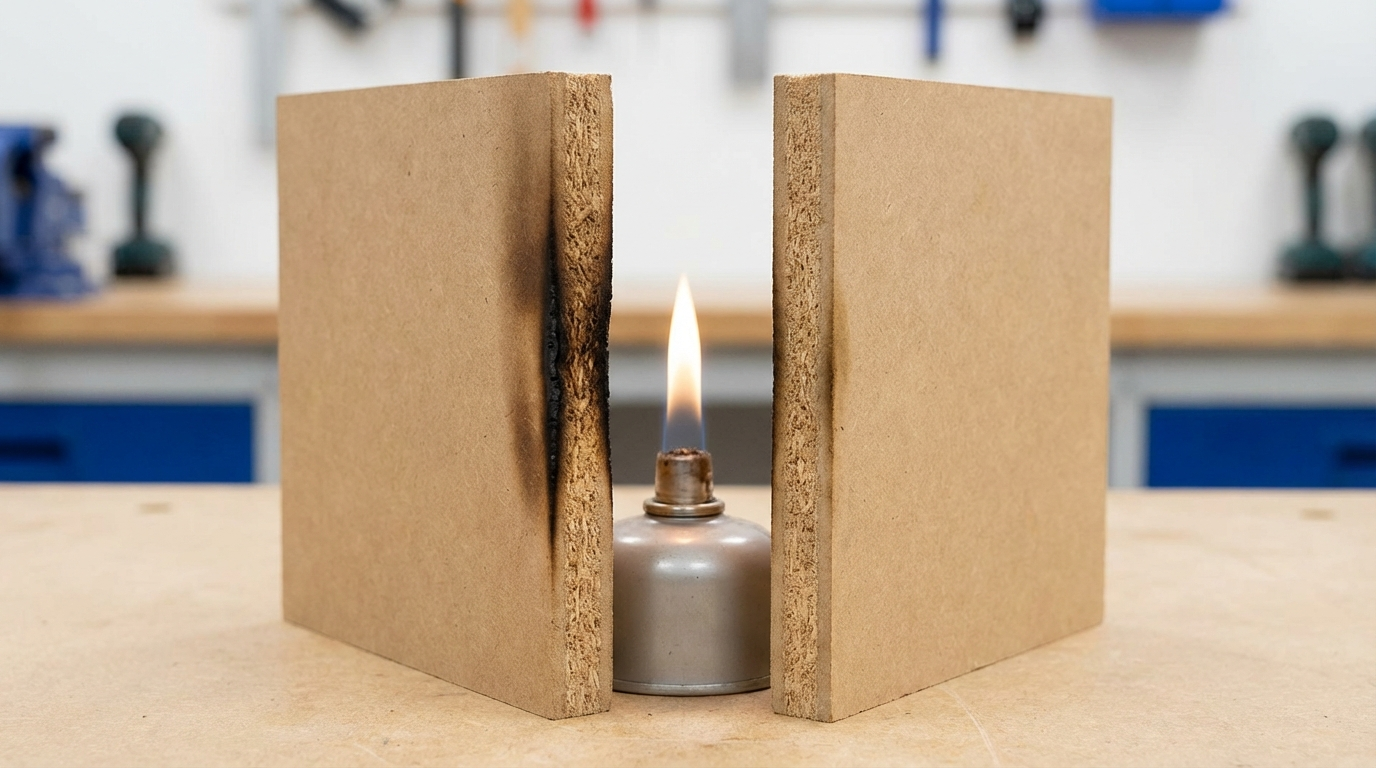
Check: Hold a lighter briefly to edge (safely, outdoors)—FR chars black without dripping flames, unlike regular MDF.[[3]](https://vir-mdf.com/fire-retardant-mdf-vs-regular-mdf.html)
Meaning, Types, and Where People Get Confused
FR MDF means Medium Density Fiberboard impregnated with retardants like ammonium phosphates or borates, certified for reduced ignitability. Core confusion: it's not moisture-resistant by default—needs MR or HDFWR variants for wet zones.
- Misunderstanding 1: "FR = fireproof"—it delays, doesn't stop fire.
- Misunderstanding 2: Red color guarantees quality—cheap fakes exist; check test reports.
- Misunderstanding 3: Same machinability as standard—cutting produces more fumes, needs extraction.
- Misunderstanding 4: Cheaper than plywood—no, treatments add cost parity.
- Misunderstanding 5: Home use always needed—only if codes specify, like high-rise apartments.
- Misunderstanding 6: Laminates make it FR—surface finishes don't confer bulk retardancy.
Where Fire Retardant MDF is Required in India
Primarily commercial: NBC Part 4 mandates Class 1 materials for interior linings in assembly buildings (malls, theaters), institutional (hospitals, schools), business (offices, IT parks), and high-rises above 15m. Specifics: corridors, stairwells, false ceilings, partitions over 10% floor area.
Hotels and hostels need it for room partitions; kitchens in commercial setups for cabinets. Residential: rare, but high-rises or gated communities may stipulate for lobbies. Coastal cities like Mumbai enforce stricter due to dense occupancy.
Decision rule: If occupancy >50 or multi-story, spec FR; verify with local fire officer.
Practical Use Cases (What Works, What Fails)
| Application | Recommended Thickness | Finish Notes | Risk Notes (India Context) |
|---|---|---|---|
| Office Partitions | 12-18mm | Melamine or laminate | High—crowded spaces; fails if unsealed edges absorb monsoon moisture |
| Hotel Room Walls | 9-12mm | Veneer + FR coating | Medium—smoking risks; humidity warps if not acclimated |
| Mall False Ceilings | 6-9mm | Painted or acoustic | High—fire load from lights; dust buildup reduces rating |
| Commercial Kitchens (Cabinets) | 18mm + MR | High-pressure laminate | Critical—grease fires; combine with MR for steam |
| School Auditoriums | 12mm | Fabric-covered | High—evacuation priority; kid vandalism chips edges |
How to Specify FR MDF Correctly in 5 Steps
- Assess need: Review NBC/project specs—if flame spread index <30 required, proceed.
- Define thickness/density: 12-18mm, 700+ kg/m³ for structural use.
- Demand tests: BS 476 Class 1 or equivalent; ask for dated reports.
- Specify extras: MR grade for humid sites, edge banding mandatory.
- Quote checklist: Include delivery flat-wrapped, storage norms.
Failure point: Vague specs lead to downgrades—write "FR MDF BS 476 Class 1 verified".
FR MDF vs Standard MDF: Two-Minute Comparison
| Aspect | FR MDF | Standard MDF | Trade-off |
|---|---|---|---|
| Fire Behavior | Chars slowly, low smoke | Ignites fast, high flame | FR adds safety, costs more |
| Cost (per sqm, 18mm) | Typically 20-50% higher | Lower baseline | Budget vs compliance |
| Machinability | Good, but fumey dust | Smoother | Ventilation needed |
| Humidity Tolerance | Similar—needs MR add-on | Same | No free moisture gain |
Decision Framework: Choose Right Board for Conditions
| Site Condition | Recommended Spec | Verify Checklist |
|---|---|---|
| Wet/Coastal (high RH) | FR + MR HDF, 18mm | Water soak test: <10% swell |
| Heavy Use (offices) | FR MDF 18mm + laminate | Screw hold: 800N min |
| Tight Budget | Standard + intumescent paint | Cost audit: avoid overkill |
| Fast Delivery | Pre-lam FR stock sizes | Lead time <7 days |
| High Scratch Risk | FR + 0.8mm laminate | Taber abrasion test data |
| Monsoon Storage | Wrapped pallets, elevated | MC 8-12% on delivery |
Price Range and Cost Drivers
For 18mm FR MDF, expect ₹50-90 per sq ft in major cities, varying 20-30% by tier-2/3 locations. Thinner 12mm drops to ₹40-70.
Drivers: Treatment chemicals (20% uplift), thickness/density, logistics (North vs South adds 10%), batch certification. Wastage from CNC kerf ups 5-10%.
Budget example: 100 sq ft office partition (18mm)—₹6,000-9,000 material + 20% edges. Quote ask: "Breakout: base + FR premium + freight".
Common Buyer Mistakes and How to Avoid (8 Key Ones)
- Mistake 1: Assuming FR handles moisture—avoid by adding MR spec for coastal.
- Mistake 2: No test verification—demand BS 476 sheets pre-purchase.
- Mistake 3: Bulk storage outdoors—use covered godown, check MC gauge.
- Mistake 4: Skipping edge sealing—band all cuts same day.
- Mistake 5: Wrong thickness for spans—calc load, min 18mm partitions.
- Mistake 6: Ignoring cutting fumes—setup dust extraction mandatory.
- Mistake 7: Residential over-spec—audit codes first.
- Mistake 8: No acclimation—site-condition boards 48hrs pre-install.
Failure Modes and Fixes
- Symptom: Rapid edge charring in test. Cause: Fake FR. Fix: Reject, source certified. Prevention: Visual red uniform + report.
- Symptom: Swelling post-monsoon. Cause: Humidity ingress. Fix: Sand/refinish edges. Prevention: MR grade + sealant.
- Symptom: Poor screw hold in hinges. Cause: Lower density from treatments. Fix: Reinforce pilots. Prevention: 750kg/m³ min.
- Symptom: Fume irritation during CNC. Cause: Chemical volatiles. Fix: Ventilate, masks. Prevention: Wet saw option.
- Symptom: Delam in fire exposure. Cause: Unsealed surfaces. Fix: Replace panels. Prevention: Full laminate cover.
- Symptom: Chipping at routes. Cause: Brittle fibers. Fix: Slower feeds. Prevention: Sharp tools, 6000rpm+.
Quality Checks You Can Do Without Lab Tests
Before buying: Uniform red tint, no dark streaks; flat stack—no warp; tap test—dull thud, no cracks. Ask: "Which fire test passed? Retention % chemicals?" Red flag: Vague answers.
After cutting: Edges char slowly (lighter test safely); dust not overly acrid; screw 20mm deep—no strip.
After install: Even gaps, no sags; wipe clean— no residue lift. Habits: Avoid wet wipes, use dry cloth.
Does FR MDF work in humid Indian kitchens?
Only if MR variant—pure FR lacks water resistance, swells in steam.
Nuance: Coastal humidity accelerates failure; thickness >16mm helps.
Step: Spec "FR-MR dual treated", check immersion swell <8%.[[4]](https://www.risunboard.com/news/74.html)
Can I use FR MDF for home wardrobes?
Rarely needed—standard suffices unless high-rise lobby.
Conditions: Cost no issue, but overkill adds weight.
Check: Local bye-laws; if no, save 30%.[[3]](https://vir-mdf.com/fire-retardant-mdf-vs-regular-mdf.html)
Tips by User Persona
Homeowners: Prioritize sealed edges for easy clean—avoid spills near panels. Durability: Lasts 10+ years dry; don't overload shelves.
Carpenters: Acclimate 72hrs; use 10mm pilot holes; edge band CNC cuts immediately. Handling: Gloves for dust.
Architects/Designers: Detail FR zones in drawings; spec thicknesses per span tables; wet-zone buffers with MR.
OEM/Modular Makers: QC: Random torch char test; batch traceability; reduce returns via pre-lam options.
How to cut FR MDF without health risks?
Use dust extraction vacuum + N95 masks; cut outdoors or ventilated.
Nuance: Chemicals volatile in heat; slower speeds reduce fines.
Next: Train team, stock extractors.[[5]](https://www.creffields.co.uk/2025/03/18/top-tips-for-working-with-fire-retardant-mdf/)
What's the shelf life of FR MDF sheets?
12-24 months if stored dry, flat, under cover.
Conditions: Monsoon exposes to 20% MC rise, warping.
Check: Weigh sample vs spec density on arrival.[[6]](https://www.researchgate.net/publication/290530540_Effect_of_two_relative_humidity_environments_on_the_performance_properties_of_MDF_OSB_and_chipboard_Part_1_MOR_MOE_and_fatigue_life_performance)
FAQs
Is FR MDF mandatory for all commercial offices in India?
No, but required for specific areas like corridors and ceilings per NBC if occupancy exceeds thresholds. In practice, many IT parks and malls specify it fully to simplify approvals. Assess via fire consultant—over-spec adds unnecessary cost in low-risk zones like private cabins. Always align with local municipal fire NOC requirements, especially in metros like Delhi or Bangalore where audits are strict.
Can FR MDF be painted or laminated like regular MDF?
Yes, it accepts paints, laminates, veneers, and melamine finishes seamlessly due to similar surface porosity. However, choose FR-rated adhesives to maintain overall rating. In Indian workflows, pre-laminated FR saves time but verify glue lines don't compromise retardancy. Test adhesion on scrap—peel strength should match standard. Ideal for modular units where aesthetics meet safety.
How does humidity affect FR MDF performance?
High RH causes swelling and density drop, indirectly weakening fire char integrity like regular MDF. In monsoon-prone India, opt for FR-MR hybrids; store at 12% MC. Field fix: If warped, reject batch. Prevention beats cure—elevate pallets, use silica packs. Long-term, it holds better than plywood in stable interiors but monitor coastal installs closely.
What thickness of FR MDF for partitions?
12-18mm standard for non-load bearing; 18-25mm if spanning >600mm or with doors. Factor Indian site vibrations—thicker resists sags. CNC workflows favor even thicknesses for nesting. Verify supplier span tables; under-spec leads to callbacks. Combine with metal studs for high-rises.
Does FR MDF release toxic fumes in fire?
Typically lower smoke and gases than standard due to charring, but resins emit CO/acrylates. Design with ventilation/smoke detectors. In crowded Indian venues, this edge aids escape. Post-fire, inspect for residue before reuse—often total replacement needed.
Can carpenters work FR MDF on standard tools?
Yes—saws, routers, sanders handle it, but upgrade extraction for finer dust. Blades dull 20% faster from abrasives; stock spares. In humid sites, pre-drill to avoid splits. Workflow tip: Cut-to-size offsite reduces site mess.
Is FR MDF more expensive long-term?
Upfront yes (20-50% premium), but compliance avoids fines/rewrites. Durability matches standard if protected. ROI shines in commercial leases with fire audits. Budget hack: Hybrid zones—FR only where mandated.
How to verify genuine FR MDF at site?
Uniform red core on cross-cut; request test report copies. Simple field: Lighter to edge—chars without flame travel >50mm. Weigh for density. Red flags: Price too low, inconsistent color. Insist on third-party certs for big projects.
Can FR MDF go in bathrooms or kitchens?
Not standalone—needs MR treatment for steam/splashes. Common fail: Swells delam. Spec dual FR-MR for commercial pantries. Edge seal + PVC molding boosts life. Homeowners: Avoid fully, use SS or tiles nearby.
What's the difference between FR MDF and FR plywood?
FR MDF smoother for laminates/CNC, uniform density; plywood stronger screw-hold but grainier. MDF edges better for painting. Choose MDF for flush panels, ply for frames. Both retard similarly if Class 1. Cost: MDF often edges lower.
Disclaimer: This content is provided for general informational purposes based on industry practices and publicly available information. Product specifications, standards, prices, and availability may vary by manufacturer, region, and time. Readers should independently verify details with manufacturers, dealers, or qualified professionals before making purchase or construction decisions.Want Plywood Suggestions?
Share a few details and a VIR MDF specialist will suggest suitable brands and connect you to responsive dealers.