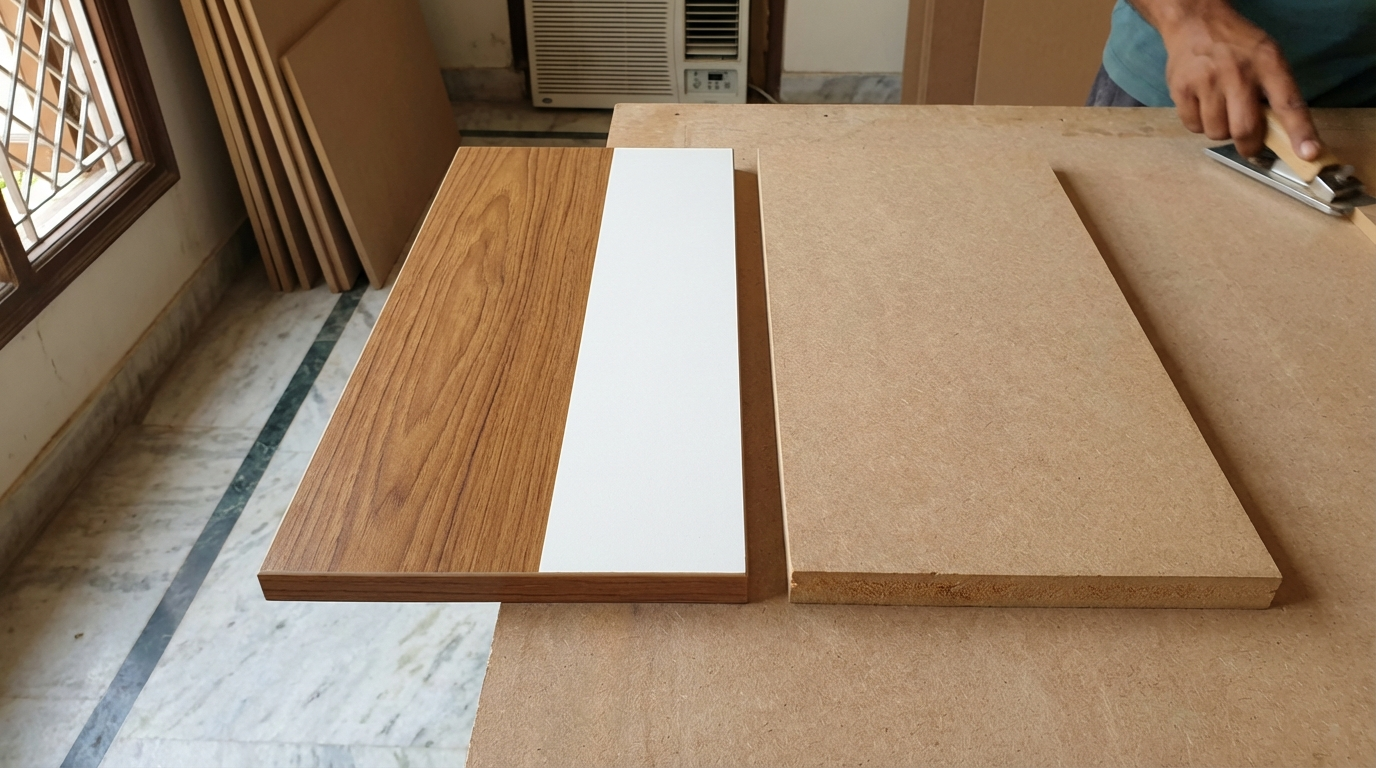
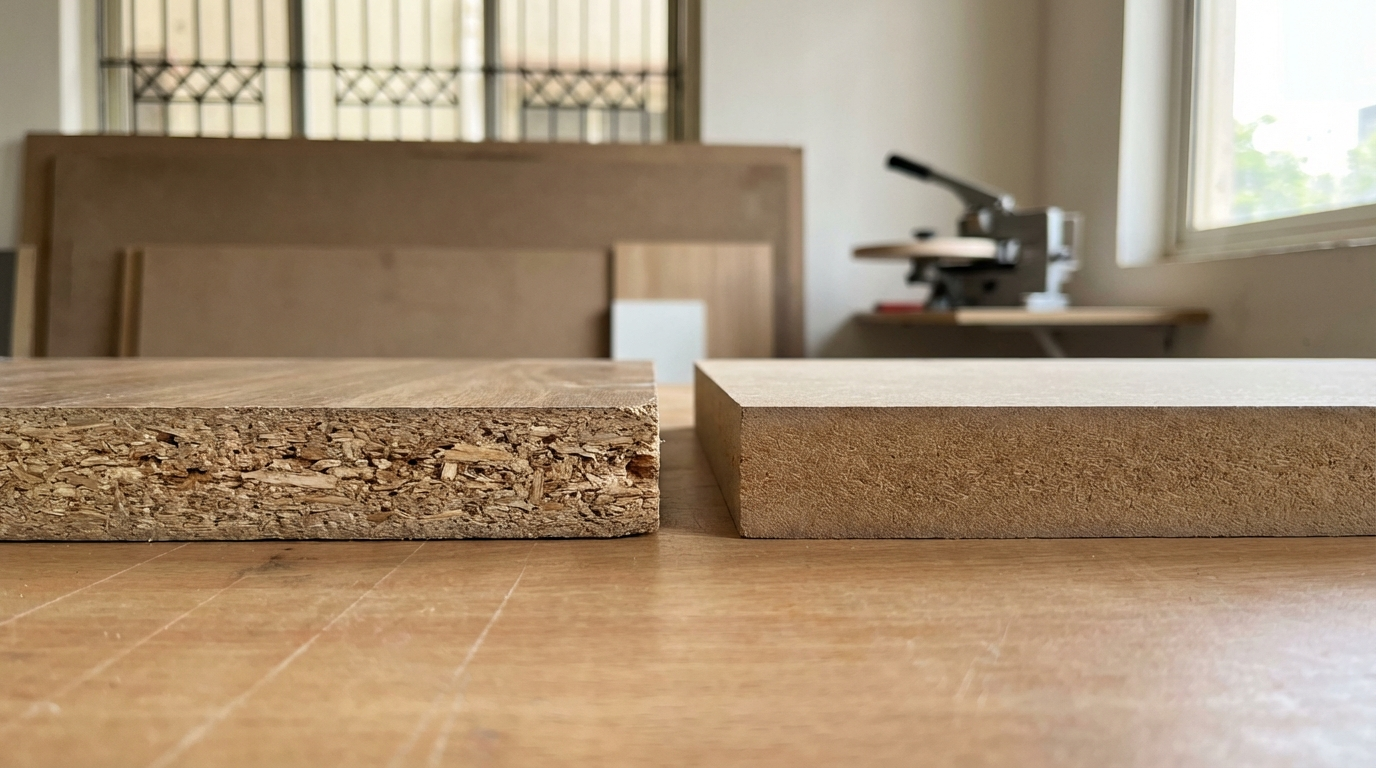
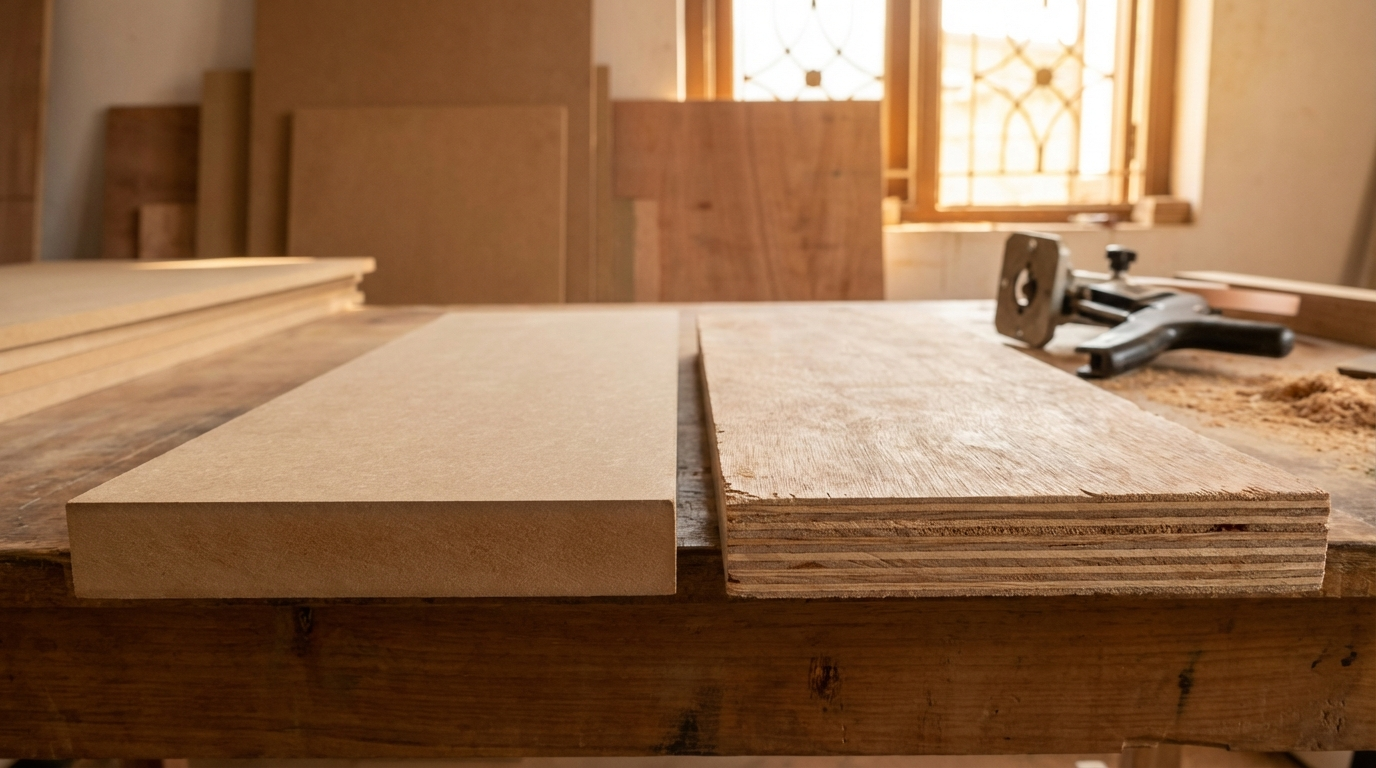
HDHMR vs MDF: Complete Comparison for Indian Homes 2026
HDHMR vs MDF board comparison: moisture resistance, strength, price & best uses. Complete guide for Indian homes. Find VIR boards for your project.
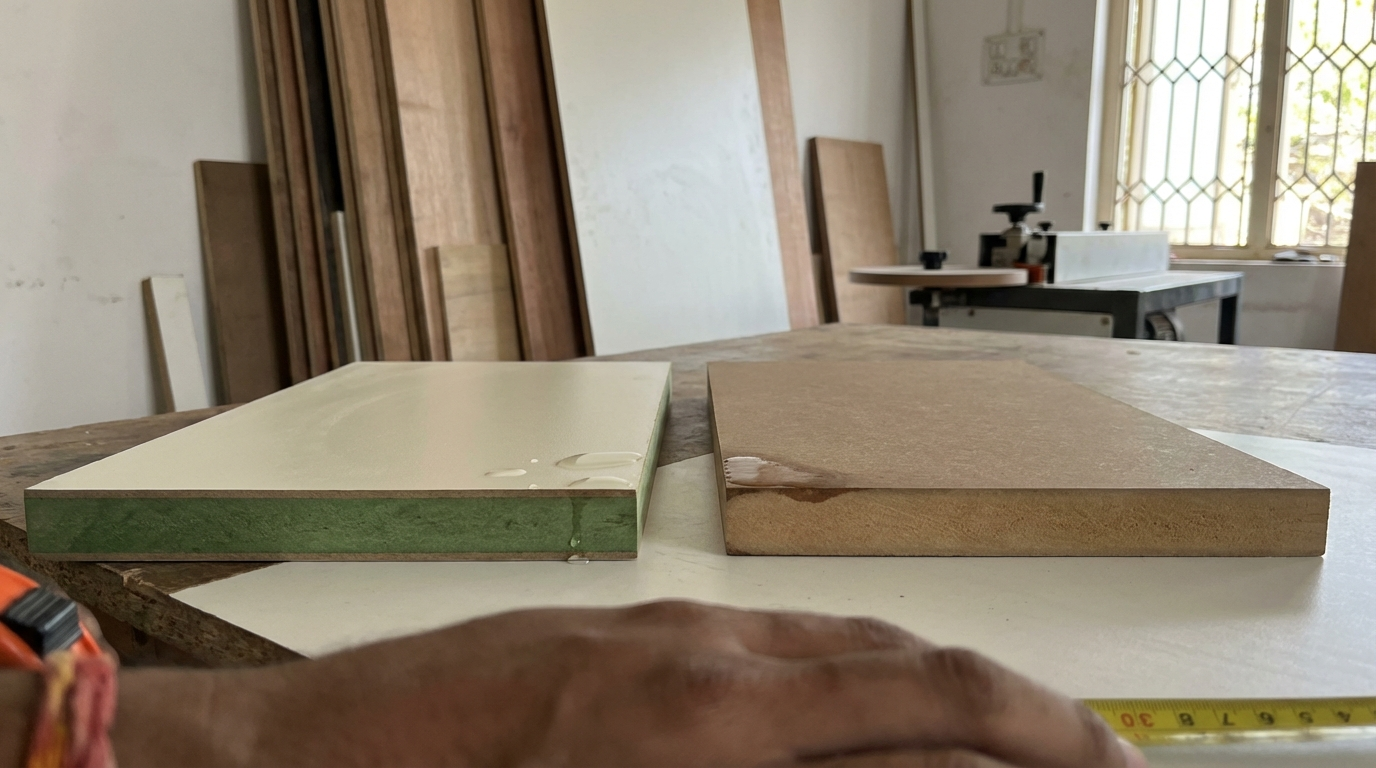
Quick Answer: HDHMR (High Density High Moisture Resistant) boards outperform standard MDF in moisture resistance, density, and durability, making them ideal for Indian kitchens and bathrooms. Choose HDHMR for wet zones and high-humidity areas; choose MDF for dry, budget-conscious interior projects where moisture exposure is minimal.
Quick Decision Summary
HDHMR boards offer superior moisture resistance and density compared to standard MDF, making them the preferred choice for humidity-prone Indian homes in 2026.
If you're in a hurry: For kitchen cabinets, bathroom vanities, or any furniture in coastal or monsoon-affected areas, HDHMR is your safer investment. Standard MDF works well for bedroom wardrobes, TV units, and decorative panels in air-conditioned, dry spaces where moisture isn't a concern.
Choose HDHMR if:
- Your project involves kitchen base units or sink cabinets
- You live in a coastal city or high-humidity region
- The furniture will be exposed to steam, splashes, or condensation
- You need long-term durability without swelling concerns
Choose MDF if:
- Your budget is tight and the area stays completely dry
- You need an ultra-smooth surface for high-gloss paint finishes
- The installation is in an air-conditioned bedroom or living room
- You're building decorative mouldings, wall panels, or craft projects
What HDHMR and MDF Actually Mean
MDF (Medium Density Fibreboard) refers to an engineered wood panel made by breaking down hardwood or softwood residuals into fine wood fibres, combining them with wax and resin binder, and forming panels through high temperature and pressure. The resulting board has a density typically between 600-750 kg/m³ and offers a smooth, uniform surface ideal for painting and laminating.
HDHMR (High Density High Moisture Resistant) refers to an upgraded version of HDF (High Density Fibreboard) that incorporates special moisture-resistant resins, typically melamine-urea-formaldehyde with added wax. HDHMR boards achieve densities of 850+ kg/m³ and undergo additional treatment to resist water absorption significantly better than standard MDF or even regular HDF.
Where they fit in the material hierarchy:
- Particle Board → MDF → HDF → HDHMR (increasing density and performance)
- Standard MDF → MR-MDF (Moisture Resistant) → HDHMR (increasing water resistance)
Common confusions clarified:
- HDHMR is NOT the same as regular HDF – it has additional moisture-resistant treatment
- MR-MDF is NOT equivalent to HDHMR – HDHMR typically offers higher density plus better moisture performance
- Neither board is completely waterproof – both are water-resistant to varying degrees
- HDHMR is sometimes marketed as "HDFHMR" or "HDF-HMR" by different manufacturers
Why This Comparison Matters for Indian Homes
India's climate presents unique challenges that make board selection critical. Understanding how HDHMR and MDF perform under real Indian conditions can save you from costly furniture failures.
Monsoon and Humidity Impact
During June to September, relative humidity in many Indian cities exceeds 80-90%. Standard MDF absorbs this ambient moisture, causing edge swelling, surface bubbling, and structural weakening. In coastal cities like Mumbai, Chennai, or Kochi, this problem persists nearly year-round. HDHMR's moisture-resistant resin formulation significantly reduces water absorption, maintaining dimensional stability even during peak monsoon.
Real Consequences of Wrong Choice
Choosing standard MDF for kitchen cabinets in a humid area typically results in:
- Edge swelling within 6-12 months, especially near sinks and gas stoves
- Laminate delamination due to substrate expansion
- Hinge screw failure as the board softens around fittings
- Complete cabinet replacement within 3-5 years
Site Handling Realities
During construction, boards often sit exposed on sites for days or weeks. MDF left uncovered during even light rain will absorb moisture and become unusable. HDHMR tolerates brief exposure better, though proper storage remains essential. Indian carpenter workshops rarely have climate control, meaning boards face humidity fluctuations during cutting and assembly – another scenario where HDHMR's stability proves valuable.
Head-to-Head Comparison: HDHMR vs MDF
| Parameter | Standard MDF | HDHMR | Winner For |
|---|---|---|---|
| Density | 600-750 kg/m³ | 850-900+ kg/m³ | HDHMR – structural strength |
| Moisture Resistance | Poor – swells quickly | High – resists humidity and splashes | HDHMR – wet zones |
| Screw Holding | Moderate – edges can split | Excellent – dense core grips well | HDHMR – heavy hardware |
| Surface Smoothness | Excellent – ultra-smooth | Very Good – slightly textured | MDF – paint finishes |
| Price (per sq ft, 18mm) | ₹35-55 | ₹75-110 | MDF – budget projects |
| Weight | Moderate | Heavy | MDF – wall-mounted units |
| Termite Resistance | Low to Moderate | High | HDHMR – pest-prone areas |
| Machinability | Excellent – clean cuts | Good – dulls blades faster | MDF – intricate routing |
| Expected Lifespan | 5-10 years (dry areas) | 12-15+ years | HDHMR – long-term value |
| Edge Quality After Cutting | Very smooth | Smooth, less chipping | Comparable |
When to Choose MDF Over HDHMR
Despite HDHMR's advantages, MDF remains the better choice when:
- The installation is in a permanently air-conditioned space
- Budget constraints are significant and moisture risk is genuinely low
- You need the smoothest possible surface for spray painting or high-gloss lacquer
- The project involves decorative mouldings, speaker boxes, or craft applications
- Weight is a concern for wall-mounted installations without adequate support
When HDHMR is Non-Negotiable
Always choose HDHMR for:
- Kitchen base cabinets and sink units
- Bathroom vanity carcasses
- Modular kitchen shutters in non-AC kitchens
- Any furniture in coastal cities or flood-prone ground floors
- Commercial kitchen and restaurant furniture
- Wardrobes in homes without regular AC usage
Price Ranges and Cost Factors in India 2026
Understanding the cost difference between HDHMR and MDF helps in budgeting realistically. Prices vary by brand, thickness, and region.
Current Price Ranges (January 2026)
| Thickness | MDF (₹/sq ft) | MR-MDF (₹/sq ft) | HDHMR (₹/sq ft) |
|---|---|---|---|
| 6mm | ₹18-28 | ₹25-35 | ₹40-55 |
| 12mm | ₹28-42 | ₹38-52 | ₹55-75 |
| 18mm | ₹38-55 | ₹50-68 | ₹75-110 |
| 25mm | ₹52-70 | ₹65-85 | ₹95-130 |
Note: Prices vary significantly by brand, location, and purchase volume. These ranges represent typical retail prices in major Indian cities.
Cost Drivers to Consider
- Brand premium: Established brands typically cost 15-25% more than lesser-known manufacturers
- Pre-laminated vs raw: Pre-laminated boards cost ₹25-45 more per sq ft but save lamination labour
- Transport: Heavy HDHMR sheets incur higher freight, especially for remote locations
- Wastage: Both boards have similar cutting wastage (typically 8-12%)
Budget Estimation Example
For a 10x10 ft modular kitchen with approximately 120 sq ft of board requirement:
- Standard MDF (18mm): ₹4,500-6,600 for boards alone
- HDHMR (18mm): ₹9,000-13,200 for boards alone
- Difference: ₹4,500-6,600 extra for HDHMR
This ₹5,000-7,000 premium often represents less than 5-8% of total kitchen cost but can prevent complete replacement within 5 years – making HDHMR the more economical long-term choice for kitchen applications.
Decision Framework: Which Board for Which Condition
| Condition/Scenario | Recommended Choice | What to Verify |
|---|---|---|
| Kitchen base units near sink | HDHMR (mandatory) | Check density rating, ensure 850+ kg/m³ |
| Kitchen wall units (with chimney) | HDHMR (recommended) | Verify moisture resistance grade |
| AC bedroom wardrobe | MDF or MR-MDF | Confirm room has consistent AC usage |
| Non-AC bedroom wardrobe | HDHMR or MR-MDF | Assess local humidity levels |
| Bathroom vanity cabinet | HDHMR (mandatory) | Ensure edges will be properly sealed |
| Living room TV unit | MDF | Check for water sources nearby |
| Coastal city (any furniture) | HDHMR (recommended) | Verify salt-air resistant finishing planned |
| Tight budget, dry area | MDF | Plan for edge sealing, avoid wet zones |
| CNC-routed decorative panels | MDF | MDF gives cleaner routing results |
| Heavy shelving (books, equipment) | HDHMR | Check thickness adequacy, consider span |
| High-traffic commercial space | HDHMR | Verify warranty coverage for commercial use |
| Pooja room cabinet | MDF (usually adequate) | Keep away from oil lamp/diya moisture |
Common Buyer Mistakes (And How to Avoid Them)
Learning from others' errors can save significant money and frustration. Here are the most frequent mistakes Indian buyers make when choosing between HDHMR and MDF:
Mistake 1: Using Standard MDF for Kitchen Sink Cabinets
Consequence: Swelling starts within 3-6 months, hinge screws loosen, cabinet base warps
Prevention: Always use HDHMR for any cabinet within 2 feet of water sources
Mistake 2: Assuming "Waterproof" Claims are Absolute
Consequence: Leaving HDHMR edges unsealed leads to moisture ingress and eventual swelling
Prevention: Always seal all edges with laminate, edge band, or sealant – even on HDHMR
Mistake 3: Choosing MDF Just Because It's Cheaper
Consequence: Replacement costs within 5 years exceed the initial savings multiple times
Prevention: Calculate total cost of ownership, not just initial material cost
Mistake 4: Ignoring Local Humidity Patterns
Consequence: MDF furniture in humid regions fails prematurely
Prevention: Research your city's average humidity; if above 70% for 4+ months, prefer HDHMR
Mistake 5: Not Verifying Actual Board Grade
Consequence: Receiving inferior MDF labelled as HDHMR, or HDF sold as HDHMR
Prevention: Ask for density specifications, check manufacturer documentation, buy from reputable dealers
Mistake 6: Storing Boards Improperly Before Use
Consequence: Both MDF and HDHMR absorb moisture if left exposed on construction sites
Prevention: Store flat, off the ground, covered with plastic sheet, in enclosed space
Mistake 7: Using the Same Board Throughout the House
Consequence: Overspending on HDHMR for dry areas, or under-specifying for wet zones
Prevention: Zone your requirements – HDHMR for wet areas, MDF for dry areas
Mistake 8: Neglecting Edge Banding Quality
Consequence: Poor edge banding allows moisture entry regardless of board type
Prevention: Invest in quality PVC edge band (1mm+ thickness) with proper adhesive application
Failure Modes and How to Prevent Them
Understanding how these boards fail helps you prevent problems before they start.
Failure Mode 1: Edge Swelling
Symptom: Edges become puffy, soft, or discoloured
Root Cause: Unsealed edges absorbing moisture from air or direct water contact
Prevention: Apply edge band to all exposed edges immediately after cutting; use moisture-resistant adhesive
Fix if Already Happening: Cut back affected portion by 10-15mm, apply fresh edge band with sealant
Failure Mode 2: Surface Delamination
Symptom: Laminate or veneer peeling away from board surface
Root Cause: Substrate swelling creating uneven surface; poor initial lamination adhesive
Prevention: Use appropriate adhesive for board type; ensure board is acclimatized before lamination
Fix if Already Happening: If localized, inject adhesive under bubble and clamp; if widespread, replacement may be necessary
Failure Mode 3: Hinge Screw Pull-Out
Symptom: Hinges becoming loose, doors sagging or falling off
Root Cause: Board core softening from moisture; MDF's inherent lower screw-holding strength
Prevention: Use HDHMR for doors; pre-drill correctly; don't over-tighten; consider hinge plates for MDF
Fix if Already Happening: Fill holes with wood filler mixed with sawdust, re-drill; or relocate hinges slightly
Failure Mode 4: Structural Sagging
Symptom: Horizontal surfaces (shelves, countertops) bowing in the middle
Root Cause: Insufficient thickness for span; moisture weakening; excessive load
Prevention: Use appropriate thickness (18mm+ for spans over 600mm); add support battens for long spans; use HDHMR for heavy loads
Fix if Already Happening: Add centre support; replace with thicker board or reduce span
Failure Mode 5: Mould Growth
Symptom: Black or green spots appearing on board surface or edges
Root Cause: Persistent moisture exposure; poor ventilation in cabinet interiors
Prevention: Ensure adequate ventilation in enclosed cabinets; use HDHMR in humidity-prone areas; keep areas dry
Fix if Already Happening: Clean with diluted bleach solution; improve ventilation; address water source
Failure Mode 6: Core Crumbling
Symptom: Board becoming soft or powdery internally, especially at fastener points
Root Cause: Severe moisture penetration causing fibre breakdown
Prevention: Use HDHMR for any moisture-risk application; seal all surfaces including backs of panels
Fix if Already Happening: No reliable fix – replacement necessary
Quality Checks Without Lab Tests
You don't need a laboratory to assess board quality. Here's how to verify HDHMR and MDF quality at purchase, after cutting, and after installation.
Before Buying: Visual and Physical Checks
- Weight test: HDHMR should feel noticeably heavier than MDF of the same size – if similar weight, question the grade
- Edge inspection: Look at factory edges – HDHMR appears denser with finer, more compact fibres
- Tap test: HDHMR produces a sharper, more solid sound when tapped; MDF sounds slightly duller
- Surface check: Both should be smooth, but feel for any soft spots or inconsistencies
- Colour consistency: Uniform colour indicates consistent manufacturing; patches suggest quality issues
Questions to Ask the Dealer
- What is the exact density rating of this board? (HDHMR should be 850+ kg/m³)
- Is this regular HDF or specifically HDHMR with moisture treatment?
- What manufacturer documentation can you provide?
- What is the warranty coverage and process for claims?
- How long has this batch been in storage? (Fresher is better)
Red Flags to Watch For
- Dealer cannot specify density or provide documentation
- Price significantly below market rates (likely inferior grade)
- Visible edge swelling or water stains on stored boards
- Inconsistent thickness across the sheet
- Strong formaldehyde smell (indicates poor quality resin or insufficient curing)
After Cutting: Edge Quality Assessment
- Core examination: Cut edge should show uniform density throughout – no voids or soft pockets
- Edge firmness: Press your fingernail into the cut edge – HDHMR should resist indentation more than MDF
- Fibre pattern: HDHMR shows finer, more compacted fibres; MDF appears slightly more porous
After Installation: Ongoing Monitoring
- Check alignment: Doors and drawers that suddenly don't close properly may indicate board swelling
- Inspect edges monthly: Early swelling appears first at edges near moisture sources
- Monitor screw tightness: Loosening hardware in new installation suggests moisture infiltration
Tips by User Type
For Homeowners
Setting durability expectations: HDHMR kitchen cabinets, when properly installed and maintained, should last 12-15+ years. Standard MDF in dry areas typically performs well for 8-10 years. Budget for potential repairs after the 8-year mark.
Cleaning do's and don'ts:
- Do: Wipe spills immediately with dry cloth, then damp cloth if needed
- Do: Use mild soap solution for stubborn stains
- Don't: Use soaking wet cloths or pour water on surfaces
- Don't: Use abrasive cleaners that damage laminate finish
When to worry: If you notice persistent musty smell from cabinets, doors becoming difficult to close, or any visible swelling – investigate immediately. Early intervention prevents major replacement.
For Carpenters and Fabricators
Cutting tips:
- HDHMR dulls blades faster – use carbide-tipped blades and expect more frequent sharpening
- Support boards properly during cutting to prevent breakage at cut point
- MDF produces finer dust – ensure proper dust extraction and respiratory protection
Edge preparation:
- Sand edges lightly before edge banding for better adhesion
- Apply edge band to all exposed edges, including backs of shelves
- For HDHMR, use quality PVC edge band (minimum 1mm thickness)
Screw zones and hinge areas:
- Pre-drill all screw holes – especially critical for MDF which splits easily
- Use appropriate screw diameter – too large damages fibres, too small won't hold
- For heavy doors on MDF, consider hinge mounting plates to distribute load
- HDHMR handles direct screwing better but pre-drilling still recommended
Handling:
- HDHMR is significantly heavier – plan for two-person handling of full sheets
- Store flat and covered; never lean against walls for extended periods
- Acclimatize boards to workshop humidity for 24-48 hours before cutting
For Architects and Interior Designers
Specification language:
- Specify "HDHMR board with minimum density 850 kg/m³" rather than just "moisture-resistant MDF"
- Include moisture resistance test requirements in specifications for critical applications
- Specify acceptable brands or equivalent standards
Wet-zone detailing:
- Specify granite or acrylic solid surface for areas directly exposed to water
- Call out sealant requirements at board-to-wall and board-to-countertop junctions
- Detail ventilation requirements for enclosed cabinet interiors
- Consider PVC board alternatives for extreme moisture areas (directly behind sinks)
Finish selection:
- MDF provides superior base for high-gloss spray finishes due to ultra-smooth surface
- HDHMR works better with pressure-applied laminates due to its density
- For CNC-routed patterns, MDF gives cleaner edges and finer detail capability
For Modular Furniture Manufacturers (OEM)
QC checkpoints:
- Incoming inspection: verify density, check for storage damage, confirm specifications
- Post-cutting: examine cut edges for voids or inconsistencies
- Pre-dispatch: verify all edges are banded, hardware is secure
Reducing customer complaints:
- Over-specify for borderline applications – use HDHMR where MDF might suffice
- Document board grade used in customer handover
- Provide clear care instructions specific to board type used
Batch consistency:
- Source from consistent suppliers to maintain quality standards
- Track batch numbers for traceability if issues arise
- Conduct periodic third-party density testing on random samples
Practical Applications: Where Each Board Excels
| Application | Recommended Board | Thickness | Key Risks to Mitigate |
|---|---|---|---|
| Kitchen base cabinets | HDHMR | 18mm | Water splash, steam condensation |
| Kitchen wall cabinets | HDHMR or MR-MDF | 18mm | Steam from cooking, oil residue |
| Kitchen shutters | HDHMR | 18mm | Daily handling, moisture cycling |
| Bathroom vanity | HDHMR | 18mm | Direct water splash, high humidity |
| Bedroom wardrobe (AC room) | MDF | 18mm | None significant |
| Bedroom wardrobe (non-AC) | MR-MDF or HDHMR | 18mm | Seasonal humidity changes |
| TV unit | MDF | 18mm | Weight of equipment, cable heat |
| Bookshelf (heavy books) | HDHMR | 18mm/25mm | Sagging under load |
| Wall panelling | MDF | 12mm | Wall moisture seepage |
| CNC-routed panels | MDF | 12mm/18mm | None significant |
| Study table | MDF | 18mm/25mm | Water bottle spills |
| Commercial reception counter | HDHMR | 25mm | Heavy use, cleaning chemicals |
Design Ideas by Room
Kitchen (HDHMR applications):
- Full-height pantry units with pull-out baskets
- Sink base cabinet with waterproof bottom panel
- Chimney cabinet with ventilation detailing
- Tall unit with built-in oven housing
Bedroom (MDF applications):
- Sliding wardrobe with mirror panel inserts
- Bed back panel with CNC-carved patterns
- Floating bedside units with hidden brackets
- Dressing unit with integrated LED strip housing
Living Room (MDF applications):
- TV unit with back panel groove for cable management
- Display shelving with glass door frames
- Window seating with storage underneath
- Bar unit with laminated finish
Bathroom (HDHMR applications):
- Under-basin storage cabinet with sealed bottom
- Mirror unit with closed storage above basin
- Toilet accessory cabinet (away from direct splash)
Frequently Asked Questions
Is HDHMR actually waterproof or just water-resistant?
HDHMR is water-resistant, not completely waterproof. This means it handles humidity, steam, and occasional splashes significantly better than standard MDF or HDF. However, if submerged in water or exposed to continuous water contact for extended periods, HDHMR will eventually absorb moisture and may swell. For practical purposes in Indian kitchens and bathrooms, HDHMR provides adequate protection when all edges are properly sealed with laminate or edge band. Think of it as having a strong defence against moisture rather than being impermeable to water.
Can I use MDF in my kitchen if I seal it properly?
Technically yes, but it's not recommended for areas near water sources. Even with excellent sealing, standard MDF in Indian kitchen conditions faces challenges: steam from cooking, splashes during washing, and humidity fluctuations stress the seal over time. Micro-cracks in laminate edges can allow moisture entry. If budget is very tight, use MR-MDF (Moisture Resistant MDF) rather than standard MDF, and restrict it to wall units far from the sink and stove. For base units and sink cabinets, HDHMR remains the safer investment that typically costs only 15-20% more than the total cabinet price.
How do I know if I'm getting genuine HDHMR and not just HDF?
Request density specifications from the dealer – genuine HDHMR should have density of 850+ kg/m³. Compare the weight of similar-sized HDHMR and MDF sheets; HDHMR should feel significantly heavier. Check manufacturer documentation showing "HMR" or "High Moisture Resistant" designation. Reputable brands clearly mark their boards and provide test certificates. If the price seems too good to be true (close to standard MDF pricing), question the authenticity. When in doubt, buy from authorized dealers of established brands and retain purchase receipts for warranty claims.
Which board is better for CNC routing and decorative panels?
Standard MDF is superior for CNC routing and intricate decorative work. MDF's ultra-smooth, uniform surface and consistent density produce cleaner cuts, sharper edges, and finer details. HDHMR's higher density makes it harder on CNC bits and can result in slightly rougher edges on detailed patterns. For decorative wall panels, jali patterns, 3D wall tiles, or any design requiring detailed carving, choose quality MDF. Reserve HDHMR for functional applications where moisture resistance matters more than fine detail capability.
Is HDHMR termite-proof and can I use it without any pest treatment?
HDHMR is highly termite-resistant, approaching termite-proof status for practical purposes. Its dense, compressed core with synthetic resins provides minimal attraction for termites compared to natural wood or plywood. Many users report HDHMR furniture remaining unaffected even when other wood items in the same home show termite damage. However, no organic material is 100% immune if termites have no alternative food source. For added assurance, especially in termite-prone areas, occasional pest control treatment of the surrounding area is still advisable, though HDHMR itself typically needs no special treatment.
What thickness should I choose for kitchen cabinets?
For kitchen cabinet carcasses (body), 18mm thickness is standard and appropriate for most applications. Use 18mm for all vertical partitions, horizontal shelves, and cabinet sides. For very long shelves (over 800mm unsupported span) or heavy-duty applications, consider 25mm or add centre supports. Cabinet backs can be 6mm or 8mm to save cost. Shutter thickness of 18mm is standard; some premium kitchens use 19mm or 25mm for a more substantial feel. Never go below 18mm for cabinet body components regardless of board type.
Can HDHMR be painted directly like MDF?
HDHMR can be painted, but its surface is slightly more textured than MDF, which may affect ultra-smooth paint finishes. For painted finishes on HDHMR, apply a quality primer, sand lightly, and use multiple thin paint coats. MDF remains the preferred choice for high-gloss spray-painted or lacquered finishes due to its naturally smoother surface. However, since most HDHMR applications involve laminate finishing rather than paint, this difference rarely matters in practice. If you specifically want a painted finish and moisture isn't a concern, MDF is the better substrate.
How long will HDHMR kitchen cabinets last compared to MDF?
In typical Indian kitchen conditions, HDHMR cabinets typically last 12-15+ years with proper maintenance. Standard MDF in the same environment may start showing moisture damage within 3-5 years, particularly near sinks and stoves. MR-MDF performs better than standard MDF but still falls short of HDHMR's longevity. The key variables are: proximity to water sources, quality of edge sealing, ventilation in the kitchen, and maintenance practices. HDHMR's higher upfront cost is typically recovered through significantly longer service life and lower replacement probability.
Is the price difference between HDHMR and MDF justified?
For moisture-prone applications, absolutely yes. HDHMR typically costs 70-100% more than standard MDF per square foot, but this premium represents only 10-15% of total furniture cost once labour, hardware, and finishing are included. If HDHMR prevents just one major repair or extends cabinet life by 5-7 years, the investment is recovered. For completely dry applications with no moisture risk, the premium may not be justified – standard MDF performs adequately and offers cost savings. The decision should be based on application environment rather than pure cost comparison.
Can I mix HDHMR and MDF in the same kitchen to save cost?
Yes, this is a practical and commonly recommended approach. Use HDHMR for: base cabinets, sink units, dishwasher adjacent cabinets, and shutters. Use MDF or MR-MDF for: tall units away from water, overhead cabinets not near cooking area, and decorative panels. This zoning approach optimizes cost while ensuring moisture-critical areas have appropriate protection. Ensure your carpenter understands the zoning plan and doesn't mix up materials during installation. Label boards clearly during site storage to prevent confusion.
Does HDHMR have any health or emission concerns?
Like all engineered wood panels, HDHMR contains formaldehyde-based resins that can emit volatile organic compounds (VOCs). However, most quality HDHMR boards meet E1 or E0 emission standards, indicating low formaldehyde release. Modern manufacturing processes have significantly reduced emission levels compared to older products. If VOC sensitivity is a concern, look for boards specifically certified as E0 grade or those with third-party low-emission certifications. Ensure good ventilation during and immediately after installation. Once laminated or sealed, emission is further reduced as surfaces are covered.
What's the best brand of HDHMR available in India?
Note: This is independent informational content and is not affiliated with any manufacturer. Several manufacturers offer quality HDHMR boards in India. When selecting a brand, prioritize: documented density specifications, warranty terms, dealer network for support, and track record in your region. Ask for customer references if possible. Price variations between brands often reflect quality differences in raw materials and manufacturing consistency. Rather than naming specific brands as "best," focus on verifying specifications and warranties regardless of brand name. Quality varies even within brands based on specific product lines.
Final Recommendation: Making Your Choice
The HDHMR vs MDF decision ultimately depends on your specific application and risk tolerance. For Indian homes in 2026, the guidance is clear:
Invest in HDHMR when: Moisture exposure is possible (kitchens, bathrooms, coastal areas, non-AC rooms). The extra cost is modest insurance against premature failure.
Save with MDF when: The environment is consistently dry and controlled, budget is tight, or the application requires ultra-smooth surfaces for specialty finishes.
The smartest approach combines both materials strategically – using HDHMR where it matters and MDF where it's adequate. This optimizes both performance and budget.
Whatever you choose, ensure proper edge sealing, appropriate thickness, and quality installation. Even the best board fails when installation fundamentals are ignored.
Disclaimer: This content is provided for general informational purposes based on industry practices and publicly available information. Product specifications, standards, prices, and availability may vary by manufacturer, region, and time. Readers should independently verify details with manufacturers, dealers, or qualified professionals before making purchase or construction decisions.Want Plywood Suggestions?
Share a few details and a VIR MDF specialist will suggest suitable brands and connect you to responsive dealers.