High Pressure Laminate – Complete Guide for Indian Buyers
Research-backed high pressure laminate breakdown with pros/cons, tables, and a clear decision checklist for Indian buyers and carpenters.

Note: This is independent informational content and is not affiliated with any manufacturer.
Quick Decision Summary
Best answer in one line: High Pressure Laminate (HPL) is a durable, scratch-resistant surfacing material ideal for Indian homes facing humidity, heavy use, and budget constraints.
If you're in a hurry: HPL sheets work well for kitchen shutters, wardrobes, office furniture, and wall panels where durability matters more than ultra-premium aesthetics. They resist scratches, moisture exposure, and daily wear better than melamine or low-pressure laminates. For coastal or high-humidity zones, always verify the core substrate quality and ensure proper edge sealing. Typical thickness ranges from 0.8mm to 1.5mm for furniture applications, with compact HPL (3mm–25mm) used for self-supporting panels.
- Choose HPL if: You need scratch resistance, moderate moisture protection, easy cleaning, budget-friendly durability, or are working in high-traffic residential or commercial spaces.
- Avoid HPL if: You want ultra-high-gloss mirror finishes (consider acrylic), need completely waterproof surfaces for wet areas (consider marine-grade plywood with proper sealing), or require natural wood grain depth (consider veneer).
What High Pressure Laminate Actually Is
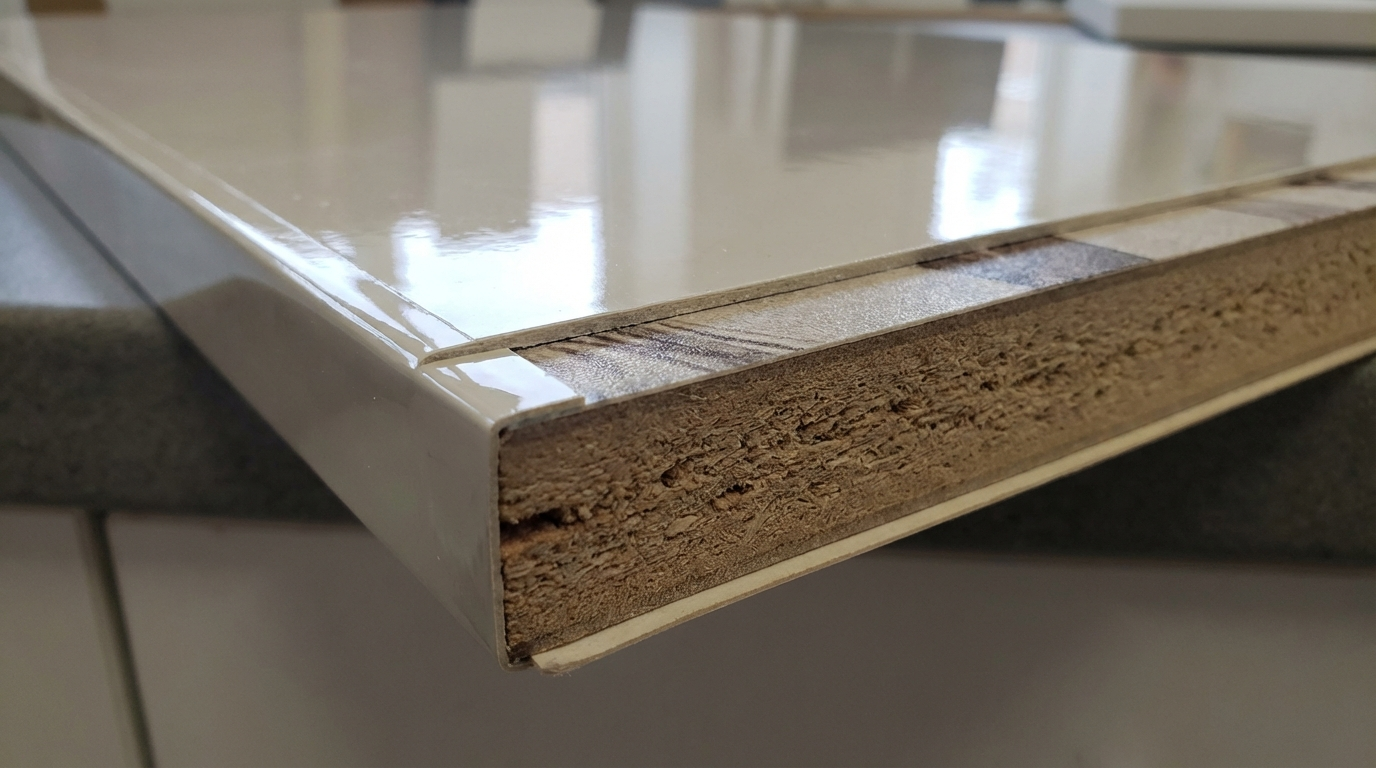
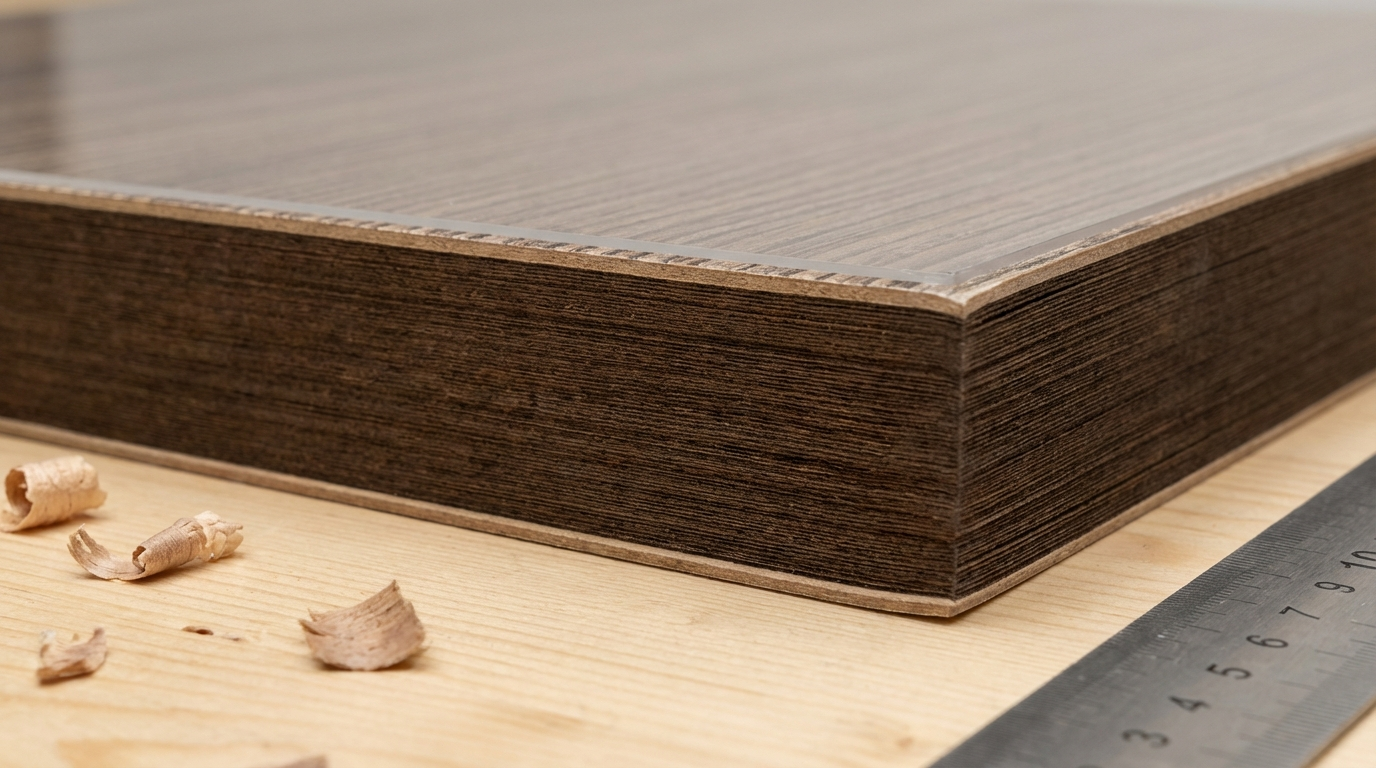
High Pressure Laminate (HPL) is a composite surfacing material manufactured by pressing multiple layers of kraft paper soaked in phenolic resin, topped with a decorative paper layer saturated in melamine resin. This assembly undergoes compression at high pressure (typically 1,000–1,500 PSI) and elevated temperatures, fusing the layers into a rigid, dense sheet.
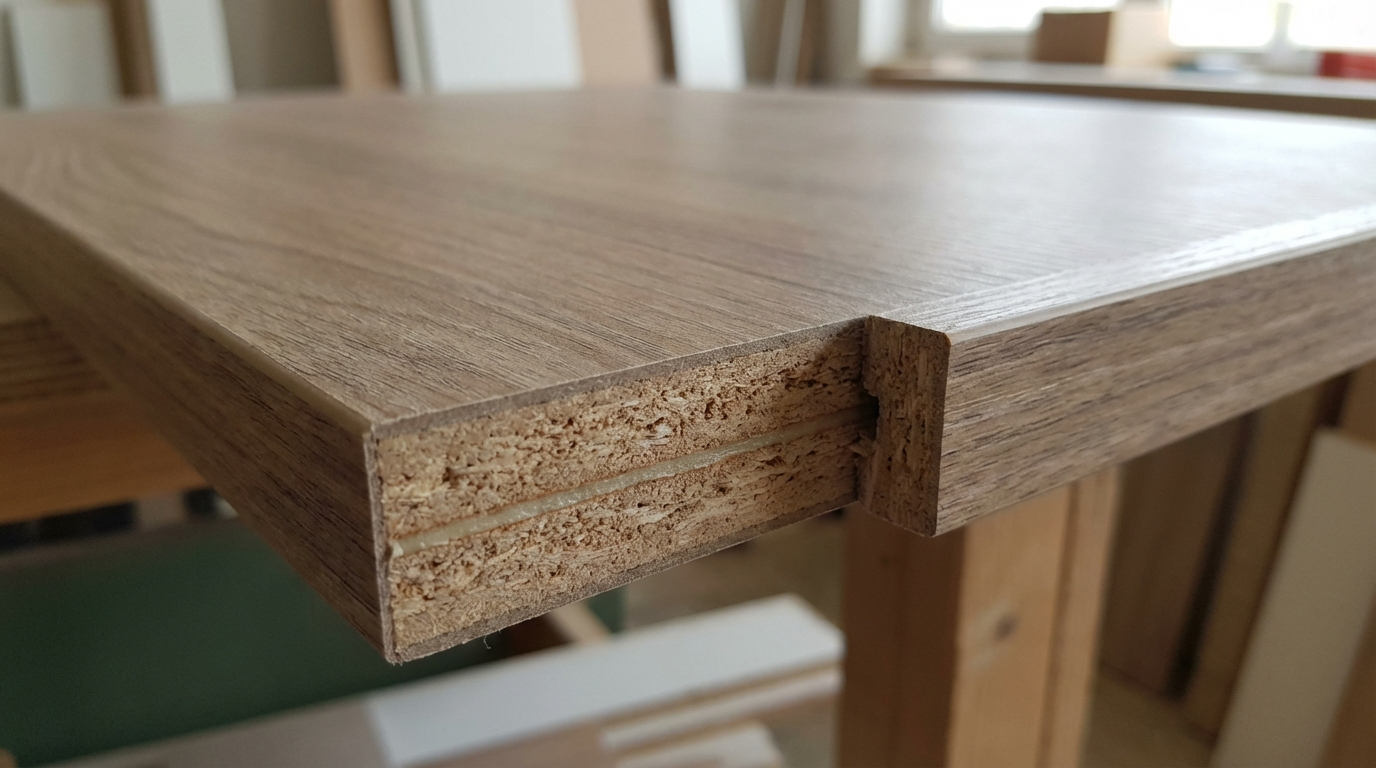
The result is a hard surface material ranging from 0.6mm to 1.5mm for standard decorative applications, and 2mm to 25mm for compact or structural HPL. Unlike Low Pressure Laminate (LPL), which bonds directly to particleboard during manufacture, HPL arrives as a separate sheet that carpenters glue onto substrates like plywood, MDF, HDF, or blockboard using contact adhesive or PVA-based glues.
How Does HPL Differ from Sunmica, Formica, or Decorative Laminate?
"Sunmica" and "Formica" are brand names that became generic terms for decorative laminates in India, similar to how "Xerox" means photocopying. All these typically refer to HPL products. The manufacturing process remains consistent across brands—kraft paper layers impregnated with phenolic resin, decorative layer with melamine resin, high-pressure bonding. What varies is the paper quality, resin formulation, surface finish technology, and quality control standards. When evaluating any HPL product, focus on thickness consistency, surface hardness, and edge quality rather than brand name alone.
Why HPL Matters in Indian Homes and Sites
India's climate presents unique challenges that make material selection critical. Coastal cities experience 70–85% relative humidity year-round. Monsoon months bring moisture infiltration even into seemingly dry interiors. Construction sites often store materials in open areas before installation. These conditions directly impact how laminates perform over years of use.
What Happens to HPL in High Humidity Conditions?
HPL itself resists moisture absorption reasonably well due to the melamine-phenolic resin structure. However, the substrate underneath—typically MDF, HDF, or plywood—remains vulnerable. When moisture reaches the substrate through exposed edges, unsealed cutouts, or prolonged surface exposure, the substrate swells. This causes laminate lifting, edge bubbling, and eventual delamination. The solution involves proper edge banding, avoiding direct water contact, and selecting moisture-resistant substrates (HDFWR, BWR plywood, or marine plywood) for wet-adjacent zones like kitchens and bathrooms.
Site handling matters significantly. HPL sheets stored flat in humid, poorly ventilated godowns can absorb atmospheric moisture, leading to warping before installation. Carpenters should acclimatize sheets in the installation environment for 48–72 hours, store them horizontally on flat surfaces, and avoid ground contact where concrete releases moisture.
Meaning, Types, and Where People Get Confused
Understanding HPL terminology prevents costly specification errors. Here's what the common terms actually mean:
What Is the Difference Between HPL and LPL?
HPL (High Pressure Laminate) is manufactured separately and bonded to substrates during furniture fabrication. LPL (Low Pressure Laminate) is fused directly onto particleboard or MDF during the board manufacturing process—this is what "pre-laminated MDF" or "pre-laminated particleboard" typically refers to. HPL offers superior scratch resistance, impact resistance, and finish durability. LPL costs less and comes ready-bonded but cannot match HPL's surface hardness or longevity in high-wear applications.
What Is Compact HPL?
Compact HPL refers to thick, self-supporting laminate panels (typically 3mm–25mm) that don't require a substrate. Both faces have decorative laminate surfaces. These panels work for toilet cubicle partitions, laboratory countertops, locker systems, and exterior cladding where structural rigidity and complete moisture resistance are essential.
Common misunderstandings buyers should avoid:
- "Waterproof HPL" usually means moisture-resistant, not submersible. Prolonged water contact still damages most HPL products.
- Thicker HPL doesn't always mean better—0.8mm works fine for vertical surfaces; 1mm–1.5mm suits horizontal high-wear surfaces.
- Glossy HPL scratches more visibly than matte or textured finishes, despite having similar surface hardness.
- HPL quality varies significantly by batch and manufacturer—always inspect sample sheets before bulk orders.
- "Fire-retardant HPL" meets specific test standards but isn't fireproof—it slows flame spread, not prevents ignition.
- Digital-printed HPL can fade under direct UV exposure unless specifically UV-stabilized.
Price Range and Cost Drivers
HPL pricing in India varies significantly based on multiple factors. Understanding these helps you budget accurately and negotiate effectively.
What Does HPL Cost Per Square Foot in India?
Standard decorative HPL sheets (0.8mm–1mm thickness) typically range from ₹45 to ₹120 per square foot depending on brand positioning, finish type, and design complexity. Premium finishes like synchronized wood grain, anti-fingerprint matte, or metallic textures can reach ₹150–₹250 per square foot. Compact HPL for specialized applications ranges from ₹350 to ₹800 per square foot based on thickness and specifications. These are indicative ranges—actual prices vary by city, dealer margins, order quantity, and market conditions.
Key cost drivers include:
- Thickness: 1.0mm costs 15–25% more than 0.8mm; 1.5mm adds another 20–30%.
- Surface finish: High-gloss and textured finishes cost more than standard matte.
- Design complexity: Digital prints, synchronized textures, and metallic effects carry premiums.
- Special properties: Anti-bacterial, fire-retardant, or UV-resistant variants add 20–40% to base prices.
- Logistics: Delivery to tier-2/tier-3 cities adds freight costs; breakage during transport increases effective cost.
- Wastage: Standard 8'×4' sheets create 10–20% wastage depending on cutting patterns and furniture design.
How to Estimate HPL Cost for a Wardrobe Project
For a standard 7'×7' wardrobe with both internal and external laminate finishing: Calculate total laminate area (both faces of shutters, visible sides, internal shelving faces). A typical wardrobe might need 180–220 sq ft of laminate including wastage. At ₹70 per sq ft average, laminate material costs ₹12,600–₹15,400. Add substrate (plywood/MDF), hardware, edge banding, adhesive, and labour for complete project costing. Always get itemized quotes specifying laminate brand, thickness, and finish code.
Two-Minute Comparison: HPL vs Other Surfacing Options
| Parameter | HPL (High Pressure Laminate) | LPL / Pre-laminated Board | Acrylic Laminate | Veneer |
|---|---|---|---|---|
| Scratch Resistance | High | Moderate | Low-Moderate (scratches show on gloss) | Low (needs lacquer protection) |
| Moisture Resistance | Good (surface); substrate-dependent | Moderate; particleboard swells | Good (surface) | Poor without sealing |
| Impact Resistance | Good | Fair | Prone to cracking | Fair |
| Aesthetic Range | Very wide (wood, solid, abstract, metallic) | Limited designs | High-gloss, solid colours | Natural wood grain |
| Price Range (₹/sq ft) | 45–250 | 35–80 (board + surface) | 180–450 | 80–350 |
| Best For | Kitchens, wardrobes, offices, high-traffic areas | Budget furniture, rentals | High-end modular kitchens | Luxury furniture, traditional aesthetics |
| Repair Difficulty | Moderate (sheet replacement) | Difficult (entire panel) | Difficult | Moderate (re-polishing possible) |
Choose based on your conditions: For wet-adjacent zones with moderate budgets, HPL on moisture-resistant substrate works well. For rental properties where tenants may cause damage, pre-laminated boards offer easy replacement. For showroom-quality gloss finishes, acrylic suits better despite higher cost and scratch visibility. For heritage or traditional interiors requiring natural wood character, veneer remains irreplaceable.
Practical Use Cases: What Works, What Fails
| Application | Recommended HPL Thickness | Finish Notes | Risk Notes |
|---|---|---|---|
| Kitchen shutters | 0.8mm–1.0mm | Matte or textured (hides fingerprints) | Edge swelling near sink; seal all cutouts |
| Wardrobe exteriors | 0.8mm–1.0mm | Wood grain or solid; matte preferred | Handle zone scratches; consider anti-scratch grades |
| Office workstations | 1.0mm | Solid colours; matte or suede finish | Edge chipping from chair impacts |
| Wall panels | 0.8mm (standard) to compact (structural) | Textured or wood grain | Adhesive failure in humid conditions |
| Bathroom vanity | 1.0mm–1.5mm on MR substrate | Matte; avoid high-gloss in wet zones | Water pooling damages substrate; slope surfaces |
| Study table tops | 1.0mm–1.5mm | Matte (writing comfort) | Ink staining on porous finishes |
| Retail display units | 0.8mm–1.0mm | High-gloss for visibility; solid for backgrounds | Frequent handling causes edge damage |
| Hospital furniture | 1.0mm (anti-bacterial grade) | Solid colours for hygiene visibility | Chemical cleaners can affect standard HPL |
Decision Framework: Matching Conditions to Specifications
| Condition / Requirement | Recommended Specification | What to Verify |
|---|---|---|
| Coastal city / high humidity zone | HPL on BWR plywood or HDFWR; PVC edge banding | Substrate certification; edge band adhesion test |
| Kitchen near cooking zone | Heat-resistant HPL (postforming grade); 1.0mm+ | Heat resistance rating; edge sealing quality |
| Children's room / high scratch risk | Anti-scratch / suede finish HPL; textured surface | Surface hardness; scratch test on sample |
| Tight budget project | 0.8mm standard HPL; optimize cutting layout | Sample consistency; bulk discount availability |
| Fast delivery requirement | Stock designs from established distributors | Inventory availability; delivery timeline commitment |
| Commercial high-traffic area | 1.0mm+ HPL; compact HPL for counters | Wear resistance class; impact test results |
| Washroom-adjacent furniture | HPL on marine plywood; sealed edges | Substrate MR/BWR grade; sealant application |
| Modular factory production | Consistent thickness HPL; reliable supply chain | Batch-to-batch consistency; minimum order flexibility |
Quality Checks You Can Do Without Lab Tests
Before Buying: What to Inspect and Ask
Request sample sheets from the actual batch you'll receive, not showroom display samples. Check thickness consistency using a vernier caliper at multiple points—variation beyond ±0.05mm indicates quality issues. Examine the reverse side for uniform colour and texture; blotchy patterns suggest inconsistent resin impregnation. Ask the dealer for the manufacturing date; HPL stored improperly for over 6 months may have absorbed moisture.
Red flags to watch:
- Reluctance to provide batch samples
- Significant price difference from market averages (could indicate seconds or rejected lots)
- Damaged packaging or sheets stored vertically without support
- Visible surface defects like pinholes, scratches, or colour inconsistency
After Cutting: Edge and Workmanship Cues
Clean cuts should show uniform layer structure without delamination at the edge. If the decorative layer separates from kraft layers during cutting, the laminate quality is suspect. Check for chipping along cut edges—excessive chipping indicates either poor laminate quality or incorrect blade selection by the carpenter. The cut edge should appear dense and consistent, not porous or crumbly.
After Installation: Alignment and Long-Term Care
Verify that laminate surfaces align properly at joints without visible gaps or height differences. Edge banding should sit flush without visible adhesive squeeze-out. For the first week, avoid placing hot utensils directly on surfaces and wipe spills immediately. Establish cleaning habits using soft cloths and mild cleaners—avoid abrasive scrubbers that damage the melamine surface layer over time.
Common Buyer Mistakes and How to Avoid Them
1. Choosing substrate based on cost alone: The cheapest MDF or plywood fails first, especially in kitchens. Match substrate to application—use moisture-resistant grades for wet zones regardless of cost savings.
2. Ignoring edge sealing in humid climates: Exposed edges absorb moisture rapidly. Insist on proper edge banding with heat-sealed PVC or ABS strips, especially for kitchen and bathroom furniture.
3. Selecting gloss finish for high-touch surfaces: Glossy HPL shows fingerprints, minor scratches, and cleaning streaks. Matte or textured finishes hide wear better and require less maintenance.
4. Ordering without physical samples: Screen colours and textures differ significantly from physical samples. Always approve physical samples under the actual lighting conditions where furniture will be placed.
5. Skipping acclimatization: Installing HPL sheets immediately after delivery—especially during monsoon—causes warping and bonding issues. Allow 48–72 hours acclimatization in the installation space.
6. Using incorrect adhesives: Contact adhesives work for most HPL applications, but mixing brands or using expired adhesive causes delamination. Follow adhesive manufacturer recommendations for open time and bonding pressure.
7. Overlooking hinge and hardware zones: HPL is hard but brittle. Pre-drilling for screws and using proper hardware prevents cracking around hinges and handles.
8. Assuming all HPL is heat-resistant: Standard HPL handles moderate heat but can blister from direct hot pan contact. For kitchen platforms adjacent to cooktops, specify postforming or heat-resistant grades.
9. Ignoring grain direction: Wood-grain HPL has a visual direction. Installing adjacent panels with mismatched grain direction creates an inconsistent appearance. Plan cutting layouts to maintain grain continuity.
10. Forgetting about thermal expansion: HPL expands and contracts with temperature changes. Leave slight gaps (1–2mm) at wall junctions and use flexible sealants rather than rigid fillers.
Failure Modes and Fixes
Edge Swelling and Delamination
Symptom: Laminate lifting at edges, bubbling, or visible gap between laminate and substrate.
Root cause: Moisture ingress through unsealed edges or cutouts; substrate swelling pushes laminate off.
Prevention: Use moisture-resistant substrates in wet zones; seal all edges with proper edge banding; seal cutouts for sinks and cooktops with silicone.
Fix if happening: For minor lifting, inject adhesive under the laminate and apply pressure while curing. For extensive damage, the panel usually requires replacement.
Surface Scratching
Symptom: Visible scratch marks, especially on glossy surfaces; dulling of finish in high-use areas.
Root cause: Abrasive cleaning, dragging objects across surface, inadequate surface hardness for the application.
Prevention: Choose matte or textured finishes for high-wear areas; use soft cleaning cloths; place protective mats under frequently moved items.
Fix if happening: Light scratches on matte surfaces may be less visible. Deep scratches cannot be repaired—panel replacement is the only solution.
Chipping at Edges and Corners
Symptom: Small pieces breaking off at edges, especially around door handles, corners, and high-impact zones.
Root cause: Improper cutting technique; inadequate edge protection; impact damage from chairs, trolleys, or collisions.
Prevention: Use appropriate saw blades designed for laminate cutting; apply edge banding before installation; install corner protectors in commercial settings.
Fix if happening: Minor chips can be filled with colour-matched repair fillers for cosmetic improvement. Significant chipping requires edge banding replacement or panel replacement.
Adhesive Failure and Bubbling
Symptom: Laminate bubbles or lifts away from substrate in patches, not just at edges.
Root cause: Incorrect adhesive type or application; insufficient bonding pressure; contaminated surfaces during gluing; expired adhesive.
Prevention: Clean both surfaces thoroughly before gluing; apply adhesive evenly; use proper pressure rollers; verify adhesive shelf life.
Fix if happening: Small bubbles can sometimes be addressed by slitting, injecting adhesive, and re-pressing. Large areas require complete re-lamination.
Colour Fading
Symptom: Gradual colour change, especially in areas exposed to direct sunlight; uneven fading creating patches.
Root cause: UV exposure degrading decorative layer pigments; using non-UV-stabilized HPL for sun-exposed applications.
Prevention: Use UV-resistant HPL grades for furniture near windows; install curtains or blinds to reduce direct sun exposure; rotate decorative items to ensure even exposure.
Fix if happening: Fading is irreversible. Prevention through UV films on windows may slow further fading, but significant colour change requires panel replacement.
Warping and Dimensional Changes
Symptom: Panels bowing, twisting, or not lying flat; doors not closing properly.
Root cause: Unequal moisture absorption between laminate and substrate faces; laminating only one side of a panel; environmental humidity changes.
Prevention: Laminate both faces of panels (use backing grade HPL on non-visible face); store materials flat; maintain consistent indoor humidity.
Fix if happening: Minor warping may self-correct with humidity stabilization. Severe warping requires panel replacement with proper balancing laminate on both faces.
Tips for Different User Types
For Homeowners: Durability and Maintenance
Do: Wipe spills immediately with a soft damp cloth. Use coasters under hot cups and trivets under hot cookware. Clean regularly with mild soap solution and soft cloth. Check edge banding annually and reseal if gaps appear.
Don't: Use abrasive scrubbers or steel wool. Apply bleach or harsh chemical cleaners. Place hot pans directly from stove. Allow water to pool on horizontal surfaces. Drag heavy objects across laminate surfaces.
For Carpenters: Cutting, Edge Prep, and Fastening
Use TCT (tungsten carbide tipped) saw blades designed for laminate—minimum 60 teeth for clean cuts. Cut with the decorative face up on table saws, face down on circular saws to minimize chipping. Pre-drill all screw holes to prevent laminate cracking. Keep 15–20mm edge distance for screws and fittings. Apply edge banding before final assembly. Store sheets horizontally, never vertically without full support. Acclimatize materials to site conditions for 2–3 days before working.
For Architects and Designers: Specifications and Wet-Zone Detailing
Specify HPL thickness, surface finish code, and special properties (fire-retardant, anti-bacterial, UV-resistant) explicitly in BOQ. For wet zones, mandate moisture-resistant substrates (HDFWR, BWR, marine ply) with sealed edges and cutouts. Consider postforming-grade HPL for curved edges eliminating visible seams. Specify backing laminate on panel reverse to prevent warping. Include sealant specifications for sink and countertop cutouts. Review sample approvals under actual site lighting before confirming orders.
For OEM and Modular Manufacturers: Production and QC
Establish incoming quality checks: verify thickness consistency, surface defects, and batch uniformity before production. Standardize cutting layouts to optimize material yield and maintain grain direction consistency. Implement edge-banding quality checkpoints: adhesion strength, flush alignment, colour matching. Document and track supplier batches to trace quality issues. Build humidity-controlled storage for laminate inventory. Train operators on proper adhesive application: open time, coverage, pressure requirements. Establish clear acceptance criteria with customers including lighting conditions for sample approvals to reduce post-delivery complaints.
Design Ideas You Can Actually Build
Kitchen Applications
- Two-tone shutter design: Darker wood-grain HPL on base cabinets, lighter solid colour on wall cabinets. Use matte finish for both. Edge band with matching colour.
- Handleless profile shutters: Solid colour HPL with J-profile or G-profile aluminum channels. Anti-fingerprint matte finish essential.
- Island counter with waterfall edge: Compact HPL (6mm+) in stone texture. Mitre joint at corner with invisible seam. Heat-resistant grade near cooktop.
Wardrobe and Bedroom
- Full-height wardrobe with integrated dressing: Synchronized wood-grain HPL across all panels. Maintain grain continuity. Soft-close hinges with pre-drilled zones.
- Loft storage with minimal visibility: Match wall colour using solid matte HPL. Push-to-open mechanisms eliminate visible handles.
- Sliding wardrobe with mirror integration: Frame panels in textured HPL. Ensure track system can handle combined weight.
Living Room and Entertainment
- TV unit with back panel lighting: Dark wood HPL on unit; light solid behind. Leave 50mm gap for LED strip installation.
- Floor-to-ceiling display unit: Mix open shelves (veneer or natural finish) with closed cabinets (HPL for durability). Align grain direction.
- Floating console: Compact HPL (12mm) as self-supporting shelf. Concealed wall mounting. Cable management cutouts sealed with grommets.
Study and Home Office
- L-shaped desk with cable management: Matte HPL top for writing comfort. Grommet holes with plastic inserts. Edge banding on all exposed edges.
- Wall-mounted fold-down desk: Compact HPL panel with piano hinges. Wall bracket for support. Suitable for small spaces.
- Bookshelf with integrated desk: Consistent HPL finish throughout. Adjustable shelf pins. Consider load-bearing requirements for book weight.
Commercial Applications
- Reception counter with company branding: Solid colour HPL with digital-printed logo panel insert. Compact HPL for counter top surface.
- Workstation partitions: Textured HPL on both faces of partition core. Acoustic dampening possible with core material selection.
- Retail display fixtures: High-gloss HPL for product visibility. Reinforce shelf edges for heavy merchandise. Easy replacement panels for seasonal updates.
FAQs
Is HPL laminate waterproof?
HPL provides good moisture resistance at the surface level due to the melamine resin layer, which repels water and resists staining from common liquids. However, HPL is not truly waterproof. The substrate beneath—whether MDF, HDF, or plywood—remains vulnerable to moisture damage. Water penetration through edges, cutouts, or prolonged surface exposure can cause substrate swelling and eventual delamination. For wet-zone applications like kitchens and bathrooms, use moisture-resistant substrates (HDFWR, BWR plywood, marine plywood) combined with proper edge sealing. Wipe standing water immediately rather than allowing it to pool.
How long does HPL laminate furniture last in Indian conditions?
Well-made HPL furniture typically lasts 15–25 years with proper care and suitable installation. Longevity depends heavily on substrate quality, edge sealing, and environmental conditions. Furniture in air-conditioned spaces with stable humidity outlasts furniture in naturally ventilated coastal homes where humidity fluctuates dramatically. Kitchen furniture near sinks and cooktops experiences more stress than bedroom wardrobes. Regular maintenance—immediate spill cleanup, gentle cleaning methods, annual edge inspection—significantly extends service life. The laminate surface itself rarely fails before the substrate or edge treatments.
Can HPL be used for outdoor furniture or exterior applications?
Standard HPL is not designed for outdoor use and will deteriorate rapidly when exposed to direct sunlight, rain, and temperature extremes. UV radiation causes colour fading, while moisture cycles cause substrate damage. However, specialized exterior-grade HPL products exist for façade cladding and outdoor furniture. These use modified resins, UV stabilizers, and are typically compact HPL (self-supporting) without traditional substrates. For outdoor applications, specifically request exterior-rated compact HPL and verify the manufacturer's warranty terms for outdoor use. Standard decorative HPL should remain in interior applications only.
What is the difference between HPL and melamine-faced boards?
Melamine-faced boards (also called pre-laminated MDF or particleboard) have a thin decorative paper layer fused directly to the board during manufacturing under relatively low pressure. HPL is manufactured separately as a dense, thick sheet (0.6mm–1.5mm) using multiple layers of kraft paper and higher pressure, then bonded to substrates during furniture fabrication. HPL offers significantly better scratch resistance, impact resistance, and durability compared to melamine-faced boards. Melamine boards cost less and come ready-to-use but cannot match HPL performance in high-wear applications like kitchen shutters or commercial furniture.
How do I repair minor scratches on HPL surfaces?
Light surface scratches on matte or textured HPL finishes are often barely visible and may not require repair. For more noticeable scratches, colour-matched laminate repair fillers or wax sticks can provide cosmetic improvement. Clean the scratched area, apply the repair product following manufacturer instructions, and buff gently. Deep scratches that penetrate through the decorative layer cannot be truly repaired—they can only be masked. For glossy HPL, even minor scratches are highly visible, and repair attempts often create more noticeable marks than the original damage. Prevention through proper use and maintenance remains the best strategy.
Can HPL be bent or curved for rounded furniture edges?
Standard HPL can achieve gentle curves using postforming-grade HPL specifically manufactured for bending. This grade has modified properties allowing it to curve around radii typically down to 10–15mm when heated appropriately. Tighter curves are not possible with HPL. For rounded furniture edges, postforming-grade HPL is heated and bent around the substrate edge during fabrication, eliminating visible edge seams. Standard HPL grades are rigid and will crack if bending is attempted. If your design requires curved elements, specify postforming-grade HPL explicitly and ensure your carpenter has the equipment and experience for postforming work.
Is HPL safe for food contact surfaces like kitchen countertops?
Standard decorative HPL is generally considered safe for incidental food contact on kitchen countertops for food preparation activities. The melamine surface is inert and does not leach harmful substances under normal use. However, HPL is not certified for direct food processing applications in commercial food facilities, which have stricter regulatory requirements. For home kitchens, HPL countertops work well for food preparation when kept clean and in good condition. Use cutting boards rather than cutting directly on the laminate surface to protect both the surface and your knives. Avoid placing extremely hot cookware directly on the surface.
How do I choose between 0.8mm, 1.0mm, and 1.5mm HPL thickness?
Thickness selection depends on the application's wear exposure and impact risk. For vertical surfaces like wardrobe shutters, cabinet doors, and wall panels, 0.8mm provides adequate performance at lower cost. For horizontal surfaces subject to impact and wear—kitchen counters, table tops, desk surfaces—1.0mm offers better durability. The 1.5mm thickness suits heavy commercial applications, reception counters, and surfaces requiring maximum impact resistance. Thicker HPL also provides marginally better heat resistance. For most residential furniture applications, 0.8mm–1.0mm covers requirements without unnecessary cost. Specify thicker grades only where the application genuinely demands it.
What type of edge banding works best with HPL furniture?
PVC edge banding (0.4mm–2mm thickness) remains the most common and practical choice for HPL furniture in India. It offers good moisture resistance, durability, and is available in colours matching most HPL designs. ABS edge banding provides similar performance with better environmental credentials. For premium applications, solid wood lipping creates a high-end appearance but requires more skill to apply and maintain. Melamine edge tape is the most economical option but offers minimal moisture protection and durability. In humid climates and wet-zone furniture, prioritize PVC or ABS with proper heat-sealing to create a moisture barrier that protects the substrate edges.
How do I verify HPL quality before placing a large order?
Request physical samples from the actual production batch, not showroom display pieces. Measure thickness at multiple points using a vernier caliper—quality HPL shows minimal variation (±0.05mm). Examine the decorative surface under good lighting for defects: pinholes, colour inconsistency, surface waviness, or embedded particles. Check the reverse face for uniform colour without blotching. Perform a simple scratch test with a coin or key on a sample corner—good HPL resists superficial scratching. Ask about manufacturing date and storage conditions. Request material data sheets or test certificates if available, but note that visual inspection of actual batch samples remains your most reliable quality check.
Disclaimer: This content is provided for general informational purposes based on industry practices and publicly available information. Product specifications, standards, prices, and availability may vary by manufacturer, region, and time. Readers should independently verify details with manufacturers, dealers, or qualified professionals before making purchase or construction decisions.Want Plywood Suggestions?
Share a few details and a VIR MDF specialist will suggest suitable brands and connect you to responsive dealers.