Sunmica Sheets Design – Complete Guide for Indian Buyers
Clear, research-backed explanation of sunmica sheets design with examples, FAQs, and practical tips for Indian homes and furniture work.
Note: This is independent informational content and is not affiliated with any manufacturer.
Quick Decision Summary
Best answer in one line: Sunmica sheets are high-pressure decorative laminates that transform plain substrates into durable, attractive furniture surfaces when selected correctly for Indian conditions.
If you're in a hurry: For most Indian home furniture projects, choose 1mm thick sunmica with matte or textured finishes for high-use areas like kitchens and wardrobes. Wood-grain patterns remain versatile across design styles. Always verify the substrate quality (MDF, plywood, or particle board) before lamination, as the sunmica is only as durable as what it's bonded to. Budget approximately 15-25% extra material for cutting wastage and pattern matching.
- Choose sunmica sheets if: You want cost-effective decorative surfaces, need scratch and stain resistance, prefer low maintenance finishes, or require consistent design across large furniture runs.
- Avoid sunmica sheets if: You need seamless curved surfaces without visible joints, require outdoor exposure, or have extremely tight budgets where pre-laminated boards might work better.
What Sunmica Sheets Actually Are
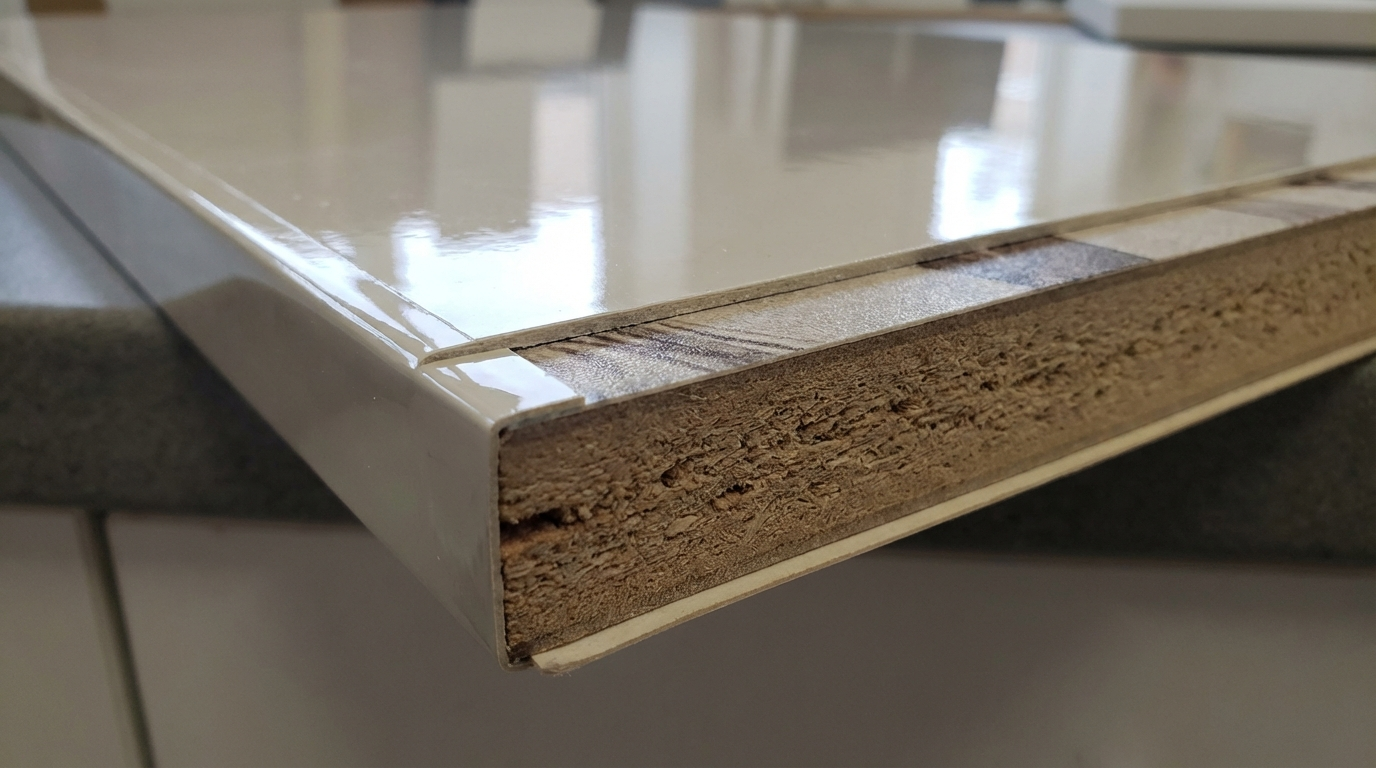
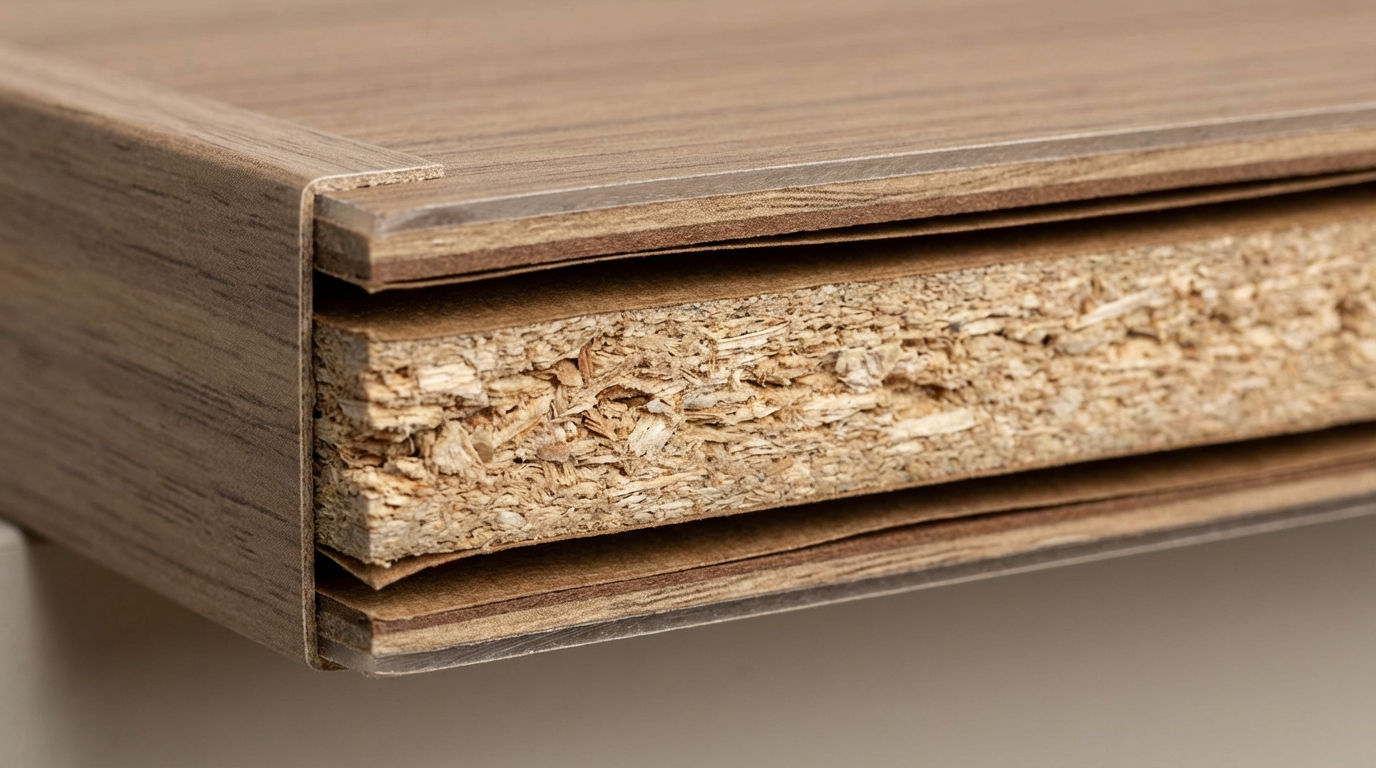
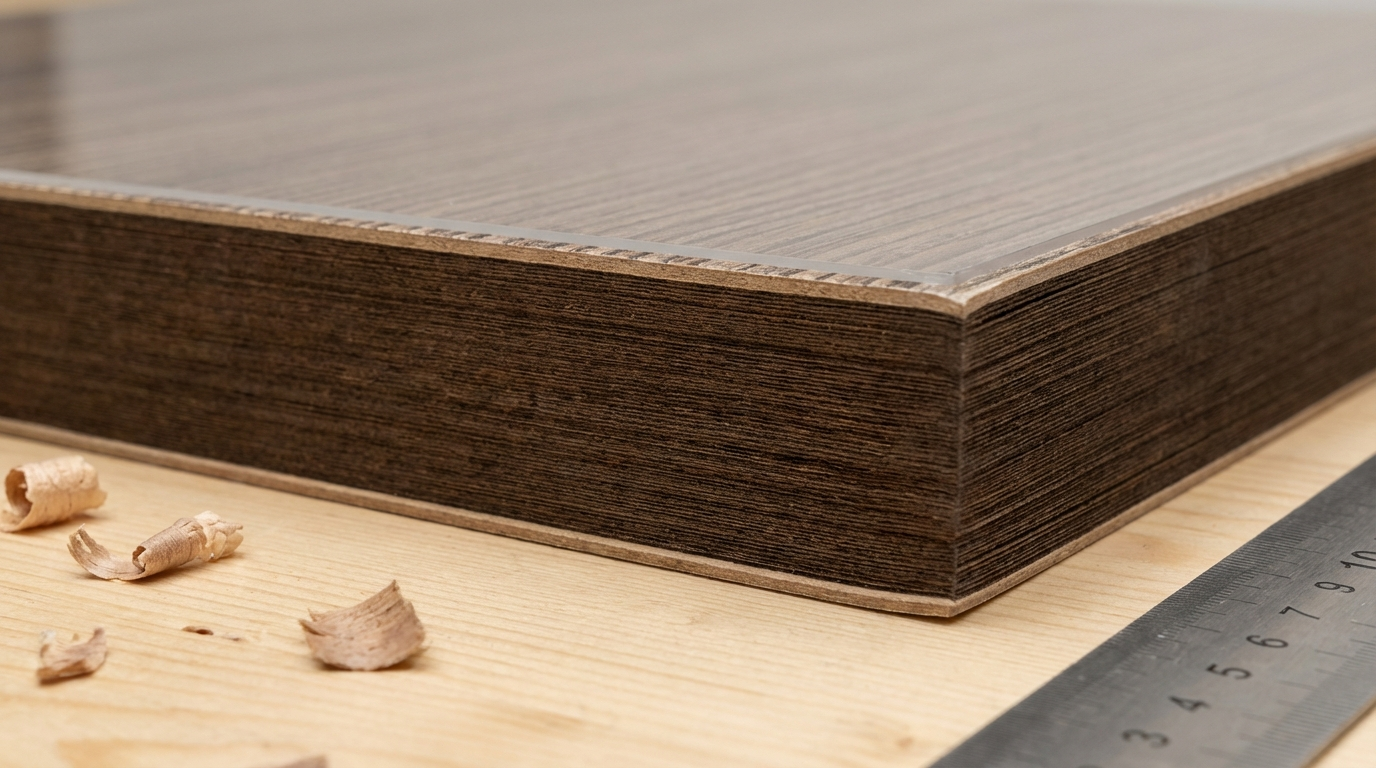
Sunmica is a genericized trademark that has become synonymous with high-pressure decorative laminates (HPL) in India. Originally a brand name, the term now colloquially refers to any decorative laminate sheet used for furniture finishing. The material consists of multiple layers of kraft paper impregnated with phenolic resins, topped with a decorative paper layer and a protective melamine overlay, all bonded under high heat and pressure.
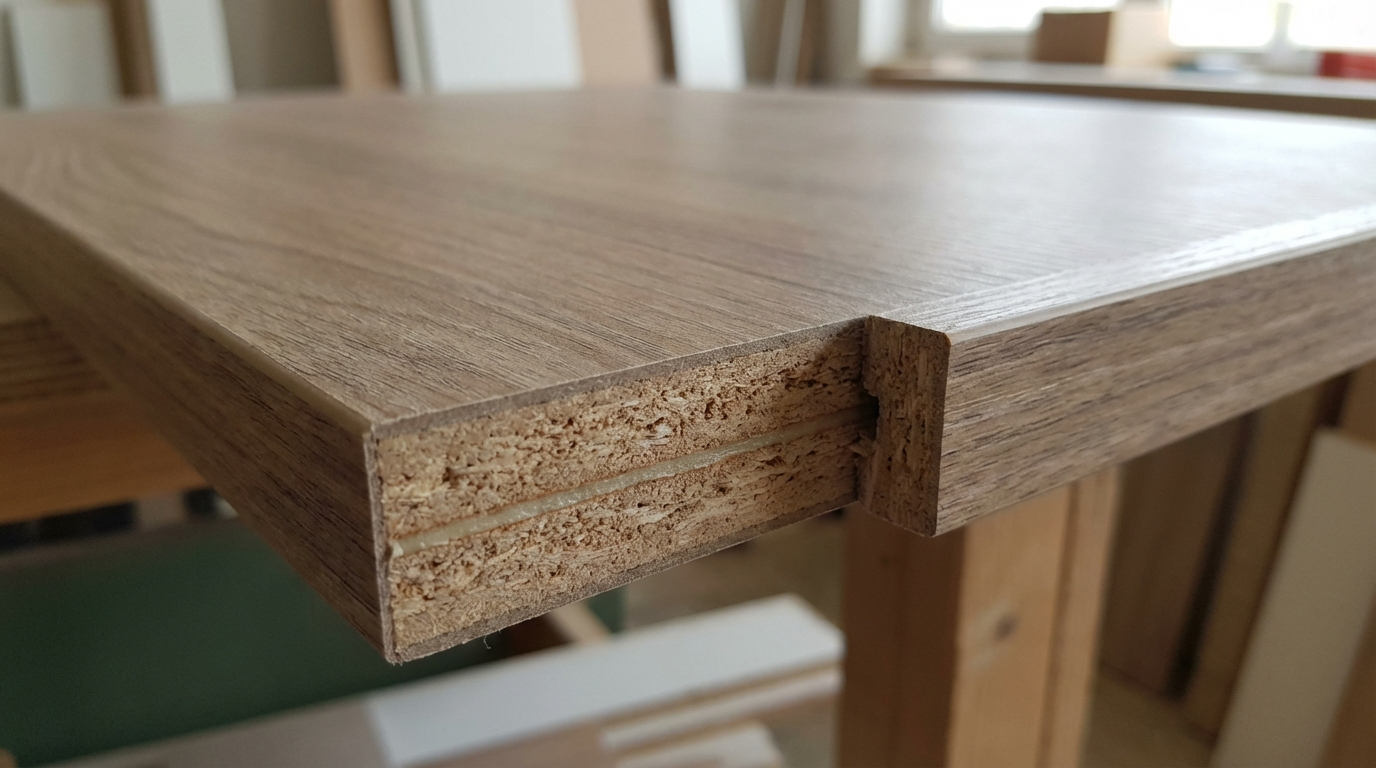
The manufacturing process creates a thin, rigid sheet—typically 0.6mm to 1.5mm thick—that can be adhesive-bonded to substrates like plywood, MDF, particle board, or block board. The decorative layer can replicate wood grains, stone textures, solid colours, metallic finishes, or abstract patterns with remarkable fidelity.
How Does Sunmica Differ from Pre-Laminated MDF?
Pre-laminated MDF comes with the laminate already factory-bonded to the board, offering convenience but limiting design flexibility. Sunmica sheets, conversely, are applied on-site or at fabrication units, allowing you to choose specific designs, mix patterns, and cover any substrate. Pre-laminated boards typically have thinner laminate layers (0.3-0.5mm) compared to separately applied sunmica (0.8-1.2mm commonly used). The thicker laminate layer in site-applied sunmica generally provides better scratch resistance and longer surface life, though application quality depends heavily on workmanship.
What Thickness Should You Choose for Home Furniture?
For most residential applications, 0.8mm to 1mm sunmica works well, balancing flexibility during application with adequate surface durability. Thinner sheets (0.6-0.7mm) suit vertical surfaces with minimal contact, like back panels or wall cladding. Thicker options (1.2-1.5mm) are preferable for horizontal surfaces facing heavy use—kitchen countertops, study tables, or commercial furniture. The substrate matters equally: pairing thin sunmica with a weak substrate creates a system prone to denting and edge damage regardless of laminate quality.
Why Sunmica Sheet Selection Matters in Indian Homes
Indian homes present unique challenges that standard international specifications don't always address. Humidity fluctuations between monsoon and summer seasons can cause substrate expansion and contraction, stressing laminate bonds. Coastal regions face salt-laden air that accelerates edge deterioration. Urban dust accumulation demands surfaces that clean easily without scratching.
The typical Indian furniture lifecycle expectation is 10-15 years minimum, considerably longer than Western markets where furniture replacement is more frequent. This longevity requirement means that sunmica selection mistakes manifest as peeling edges, faded colours, or surface degradation well before the furniture's expected end-of-life.
Does Monsoon Humidity Affect Sunmica Performance?
Sunmica itself is highly moisture-resistant on the surface, but the bonding adhesive and underlying substrate are vulnerable. During monsoons in cities like Mumbai, Chennai, or Kolkata, humidity routinely exceeds 80-90%. If furniture is placed against damp walls, or if substrates weren't properly acclimatized before lamination, moisture absorption causes the substrate to swell. This swelling breaks the adhesive bond at edges first, leading to the characteristic peeling seen in many Indian homes after 3-5 monsoons. Prevention requires proper substrate selection (moisture-resistant grades), adequate wall gaps, and sealed edges.
Design Categories and Pattern Selection Logic
Sunmica designs broadly fall into several categories, each suited to different applications and aesthetic goals. Understanding these categories helps narrow choices from overwhelming catalogues containing hundreds of options.
| Design Category | Best Applications | Finish Recommendation | Considerations for Indian Homes |
|---|---|---|---|
| Wood Grains | Wardrobes, TV units, bedroom furniture | Matte or textured (anti-fingerprint) | Lighter wood tones show less dust; darker grains hide minor scratches |
| Solid Colours | Kitchen shutters, modern furniture, accent pieces | Matte for daily use; gloss for low-contact areas | White and cream show stains quickly; medium tones more practical |
| Stone/Marble Effects | Kitchen counters, bathroom vanities, wall panels | Glossy for premium look; textured for grip | Pattern repetition visible on large surfaces; plan layout carefully |
| Abstract/Geometric | Feature walls, commercial spaces, accent furniture | Varies by design | Trendy patterns may date quickly; consider resale value |
| Metallic Finishes | Handles, edge bands, accent strips, modern kitchens | Usually glossy | Shows fingerprints readily; best for minimal-contact areas |
| Fabric/Leather Textures | Wardrobe interiors, premium furniture, office spaces | Textured essential | Cleaning can be tricky in textured grooves; not ideal for kitchens |
Practical Use Cases: What Works and What Fails
Successful sunmica application depends on matching material specifications to actual use conditions. A design that works beautifully in a bedroom wardrobe may fail rapidly in a kitchen environment.
Kitchen Sunmica Design: What Actually Survives?
Kitchens present the harshest conditions: heat from cooktops, steam from pressure cookers, oil splashes, water exposure near sinks, and frequent cleaning. Glossy finishes look stunning initially but show every fingerprint and scratch within weeks. Matte or textured finishes in medium-toned solid colours or subtle wood grains prove more practical. For countertops, only post-forming grade sunmica (specifically rated for horizontal surfaces) should be used—regular vertical-grade laminate will delaminate from heat exposure. Near gas burners, maintain a minimum 50mm gap from direct flame exposure regardless of laminate specification.
Wardrobe Sunmica Design: Balancing Aesthetics and Durability
Wardrobes face moderate stress—primarily from handle areas, hinge zones, and occasional impacts from sliding objects. Wood-grain sunmica remains the popular choice, offering warmth without maintenance concerns of real wood. Two-tone combinations (darker base cabinets, lighter uppers) create visual interest while the darker lower sections hide scuffs from shoe storage or daily contact. Interior surfaces can use thinner, economical grades since they face less wear than exteriors. Handle-less push-to-open designs eliminate the highest-stress point but require careful edge protection where fingers contact the surface.
Can Sunmica Be Used for Bathroom Vanities?
Yes, but with significant precautions. Standard sunmica on regular MDF or particle board will fail within 2-3 years in bathroom humidity. Success requires marine-grade plywood or HDFWR (High-Density Fibreboard Water Resistant) as the substrate, edges sealed with PVC or acrylic edge bands (not just exposed laminate), and post-forming grade laminate if the design involves curved edges around basins. Even then, ensure adequate ventilation—bathrooms without exhaust fans or windows trap moisture that eventually compromises any wood-based substrate.
Design Ideas You Can Actually Build
Moving from categories to specific implementations, here are practical design approaches organized by space and use case:
Kitchen Designs (7 Ideas)
- Two-tone parallel kitchen: Walnut wood-grain lower cabinets with cream matte uppers; textured finish throughout; PVC edge banding; suitable for Indian cooking with proper chimney installation.
- All-white modern kitchen: Bright white matte sunmica; requires high-quality substrate and sealed edges; best for homes with domestic help for regular cleaning; anti-fingerprint coating essential.
- Industrial grey kitchen: Concrete-effect sunmica in charcoal grey; matte textured finish; pairs with steel handles; hides stains well; excellent for bachelor apartments.
- Warm oak contemporary: Light oak wood-grain with matching edge bands; soft-close hinges reduce impact stress; works across apartment sizes.
- Bold colour accent kitchen: Neutral base with one cabinet bank in deep teal or forest green; limits trend risk while adding personality.
- Stone-effect island kitchen: Marble-pattern sunmica for island; solid colour for perimeter cabinets; post-forming grade essential for island countertop curve.
- Handleless glossy kitchen: High-gloss solid colours; J-profile or push-to-open mechanisms; best for minimal-cooking households; requires frequent cleaning.
Wardrobe Designs (6 Ideas)
- Floor-to-ceiling walnut wardrobe: Dark wood-grain matte finish; concealed handles; internal mirror panel in lighter shade; anti-scratch grade for door surfaces.
- Sliding door wardrobe: Two contrasting panels per door (wood-grain and solid); aluminium frame reduces edge stress; textured finish hides track marks.
- Walk-in closet system: Light wood-grain interior panels; darker exterior faces; open shelving areas in matching laminate; drawer fronts in accent colour.
- Children's room wardrobe: Bright solid colours (avoiding pure white); rounded edge profiles; scuff-resistant textured finish; easy-clean matte surface.
- Master bedroom premium wardrobe: Leather-texture sunmica on select panels; wood-grain primary surfaces; integrated LED lighting zones; handle-less design.
- Compact apartment wardrobe: Mirror-front sliding doors to expand visual space; light neutral sunmica sides; maximize internal fittings over external design.
TV Unit and Living Room Designs (5 Ideas)
- Wall-mounted floating TV unit: Dark wood-grain back panel; contrasting lighter shelf units; concealed cable management; matte finish essential for screen-viewing angles.
- Full-wall entertainment unit: Combined TV zone, display shelving, and bar storage; multiple sunmica patterns coordinated (maximum 3); textured finishes for high-touch areas.
- Minimalist low-profile unit: Single long cabinet in solid colour; metal legs; high-gloss acceptable for low-contact design; hidden storage throughout.
- Traditional-modern fusion unit: Wood-grain base with decorative sunmica featuring subtle traditional motifs; carved-effect laminates available for this application.
- Open-shelf media unit: Combination of laminated closed storage and open display; contrasting back panels for visual depth; avoid glossy finishes behind glass doors (shows dust).
Price Range and Cost Drivers
Sunmica sheet pricing in India varies considerably based on multiple factors. Understanding these helps budget accurately and avoid specification downgrades during project execution.
Typical Price Ranges by Category
| Sunmica Type | Approximate Range (per sheet, 8x4 feet) | Primary Use |
|---|---|---|
| Economy/Commercial Grade | ₹800–₹1,500 | Rental properties, budget furniture |
| Standard Residential Grade | ₹1,500–₹2,500 | Most home furniture applications |
| Premium Decorative | ₹2,500–₹4,000 | Feature furniture, kitchens, visible areas |
| Specialty (Post-forming, Anti-bacterial) | ₹3,500–₹6,000+ | Countertops, healthcare, hospitality |
| Designer/Imported Patterns | ₹5,000–₹10,000+ | Luxury residences, boutique commercial |
Note: Prices vary by city, purchase volume, and market conditions. These ranges are indicative for planning purposes only.
What Factors Increase Sunmica Costs?
Thickness is the primary cost driver—moving from 0.8mm to 1.2mm can increase prices by 30-50%. Finish type matters significantly: high-gloss and specialty textures cost more than standard matte. Pattern complexity affects pricing, with realistic wood grains and stone effects typically priced higher than solid colours. Brand positioning creates price tiers even for similar specifications. Geographic location influences costs through transport—interior regions pay more than port cities where raw materials arrive. Finally, small quantity purchases cost more per sheet than bulk orders.
Budget Estimator: Standard Wardrobe
For a typical 8-foot wide, floor-to-ceiling wardrobe with standard interior fittings:
- External laminate requirement: approximately 4-5 sheets (accounting for doors, sides, top)
- Internal laminate: 2-3 sheets (lower grade acceptable)
- Wastage allowance: 15-20% additional
- Total sunmica cost (mid-grade): approximately ₹12,000–₹18,000
- This excludes substrate, hardware, and labour
Decision Framework: Choosing Based on Your Conditions
Rather than selecting sunmica based solely on appearance, match specifications to your actual use environment.
| Your Condition | Recommended Approach | What to Verify |
|---|---|---|
| Coastal city (high humidity/salt air) | Marine-grade substrate; sealed edges mandatory; matte textured finish | Check substrate grade; confirm edge-band adhesive is moisture-rated |
| Heavy-use kitchen (daily Indian cooking) | Post-forming grade for counters; textured matte for shutters; darker mid-tones | Verify heat resistance rating; confirm distance from flame sources |
| Rental property (tenant use) | Economy grade acceptable; solid colours; scuff-resistant textured finish | Focus on substrate durability over laminate premium |
| Children's spaces | Anti-bacterial coating if available; textured for grip; medium colours | Confirm easy-clean surface; avoid sharp edge profiles |
| Tight budget | Pre-laminated boards for hidden areas; site-applied only for visible surfaces | Compare total cost including labour; don't sacrifice edge treatment |
| Premium finish required | Thicker laminate (1mm+); coordinated edge bands; anti-fingerprint coating | Demand sample panels; check pattern registration across sheets |
| Fast project timeline | Pre-laminated boards reduce application time; limited pattern choice acceptable | Confirm stock availability; plan for less customization |
| High-scratch risk (pets, heavy use) | Textured matte finish; darker patterns; thicker laminate grade | Test scratch resistance on sample; specify anti-scratch coating |
Common Buyer Mistakes and How to Avoid Them
Years of industry observation reveal recurring errors that compromise sunmica furniture outcomes. Recognizing these helps you avoid expensive corrections.
- Choosing based on showroom lighting: Showrooms use optimized lighting that differs from home environments. Always take samples home and view under your actual lighting conditions—morning, afternoon, and artificial light—before finalizing.
- Ignoring substrate quality: Beautiful sunmica bonded to poor-quality particle board creates furniture that fails at edges and screw points within 2-3 years. Allocate budget for better substrate rather than premium laminate on weak core.
- Selecting high-gloss for high-use areas: Glossy finishes look impressive initially but reveal every fingerprint, scratch, and dust particle. Reserve gloss for display areas with minimal hand contact.
- Underestimating wastage: Pattern matching, cutting inefficiencies, and handling damage typically consume 15-25% more material than calculated surface area. Budget accordingly rather than forcing mismatched patterns mid-project.
- Skipping edge treatment: Exposed laminate edges absorb moisture, causing swelling and delamination. Proper edge banding costs little but prevents the most common failure mode in Indian conditions.
- Overlooking pattern repetition: Large surfaces (wall panels, long wardrobes) reveal pattern repetition in sunmica sheets. Plan layout to minimize visible repeats; consider breaking large surfaces with accent strips.
- Not checking batch consistency: Different production batches may have slight colour variations. Order complete quantity from single batch; inspect all sheets together before application.
- Assuming all white is the same: "White" varies significantly—warm white, cool white, bright white, off-white. Mismatched whites look worse than intentionally contrasting colours. Verify exact shade codes.
- Ignoring cleaning requirements: Some textured finishes trap dust in grooves, requiring more cleaning effort. Match texture choice to realistic maintenance commitment.
- Prioritizing trends over longevity: Bold patterns and unusual colours may feel dated within 3-5 years. Consider neutral bases with changeable accessories for trend expression.
Failure Modes and Fixes
Understanding how sunmica furniture fails helps prevent problems and address them early when they occur.
Edge Peeling and Delamination
Symptom: Laminate lifts at edges, starting from corners; visible gap between laminate and substrate.
Root Cause: Moisture absorption through unsealed edges; poor adhesive application; substrate swelling from humidity.
Prevention: Seal all edges with PVC or acrylic edge bands; use moisture-resistant substrate grades; ensure furniture has adequate wall gaps for air circulation.
If Already Happening: For minor lifting, apply contact adhesive under the lifted section and clamp until cured. For extensive damage, edge bands may need replacement, or affected panels may require refabrication.
Surface Scratching
Symptom: Visible lines, especially on glossy surfaces; dulling of finish in high-contact areas.
Root Cause: Abrasive cleaning (rough cloths, harsh chemicals); contact with hard objects; insufficient hardness grade for application.
Prevention: Use soft microfibre cloths; avoid abrasive cleaners; specify scratch-resistant grades for heavy-use surfaces; use textured matte finishes that hide minor scratches.
If Already Happening: Light scratches on matte surfaces can sometimes be minimized with furniture polish. Deep scratches or scratches on glossy surfaces cannot be repaired—only panel replacement resolves them.
Colour Fading
Symptom: Noticeable colour change in areas exposed to sunlight; uneven appearance between exposed and protected zones.
Root Cause: Prolonged UV exposure; inferior laminate grade without UV stabilizers; dark colours absorb more heat.
Prevention: Use UV-resistant grades for sunlight-exposed furniture; control direct sunlight with curtains or blinds; lighter colours fade less visibly.
If Already Happening: Fading cannot be reversed. Rearranging room layout to reduce exposure can slow further fading. Severely faded panels require replacement.
Bubbling and Blistering
Symptom: Raised areas on laminate surface; air pockets under the sheet.
Root Cause: Insufficient adhesive coverage; air trapped during application; heat exposure causing adhesive breakdown; moisture under the laminate.
Prevention: Ensure complete adhesive coverage; use proper roller technique during application; avoid heat sources near laminated surfaces.
If Already Happening: Small bubbles can sometimes be addressed by slitting with a blade, injecting adhesive, and re-rolling. Large blisters typically require panel replacement.
Joint Line Visibility
Symptom: Visible seams where laminate sheets meet; colour or pattern mismatch at joints.
Root Cause: Poor planning of sheet layout; batch colour variation; improper cutting angles; substrate unevenness.
Prevention: Plan layouts to place joints at natural break points; verify batch consistency; ensure substrate surface is perfectly flat before application.
If Already Happening: Minor joint visibility cannot be corrected without relamination. Consider adding decorative trim strips to mask joints if aesthetically acceptable.
Chipping at Cut Edges
Symptom: Rough, chipped edges where laminate was cut; visible substrate at edges.
Root Cause: Improper cutting technique; dull blades; cutting against the grain of the decorative layer; handling damage.
Prevention: Use sharp carbide-tipped blades; cut with decorative face up on table saws, face down on hand-held circular saws; score laminate before cutting; handle carefully to prevent edge impacts.
If Already Happening: Minor chips can be hidden with edge banding. Severe chipping requires re-cutting from new material.
Quality Checks You Can Do Without Lab Tests
Practical verification methods that don't require specialized equipment help ensure you receive quality materials and workmanship.
Before Buying: Visual and Physical Checks
- Surface consistency: Run your palm across the sheet—quality laminate feels uniformly smooth without undulations or grit.
- Edge examination: Look at the sheet edges under good light—layers should appear well-bonded without visible delamination lines.
- Colour matching: Place multiple sheets from your order adjacent to each other—colour should match consistently across all sheets.
- Pattern registration: For patterned laminates, check that the pattern aligns properly across the sheet without visible distortion.
- Flexibility test: Quality laminate flexes slightly without cracking; extremely rigid or brittle material may have curing issues.
- Smell check: Strong chemical odour may indicate incomplete curing or inferior resins.
Red Flags When Purchasing
- Seller unable to provide batch information
- Significant price below market range for stated grade
- Sheets stored in damp conditions or direct sunlight
- Visible scratches or damage passed off as normal
- Unwillingness to provide samples for home evaluation
- Pressure to accept mixed batches
After Cutting: Edge Quality Assessment
- Clean cut line: The cut edge should be smooth without visible chips or fraying.
- Layer bonding: Cut edge should show well-fused layers without separation.
- No burning: Cut edges shouldn't show discolouration from blade heat (indicates dull blade or incorrect speed).
After Installation: Verification Points
- Surface flatness: Place a straight edge across laminated surfaces—gaps indicate substrate problems or adhesive issues.
- Edge band adhesion: Gently try to lift edge bands at corners—properly bonded edges resist fingernail pressure.
- Joint tightness: Joints between panels should be tight and consistent throughout their length.
- Handle and hinge zones: Check areas around hardware for any laminate lifting or cracking.
- Alignment: Doors and drawers should align properly without binding—misalignment indicates installation issues that stress laminate over time.
Tips by User Type
For Homeowners
Durability practices:
- Use soft cloths and mild cleaners—harsh chemicals degrade the protective overlay.
- Wipe spills promptly rather than letting them sit, especially acidic substances.
- Use coasters and trivets on countertops; hot vessels directly on laminate cause damage over time.
- Maintain consistent room humidity through ventilation—extreme variations stress laminate bonds.
What to avoid:
- Abrasive scrubbers or scouring pads
- Dragging heavy objects across surfaces
- Placing furniture directly against damp walls
- Using water-based cleaners excessively near edges
- Ignoring early signs of edge lifting
For Carpenters and Fabricators
Cutting best practices:
- Use 80-tooth or higher carbide blades for clean cuts.
- Score the decorative surface before cutting to prevent chipping.
- Support sheets fully during cutting to prevent vibration damage.
- Allow material to acclimatize to workshop humidity for 24-48 hours before cutting.
Edge preparation:
- Router edges smooth before applying edge bands.
- Ensure edge band adhesive temperature is correct for the band type.
- Trim edge bands flush immediately after application for tight joints.
Fastening zones:
- Pre-drill for all screws near laminated edges.
- Use hinge cups that distribute load rather than point-loading the laminate.
- Consider cam-lock fittings for knockdown furniture rather than direct screwing.
For Architects and Interior Designers
Specification considerations:
- Specify laminate grade by application—vertical, horizontal, post-forming—not just aesthetics.
- Include substrate specifications in laminate specifications; they're inseparable for performance.
- Detail edge treatment requirements in drawings—leaving it to contractor discretion causes inconsistency.
- For wet zones, specify moisture-resistant substrate grades explicitly, with verification requirements.
Design detailing:
- Plan panel layouts to minimize visible joints and pattern repetition.
- Consider natural break points for colour or pattern transitions rather than forcing continuity across large spans.
- Specify direction of wood grain patterns for consistent appearance.
- Allow for material tolerances in tight reveals and shadow gaps.
For OEM and Modular Furniture Manufacturers
Repeatability considerations:
- Establish relationships for consistent batch supply on high-volume patterns.
- Implement incoming inspection for colour consistency across deliveries.
- Standardize edge-banding processes to minimize quality variation.
- Document cutting layouts for material optimization and consistent appearance.
QC checkpoints:
- Inspect raw sheets before cutting—catching defects early prevents wastage.
- Verify adhesive coverage before pressing—spotty coverage causes delayed failures.
- Check edge band adhesion systematically, not randomly.
- Test hardware installation on laminated surfaces before shipping.
Reducing returns:
- Most complaints relate to colour mismatch expectations—provide actual samples, not digital images.
- Edge failures generate significant returns—invest in edge treatment quality over surface premium.
- Package to prevent transit scratches—damage during delivery is perceived as manufacturing defect.
Comparison: Sunmica vs Other Surface Finishing Options
Understanding alternatives helps validate when sunmica is the right choice and when other options serve better.
| Aspect | Sunmica (HPL) | Pre-laminated Boards | PVC Laminates | Veneer | Acrylic Finish |
|---|---|---|---|---|---|
| Initial Cost | Moderate | Low-Moderate | Low | High | Very High |
| Design Variety | Excellent | Limited by stock | Good | Limited to wood species | Limited colours |
| Durability | High | Moderate | Moderate | Moderate (needs maintenance) | Very High |
| Moisture Resistance | High (surface) | Moderate | Very High | Low | Very High |
| Scratch Resistance | High | Moderate | Low-Moderate | Low | Very High |
| Heat Resistance | Moderate-High | Low-Moderate | Low | Low | High |
| Repairability | Difficult | Difficult | Very Difficult | Possible | Very Difficult |
| Application Flexibility | Excellent | Limited | Good | Good | Limited |
FAQs
What is the difference between Sunmica and laminate sheets?
Sunmica is actually a brand name that became a generic term for high-pressure decorative laminates in India, similar to how certain brand names become synonymous with product categories. All Sunmica is laminate, but not all laminate is Sunmica. The term "laminate" encompasses various types including low-pressure laminates, compact laminates, and decorative papers, while Sunmica specifically refers to high-pressure decorative laminates used for furniture surfaces. When purchasing, focus on specifications like thickness, grade, and finish rather than brand terms to ensure you get appropriate material for your application.
How long do Sunmica sheets typically last on furniture?
In typical Indian home conditions with proper installation and reasonable care, sunmica-finished furniture lasts 10-15 years before showing significant wear. However, this lifespan depends heavily on several factors: substrate quality (poor substrate fails before laminate), edge treatment (unsealed edges reduce life by half or more), usage intensity (kitchen cabinets wear faster than bedroom wardrobes), and maintenance practices (harsh cleaners accelerate deterioration). Furniture in coastal or high-humidity areas without proper precautions may show problems within 5-7 years even with quality materials.
Can Sunmica be applied over old laminate surfaces?
Technically possible but generally not recommended. Applying new laminate over old requires the existing surface to be completely flat, securely bonded, and properly prepared with sanding and cleaning. Even then, the increased thickness creates issues with hardware placement and edge finishing. More importantly, any problems with the original laminate (moisture damage, adhesive failure) will eventually affect the new layer. For best results, remove old laminate completely, prepare the substrate properly, and apply fresh laminate. The additional effort and cost produce significantly better long-term outcomes.
Which Sunmica finish is best for kitchen cabinets?
Matte textured finishes in medium-toned solid colours or subtle wood grains perform best in Indian kitchens. This recommendation balances multiple practical factors: textured surfaces hide fingerprints and minor scratches better than glossy finishes, matte finishes don't show water spots as prominently, and medium tones (neither very light nor very dark) balance stain visibility with dust visibility. For areas near cooking zones, ensure the laminate is rated for horizontal or high-heat applications. Glossy finishes, while visually appealing, require constant cleaning to maintain appearance in active kitchens.
How do I prevent Sunmica edges from peeling?
Edge peeling is the most common failure mode and almost entirely preventable through proper edge treatment. Every exposed edge should receive edge banding—PVC edge bands for moderate moisture areas, acrylic or ABS bands for higher moisture exposure. The edge band must fully cover the substrate edge with properly bonded adhesive and be trimmed flush for a tight seal. Additionally, ensure furniture isn't placed directly against damp walls (maintain 20-30mm gap), control room humidity through ventilation, and wipe spills at edges promptly rather than letting moisture sit.
What thickness of Sunmica should I use for wardrobes?
For wardrobe exteriors (doors and visible panels), 0.8mm to 1mm thickness provides the optimal balance of durability, workability, and cost. Thinner sheets (0.6-0.7mm) can be used for wardrobe interiors where wear is minimal and cost savings are meaningful. Avoid going below 0.6mm even for interior applications as handling becomes difficult and durability drops significantly. If wardrobes will face heavy daily use or you're particularly concerned about longevity, 1mm is preferable for exterior surfaces. The substrate quality matters as much as laminate thickness—don't pair thin laminate with thick substrate or vice versa.
Can Sunmica withstand direct sunlight exposure?
Standard sunmica will fade over time with direct sunlight exposure, particularly darker colours and certain pigments. UV-resistant grades are available and should be specified for furniture in sunlight-exposed positions—near windows, in sun-facing rooms, or outdoor-adjacent spaces. Even UV-resistant grades will eventually show some change; controlling exposure through curtains, blinds, or furniture placement remains the most effective protection. If existing furniture is already sun-exposed, the fading process cannot be reversed, but reducing future exposure slows further change.
How do I clean Sunmica surfaces properly?
For regular cleaning, use a soft microfibre cloth dampened with water and mild dish soap. Wipe in the direction of any surface texture, then dry with a clean cloth. For stubborn stains, allow a diluted mild cleaner to sit for a few minutes before wiping. Never use abrasive pads, scouring powders, or harsh chemicals like acetone, thinner, or strong acids. Avoid excessive water, especially near edges where moisture can penetrate. For textured finishes with grooves that trap dust, use a soft brush periodically to clean texture valleys.
Is Sunmica waterproof?
The sunmica surface itself is highly water-resistant—water beads on the surface and doesn't penetrate through the laminate layer. However, the overall system (laminate plus substrate plus adhesive) is not waterproof. Water can penetrate through edges, joints, or any surface damage, reaching the substrate beneath. Once moisture enters the substrate, it swells, breaking the adhesive bond and causing delamination. For wet areas like bathrooms or kitchen sink zones, success requires water-resistant substrates, sealed edges, and joints with appropriate sealants—not just water-resistant laminate surfaces.
What substrate is best under Sunmica for Indian conditions?
For most applications, commercial-grade plywood (BWR or marine grade) provides the best balance of stability, screw-holding, and moisture resistance. MDF offers superior surface smoothness for visible applications but requires moisture-resistant grades (MR-MDF or HDFWR) in humid climates. Particle board is economical but performs poorly with moisture—suitable only for dry interior applications in climate-controlled spaces. Block board works well for large panels like wardrobe shutters. Match substrate choice to your specific humidity exposure: coastal areas and wet zones demand higher moisture resistance grades regardless of cost premium.
How do I identify good quality Sunmica sheets when buying?
Quality indicators include: consistent colour and pattern across all sheets (view them adjacent to each other), smooth surface without undulations or embedded particles (run your palm across), clean edges without visible layer separation, slight flexibility without brittleness, minimal chemical odour, and proper storage conditions at the point of sale (not damp, not in direct sun). Request sheets from the same production batch for your project. Reputable suppliers provide batch information and allow sample evaluation. Extremely low prices relative to market rates usually indicate inferior grades or storage-damaged material.
Can scratches on Sunmica be repaired?
Minor surface scratches on matte finishes can sometimes be minimized using furniture polish or specialized laminate touch-up products, though they remain visible under certain lighting. Deep scratches that penetrate the decorative layer cannot be repaired—the damaged area will always be visible. Scratches on glossy surfaces are particularly prominent and essentially permanent. Prevention through appropriate finish selection (textured matte for high-use areas), protective pads under objects, and careful cleaning practices is far more effective than attempting repairs. Severely scratched panels require replacement; localized patch repairs are not possible with laminate.
Understanding sunmica sheet design involves more than aesthetic selection—it requires matching material specifications to your specific conditions, use patterns, and maintenance capacity. The Indian market offers extensive options across grades, finishes, and price points. Success comes from treating sunmica as a system including substrate, adhesive, laminate, and edge treatment rather than focusing solely on the decorative surface. Proper specification and installation create furniture that performs beautifully for its intended lifespan, while shortcuts in substrate quality or edge treatment lead to predictable failures regardless of laminate brand or pattern choice.
Disclaimer: This content is provided for general informational purposes based on industry practices and publicly available information. Product specifications, standards, prices, and availability may vary by manufacturer, region, and time. Readers should independently verify details with manufacturers, dealers, or qualified professionals before making purchase or construction decisions.Want Plywood Suggestions?
Share a few details and a VIR MDF specialist will suggest suitable brands and connect you to responsive dealers.