High Pressure Laminate Sheet – Complete Guide for Indian Buyers
Research-backed high pressure laminate sheet breakdown with pros/cons, tables, and a clear decision checklist for Indian buyers and carpenters.
Note: This is independent informational content and is not affiliated with any manufacturer.
Quick Decision Summary
Best answer in one line: High pressure laminate (HPL) sheets are durable decorative surfaces ideal for furniture, wall panels, and countertops in Indian conditions when bonded correctly to stable substrates.
If you're in a hurry: HPL sheets offer excellent scratch resistance, design variety, and longevity compared to paint or veneer finishes. They work well across most Indian climates when paired with moisture-resistant substrates and proper edge sealing. Budget approximately ₹80–₹350 per square foot for material alone, depending on thickness, finish, and brand tier. Always verify thickness with calipers and check for surface defects before accepting delivery.
- Choose HPL if: You need scratch-resistant, easy-to-clean surfaces for kitchens, wardrobes, office furniture, or high-traffic commercial interiors.
- Avoid HPL if: You require curved surfaces with tight radii, outdoor exposure without specialised exterior-grade HPL, or if your substrate quality is poor and cannot hold adhesive properly.
What High Pressure Laminate Actually Is
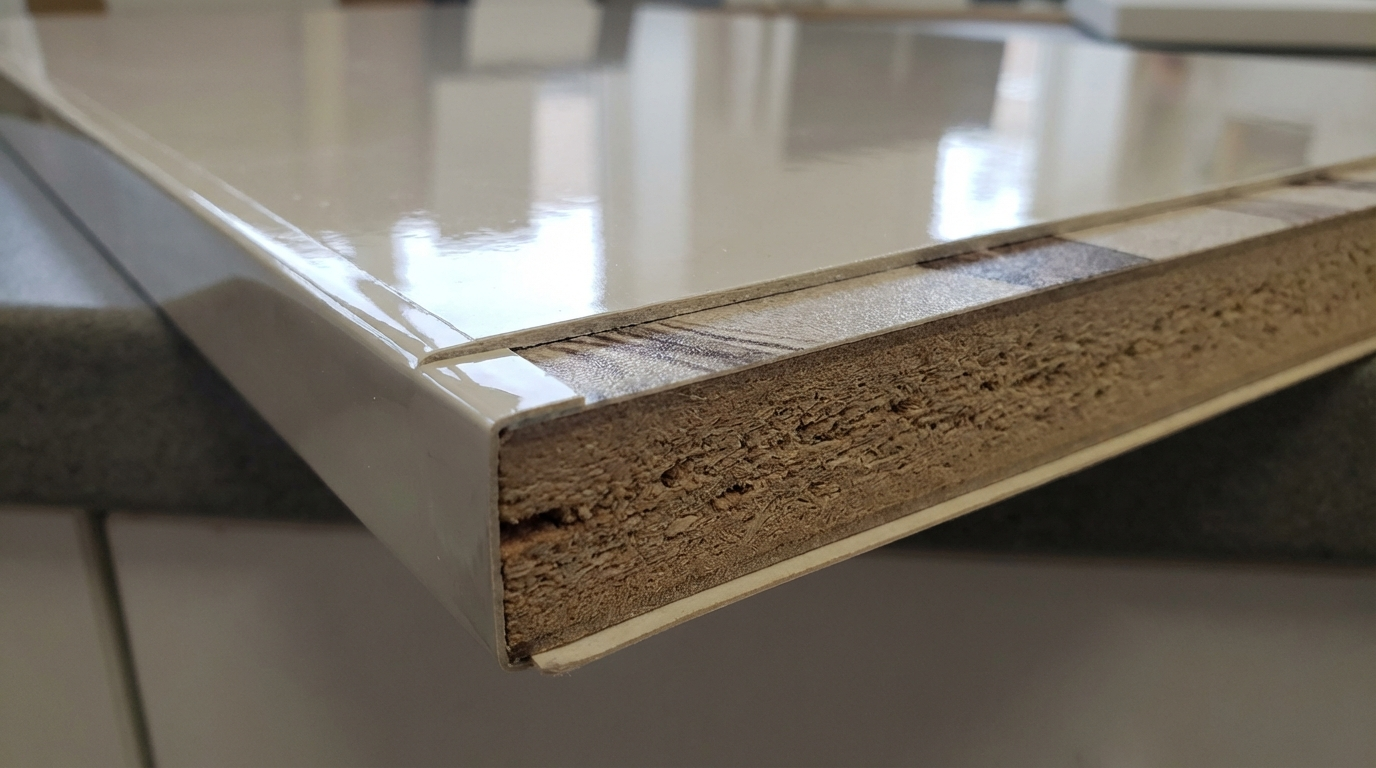
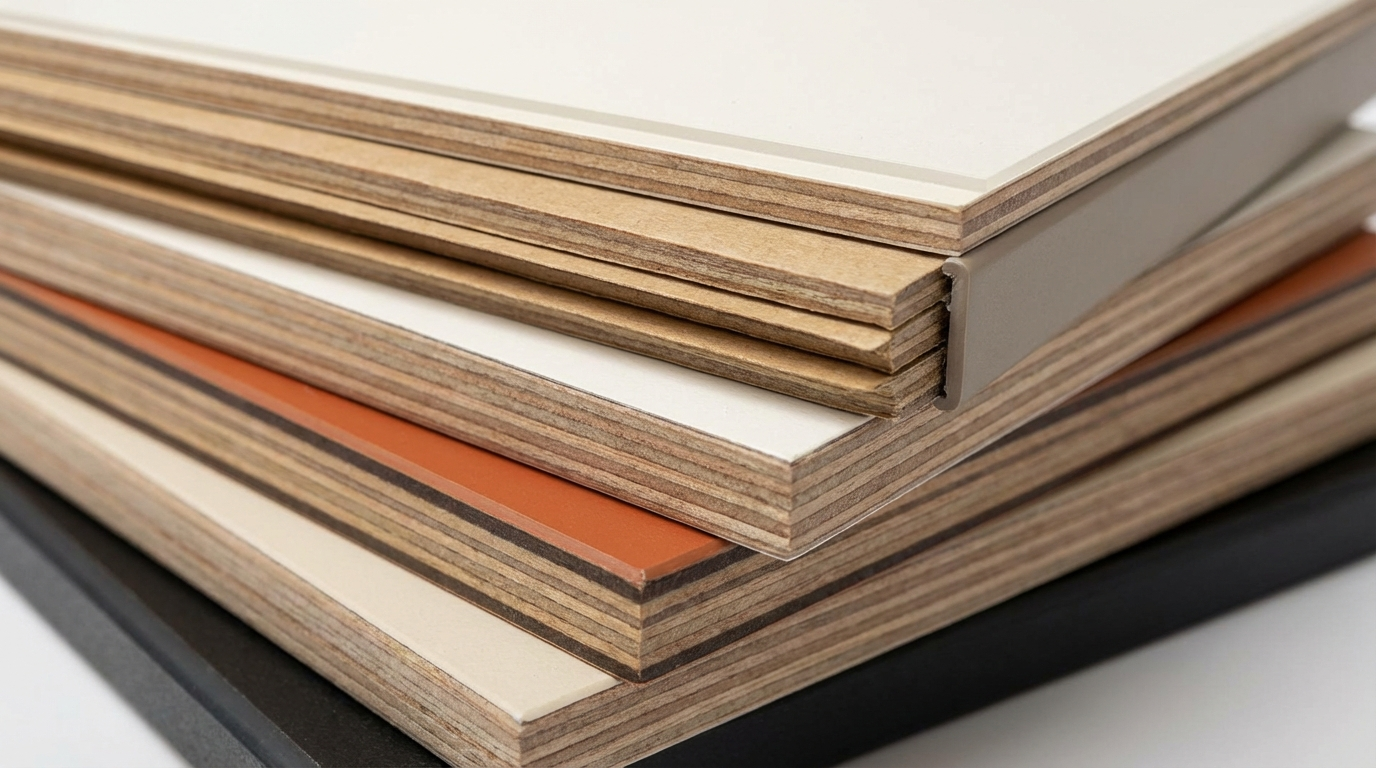
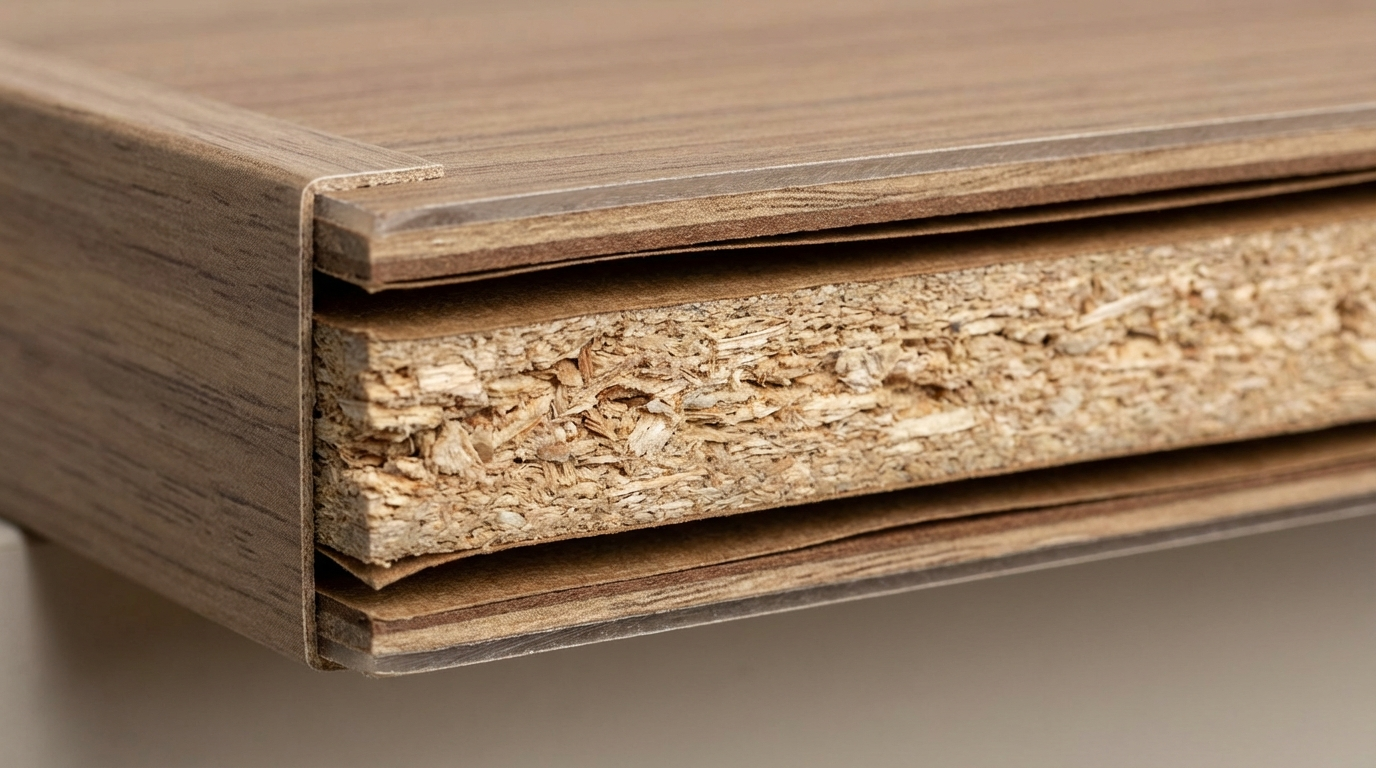
High pressure laminate is a composite surfacing material manufactured by pressing multiple layers together under high heat and pressure. The typical composition includes three distinct layers: a transparent overlay paper on top that provides scratch and abrasion resistance, a decorative paper layer beneath it that carries the visible pattern or colour, and multiple sheets of kraft paper saturated with phenolic resin forming the core.
During manufacturing, these layers are compressed at pressures typically exceeding 1,000 PSI and temperatures around 140-150°C. This process creates a dense, homogeneous sheet that cannot be easily separated back into its constituent layers. The resulting material is rigid but not self-supporting—it must be bonded to a substrate like plywood, MDF, HDF, or particle board to function as furniture or panelling.
How is HPL different from low pressure laminate?
Low pressure laminate (LPL) involves bonding decorative paper directly to particle board or MDF under lower pressure, creating what many call pre-laminated or melamine-faced boards. HPL sheets are manufactured separately and then adhesive-bonded to substrates during furniture fabrication. This distinction matters because HPL offers superior impact resistance, better edge finishing options, and longer service life in demanding applications. However, LPL provides cost efficiency and faster production for budget furniture. The choice depends on your durability requirements and budget constraints.
HPL thickness typically ranges from 0.6mm to 1.5mm for standard decorative applications, while compact laminates (a thicker variant) range from 2mm to 25mm and can be used as self-supporting structural elements. Most Indian residential and commercial projects use 0.8mm or 1.0mm HPL for furniture surfaces.
Why HPL Matters in Indian Homes and Sites
Indian conditions present specific challenges that make surface material selection critical. Monsoon humidity in coastal and central regions can cause substrate swelling, adhesive failure, and edge delamination if materials are poorly chosen or installed. HPL's dense, non-porous surface acts as a moisture barrier on the visible face, but edges and substrate quality determine long-term performance.
Storage and transport conditions across India often expose materials to humidity fluctuations, dust, and physical damage before they reach the fabrication site. HPL sheets are relatively robust during handling compared to veneer or painted surfaces, but scratches during transport become permanent defects. Always inspect sheets upon delivery and store them flat in a dry, covered area away from direct sunlight.
Does HPL work in coastal cities like Mumbai or Chennai?
HPL performs reasonably well in coastal environments because its melamine-resin surface resists moisture absorption better than raw wood or unsealed MDF. However, the substrate beneath the laminate remains vulnerable. In Mumbai, Chennai, or Kochi, always pair HPL with marine plywood, HDFWR, or BWR-grade boards rather than standard MR-grade MDF. Edge banding becomes critical—use PVC or ABS edge bands with proper adhesive and ensure complete sealing. Ventilation inside wardrobes and cabinets helps reduce trapped humidity. Avoid placing HPL-finished furniture directly against damp external walls without a gap.
Site workmanship realities in India also influence HPL success. Many carpenters work in semi-outdoor conditions where dust contamination affects adhesive bonding. Ensure adhesive application happens in clean conditions, and press bonded sheets with adequate weight or clamps for the adhesive's recommended curing time. Rushed work leads to edge lifting within months.
Meaning, Types, and Where People Get Confused
HPL is sometimes called "sunmica" colloquially in India, though that term originated as a brand name and now functions as a generic reference. Understanding the actual types helps you specify correctly and avoid supplier confusion.
What are the main types of HPL available in India?
HPL can be classified by thickness, surface finish, and special properties. By thickness: regular decorative HPL (0.6mm–1.5mm) requires substrate bonding, while compact HPL (2mm–25mm) can serve as self-supporting panels. By surface finish: options include matte, gloss, high-gloss, textured, wood-grain, solid colours, metallic, and specialised finishes like chalk-marker grade. By special properties: fire-retardant HPL, anti-bacterial HPL, and exterior-grade HPL with enhanced UV and weather resistance exist for specific applications. Specify both thickness and finish type when ordering to avoid receiving wrong materials.
Common misunderstandings about HPL:
- HPL is waterproof: The surface resists water penetration, but edges and substrate are vulnerable. It's water-resistant, not waterproof.
- All laminates are the same: HPL differs significantly from LPL, acrylic laminates, and PVC laminates in manufacturing, properties, and applications.
- Thicker always means better: Thicker HPL (1.0mm vs 0.8mm) offers marginal impact improvement but increases material cost and requires stronger adhesive bonding. Application determines appropriate thickness.
- HPL can be bent easily: Standard HPL has limited flexibility. Tight curves require post-forming grades or different materials entirely.
- Wood-grain HPL equals real wood durability: Wood-grain HPL offers aesthetic similarity but different mechanical properties. It won't develop patina, can't be refinished, but resists scratches better than real wood veneer.
- Any adhesive works: Contact adhesives, PVA, and fevicol variants have different bonding strengths and open times. Use adhesives specified for HPL-to-substrate bonding.
Price Range and Cost Drivers
HPL sheet prices in India typically range from ₹800 to ₹3,500 per sheet for standard 8×4 feet (2440×1220mm) decorative grades. Per square foot, this translates to approximately ₹25–₹110 for the laminate alone, before adding substrate, adhesive, edge banding, and labour costs.
| HPL Category | Thickness Range | Approximate Price Range (per 8×4 sheet) | Typical Applications |
|---|---|---|---|
| Economy decorative | 0.6mm–0.8mm | ₹800–₹1,200 | Budget furniture, rental properties |
| Standard decorative | 0.8mm–1.0mm | ₹1,200–₹2,000 | Home furniture, office workstations |
| Premium decorative | 1.0mm–1.5mm | ₹2,000–₹3,500 | High-end kitchens, commercial interiors |
| Compact laminate | 6mm–12mm | ₹6,000–₹15,000+ | Toilet partitions, lab counters, exterior cladding |
Why do HPL prices vary so much between suppliers?
Price variations stem from multiple factors beyond brand positioning. Thickness consistency affects cost—premium manufacturers maintain tighter tolerances. Surface finish complexity matters: high-gloss and synchronised texture finishes cost more than matte solids. Resin quality influences durability; better phenolic and melamine resins cost more but deliver longer service life. Logistics add ₹50–₹150 per sheet depending on distance from manufacturing hubs. Finally, market conditions and bulk purchasing create dealer-to-dealer variations of 10-20% for identical products. Always compare like-for-like specifications, not just price per sheet.
Budget estimator example for a 100 sq ft wardrobe:
- HPL sheets (0.8mm standard): approximately ₹3,500–₹5,000
- MR plywood substrate: approximately ₹8,000–₹12,000
- PVC edge banding: approximately ₹1,500–₹2,500
- Adhesive and hardware: approximately ₹2,000–₹3,500
- Labour (fabrication and installation): approximately ₹8,000–₹15,000
- Total estimate: ₹23,000–₹38,000 (₹230–₹380 per sq ft all-inclusive)
How to ask for a quote—checklist:
- Specify exact HPL thickness required (0.8mm, 1.0mm, etc.)
- Mention finish type: matte, gloss, textured, wood-grain
- Clarify substrate grade: MR, BWR, or marine plywood; MDF or HDF
- Include edge treatment: PVC edge band thickness and colour match
- Request breakdown of material, labour, and hardware costs separately
- Ask about wastage allowance (typically 8-15% for complex designs)
Practical Use Cases: What Works, What Fails
| Application | Recommended HPL Thickness | Finish Notes | Risk Notes |
|---|---|---|---|
| Kitchen shutters | 0.8mm–1.0mm | Matte or textured; avoids fingerprint visibility | Edge swelling near sink; ensure sealed edges |
| Wardrobe exteriors | 0.8mm | Wood-grain or solid; personal preference | Hinge screw areas need reinforced substrate |
| Office workstations | 0.8mm–1.0mm | Matte solid for professional look | Edge chipping from chair arms and bags |
| Wall panelling | 0.6mm–0.8mm | Textured or wood-grain for visual depth | Adhesive failure on uneven walls; use battens |
| Countertops | 1.0mm–1.5mm or compact | Solid dark colours hide minor scratches | Not heat-proof; use trivets for hot vessels |
| TV unit backs | 0.6mm | Any; low-stress area | Minimal risk; thickness economy possible |
| Toilet vanity | 1.0mm or compact | Solid colours, easy-clean surfaces | High moisture; BWR substrate mandatory |
| Commercial reception | 1.0mm–1.5mm | High-gloss or metallic for premium appeal | Shows fingerprints; needs frequent cleaning |
Can HPL be used for bathroom cabinets?
HPL can work in bathroom applications but demands specific precautions. The substrate must be BWR-grade plywood, marine plywood, or HDFWR—never standard MR-grade MDF, which swells rapidly in humid conditions. All edges must be completely sealed with PVC or ABS edge bands; open edges absorb moisture and delaminate the laminate. Ventilation matters: ensure cabinets aren't fully enclosed against wet walls. Compact HPL (6mm+) works better for vanity tops where direct water contact occurs. Standard decorative HPL can serve cabinet doors and sides. Silicone sealing at wall junctions adds protection. Despite precautions, expect shorter service life in bathrooms compared to dry areas.
Design Ideas You Can Actually Build
Kitchen applications:
- Two-tone shutter design: Combine wood-grain HPL for base cabinets with solid-colour wall cabinets; use matching edge bands; matte finish reduces fingerprint visibility near handles.
- Handleless profile kitchens: Use J-profile aluminium channels with 1.0mm HPL; ensure internal edge where profile meets laminate is sealed.
- Open shelf accent: Apply textured HPL to visible shelf interiors; 0.6mm sufficient for non-structural surfaces.
Wardrobe applications:
- Full-height sliding wardrobes: Wood-grain HPL with grain direction vertical enhances height perception; 0.8mm standard; aluminium frame handles concentrated stress.
- Loft with base wardrobe: Match HPL across both sections; order from same batch to avoid shade variations.
- Internal laminate lining: Economy 0.6mm HPL for drawer interiors and shelf surfaces; reduces dust accumulation compared to raw board.
Living room applications:
- TV unit with back panelling: Textured stone-pattern HPL creates feature wall effect; use battens to ensure flat mounting surface.
- Floating shelves: Compact HPL (6mm) can create minimal-look shelves without visible substrate; requires precise edge finishing.
- Study table integration: Solid dark HPL countertop with wood-grain side panels; 1.0mm for countertop durability.
Commercial applications:
- Reception desk cladding: High-gloss or metallic HPL creates premium impression; accepts company logos via digital printing on custom sheets.
- Workstation partitions: Chalk-marker grade HPL enables writable surfaces; verify compatibility with dry-erase markers before bulk ordering.
- Retail display units: Solid white or light colours with gloss finish brighten merchandise display; requires frequent cleaning protocol.
Decision Framework: Which Material and Finish for Your Condition
| Condition/Requirement | Recommended Choice | What to Verify |
|---|---|---|
| Wet zone (kitchen sink area, bathroom) | 1.0mm HPL + BWR/marine substrate + sealed PVC edges | Substrate certification; edge seal completeness |
| Coastal city (Mumbai, Chennai, Kochi) | HPL + marine plywood + 2mm PVC edge + silicone at wall junctions | Adhesive quality; ventilation gaps inside cabinets |
| Heavy daily use (office, school) | 1.0mm+ HPL with textured finish; commercial-grade adhesive | Surface hardness; edge band thickness (minimum 1mm) |
| Tight budget | 0.6mm–0.8mm economy HPL + MR plywood | Dry-area use only; avoid high-scratch zones |
| Fast delivery needed | Stock designs from local dealers; pre-laminated boards as alternative | Shade consistency across sheets; batch matching |
| High scratch risk (kids room, commercial) | Textured matte HPL (hides minor scratches better) | Scratch resistance rating if available; avoid high-gloss |
| Design flexibility priority | 0.8mm HPL with wide design range; post-forming grade for curves | Minimum bend radius specifications for curved elements |
| Self-supporting panels needed | Compact HPL (6mm–12mm) | Structural load requirements; fixing method compatibility |
Common Buyer Mistakes and How to Avoid Each
- Ordering without checking actual samples: Digital images and catalogue prints differ from physical appearance. Visit dealer showrooms or request physical samples before bulk orders. Check samples under natural light and artificial light similar to installation location.
- Ignoring substrate quality to save cost: A premium HPL bonded to poor-quality particle board fails faster than economy HPL on good plywood. Allocate at least 50% of material budget to substrate quality, especially in humid regions.
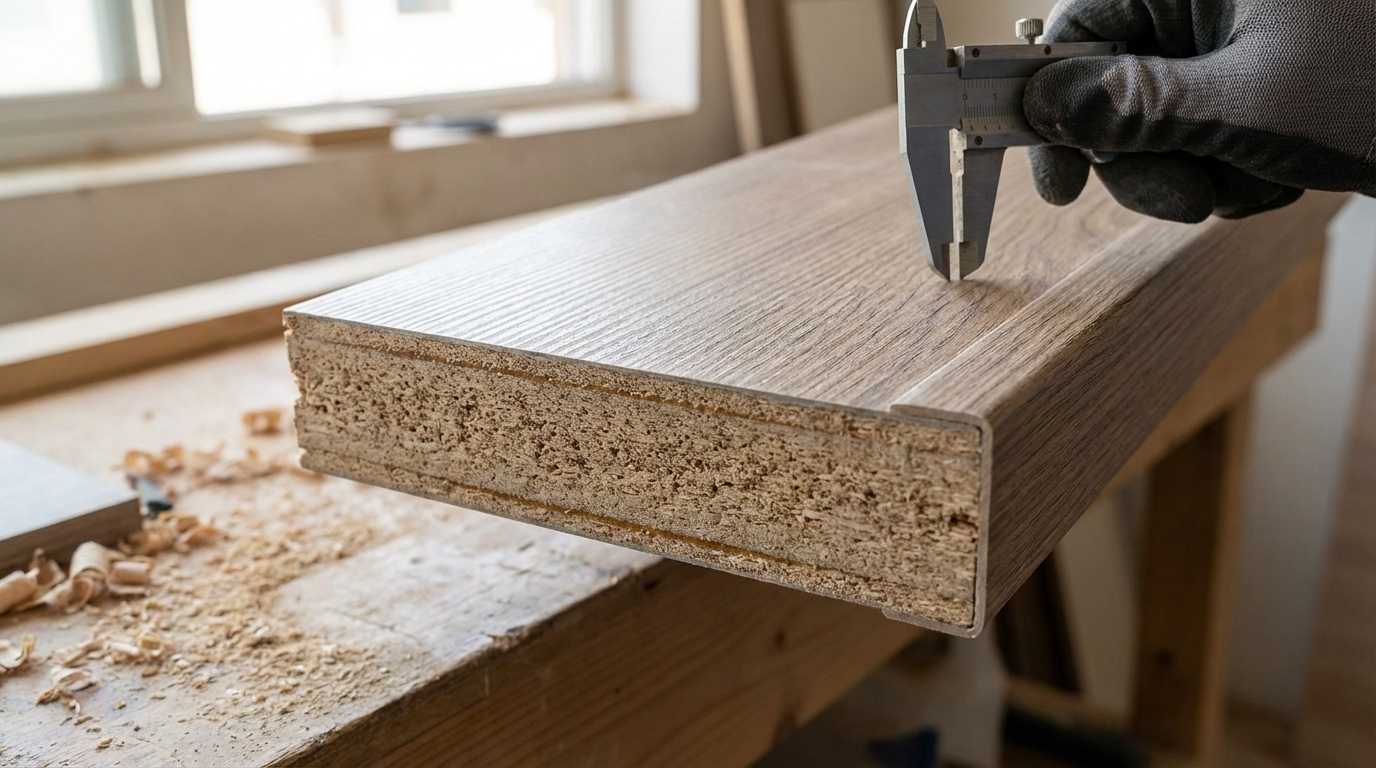
- Not specifying thickness clearly: Dealers may substitute thinner sheets if thickness isn't explicitly confirmed. Measure delivered sheets with calipers. A 0.7mm sheet sold as 0.8mm creates installation fit issues and durability problems.
- Skipping edge banding on "hidden" edges: Moisture enters through any unsealed edge, including edges inside cabinets or against walls. Seal all edges, even non-visible ones, with at least tape-based edge banding.
- Choosing high-gloss finish for high-touch areas: Gloss surfaces show fingerprints, smudges, and minor scratches prominently. For kitchen cabinets and wardrobes with frequent handle contact, matte or textured finishes require less maintenance.
- Not accounting for wastage: Complex designs with angled cuts or multiple small pieces generate 12-18% wastage. Simple rectangular layouts waste 8-10%. Budget accordingly and order extra rather than facing mid-project shortages with potential batch colour variations.
- Accepting delivery without inspection: HPL sheets can have surface scratches, edge chips, or shade variations between sheets. Inspect every sheet before signing delivery receipt. Reject damaged sheets immediately—claims after acceptance are difficult.
- Using wrong adhesive or insufficient curing time: Generic fevicol may work for light-duty applications but fails under thermal cycling or humidity stress. Use contact adhesives formulated for HPL bonding. Allow full curing time (typically 24-48 hours) before subjecting surfaces to load or heat.
- Installing in direct sunlight without UV consideration: Standard HPL fades and can warp under prolonged direct UV exposure. For sun-facing windows or outdoor-adjacent areas, specify exterior-grade or UV-resistant HPL variants.
- Mixing sheets from different batches: HPL from different production batches can have subtle shade variations visible when installed adjacent to each other. Order sufficient quantity from single batch and verify batch numbers on packaging.
Failure Modes and Fixes
Edge delamination and peeling
Symptom: Laminate lifts at edges, especially near sinks or in humid areas. Often starts as slight bubbling before complete separation.
Likely root cause: Moisture penetration through unsealed edges or inadequate adhesive coverage during bonding. Can also result from using MR-grade substrate in wet zones.
Prevention: Seal all edges with PVC/ABS edge bands. Use BWR substrate in kitchens and bathrooms. Ensure adhesive covers entire bonding surface uniformly. Maintain 60-70% humidity during installation.
Fix if already happening: If minor, inject wood adhesive under lifted area, clamp flat, and seal edge. If extensive, replacement is more practical than repair.
Surface scratching and scuffing
Symptom: Fine scratches visible especially on gloss or solid-colour surfaces. May appear as dull patches or directional marks.
Likely root cause: Abrasive cleaning materials, sliding objects across surface, or inherently softer overlay paper in economy HPL.
Prevention: Use soft cloth for cleaning. Place felt pads under frequently moved items. Choose textured matte finishes for high-use surfaces. Avoid abrasive scrubbers.
Fix if already happening: Minor scratches cannot be repaired on HPL. Deep scratches require surface replacement. For high-gloss surfaces, some polishing compounds offer temporary improvement but don't restore original finish.
Substrate swelling causing surface distortion
Symptom: Laminate surface shows bumps, waves, or bulges. Often accompanies soft spots when pressed.
Likely root cause: Substrate absorbed moisture through unsealed edges or from damp wall contact. MR-grade MDF/particle board in humid conditions is common culprit.
Prevention: Use moisture-resistant substrates. Seal all edges. Maintain ventilation gap between furniture and damp walls. Avoid floor contact in wet zones.
Fix if already happening: Damage is usually irreversible. Affected panels must be replaced. Drying may reduce visible swelling but substrate integrity remains compromised.
Adhesive failure causing bubbling
Symptom: Air pockets or bubbles under laminate surface. May appear gradually after installation.
Likely root cause: Insufficient adhesive coverage, incorrect adhesive type, contaminated bonding surfaces, or inadequate pressing during curing.
Prevention: Apply adhesive uniformly using roller or spreader. Clean both surfaces before bonding. Use appropriate clamps or weights. Allow full curing time.
Fix if already happening: Small bubbles can sometimes be addressed by injecting adhesive through a tiny hole, pressing flat, and sealing. Large areas require re-lamination.
Heat damage and burn marks
Symptom: Discolouration, white marks, or surface texture changes where hot objects contacted laminate.
Likely root cause: Direct contact with hot vessels (typically above 140°C damages HPL). Kitchen countertops near cooktops are vulnerable.
Prevention: Always use trivets or heat pads. Maintain gap between HPL surfaces and heat sources. Consider compact laminate or alternative materials for areas directly adjacent to cooktops.
Fix if already happening: Heat damage is permanent. Affected section requires replacement. No DIY repair restores original appearance.
Colour fading from sun exposure
Symptom: Progressive colour change, typically lightening, in areas receiving direct sunlight.
Likely root cause: UV degradation of decorative paper pigments. Standard HPL has limited UV resistance.
Prevention: Use exterior-grade or UV-resistant HPL for sun-exposed applications. Install UV-filtering window film. Rotate furniture position periodically if possible.
Fix if already happening: Fading is irreversible. Replacement with UV-resistant grade is the only solution for restored appearance.
Quality Checks You Can Do Without Lab Tests
Before buying: Visual and specification checks
- Measure thickness: Use digital calipers to verify stated thickness matches actual measurement. Tolerance should be within ±0.05mm of specified value.
- Check surface for defects: Examine under good lighting for scratches, pits, colour inconsistencies, or contamination under the overlay. Reject sheets with visible defects.
- Verify shade consistency: Compare multiple sheets side by side. Even same-design sheets from different batches may vary. For projects requiring multiple sheets, ensure single batch supply.
- Test flexibility gently: Standard HPL should have slight flex without cracking sounds. Excessive rigidity or brittleness may indicate poor resin impregnation.
- Examine edges: Edge should show distinct layers without delamination. Brown core (kraft paper) should be uniform without voids or colour variations.
After cutting: Workmanship cues
- Cut edge quality: Clean cuts with proper blades show minimal chipping. Excessive edge chipping indicates dull blades, wrong cutting direction, or inferior laminate quality.
- Flexibility at narrow strips: Thin strips (under 30mm) should handle without cracking. Brittle behaviour suggests poor internal bonding.
- Colour at cut edge: Uniform brown/black core colour indicates consistent resin penetration. White streaks or variations suggest uneven manufacturing.
After installation: Ongoing verification
- Edge seal completeness: Run finger along all edges. Any roughness or gaps in edge banding create moisture entry points.
- Surface flatness: View surface at low angle under light. Bubbles or substrate irregularities appear as shadows or reflections.
- Hardware mounting: Hinges and handles should sit flat without rocking. Gaps indicate substrate or laminate thickness inconsistency.
- Clean with damp cloth: First cleaning should reveal any surface contamination or defects not visible when dry.
Tips by User Type
For Homeowners: Durability and Cleaning Guide
Do:
- Clean HPL surfaces regularly with soft damp cloth
- Use mild soap solution for stubborn marks
- Wipe spills promptly, especially acidic substances
- Use chopping boards and trivets consistently
- Ensure bathroom and kitchen cabinets have ventilation
Don't:
- Use abrasive scrubbers or scouring pads
- Apply wax polish (attracts dust, builds up)
- Place hot vessels directly on surface
- Use harsh chemicals (strong acids, bleach concentrates)
- Drag heavy objects across the surface
- Allow water to pool at edges or joints
For Carpenters: Fabrication Checklist
- Cutting: Use TCT blades with fine teeth (60+). Cut decorative face up on table saw, face down on circular saw. Support sheet fully to prevent vibration chipping.
- Edge preparation: Sand cut edges lightly (180 grit) before edge banding. Remove dust completely. Ensure edge is perpendicular for flush edge band application.
- Adhesive application: Apply contact adhesive to both surfaces. Allow appropriate flash-off time per adhesive specifications. Use rollers for even coverage.
- Bonding: Align precisely before contact—repositioning is difficult. Use J-roller or block to press from center outward, expelling air.
- Hinge areas: Pre-drill pilot holes. Use appropriate screw lengths that don't penetrate decorative surface. Consider hinge mounting plates for heavy doors.
- Storage on site: Store flat, supported at multiple points. Keep away from moisture and direct sun. Protect surfaces from scratching during handling.
For Architects and Designers: Specification Notes
- Specify HPL thickness, finish type, and substrate grade explicitly in BOQ. Avoid generic "laminate finish" specifications.
- For wet zones, mandate BWR plywood or marine plywood with sealed edges. Include this in scope of work.
- Review sample submissions under site lighting conditions—showroom lighting often differs significantly.
- For colour-critical applications, require single-batch supply and verify batch numbers.
- Consider maintenance implications when specifying high-gloss finishes in high-traffic areas.
- For curved elements, verify post-forming grade availability and minimum bend radius before finalising design.
- Document edge treatment requirements clearly—PVC thickness, colour matching, and sealing at vulnerable points.
For OEM and Modular Furniture Makers: Production QC Points
- Establish incoming inspection protocol: thickness verification, shade consistency check, surface defect inspection per delivery.
- Maintain batch traceability: link HPL batches to final products for warranty claims and consistency complaints.
- Standardise adhesive types and application procedures. Document flash-off times and curing conditions.
- Implement edge-banding quality checkpoints: adhesion strength (peel test), alignment, and seal completeness.
- Train workers on proper HPL handling—surface-down stacking causes scratches; support full length during transport.
- For recurring complaints, photograph failures and correlate with material batches, adhesive lots, and production dates.
- Stock critical shades with buffer inventory to avoid mid-order batch variation issues.
FAQs
What is the standard size of HPL sheets available in India?
The most commonly available HPL sheet size in India is 8 feet by 4 feet (2440mm × 1220mm). Some manufacturers also offer 10 feet by 4 feet sheets for applications requiring fewer joints. Compact laminates may come in larger sizes depending on the manufacturer. When planning your project, calculate material requirements based on these standard sizes and account for cutting waste, which typically ranges from 8-15% depending on design complexity. Always confirm available sizes with your supplier before finalising designs that assume specific dimensions.
How long does HPL last in Indian conditions?
Well-installed HPL on quality substrates typically lasts 10-15 years in residential applications under normal Indian conditions. Kitchen areas may show earlier wear (7-10 years) due to heat, moisture, and heavy use. Commercial applications with high traffic may require replacement sooner. Coastal humidity, poor substrate choices, unsealed edges, and rough handling significantly reduce lifespan. The laminate surface itself remains durable, but substrate failures (swelling, screw hole loosening) often necessitate replacement before the HPL surface degrades. Proper edge sealing and appropriate substrate selection extend service life substantially.
Can HPL be repaired if damaged?
HPL has very limited repair options once damaged. Minor scratches on matte surfaces may become less visible with use, but cannot be polished out like solid surfaces. Chips and deep scratches require section replacement rather than repair. Edge delamination caught early can sometimes be re-glued, but underlying moisture damage usually means replacement is more practical. For valuable furniture, professional restorers can sometimes replace individual panels. Prevention through proper use (trivets, cutting boards, soft cleaning) is far more effective than attempting repairs after damage occurs.
Is HPL safe for kitchen use with food contact?
Standard decorative HPL is generally considered safe for kitchen cabinet and countertop applications where occasional food contact occurs. The melamine resin surface is inert under normal conditions. However, HPL is not specifically designed as a food-contact surface like food-grade stainless steel. Avoid cutting directly on HPL surfaces—use cutting boards. Hot vessel contact can damage the surface and potentially release compounds. For surfaces with regular direct food contact (restaurant prep areas, commercial kitchens), consider food-grade stainless steel or solid surface materials specifically rated for food contact.
How does HPL compare to acrylic finish for kitchens?
HPL and acrylic finishes serve different aesthetic and functional needs. HPL offers superior scratch resistance, wider design options including realistic wood grains, lower cost, and easier field fabrication. Acrylic finishes (whether acrylic-faced boards or acrylic laminates) provide higher gloss levels, greater depth of colour, and can be polished to restore minor scratches. However, acrylic is more expensive, shows fingerprints more prominently, and has lower scratch resistance than HPL. For practical daily-use kitchens, HPL typically offers better value. For high-end kitchens prioritising visual impact, acrylic may be preferred despite maintenance demands.
What adhesive should be used for HPL bonding?
Contact adhesive (solvent-based or water-based) is the standard choice for HPL-to-substrate bonding. Apply to both surfaces, allow flash-off time until tacky but not wet, then bond under pressure. Solvent-based contact adhesives offer stronger initial tack and faster curing but require good ventilation during application. Water-based variants are lower-VOC but need longer drying time. PVA-based wood adhesives can work for light-duty applications but lack the immediate bond strength of contact adhesives. For critical applications, follow adhesive manufacturer recommendations and test bonding on samples before production use.
Can HPL be used for exterior applications?
Standard decorative HPL is not suitable for exterior use due to UV sensitivity and moisture vulnerability at edges. Exterior-grade HPL variants exist with enhanced UV stabilisers, through-colour composition, and weather-resistant resins. These are typically compact laminates (6mm+) designed for facade cladding, outdoor furniture, and balcony applications. They cost significantly more than interior-grade HPL and require specific installation systems. For exterior applications, verify the product is explicitly rated for outdoor use and understand the warranty conditions. Standard interior HPL used outside will fade, delaminate, and fail within 1-2 years.
How to match HPL colour with existing furniture?
Exact colour matching between new HPL and existing furniture is difficult because HPL colours vary between manufacturers, batches, and even age-related fading. Start by identifying the original HPL shade if possible—check for stickers or ask the original fabricator. Request physical samples from suppliers and compare under the same lighting as the existing furniture. Different light sources (daylight, LED, tube light) affect colour perception. If exact matching is impossible, consider deliberate contrast as a design choice rather than attempting to match and achieving visible mismatch. For extensions or repairs, source from the same batch as original if possible.
Does HPL scratch easily?
HPL is more scratch-resistant than paint, veneer, or most other common furniture surfaces, but it is not scratch-proof. Resistance varies with quality grade and surface finish—textured matte finishes hide minor scratches better than high-gloss surfaces. Economy HPL grades may have softer overlay papers with lower scratch resistance. For high-traffic surfaces like office desks or children's furniture, choose quality HPL with textured finishes. Avoid dragging hard objects across surfaces. While casual daily use shouldn't cause noticeable scratching, deliberate abuse with sharp objects will damage any HPL surface.
What is the difference between HPL and veneer finish?
HPL is a manufactured composite material offering consistent patterns, superior scratch resistance, easy maintenance, and design variety including non-wood patterns. Natural wood veneer provides authentic wood appearance with grain variations, can be refinished through sanding, and develops patina over time. Veneer is more vulnerable to scratches, water damage, and requires more careful maintenance. HPL costs less than quality veneer but cannot replicate natural wood's depth and variation. For modern, low-maintenance interiors, HPL is often preferred. For traditional aesthetics and willingness to invest in maintenance, natural veneer offers authenticity that HPL cannot match.
How to prevent HPL edge swelling in humid conditions?
Edge swelling prevention starts with substrate selection—use BWR plywood or HDFWR instead of MR grades in humid areas. Seal all edges comprehensively with PVC or ABS edge bands at least 0.8mm thick, applied with proper heat and adhesive. Don't leave any edges unsealed, including those against walls or inside cabinets. Maintain ventilation inside closed cabinets—consider vent grilles or gaps. Keep floor contact minimal; use legs or plinths to elevate furniture. In coastal areas, apply silicone sealant at wall junctions. These measures collectively minimise moisture entry points where swelling typically begins.
Is anti-bacterial HPL necessary for home kitchens?
Anti-bacterial HPL contains additives that inhibit bacterial growth on the surface. For typical home kitchens with normal cleaning habits, standard HPL provides adequate hygiene—the non-porous surface doesn't harbour bacteria when cleaned regularly. Anti-bacterial variants offer marginal additional protection and may be worth considering for households with immunocompromised members or for commercial food service applications. However, they don't eliminate the need for regular cleaning and shouldn't be viewed as a substitute for hygiene practices. The additional cost premium may not be justified for most residential applications with normal cleaning routines.
Disclaimer: This content is provided for general informational purposes based on industry practices and publicly available information. Product specifications, standards, prices, and availability may vary by manufacturer, region, and time. Readers should independently verify details with manufacturers, dealers, or qualified professionals before making purchase or construction decisions.
Want Plywood Suggestions?
Share a few details and a VIR MDF specialist will suggest suitable brands and connect you to responsive dealers.