MDF for Doors: Is MDF Good for Interior Doors? (Pros, Cons & Best Practices)
Considering MDF doors? Learn where MDF works (interiors), how to protect edges, and what construction details matter for longevity.
Quick Decision Summary
Yes, MDF works well for interior doors in dry, low-traffic areas if edges receive full sealing and proper framing.
If you’re in a hurry: MDF doors offer smooth finishes and affordability for bedrooms or living rooms in non-humid Indian homes. They resist minor dents better than plywood in controlled settings but fail fast without edge protection during monsoons. Opt for 18mm thickness, melamine or laminate facing, and PVC edge banding. Avoid bathrooms or coastal sites unless using HDFWR variants. Check density over 700kg/m³ and screw-hold strength before buying. Total cost per door typically runs 30-60% less than solid wood, driven by size and finish.
- Choose this if: Budget-tight project, need paintable surface, modern flush design, dry interiors like bedrooms, fast carpenter workflow.
- Avoid this if: High humidity (monsoon-prone), heavy daily slams, wet zones like kitchens/bathrooms, poor storage before install.
Is MDF good for interior doors?
Directly, yes for most bedroom and living room doors in Indian apartments with good ventilation. MDF provides a flat, defect-free surface ideal for veneers or laminates, enabling clean modern looks at lower cost. Nuance comes in humidity: uncoated edges swell in 70%+ RH common during monsoons, leading to gaps. In coastal cities like Mumbai or Chennai, pair with moisture-resistant resins. Next step: Tap edges with a knuckle—solid thud means good density; hollow sound flags low quality. Verify frame alignment prevents sagging over time.
What This Material/Option Actually Is
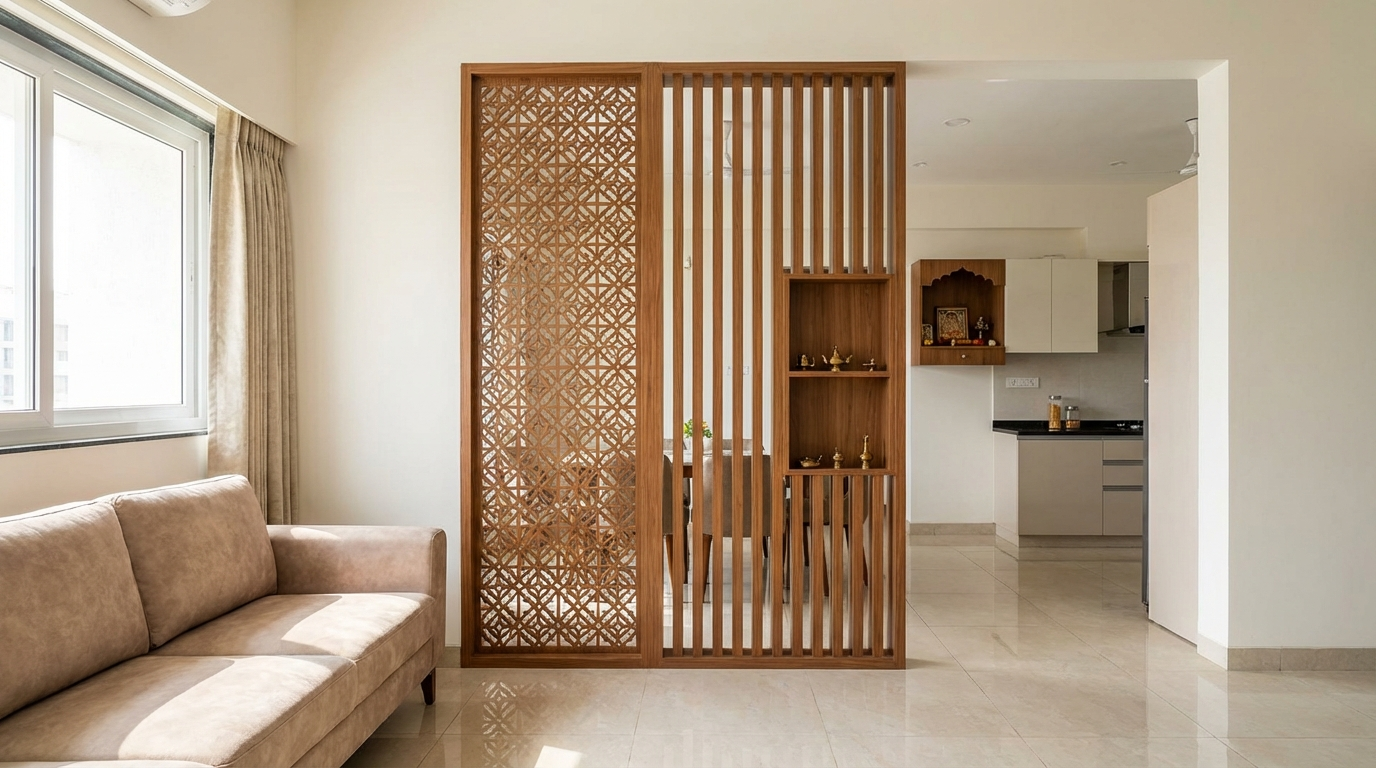
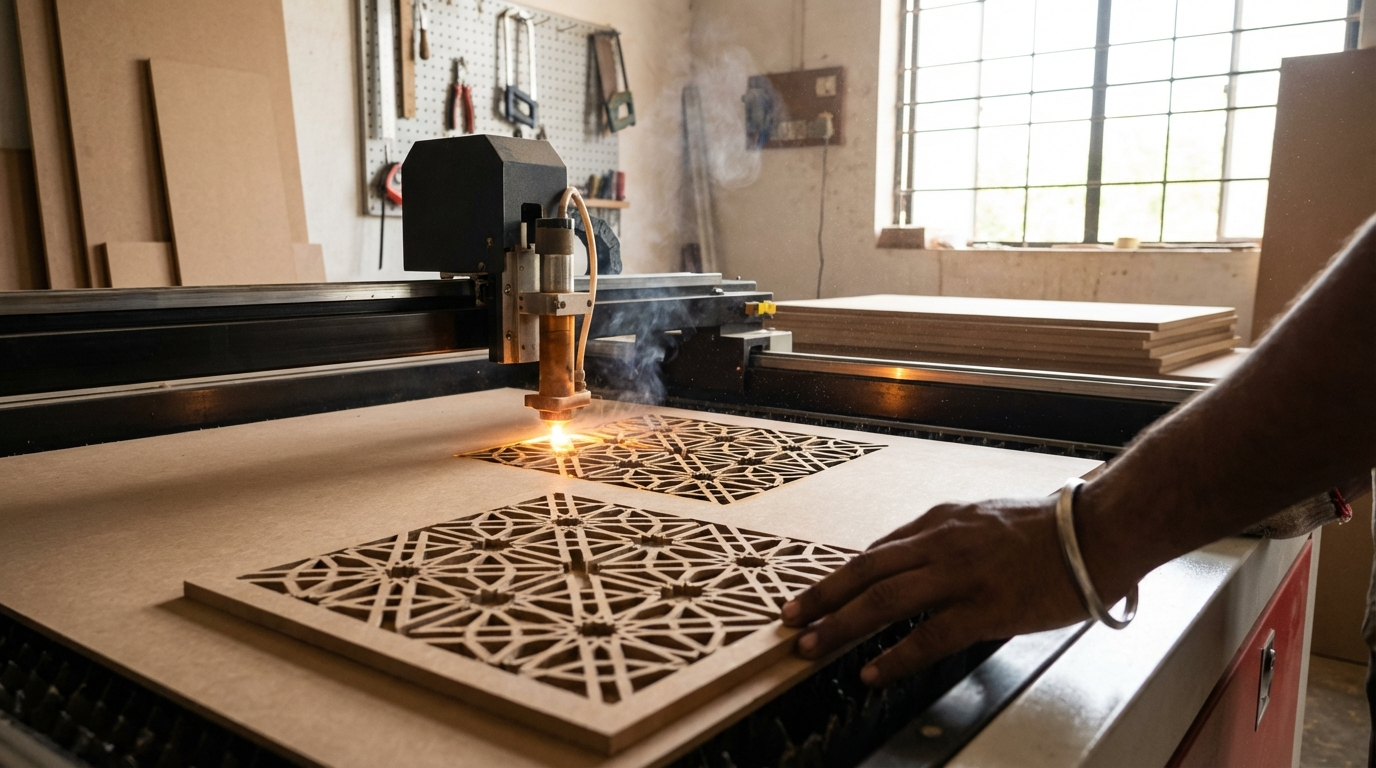
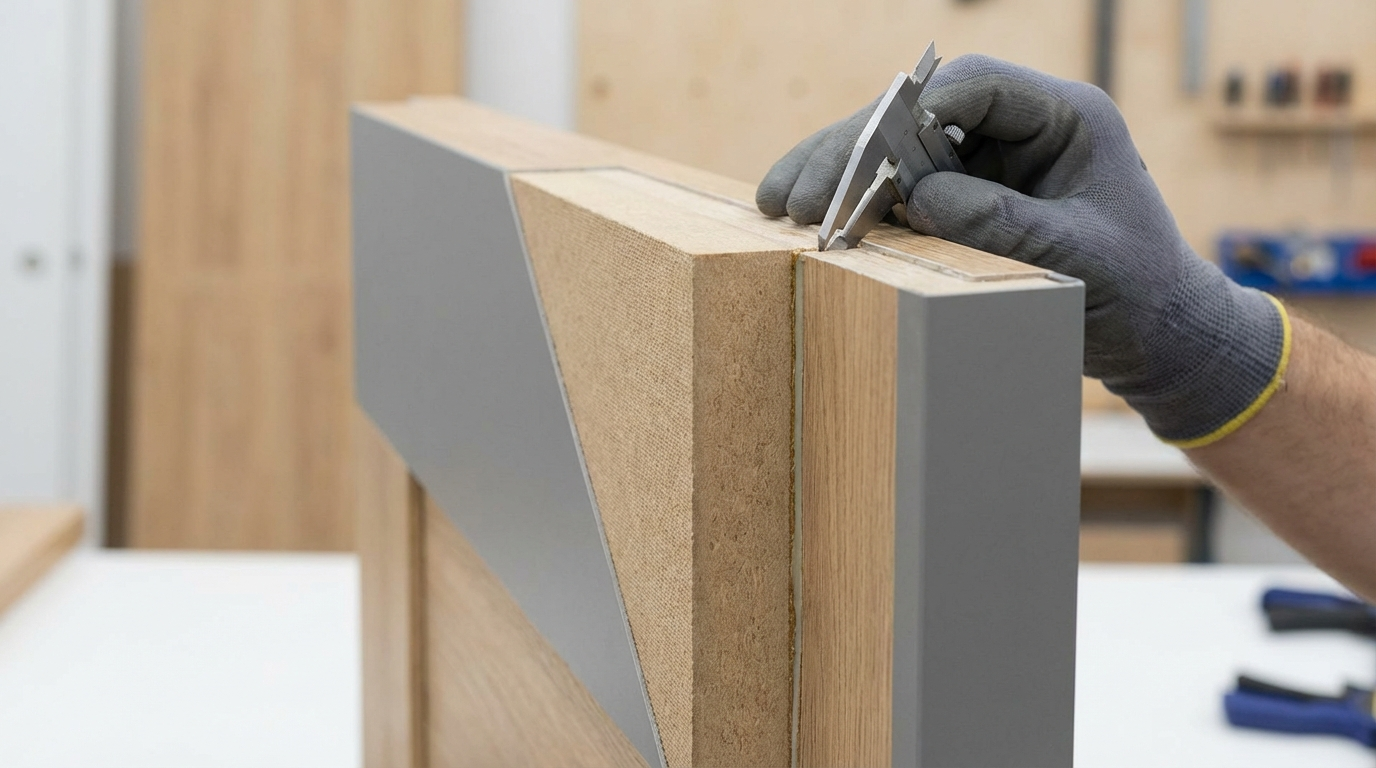
MDF, or Medium Density Fiberboard, forms doors via compressed wood fibers bonded with resins into dense panels, often 16-25mm thick for structural use. Interior MDF doors typically feature a solid MDF core or honeycomb interior skinned with MDF faces, finished via lamination, melamine paper, or paint primer. Unlike plywood's layered veneers, MDF cuts smoother for CNC routing into panels or frames.
Variations include standard MDF for dry zones, moisture-resistant (MR) grades with extra wax/paraffin, and HDF (High Density Fiberboard) for better screw holding. Prelam MDF doors arrive with printed surfaces, while raw slabs need shop finishing. In door context, they create flush, paneled, or louvered designs without natural wood's knots or warping risks.
Why It Matters in Indian Homes and Sites
Indian climates amplify MDF vulnerabilities: monsoons push indoor humidity to 80-90% in un-AC homes, causing unsealed edges to absorb moisture and expand 10-15%. Coastal areas like Goa or Kerala add salt-laden air, accelerating resin breakdown. Godown storage often exposes sheets to rain leaks, leading to delamination before site arrival.
Site realities include carpenter shortcuts—rushing cuts without sealing exposes fibers. Poor ventilation in wardrobes or passages traps moisture, weakening screw holds for hinges. Benefits shine in urban apartments: uniform density suits modular factories, resists termites better than softwood, and accepts paints uniformly for rental flips.
Practical Use Cases (What Works, What Fails)
| Door Location | Recommended Thickness | Finish Notes | Risk Notes (India Context) |
|---|---|---|---|
| Bedroom | 18-20mm | Melamine or laminate | Low risk; seal edges fully for AC use |
| Living Room | 20-25mm | PU paint over primer | Medium traffic; check frame squareness |
| Kitchen (dry side) | 18mm HDFMR | High-pressure laminate | Steam risk; avoid direct cooking exposure |
| Bathroom | Not ideal; use HDFWR 20mm | Waterproof PVC foil | High failure; swelling in 3-6 months without sealing |
| Balcony/Utility | Avoid standard MDF | N/A | Monsoon direct hit causes warping |
This table highlights fits: MDF excels in enclosed, dry spaces but demands prep for semi-wet areas.
Can MDF doors handle daily use in Indian homes?
Yes, in moderate traffic like 20-30 opens/closes daily for bedroom doors, thanks to uniform density absorbing impacts without cracks. In high-use living rooms, dents appear faster on thin laminates. Coastal humidity softens surfaces over 2 years. Check by pressing center—minimal flex means good core. Next: Reinforce hinge areas with pilot holes and longer screws.
MDF Doors: Key Pros and Cons
Pros: Smooth surface for flawless paint/laminate adhesion; lightweight for easy hanging (20-30% less than plywood); termite-resistant fibers; CNC-friendly for custom panels; cost-effective at scale.
Cons: Swells if edges exposed to moisture; weaker screw hold than solid wood (pulls out after 100+ cycles); scratches show on glossy finishes; not fire-rated without additives; dust during sanding irritates in poor-vent sites.
Trade-offs balance in dry interiors: save 40% upfront but invest in sealing for 10-year life.
Two-Minute Comparison (What Changes in Real Life)
| Aspect | MDF Doors | Plywood Flush Doors | Hardwood Doors |
|---|---|---|---|
| Humidity Tolerance | Medium (sealed edges) | Good (MR grades) | Excellent |
| Screw Hold | Fair (needs inserts) | Good | Best |
| Finish Quality | Excellent (smooth) | Good (veneer risks) | Variable (grains) |
| Cost per 2100x900mm | Low (₹3,000-6,000) | Medium (₹4,000-8,000) | High (₹10,000+) |
| Monsoon Risk | Edge swelling | Delam if boiling water proof missing | Warping if not seasoned |
Choose MDF for budget smooth looks; plywood for wetter balance; hardwood for heirloom durability. Verify via weight and edge tap test.
Is MDF better than plywood for interior doors?
No absolute better—MDF wins on finish uniformity and lightness, ideal for painted modern doors. Plywood edges stronger in semi-humid kitchens. In monsoons, both need sealing, but MDF swells more if cut poorly. Weigh project: fast urban install favors MDF. Check: Cut sample—clean MDF edges vs plywood voids.
How to Decide or Do This in 5 Steps
- Assess site conditions: Measure humidity (under 65% RH ideal); note monsoon exposure, ventilation.
- Select grade/thickness: Standard MDF 18mm for bedrooms; HDFMR 20mm elsewhere. Density 700kg/m³+.
- Plan finishes: Laminate 0.8mm+ thick; full edge banding with PVC 2mm.
- Prep workflow: Acclimatize 48hrs; CNC cut oversize; seal immediately with PU primer.
- Install checks: Shim frames plumb; use 3 hinges min; test swing before final fix.
Failure point: Skipping step 4 causes 80% of swelling complaints.
Failure Modes and Fixes
- Symptom: Edge swelling/gaps. Root: Moisture ingress post-cut. Prevent: Apply 2-coat edge sealer before banding. Fix: Sand, reseal; replace if core wet.
- Symptom: Hinge screw pull-out. Root: Low density zones. Prevent: Use wood inserts or 50mm screws. Fix: Plug holes, redrill.
- Symptom: Surface delamination. Root: Poor glue adhesion in humid storage. Prevent: Store flat, covered. Fix: Spot glue; refinish if bubbles small.
- Symptom: Warping/bowing. Root: Uneven frame or humidity gradient. Prevent: Level shims. Fix: Plane edges; new frame if severe.
- Symptom: Chipping at handles. Root: Thin overlay. Prevent: Reinforce with metal plates. Fix: Fill, repaint.
- Symptom: Termite trails (rare). Root: Contaminated fibers. Prevent: MR grade + site spray. Fix: Treat + monitor.
How do you protect MDF door edges from moisture?
Seal all four edges with two coats of polyurethane primer before banding, then apply 2-3mm PVC or ABS tape via hot-melt machine. This blocks 95% monsoon absorption. In coastal sites, add wax emulsion. Check: After 24hrs, wipe damp cloth—no darkening. Next: Carpenter must seal cutouts for locks too.
Common Buyer Mistakes and How to Avoid
- Mistake 1: Buying thin 12mm for main doors. Avoid: Stick to 18mm+; test flex by hand.
- Mistake 2: Skipping edge banding. Avoid: Insist on full perimeter; check samples.
- Mistake 3: Storing vertical in humid godowns. Avoid: Flat stack under cover 7 days pre-cut.
- Mistake 4: Using standard hinges without pilots. Avoid: Pre-drill 3mm holes.
- Mistake 5: Painting without primer. Avoid: 2 coats sanding sealer first.
- Mistake 6: Ignoring frame moisture. Avoid: Waterproof concrete frames.
- Mistake 7: Coastal install without MR. Avoid: HDFMR min.
- Mistake 8: Overlooking density. Avoid: Weigh sample—heavier better.
- Mistake 9: Rushing acclimatization. Avoid: 48hrs site-conditioned.
Decision Framework for MDF Doors
| Site Condition | Recommended Spec | What to Verify |
|---|---|---|
| High humidity/monsoon | HDFMR 20mm + full PVC band | Edge seal test; resin type |
| Coastal/salty air | HDFWR + laminate | Salt spray resistance claim; density |
| Heavy use/kids | 25mm + reinforced hinges | Screw pull test on sample |
| Tight budget | 18mm prelam standard | Total per sq ft incl banding |
| Fast delivery | Prelam MDF | Stock availability; cut tolerance |
| High scratch risk | 1.2mm HPL + matte | Overlay thickness gauge |
Should I use MDF for kitchen doors?
For dry-side kitchen doors away from sinks, yes with HDFMR and thick laminate. Avoid direct steam zones. Indian cooking oils/smoke dull finishes fast. Nuance: 20mm thickness prevents sagging. Check: Simulate steam— no bubbling after 10min. Next: Pair with SS handles, clean with microfiber only.
Quality Checks You Can Do Without Lab Tests
Before buying: Tap surface (uniform thud); weigh (heavier= denser); check edges for voids; ask resin % and MR grade.
After cutting: Edges smooth no fuzz; screw test (holds 5 turns); moisture meter under 12%.
After install: Swing smooth no bind; wipe test no water marks; gap under 2mm all sides.
Red flags: Sanding dust clumps (poor bond); visible fibers; uneven thickness.
Tips for Different Users
Homeowners: Clean with damp cloth only, no abrasives; ventilate post-monsoon; inspect hinges yearly.
Carpenters: Cut with 60-tooth blade; seal in 1hr; use inserts near hinges; handle by edges.
Architects/Designers: Spec full banding in drawings; detail frame rebates; avoid butt joints.
OEM/Modular Makers: QC density batches; automate banding; track return rates by thickness.
What thickness of MDF for doors?
18-20mm standard for interiors; 25mm heavy doors. Thinner risks flex in Indian wind drafts. Verify caliper measure. Next: Match frame depth exactly.
Design Ideas You Can Actually Build
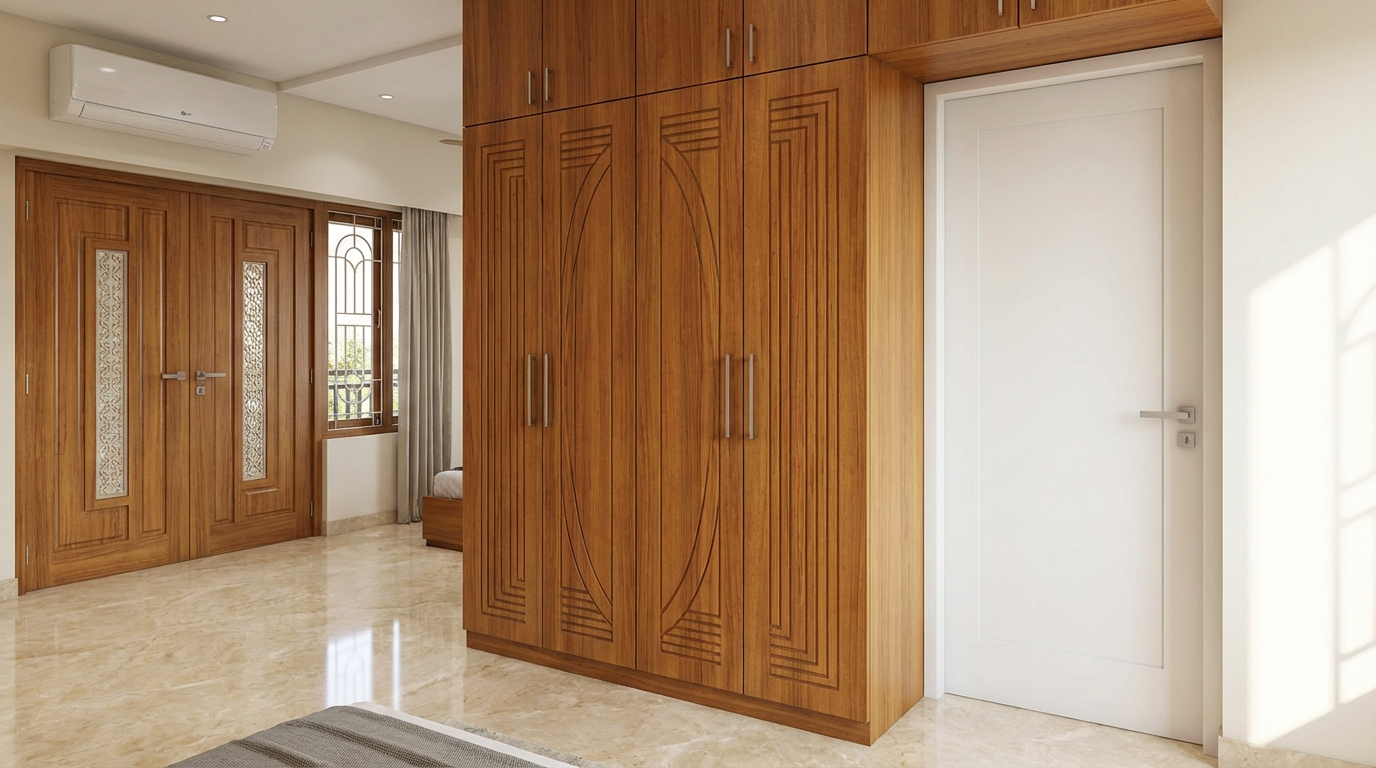
Bedroom Flush: 18mm MDF, white melamine, slim aluminum handles—fits humid AC rooms.
Living Paneled: CNC routed 20mm, veneer overlay, brass hinges—for premium dry halls.
Minimalist Pocket: Prelam 16mm sliders, soft-close—urban space-savers.
And 12 more: Customize via groove depth, inset panels, louver vents for wardrobes, etc., always edge-seal.
Can MDF doors be painted?
Yes, prime with MDF-specific sealer first for adhesion. Sand 180-grit between coats. Holds 5-7 years in dry use. Coastal needs UV topcoat. Check: Scratch test post-dry—no lift.
FAQs
Are MDF doors termite proof?
MDF's dense fibers and resins make it more resistant than solid softwood, especially MR grades, as termites struggle without voids. In Indian termite belts like UP/Bihar, pair with site barriers. Not 100% proof—inspect annually for mud tubes. Prevention beats cure: Elevate storage, use borate sprays pre-install. Longevity hits 15+ years with checks.
Do MDF doors warp?
Less than plywood if sealed, but uneven humidity causes bow in monsoons. Frame squareness prevents 90% cases. Acclimatize properly. If warped, plane edges or adjust shims—rare post-6 months with prep.
How long do MDF doors last?
10-20 years in dry interiors with maintenance; 5-10 in humid without. Edges decide fate. Indian users report good life via banding. Track via annual wipe tests.
Can I use MDF for exterior doors?
No, direct weather destroys it fast. Reserve for interiors only. Use solid wood or phenolic for outside.
What's the difference between MDF and particle board doors?
MDF denser (700+ kg/m³ vs 500-650), smoother cuts, better hold. Particle cheaper but chips easy. Choose MDF for doors.
How to fix swollen MDF door edges?
Sand flush, apply sealer + paint. Prevent recurrence with tape. Severe cases: Replace panel.
Is HDF better than MDF for doors?
HDF denser, stronger screws—yes for high-use. Costlier but worth in busy homes.
Can MDF doors be fire-resistant?
Standard no; FR grades available with additives. Check specs for public spaces.
How much weight can MDF doors hold?
20-30kg shelves ok on reinforced doors. Distribute load.
Best finish for MDF doors in India?
Laminate or melamine for durability; PU paint for custom. Seal always.
Do MDF doors need special hinges?
Yes, heavy-duty with longer screws or inserts for hold.
Disclaimer: This content is provided for general informational purposes based on industry practices and publicly available information. Product specifications, standards, prices, and availability may vary by manufacturer, region, and time. Readers should independently verify details with manufacturers, dealers, or qualified professionals before making purchase or construction decisions.Want Plywood Suggestions?
Share a few details and a VIR MDF specialist will suggest suitable brands and connect you to responsive dealers.