MDF for False Ceiling & Wall Panels: When to Use It and Moisture-Safe Detailing
Thinking of MDF for wall panels or ceilings? Here’s where it works, how to detail for moisture, and how to maintain a clean finish over time.
Quick Decision Summary
MDF works well for false ceilings and wall panels in dry interiors if edges are fully sealed and moisture detailing is followed strictly.
If you’re in a hurry: Opt for MDF in bedrooms or living rooms away from bathrooms or kitchens. Use 8-12mm thickness, prime all surfaces including edges, and apply two coats of oil-based paint. This handles typical Indian home humidity if stored dry and installed with gaps for ventilation. Avoid in coastal areas or direct monsoon exposure without extra protections like PVC wrapping on edges. Expect smooth paint finish at lower cost than plywood, but check screw hold after cutting.
- Choose this if: Budget-focused project in low-humidity zones, needing paintable smooth surface, fast cutting for custom designs.
- Avoid this if: High moisture areas like bathrooms, coastal sites with salt air, or heavy load-bearing without supports.
What This Material/Option Actually Is
MDF, or medium-density fiberboard, is an engineered panel made by compressing wood fibers with resins under heat and pressure. It creates a uniform, smooth sheet ideal for painting or laminating, unlike plywood's visible grain.
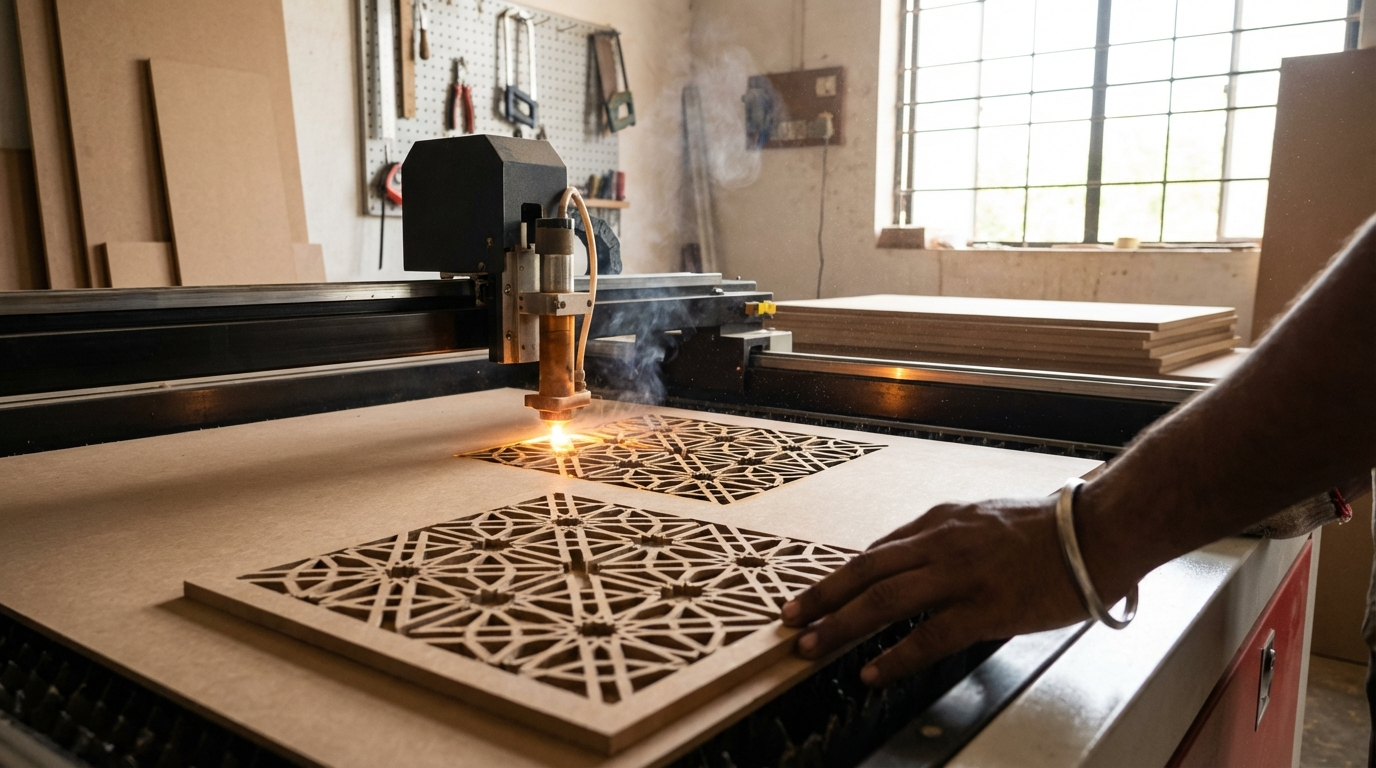
For false ceilings and wall panels, standard MDF (not moisture-resistant variants) suits interior dry applications. Thicknesses typically range from 6mm for lightweight panels to 12mm for sturdier ceilings. It cuts cleanly with CNC or jigsaw, holds paint evenly, but absorbs moisture at exposed edges if unsealed.
In Indian workflows, carpenters often pair it with pre-primed surfaces or melamine finishes for quick installs. It's denser than particleboard but less than HDF, balancing weight and strength for suspended ceilings.
Why It Matters in Indian Homes and Sites
India's monsoon season brings 80-90% humidity, causing unsealed MDF edges to swell by 10-15% in days. Coastal areas add salt-laden air, accelerating surface breakdown.
Site realities like open storage during transport or dust-filled construction yards worsen this. Poor ventilation in false ceilings traps humidity, leading to sagging or mold. Wall panels near AC drips or cooking steam face similar risks.
Practical upside: MDF's smoothness hides imperfections in uneven Indian walls/ceilings, reducing plastering needs. But screw pullout weakens if fibers delaminate from moisture, common in humid Mumbai or Chennai projects.
Practical Use Cases (What Works, What Fails)
MDF shines in controlled environments but fails without detailing. Below table outlines real applications with specs.
| Application | Recommended Thickness | Finish Notes | Risk Notes (India Context) |
|---|---|---|---|
| False Ceiling (Bedroom/Living) | 8-12mm | Primer + emulsion paint, edges sealed | Low risk if ventilated; avoid direct rain exposure during install |
| Wall Panel (Accent Feature) | 6-9mm | Laminate or veneer, PVC edge tape | Medium risk near windows; seal cutouts for lights/switches |
| Office Partition Panel | 9-12mm | Melamine face, ABS edging | Low if AC-controlled; check for door slam impacts |
| Kitchen Backsplash Panel | Avoid or use HDFWR | Tile over if must | High failure from steam/oil; swells fast in monsoons |
Can MDF handle false ceilings in apartments?
Yes, in dry apartments with good ventilation. Direct answer: Use 10mm MDF with full priming and 50mm gaps at walls for air flow. Nuance: In Mumbai high-rises, AC keeps humidity low, but balcony-adjacent ceilings need extra edge sealing. Next step: Test a sample panel in site humidity for 48 hours; if no swelling over 2mm, proceed. This prevents sagging common in poorly ventilated spaces.
Is MDF good for wall panels in living rooms?
Typically yes for decorative panels. Start with 8mm sheets, sanded and painted. Conditions: Ideal for textured designs, but avoid below 40% humidity thresholds without sealant. In Delhi winters, it holds well; monsoons demand polyurethane topcoat. Check: Weigh a cut edge piece before/after damp cloth exposure—if under 5% weight gain, it's site-ready.
Moisture-Safe Detailing Essentials
Moisture detailing starts at factory but peaks in prep. Seal all six sides: two faces, four edges. Use solvent-based primer first, then water-based paint.
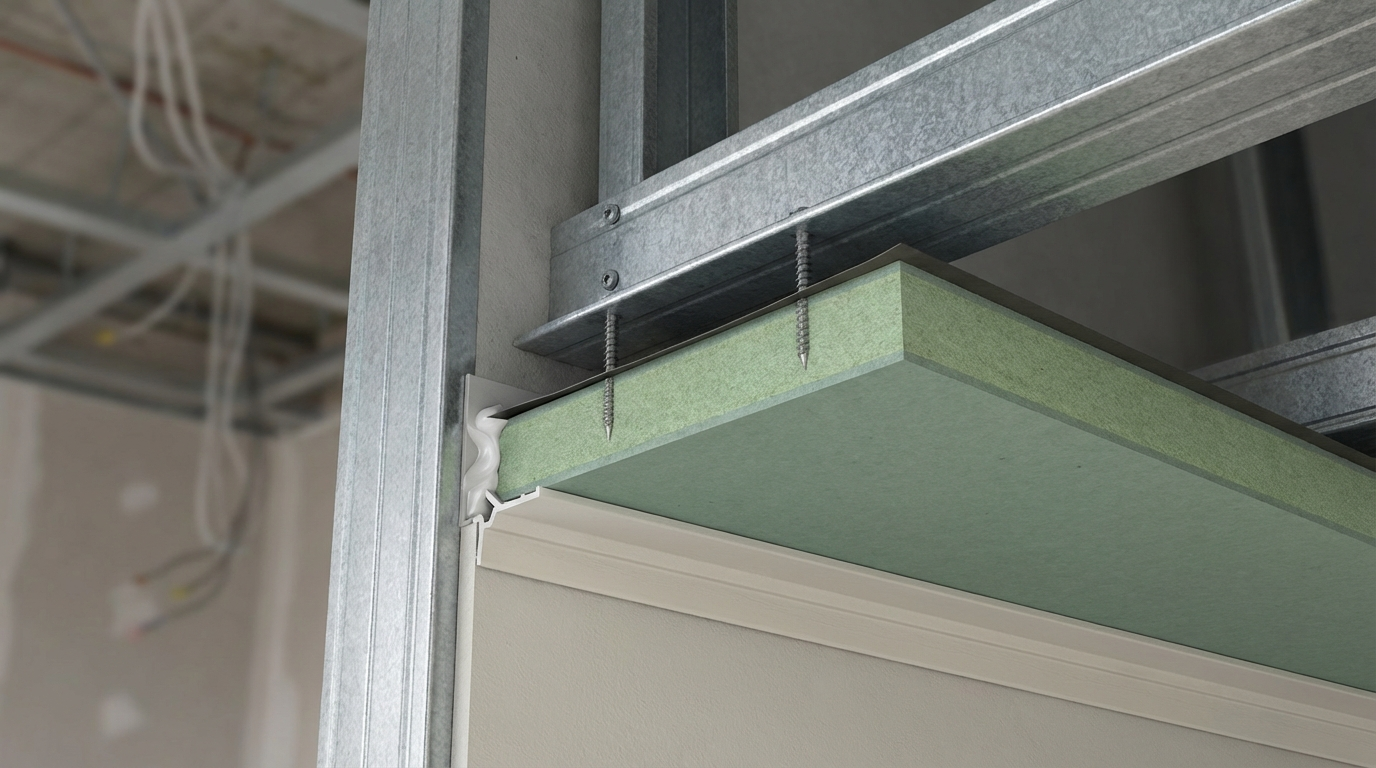
For false ceilings, add 1-2mm expansion gaps at joints. Wall panels need back-venting if over 2m high. In coastal Gujarat, apply wax-based edge filler before tape.
Workflow: Cut onsite → immediate edge sealing → 24hr dry → install. This cuts swelling risk by 70% in humid trials.
Failure Modes and Fixes
- Symptom: Edge swelling (wavy borders). Root: Unsealed raw edges absorb humidity. Prevention: Prime edges twice before install. Fix: Sand swollen area, re-prime, repaint; replace if over 5mm swell.
- Symptom: Ceiling sagging (droops mid-span). Root: Moisture-softened fibers + overload. Prevention: Use 12mm min, supports every 40cm. Fix: Reinforce with battens; full replacement if delam.
- Symptom: Paint peeling (bubbles/flakes). Root: Moisture trapped under paint. Prevention: Oil-based primer. Fix: Scrape, prime again, recoat.
- Symptom: Screw pullout (loose fittings). Root: Fibers weakened post-cut. Prevention: Pilot holes + washers. Fix: Fill with putty, redrill offset.
- Symptom: Surface scratches showing fibers. Root: Thin paint or abrasive cleaning. Prevention: Semi-gloss finish. Fix: Spot sand, touch-up paint.
- Symptom: Delamination (layers separate). Root: Prolonged humidity exposure. Prevention: HDFWR upgrade in risks. Fix: Discard affected panels.
Decision Framework: Matching Conditions to Choices
Use this table to pick specs based on site realities.
| Site Condition | Recommended MDF Type/Detail | What to Verify Onsite |
|---|---|---|
| Dry interior (bedroom) | Standard MDF 8-10mm, full prime | Edge smoothness post-cut, no crumbling |
| Coastal/high humidity | HDFMR + PVC edges, gaps at joints | Sample swell test in 85% RH |
| Heavy use (kids/pets) | 12mm + laminate face | Screw hold in test block |
| Tight budget | 6mm standard, emulsion paint | Weight per sqm under 8kg |
| Fast install needed | Pre-laminated 9mm | Cut speed without chipping |
| High scratch risk | Melamine or PVC overlay | Finger-push test on finish |
Two-Minute Comparison: MDF vs Alternatives for Panels/Ceilings
| Aspect | MDF | Plywood | PVC/WPC |
|---|---|---|---|
| Moisture Resistance | Low (needs detailing) | Medium (MR grade) | High (inherent) |
| Smooth Finish | Excellent | Grainy | Good |
| Cost per sqm (12mm) | Low | Medium | High |
| Weight | Medium | Heavy | Light |
| India Monsoon Fit | Dry zones only | Better | Best |
Choose MDF for budget smooth paints in dry areas; plywood for semi-wet; PVC for no-fuss moisture.
Should I use MDF or plywood for false ceilings?
MDF if smooth paint priority and dry site. Nuance: Plywood edges better in humidity but needs veneer. Trade-off: MDF lighter for solo install. Verify: Cut both samples, expose to steam 30min—pick non-sweller.
Will MDF warp in Indian summers?
Rarely if sealed. Direct: No, stable up to 50°C dry. But monsoon combo warps edges. Prevention: Seal + ventilate. Check: Hang sample vertically 1 week in site.
Quality Checks You Can Do Without Lab Tests
Before buying: Tap sheet—uniform thud, no hollows. Weigh sqm: 650-750kg/m3 density feel. Ask for cut edge sample.
After cutting: Edges should not crumble; sand smooth in 2 passes. Test screw: 3x diameter pilot hole holds 5kg pull.
After install: No gaps over 2mm; spray water on edge—beads off, no absorb in 10min. Clean with microfiber only.
Common Mistakes to Avoid
- Skipping edge priming: Swells in 1 monsoon week—always seal raw cuts same day.
- No expansion gaps in ceilings: Leads to buckling—leave 1-2mm at walls/joints.
- Water-based paint only: Traps moisture—use oil primer first.
- Storing onsite uncovered: Absorbs dust/humidity—plastic wrap sheets.
- Oversized spans without supports: Sags under AC weight—max 45cm spacing.
- Direct screw near edges: Pulls out—use 40mm inset + anchors.
- Cleaning with abrasives: Scratches finish—microfiber + mild soap only.
- Ignoring back priming: Delams from wall moisture—prime all sides.
- Thin sheets in traffic areas: Chips easy—8mm min for walls.
Tips by User Type
For Homeowners
Focus on cleaning: Wipe weekly with damp cloth, no soaking. Avoid hanging heavy lights directly—use brackets. In monsoons, run exhaust fans near panels. Check quarterly for edge lifts.
For Carpenters
Cut with 60-tooth blade, zero clearance. Edge band immediately. Fasten with 4x5cm screws in zones. Handle with gloves to avoid oils.
For Architects/Designers
Spec "all edges sealed, 10mm min, gaps 1.5mm." Detail vents in ceiling grids. Coastal: Add MR resin callout.
For OEM/Modular Makers
QC: 100% edge seal check. Batch test humidity. Use jigs for repeat cuts to cut waste 20%.
Is 6mm MDF enough for lightweight ceilings?
Yes for low-load decorative. But upgrade to 8mm for fans. Conditions: Bedroom only, no spans over 1m. Check: Flex test—bend <5mm under hand pressure.
Design Ideas You Can Actually Build
Bedroom False Ceilings (6 ideas):
- Coffered grid: 9mm MDF, paint recessed squares—dry zone fit, easy CNC.
- Layered tray: 8mm steps, LED cove—seal edges, ventilate.
- Textured waves: Routed 10mm, emulsion—low humidity only.
- Star cutouts: 6mm thin, backlit—prime cutouts extra.
- Slatted indirect light: 12mm strips, gaps for air.
- Minimal flat with cornice: Seamless paint match.
Wall Panels (8 ideas):
- Vertical shiplap: 8mm, matte finish—hides wall cracks.
- Hexagon tiles: 6mm modular, laminate—fast glue-up.
- 3D geometric: Routed 9mm, semi-gloss.
- Feature stripe: Alternate heights, edge taped.
- Wainscoting lower wall: 12mm robust, chair rail.
- TV backdrop: 10mm, fabric wrap option.
- Headboard panel: Curved CNC, padded edges.
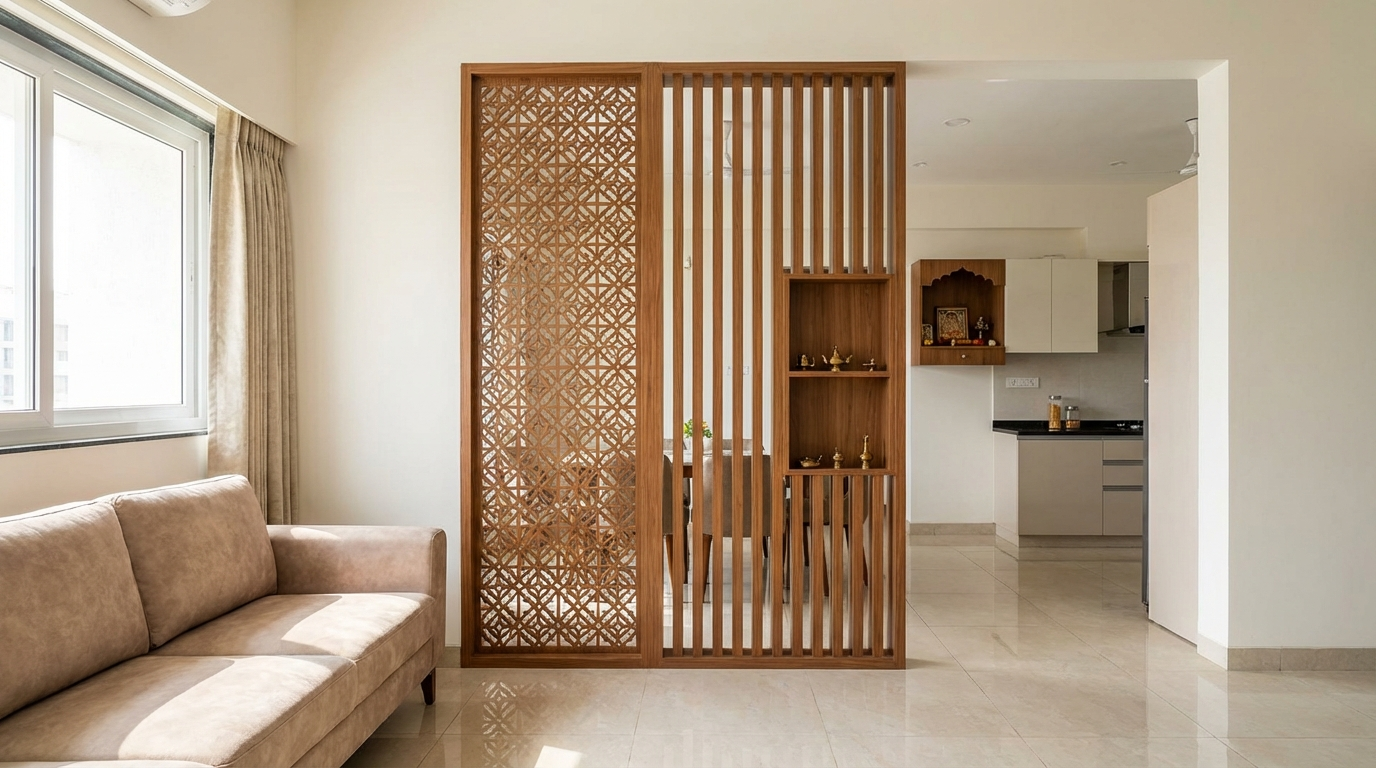
- Partition screen: Perforated 8mm, paint both sides.
Each uses MDF's routability; always moisture-detail for India sites.
FAQs
How long does MDF last in false ceilings?
Typically 8-15 years with proper sealing in dry Indian interiors. Factors like ventilation and cleaning extend it; poor edge work halves lifespan. In Bangalore's moderate climate, sealed installs hold 12+ years without sag. Homeowners report repaint every 5 years keeps it fresh. Key: Annual checks for humidity signs.
Can I paint MDF directly without primer?
No, primer is essential for adhesion and moisture block. Direct paint leads to peeling in 6 months, especially humid seasons. Use MDF-specific primer, two coats on edges. This creates a barrier against site vapors. Carpenters note it cuts callbacks by half.
What thickness for wall panels?
6-9mm for decor, 12mm for functional. Thinner suits lightweight accents; thicker for impacts. In Pune apartments, 8mm balances weight and rigidity. Verify by flex test onsite. Thicker adds cost but screw hold.
Does MDF attract termites?
Less than solid wood due to resins, but untreated edges can. Indian sites need termite oil on cuts. Resins deter most, but coastal soil risks persist. Store off-ground; inspect yearly.
How to fix swollen MDF edges?
Sand to original, dry 48hrs, re-prime/paint. Prevent with immediate sealing post-cut. In monsoon installs, this saves 80% panels. Use putty filler first for smooth.
Is MDF fire-resistant for ceilings?
Standard no; gets char but not self-extinguish. Add fire-retardant paint for codes. Indian homes rarely need; focus smoke seal gaps. Verify class per local rules.
Can I use MDF outdoors?
No, degrades fast. Exteriors demand WPC/PVC. Even covered patios fail in rain. Stick interiors.
What's the weight impact on false ceiling frame?
8mm ~6kg/sqm, lighter than gypsum. Frames handle easy; check rusty angles in humid sites. Use galvanized supports.
How to clean painted MDF panels?
Microfiber dampened with soap water, no soak. Dry immediately. Avoid steel wool. Weekly in kitchens prevents grime build.
Should I laminate MDF for walls?
Yes for durability. Laminate hides edges better than paint in traffic areas. Heat-press quality varies; check adhesion post-install. Disclaimer: This content is provided for general informational purposes based on industry practices and publicly available information. Product specifications, standards, prices, and availability may vary by manufacturer, region, and time. Readers should independently verify details with manufacturers, dealers, or qualified professionals before making purchase or construction decisions.
Want Plywood Suggestions?
Share a few details and a VIR MDF specialist will suggest suitable brands and connect you to responsive dealers.