MDF Full Form in Furniture: Understanding Wood Boards
MDF full form in furniture context: what it means for your wardrobes, cabinets & interiors. Learn how VIR MDF delivers quality furniture solutions.
Quick Decision Summary
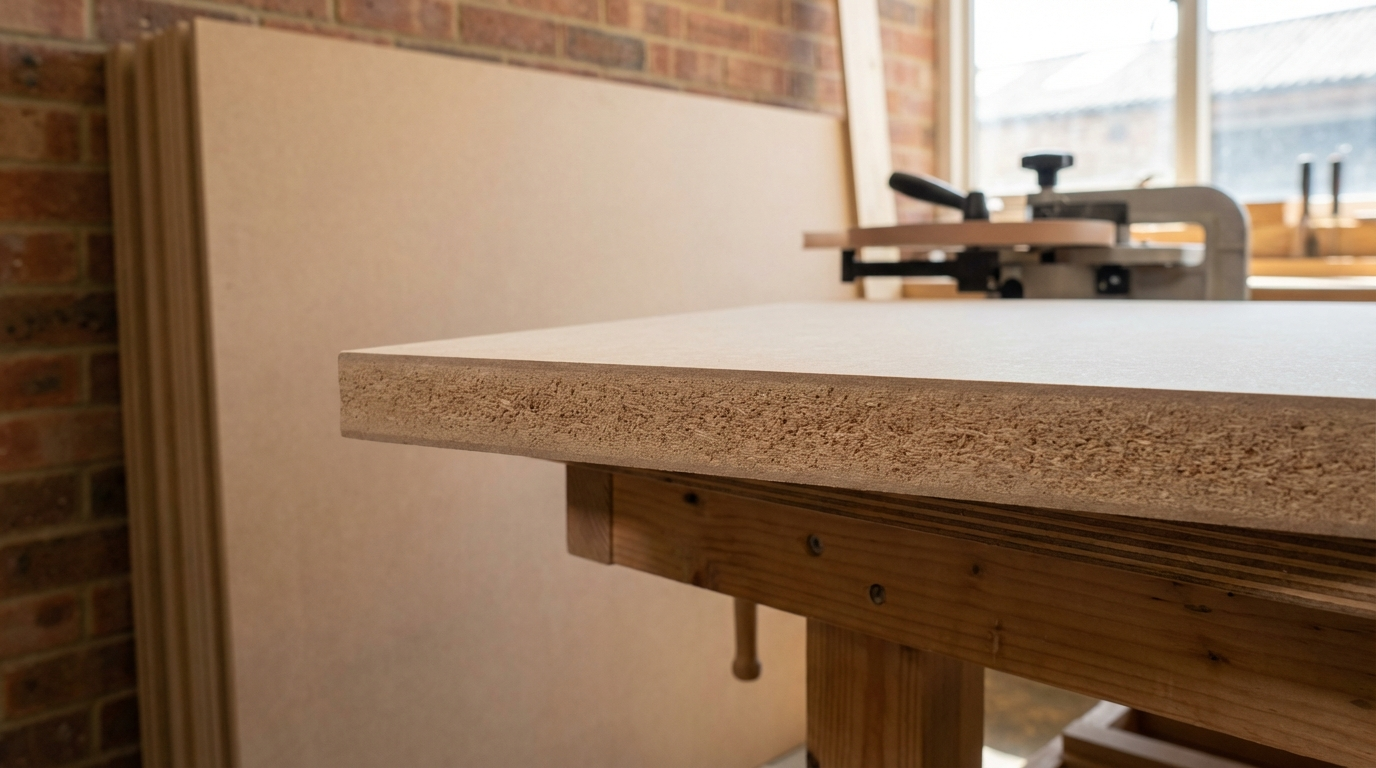
Quick Answer: MDF full form is Medium Density Fibreboard – an engineered wood panel made from wood fibres bonded with resin under high pressure and heat, widely used in Indian furniture for wardrobes, kitchen cabinets, TV units, and modular interiors due to its smooth surface, consistent quality, and cost-effectiveness compared to solid wood.
If you're in a hurry: MDF is your go-to material when you need furniture with smooth paintable surfaces, intricate designs, or budget-friendly modular units. It works exceptionally well for wardrobe shutters, kitchen cabinets (with proper moisture protection), TV units, shoe racks, and decorative wall panels. For wet areas like bathrooms or coastal homes, specifically request HDFWR (High Density Fibre Water Resistant) grade MDF.
- Choose MDF if: You want smooth, paint-ready surfaces without wood grain
- Choose MDF if: Budget is a constraint but quality finish is non-negotiable
- Choose MDF if: Your furniture requires CNC routing or intricate patterns
- Choose MDF if: You need consistent thickness and density throughout
- Avoid MDF if: The furniture will be in direct contact with standing water
- Avoid MDF if: You need visible natural wood grain aesthetics
- Avoid MDF if: The application requires heavy load-bearing without proper support
- Avoid MDF if: Installation site has prolonged uncontrolled humidity exposure
What MDF Full Form Actually Means in Furniture Context
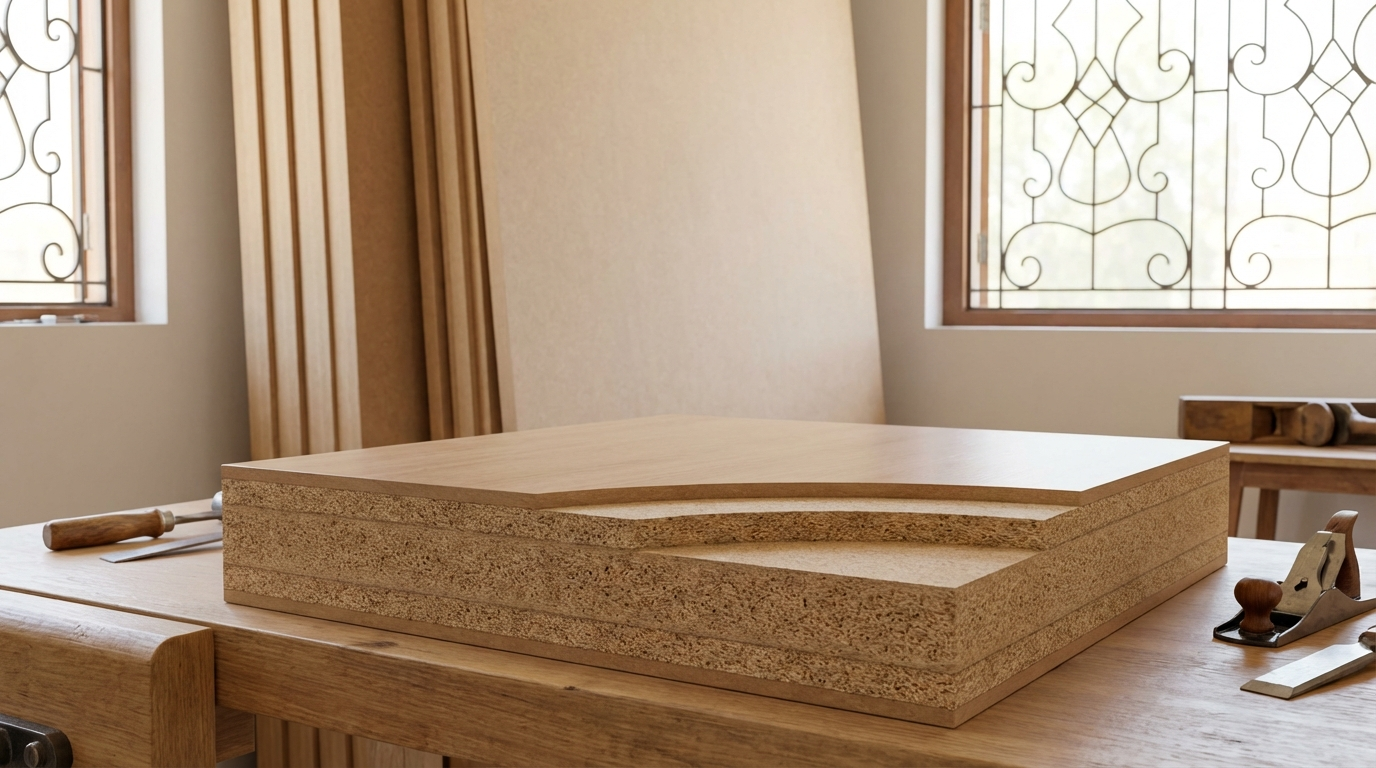
MDF stands for Medium Density Fibreboard – an engineered wood product created by breaking down hardwood or softwood residuals into fine wood fibres, combining them with wax and resin binders, and forming panels through high-temperature and high-pressure processes. The "medium density" refers to its density range of 600-800 kg/m³, positioning it between low-density fibreboard (LDF) and high-density fibreboard (HDF).
In the furniture industry, MDF has become the backbone of modern interior solutions. Unlike solid wood that comes from cutting trees directly, or plywood that consists of thin wood veneer layers glued together, MDF represents a completely reconstituted wood product. The manufacturing process eliminates natural wood defects like knots, grain variations, and internal stresses that cause warping.
The material hierarchy in Indian furniture typically follows this pattern: Solid Wood (highest cost, natural aesthetics) → Plywood (layered strength, moisture options) → MDF (smooth finish, design flexibility) → Particle Board (budget option, limited durability). MDF occupies a sweet spot offering better surface quality than plywood at a lower price point than solid wood.
Common Confusions Clarified
Many Indian homeowners confuse MDF with particle board or compressed wood. The key distinction lies in the fibre structure – MDF uses finely ground wood fibres creating a homogeneous, smooth panel, while particle board uses larger wood chips resulting in a rougher, weaker composition. MDF can hold screws better, accepts paint smoothly, and allows intricate CNC routing that particle board simply cannot match.
Why Understanding MDF Matters for Indian Homes
India's diverse climate presents unique challenges for furniture materials. The monsoon season (June-September) brings humidity levels exceeding 80% in many regions, while summer months in northern India can see extreme dryness. This humidity cycling directly impacts how furniture materials behave over years of use.
Standard MDF, when used incorrectly in moisture-prone areas, can swell at edges, develop surface bubbling, or experience delamination. However, when properly specified (using moisture-resistant grades) and correctly installed (with proper edge sealing), MDF delivers exceptional performance even in challenging Indian conditions.
Real Consequences of Wrong Material Selection
Swelling at edges is the most common MDF failure in Indian homes, typically occurring when kitchen cabinet bases absorb moisture from wet floors during mopping. Delamination happens when surface laminates peel away from swollen MDF cores. Screw failure occurs when MDF absorbs moisture and loses its holding strength. These failures are preventable with correct grade selection and installation practices.
Site handling realities in India often involve construction-phase storage where boards remain exposed to dust, moisture, and rough handling during transport. Carpenter skill variations across regions mean edge sealing quality differs significantly. Understanding these ground realities helps homeowners specify requirements correctly and verify installation quality.
Types of MDF Used in Indian Furniture Manufacturing
The Indian market offers several MDF grades, each engineered for specific applications. Understanding these variations helps you specify the right material for each furniture piece in your home.
| MDF Type | Full Form/Description | Density Range | Best Applications | Moisture Resistance |
|---|---|---|---|---|
| Standard MDF | Interior Grade Medium Density Fibreboard | 600-750 kg/m³ | Bedroom wardrobes, living room furniture, TV units | Low – dry areas only |
| MR-MDF | Moisture Resistant MDF | 650-780 kg/m³ | Kitchen cabinets (upper), bathroom vanities with ventilation | Moderate – handles humidity |
| HDFWR | High Density Fibre Water Resistant | 800-900 kg/m³ | Kitchen base units, bathroom furniture, coastal applications | High – resists moisture penetration |
| Prelam MDF | Pre-laminated MDF with melamine surface | 650-800 kg/m³ | Ready-to-use modular furniture, office partitions | Varies by base grade |
| FR-MDF | Fire Retardant MDF | 700-800 kg/m³ | Commercial spaces, hospitals, schools, public buildings | Moderate |
| Ultralite MDF | Lightweight MDF (30% lighter) | 450-550 kg/m³ | Wall panels, display fixtures, mobile furniture | Low |
How to Identify MDF Grade at Purchase
Standard interior-grade MDF typically appears light brown with uniform colour throughout. Moisture-resistant grades often have a green-tinted core (though colour alone isn't definitive). HDFWR grades feel noticeably heavier and denser. Always request grade certification from your supplier and verify the manufacturer's specifications rather than relying solely on visual inspection.
MDF Applications in Different Furniture Categories
MDF's versatility makes it suitable for numerous furniture applications across Indian homes. However, matching the right MDF grade to each application ensures longevity and performance.
Wardrobe and Closet Systems
Wardrobes represent one of the largest MDF applications in Indian bedrooms. The material excels here because wardrobe shutters require smooth surfaces for laminate application, consistent thickness for proper hinge alignment, and the ability to accommodate CNC-routed handles or patterns. Interior-grade MDF works well for wardrobe carcasses and shutters in air-conditioned bedrooms. For non-AC rooms in humid cities like Mumbai, Chennai, or Kolkata, consider MR-MDF for better humidity tolerance.
Kitchen Cabinets and Modular Kitchens
Kitchen applications demand careful grade selection. Upper cabinets away from direct water exposure can use MR-MDF successfully. Base cabinets near sinks, dishwashers, or areas prone to water splashes require HDFWR grade. The sink cabinet specifically needs marine plywood or HDFWR with proper waterproof edge banding. Many kitchen failures trace back to using standard MDF in base units where water contact is inevitable.
TV Units and Entertainment Centers
Living room furniture like TV units, display cabinets, and bookshelves represents ideal MDF territory. These pieces stay in climate-controlled spaces, require smooth painted or laminated surfaces, and often feature design elements like cable management holes or decorative patterns – all areas where MDF excels. Standard interior-grade MDF serves these applications well.
Study Tables and Home Office Furniture
Work-from-home setups have increased demand for study tables and office furniture. MDF provides excellent surface flatness for writing and computer work. Edge banding quality becomes important here since desk edges experience regular contact. Ensure your carpenter applies proper PVC or ABS edge banding with adhesive suitable for your climate zone.
MDF vs Other Furniture Materials: Decision Framework
Choosing between MDF and alternatives requires understanding each material's strengths relative to your specific requirements.
| Condition/Requirement | Recommended Material | What to Verify |
|---|---|---|
| Smooth painted finish needed | MDF (any grade) | Surface sanding quality, primer compatibility |
| Wet zone (bathroom/kitchen base) | HDFWR MDF or Marine Plywood | Grade certification, edge sealing completeness |
| Coastal area installation | HDFWR MDF with sealed edges | Borer/termite treatment, edge band quality |
| Heavy load shelving (books) | Plywood or MDF with support battens | Span length, support spacing, thickness adequacy |
| Tight budget, dry area | Standard MDF | Density consistency, surface smoothness |
| Natural wood appearance needed | Veneer on MDF or Solid Wood | Veneer thickness, adhesion quality |
| CNC routing/intricate patterns | MDF (preferred choice) | Core density uniformity, edge chipping tendency |
| Outdoor/balcony furniture | WPC or treated solid wood | UV resistance, waterproofing treatment |
MDF vs Plywood: The Indian Context
Plywood offers better screw-holding at edges and superior moisture resistance in BWR grades. However, plywood surfaces show veneer grain patterns and require more preparation for paint finishes. MDF wins for painted furniture, routed designs, and budget-conscious projects. Plywood wins for structural applications, wet zones (in BWR grade), and where edge screw strength matters.
MDF vs Particle Board: Quality Difference
Particle board costs less than MDF but delivers significantly inferior performance. It cannot hold screws well at edges, shows rough surfaces under laminate, and fails quickly in any humidity. The price difference (typically 15-25% less for particle board) doesn't justify the quality compromise for furniture expected to last 10+ years.
Common Buyer Mistakes When Selecting MDF for Furniture
Learning from others' mistakes helps you avoid costly errors. These are the most frequent issues observed in Indian furniture projects:
Mistake 1: Using standard MDF in kitchen base cabinets
Consequence: Swelling within 6-12 months, shutter misalignment, complete cabinet failure
Prevention: Always specify HDFWR or marine plywood for sink units and base cabinets
Mistake 2: Skipping edge banding on exposed edges
Consequence: Moisture entry through edges, progressive swelling, delamination
Prevention: Ensure all edges receive proper PVC/ABS edge banding with heat-sealed adhesive
Mistake 3: Storing MDF on construction site without protection
Consequence: Moisture absorption before installation, pre-swelling, edge damage
Prevention: Store MDF flat, covered, elevated from floor, in enclosed dry areas
Mistake 4: Ignoring thickness requirements for spans
Consequence: Sagging shelves, warped tabletops, structural failure
Prevention: Use 18mm minimum for shelves under 60cm span, 25mm for longer spans
Mistake 5: Assuming all MDF is moisture resistant
Consequence: Using interior grade in humid zones leads to failure
Prevention: Verify grade before purchase, check green core indicator for MR grades
Mistake 6: Overtightening screws in MDF
Consequence: Stripped screw holes, weak joints, hardware failure
Prevention: Use proper pilot holes, controlled torque, avoid edge screwing
Mistake 7: Painting without proper primer
Consequence: Uneven finish, paint absorption variations, visible patches
Prevention: Apply MDF-specific primer, sand between coats, seal edges first
Mistake 8: Choosing based solely on price
Consequence: Inferior quality boards with density variations, surface defects
Prevention: Verify manufacturer reputation, check for quality certifications
MDF Quality Failures and Prevention Strategies
Understanding how MDF fails helps you prevent problems before they occur and identify early warning signs.
Edge Swelling
Symptom: Edges become soft, expand visibly, laminate lifts at edges
Root Cause: Moisture penetration through unsealed or poorly sealed edges
Prevention: Complete edge banding with quality adhesive, avoid water contact
Fix if occurring: Limited options – severely swollen boards require replacement
Surface Bubbling
Symptom: Laminate surface develops bumps or bubbles
Root Cause: Moisture trapped during lamination or absorbed through back
Prevention: Ensure both surfaces are sealed, use quality lamination process
Fix if occurring: Professional re-lamination after thorough drying
Screw Pull-Out
Symptom: Screws become loose, hinges sag, hardware fails
Root Cause: Screwing too close to edge, moisture degradation, overtightening
Prevention: Maintain 25mm minimum from edges, use proper pilot holes
Fix if occurring: Use larger screws with wall plugs or relocate hardware
Warping and Bowing
Symptom: Flat panels develop curves or twists
Root Cause: Uneven moisture exposure between two faces, improper storage
Prevention: Store flat, seal both faces, maintain consistent environment
Fix if occurring: Minor warping may self-correct with controlled humidity; severe cases require replacement
Delamination
Symptom: Layers separate, surface peels away from core
Root Cause: Manufacturing defect, extreme moisture exposure, adhesive failure
Prevention: Source quality boards, avoid extreme conditions
Fix if occurring: Re-gluing possible for minor cases; major delamination needs replacement
Core Crumbling
Symptom: MDF becomes soft, fibres separate easily
Root Cause: Prolonged moisture saturation, inferior manufacturing
Prevention: Use appropriate grade, maintain edge sealing, control humidity
Fix if occurring: No effective fix – replacement required
Quality Checks for MDF Without Laboratory Testing
You can assess MDF quality through practical inspections at different stages:
Before Buying: Visual and Physical Checks
- Check surface smoothness by running your palm across – no rough patches should be felt
- Examine edges for consistent density throughout thickness
- Look for any surface depressions or swelling marks
- Verify thickness uniformity using a calliper at multiple points
- Lift the sheet to assess weight – unusually light boards may have density issues
- Ask for manufacturer name and grade documentation
Questions to Ask Your Supplier
- What is the exact grade – Interior, MR, or HDFWR?
- Who is the manufacturer and where is the factory?
- What is the board's density specification?
- Is there any warranty or quality guarantee?
- Can you provide test certificates if needed?
After Cutting: Core Quality Assessment
- Examine cut edges for uniform fibre distribution
- No visible voids or gaps should appear in the core
- Colour should be consistent throughout thickness
- Edge should feel solid, not crumbly or soft
- Cutting should produce fine dust, not chunks
After Installation: Ongoing Monitoring
- Check for edge swelling at regular intervals, especially during first monsoon
- Monitor hinge areas for screw loosening
- Ensure no moisture accumulation around furniture bases
- Verify laminate adhesion at edges hasn't lifted
Tips by User Type
For Homeowners
When commissioning furniture, always ask your carpenter or modular kitchen vendor about the specific MDF grade being used. Don't accept vague answers like "good quality MDF" – insist on knowing whether it's interior grade, MR, or HDFWR. For kitchen cabinets, this single specification can mean the difference between 3-year and 15-year lifespan.
For cleaning MDF furniture, use slightly damp (not wet) microfibre cloths. Avoid pooling water on surfaces. Wipe spills immediately. Don't use harsh chemicals that can damage laminate surfaces. For maintenance, check edge banding annually and have loose sections re-sealed promptly.
Warning signs requiring attention include: edges feeling soft or swollen, doors not closing properly (may indicate swelling), laminate lifting at corners, musty smell indicating moisture absorption, or visible colour changes at edges.
For Carpenters and Woodworkers
When cutting MDF, use carbide-tipped blades designed for engineered wood. Standard wood blades dull quickly and produce rough edges. Maintain blade speed and feed rate to minimize chipping. Always wear proper dust masks – MDF dust is finer than wood dust and poses respiratory risks.
For edge preparation, clean cut edges before applying edge banding. Use proper temperature settings for PVC edge banding (typically 180-200°C for hot-melt adhesive). Ensure complete coverage without gaps. For screw joints, always drill pilot holes. Avoid screwing within 25mm of edges. Use confirmat screws designed for MDF/particle board where possible.
Hinge installation requires attention to screw placement. The 32mm system works well for MDF cabinets. Use proper cup hinges with adequate mounting plate coverage. In high-use applications, consider reinforcing hinge areas with hardwood plugs or metal inserts.
For Architects and Interior Designers
When specifying MDF in project documents, include: exact grade (Interior/MR/HDFWR), required thickness, density range acceptable, edge treatment requirements, and finishing specifications. Avoid generic specifications like "MDF board" – this invites substitution with inferior products.
For wet-zone detailing, specify HDFWR grade with complete edge sealing. Detail the edge treatment method in drawings. Include maintenance access provisions for plumbing areas. Consider waterproof membrane backing for cabinet units adjacent to wet walls.
Finish selection should match application intensity. High-traffic areas benefit from high-pressure laminates (HPL) rather than low-pressure laminates. Paint finishes require proper primer specification. Veneer finishes need UV protection specification for south-facing installations.
For Modular Furniture Manufacturers (OEM)
Quality control checkpoints should include: incoming material density verification, moisture content testing (target 8-10%), edge quality assessment post-cutting, lamination adhesion testing, and final product dimensional accuracy checks.
To reduce customer complaints, focus on edge sealing completeness – most field failures trace to moisture entry through edges. Implement 100% edge inspection before dispatch. Document grade used per order for warranty traceability. Train installation teams on site protection requirements.
For batch consistency, establish relationships with consistent MDF sources. Specify density tolerances in purchase orders. Implement incoming inspection protocols. Reject batches showing visible quality variations.
MDF Thickness Guide for Furniture Applications
Selecting correct thickness prevents structural failures and ensures furniture longevity. Here's a practical guide for common Indian furniture applications:
| Application | Recommended Thickness | Maximum Unsupported Span | Notes |
|---|---|---|---|
| Wardrobe shutters | 18mm | Up to 600mm width | Use 25mm for wider shutters |
| Cabinet carcass (sides) | 18mm | N/A | Standard for most applications |
| Shelves (light items) | 18mm | 600mm | Add support for longer spans |
| Shelves (books/heavy) | 25mm | 500mm | Consider additional support battens |
| Back panels | 6mm or 8mm | N/A | Grooved into carcass |
| Drawer bottoms | 6mm or 8mm | N/A | Depends on drawer size |
| Table tops | 25mm | 800mm | Support frame recommended |
| TV unit tops | 18-25mm | 600-800mm | Based on TV weight and span |
| Wall panels/cladding | 12mm | N/A | With proper wall mounting |
| CNC routed designs | 18mm minimum | N/A | Thicker for deeper routing |
MDF Price Factors and Budget Planning
Understanding what drives MDF pricing helps you budget accurately and avoid overpaying:
Factors Affecting MDF Prices in India
Grade/Type: Interior grade costs least, MR-MDF typically costs 15-25% more, HDFWR commands 30-50% premium over standard grades.
Thickness: Prices increase roughly proportionally with thickness. 18mm is the most commonly stocked and competitively priced. Unusual thicknesses may carry premiums.
Brand/Manufacturer: Established manufacturers with quality certifications typically price 10-20% higher than lesser-known brands. The premium usually reflects better quality control.
Finish: Plain MDF costs less than pre-laminated. Pre-laminated MDF (with melamine surface) saves lamination costs but limits design flexibility.
Market Location: Metro cities typically have more competitive pricing due to competition. Remote locations may see 10-15% higher prices due to transport costs.
Budget Estimation Example
For a standard 8x10 ft bedroom wardrobe with loft:
- MDF requirement: approximately 6-8 sheets (8x4 ft)
- Grade recommendation: Interior grade for carcass, MR for areas near bathroom
- Additional costs: Edge banding, hardware, laminate, labour
- MDF typically represents 25-35% of total wardrobe cost
Frequently Asked Questions
What is MDF full form and why is it called Medium Density?
MDF full form is Medium Density Fibreboard. The "medium density" classification refers to its density range of 600-800 kg/m³, which positions it between low-density fibreboard (under 600 kg/m³) and high-density fibreboard (above 800 kg/m³). This medium density provides an optimal balance of workability, strength, and cost – making it neither too soft for furniture applications nor too hard for easy machining. The density is achieved through controlled compression of wood fibres with resin binders during the manufacturing process.
Is MDF safe for home furniture and does it contain harmful chemicals?
Modern MDF manufactured by reputable companies is considered safe for indoor furniture applications. The primary concern historically was formaldehyde emissions from the resin binders. Today, most quality MDF manufacturers use low-emission or E1/E0 grade adhesives that emit formaldehyde well below safety thresholds. Once installed and sealed with laminate or paint, emissions are further minimized. Look for certifications indicating low VOC (Volatile Organic Compounds) and low formaldehyde emission when purchasing. Proper ventilation during installation and initial weeks helps dissipate any residual emissions.
Can MDF furniture last 10-15 years in Indian climate conditions?
Yes, MDF furniture can absolutely last 10-15 years or longer when the correct grade is selected for each application and proper installation practices are followed. The key factors are: using HDFWR grade in moisture-prone areas, ensuring complete edge sealing, avoiding direct water contact, and maintaining reasonable indoor humidity levels. Failures typically occur when interior-grade MDF is incorrectly used in kitchens or bathrooms, or when edges remain unsealed. Well-made MDF wardrobes in bedrooms routinely last 15+ years without issues.
What is the difference between MDF and HDF used in furniture?
HDF (High Density Fibreboard) is denser than MDF, with densities exceeding 800 kg/m³. This higher density makes HDF stronger, harder, and more resistant to wear. In furniture applications, HDF is often used for flooring underlayment, high-wear surfaces, and applications requiring superior screw-holding strength. MDF remains the more common choice for general furniture due to its lower cost and easier workability. HDFWR (High Density Fibre Water Resistant) combines HDF's strength with moisture-resistant properties, making it ideal for kitchen and bathroom furniture.
How do I know if my carpenter is using genuine MDF or particle board?
You can identify MDF by examining cut edges – MDF shows uniform, fine fibres throughout its thickness without visible wood chips or particles. Particle board displays larger wood chips and particles with visible voids. MDF feels heavier for the same thickness and has a smooth, consistent surface. The cut edge of MDF is clean and can be painted directly, while particle board edges appear rough and porous. Ask your carpenter to show you the board before cutting and verify the manufacturer label on the sheet.
Why does MDF swell and how can I prevent it in monsoon season?
MDF swells because wood fibres absorb moisture from humid air or direct water contact. The fibres expand when wet, causing dimensional changes especially at unsealed edges. Prevention strategies include: using moisture-resistant grades (MR-MDF or HDFWR) in humidity-prone areas, ensuring complete edge banding on all exposed edges, maintaining adequate ventilation in rooms, wiping spills immediately, using exhaust fans in kitchens and bathrooms, and avoiding furniture placement directly against wet walls. Even with these precautions, standard MDF should not be used in direct wet zones.
Is MDF better than plywood for kitchen cabinets?
Neither material is universally better – each has advantages depending on the specific application. MDF provides smoother surfaces ideal for painted finishes and costs less than equivalent plywood. However, BWR (Boiling Water Resistant) plywood offers superior moisture resistance for areas with water exposure. A practical approach: use HDFWR MDF or BWR plywood for base cabinets and sink units, MR-MDF for upper cabinets, and standard MDF or plywood for tall units away from water sources. Many successful kitchens combine both materials strategically.
What thickness of MDF should I use for wardrobe shutters?
For standard wardrobe shutters up to 600mm width, 18mm MDF provides adequate strength and rigidity. Wider shutters (600-900mm) benefit from 25mm thickness to prevent warping. Very tall shutters should also consider thicker material. The shutter construction method matters too – a well-constructed 18mm shutter with proper edge banding and quality hinges often outperforms a poorly made 25mm shutter. Additionally, the hinge selection should match the door weight – heavier 25mm doors need robust hinges rated for the load.
Can MDF be used for bathroom vanity units?
Yes, but only with the correct grade and installation. HDFWR grade MDF works well for bathroom vanities when all edges are properly sealed, surfaces are laminated or painted with moisture-resistant finishes, and the unit is designed to prevent water pooling. Elevated installation (not sitting directly on potentially wet floors) improves longevity. For areas directly adjacent to showers or bathtubs with regular splash exposure, marine plywood may be more appropriate. Ventilation in the bathroom significantly impacts any wood-based material's performance.
How is MDF manufactured and what materials go into it?
MDF manufacturing begins with debarking wood logs and chipping them into small pieces. These chips are then broken down into fine wood fibres using a defibrator under steam pressure. The fibres are mixed with synthetic resin binders (typically urea-formaldehyde or phenol-formaldehyde) and wax. This mixture is formed into a mat, pre-compressed, and then pressed under high temperature (around 170-200°C) and pressure to create dense panels. The pressing process activates the resin, bonding fibres together permanently. Final steps include cooling, trimming to size, and surface sanding for smoothness.
What are the standard MDF sheet sizes available in India?
The most common MDF sheet size in India is 8 feet × 4 feet (2440mm × 1220mm). This size fits standard modular furniture designs and minimizes cutting waste. Some manufacturers also offer 7 feet × 4 feet and 6 feet × 4 feet options. Thicknesses commonly available include 6mm, 8mm, 12mm, 18mm, and 25mm. Pre-laminated MDF typically comes in the same 8×4 ft dimension. When planning furniture, calculate material requirements based on these standard sizes to optimize utilization and minimize waste.
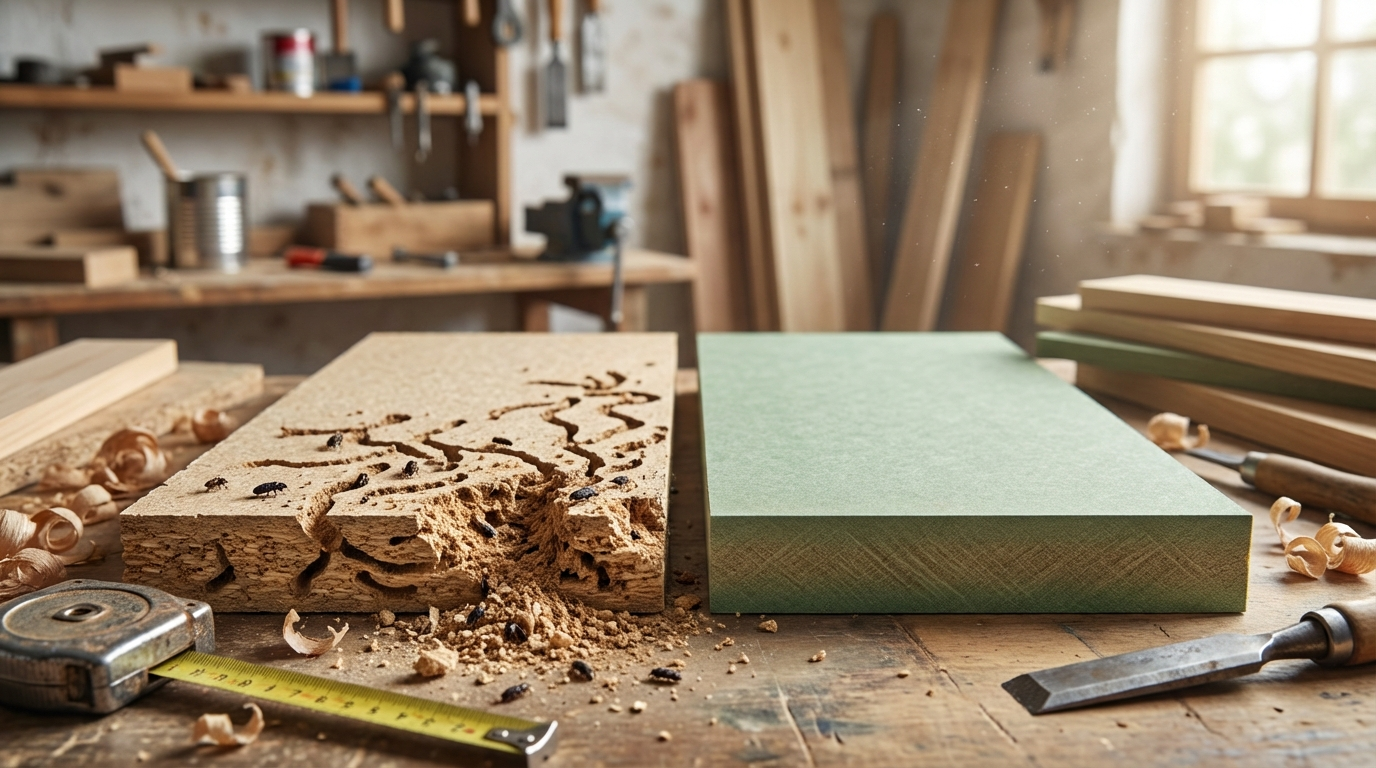
Does MDF attract termites like natural wood?
MDF is generally more resistant to termites than natural solid wood because the manufacturing process and resin content create an environment less hospitable to termites. The synthetic resin binders used in MDF act as natural deterrents. However, MDF is not completely termite-proof – in severe infestations or when moisture has compromised the board, termites can attack MDF. For additional protection, especially in termite-prone regions, applying anti-termite treatment to furniture and maintaining dry conditions provides extra security. Quality manufacturers often incorporate termite-resistant additives in their formulations.
Note: This is independent informational content and is not affiliated with any manufacturer. Information provided is for educational purposes. Always verify specifications with your supplier and consult professionals for specific project requirements. Last Updated: January 2026
Disclaimer: This content is provided for general informational purposes based on industry practices and publicly available information. Product specifications, standards, prices, and availability may vary by manufacturer, region, and time. Readers should independently verify details with manufacturers, dealers, or qualified professionals before making purchase or construction decisions.Want Plywood Suggestions?
Share a few details and a VIR MDF specialist will suggest suitable brands and connect you to responsive dealers.