MDF Furniture: Design Ideas, Durability & Buying Guide 2026
MDF furniture guide: modern designs, durability tips & buying advice. Discover how VIR MDF creates long-lasting furniture. Design ideas included.
Quick Decision Summary
Quick Answer: MDF furniture offers the ideal combination of affordability, design flexibility, and durability for Indian homes in 2026, making it the preferred choice for wardrobes, TV units, study tables, and modular kitchens when properly specified and maintained.
If you're in a hurry: MDF furniture delivers smooth, paintable surfaces without wood grain inconsistencies, costs 30-50% less than solid wood alternatives, and performs exceptionally well in climate-controlled Indian homes. Choose HDFWR (High-Density Fibreboard Water Resistant) variants for kitchens and bathrooms, standard MDF for bedrooms and living rooms, and always insist on proper edge sealing to prevent moisture damage during monsoon months.
Choose MDF furniture if:
- You want smooth, flawless painted finishes without visible grain patterns
- Your budget requires cost-effective solutions without compromising aesthetics
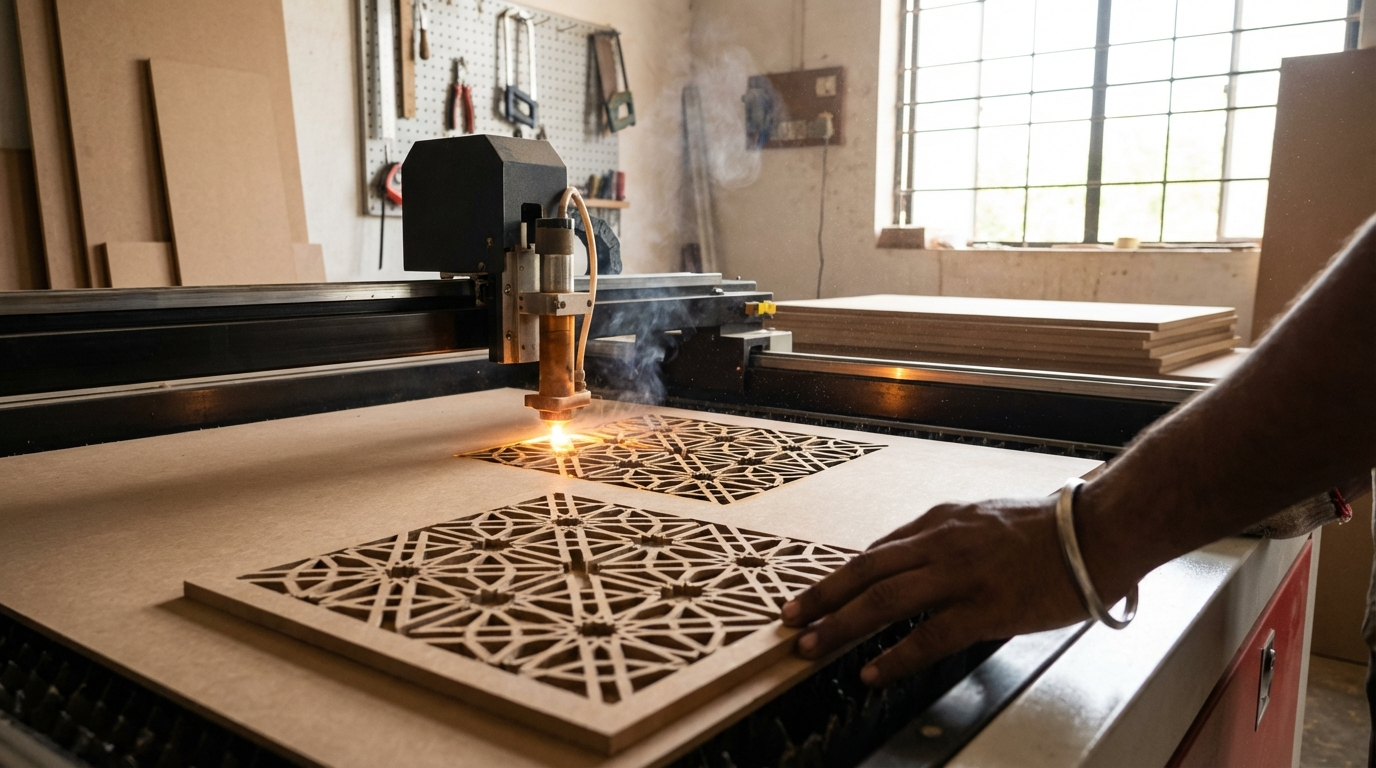
- You need custom designs with intricate CNC-routed patterns or curved profiles
- Your space has climate control (AC rooms) or remains relatively dry
Avoid MDF furniture if:
- Installation location experiences constant direct water exposure
- No edge sealing or lamination will be applied to cut surfaces
- Storage during construction will expose boards to rain or ground moisture
- You require furniture that can be frequently disassembled and reassembled
What MDF Furniture Actually Means
MDF furniture refers to any furniture piece constructed primarily from Medium Density Fibreboard—an engineered wood panel manufactured by breaking down hardwood or softwood residuals into fine fibres, combining them with wax and resin binders, and forming panels under high temperature and pressure. The resulting material offers exceptional dimensional stability, consistent density throughout, and a surface ideal for finishing.
Within the material hierarchy, MDF sits between particle board (lower density, less refined) and HDF (High-Density Fibreboard—denser, harder surface). Unlike natural wood or plywood with visible grain patterns and potential knots, MDF provides uniform composition that machines cleanly without splintering, accepts paint flawlessly, and enables design possibilities impossible with traditional materials.
Common confusions clarified:
- MDF is NOT compressed sawdust—it contains refined wood fibres bonded under controlled conditions
- MDF is NOT automatically water-damaged—moisture-resistant variants (HDFWR, MR-MDF) perform well in humid conditions when properly sealed
- MDF furniture is NOT inferior—premium furniture brands worldwide use MDF for painted components
- Pre-laminated MDF and plain MDF serve different purposes—pre-laminated arrives factory-finished while plain MDF requires site finishing
Why MDF Furniture Matters for Indian Homes
Indian homes present unique challenges that make material selection critical. The monsoon season (June-September) brings humidity levels exceeding 80% in many regions, causing unprotected wood products to swell, warp, or develop fungal growth. Coastal areas face additional salt-air exposure that accelerates deterioration. Understanding these conditions determines whether your MDF furniture thrives for decades or fails within years.
Real consequences of poor material choices in India:
- Swelling at edges: Unsealed MDF edges absorb atmospheric moisture, expanding up to 15-20% and causing doors to stick, drawers to jam, and laminate to peel
- Delamination: When moisture penetrates the core through unsealed areas, layers separate, creating bubbling surfaces that cannot be repaired
- Screw failure: Moisture-weakened MDF loses holding capacity, causing hinges to pull out and shelves to sag
- Fungal growth: Persistent dampness in poorly ventilated areas creates conditions for mould development on furniture surfaces
Site handling realities Indian buyers must consider:
- Construction sites often lack covered storage—boards left exposed to rain become unusable
- Carpenter skill varies significantly—proper edge sealing techniques are not universally practised
- Transport damage from rough handling can chip edges, creating moisture entry points
- Delayed installation after cutting leaves exposed edges vulnerable during monsoon months
Types of MDF for Different Furniture Applications
Selecting the correct MDF variant for each furniture application prevents premature failure and ensures optimal performance. The table below provides specification guidance based on Indian usage conditions.
| MDF Type | Density Range | Best Applications | Humidity Tolerance | Price Position |
|---|---|---|---|---|
| Standard MDF | 680-750 kg/m³ | Bedroom wardrobes, study tables, wall panels in AC rooms | Moderate (below 65% RH) | Base price |
| MR-MDF (Moisture Resistant) | 700-780 kg/m³ | Living room furniture, non-AC bedrooms, office furniture | Good (up to 75% RH) | 15-20% premium |
| HDFWR (Water Resistant HDF) | 850-1000 kg/m³ | Kitchen cabinets, bathroom vanities, coastal area furniture | Excellent (up to 85% RH) | 30-40% premium |
| FR-MDF (Fire Retardant) | 720-800 kg/m³ | Commercial installations, public buildings, hospital furniture | Moderate to Good | 40-50% premium |
| Pre-laminated MDF | Varies by base | Ready-to-use furniture, quick installations, rental properties | Depends on laminate quality | 25-35% premium over plain |
Which MDF thickness for which furniture?
Thickness selection directly impacts structural integrity and visual proportions. Indian market typically offers 6mm, 9mm, 12mm, 18mm, and 25mm options in standard 8x4 feet sheets.
- 6mm MDF: Backing panels for wardrobes, drawer bottoms, decorative wall panels
- 12mm MDF: Internal shelves, cabinet sides where not load-bearing, doors for small cabinets
- 18mm MDF: Most common for shutters, wardrobe doors, desk tops, TV unit carcasses
- 25mm MDF: Heavy-duty shelving, thick table tops, commercial furniture requiring substantial feel
MDF Furniture Design Ideas for Every Room
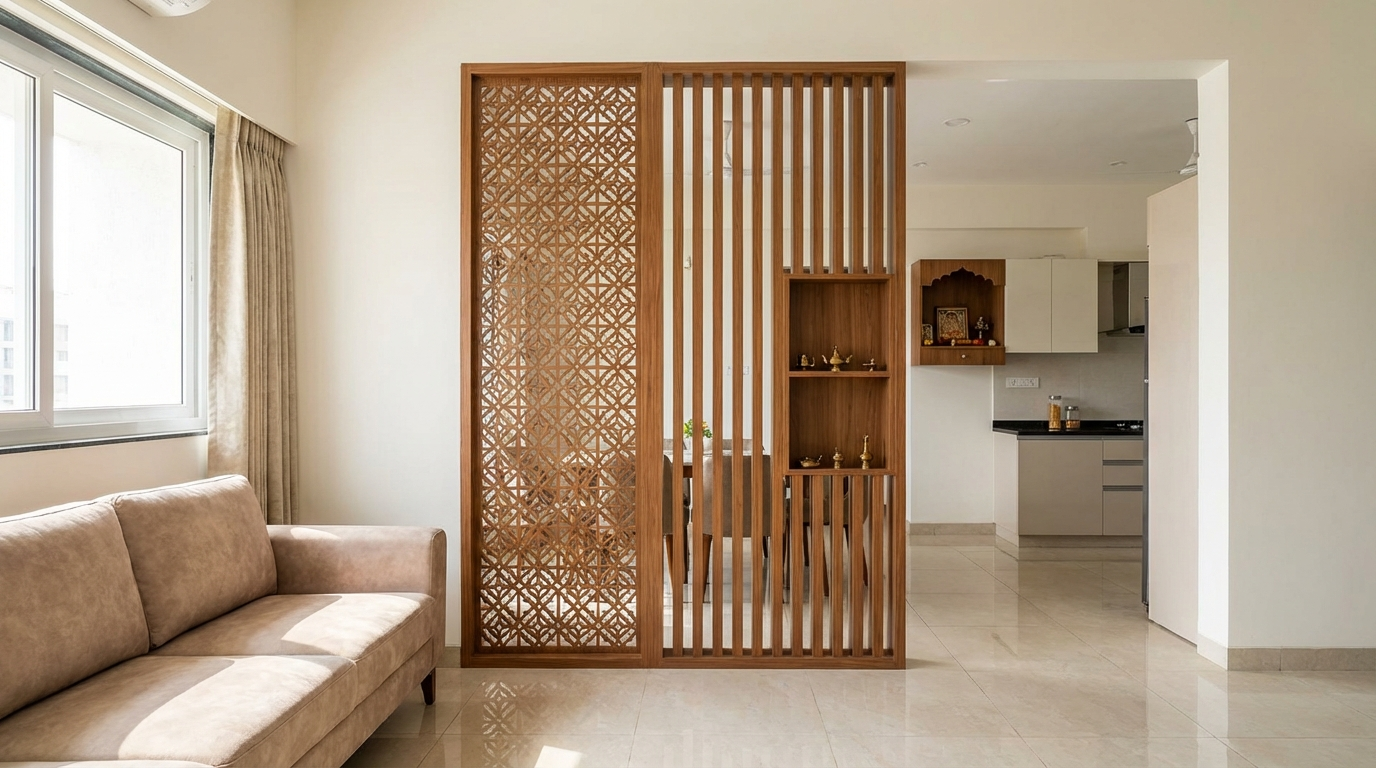
MDF's machinability enables design flexibility that other materials cannot match. The absence of grain direction allows CNC routers to create intricate patterns, curves, and profiles that would splinter natural wood.
Living Room MDF Furniture Ideas
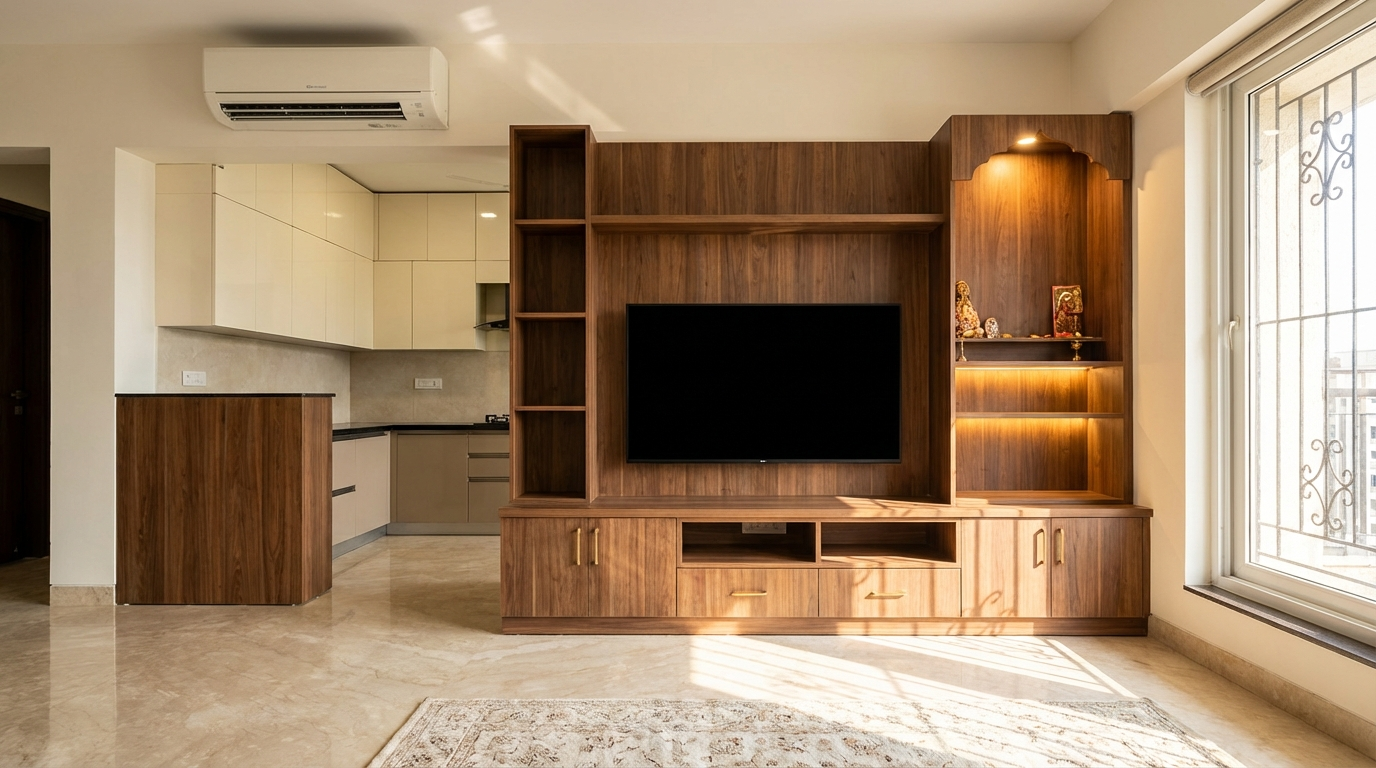
- Floor-to-ceiling entertainment units with integrated cable management
- Geometric patterned wall panels with concealed LED lighting channels
- Floating shelves with invisible mounting systems
- Custom mantelpiece designs with routed detailing
- Modular bookshelf systems adaptable to changing needs
- Coffee tables with CNC-cut decorative bases
Bedroom MDF Furniture Ideas
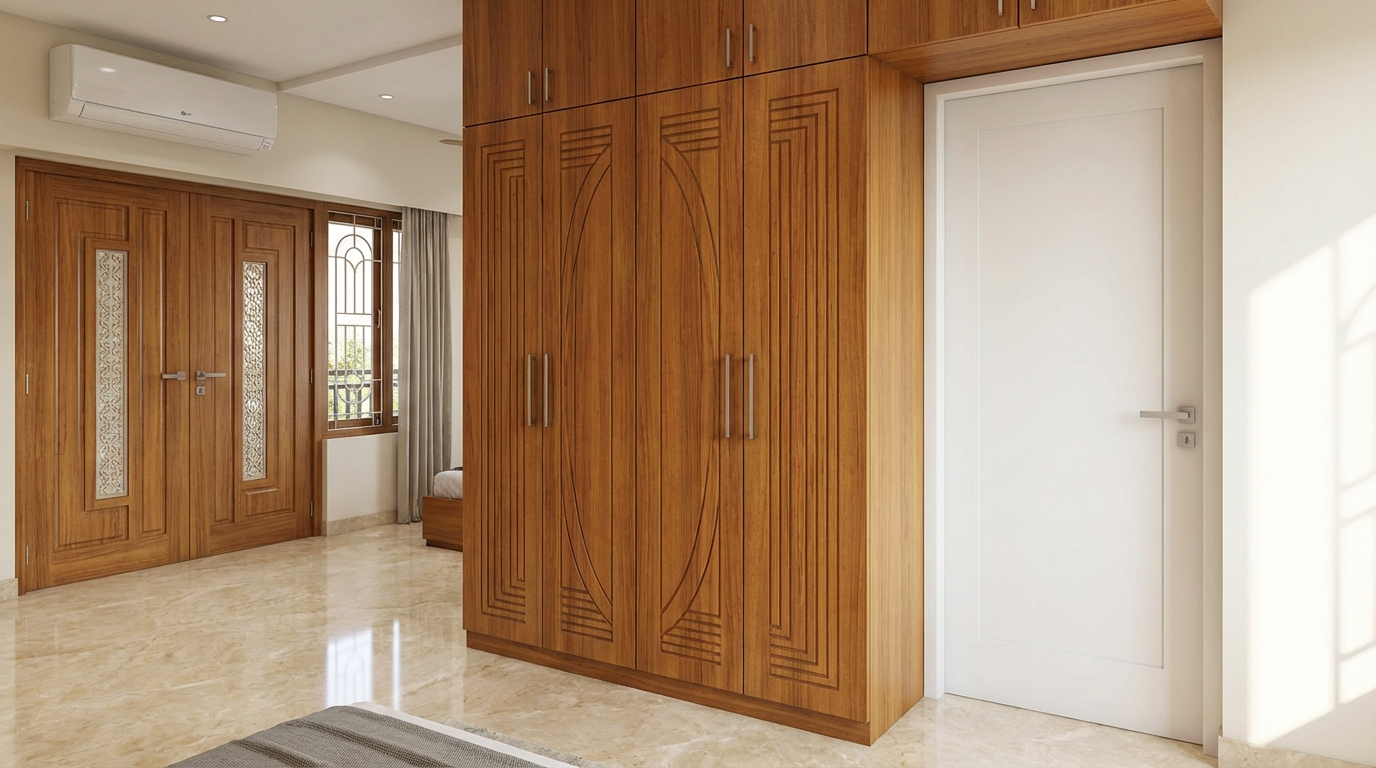
- Sliding wardrobe systems with soft-close mechanisms
- Upholstered bed frames with MDF structural backing
- Vanity units with integrated mirrors and drawer organizers
- Bedside tables with wireless charging pads embedded in surface
- Walk-in closet systems with adjustable internal fittings
- Study desks with built-in cable management and storage
Kitchen MDF Furniture Ideas
- Shaker-style cabinet doors with routed frames (use HDFWR grade)
- Handle-less push-to-open cabinet fronts for modern aesthetics
- Tall pantry units with pull-out basket systems
- Island units with integrated seating counters
- Wall-mounted cabinets with lift-up door mechanisms
Children's Room MDF Furniture Ideas
- Themed bed designs with custom-cut headboards
- Combination study-and-storage units maximizing floor space
- Wall-mounted desks that fold away when not needed
- Toy storage systems with child-height accessibility
- Bunk beds with integrated shelving and safety rails
Decision Framework: Which MDF Specification for Which Condition
This framework eliminates confusion when specifying MDF furniture for specific Indian conditions. Match your situation to the recommendation, then verify as indicated.
| Condition | Recommended MDF Type | Minimum Thickness | What to Verify |
|---|---|---|---|
| Kitchen base units (near sink) | HDFWR with laminate | 18mm | Green-coloured core, all edges sealed with PVC edge band |
| Coastal city bedroom (Mumbai, Chennai) | MR-MDF minimum | 18mm | Moisture-resistant certification, factory-sealed edges preferred |
| Air-conditioned office furniture | Standard MDF acceptable | 18mm | Consistent AC operation, humidity below 60% |
| Bathroom vanity | HDFWR mandatory | 18mm | All surfaces laminated including undersides, no exposed MDF |
| Budget bedroom wardrobe (North India) | Standard MDF with laminate | 18mm sides, 12mm internals | Complete edge sealing, avoid ground-floor installations without DPC |
| High-traffic retail display | HDF or HDFWR | 18-25mm | Higher density for scratch resistance, commercial-grade laminate |
| Children's furniture | MR-MDF with lacquer finish | 18mm | Rounded edges, low-VOC finishes, sturdy hardware |
| Rental property furniture | Pre-laminated MDF | 18mm | Factory finish quality, tenant-proof hardware specification |
Common Buyer Mistakes When Purchasing MDF Furniture
Avoiding these documented mistakes saves significant expense and frustration. Each mistake below represents real-world failures observed in Indian market conditions.
Mistake 1: Ignoring edge sealing importance
Consequence: Moisture enters through exposed edges within first monsoon, causing irreversible swelling. Prevention: Insist on PVC edge banding (minimum 1mm thickness) on all visible edges before installation.
Mistake 2: Using standard MDF in wet zones
Consequence: Kitchen cabinet bottoms swell within 6-12 months, doors stop closing. Prevention: Specify HDFWR for any location within 1 metre of water source.
Mistake 3: Storing boards at construction site without protection
Consequence: Even brief rain exposure damages boards beyond usability. Prevention: Store elevated on wooden battens, covered with waterproof sheets, in enclosed area.
Mistake 4: Choosing based only on price per sheet
Consequence: Lower-density boards fail structurally, requiring complete replacement. Prevention: Specify density requirement (minimum 700 kg/m³ for furniture), verify with weight check.
Mistake 5: Accepting furniture without checking backside finishing
Consequence: Unfinished backs against walls absorb moisture from masonry. Prevention: Specify melamine or paint on all surfaces including backs and undersides.
Mistake 6: Allowing carpenter to drill without pilot holes
Consequence: MDF splits or screws strip immediately. Prevention: Require pre-drilling at 80% of screw diameter, use specialized MDF screws.
Mistake 7: Installing immediately after painting without cure time
Consequence: Trapped moisture causes bubbling and adhesion failure. Prevention: Allow minimum 48-72 hours cure time after final paint coat before installation.
Mistake 8: Neglecting to verify moisture-resistant claims
Consequence: Standard MDF sold as MR-MDF fails in humid conditions. Prevention: Check for green-coloured core (industry standard for MR boards), request test certificates.
Mistake 9: Over-tightening hardware
Consequence: Screw holes enlarge, hinges become loose within months. Prevention: Use torque-limited drivers, install with hinge mounting plates that distribute load.
Mistake 10: Ignoring substrate preparation before painting
Consequence: Paint peels, finish appears uneven. Prevention: Sand with 180-220 grit, apply MDF-specific primer, sand lightly between coats.
Failure Modes in MDF Furniture and Prevention Strategies
Understanding how MDF furniture fails enables specification and maintenance decisions that extend service life significantly.
Edge Swelling
Symptom: Edges become soft, expand visibly, laminate lifts at perimeter
Root cause: Unsealed edges absorbing atmospheric moisture or direct water contact
Prevention: Complete edge sealing with PVC or ABS edge band before installation, apply edge sealant to any site-cut edges
Fix if already happening: Trim affected area, apply epoxy filler, reseal—extensive damage requires panel replacement
Surface Delamination
Symptom: Bubbles appearing under laminate, surface separating from core
Root cause: Moisture ingress through unsealed areas, poor adhesive application, extreme temperature exposure
Prevention: Use high-pressure laminate (HPL) for horizontal surfaces, ensure proper adhesive coverage, avoid direct heat sources
Fix if already happening: Small bubbles can be injected with adhesive and clamped; large areas require re-lamination
Hinge Pull-Out
Symptom: Screws becoming loose, hinges pulling away from panel
Root cause: Incorrect screw type, moisture weakening, over-tightening, heavy door without adequate support
Prevention: Use hinge mounting plates, specify appropriate door weight for hinge rating, pre-drill correctly
Fix if already happening: Fill holes with wood filler and dowels, re-drill in slightly different position, add mounting plate if not present
Shelf Sagging
Symptom: Horizontal shelves bowing under load over time
Root cause: Insufficient thickness for span length, overloading, moisture weakening
Prevention: Maximum 600mm span for 18mm MDF without support, add central support for longer spans, upgrade to 25mm for heavy loads
Fix if already happening: Add intermediate supports, replace with thicker panel, redistribute load
Paint Adhesion Failure
Symptom: Paint flaking, peeling, or rubbing off easily
Root cause: Inadequate surface preparation, wrong primer, insufficient cure time
Prevention: Sand thoroughly, use MDF-specific primer (shellac-based recommended), allow proper drying between coats
Fix if already happening: Strip affected areas, re-prime properly, repaint with appropriate system
Structural Joint Failure
Symptom: Furniture becoming wobbly, joints opening up
Root cause: Reliance on screws alone without proper joinery, moisture cycling causing expansion/contraction
Prevention: Use combination of screws, dowels, and adhesive; incorporate corner brackets for structural pieces
Fix if already happening: Disassemble if possible, add dowels and fresh adhesive, reinforce with brackets
Quality Checks for MDF Furniture Without Lab Tests
These practical verification methods help buyers and specifiers assess MDF furniture quality using only observation and simple tests.
Before Buying (At Dealer or Factory)
- Weight test: 18mm MDF sheet (8x4 ft) should weigh approximately 45-55 kg—significantly lighter indicates lower density
- Edge examination: Cut edge should show uniform fibre density without voids or layers
- Surface smoothness: Run hand across surface—should feel uniformly smooth without rough patches
- Flexibility test: 18mm board should not flex noticeably when supported at ends—excessive flexibility indicates quality issues
- Colour consistency: MR-MDF typically shows green core; standard MDF is light brown throughout
- Questions to ask: Density specification? Manufacturing location? Warranty terms? Test certificates available?
- Red flags: Reluctance to provide specifications, significantly below-market pricing, inconsistent colour between sheets
After Cutting (During Fabrication)
- Edge quality: Clean cuts without excessive fuzzing or tearout indicate proper density
- Core consistency: Cross-section should show uniform density from face to face
- Machining behavior: Quality MDF routs cleanly without burning at normal speeds
- Screw holding: Test screw in off-cut—should require significant force to strip
After Installation (Acceptance Checks)
- Door alignment: All doors should close without binding, gaps should be consistent
- Edge sealing completeness: No visible raw MDF edges anywhere, including undersides and backs
- Hardware security: Hinges and handles should feel solid with no movement
- Surface finish: Painted surfaces should be smooth, laminated surfaces should show no bubbles or lifting
- Drawer operation: Smooth movement without catching or misalignment
Tips by User Type
For Homeowners
Durability expectations: Quality MDF furniture with proper finishing lasts 15-20 years in appropriate conditions. Expect refinishing needs every 5-7 years for painted surfaces in high-use areas.
Cleaning guidelines:
- Wipe spills immediately—do not allow liquids to stand on surfaces
- Use slightly damp cloth followed by dry cloth—never wet cleaning
- Avoid abrasive cleaners that damage laminate or paint
- Clean hardware regularly to maintain smooth operation
When to worry: Soft edges, persistent musty smell, doors sticking progressively worse, visible swelling—these indicate moisture problems requiring immediate attention.
For Carpenters and Fabricators
Cutting recommendations:
- Use carbide-tipped blades designed for engineered wood
- Support panels properly to prevent sagging during cuts
- Cut face-side down with circular saw, face-side up with table saw
- Apply masking tape along cut lines to reduce chipping
Edge preparation:
- Sand cut edges lightly (180 grit) before edge banding
- Apply edge sealant to any edges that will not receive edge band
- Use proper edge banding adhesive—contact cement for PVC, hot-melt for ABS
Screw zones and hinge areas:
- Pre-drill at 80% of screw diameter minimum
- Use coarse-thread screws or MDF-specific fasteners
- Position screws minimum 25mm from edges to prevent splitting
- Consider hinge mounting plates for heavy doors
For Architects and Interior Designers
Specification language: "MDF to be minimum 720 kg/m³ density, HDFWR grade for wet zones, with factory-applied laminate and PVC edge banding (1mm minimum) to all exposed edges. All site-cut edges to be sealed before installation."
Wet-zone detailing:
- Raise base units minimum 100mm from floor on waterproof legs
- Specify aluminium or stainless steel plinth panels
- Require lamination on all surfaces including undersides
- Include silicone sealing at countertop-cabinet junction
Finish selection guidance:
- High-pressure laminate (HPL) for horizontal surfaces with high wear
- Pre-laminated MDF for budget vertical applications
- Paint-grade MDF for custom colour matching—specify primer system
- Veneer on MDF for wood-look with stability advantage
For Modular and OEM Furniture Manufacturers
QC checkpoints:
- Incoming inspection: weight verification, surface check, sample cutting
- Process control: edge sealing completion before next operation
- Final inspection: complete coverage verification, hardware torque check
Reducing complaints:
- Include care instructions with every delivery
- Photograph edge sealing completion before dispatch
- Train installation teams on humidity-related precautions
- Specify minimum site conditions (completed waterproofing, roof on)
Batch consistency:
- Source from single manufacturer for colour matching
- Store in climate-controlled conditions
- Use boards within 6 months of delivery
- Condition boards to site humidity before fabrication when possible
MDF Furniture Price Guide for 2026
Pricing varies significantly based on MDF type, thickness, finish, and regional factors. The ranges below reflect January 2026 market conditions across major Indian cities.
Raw MDF sheet prices (per 8x4 feet sheet):
- Standard MDF 18mm: ₹2,800 - ₹3,800
- MR-MDF 18mm: ₹3,400 - ₹4,500
- HDFWR 18mm: ₹4,200 - ₹5,500
- Pre-laminated MDF 18mm: ₹4,000 - ₹6,500 (depending on laminate quality)
Cost factors beyond material:
- Edge banding: ₹15-40 per running metre depending on type
- Paint finish: ₹150-300 per sq ft for professional lacquer finish
- Hardware: ₹500-3,000 per door depending on hinge quality
- Installation: ₹200-400 per sq ft for modular furniture
Budget estimation example (standard 6-feet wardrobe):
- Material (MR-MDF): ₹12,000 - ₹18,000
- Laminate/finish: ₹8,000 - ₹15,000
- Hardware: ₹4,000 - ₹8,000
- Fabrication and installation: ₹10,000 - ₹18,000
- Total range: ₹34,000 - ₹59,000
Frequently Asked Questions
Is MDF furniture good for Indian climate conditions?
MDF furniture performs excellently in Indian conditions when the correct variant is specified for each application. For air-conditioned rooms and dry regions like Rajasthan and parts of North India, standard MDF works well. For humid coastal cities like Mumbai, Chennai, and Kolkata, moisture-resistant MDF (MR-MDF) is recommended. Kitchen and bathroom applications require HDFWR grade regardless of location. The key to success is complete edge sealing—MDF's vulnerability lies entirely in exposed edges absorbing moisture. With proper specification and finishing, MDF furniture routinely lasts 15-20 years in Indian homes.
How does MDF furniture compare to plywood furniture?
MDF and plywood serve different purposes and comparing them requires understanding these differences. MDF offers superior surface smoothness ideal for painted finishes—no grain patterns show through, enabling flawless lacquer or painted work. Plywood provides better screw-holding at edges and higher resistance to impact damage. MDF costs typically 20-30% less than equivalent-grade plywood. For wardrobe shutters, TV units, and painted furniture, MDF often delivers better aesthetics. For carcass construction, drawer boxes, and areas requiring exceptional screw holding, plywood may be preferable. Many quality furniture pieces combine both—plywood carcass with MDF doors.
Can MDF furniture be used in kitchens?
MDF furniture is widely used in Indian kitchens but requires specific variants and installation practices. Standard MDF will fail in kitchen environments due to humidity from cooking, water splashes near sinks, and moisture from dishwashing. HDFWR (water-resistant high-density fibreboard) grade is mandatory for kitchen applications. Additional requirements include complete surface lamination on all sides including undersides and backs, PVC edge banding on every edge, raised installation on adjustable legs (minimum 100mm clearance), and silicone sealing at countertop junctions. With these precautions, HDFWR kitchen cabinets provide excellent service for 10-15 years.
How long does MDF furniture typically last?
Service life varies dramatically based on quality and conditions. Premium MDF furniture with proper finishing in appropriate environments (climate-controlled, away from water sources) routinely lasts 20-25 years with minimal maintenance. Standard MDF furniture in typical Indian conditions averages 12-18 years. Key factors affecting longevity include edge sealing completeness, ambient humidity levels, quality of original finishing, hardware quality, and user maintenance practices. Painted surfaces may require refinishing every 5-7 years in high-use areas, while laminated surfaces typically require no refinishing throughout their service life.
What is the best finish for MDF furniture?
Finish selection depends on application, budget, and desired appearance. High-pressure laminate (HPL) provides excellent durability and moisture resistance for horizontal surfaces like countertops and table tops—ideal for high-wear applications. Pre-laminated MDF offers cost-effective finishing for vertical surfaces like wardrobe shutters. Polyurethane (PU) lacquer creates high-gloss or matte custom finishes but requires skilled application. For painted finishes, acrylic lacquer over MDF-specific primer delivers durable results. Veneer on MDF combines wood aesthetics with MDF's stability. For kitchens, always choose water-resistant laminate or lacquer systems designed for humid environments.
Does MDF furniture require special maintenance?
MDF furniture requires specific care practices that differ from solid wood. Avoid wet cleaning—use slightly damp cloth followed immediately by dry cloth. Never allow water to pool on surfaces or edges. Clean up spills immediately, especially near edges and joints. Do not drag heavy objects across laminated surfaces. Keep furniture away from direct heat sources like radiators or sunny windows. Maintain consistent room humidity where possible—extreme fluctuations stress the material. Lubricate hinges and drawer slides annually. For painted surfaces, touch up scratches promptly to prevent moisture entry. These simple practices significantly extend furniture lifespan.
Can MDF furniture be repaired if damaged?
Many MDF furniture damages are repairable, though extent determines feasibility. Minor scratches in laminate can be filled with colour-matched filler pens. Small edge chips can be repaired with wood filler and touched up. Loose hinges can be fixed by filling holes with dowels and re-drilling. Sagging shelves can be reinforced with additional supports. However, significant moisture damage causing core swelling is generally irreparable—affected panels require replacement. Delaminated surfaces can sometimes be re-adhered if caught early. Paint adhesion failures require stripping and proper re-preparation. For valuable pieces, professional furniture repair services can address most issues short of complete core failure.
What thickness of MDF should I choose for wardrobes?
Wardrobe construction requires different thicknesses for different components. Shutter doors typically use 18mm MDF—this provides adequate stiffness to prevent warping while keeping weight manageable for hinges. Internal shelves can use 18mm for spans up to 600mm, or 25mm for longer spans or heavy loads. Side panels and partitions use 18mm for structural integrity. Back panels commonly use 6mm or 8mm, which provides sufficient stability while reducing weight and cost. Top panels exposed to items stored above should use 18mm for durability. For sliding wardrobes, 18mm remains standard for slider panels as thicker options create excessive weight for track systems.
Is MDF furniture safe for children's rooms?
MDF furniture is widely used in children's rooms with appropriate precautions. Modern MDF manufactured to E1 or E0 emission standards releases minimal formaldehyde and is considered safe for residential use including children's spaces. Key safety considerations include specifying rounded edges to prevent injury, using low-VOC finishes for painted pieces, ensuring furniture stability (wall mounting for tall pieces), and selecting durable finishes that withstand rough use. Avoid very glossy finishes that show fingerprints and scratches prominently. MDF's ability to create custom designs makes it popular for themed children's furniture. Request emission certification if concerned about indoor air quality.
Where can I buy quality MDF furniture in India?
Quality MDF furniture is available through multiple channels in India. Modular furniture brands operate showrooms in major cities, offering complete design and installation services. Independent carpenters and fabricators can create custom pieces—verify their experience with MDF and ability to source appropriate grades. Building material dealers stock raw MDF boards for those employing their own carpenters. When purchasing, verify the MDF grade matches application requirements, inspect edge sealing completion, confirm hardware quality and warranty terms, and request references from previous installations. For significant purchases, visiting completed installations from your supplier provides the best quality assurance.
Note: This is independent informational content and is not affiliated with any manufacturer. Information presented represents general industry practices as of January 2026 and may vary by specific product and manufacturer.
Disclaimer: This content is provided for general informational purposes based on industry practices and publicly available information. Product specifications, standards, prices, and availability may vary by manufacturer, region, and time. Readers should independently verify details with manufacturers, dealers, or qualified professionals before making purchase or construction decisions.Want Plywood Suggestions?
Share a few details and a VIR MDF specialist will suggest suitable brands and connect you to responsive dealers.