MDF Thickness Guide: 6mm vs 12mm vs 18mm vs 25mm — What to Use Where
A clear MDF thickness guide with application recommendations, common mistakes, and a simple decision table you can screenshot.
Quick Decision Summary
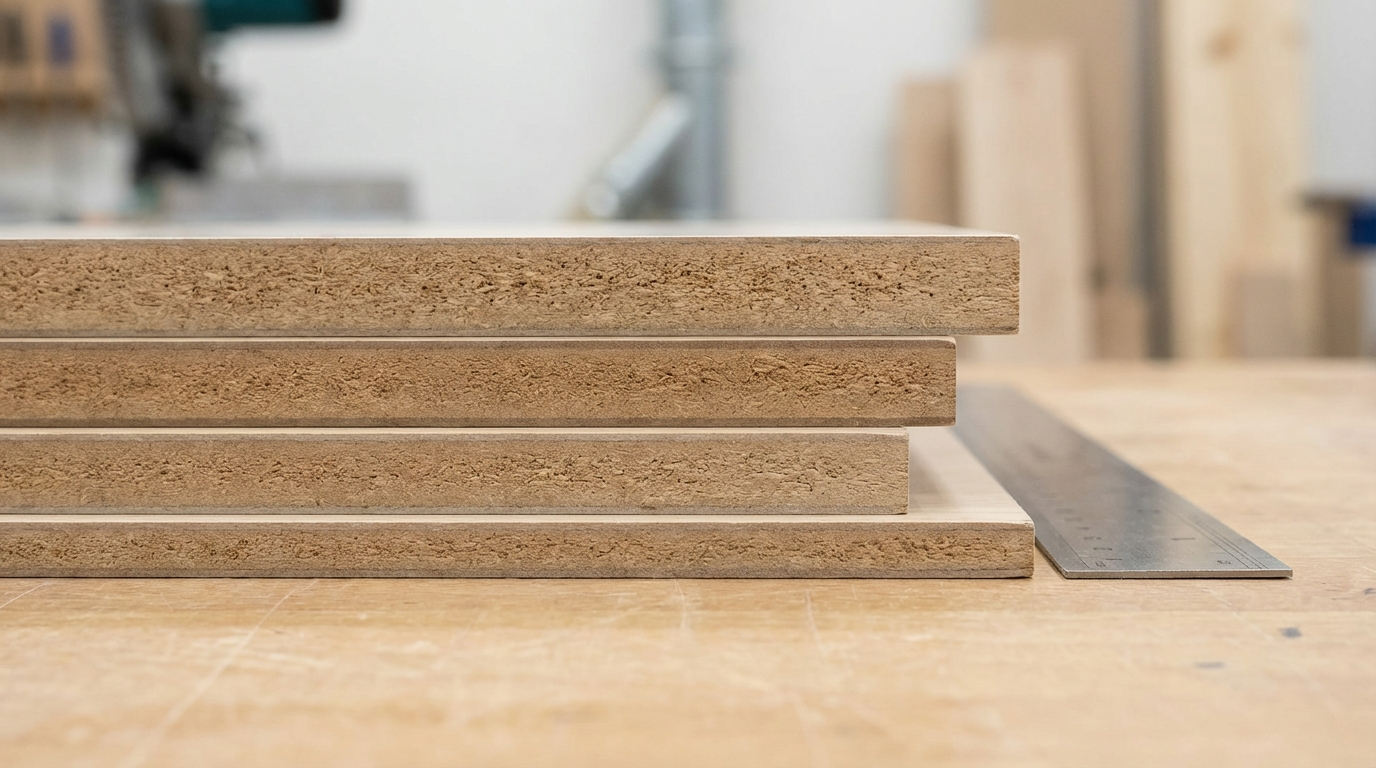
Match MDF thickness to load, span, and site conditions: 6mm for decorative backs/light partitions, 12mm for doors/carcasses, 18mm for shelves/drawer bases, 25mm for heavy structural frames.
If you’re in a hurry, scan this: In most Indian homes, 12mm or 18mm covers 80% of modular furniture needs due to balanced strength and cost. Use 6mm only for non-structural panels to save weight and money, but avoid it under direct loads. Opt for 18mm+ in humid coastal areas or kitchens to resist sagging from monsoon moisture. Always seal edges and verify density by feel before buying. Screenshot the decision table below for site reference.
- Choose 6mm if low/no load, tight budgets, or wall-mounted decor.
- Choose 12mm if standard cabinets, doors, or fast workflows.
- Choose 18mm if shelves over 60cm span, heavy use, or moderate humidity.
- Choose 25mm if frames, high loads, or poor ventilation sites.
- Avoid 6mm if any screw-holding or spanning needed; skip 25mm if weight/cost is an issue.
What This Material/Option Actually Is
MDF, or medium-density fiberboard, is an engineered panel made by compressing wood fibers with resins under heat and pressure. It offers a smooth, uniform surface ideal for laminates, paints, or veneers. Thicknesses like 6mm, 12mm, 18mm, and 25mm refer to the panel's nominal depth, which directly impacts rigidity, weight, and screw-holding ability.
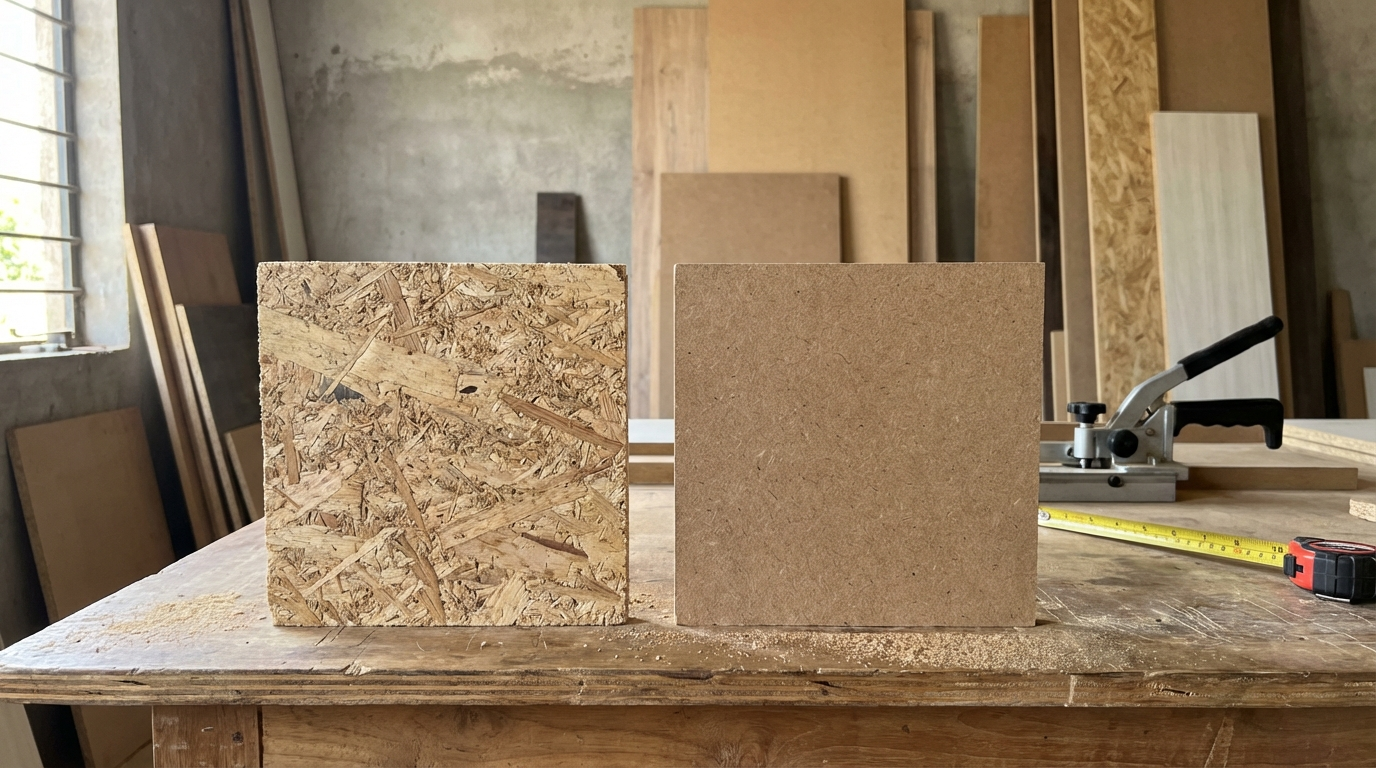
Thinner boards (6mm-12mm) suit lightweight applications, while thicker ones (18mm-25mm) handle structural demands. In India, standard MDF uses urea-formaldehyde resins, but moisture-resistant variants add wax or MR-grade additives. Not plywood—it's denser (650-800 kg/m³ typically) with no grain direction, reducing warping but increasing edge fragility.
Why It Matters in Indian Homes and Sites
India's climate—monsoon humidity up to 90%, coastal salt air, and erratic site storage—amplifies thickness choices. Thin MDF (6mm) swells 20-30% faster at edges if unsealed, leading to delamination in kitchens or bathrooms. Thicker boards distribute moisture stress better, holding screws tighter in humid wardrobes.
Site realities like poor ventilation, direct rain exposure during transport, or carpenter handling add risks. A 12mm door might sag under hinge stress in Mumbai apartments, while 18mm resists better. Wrong thickness means callbacks: sagging shelves waste time/money. Prioritize thickness for longevity in high-humidity zones like Kerala or Chennai.
Two-Minute Comparison (What Changes in Real Life)
Thickness alters weight (handling ease), rigidity (span without sag), cost (per sq ft), and workflow speed. Thinner cuts faster on CNC but chips easier; thicker needs robust tooling. In practice, 12mm balances most needs, but test spans: hold a sample horizontally—if it bows under palm pressure, upsize.
| Property | 6mm | 12mm | 18mm | 25mm |
|---|---|---|---|---|
| Weight (per sqm) | Light (4-5kg) | Medium (8-10kg) | Heavy (12-15kg) | Very Heavy (16-20kg) |
| Sag Resistance (1m span) | Poor | Fair | Good | Excellent |
| Screw Hold | Weak (pilot holes must) | Good | Strong | Very Strong |
| Cost Driver Impact | Lowest | Baseline | +30-50% | +60-100% |
| Best For | Backs, cladding | Doors, sides | Shelves, bases | Frames, tables |
Choose based on conditions: wet zones need 18mm+ with edge sealing; dry interiors allow 12mm.
Which thickness sags least under load?
18mm and 25mm resist sagging best for spans over 60cm, holding 10-15kg/m evenly. 12mm works for shorter spans or light loads, but add supports. 6mm fails quickly.
Nuance: Humidity softens all—test by wetting edge; thicker recovers slower but holds shape better. In monsoon-prone sites, pair 18mm with MR-grade.
Next step: Measure your span, add 20% safety, then feel sample rigidity by flexing.
Does thicker MDF mean better quality?
No—quality ties to density (700+ kg/m³ ideal), not just thickness. A dense 12mm outperforms low-density 18mm in screw hold.
Conditions: Coastal areas favor dense thicker boards for moisture. Trade-off: thicker adds weight, complicating lifts for carpenters.
Check: Weigh a 60x60cm sample (heavier = denser); tap for solid thud, not hollow.
Practical Use Cases (What Works, What Fails)
Match thickness to real demands: light decor vs load-bearing. Failures spike in undersized boards—shelves bow 5-10mm in humid storage.
| Application | Recommended Thickness | Finish Notes | Risk Notes (India-Specific) |
|---|---|---|---|
| Wardrobe carcass sides | 12mm | Laminate both sides | Edge swell in humid closets; seal PVC lips |
| Kitchen shutters | 18mm | High-pressure laminate | Steam warping; use MR-grade |
| TV unit shelves | 18-25mm | Pre-lam or paint | Sag from speakers; add battens |
| Wall panels/partitions | 6-12mm | Digital print vinyl | Direct AC drip; ventilate |
| Drawer bottoms | 6mm | Unfinished or tape | Dust/moisture ingress; double up if heavy |
| Office desk frames | 25mm | Edge banded | High abuse; check density first |
Price Range and Cost Drivers
Expect ₹40-80/sqft for 6mm, ₹60-120 for 12mm, ₹90-160 for 18mm, ₹120-220 for 25mm—varies by city (metros 20% higher), density, and finish.
Drivers: Thickness adds material volume; MR resins +10-20%; laminates double cost; edge treatments +₹5-10/linear m; logistics from north to south hikes 15%. Wastage in CNC (5-10%) favors standard sizes.
Budget example: 10sqm wardrobe (12mm carcass +18mm shelves) totals ₹12,000-18,000 raw panels. Add 20% for finishes.
- Ask quote with: "12mm MR MDF, 750kg/m³ density, plain, FOB [city], 10 sheets."
- Verify: Negotiate bulk; check GST slabs.
How to Decide in 5 Steps
- Map loads/spans: Shelves? Measure length, estimate weight (books=5kg/shelf).
- Assess site: Coastal/monsoon? Upsize + use MR. Dry AC room? Standard ok.
- Budget check: Baseline 12mm; add ₹30/sqft per 6mm thickener.
- Sample test: Flex, screw, wet edge—pick winner.
- Workflow fit: CNC? Thinner cuts faster; manual? Thicker handles abuse.
Failure point: Skipping step 2 leads to 30% redo in humid sites.
Failure Modes and Fixes
Common issues stem from mismatch or poor handling—here's how to spot/prevent.
- Sagging shelves: Symptom: 5+mm bow under load. Cause: Too thin/long span. Prevent: 18mm min for 60cm+. Fix: Add risers or replace.
- Edge swelling: Puffy, soft edges post-monsoon. Cause: Unsealed thin boards. Prevent: PVC/ABS banding immediate. Fix: Sand + reband.
- Screw pullout: Hinges loose after months. Cause: Undersized or low density. Prevent: 18mm+ with plugs. Fix: Larger screws + epoxy.
- Chipping on cuts: Jagged CNC edges. Cause: Dull tools/thin boards. Prevent: 5000RPM feeds, upcut bits. Fix: Route smooth.
- Delamination: Layers separate in steam. Cause: Non-MR in kitchens. Prevent: HDFMR. Fix: Discard affected.
- Surface scratches: Visible on laminates. Cause: Handling/abuse on thin boards. Prevent: 18mm+ with protective film. Fix: Buff minor; replace major.
Simple Decision Framework Table
Screenshot this for sites—matches conditions to picks.
| Condition | Recommended Thickness | Verify/Notes |
|---|---|---|
| Wet zone (kitchen/bath) | 18mm MR | Edge seal 100%; density tap-test |
| Coastal humidity | 18-25mm | Wax additives; store vertical |
| Heavy use (kids/office) | 18-25mm | Double screw zones; battens |
| Tight budget | 12mm standard | Short spans only; no loads |
| Fast delivery/CNC | 12mm | Stock sizes; clean cuts |
| High scratch risk | 18mm prelam | Thick overlay; corner radii |
| Light decor/walls | 6mm | Backer support; no direct wet |
Quality Checks You Can Do Without Lab Tests
Before buying: Eye flatness (no waves), uniform color (no patches), smooth edges (no fuzz). Weigh sample—heavier per thickness = denser. Tap center: solid thud good, dull bad.
Questions for supplier: "Density range? MR certification process? Batch moisture %?" Red flags: Wet stacks, warped sheets, cheap resin smell.
After cutting: Edges should not crumble; screw test (3x diameter pilot). Post-install: Check level (sag-free), tug hinges (no play), wet-wipe edges (no swell overnight).
Can 6mm MDF hold weight?
Only light loads (<2kg) over short spans (<40cm) with supports. Fails as standalone shelf.
Nuance: Fine for backs/partitions, but add plywood stiffener in humid sites. Cost saver but risky solo.
Check: Load test sample statically 24hrs.
Is 12mm enough for wardrobe doors?
Yes for standard heights (up to 210cm), soft-close hinges. Pair with sturdy frames.
Conditions: Dry interiors ok; humid needs 18mm. Trade-off: Lighter handling.
Step: Hinge load calc (door weight x cycles); pilot screws.
Common Buyer Mistakes and How to Avoid
- Mistake 1: Undersizing shelves—goes 6/12mm for 1m spans. Avoid: Span rule (thickness mm x 4 = max cm).
- Mistake 2: Ignoring humidity—plain MDF in kitchens. Avoid: MR stamp check.
- Mistake 3: No edge prep. Avoid: Band before assembly.
- Mistake 4: Overloading thin boards. Avoid: Weight estimate x1.5 safety.
- Mistake 5: Poor storage (flat/horizontal). Avoid: Vertical racks, covered.
- Mistake 6: Skipping density feel. Avoid: Compare samples side-by-side.
- Mistake 7: Wrong tooling for thick. Avoid: Beefy blades for 25mm.
- Mistake 8: No pilot holes. Avoid: Always 70% screw dia.
Advice by User Type
Homeowners: Durability Do’s and Don’ts
Do: Wipe spills immediately, use coasters on shelves. Don’t overload (max 10kg/m for 18mm), drag cleaners. Lasts 10+ years with care in AC homes.
Carpenters: Cutting and Handling Tips
Cut thin with fine teeth (80T blade), thick needs clamps. Edge band hot-melt for speed. Fasten: 35mm screws in 18mm+, glue assist.
Architects/Designers: Spec Writing
Specify "18mm HDFMR, 750kg/m³ min, edge banded." Detail radii 2mm corners, wet-zone liners. Logic: Span/load charts over aesthetics.
OEM/Modular Makers: QC and Scale
Checkpoint: 10% batch flex test. Reduce returns: Pre-band, moisture packs in packs. Repeatability via CNC macros per thickness.
Should I use 25mm everywhere for safety?
No—overkill adds 50% cost/weight without proportional gain. Reserve for frames/tables.
Nuance: Fine in bungalows, but apartments hate lift strain. Balance with supports.
Next: Cost-benefit calc per project.
FAQs
Can I use 6mm MDF for kitchen cabinets?
Generally no—handles no steam or weight. Fine for lightweight uppers with liners, but shutters need 12mm+. In Indian kitchens, grease/moisture warps thin boards fast. Opt 18mm MR for bases; seal all edges religiously. Test: Simulate steam exposure on sample.
What's the standard thickness for wardrobes?
12mm for sides/doors, 18mm shelves/drawers in most projects. Balances cost (₹10k-15k/unit) and strength for 2x6ft units. Coastal? Upsize shelves to 25mm. Verify by mocking a door swing—should not flex.
Does thickness affect CNC machining?
Yes—6-12mm cuts quickest (high feeds), 25mm risks vibration/chipout without rigid setup. Use vacuum hold-downs for thick; shallower passes. In humid shops, acclimate 48hrs pre-cut to avoid dimension drift.
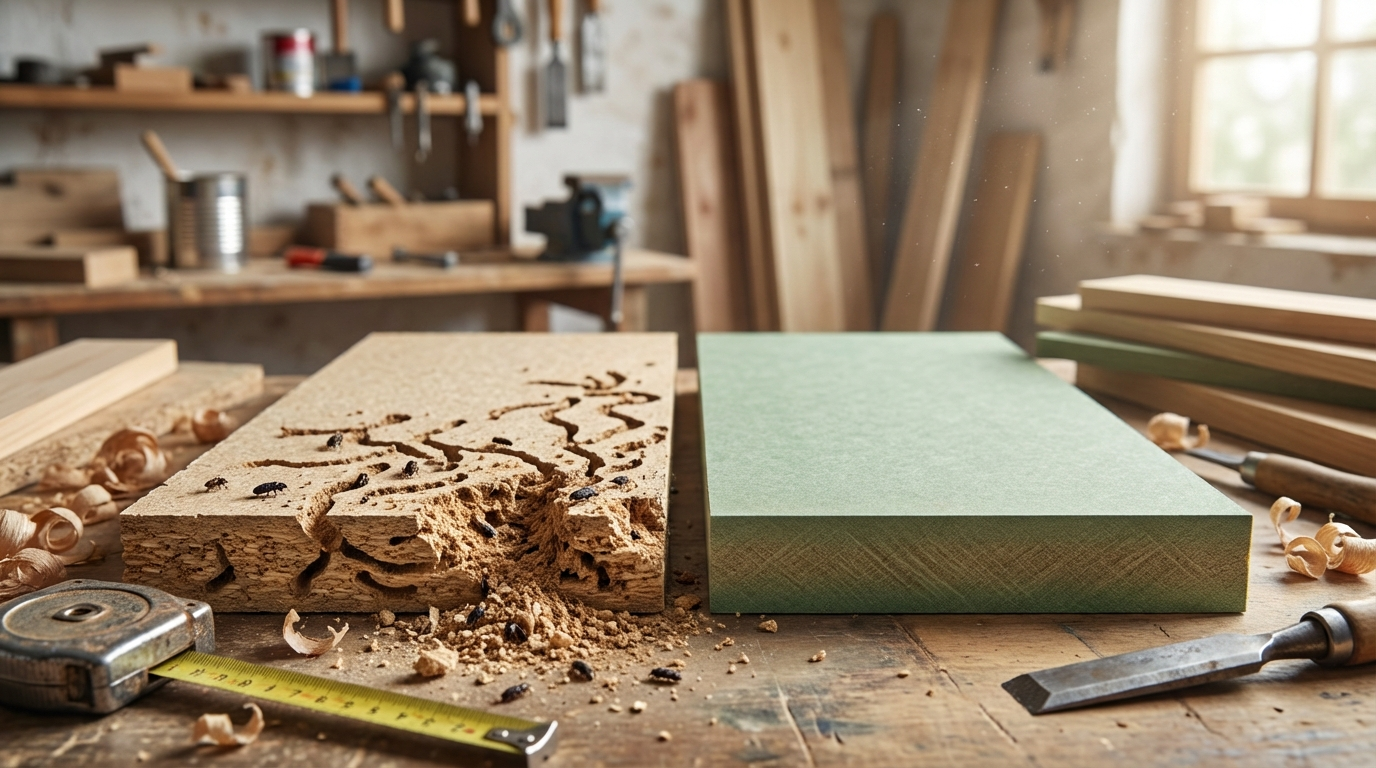
Is 18mm MDF termite resistant?
Base MDF isn't—add termite-grade resins or treat post. Thicker holds treatments better. Indian sites: Elevate stacks, use neem oil barriers. Check supplier process; inspect for tunnels yearly.
How much weight can 12mm MDF shelf hold?
5-8kg per meter span with end supports; less unsupported. Add cleats for 10kg+. Monsoon softens 20%, so derate. Real test: Gradual load till 5mm sag max.
12mm vs 18mm for TV units—which wins?
18mm for shelves (holds 20kg+ TVs), 12mm sides. Saves weight overall. Laminate thickens surface durability. Fix: Mid-support for long shelves in living rooms.
Can thin MDF replace plywood?
Often yes for smooth finishes, but plywood edges better untreated. MDF cheaper per thickness, uniform for cabinets. Fail in heavy doors—hybrid: MDF face + ply core.
Best thickness for wall panels in humid areas?
6-12mm with breathable vinyl, but ventilate behind. Avoid direct wet; use HDFWR. Panels bow less thick, but weight strains mounts. Install with gaps for air.
Does MDF thickness impact painting?
Thicker sand smoother (less telegraphing), but all prime first. 18mm+ resists dents. Indian dust: 2 coats PU top. Thin shows roller marks easier.
25mm MDF for beds—good idea?
Yes for slats/frames (holds 200kg+), but heavy install. Pair with 12mm ply topper. Coastal: MR essential. Alternative: Lighter hybrids for upstairs.
How to store MDF sheets on site?
Vertical, covered, off-ground. Monsoon: Plastic wrap ends. Acclimatize 72hrs indoors. Thin stacks first to prevent crush.
Disclaimer: This content is provided for general informational purposes based on industry practices and publicly available information. Product specifications, standards, prices, and availability may vary by manufacturer, region, and time. Readers should independently verify details with manufacturers, dealers, or qualified professionals before making purchase or construction decisions.Want Plywood Suggestions?
Share a few details and a VIR MDF specialist will suggest suitable brands and connect you to responsive dealers.