MDF vs Acrylic for Wardrobe Shutters: Look, Durability, Cost & Maintenance
Comparing MDF shutters with acrylic finishes? See how acrylic differs in look, scratch resistance, cost, and maintenance—and what to choose.
Quick Decision Summary
Acrylic-finish shutters excel in high-gloss looks and scratch resistance for premium wardrobes, but MDF with laminate suits budget-conscious dry interiors better.
If you're in a hurry, pick acrylic for modern, glossy wardrobes in low-touch bedrooms where fingerprints won't annoy; it holds up well in standard Indian humidity if edges are sealed. Opt for MDF laminate shutters in high-use kids' rooms or coastal areas on tight budgets—they offer good value with matte finishes that hide daily wear. Always verify moisture-resistant (MR) grade base for both during monsoons.
- Choose acrylic if: glossy aesthetics matter, low-maintenance shine desired, willing to pay 1.5-2x more for surface durability.
- Choose MDF laminate if: budget under ₹2,000/sq ft, matte/textured look preferred, higher scratch tolerance needed in busy homes.
- Avoid acrylic if: fingerprints bother you, sharp objects common, or coastal high-humidity without proper edge sealing.
- Avoid plain MDF if: exposed to spills or monsoons without MR grade—opt for HDFMR base instead.
What These Options Actually Are
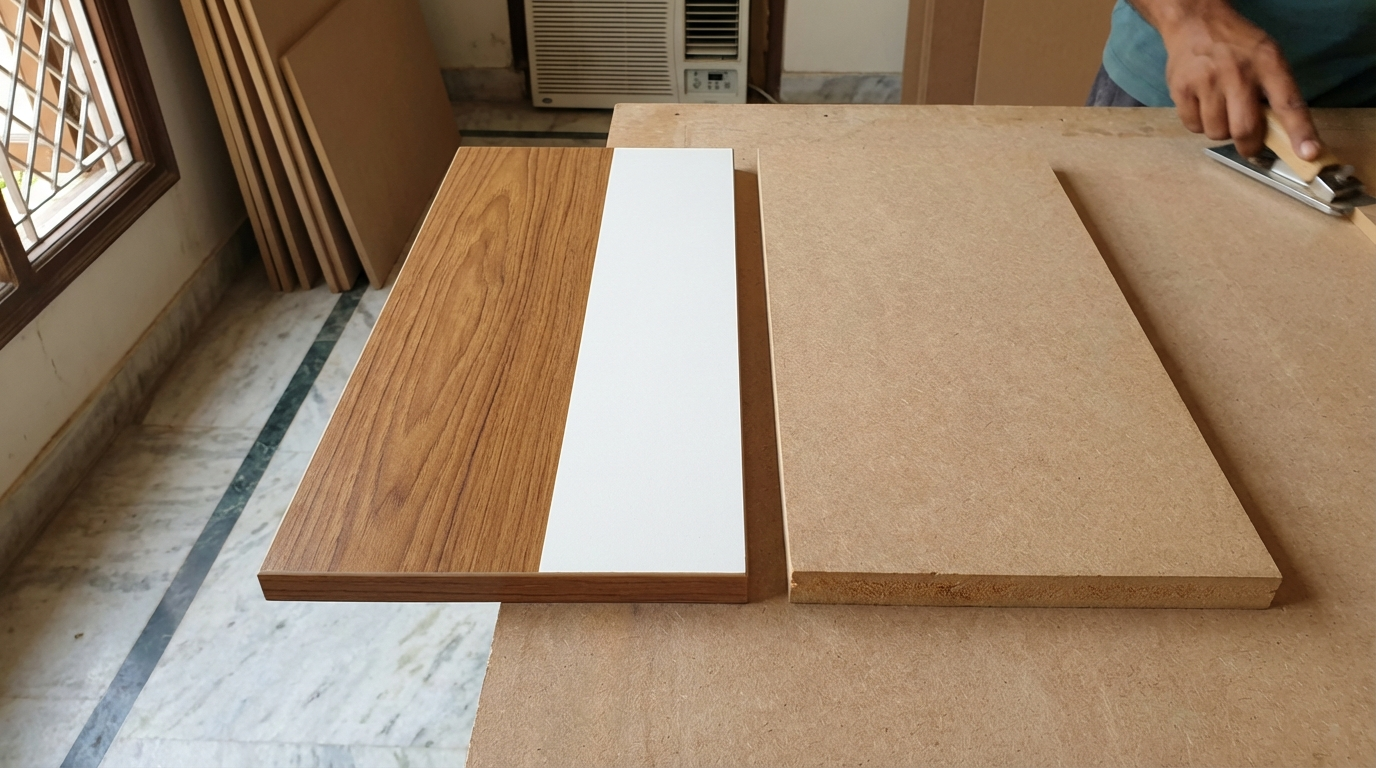
MDF shutters use medium-density fiberboard as the core, typically 16-18mm thick, topped with laminate sheets for surface protection and color. This creates flat, paintable or printed panels ideal for wardrobe doors in sliding or hinged setups. Laminates come in matte, gloss, or wood-grain textures, bonded under heat and pressure.
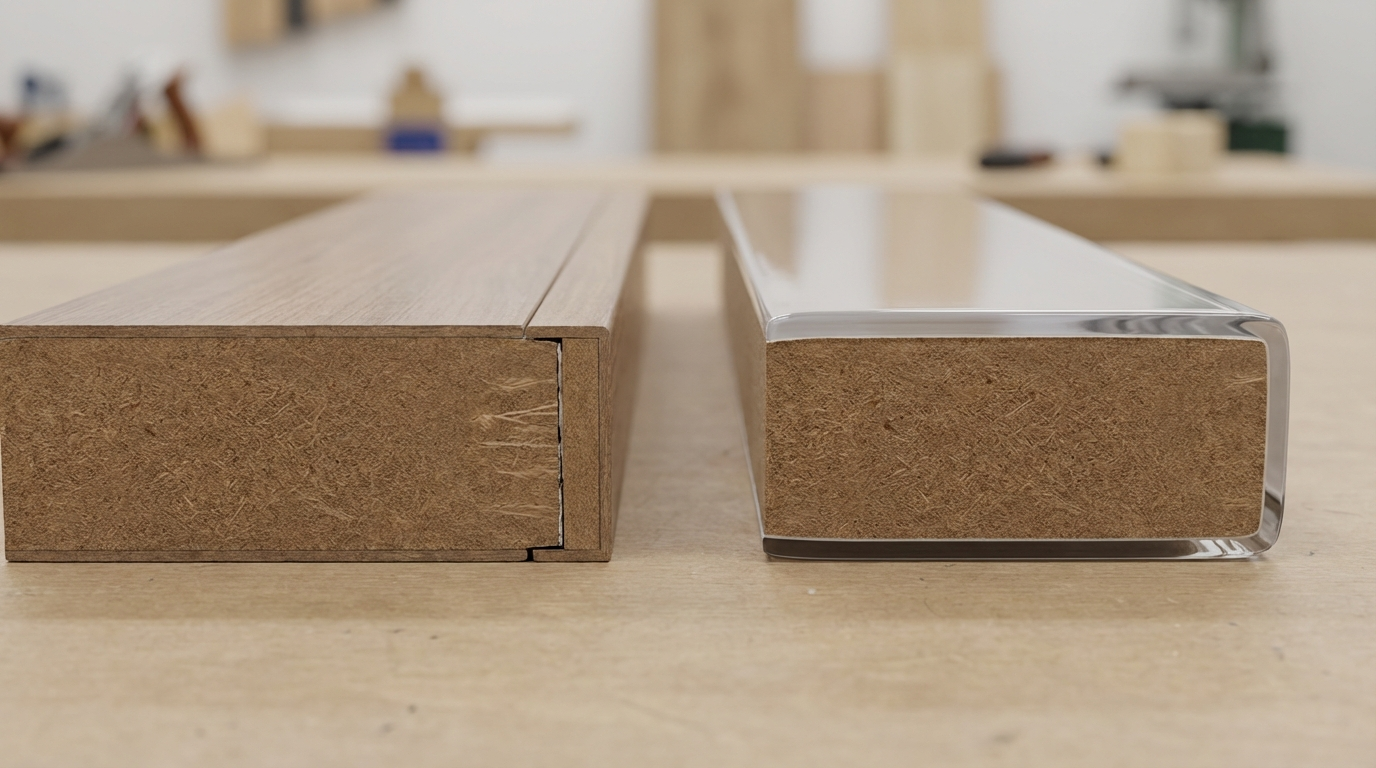
Acrylic shutters start with the same MDF or HDF base but add a 1.5-2mm thick acrylic sheet—either pasted or vacuum-membrane pressed for a seamless high-gloss wrap. This finish mimics glass-like shine without reflections, using UV-cured layers for color stability. In Indian workflows, both rely on CNC routing for clean profiles, but acrylic demands precise pressing to avoid bubbles.
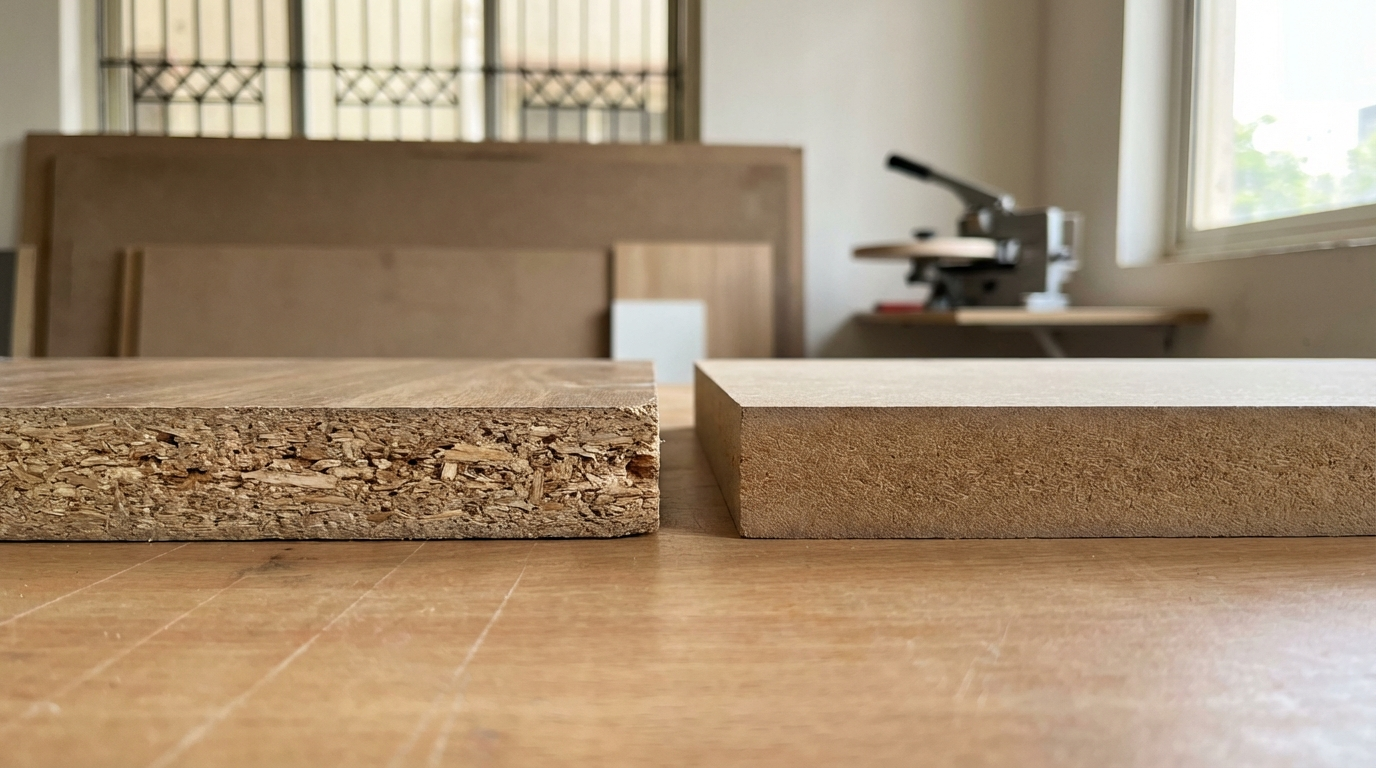
Key distinction: MDF refers to the versatile base with basic finishes; acrylic elevates it to premium surfacing. Neither is solid wood—both are engineered for flatness and screw-holding in modular wardrobes.
Why It Matters in Indian Homes and Sites
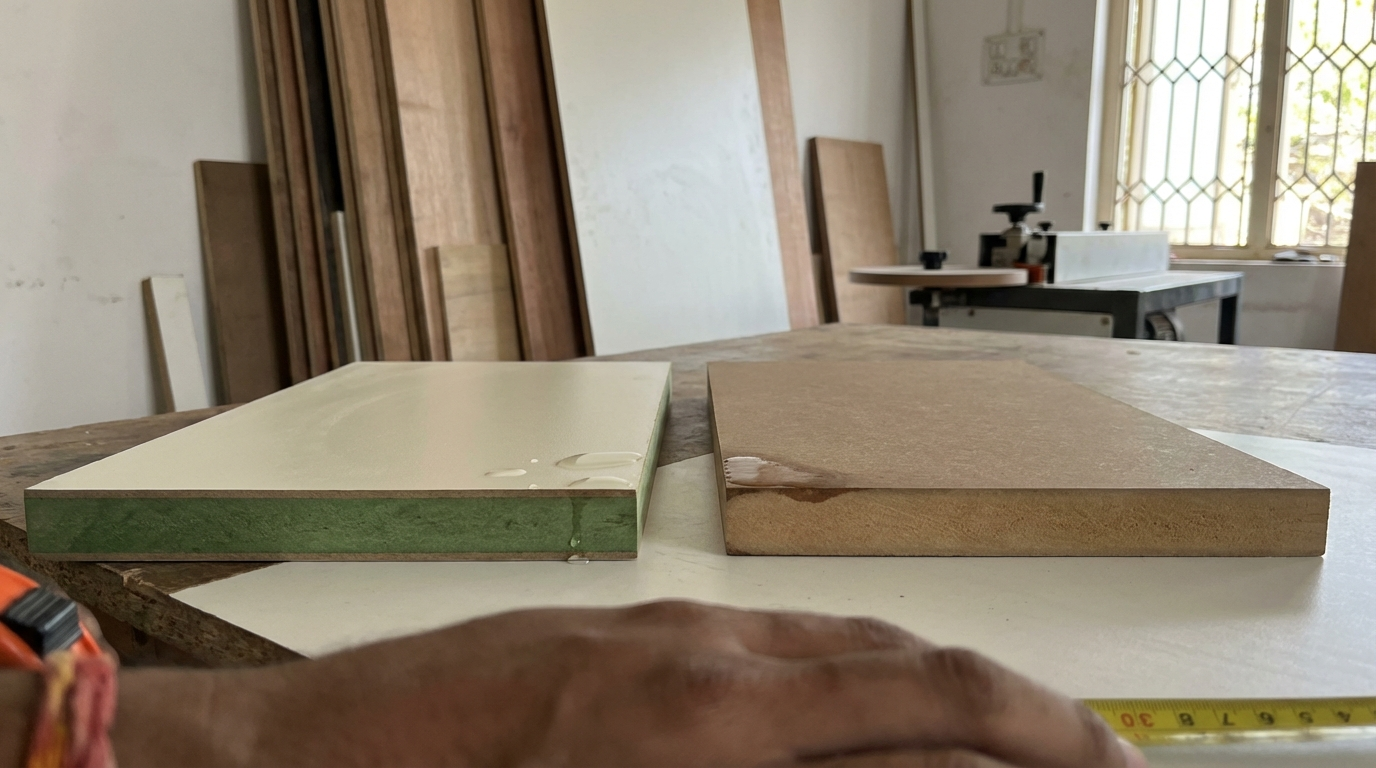
Indian wardrobes face monsoon humidity (70-90% RH), coastal salt air, and poor site storage—causing MDF edges to swell if not MR-grade. Acrylic's sealed surface resists surface moisture better, but unsealed cut edges fail fast in Mumbai rains. Daily use adds fingerprints on gloss, scratches from bags/hooks, and screw loosening from door slams.
Site realities like dusty transport and carpenter haste amplify issues: warped panels misalign tracks, delamination bubbles in heat. Coastal homes need HDFWR bases for both. Practical payoff: right choice cuts callbacks by 50% in humid zones, saves repaint costs long-term.
Two-Minute Comparison Table
| Aspect | MDF Laminate Shutters | Acrylic Shutters |
|---|---|---|
| Look | Matte/textured options; versatile prints; hides dust/fingerprints | High-gloss mirror shine; vibrant solids; premium modern vibe |
| Durability | Good impact; scratches show on gloss; edges vulnerable | Scratch/UV resistant surface; dents easier on thin sheets |
| Cost (per sq ft) | ₹1,200-2,500 | ₹2,000-4,500 |
| Maintenance | Wipe with damp cloth; recoat if chipped | Microfiber only; buff minor scratches |
| Monsoon Fit | Needs MR/HDFMR base; edge seal critical | Better surface seal; edges still key |
This table highlights real shifts: acrylic wins aesthetics/durability trade-off, MDF value/speed. Choose per room abuse and budget.
Price Range and Cost Drivers
Expect MDF laminate wardrobe shutters at ₹1,200-2,500 per sq ft installed; acrylic at ₹2,000-4,500 per sq ft. Ranges vary by tier-1 cities (Delhi +10-20%, Tier-2 -15%).
Key drivers: thickness (16mm base ₹1,200; 18mm +20%), density (700kg/m³ premium +15%), finish grade (post-formed laminate +10%), edge banding (PVC 1-2mm +₹100/sq m), logistics (coastal +15% freight), wastage (CNC curves 10-20%). Add 25% for sliding mechanisms.
Budget estimator for 10x7 ft wardrobe (70 sq ft shutters): MDF ₹1,00,000-1,50,000; acrylic ₹1,50,000-2,80,000. Quote checklist: specify "16mm HDFMR + 1mm PVC edge + post-lam finish", ask for sq ft breakdown excluding carcass.
Is acrylic worth the extra cost for wardrobes?
Yes for master bedrooms prioritizing gloss—surface lasts 8-10 years with light use. No for kids' rooms where scratches dominate. Nuance: premium acrylic (imported sheet) justifies +50% in dry Delhi vs humid Chennai. Check: tap edge—if hollow sound, cheap paste; insist on membrane-pressed samples. Next: calculate total sq ft (shutters only) x range, add 20% buffer for edges.
Look and Finish Differences
MDF laminates offer 100+ textures (woodgrain, stone) for subtle elegance; acrylic locks into 50-70 gloss solids/metallics for bold statements. Gloss levels: laminate 20-60%; acrylic 80-95%. In lit bedrooms, acrylic amplifies space; laminates blend neutrally.
Trade-off: acrylic fingerprints scream in white tones; matte laminates forgive. India tip: dust-settling gloss needs weekly wipes.
Which has the better shine for modern wardrobes?
Acrylic delivers unmatched depth-of-shine, reflecting light like glass for spacious feel. Laminates max at semi-gloss. Conditions: ideal low-touch guest rooms; avoid kitchens (grease sticks). Verify: hold sample to light—acrylic shows seamless layers. Step: pair with LED strips for wow, but test fingerprint visibility first.
Can MDF match acrylic's premium look?
High-end gloss laminates or PU-painted MDF get 70-80% close for half cost. Not fully—acrylic's 3D depth wins. Best for textured/rustic vibes. Check: rub finger—laminate dulls slightly. Next: view under room lighting; choose per style (minimalist=acrylic, eclectic=laminate).
Durability Breakdown
Acrylic surfaces resist scratches (Mohs 2-3), fading, heat (up to 60°C); MDF laminates dent easier but flex better on impacts. Screw-hold similar on HDF base (40-50 cycles). Longevity: acrylic 10+ years surface; laminate 7-8 years with edge care.
Which is more scratch-resistant?
Acrylic—thicker UV coat shrugs keys/bags. Laminates scratch at nails. High-abuse: acrylic. Coastal: both need HDFWR. Test: fingernail drag on sample. Prevent: soft-close hinges reduce slams.
Maintenance Realities
Acrylic: microfiber dry-wipe daily; mild soap quarterly; buff scratches with polish. MDF: damp cloth ok, avoid soak; chip touch-up easy. Monsoon: ventilate to curb humidity.
How to clean acrylic shutters without damage?
Use streak-free glass cleaner or 1:10 soap-water, microfiber only—no abrasives. Dry immediately. Nuance: whites show streaks more. Habit: post-monsoon full wipe. Check: no haze post-clean.
Practical Use Cases Table
| Use Case | Recommended | Thickness | Risk Notes |
|---|---|---|---|
| Master Bedroom Sliding | Acrylic | 18mm | Low touch; seal edges tight |
| Kids' Wardrobe Hinged | MDF Laminate Matte | 16mm | High abuse; impact forgiving |
| Coastal Guest Room | HDFMR + Laminate | 18mm | Swelling risk high; ventilate |
| Budget Modular | MDF Laminate | 16mm | Cost control; easy CNC |
Decision Framework Table
| Condition | Recommended Choice | Verify Checklist |
|---|---|---|
| Wet/Coastal Zone | HDFMR base + Laminate | Edge seal uniform; tap test solid |
| Heavy Use/Scratches | Acrylic | Scratch sample test; thickness gauge |
| Tight Budget | MDF Laminate | Post-formed edges; color consistency |
| Fast Delivery | MDF Laminate | Stock availability; CNC ready |
| High Gloss Priority | Acrylic | UV stability sample; no bubbles |
| Monsoon Exposure | Acrylic or HDFMR Laminate | MR grade stamp; weight per sq m |
Failure Modes and Fixes
- Symptom: Edge swelling. Root: Non-MR MDF + monsoon humidity. Prevent: HDFMR base, immediate PVC edge band. Fix: Sand, reseal; replace if core soft.
- Symptom: Surface scratches. Root: Sharp objects on acrylic. Prevent: Felt pads on hangers. Fix: Buff with compound; deep=repaint.
- Symptom: Delamination bubbles. Root: Poor bonding in heat. Prevent: Factory-pressed only. Fix: Spot glue; full replace panel.
- Symptom: Screw holes loosening. Root: Repeated slams. Prevent: Soft-close hinges. Fix: Wooden plugs + rescrew.
- Symptom: Fingerprints haze. Root: Gloss acrylic oils. Prevent: Daily microfiber. Fix: Polish restore.
- Symptom: Color fading. Root: Direct sun on laminate. Prevent: UV films. Fix: Overlay new sheet.
- Symptom: Chipping at corners. Root: CNC burrs + impacts. Prevent: 2mm edge band. Fix: Filler + repaint.
Quality Checks You Can Do Without Lab Tests
Before buying: Weigh sample (good MDF 12-15kg/sq m at 18mm); check edge squareness with ruler; ask "MR grade? Pressing method?" Red flag: lightweight foam core, visible glue lines.
After cutting: Edges smooth no fiber pull-out; tap—solid thud not hollow. Verify PVC adhesion by peel test.
After install: Gaps <1mm; swing test 20x no bind; clean test no streaks.
Which material holds screws better in wardrobes?
MDF/HDF both excellent (40kg hold); acrylic same base. Nuance: denser HDFMR for coastal. Check: drill test scrap—threads grip firm. Next: space hinges 10cm from edges.
Common Buyer Mistakes and Avoidances
- Mistake 1: Ignoring base grade—plain MDF swells in monsoons. Avoid: Insist HDFMR stamp.
- 2: Skipping edge banding—cut edges drink humidity. Avoid: 2mm PVC mandatory.
- 3: Gloss acrylic for kids—scratches show. Avoid: Matte laminate instead.
- 4: Site pasting acrylic—bubbles/delam. Avoid: Factory only.
- 5: No soft-closes—heavy doors loosen screws. Avoid: Add ₹200/door.
- 6: Budget quotes exclude edges/wastage—+30%. Avoid: Full sq ft breakdown.
- 7: White gloss coastal—yellows fast. Avoid: Sample sun-test 1 week.
- 8: Poor storage pre-install—warps. Avoid: Flat, dry stack under cover.
- 9: Abrasive cleaners—ruins finishes. Avoid: Microfiber rule.
Tips for Different Users
Homeowners: Durability do: weekly dust, no direct water. Don't: hang wet clothes inside. Cleaning: glass spray on acrylic.
Carpenters: Cutting: sharp 60-tooth blade, zero clearance insert. Edge prep: clean dust before band. Hinges: pilot holes 3mm. Handling: edge protectors.
Architects: Specs: "18mm HDFMR + vacuum acrylic + 2mm ABS edge". Detailing: 3mm reveals hide gaps. Wet-zone: alternate laminate.
OEM Makers: QC: 100% tap/weight check. Reduce returns: pre-seal all cuts. Repeatability: fixed CNC feeds.
Can I use MDF shutters in humid Indian bedrooms?
Yes with HDFMR grade and sealed edges—handles 80% RH fine. Avoid plain in coastal. Check: moisture meter under 12% on sample. Step: elevate off floor 15cm, use dehumidifier bags.
Does acrylic yellow over time in India?
Minimal with UV coat—5-7 years stable. Sun-direct fades faster. Prevent: blinds/curtains. Test: expose sample 1 month south window.
FAQs
What's the main difference between MDF and acrylic wardrobe shutters?
The core is similar (MDF/HDF base), but acrylic adds a thick glossy sheet for shine and protection, while MDF uses thinner laminates for matte versatility. Acrylic suits premium looks; MDF everyday durability. In India, both need moisture upgrades for monsoons—acrylic edges demand extra sealing to match laminate's flexibility.
Are acrylic shutters more durable than MDF?
Acrylic surfaces resist scratches and UV better, lasting 10 years in low-abuse spots. MDF laminates handle impacts without denting but chip easier. Overall, acrylic wins cosmetics; MDF value. Key: pair with HDF base everywhere—plain MDF fails fast in humidity.
How much more does acrylic cost compared to MDF?
Typically 1.5-2x: MDF ₹1,200-2,500/sq ft; acrylic ₹2,000-4,500. Factors like 18mm thickness or Mumbai delivery push acrylic higher. Get quotes splitting shutters vs carcass; add 15% wastage for curved designs.
Can acrylic shutters handle Indian monsoons?
Yes if HDFMR base and edges PVC-banded—surface repels water. Unsealed cuts swell like MDF. Store flat pre-install; ventilate rooms. Failure shows as bubbling after 2 monsoons without prep.
Which is easier to maintain daily?
Matte MDF laminate—hides fingerprints, damp-wipe ok. Acrylic gloss shines post-clean but streaks easy. Routine: microfiber for both; quarterly polish acrylic. Avoid abrasives everywhere.
Is MDF good for sliding wardrobe shutters?
Excellent—flat, light, tracks smooth. Use 16mm for speed. Laminate wears less on touch-points vs paint. Monsoon tip: MR grade or warping binds sliders.
Can I repair scratches on acrylic shutters?
Minor yes—buff with plastic polish, restore 80% shine. Deep needs pro repolish or panel swap. Prevent: no sharp hooks. MDF chips filler easier DIY.
Which looks more premium in wardrobes?
Acrylic's depth-gloss screams luxury, especially solids. MDF high-gloss laminate 70% close cheaper. Match room: acrylic minimalism, laminate traditional.
Do acrylic shutters fade in sunlight?
UV layers hold color 7-10 years; direct south sun accelerates. Use curtains; test samples. Laminates fade similar without UV.
Should I choose acrylic for kids' wardrobes?
No—scratches/bags ruin gloss fast. Matte MDF forgives play. If gloss, budget for 3-year refresh.
How to check shutter quality on site?
Tap solid sound, edges flush, weight heavy, rub no color transfer. Swing test alignment. Red flags: bubbles, light foam feel.
Disclaimer: This content is provided for general informational purposes based on industry practices and publicly available information. Product specifications, standards, prices, and availability may vary by manufacturer, region, and time. Readers should independently verify details with manufacturers, dealers, or qualified professionals before making purchase or construction decisions.Want Plywood Suggestions?
Share a few details and a VIR MDF specialist will suggest suitable brands and connect you to responsive dealers.