MDF vs HDF: What’s the Difference and Which Should You Use?
MDF and HDF look similar but behave differently. Learn density differences, typical applications, and how to choose the right board for your job.
Quick Decision Summary
Choose HDF for high-wear areas needing superior screw hold and impact resistance; opt for MDF in low-moisture, budget-driven projects.
If you’re in a hurry: HDF offers higher density (typically 800-1000+ kg/m³) for better strength and durability in demanding spots like kitchen cabinets or wardrobe frames, but it costs more and machines slower. MDF (600-800 kg/m³) suits lighter uses such as TV units or wall panels where cost and easy finishing matter most. Factor in Indian monsoons—prefer HDF or moisture-resistant variants in humid zones to avoid swelling. Check density stamps on boards and test screw hold on samples before bulk buy.
- Choose HDF if: heavy daily use, repeated screwing/unscrewing, coastal humidity, or structural demands.
- Choose MDF if: tight budget, simple decorative panels, dry interiors, or fast CNC routing needed.
- Avoid HDF if: low-load decorative work or when machinability speed trumps strength.
- Avoid MDF if: high moisture exposure or areas with frequent hardware changes.
What This Material/Option Actually Is
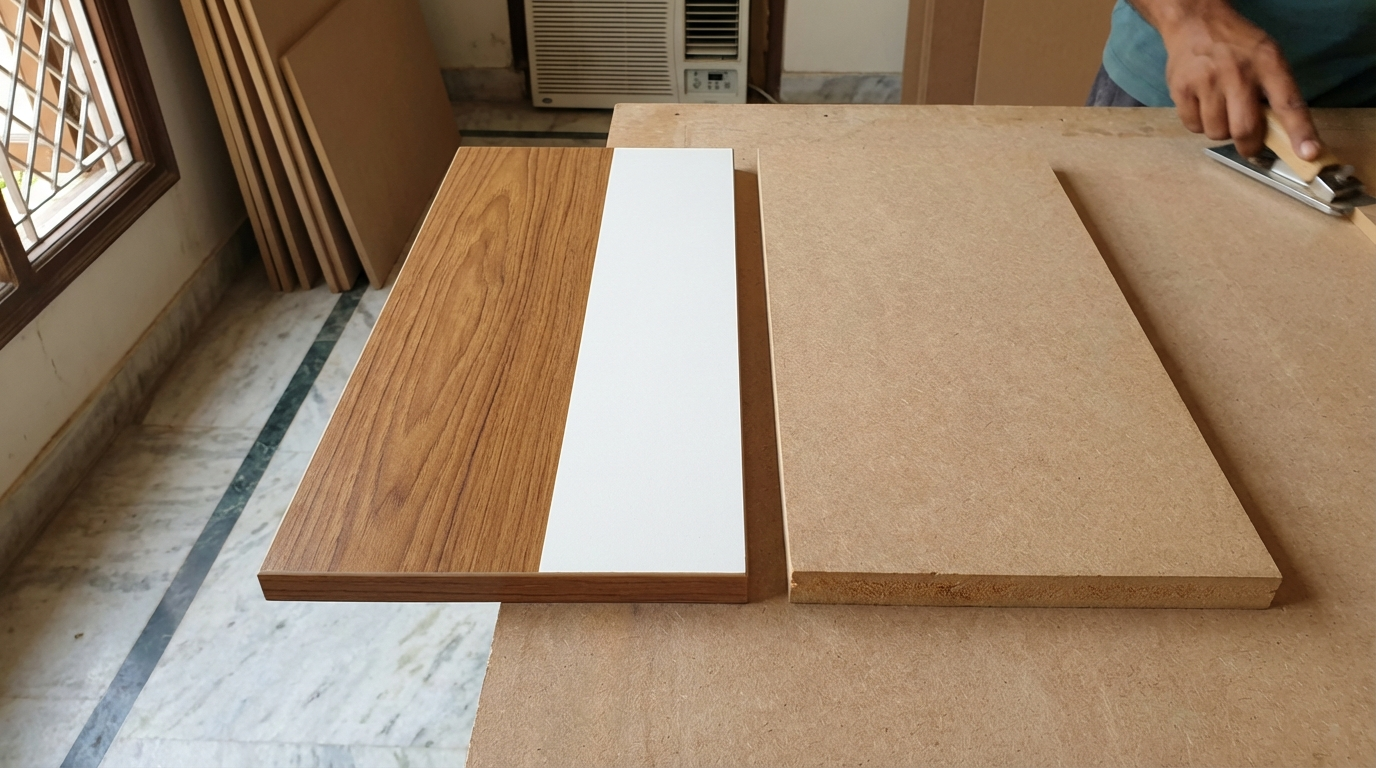
MDF, or Medium Density Fiberboard, forms by compressing wood fibers with resins under heat and pressure, yielding boards with densities typically between 600-800 kg/m³. It provides a smooth, uniform surface ideal for painting, laminating, or veneering. Available in standard, moisture-resistant (MR), and termite-resistant variants, it fits modular furniture and interiors.
HDF, or High Density Fiberboard, uses a similar process but achieves higher compression, resulting in densities of 800-1200 kg/m³ or more. This makes it harder and denser, suited for flooring underlays, door skins, or heavy-duty panels. Like MDF, it comes in moisture and pest-resistant grades, but its rigidity demands precise tooling.
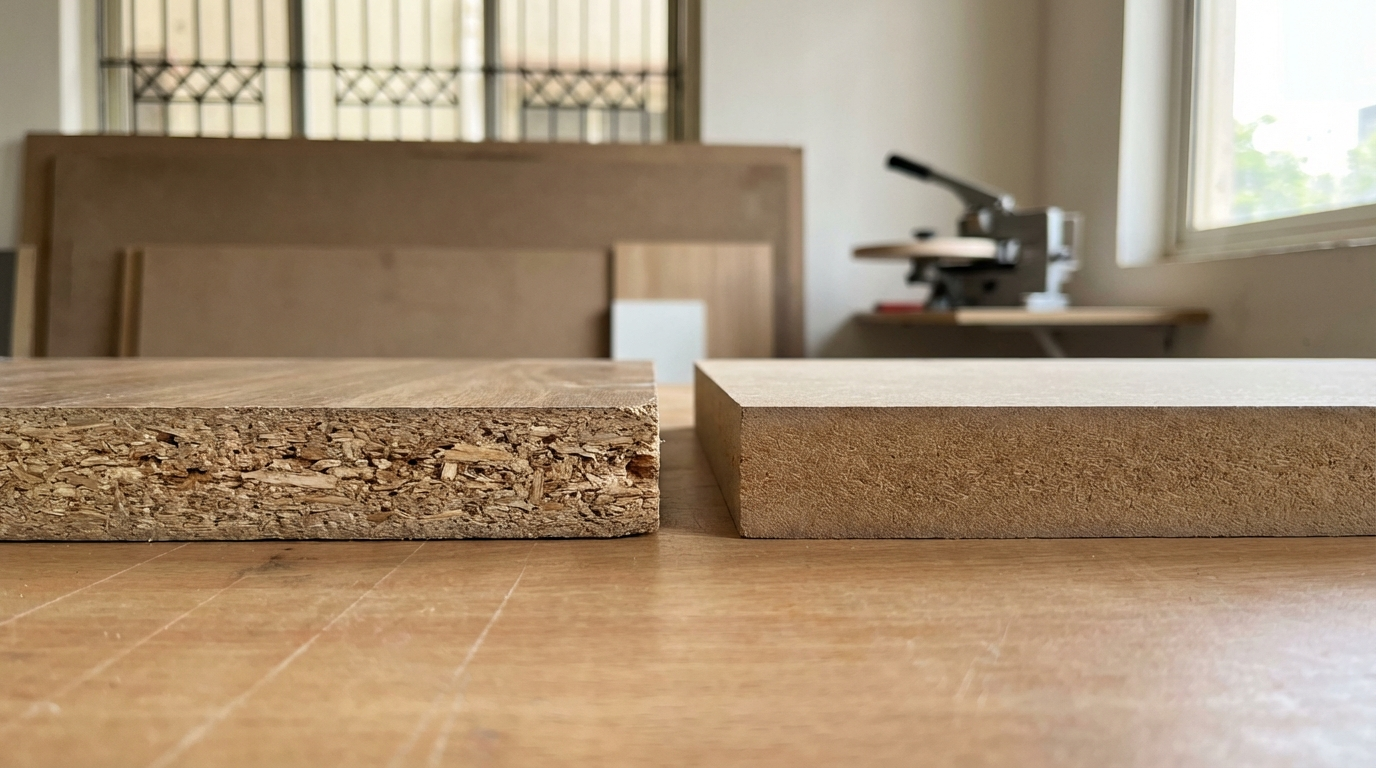
Both are engineered wood panels, distinct from plywood or particleboard due to finer fiber structure, which minimizes voids and improves finish quality. In Indian markets, they often arrive as raw boards or pre-laminated sheets for CNC shops.
Why It Matters in Indian Homes and Sites
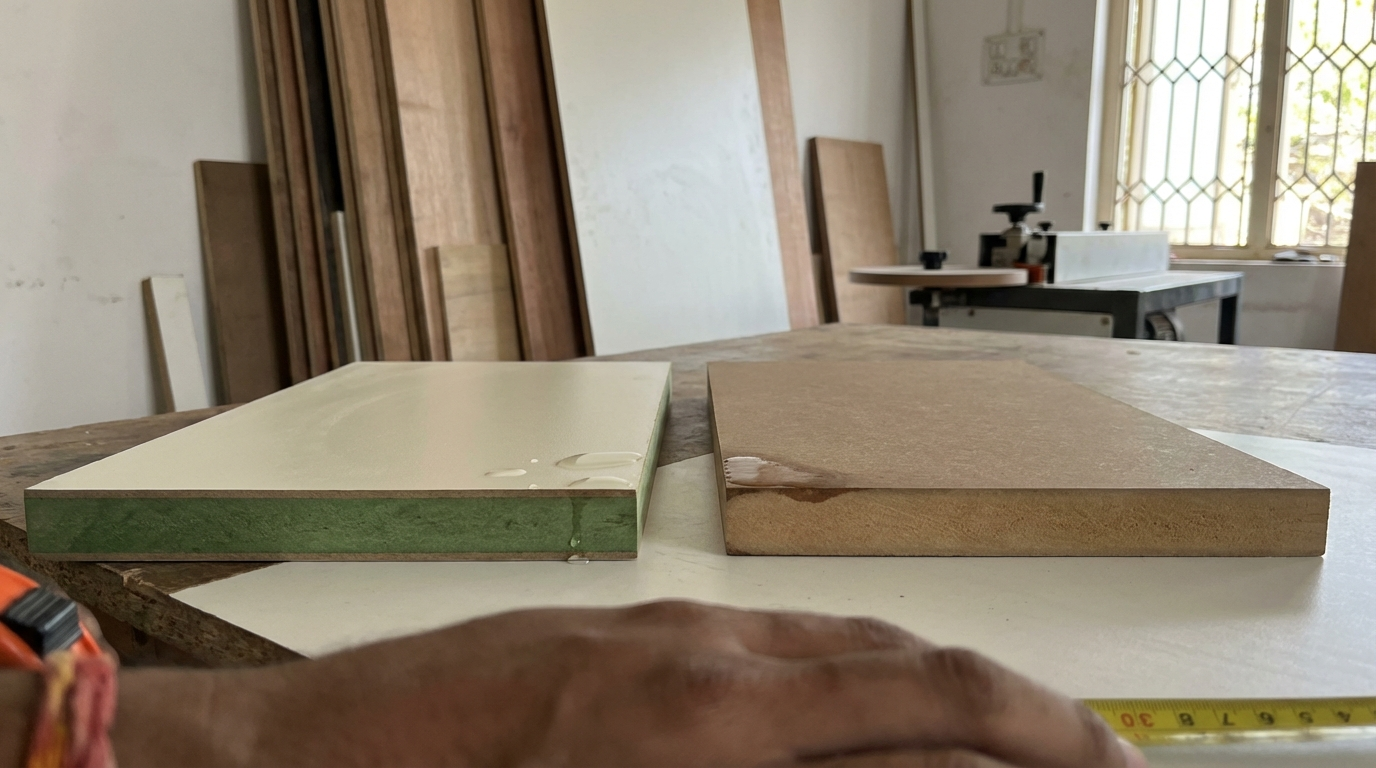
Indian climates amplify board performance differences—monsoon humidity (70-90% RH) and coastal salt air cause standard MDF to swell at edges if poorly stored or sealed. HDF resists this better due to tighter fiber packing, holding shape longer in kitchens or bathrooms.
Site realities like poor ventilation during construction, dust-laden air, and variable carpenter skills highlight density's role. Low-density MDF chips easily under rough handling or inadequate clamps, while HDF withstands transport bumps from factory to site. Screw holding fails faster in MDF under repeated door slams common in busy homes.
Long-term, HDF maintains flatness in AC-dry rooms but overkill for wardrobes in stable inland homes. Always acclimatize boards 48-72 hours on-site to match ambient moisture, preventing cupping post-installation.
Two-Minute Comparison (What Changes in Real Life)
Density drives most real-world differences: HDF's extra compaction boosts strength but raises costs and machining challenges. MDF excels in affordability and finish ease for non-structural roles.
| Aspect | MDF (Medium Density) | HDF (High Density) |
|---|---|---|
| Density Range | 600-800 kg/m³ | 800-1200+ kg/m³ |
| Screw Holding | Good for light loads; weakens after 2-3 cycles | Excellent; holds 2x longer in hinges/drawers |
| Machinability | Easy CNC routing, minimal tool wear | Harder; needs sharp bits, slower feeds |
| Moisture Resistance | Swells 10-15% in MR grade; edges vulnerable | 5-10% less swelling; better in humid zones |
| Cost per Sheet (18mm) | Typically lower by 20-40% | Higher due to density/process |
| Best For | Panels, cabinets in dry areas | Frames, flooring, high-abuse spots |
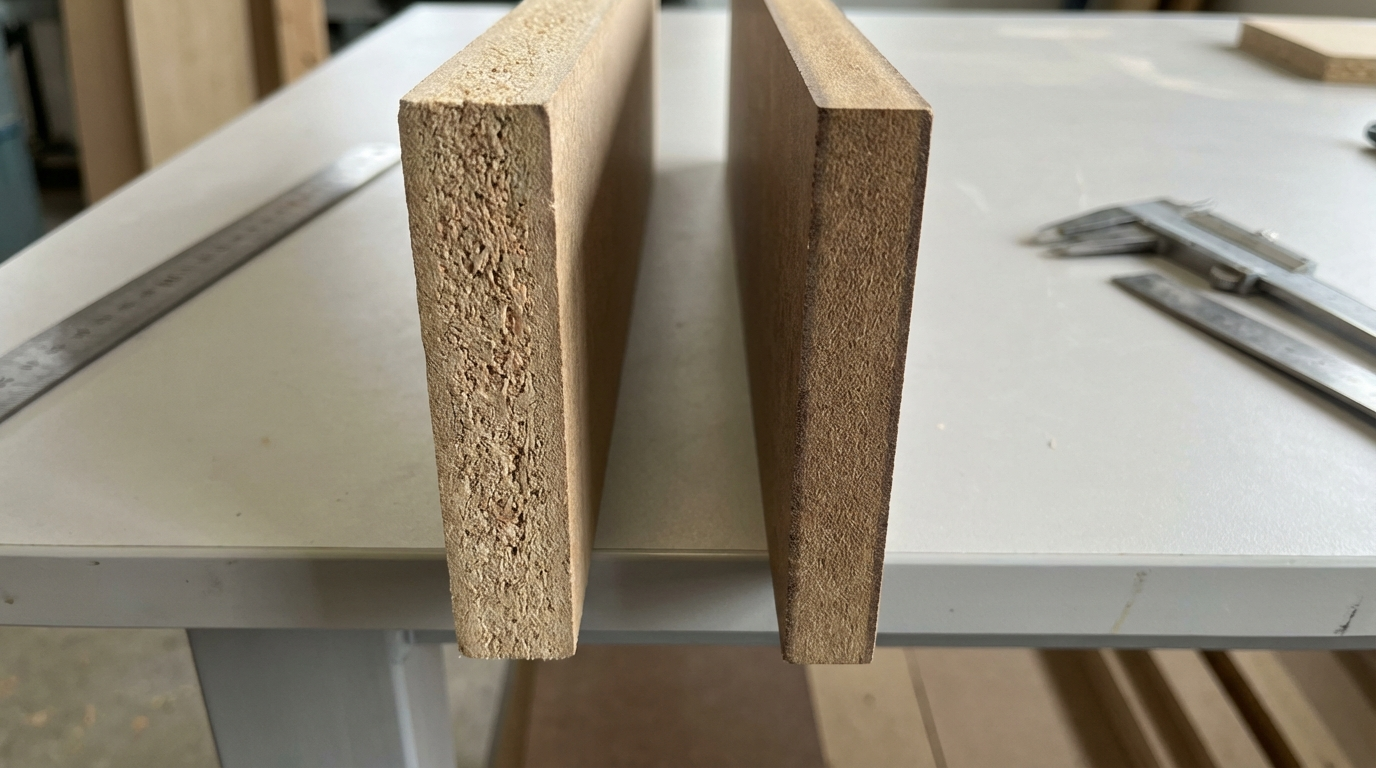
Use this table for quick specs review. In practice, test samples: HDF feels heavier per sq ft and resists denting better under thumb pressure.
Is HDF always better than MDF?
No, HDF suits strength-critical jobs but overkill for decorative panels where MDF's lower cost and smooth sanding win. HDF machines tougher, risking tool dulling in small shops without carbide bits. In dry Indian interiors like bedrooms, MDF performs nearly identically at half the price. Check project load: if no heavy hardware or moisture, stick to MDF. Next, weigh your budget—HDF adds 20-40% expense without proportional gains in low-stress uses. Always verify density via supplier stamp, as mislabeled boards mislead.
Which is stronger, MDF or HDF?
HDF is stronger due to higher density, offering 1.5-2x better bending strength and screw retention. It handles impacts like drawer pulls or child play without denting. MDF suffices for static shelves but sags under point loads over time. In coastal homes, HDF's density fights humidity warping better. Test by dropping a weight on samples—HDF rebounds cleaner. Consider thickness too: 18mm HDF outperforms 12mm MDF. For architects, spec IB values (internal bond) above 0.8 N/mm² for HDF in load-bearing spots.
Price Range and Cost Drivers
Expect MDF sheets (8x4 ft, 18mm) to range lower, typically varying by city—metro areas add logistics premiums. HDF commands 20-50% more due to intensive pressing. Thickness jumps cost 10-15% per mm; MR grades add 15-25%.
Key drivers: density (higher = pricier resins/energy), finish (prelam adds 10-20%), edge treatment (PVC banding extra), and batch size (bulk cuts 10%). Wastage from CNC kerf (3mm saw) hits denser HDF harder. Coastal cities factor salt-proof transport; inland cheaper but humid storage risks.
Budget example for 10x6 ft wardrobe: MDF shutters ~ lower range total; HDF for frames pushes mid-range. Quote checklist: specify density min, thickness tolerance (±0.5mm), MR grade, sheet size, delivery terms.
How to Choose Between MDF and HDF: 5-Step Guide
- Assess site conditions: Humid/coastal? HDF or MR MDF. Dry AC room? MDF fine. Check RH with hygrometer.
- Map loads/uses: Frequent screws? HDF. Decorative only? MDF. List hardware points.
- Test samples: Screw in/unscrew 5x; check hold. Drop-test for dents. Feel weight/density.
- Budget workflow: Factor machining time—HDF slows CNC 20%. Calc total incl. edges/finishes.
- Verify supplier: Ask density cert visuals, acclimation norms. Buy small batch first.
Failure point: Skipping step 3 leads to site regrets. In monsoons, add edge sealing universally.
Can I use MDF in kitchens?
Yes, with MR grade and full lamination/edge banding, but limit to shutters away from sinks. Standard MDF swells under steam splashes common in Indian cooking. HDF or HDFWR holds better near hobs. Seal all cut edges with primer pre-lam. In ventilated kitchens, 18mm MR MDF lasts 5+ years. Check post-install: no gaps at joints. Upgrade to HDF if heavy utensils or coastal steam. Carpenter tip: Route rebates deeper for hinges on MDF to compensate hold.
Practical Use Cases (What Works, What Fails)
| Use Case | Recommended Board | Thickness Range | Finish/Edge Notes | Risk Notes (India-Specific) |
|---|---|---|---|---|
| Kitchen Shutters | HDF MR | 18-25mm | Laminate + PVC edge | Steam swelling if unbanded |
| Wardrobe Carcass | MDF | 15-18mm | Prelam + ABS edge | Screw pullout in humid storage |
| TV Unit Panels | MDF | 12-18mm | Paint + PU edge | Low risk; easy CNC |
| Office Partitions | HDF | 18mm | Veneer + T-edge | Denting from trolleys |
| Wall Panels | MDF | 8-12mm | Digital print + tape | Humidity cupping |
Is HDF good for wardrobes?
HDF excels for wardrobe frames and shutters needing strong shelf supports, resisting sagging under clothes weight. Its density prevents hinge pullouts common in daily use. MDF works for sides/back if laminated fully. In humid wardrobes without dehumidifiers, HDFMR avoids delam. Use 18mm min; band all edges. Failure: Raw HDF scratches easier—always finish. Architects spec HDF for modular repeatability. Check: Post-assembly, load test shelves at 20kg/sq m.
Common Mistakes When Choosing MDF or HDF
- Ignoring density stamp: Buy without verifying kg/m³, get weak boards.
- No acclimation: Stack direct from truck; monsoon moisture traps cause warp.
- Skipping edge banding: Exposed cuts swell in 1st rain exposure.
- Over-spec thickness: 12mm MDF in heavy cabinets sags fast.
- Machining with dull bits: HDF gums up, MDF tears out.
- Budget-only pick: Cheapest MDF fails screws in 6 months.
- No MR in wet zones: Coastal kitchens delam shutters.
- Poor storage: Ground stacking invites termites/moisture.
Avoid by sample-testing and site-matching always.
Failure Modes and Fixes
- Edge Swelling: Symptom: Fuzzy, expanded cuts post-humidity. Cause: Unsealed fibers absorb monsoon vapor. Prevent: Band/PU seal within 24hrs cutting. Fix: Sand, re-prime, band.
- Screw Pullout: Symptom: Loose hinges after months. Cause: Low density + cycles. Prevent: HDF + pilot holes. Fix: Larger screws or epoxy fill.
- Surface Delam: Symptom: Bubbles under laminate. Cause: Moisture under film. Prevent: MR grade + full coverage. Fix: Replace panel.
- Chipping on Cuts: Symptom: Rough CNC edges. Cause: Dull tools on HDF. Prevent: Carbide bits, slow feeds. Fix: Sand/radius edges.
- Denting/Scratches: Symptom: Marks from cleaning. Cause: Soft surface. Prevent: Laminate + microfiber clean. Fix: Spot filler + repaint.
- Sagging Shelves: Symptom: Bow under load. Cause: Thin/low density. Prevent: 18mm+ ribs. Fix: Add supports.
Does MDF warp more than HDF?
Yes, MDF warps easier in humidity swings due to looser fibers, expanding 10-20% more than HDF. Indian monsoons exacerbate this in un-AC stores. HDF stays flat better but both need sealing. Acclimatize 72hrs; use battens for storage. Test: Wet corner overnight—measure swell. For walls, MDF ok if vertical; horizontals need HDF. Carpenter: Clamp during glue-up to counter warp tendency.
Decision Framework: Match Conditions to Choices
| Project Condition | Recommended Board/Finish | What to Verify/Do |
|---|---|---|
| Wet zone (kitchen/sink) | HDF MR + Laminate + PVC edge | MR stamp; edge seal test |
| Coastal humidity | HDF + Prelam + Full band | Density >850 kg/m³; acclimate 5 days |
| Heavy use (kids/office) | HDF 18mm+ + Veneer | Screw cycle test on sample |
| Tight budget | MDF 15mm + Melamine | Flatness check; dry storage only |
| Fast CNC job | MDF + Digital print | Tool feed rates; chip collection |
| High scratch risk | HDF + High gloss lam | Impact dent test; clean protocol |
Quality Checks You Can Do Without Lab Tests
Before Buying: Weigh sample sheets—HDF feels 20-30% heavier. Tap for uniform thud (no hollows). Check edges for cracks. Ask density proof, MR indicators.
After Cutting: Inspect chips: MDF finer, HDF dustier. Screw test: 5 cycles, measure play. Sand edge—smooth = good resin.
Post-Install: Load shelves 24hrs; check sag. Wipe wet cloth on corner—no swell. Verify joints tight, no gaps for moisture entry.
Red flags: Warped stacks, color variance, soft under nail press.
Which is better for CNC work?
MDF machines easier with standard bits, faster feeds for intricate profiles common in modular kitchens. HDF requires sharp carbide, coolant, risking breakage on thin kerfs. In dusty Indian shops, MDF clears chips better. For wardrobes, MDF cuts 20% quicker. Test: Route sample curve—clean edges? Use vac attachment. Architects: Spec MDF for complex routing; HDF for straight structural cuts only.
Tips for Homeowners, Carpenters, Architects, and OEMs
Homeowners: Durability do: Laminate fully, clean dry microfiber. Don’t: Abrasive wipes, wet mopping near edges. Inspect yearly for loose screws.
Carpenters: Cutting: Clamp firm, sharp 60-tooth blade. Edge prep: Sand 220 grit pre-band. Fastening: Pilot 70% diameter. Handle HDF with gloves to avoid splinters.
Architects/Designers: Spec: Density min, thickness per load chart. Detail wet zones with drips/overhangs. Finish logic: Gloss lam hides MDF better.
OEM/Modular Makers: QC: Random density weigh-in. Reduce returns: Pre-band all. Repeatability: Standardize feeds for HDF uniformity.
How do I check density without tools?
Compare weights: Same size/thickness HDF noticeably heavier (tap test echoes deeper). Press nail: HDF resists deeper. Drop height: HDF bounces firmer. In markets, ask stamped boards. For precision, volume-calc weight, but field thumb test works 80%. Avoid light "HDF"—true ones exceed 850 kg/m³. Monsoon tip: Heavier aids moisture resistance indirectly.
FAQs
Can MDF be used outdoors?
No, standard MDF degrades fast under rain/UV, swelling and delaminating within months. Even MR grades suit covered porches only, not direct exposure. HDF fares slightly better but still needs sealing/paint. In Indian monsoons, choose marine plywood or aluminum composites instead. If forced, fully encapsulate with epoxy and overhangs, but expect 1-2 year life. Verify by water-spray test on sample—immediate darkening signals rejection.
Is HDF termite resistant?
HDF itself isn't inherently termite-proof, but many variants include additives making them resistant like MR MDF. Termites target exposed edges/core if unsealed. In India, pair with termiticide spray during install. Store elevated/off-ground. Check: No tunnels on cut edges post-storage. For infested sites, HDF's density slows penetration vs MDF, but prevention trumps—seal all voids.
Which holds paint better, MDF or HDF?
MDF holds paint superbly due to smooth fibers absorbing primer evenly, ideal for custom colors. HDF's hardness can reject if not sanded deeply, but takes gloss well once prepped. Both need sanding sealer first. In humid homes, MDF's paint cracks less if MR. Prep: 180-220 grit, 2 primer coats. Durability equal post-finish; MDF easier for spot touch-ups.
Does thickness matter more than density?
Both interplay: 18mm MDF often matches 15mm HDF in stiffness, but density aids local strength like screws. For spans, thickness dominates (stiffness cubes with it). Indian shelves: Prioritize 18mm min regardless. Test combo: Load calc (span/10 = thick mm rough). Over-thick MDF wastes budget; under-dense HDF chips. Balance via framework above.
Can I mix MDF and HDF in one project?
Yes, smartly: HDF for frames/load zones, MDF for panels/backs to save cost. Match thicknesses for joints; use fillers for mismatches. CNC tip: Cut HDF first to preserve bits. In kitchens, this hybrid cuts 15-20% expense without weakness. Seal junctions extra. Common in modular wardrobes—ensures strength where needed.
How long do MDF/HDF interiors last?
Typically 7-15 years in Indian homes, depending on grade/use. Well-sealed HDFMR in dry zones hits 12+; exposed MDF 5-8. Factors: Finish quality, cleaning, hardware abuse. Monsoon neglect halves life. Maintain: Annual screw checks, dry wipes. Re-lam at 10 years extends. Varies by workmanship—poor banding kills fast.
Is HDF eco-friendlier than MDF?
Both use similar recycled fibers/resins; HDF's higher compression might use more energy but thinner sections possible. E0/E1 emission grades available equally. India: Check urea-formaldehyde low variants. No clear winner—focus low-VOC. Recycle scraps via carpenter networks. True green: Local sourcing cuts transport emissions.
What's the difference between HDF and HDFWR?
HDFWR adds moisture-repellent resins/waxes, shrinking swell by 30-50% vs standard HDF. Ideal for semi-wet like laundry zones. Cost 15-25% up. Use standard HDF dry-only. Test: Soak edge sample—WR stays rigid. Indian coastal must-have; inland optional over MR MDF.
Disclaimer: This content is provided for general informational purposes based on industry practices and publicly available information. Product specifications, standards, prices, and availability may vary by manufacturer, region, and time. Readers should independently verify details with manufacturers, dealers, or qualified professionals before making purchase or construction decisions.Want Plywood Suggestions?
Share a few details and a VIR MDF specialist will suggest suitable brands and connect you to responsive dealers.