MDF vs WPC Board: What to Use in Bathrooms and Wet Zones
Choose the right board for wet areas. Compare MDF vs WPC on water resistance, rigidity, screw holding, and finishing options.
Quick Decision Summary
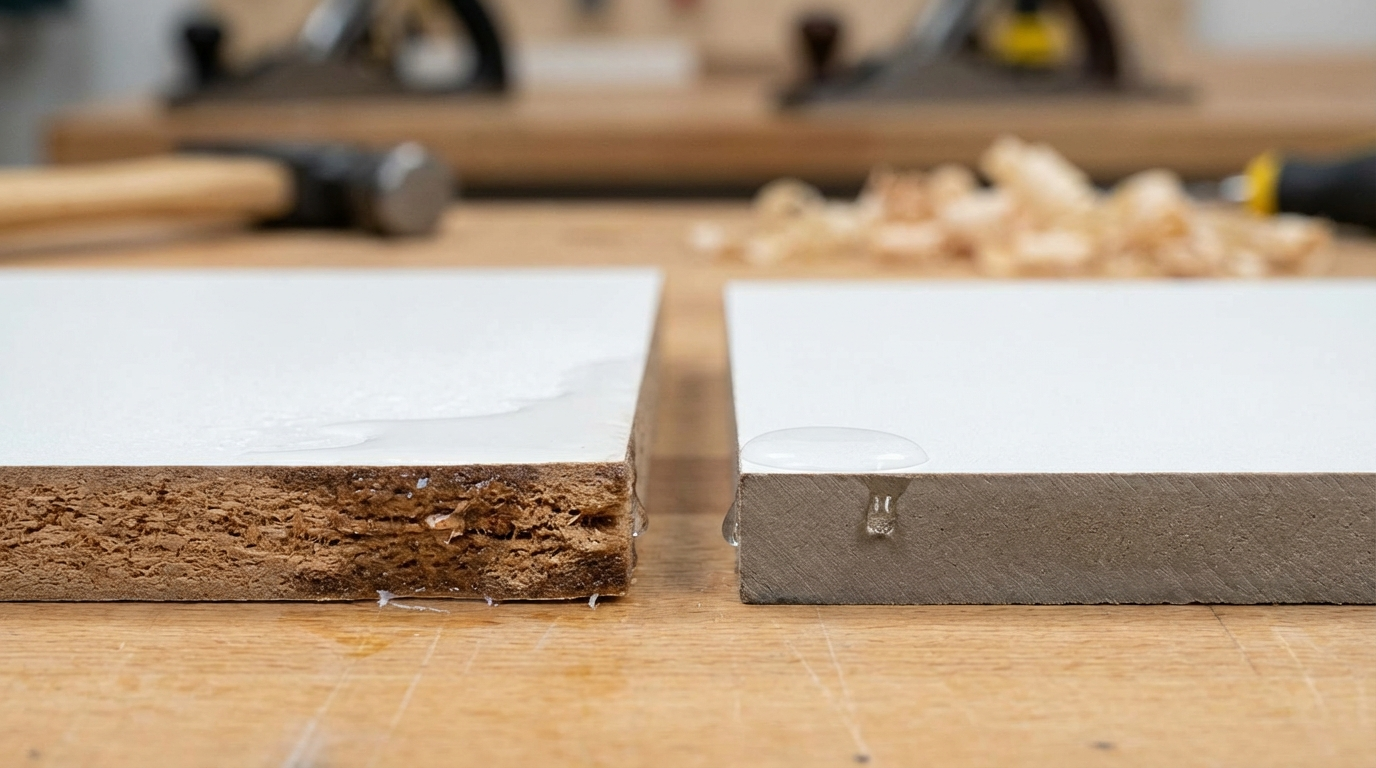
WPC boards are typically the better choice for bathrooms and wet zones over standard MDF due to stronger water resistance.
If you’re in a hurry, opt for WPC in any area exposed to splashes, steam, or high humidity like bathrooms, kitchens sinks, or coastal homes. MDF works only if sealed perfectly and kept fully dry, but in Indian monsoons or poor ventilation sites, it risks swelling. WPC handles moisture without warping, holds screws better under damp conditions, and needs less edge sealing. Check thickness (12-18mm for rigidity) and test water drop absorption on samples before buying.
- Choose WPC if: direct water contact, coastal humidity, modular cabinets, or long-term durability needed.
- Choose MDF if: fully enclosed dry zones, budget tight, and extra sealing applied; avoid in wet areas.
- Avoid MDF if: poor site ventilation, monsoon exposure, or untrained carpenters handling edges.
What MDF Actually Is
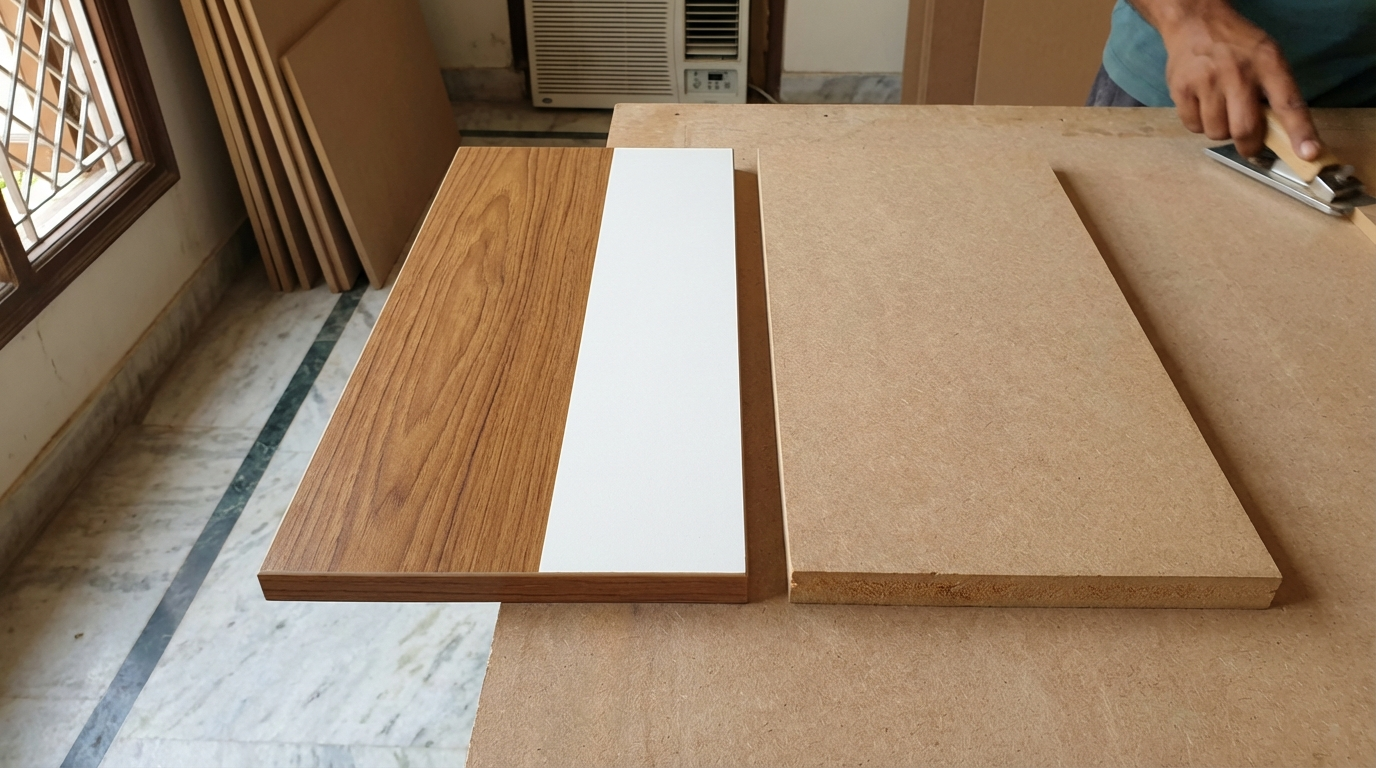
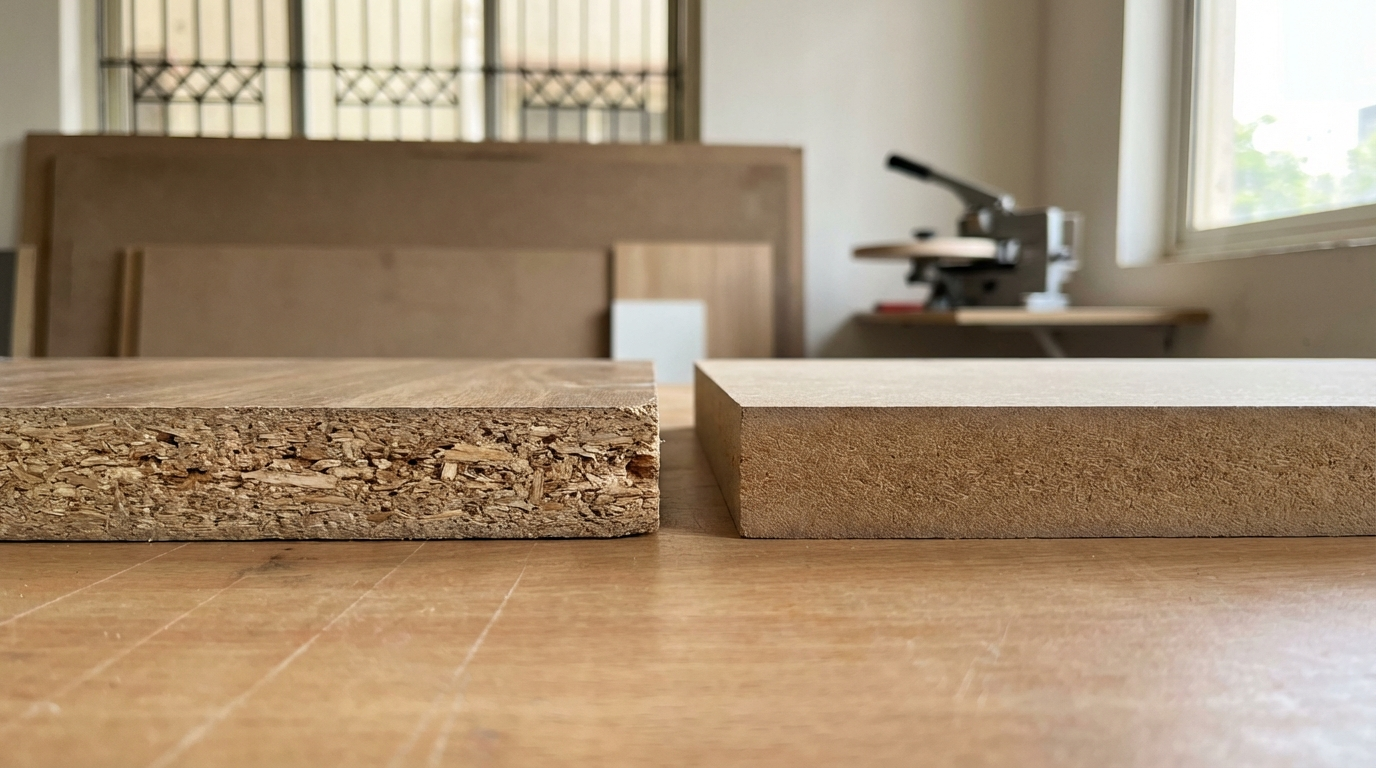
MDF, or Medium Density Fiberboard, consists of fine wood fibers mixed with resins and wax, compressed under heat and pressure into dense sheets. Standard types have densities around 700-800 kg/m³, making them smooth for laminates or painting.
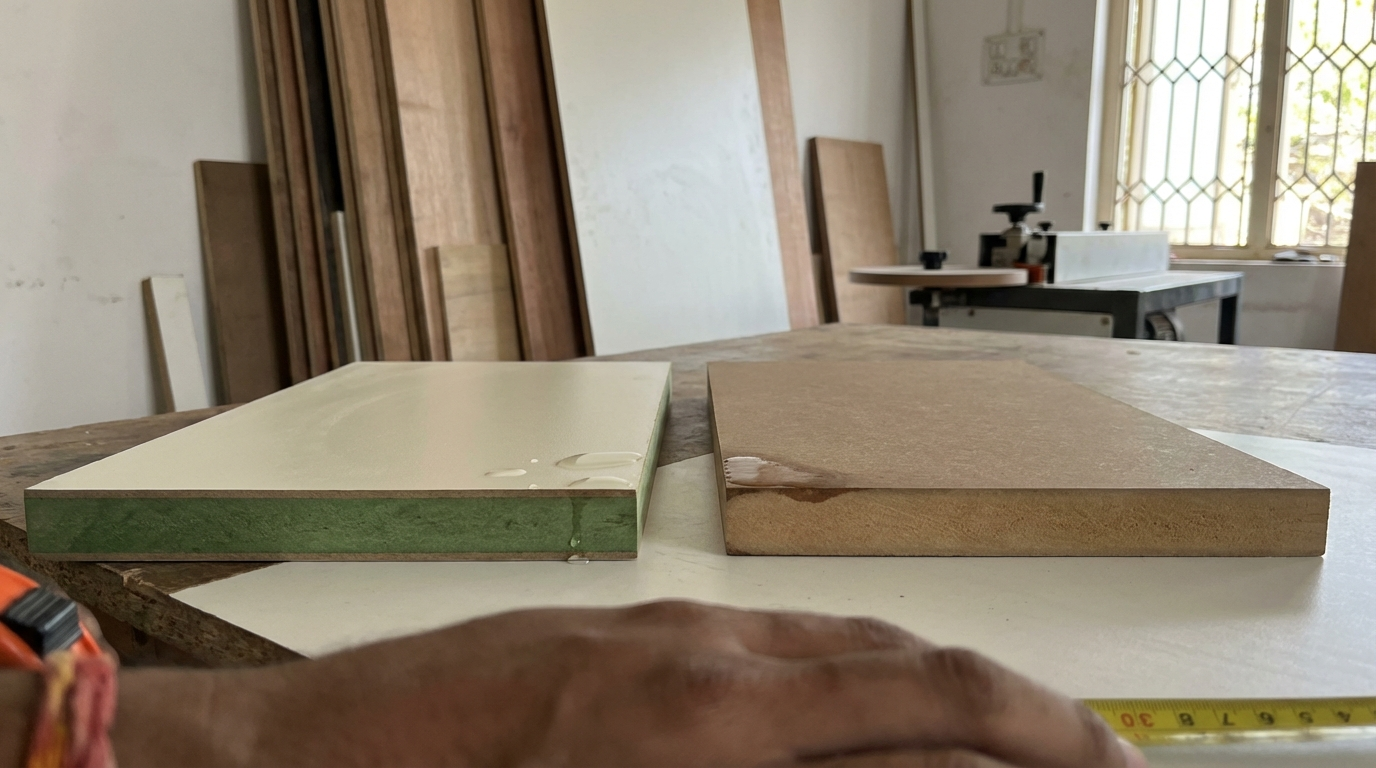
In wet zones, regular MDF absorbs moisture easily through edges and surfaces, leading to swelling. Moisture-resistant variants use added resins or treatments, but they still need full sealing for bathrooms. Thicknesses from 3-25mm suit cabinets, but thinner ones flex more.
What WPC Board Actually Is
WPC, or Wood Plastic Composite, blends wood fibers or flour with thermoplastics like PVC or polyethylene, extruded into boards. Densities vary 600-900 kg/m³, offering foam-like lightness or solid rigidity.
These boards resist water inherently due to plastic content, ideal for humid Indian bathrooms. They come pre-finished or raw, with thicknesses 6-20mm common for vanities or partitions. Unlike MDF, WPC cuts cleanly without dust explosions but may yellow under UV.
Why It Matters in Indian Homes and Sites
Indian climates bring monsoon humidity above 80%, coastal salt air, and site storage issues like ground contact or open stacking. Bathrooms often lack exhaust fans, trapping steam that MDF soaks up, causing edge swell within months.
WPC shrugs off splashes and condensation, but poor installation exposes weak joints. Workmanship realities—rushed sealing, uneven edges—amplify failures. Coastal sites add salt corrosion risks to fittings. Choosing wrong leads to rework costs, mold growth, and weakened cabinets.
Two-Minute Comparison Table
| Property | MDF (Standard) | WPC Board | Real-Life Impact in Wet Zones |
|---|---|---|---|
| Water Resistance | Low; swells 20-50% on exposure | High; minimal absorption | WPC survives daily splashes; MDF needs full lamination + edge wax |
| Rigidity/Stiffness | Good in thick sheets | Variable; foam types flex | MDF better for spans >60cm; WPC needs supports closer |
| Screw Holding | Moderate; weakens when damp | Strong initially, but pulls out over time | WPC for hinges; confirm grip with test screws |
| Finishing Options | Smooth for laminates/paint | Pre-faced or raw; limited paint adhesion | MDF versatile; WPC faster for plain jobs |
| Weight/Handling | Heavier | Lighter | WPC easier for solo carpenters |
Price Range and Cost Drivers
Expect MDF at 800-1500 rupees per sheet (8x4 ft, 18mm), WPC 1200-2500 rupees same size. Thinner 12mm drops 20-30%. Cost drivers: density (higher resists warp), moisture treatment (adds 15-25%), finish (prelam +10%), city logistics (metros 10% more), and wastage (curved cuts 15%).
For a 10 sqm bathroom vanity: MDF setup 25,000-40,000 rupees including edges; WPC 35,000-55,000. Quote checklist: specify thickness/density, water test cert request (visual only), sheet size, delivery protected stacking.
Which is Cheaper Long-Term in Wet Areas?
WPC costs more upfront but saves 30-50% on repairs over 5 years by avoiding swell fixes. MDF seems budget-friendly initially, but monsoon failures demand replacements. Factor site humidity: coastal adds 20% MDF risk premium. Check sample drop test—water beads on WPC, sinks into MDF. Next, calculate total project: add sealing labor (MDF extra 500/sqm).
Decision Framework: Match Conditions to Choice
| Site Condition | Recommended Board | Verify/Prep Steps |
|---|---|---|
| High splash (shower walls) | WPC 16-18mm | Water drop test; full edge PVC tape |
| Coastal humidity | WPC or MR MDF sealed | Salt spray simulation; ventilation check |
| Heavy use cabinets | MDF 18mm if dry inside | Screw pull test; blockboard core hybrid |
| Tight budget | MR MDF + heavy sealing | Compare densities; avoid thin |
| Fast modular install | WPC prefinished | CNC compatibility; minimal dust |
| High scratch risk | WPC with overlay | Surface hardness scratch test |
Practical Use Cases: Bathrooms and Wet Zones
| Application | Recommended Thickness | Finish Notes | Risk Notes (India Context) |
|---|---|---|---|
| Vanity cabinets | 18mm WPC | Prelam or PVC foil | Steam swell low; seal hinges |
| Shower partitions | 12mm WPC | Waterproof foil | Monsoon drip test essential |
| Sink counters | 18mm MR MDF | Postform laminate | Edge wax critical; avoid direct soak |
| Wet wall panels | 8-10mm WPC | Printed skin | Ventilation gaps prevent mold |
Can MDF Survive Indian Bathrooms?
Standard MDF cannot without heavy sealing, but moisture-resistant (MR) versions handle moderate humidity if edges are waxed and fully laminated. Direct splashes cause swelling in 2-4 weeks during monsoons. Use only for enclosed cabinets with exhaust fans. Test: leave sample in steamy room overnight—no warp means okay. Next step: pair with marine plywood core for hybrids.
Is WPC Better Than PVC for Wet Zones?
WPC edges out PVC in rigidity for load-bearing like shelves, while PVC is smoother for curves. Both resist water, but WPC cheaper for flats. In coastal areas, WPC's wood content may attract termites less if treated. Scratch WPC surface lightly—resists better than MDF. Verify density stamp; choose 800+ kg/m³.
Failure Modes and Fixes
- Symptom: Edge swelling. Root: Unsealed MDF ends absorb moisture. Prevention: Apply edge banding + silicone sealant before install. Fix: Sand, reband; replace if core bloated.
- Symptom: Screw pull-out. Root: Damp WPC fibers weaken grip. Prevention: Use inserts or pilot holes. Fix: Epoxy new screws; reinforce with blocks.
- Symptom: Surface delamination. Root: Poor laminate adhesion on humid MDF. Prevention: Acclimatize 48hrs. Fix: Re-laminate or overlay.
- Symptom: Warping bows. Root: Uneven moisture in storage. Prevention: Stack flat, covered. Fix: Clamp straight, dry slowly.
- Symptom: Yellowing fades. Root: WPC UV/plastic breakdown. Prevention: Avoid direct sun. Fix: Paint over or replace panels.
- Symptom: Chipping corners. Root: Brittle MDF edges during CNC. Prevention: Sharp tools, slow feeds. Fix: Fill, sand, re-edge.
What Causes Delamination in Wet Areas?
Steam penetrates unsealed laminate edges on MDF, softening resins. WPC less prone but foil bubbles if low-quality. Happens faster in humid monsoons. Direct fix: humidity below 60% via exhaust. Check: press edges—no give. Prevention: Double seal joints.
Quality Checks You Can Do Without Lab Tests
Before buying: Tap sheet—solid thud means density; water drop test (5min no dark spot); flex ends gently (no bend under weight); smell—no strong chemical offgas.
After cutting: Edges smooth, no fuzz (WPC cleaner); screw 3-4 times same hole—holds tight; sand lightly—uniform powder.
After install: Wipe wet cloth, dry fast; check gaps sealed; torque hinges—no strip.
Common Buyer Mistakes and How to Avoid
- Mistake 1: Buying standard MDF for baths. Avoid: Specify MR grade, test water.
- Mistake 2: Skipping edge sealing. Avoid: Budget 10% extra for banding tape.
- Mistake 3: Ignoring storage. Avoid: Insist delivered wrapped, stack indoors.
- Mistake 4: Thin boards for spans. Avoid: Min 16mm for 50cm shelves.
- Mistake 5: No acclimatization. Avoid: 2 days in site humidity.
- Mistake 6: Wrong screws. Avoid: Coarse thread for WPC.
- Mistake 7: Poor ventilation plan. Avoid: Spec exhaust in design.
- Mistake 8: Overlooking density. Avoid: Ask kg/m³, higher better.
Tips for Homeowners
Clean with mild soap only—avoid abrasives on WPC. Install exhaust fans mandatorily. Inspect edges yearly for gaps. Use coasters under pots. Budget for pro sealing if DIY carpenter.
Tips for Carpenters
Cut WPC with fine blade, zero clearance. Pre-drill screws 70% depth. Edge band hot-melt for MDF. Handle sheets vertically to avoid sag. Test fit dry-run.
Tips for Architects and Designers
Spec WPC for zones <2m from water. Detail 2mm overhangs for drips. Pair with SS fittings coastal. Draw sealing layers. Calc spans per load.
Tips for OEM and Modular Makers
Standardize CNC feeds for WPC. QC screw holds on 10% batches. Package with silica packs. Track complaints by thickness. Bulk buy MR MDF only.
How to Prep Edges for Wet Zones?
Apply PVC tape or acrylic paint first, then silicone bead on joints. For MDF, two coats edge sealer. WPC needs less but seal cuts. Dry 24hrs. Test: soak edge 30min, no swell.
FAQs
Can I paint WPC boards for bathrooms?
Yes, but adhesion varies—roughen surface first and use plastic primers. In humid sites, painted WPC chips less than MDF but yellows over time. Expect 3-5 years durability with topcoat. Test small area with humidity exposure. Avoid oil paints; water-based better for monsoons. Confirm carpenter uses 80-grit sand before.
Which holds hinges better in damp cabinets?
WPC typically grips better initially, but both weaken if soaked. Use euro hinges with plates. In coastal homes, add wooden dowels. Pull test on samples: 50 cycles no slip. MDF needs thicker zones.
Is 12mm enough for bathroom shutters?
12mm WPC works for light doors under 60cm wide, but add frames for sag. MDF at 12mm flexes in steam. Upgrade to 16mm for heavy use. Check door span and weight.
How to store boards before bathroom install?
Stack horizontally on pallets, covered plastic, indoors 40-60% humidity. Acclimatize 48hrs site-side. Monsoon tip: elevate off ground. Inspect for warp on arrival.
Does WPC attract termites like wood?
Less due to plastics, but wood fibers can if untreated. Coastal: use borate spray. MDF resins deter better. Annual check cracks.
Can I use MDF with laminate in kitchens?
Yes for dry uppers, but sinks need sealing. Postformed edges help. Monsoon: vent well. Hybrid with WPC base.
What if my site has no exhaust fan?
Go full WPC, add silica dehumidifiers. MDF risks high. Design passive vents.
How thick for wet wall cladding?
8-12mm WPC with foil. Seal joints silicone. Avoid MDF fully. Disclaimer: This content is provided for general informational purposes based on industry practices and publicly available information. Product specifications, standards, prices, and availability may vary by manufacturer, region, and time. Readers should independently verify details with manufacturers, dealers, or qualified professionals before making purchase or construction decisions.
Want Plywood Suggestions?
Share a few details and a VIR MDF specialist will suggest suitable brands and connect you to responsive dealers.