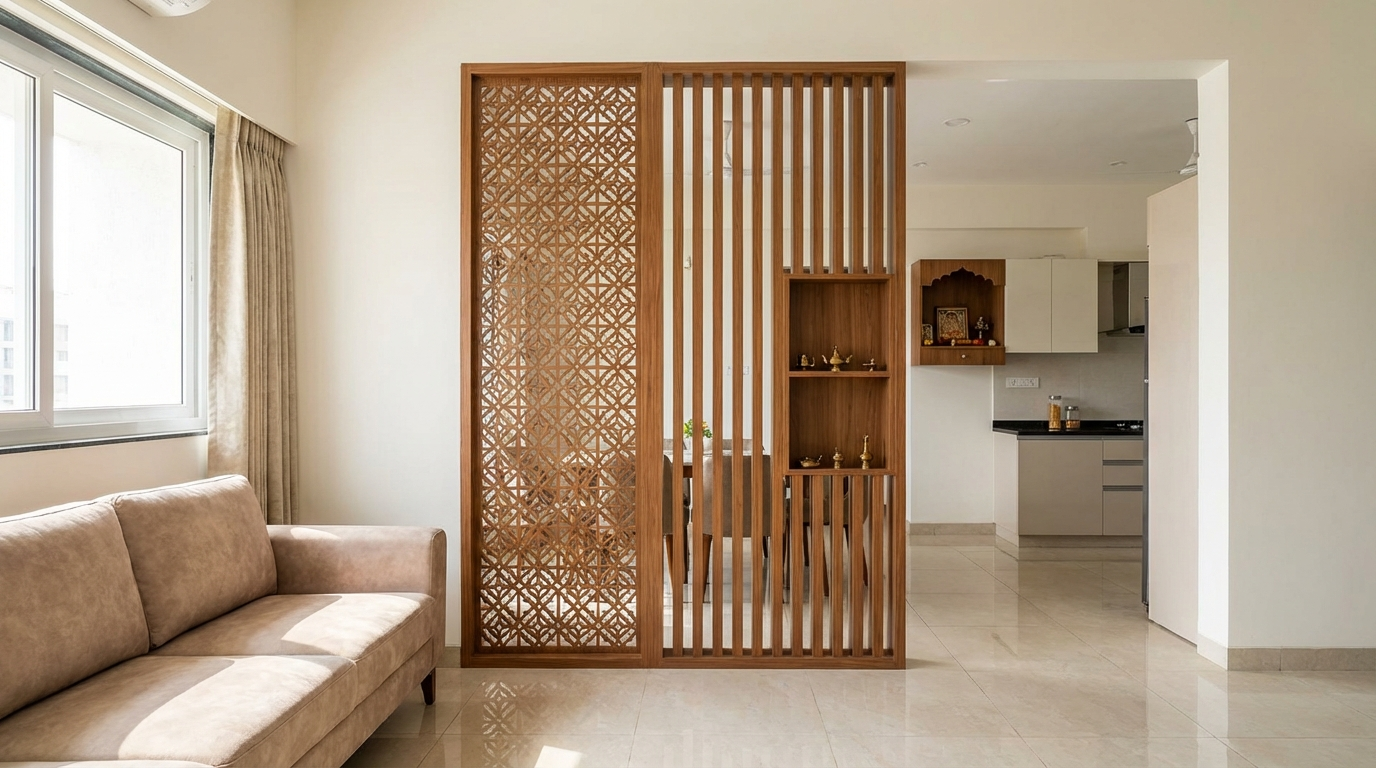
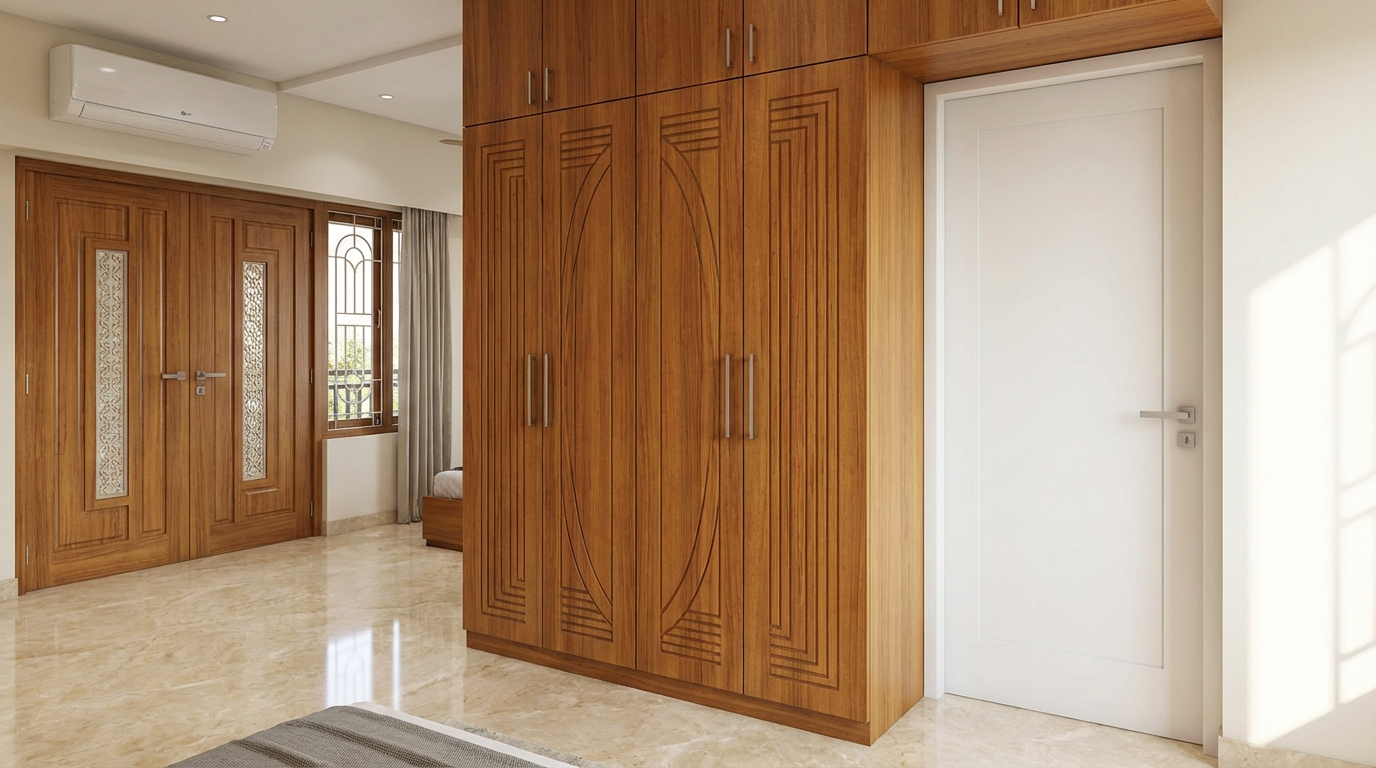
MDF Wall Moulding: Design Ideas, Profiles, Installation Steps & Cost Factors
Planning MDF wall moulding? Explore popular profiles, layout ideas, installation steps, and what impacts cost so you can budget confidently.
Quick Decision Summary
MDF wall moulding uses shaped MDF strips for affordable, paintable wall accents that elevate interiors without high costs.
If you’re in a hurry: Opt for 12-18mm thick primed MDF profiles like cove or dado rails for living rooms or bedrooms. They install quickly with adhesive and nails, costing typically Rs 150-350 per meter linear. Seal edges twice for monsoon protection, and choose moisture-resistant variants for coastal areas. Expect 20-30% material wastage on curves—budget extra. Avoid in direct wet zones unless HDFWR grade.
- Choose this if you want smooth, paintable details on budget dry interiors with good ventilation.
- Avoid this if high humidity without sealing, heavy impacts expected, or unfinished raw exposure.
What This Material/Option Actually Is
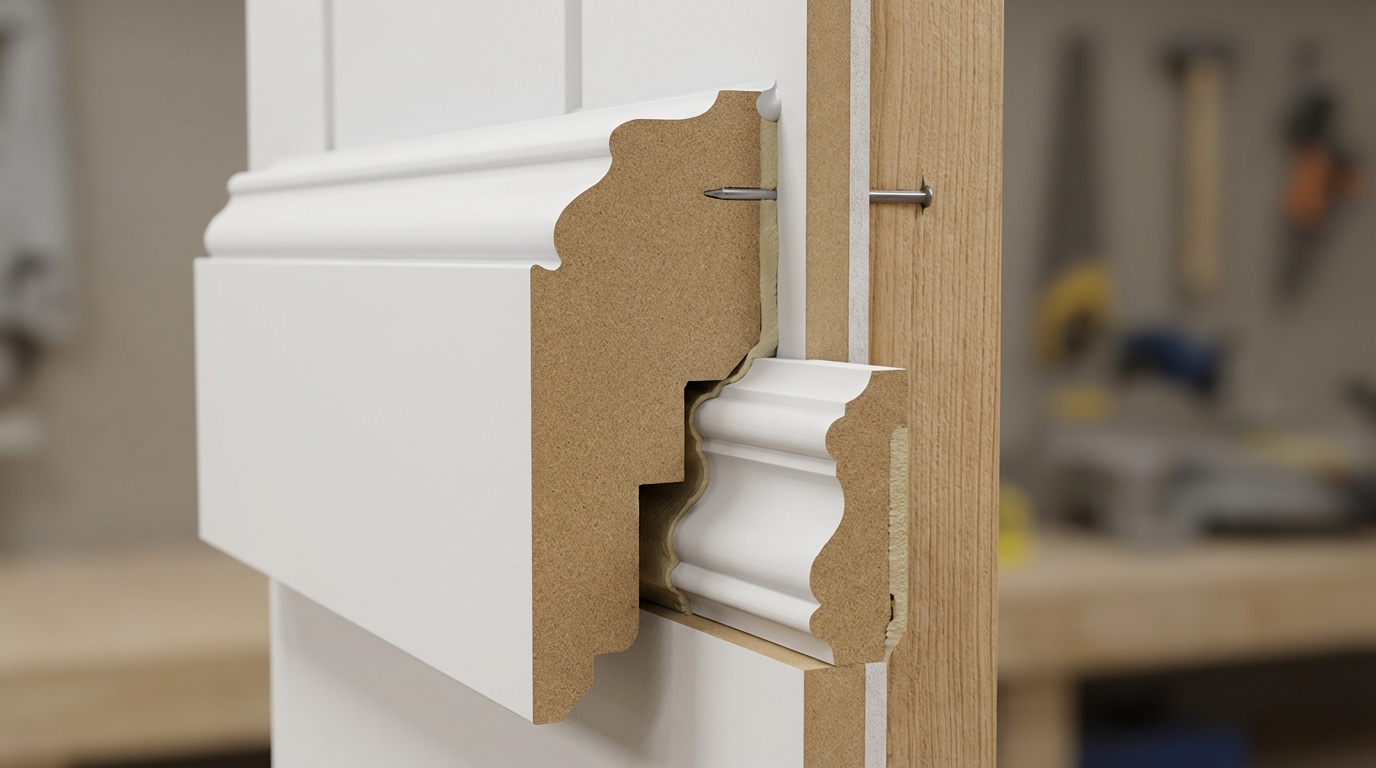
MDF wall moulding consists of medium-density fiberboard (MDF) cut and shaped into profiles like coving, chair rails, or panels. These strips, typically 20-100mm wide and 12-25mm thick, attach to walls or ceilings for decorative borders, transitions, or panels. Unlike solid wood, MDF offers uniform density for crisp edges post-painting, making it popular for modular interiors.
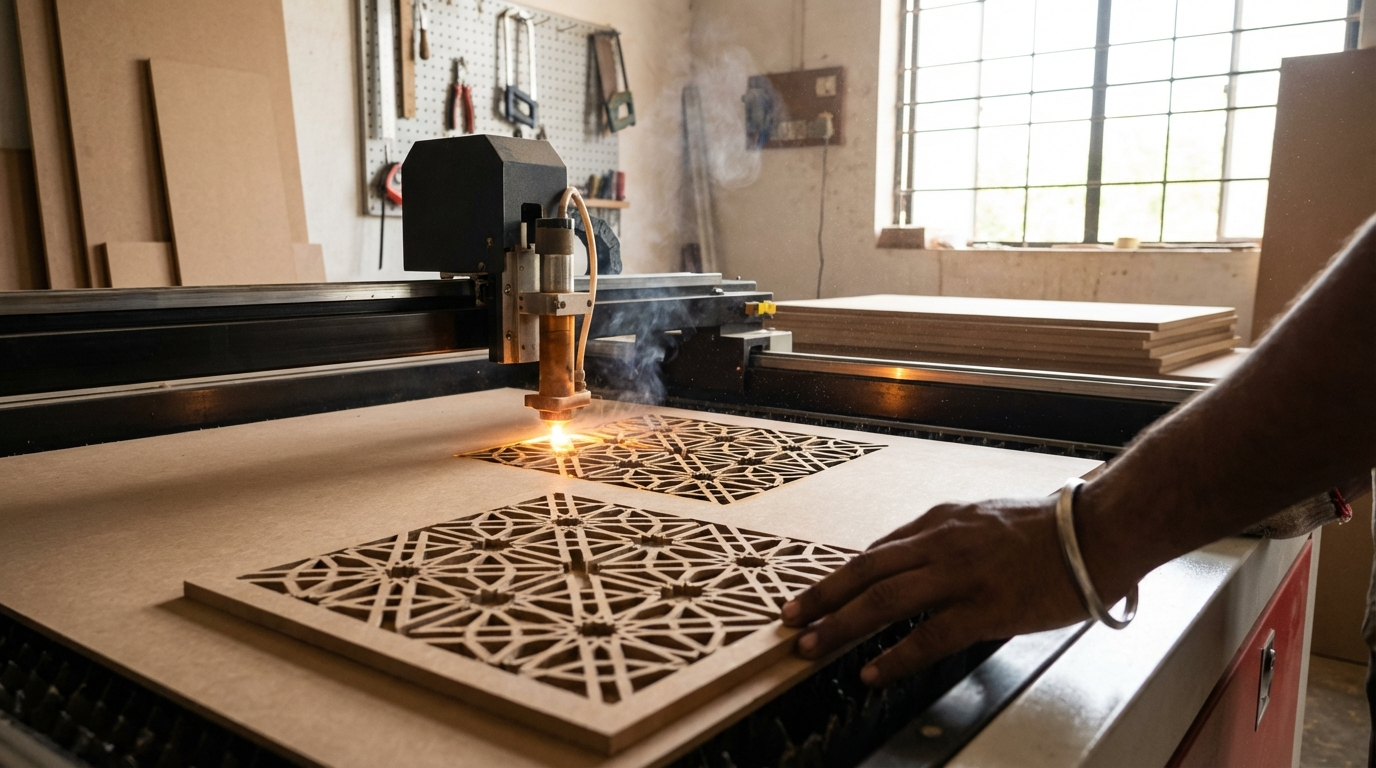
It fits as a surface-level accent on plastered walls, often combined with laminates or paint. Profiles come plain for custom painting or pre-primed for speed. In Indian workflows, carpenters route these on CNC for custom shapes, then edge-band or seal for durability.
Why It Matters in Indian Homes and Sites
In India, monsoon humidity (70-90% RH) and coastal salt air swell unprotected MDF edges by 5-10%, causing cracks or peeling paint. Poor site storage during rainy seasons leads to warp before installation. Workmanship gaps, like uneven plaster, amplify adhesion failures.
Yet, sealed MDF holds screws well (up to 20kg per point) for light fixtures and resists termites better than softwoods. In ventilated AC homes, it lasts 10+ years with minimal upkeep. Trade-off: cheaper than PVC (Rs 100 less per meter) but needs primer to match wood's impact resistance.
Price Range and Cost Drivers
Plain MDF wall moulding profiles typically range Rs 80-250 per linear meter for 12-18mm thickness. Primed or profiled versions go Rs 150-450 per meter, with custom CNC routes adding 20-40%. Full project costs for a 100 sqm room (200m linear) fall Rs 40,000-1,20,000, including labor (Rs 30-60/m).
Cost drivers include thickness (thicker = 30% more), profile complexity (intricate = higher tooling), finish (pre-lacquered +25%), density (700-850kg/m³ for better screw hold), edge treatment (PVC banding +Rs 20/m), logistics (Tier-2 cities +15%), and wastage (10-25% on miters). City variation: Mumbai/Coastal 20% premium for moisture grades.
| Project Scale | Linear Meters | Est. Material Cost (Rs) | Labor + Misc (Rs) |
|---|---|---|---|
| Small Bedroom Accent | 50m | 8,000-18,000 | 5,000-10,000 |
| Full Living Room | 150m | 25,000-55,000 | 12,000-25,000 |
| Large Hall Panelling | 300m | 50,000-1,10,000 | 25,000-45,000 |
How to Ask for a Quote: Checklist
- Specify profile name, width, thickness, length per piece.
- Mention quantity, finish (plain/primed), and moisture grade if humid area.
- Ask for wastage inclusion, delivery terms, and sample for density check.
What Impacts MDF Moulding Costs the Most?
Thickness and profile intricacy drive 50% of costs—simple cove at 12mm stays under Rs 150/m, while ornate cornice at 25mm hits Rs 400+. Resins for moisture resistance add 15-20%. In India, logistics from North to South doubles for bulk. Verify by comparing 3 quotes with exact specs; negotiate 10% on volume. Next step: Calculate your linear footage (room perimeter x layers) and add 20% buffer.
Popular Profiles for MDF Wall Moulding
Common profiles include coving (curved ceiling-wall join), dado rails (mid-wall protector), and picture rails (for hanging art). In Indian homes, slim astragal (10-20mm) suits modern minimalism, while dentil blocks add classic charm. Choose based on wall height: under 10ft, shallow profiles (25mm projection); taller walls, deeper (50mm) for balance.
Custom profiles via CNC allow hybrid designs, like fluted panels for TV walls. Always factor miter cuts—45° angles waste 5-10% on corners.
Which MDF Profile Suits Modern Indian Interiors?
Slim cove or bullnose profiles (20-30mm wide) work best for contemporary flats, pairing with flat paints for clean lines. They hide uneven plaster common in new builds. In humid Mumbai homes, opt for 18mm+ with double primer. Check fit by dry-assembling a 1m sample on-site. Avoid deep Victorian styles in low ceilings—they darken small rooms. Trade-off: simpler profiles cut faster, saving carpenter time.
Design Ideas You Can Actually Build
Living Room: 1) Chair rail at 1.2m height with LED strips behind for glow. 2) Full wall panelling in 4x2ft sheets, routed flutes. 3) Ceiling coving with stepped layers for depth.
Bedroom: 4) Headboard extension with dentil topper. 5) Picture rail for fabric drapes. 6) Vertical battens (50mm wide) for texture without bulk.
Kitchen/Dining: 7) Under-cabinet moulding for clean edges. 8) Backsplash frame with slim profiles. 9) Ceiling beams simulated via deep cornices.
Each uses 15-18mm MDF, painted semi-gloss for wipeability. Seal edges with 2 coats polyurethane for monsoon resilience. Custom CNC for curves reduces joints.
Can I Use MDF Moulding for Ceiling Designs?
Yes, lightweight 12mm coving or cornices install easily with adhesive, hiding false ceiling joints. In ventilated spaces, they prevent sagging. For humid areas, prime all sides and use galvanized screws. Direct answer: Ideal for 8-10ft ceilings; add battens every 60cm for support. Nuance: Avoid in kitchens without exhaust—steam warps thin profiles. Check: Weigh a sample (under 2kg/m ideal). Next: Sketch perimeter and test adhesive on scrap plaster.
Practical Use Cases (What Works, What Fails)
| Use Case | Recommended Thickness | Finish Notes | Risk Notes (India-Specific) |
|---|---|---|---|
| Wall Panelling (Living) | 18-25mm | Emulsion paint, edge sealed | Low humidity ok; seal for monsoon |
| Ceiling Cove | 12-15mm | Primed + matte | Ventilation key; warp in AC-off rooms |
| Chair Rail (Dining) | 15-20mm | Semi-gloss | Good screw hold; chip risk on corners |
| TV Unit Frame | 18mm | Laminate face | Heavy load? Reinforce backs |
How to Plan MDF Wall Moulding in 5 Steps
- Measure & Sketch: Room perimeter x layers; account 10% extra for miters.
- Select Profile/Grade: Match style; moisture-resistant for RH>60%.
- Prep Walls: Level plaster; prime if damp.
- Buy & Acclimate: Store flat 48hrs; check density (tap test).
- Install & Finish: Adhesive + nails; 2 primer coats.
Failure point: Skipping acclimation causes 2-3% shrink post-install.
Installation Steps for MDF Wall Moulding
Step 1: Clean and level walls; fill cracks. Step 2: Mark lines with laser level. Step 3: Cut miters at 45° using fine blade (no tear-out). Step 4: Apply PU adhesive on back, nails every 30cm. Step 5: Caulk joints, sand, prime twice, paint. In coastal sites, use stainless screws to avoid rust stains.
Dry fit first; clamp curves. Total time: 1-2 days for 100m.
How Long Does MDF Wall Moulding Installation Take?
For a standard 12x15ft room, 4-6 hours prep/cut, 4-8 hours install/finish—one carpenter. Larger projects scale linearly. Direct: Pros finish 50m/day. Nuance: Curves add 50% time; monsoon delays drying. Check: Time a sample corner. Next: Hire with CNC access for precision cuts, reducing site errors by 30%.
Practical Decision Guide
| Site Condition | Recommended Profile/Finish | What to Verify |
|---|---|---|
| Monsoon Humidity (Tier-1) | 18mm HDFWR, double-sealed | Edge swell test in water 24hrs |
| Coastal/Salty Air | Primed cove, PU topcoat | Screw hold (5+ turns without strip) |
| Heavy Use (Kids/Pets) | 20mm+ chair rail, gloss paint | Impact: Drop test 1kg from 1m |
| Tight Budget | 12mm plain, emulsion | Density: No crumbling on nail |
| Fast Delivery | Stock profiles, pre-primed | Batch uniformity (color/match) |
| High Scratch Risk | Laminated face, PVC edge | Scratch with key—no white marks |
Failure Modes and Fixes
- Symptom: Edge Swelling Root: Moisture ingress. Prevent: Seal all sides pre-install. Fix: Sand, re-prime, monitor.
- Symptom: Peeling Paint Root: Poor primer adhesion. Prevent: 120-grit sand + 2 coats. Fix: Scrape, re-prep.
- Symptom: Miter Gaps Root: Uneven cuts. Prevent: Sharp blade, jig. Fix: Caulk, sand smooth.
- Symptom: Nail Pops Root: Expansion. Prevent: Acclimate 72hrs. Fix: Re-nail, fill.
- Symptom: Chipping Corners Root: Brittle edges. Prevent: 18mm+ thick. Fix: Replace section, round edges.
- Symptom: Delamination Root: Low density. Prevent: Tap test buy. Fix: Full replacement.
Quality Checks You Can Do Without Lab Tests
Before Buying: Tap for solid tone (no hollow); weigh sample (heavier=better density); flex test—no snap.
After Cutting: Edges smooth, no fuzz; screw holds 10 turns.
Post-Install: Joints tight; no gaps after 24hrs; wipe with damp cloth—no swell.
Red flags: Visible resin bleed, uneven thickness, warp when stood vertical.
Is MDF Wall Moulding Moisture Resistant Enough for Indian Homes?
Standard MDF no, but primed/HDFWR variants handle 60-70% RH if sealed. Direct: Yes with prep in ventilated rooms. Nuance: Coastal needs extra PU coat; avoid bathrooms. Check: Soak edge sample 1hr—no more than 1mm swell. Next: Specify MR grade and insist on site acclimation.
Common Buyer Mistakes and How to Avoid Them
- Mistake 1: Buying thin 9mm—Avoid: Min 12mm for walls.
- 2: Skipping primer—Avoid: Always 2 coats.
- 3: Ignoring acclimation—Avoid: 48hrs flat storage.
- 4: Poor miter tools—Avoid: Use compound saw.
- 5: No edge seal—Avoid: 3mm PVC or lacquer.
- 6: Over-nailing—Avoid: Every 40cm max.
- 7: Wrong adhesive—Avoid: PU not PVA.
- 8: Budget no wastage—Avoid: +25% linear.
Tips by User Type
For Homeowners
Do: Clean with microfiber weekly; avoid direct water. Don’t: Hang heavy mirrors without battens. Check humidity below 65%.
For Carpenters
Cut with 80-tooth blade; pre-drill hinges; edge-band curves. Handle with gloves to avoid oils.
For Architects/Designers
Spec 18mm MR in drawings; detail joints at 1:10 scale; pair with levelled substrate notes.
For OEM/Modular Makers
QC: Density gauge on batch; automate sealing; track returns by profile type.
Can MDF Wall Moulding Replace Wood?
Often yes for paint-grade—smoother finish, no knots. Direct: Cheaper, uniform. Nuance: Less impact-resistant; seal for humidity. Check: Paint sample both. Next: Use where budget/timeline tight.
FAQs
What thickness of MDF is best for wall moulding?
12-18mm balances weight, screw hold, and cost for most walls. Thinner suits ceilings; thicker for high-traffic. In Indian sites, 15mm+ resists minor bumps. Verify by checking projection—under 30mm hides gaps well. Factor room scale: bedrooms fine at 12mm, halls need 18mm stability.
Does MDF moulding need painting?
Plain yes, for seamless match; pre-primed skips one coat. Emulsion or PU paints hide imperfections. In humid areas, add topcoat for wipeability. Skip only if laminate-faced, but paint unifies. Test adhesion on scrap first.
Can I install MDF moulding myself?
Yes for straight runs with basic tools—miter saw, level, adhesive. Pros handle curves/CNC. Allow 1 day dry time. Common pit: Uneven walls—shim first. Practice on waste.
How to cut MDF moulding without chipping?
Use zero-clearance insert, fine blade, tape edges. Cut plastic side up on table saw. Sand post-cut. Carpenter tip: CNC for bulk precision, hand for tweaks.
Is MDF wall moulding termite-proof?
Better than softwood due to resins, but treat with oil if ground proximity. No full proof—combine site barriers. Check density; higher resists better.
What adhesive works best?
PU-based for gap-fill and strength; avoid water-based in humidity. Apply zigzag, clamp 1hr. Nails temporary hold.
How much wastage for MDF moulding projects?
15-30% from miters, defects. Order extra; stock lengths minimize. Curves double it.
Can I use MDF moulding outdoors?
No—swells immediately. Indoor only, away from direct wet. Alternatives: PVC or treated wood.
How to clean painted MDF moulding?
Damp cloth, mild soap; no abrasives. Dry immediately. Semi-gloss eases fingerprints.
Disclaimer: This content is provided for general informational purposes based on industry practices and publicly available information. Product specifications, standards, prices, and availability may vary by manufacturer, region, and time. Readers should independently verify details with manufacturers, dealers, or qualified professionals before making purchase or construction decisions.Want Plywood Suggestions?
Share a few details and a VIR MDF specialist will suggest suitable brands and connect you to responsive dealers.