MR MDF vs BWR MDF: What’s the Difference and Which One You Actually Need?
MR MDF and BWR/exterior MDF aren’t interchangeable. Compare moisture performance, best uses, and how to avoid paying extra unnecessarily.
Quick Decision Summary
MR MDF suits dry interiors; BWR MDF handles higher moisture but costs more—pick based on humidity exposure.
If you’re in a hurry: Use MR MDF for wardrobes, TV units, and bedrooms where humidity stays below 70% most of the year. Switch to BWR MDF only for kitchens, bathrooms, or coastal sites with monsoon splash risks. Over-specifying BWR everywhere adds 20-40% to costs without gains in dry zones. Always seal edges properly regardless—poor sealing fails both types in India's variable climate.
- Choose MR MDF if: Low-moisture areas, budget-tight projects, faster standard delivery.
- Choose BWR MDF if: Frequent water contact, coastal humidity above 80%, or steam-heavy kitchens.
- Avoid MR in wet zones: Swells faster during monsoons.
- Avoid BWR everywhere: Unnecessary expense for dry interiors like offices.
What This Material/Option Actually Is
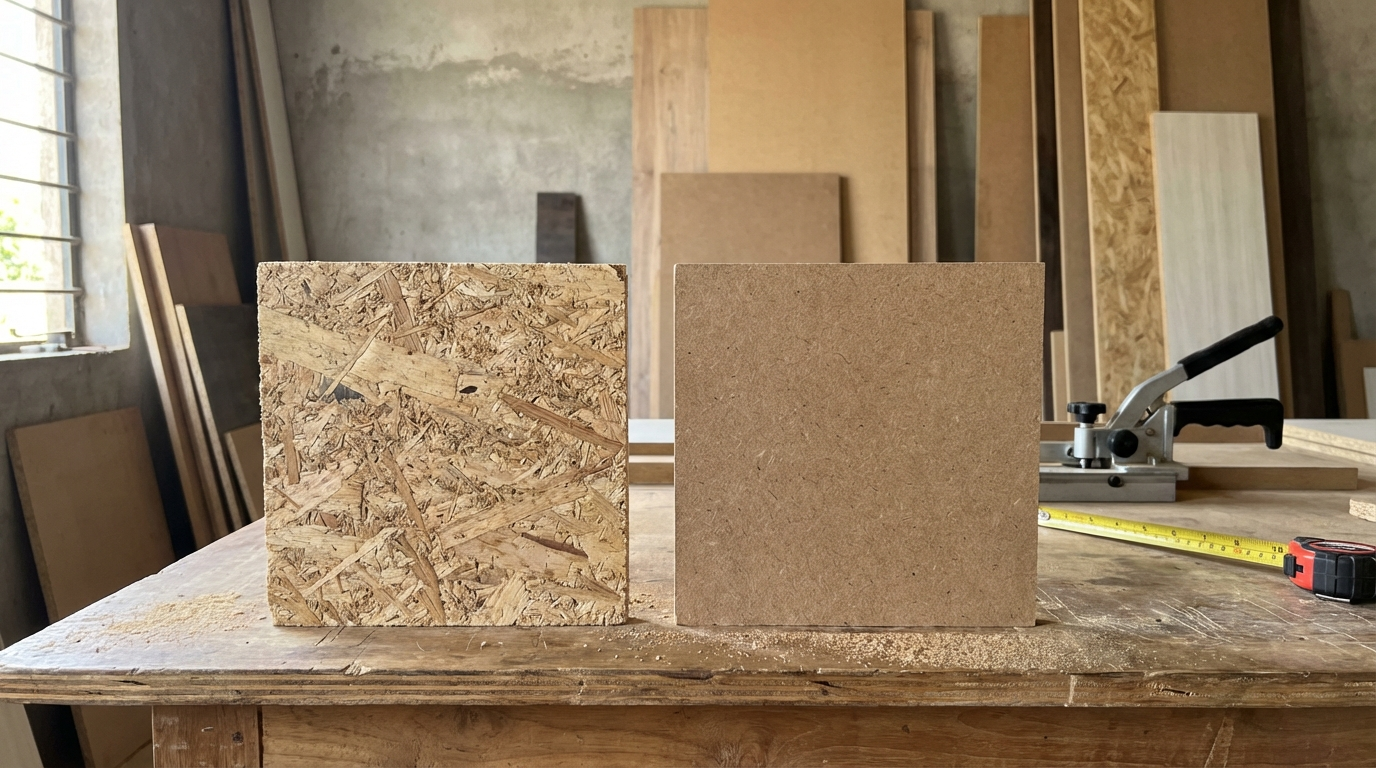
MR MDF stands for Moisture Resistant Medium Density Fiberboard. It uses resins and additives that improve water tolerance over standard MDF, but only for occasional humidity spikes. Typically made from hardwood fibers compressed at 700-850 kg/m³ density, it's graded for interior use where controlled moisture prevails.
BWR MDF means Boiling Water Resistant MDF, often called exterior-grade. It incorporates higher resin content, like urea-melamine-formaldehyde with wax or paraffin, enduring short boiling water exposure (2-4 hours in tests). Denser at 800-900 kg/m³, it targets semi-exposed applications. Both are engineered panels, not plywood, so they machine well for CNC but need edge protection.
In India, these fit modular furniture workflows: MR for pre-laminated boards in wardrobes; BWR for laminated surfaces in moisture-prone cabinets. Neither is fully waterproof—think resistance levels, not immunity.
Why It Matters in Indian Homes and Sites
India's monsoon season (June-September) pushes indoor humidity to 80-95% in many regions, causing standard MDF to swell 10-20% at edges. Coastal areas like Mumbai or Chennai add salt-laden air, accelerating delamination if unsealed. Even inland cities like Delhi see 60-70% humidity in rains, stressing screw-holds in poorly ventilated wardrobes.
Site realities amplify issues: Open godowns during transport lead to pre-installation warping. Carpenter shortcuts like exposed cuts in kitchens fail fast. BWR holds shape better here, but MR suffices with good sealing in bedrooms. Practical fallout? Swollen shutters won't close; peeling laminates need rework, hiking costs 15-25%.
Storage tip: Stack boards horizontally off-ground in shaded, ventilated sheds—avoids both types absorbing ground moisture during 2-3 week site waits.
Two-Minute Comparison (What Changes in Real Life)
MR and BWR differ mainly in moisture handling, not strength or machinability. Here's a side-by-side:
| Aspect | MR MDF | BWR MDF |
|---|---|---|
| Moisture Tolerance | Short-term humidity (up to 70-80%); swells 5-8% after 24hr soak | Higher resistance; <3% swell after boiling water test; handles 85-95% humidity |
| Best For | Dry interiors: bedrooms, offices | Wet zones: kitchens, bathrooms, outdoors semi-covered |
| Density Range | 700-850 kg/m³ | 800-900 kg/m³ |
| Edge Swelling Risk (Monsoon) | High if unsealed | Low with sealing |
| Machinability | Good for CNC | Similar, slightly harder |
| Cost Premium | Base | 20-40% higher |
Real-life shift: In Pune's humid summers, MR works for wardrobes with melamine finish; BWR shines in Goa beach homes for cabinet bases.
What Does MR MDF Full Form Mean in Practice?
MR MDF full form is Moisture Resistant Medium Density Fiberboard. It resists temporary dampness but fails prolonged exposure. Direct answer: Use where humidity rarely tops 75%, like air-conditioned living rooms. Nuance: In Indian apartments, pair with edge banding to block monsoon vapor. Check by tapping a sample—dull thud means poor density; crisp means reliable. Next step: Ask supplier for soak test demo on scrap, observing edge curl after 2 hours in water.
Is BWR MDF the Same as Exterior Grade?
Yes, BWR MDF (Boiling Water Resistant) is often labeled exterior grade for semi-outdoor use. It withstands boiling for hours without disintegrating. Conditions: Ideal for verandas or kitchens with steam. In coastal Kerala, it prevents salt-induced puffing. Verify by weight—feels heavier per sheet. Action: During site visit, expose cut edge to damp cloth overnight; minimal change signals quality.
Price Range and Cost Drivers
MR MDF typically ranges ₹50-90 per sq ft for 18mm thickness; BWR adds 20-40%, hitting ₹70-130 per sq ft. Varies by city: Mumbai/Coastal 15% higher due to logistics; inland like Jaipur lower. Thickness drives 40% of cost—6mm ₹30-50, 18mm double that.
Key drivers: Resin type (higher in BWR), density, pre-lam finish (adds ₹10-20/sq ft), edge sealing extras. Wastage from CNC cuts (10-15%) and transport (₹5-10/sq ft interstate) pile on. Example: 10x6 ft wardrobe (60 sq ft, 18mm MR) totals ₹4,000-6,000 material; BWR jumps to ₹5,500-9,000.
Quote checklist: Specify "18mm MR MDF, 750kg/m³ min density, melamine both sides, no delam on edges." Get 3 quotes comparing per sq ft landed cost.
Meaning, Types, and Where People Get Confused
MR: Moisture Resistant—basic upgrade for humid interiors. BWR: Boiling Water Resistant—tougher for wetter spots. Types include MR with MR-HMR (higher resistance variant), BWR standard.
- Confusion 1: Thinking MR is waterproof—no, it puffs in standing water.
- Confusion 2: BWR as fully exterior—needs cover from direct rain.
- Confusion 3: Ignoring density—low-density MR fails screws faster.
- Confusion 4: Laminates make it waterproof—surface protects, core still vulnerable.
- Confusion 5: All MDF same moisture—grades vary hugely in monsoons.
- Confusion 6: Cheaper import = same—often lower resin, fails in humidity.
Practical Use Cases (What Works, What Fails)
| Use Case | Recommended Grade | Thickness | Finish Notes | Risk Notes (India) |
|---|---|---|---|---|
| Wardrobe Shutters | MR | 18mm | Melamine | Low humidity ok; seal edges vs termites |
| Kitchen Cabinets | BWR | 18-25mm | Laminate | Steam/splash; coastal high risk |
| TV Unit | MR | 12-18mm | Pre-lam | Dry zone; avoid floor contact |
| Bathroom Vanity | BWR | 18mm | High-pressure laminate | Humidity 90%; vent well |
| Office Partition | MR | 12mm | Veneer | AC controlled; edge band fully |
Design Ideas You Can Actually Build
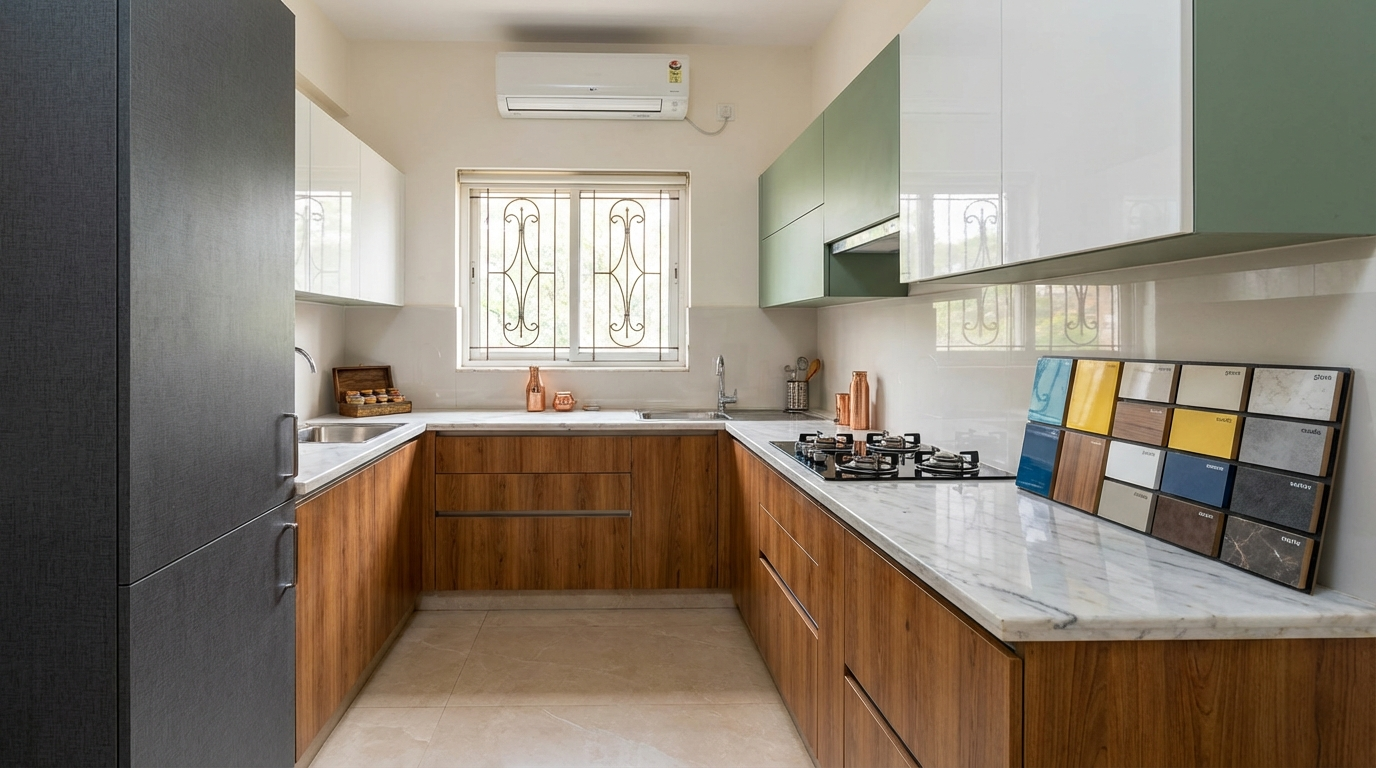
Kitchen: BWR base cabinets with 1mm laminate, PVC edge; MR uppers with melamine—saves 25% cost.
- Wardrobe: MR 18mm carcass, floating shelves—handles 70% humidity if ventilated.
- TV Unit: MR with acrylic front, edge PVC—scratch-resistant for kids.
- Wall Panels: MR 8mm prelam, clip system—monsoon-proof with silicone seal.
- Office Desk: BWR legs (coastal), MR top—balances load/moisture.
Can I Use MR MDF in Kitchen?
Only for uppers away from sinks/stoves; avoid bases. It handles occasional splashes but warps in steam-heavy Indian cooking. Nuance: In dry Delhi kitchens, yes with heavy sealing; no in humid Kolkata. Check: Post-install, wipe spills immediately. Next: Upgrade to BWR if gas proximity under 1ft.
Will BWR MDF Work Outdoors?
Semi-covered only, like verandas—no direct rain. Resists boil but UV degrades surface over years. Conditions: Mumbai balconies ok shaded; full sun fades laminate. Verify: Flex a sample edge post-soak—no cracks. Step: Add UV coat + overhang minimum 2ft.
Failure Modes and Fixes
- Symptom: Edge swelling post-monsoon. Cause: Unsealed cuts absorb vapor. Prevent: PVC/ABC edge band full perimeter. Fix: Sand, reseal; replace if >5mm puff.
- Symptom: Delamination of laminate. Cause: Moisture via poor glue or humidity. Prevent: Match resin to grade (BWR needs phenolic). Fix: Spot glue; full replace if bubbles.
- Symptom: Screw pull-out in hinges. Cause: Low density + moisture-soft core. Prevent: Use 25mm confirmat screws, pilot holes. Fix: Reinforce with inserts.
- Symptom: Surface scratches/chips. Cause: High abuse without hard finish. Prevent: 1-1.5mm laminate over melamine. Fix: Buff minor; overlay new skin.
- Symptom: Warping in storage. Cause: Vertical stack in humid godown. Prevent: Horizontal, spacers, cover. Fix: Flatten under weight 48hrs pre-cut.
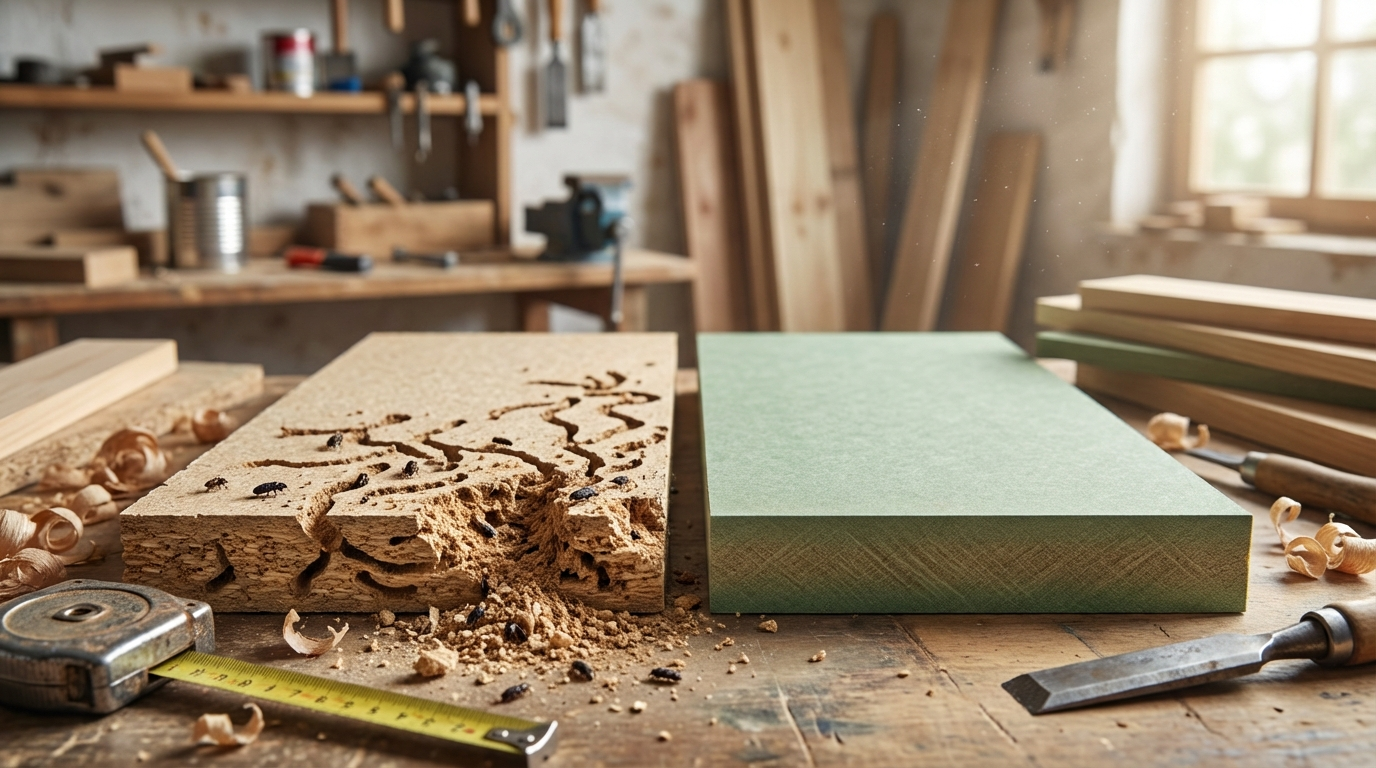
- Symptom: Termite in coastal. Cause: Untreated fibers. Prevent: HMR variant + borate spray. Fix: Fumigate, isolate.
Common Buyer Mistakes and How to Avoid
- Mistake: Buying MR for all, ignoring kitchen steam. Avoid: Map wet zones first.
- Mistake: Skipping edge banding. Avoid: Insist on 2mm PVC during quote.
- Mistake: Low thickness in humid areas. Avoid: Min 18mm for shutters.
- Mistake: No density check. Avoid: Weigh sample (heavier=better).
- Mistake: Storing vertically on site. Avoid: Use A-frames indoors.
- Mistake: Wrong screws. Avoid: Coarse thread for MDF.
- Mistake: Overlooking transport damage. Avoid: Inspect on delivery.
- Mistake: Thin laminate in kids' rooms. Avoid: 1mm+ HPL.
- Mistake: No ventilation in wardrobes. Avoid: 10% open back.
Quality Checks You Can Do Without Lab Tests
Before Buying: Visual—uniform color, no lumps; tap test—consistent sound; edge scrape—no fiber pull. Ask: Resin %, soak behavior.
After Cutting: Check perpendicularity—no jagged; soak edge 30min—minimal swell (<2mm good).
After Install: Load test drawers; humidity gauge in wardrobe (<70%); clean with damp cloth weekly.
Red flags: Warped sheets, soft core under nail press, mismatched thickness.
Decision Framework Table
| Site Condition | Recommended Grade | Verify/Notes |
|---|---|---|
| Wet zone (kitchen sink) | BWR + Laminate | Edge seal 100%; density >800kg |
| Coastal humidity >80% | BWR | Salt test scrap; vent design |
| Heavy use (kids/office) | MR/BWR + HPL | Scratch test; thick edge |
| Tight budget | MR 18mm | Dry zone only; melamine ok |
| Fast delivery | MR standard | |
| High scratch risk | Either + 1.2mm laminate | Post-form edges |
How to Decide or Do This in 5 Steps
- Map moisture: List rooms, humidity history (monsoon logs).
- Budget calc: Sq ft x range + 20% waste.
- Sample test: Soak edges, compare swell.
- Spec sheet: Thickness, density, finish locked.
- Install prep: Seal all cuts, vent zones.
Failure point: Skipping step 3—leads to site regrets.
Tips for Homeowners, Carpenters, Architects, and OEMs
Homeowners: Clean dry microfiber only; avoid spills sitting >1hr. Durability: Expect 8-12 years dry, 5-8 wet.
Carpenters: CNC feeds slower on BWR; pre-drill hinges 3mm; edge band before laminate.
Architects: Spec "BWR 850kg min, boil test pass"; detail 5cm overhang sinks.
OEMs: QC: Random soak checks; batch density log; reduce returns 30% with seals.
Which is Better for Wardrobe in Monsoon Area?
MR with full edge banding and ventilation. Handles spikes if not water-direct. Nuance: Add HMR if termite prone. Check: Install hygrometer—above 75% triggers BWR swap. Next: Open slats for air flow.
Does Thickness Matter More Than Grade?
Grade first for moisture, thickness for strength. 18mm MR > 12mm BWR in dry. Conditions: Load-bearing needs 18mm+. Verify: Cantilever test scrap. Action: Match project—drawers 18mm min.
FAQs
Can MR MDF be used in bathrooms?
Only vanities away from showers, with BWR preferred for direct humidity. In Indian homes, bathroom steam hits 90% RH, swelling MR edges quickly. Seal thoroughly and ventilate exhaust fan 24/7. If budget allows, BWR extends life 2-3x. Homeowners report MR holding 3-5 years with care, but rework common post-monsoon.
Is BWR MDF termite resistant?
Not inherently—needs added treatments like borates. Coastal India sees termites thriving in humid MDF. Choose HMR variants or spray during fab. Prevention beats cure: Elevate off floors, seal joints. Field checks show untreated BWR failing faster than MR in termite zones like South India.
How to identify fake MR or BWR grade?
Low price flags dilution. Weigh sheet—heavy means real resins. Soak test: MR swells more than BWR. Ask for supplier soak video. In markets, mix-grade scams common; insist on stamped sheets. Delivery inspect avoids post-pay disputes.
What's the ideal edge treatment for both?
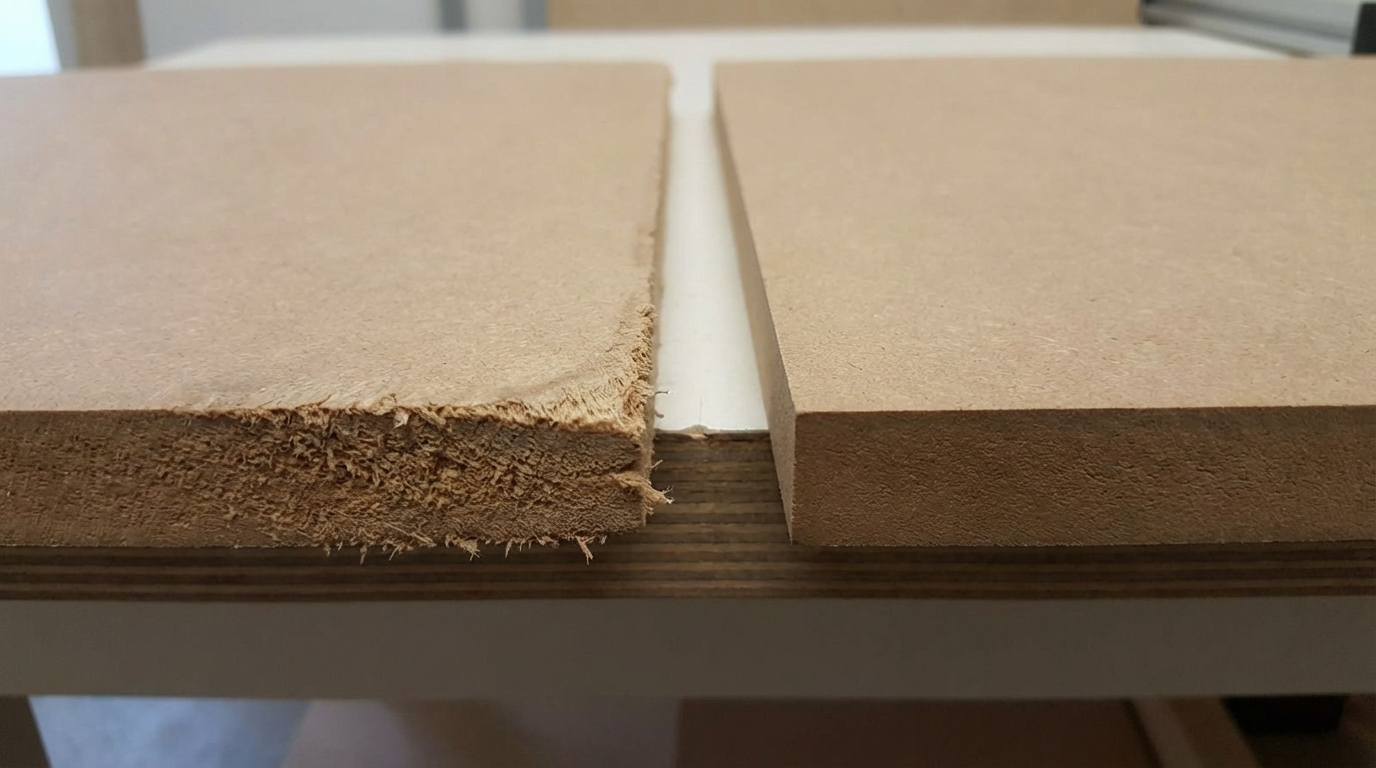
PVC or ABC 2mm thick, machine-applied pre-lam. Hand-glue fails in humidity. For CNC, zero-clearance blade prevents chipping. Monsoon-proofing: Double-band wet edges. Carpenters note 90% failures from thin paper bands.
MR or BWR for modular kitchens?
BWR carcass, MR shelves—balances cost/moisture. Indian modulars see 20% claims from MR bases. Spec 18mm BWR with PU polish. Architects favor this hybrid for 10-year durability without overkill pricing.
Does lamination make grade irrelevant?
No—protects surface, not core. Water wicks via edges/screws. In humid sites, laminated MR delams faster than bare BWR. Always seal; test by dripping water on joints. Real projects show unsealed laminates failing first.
Storage tips for monsoon delivery delays?
Horizontal stacks, 4-inch spacers, plastic cover loose. Avoid godown floors—capillary moisture ruins bottoms. In 2-week rains, unwrap daily for air. Coastal tip: Silica packs between sheets absorb vapor.
Screw holding: MR vs BWR difference?
BWR superior due to density—holds 20-30% tighter post-humidity. Use confirmat or Euro screws; pilot essential. Failures peak in wardrobe hinges; reinforce with blocks if low density suspected.
Can I paint MR/BWR directly?
Yes, after primer/sanding. BWR takes paint better, less telegraphing. Indian humidity warps paint on poor prep. Use MDF primer 2 coats; top acrylic enamel. Avoid oil paints—traps moisture.
Disclaimer: This content is provided for general informational purposes based on industry practices and publicly available information. Product specifications, standards, prices, and availability may vary by manufacturer, region, and time. Readers should independently verify details with manufacturers, dealers, or qualified professionals before making purchase or construction decisions.Want Plywood Suggestions?
Share a few details and a VIR MDF specialist will suggest suitable brands and connect you to responsive dealers.