Screw Holding in MDF: Best Screws, Pilot Holes, and Fixes for Stripped Holes
Stop screws from loosening in MDF. Learn pilot hole sizing basics, the right screw types, and simple repairs for stripped holes.
Quick Decision Summary
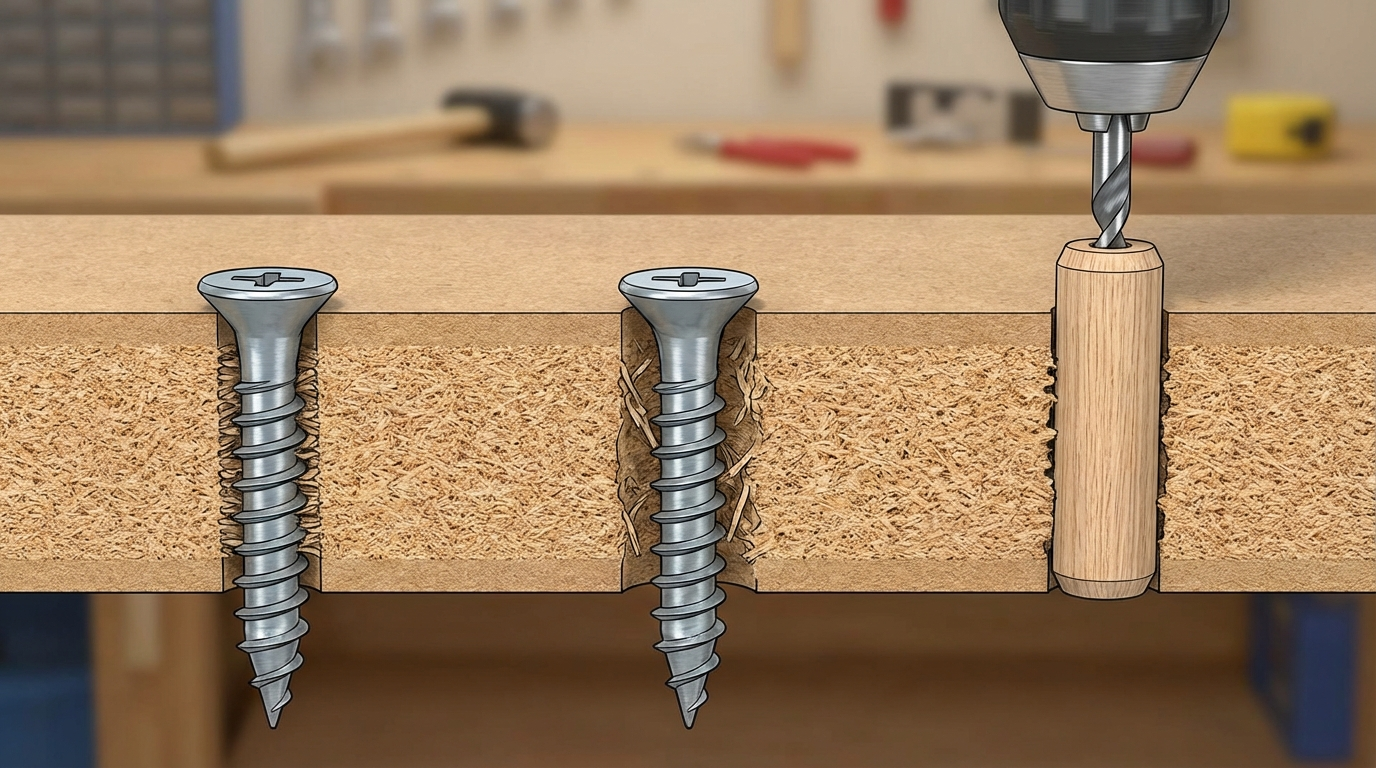
Use coarse-thread wood screws with pilot holes sized to 70-80% of the screw shank diameter for reliable holding in MDF.
If you’re in a hurry: Match screw length to 1.5 times the board thickness, pre-drill pilot holes slightly smaller than the shank (not the threads), and drive screws perpendicularly with a torque-limited driver. In humid Indian sites, opt for moisture-resistant MDF variants and seal edges. For stripped holes, insert glued toothpicks or matches, trim flush, and re-drill. This setup holds hinges and hardware firmly in wardrobes and cabinets without splitting or loosening over monsoons.
- Choose this if… building modular kitchens or wardrobes in dry interiors with standard carpenter tools.
- Avoid this if… using fine-thread metal screws or skipping pilots in edge screwing, as they strip quickly in particle-based MDF.
What Screw Holding in MDF Actually Is
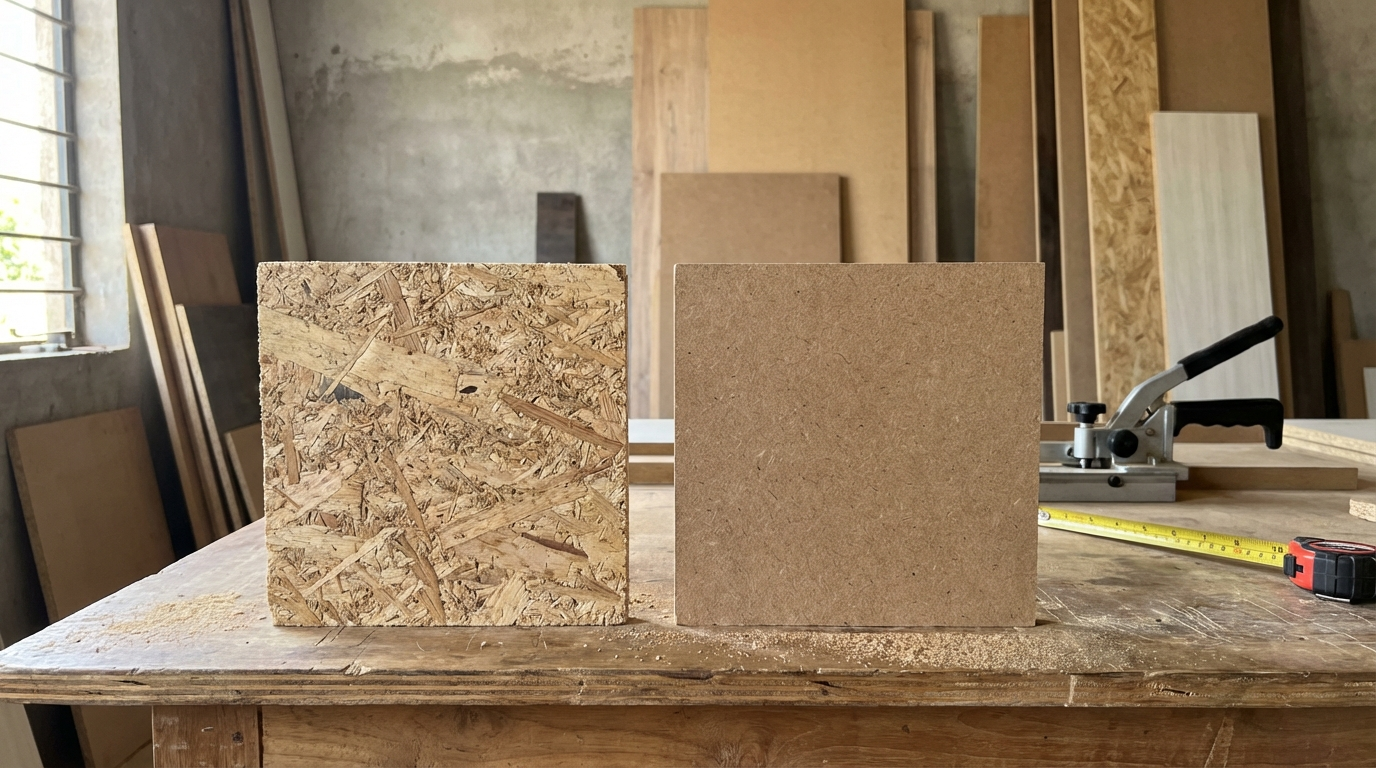
Screw holding refers to the grip strength between a screw and MDF fibers when fastening hardware like hinges, handles, or shelves. MDF, made from compressed wood fibers and resin, lacks the grain of solid wood, so screws rely on radial expansion into dense particles rather than deep wood bite.
This matters for assemblies like wardrobe shutters, TV units, or partitions where repeated open-close cycles stress joints. In pre-laminated or raw MDF, holding varies by density (typically 700-850 kg/m³), thickness (6-25mm), and screw type. Poor holding leads to loose fittings, wobbly doors, or total failure under load.
It fits workflows from CNC-cut modular panels to on-site carpenter builds, always needing pilot prep unlike plywood.
Why Screw Holding Matters in Indian Homes and Sites
In India, high monsoon humidity (70-90% RH) and coastal salt air cause MDF to swell at edges, compressing screw zones and loosening holds over 6-12 months. Site realities like poor storage (stacked sheets absorbing ground moisture) or delayed installations worsen this, leading to hinge failures in kitchens exposed to steam.
Practical fallout: Wardrobe doors sag, kitchen cabinets rattle during use, or office partitions shift. Workmanship gaps, like over-torqued screws by rushed carpenters, strip holes immediately. Strong holding ensures 5+ years of stability, vital for high-use areas amid variable climates from Mumbai coasts to Delhi dust.
How to Screw into MDF in 5 Steps
- Mark and measure: Align screw positions 25-40mm from edges to avoid blowout. Use 1.5x board thickness for length (e.g., 16mm MDF needs 25mm screws).
- Drill pilot hole: 70-80% shank diameter, full depth. Clear chips to prevent binding.
- Optional countersink: Shallow chamfer for flush heads in visible areas.
- Drive screw: Low speed, perpendicular, stop at snug (no stripping sound). Use fresh bits.
- Test hold: Tug hardware; re-fix if loose. Seal edges post-install.
Common failure: Skipping step 2 in humid boards, causing cracks during monsoon expansion.
What size pilot hole for #8 screws in MDF?
For #8 screws (4mm shank), drill 3-3.2mm pilot holes in standard MDF. This lets threads bite fibers without splitting. Direct answer: Measure shank with calipers; pilot at 75% that size. Nuance: Thicker boards (18mm+) need deeper pilots; coastal MDF variants may require 5% larger due to resin density. Check by test-driving one screw—easy entry, firm hold means right size. Next: Scale up/down proportionally (e.g., #6: 2.5mm pilot).
Can I screw directly into MDF without pilot holes?
No, direct screwing risks splitting and weak hold. Pilot holes channel force into threads. In India’s humid sites, unpiloted screws seize then strip as boards swell. Always pre-drill, especially edges. Test: Clamp scrap MDF, try both ways—piloted holds 2x longer under pull-out. For heavy loads, add washers or epoxy.
Best Screw Types for MDF
Coarse-thread wood screws outperform fine-thread or self-tappers in MDF due to better particle grip. Typically #6-#10 gauge, 16-50mm long, steel or coated for rust resistance in steamy kitchens.
Trade-offs: Wood screws hold statically well but may loosen under vibration; confirm pull-out by hand-test. Avoid drywall screws—they strip fast in fibers.
| Screw Type | Thread Style | Best For | India-Site Fit | Drawbacks |
|---|---|---|---|---|
| Coarse Wood Screw | Wide, deep threads | Hinges, shelves | Monsoon hold; economical | Slower drive |
| Particleboard Screw | Self-tapping coarse | Cabinets, edges | Quick in humid boards | Costlier per dozen |
| Fine Thread Machine | Narrow threads | Thin panels only | Dry interiors | Pulls out fast |
Are self-tapping screws better for MDF than wood screws?
Self-tapping particleboard screws excel for speed and edge hold in MDF. They cut their path, reducing splits. Typically stronger initial grip than wood screws. However, in swollen monsoon MDF, wood screws’ deeper bite lasts longer. Choose self-tappers for carpenter workflows; verify by torque test. Step: Buy packs labeled for composites.
Pilot Hole Sizing Basics
Pilot diameter = 70-85% shank for shank grip, full screw length minus 5mm. Use twist bits; brad-point for clean entry. In 18mm MDF, #8 screw pilot: 3.1mm.
Humidity note: Coastal boards need tighter pilots (75%) as resins soften.
How deep should pilot holes be in MDF?
Pilot full screw length minus head embed (5-10mm). Ensures even thread engagement. Too shallow: Surface split. In India sites, dust-filled shallow holes weaken further. Measure: Screw minus 1 thread depth. Check: Probe with wire; clean voids before screwing.
Fixes for Stripped Screw Holes in MDF
For stripped holes: Fill with glued wooden toothpicks (3-5), dry 1hr, trim, re-drill. Alternative: Matchsticks or dowel plugs. For multiples, use larger screws or epoxy anchors.
Prevention: Correct pilot first time. In wardrobes, reinforce with backing blocks.
What to do if a screw hole strips in MDF during installation?
Stop, remove screw, insert 3-4 glued toothpicks, snap flush, re-pilot smaller. Holds 80% original strength. If mid-job, switch to adjacent spot if possible. India tip: Quick-dry glue for humid sites. Test pull-out before hardware fit.
Failure Modes and Fixes
- Symptom: Screw pulls out easily. Cause: Undersized pilot or fine threads. Prevent: 75% shank pilot, coarse screws. Fix: Toothpick method.
- Symptom: Edge splitting. Cause: Screws too near edge (<25mm). Prevent: Mark 30mm inset. Fix: Fill crack with MDF dust+glue, clamp.
- Symptom: Loosening after monsoon. Cause: Swell compresses hole. Prevent: Edge-seal pre-install. Fix: Larger screw or nut-plate.
- Symptom: Head sinks unevenly. Cause: Over-torque. Prevent: Clutch driver at 5Nm. Fix: Countersink repair.
- Symptom: Rust around screws. Cause: Uncoated steel in kitchens. Prevent: Zinc-coated. Fix: Remove, clean, replace.
- Symptom: Hinge wobble post-install. Cause: Multi-hole mismatch. Prevent: Template jig. Fix: Shim or epoxy.
Decision Framework: Screw Choices by Conditions
| Condition | Recommended Screw/Method | Verify/Checks |
|---|---|---|
| Wet zone (kitchen) | Coarse self-tapper, 80% pilot, edge seal | Density >750kg/m³, test swell |
| Coastal humidity | Coated wood screw, toothpick backups | MR grade MDF, glue test |
| Heavy use (wardrobe) | #10 coarse, backing blocks | Pull-out test on scrap |
| Tight budget | Standard wood screw, precise pilot | Buy in bulk, bit sharpness |
| Fast delivery/CNC | Self-tapper, auto-pilot drill | Batch consistency |
| High scratch risk | Countersunk head, lam surface | Flush drive test |
Common Mistakes When Screwing into MDF and How to Avoid
- Mistake 1: No pilot—splits edge. Avoid: Always drill.
- Mistake 2: Wrong pilot size—loose/stuck. Avoid: Caliper measure.
- Mistake 3: Screws too long—blowout. Avoid: 1.5x thickness rule.
- Mistake 4: Over-driving—strips. Avoid: Low torque.
- Mistake 5: Edge screwing without clamp—cracks. Avoid: Reinforce.
- Mistake 6: Ignoring humidity—post-loosen. Avoid: Seal first.
- Mistake 7: Fine screws—poor grip. Avoid: Coarse only.
- Mistake 8: Reusing stripped holes—no fill. Avoid: Toothpick fix.
- Mistake 9: Dusty holes—weak bond. Avoid: Blow clean.
- Mistake 10: Uneven angles—wobble. Avoid: Square jig.
Quality Checks You Can Do Without Lab Tests
Before buying: Ask density, MR grade for coasts; tap sheet—dull thud means good compaction. Red flag: Soft edges.
After cutting: Screw test on scrap—firm tug hold. Check edge chips; minimal means machinable.
After install: Load-test doors; no play. Inspect for swelling post-monsoon.
How to test screw holding strength on-site?
Tug hardware with 5-10kg pull; no movement passes. Use scrap: Install 4 screws, pry bar test. In India, simulate monsoon by damp cloth overnight, re-test. Strong hold resists 20% swell.
Tips for Homeowners
Do: Clean spills immediately to avoid water rings loosening screws. Don’t overload shelves beyond 10kg/m. Inspect hinges yearly, tighten if needed. Use coasters in humid homes.
Tips for Carpenters
Cut with zero-clearance blade for clean edges. Pre-drill all, use magnetic bits. In monsoons, store vertical. Hinge zones: Double-screw reinforce.
Tips for Architects and Designers
Spec 18mm+ for cabinets, MR in wet zones. Detail edge bands pre-screw. Allow 2mm expansion gaps coastal.
Tips for OEM and Modular Makers
Standardize pilot jigs for repeatability. QC: 10% batch pull-tests. Reduce complaints with pre-sealed panels.
Does MDF screw holding improve with glue?
Yes, PVA glue in pilot boosts 30-50% hold. Apply sparingly before screw. Ideal for permanent fixes like shelves. Avoid excess—messy. Test: Glued vs dry scrap; glued resists twist better in vibration.
FAQs
Why do screws loosen faster in MDF than plywood?
MDF’s uniform fibers lack plywood’s layered grain for grip, so threads crush particles under cycle loads. In Indian homes, humidity swells MDF 5-8%, widening holes. Plywood resists via cross-plies. Solution: Coarse screws and pilots maintain bite. Homeowners see this in wardrobes after 1 year; carpenters fix by anchors. Always edge-seal MDF for parity.
What screws hold best in 18mm MDF for kitchen cabinets?
#8-#10 coarse-thread wood or particleboard screws, 25-30mm long. They embed fully without piercing opposite side. Match to hinge weight; test pull-out. In steamy kitchens, coated versions prevent rust. Varies by density—higher needs tighter pilots. Check carpenter demo on scrap before full job.
Can I use metal screws in MDF?
Coarse machine screws work if piloted precisely, but wood screws grip better long-term. Metal suits thin inserts. Avoid fine sheet-metal types—they strip. In coastal areas, galvanize to fight corrosion. Trade-off: Metal faster but weaker in fibers. Verify with torque meter if available.
How to prevent screw stripping during monsoon?
Seal all edges with wax or paint pre-install, use MR MDF, and pilot 5% larger. Store sheets flat-covered. Humidity expands fibers, stripping threads. Post-monsoon, check and toothpick loose ones. This extends life 2x in Mumbai-like conditions versus untreated.
Is there a maximum number of screws per MDF panel?
No hard max, but space 50-75mm apart to avoid weakening zones. Over 20% coverage risks blowout. In partitions, cluster reinforces. Test load distribution; heavy shelves need 8+ per end. India sites: Factor carpenter spacing habits.
What if I need to remove and re-screw in MDF?
Pre-plan extra holes or use nut-plates for reusables like shelves. Toothpick fill works once; repeat weakens. For hinges, epoxy thread-locker. Architects spec removable zones. Humidity accelerates wear—limit cycles to 3.
Do laminated MDF surfaces affect screw holding?
Laminate adds compression layer, slightly reducing grip—drill through carefully. Countersink under paper. No major drop if piloted right. Finishes crack if over-torqued. Seal post-screw. Common in wardrobes; holds fine with care.
Should I use washers with screws in MDF?
Yes, for large heads distributing load on soft surfaces. Prevents dimpling in cabinets. Plastic over metal for scratches. Boosts hold 20%. Essential high-use; skip light-duty. Coastal: Rust-proof washers.
How much weight can MDF screws hold typically?
Single #8 coarse screw: 20-40kg pull-out in 18mm MDF, drops 20% edges. Varies by density, pilot. Wardrobe hinge: 4 screws handle 50kg door. Test scraps; factor safety x2 for monsoons. Not for hanging loads.
Disclaimer: This content is provided for general informational purposes based on industry practices and publicly available information. Product specifications, standards, prices, and availability may vary by manufacturer, region, and time. Readers should independently verify details with manufacturers, dealers, or qualified professionals before making purchase or construction decisions.Want Plywood Suggestions?
Share a few details and a VIR MDF specialist will suggest suitable brands and connect you to responsive dealers.