Sunmica Laminate – Complete Guide for Indian Buyers
Research-backed sunmica laminate breakdown with pros/cons, tables, and a clear decision checklist for Indian buyers and carpenters.
Note: This is independent informational content and is not affiliated with any manufacturer.
Quick Decision Summary
Best answer in one line: Sunmica is a branded high-pressure decorative laminate widely used in India to finish furniture surfaces, offering durability and design variety at moderate cost.
If you're in a hurry: Sunmica laminates work well for kitchen shutters, wardrobes, tables, and wall panels in most Indian homes. They resist scratches, stains, and moderate heat better than paint or veneer. For wet zones like kitchen counters near sinks, ensure edges are properly sealed. In coastal or high-humidity areas, combine with moisture-resistant substrates and avoid storing sheets in damp conditions before installation.
- Choose this if: You want a cost-effective, low-maintenance decorative finish with hundreds of colour and texture options for furniture, cabinets, or wall panels.
- Avoid this if: You need outdoor exposure, heavy impact resistance, or are working with curved surfaces requiring tight radius bending without post-forming grades.
What Sunmica Laminate Actually Is
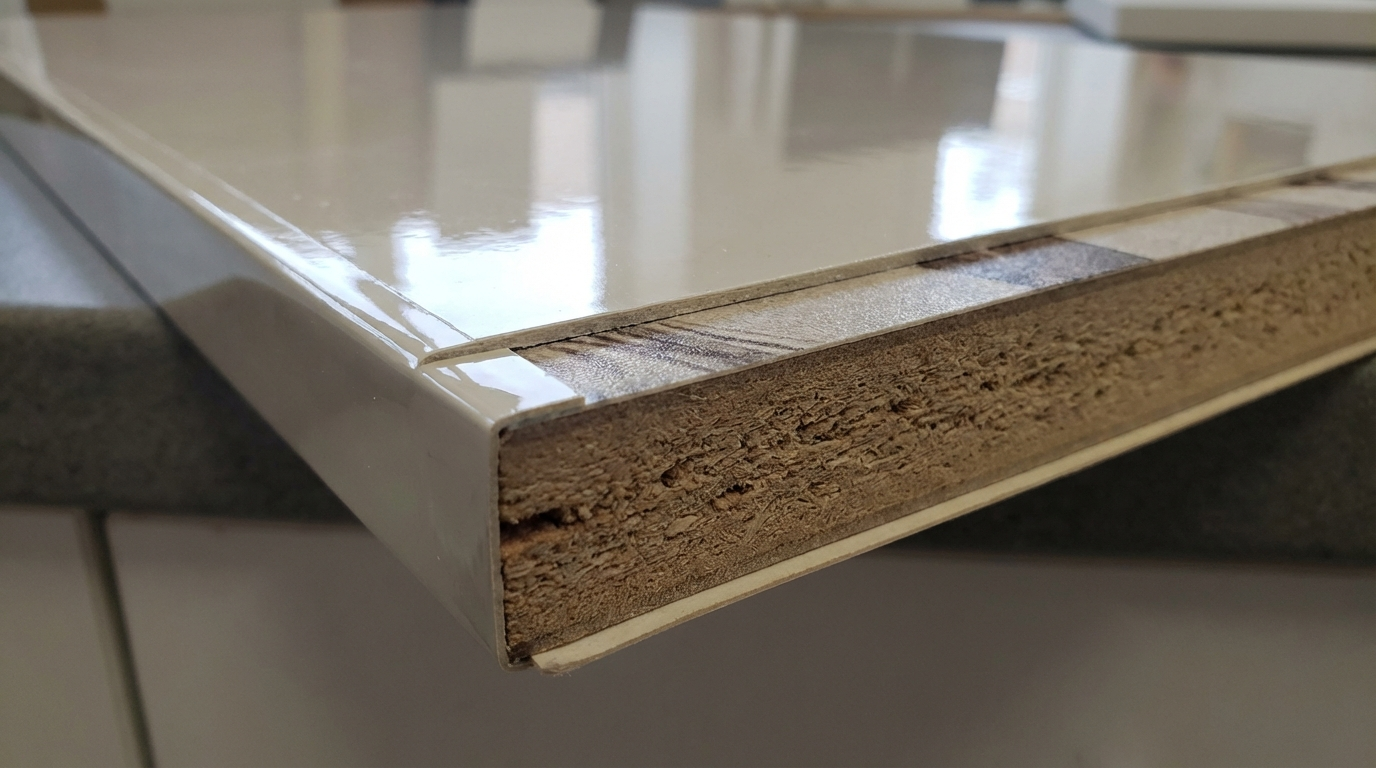
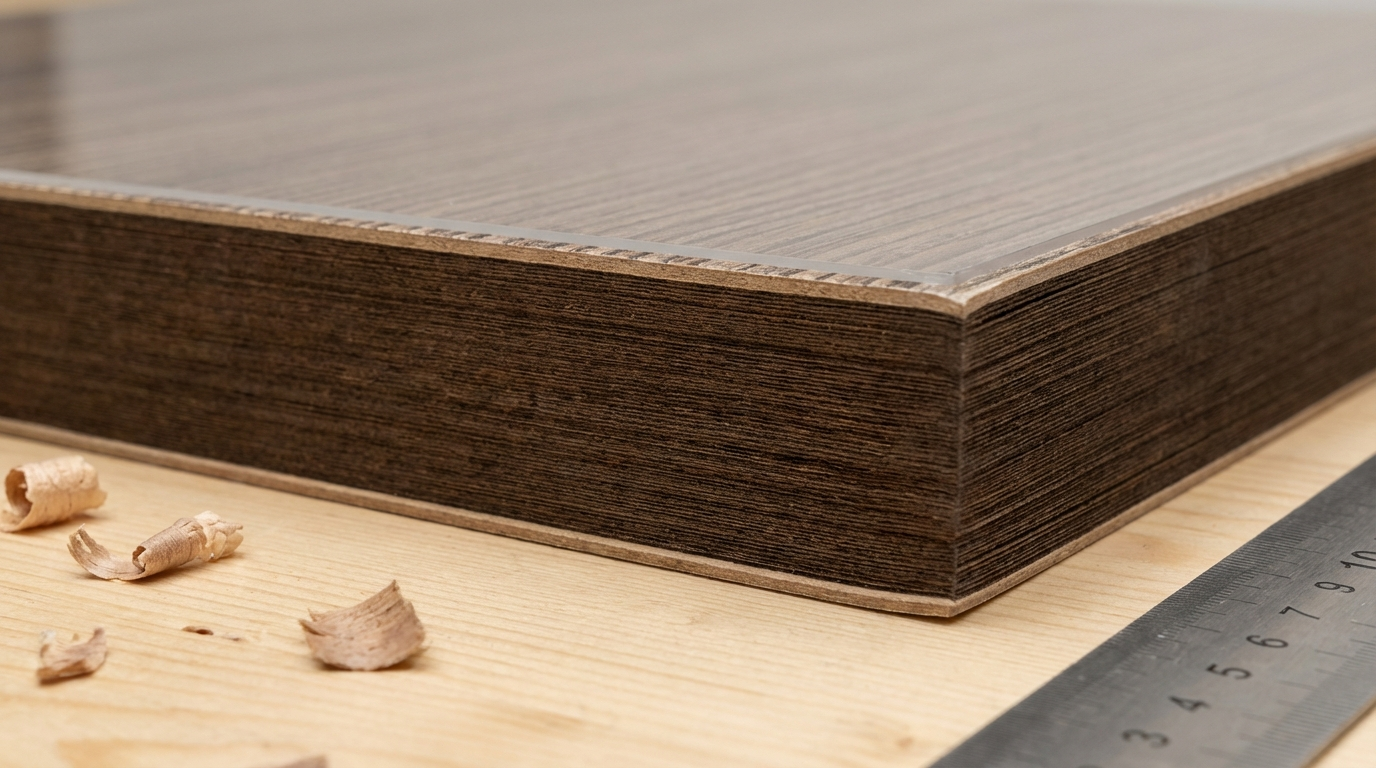
Sunmica is a brand name for high-pressure laminates (HPL) that became so popular in India that the term is now used generically for decorative laminate sheets. The actual product is manufactured by bonding multiple layers of kraft paper impregnated with phenolic resin, topped with a decorative paper layer and a melamine resin overlay, all compressed under high heat and pressure.
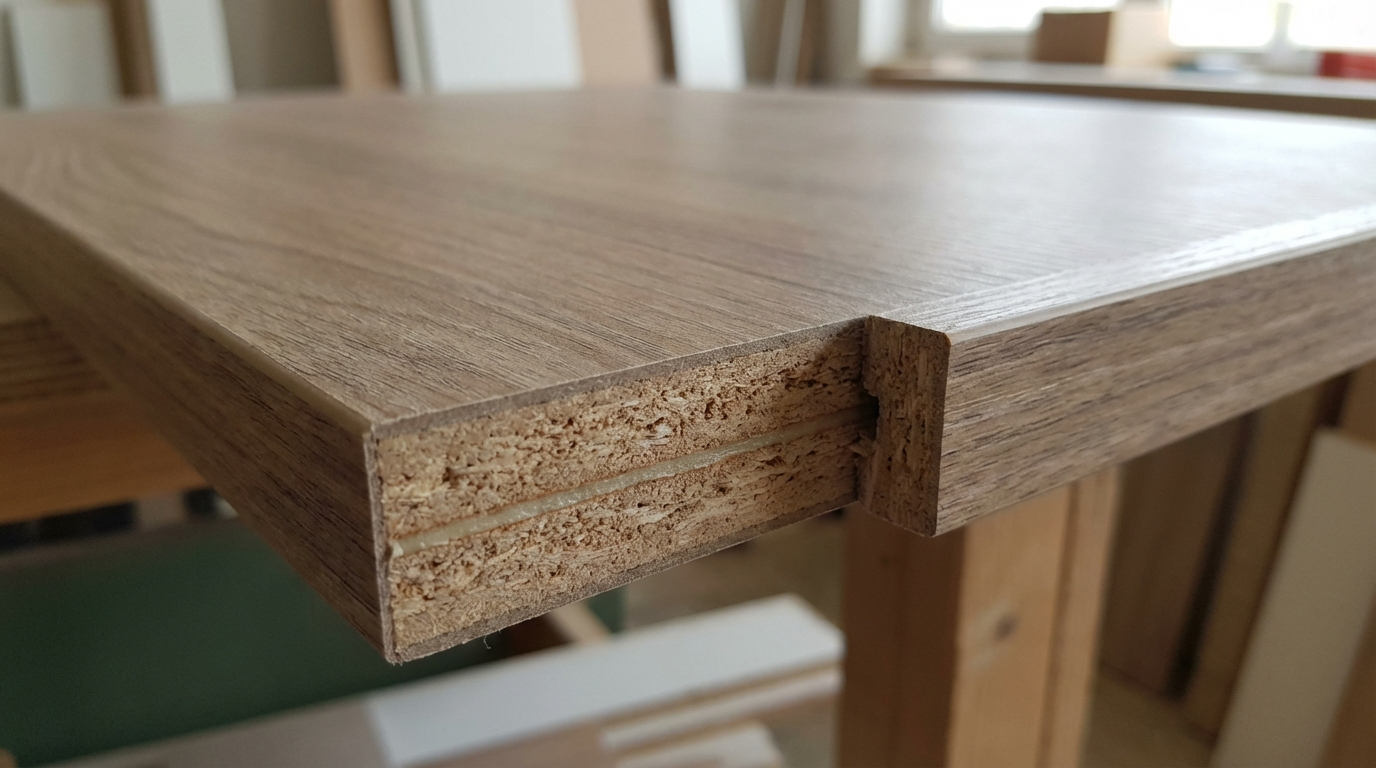
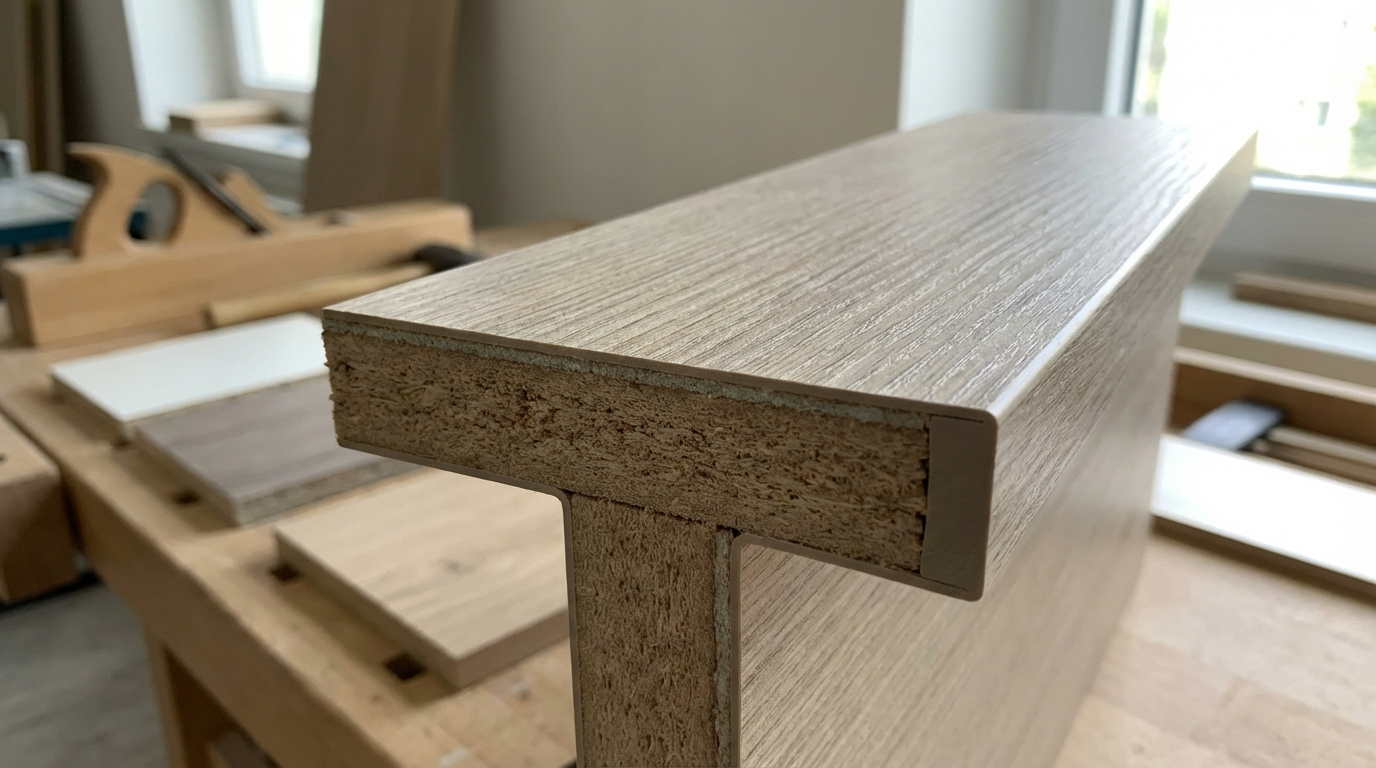
The resulting sheet—typically 0.6mm to 1.5mm thick—is then adhesive-bonded onto substrates like plywood, MDF, particle board, or block board to create finished furniture surfaces. Sunmica is not a standalone structural material; it always requires a substrate underneath.
How is sunmica different from other laminate types?
Sunmica refers specifically to high-pressure laminates (HPL), which are denser and more durable than low-pressure laminates (LPL) used in pre-laminated boards. HPL sheets are applied separately using adhesive, while LPL is factory-bonded during board manufacturing. HPL offers better scratch resistance, heat tolerance, and design flexibility but requires skilled application. Pre-laminated MDF or particle board with LPL is faster to use but offers fewer design choices and lower surface durability. For demanding applications like kitchen counters or high-traffic furniture, HPL sunmica is typically preferred over LPL finishes.
Why Sunmica Matters in Indian Homes and Sites
Indian conditions create specific challenges for furniture finishes. Monsoon humidity can reach 85-95% in coastal and eastern regions, causing substrate expansion if edges are unsealed. Summer temperatures in many cities exceed 40°C, testing heat resistance near cooking zones. Dust accumulation requires surfaces that clean easily without scratching.
Sunmica addresses these conditions reasonably well. The melamine surface resists staining from turmeric, oil splashes, and everyday spills. Scratch resistance helps maintain appearance despite regular cleaning. Heat tolerance (up to approximately 140°C for brief contact) handles hot vessels better than paint or PU finishes.
However, sunmica's weakness is its edges and the substrate underneath. The laminate itself may resist moisture, but if water penetrates through unsealed edges or poorly applied adhesive, the substrate swells and the laminate delaminates. This is why edge banding quality and substrate selection matter as much as the laminate choice itself in Indian conditions.
Does sunmica work in coastal cities with high humidity?
Sunmica can work in coastal cities, but substrate selection and edge sealing become critical. The laminate surface itself resists humidity well, but the plywood or MDF underneath absorbs moisture through exposed edges or backs. In Mumbai, Chennai, Kolkata, or Kerala, use marine plywood or HDFWR as substrates, apply PVC edge banding with proper adhesive coverage, and ensure backs of cabinets are also sealed or laminated. Store laminate sheets horizontally in dry areas before installation—never lean them against damp walls. Check for warping before application.
Types of Sunmica Laminates Available in India
Understanding laminate types helps match the right product to your application. Thickness, finish, and special properties all affect performance and cost.
Thickness variations and their uses
| Thickness | Common Name | Typical Applications | Notes |
|---|---|---|---|
| 0.6mm–0.8mm | Decorative/Economy | Vertical surfaces, wall panels, wardrobe interiors | Lower cost, adequate for low-abuse areas |
| 1.0mm | Standard | Kitchen shutters, wardrobes, furniture tops | Most common choice, balances cost and durability |
| 1.25mm–1.5mm | Premium/Heavy-duty | Countertops, tabletops, commercial furniture | Better impact resistance, slightly harder to work with |
Finish types and where to use them
| Finish Type | Characteristics | Best For | Caution |
|---|---|---|---|
| Glossy | High shine, reflective | Modern kitchens, entertainment units | Shows fingerprints, scratches visible |
| Matte | Non-reflective, subtle | Wardrobes, offices, bedrooms | May show smudges in dark colours |
| Textured | Wood grain, leather, stone patterns | Living room furniture, accent walls | Texture traps dust, needs proper cleaning |
| Anti-fingerprint | Special coating resists marks | High-touch areas, handles, shutters | Higher cost, verify actual performance |
| Metallic | Metal-like appearance | Accent panels, commercial spaces | Scratches very visible on reflective surface |
Price Range and Cost Drivers
Sunmica laminate prices in India typically range from ₹600 to ₹2,500 per sheet (standard 8ft × 4ft size), depending on thickness, finish, brand positioning, and design complexity. Digital print laminates with intricate patterns cost more than solid colours. Specialty laminates with anti-bacterial or fire-retardant properties command premium pricing.
What factors affect sunmica sheet prices?
Several factors determine the final cost you pay. Thickness directly impacts price—1.0mm sheets cost 15-25% more than 0.8mm equivalents. Finish type matters: glossy and textured laminates typically cost more than matte solid colours. Brand positioning creates price tiers, though actual performance differences between mid-range and premium brands may be modest for typical residential use. Location affects logistics costs—prices in tier-2 cities may include higher transport margins. Bulk purchases (10+ sheets) often get 5-10% discounts. Always compare per-sheet prices rather than per-square-foot quotes to avoid confusion.
Budget estimation example: Kitchen shutters
For a modular kitchen with approximately 25 square feet of shutter area:
- Laminate requirement: 2-3 sheets (accounting for 15-20% cutting wastage)
- Mid-range 1.0mm laminate: ₹1,000-1,400 per sheet
- Estimated laminate cost: ₹2,500-4,200
- Add: Adhesive (₹300-500), edge banding (₹800-1,500), labour (₹1,500-3,000)
- Total laminate finishing cost: ₹5,100-9,200
This excludes substrate (plywood/MDF) costs. Substrate typically costs 2-3 times the laminate finishing cost.
How to ask for a quote checklist
- Specify exact thickness required (0.8mm, 1.0mm, or 1.25mm)
- Mention finish type (glossy, matte, textured)
- Ask for price per sheet, not per square foot
- Clarify if price includes GST
- Ask about minimum order quantity for specific designs
- Confirm delivery charges separately
- Request sample chips before bulk ordering
Practical Use Cases: What Works and What Fails
| Application | Recommended Thickness | Finish Notes | Risk Factors |
|---|---|---|---|
| Kitchen shutters | 1.0mm | Matte or anti-fingerprint preferred | Heat damage near hob, steam near sink |
| Kitchen countertops | 1.25mm–1.5mm | Textured hides scratches better | Hot vessel burns, knife cuts, water pooling at edges |
| Wardrobes external | 0.8mm–1.0mm | Matte shows fewer fingerprints | Handle zone wear, hinge area stress |
| Wardrobe interiors | 0.6mm–0.8mm | Light colours preferred | Moisture from clothes, shelf edge wear |
| TV units | 1.0mm | Glossy popular but scratches visible | Cable hole edges need sealing |
| Wall panels | 0.8mm–1.0mm | Textured adds depth | Adhesive failure on uneven walls |
| Office tables | 1.0mm–1.25mm | Matte practical for daily use | Edge wear from arm contact |
| Study tables | 1.0mm | Light matte finishes | Writing pressure, pen marks |
Can sunmica be used for bathroom vanities?
Sunmica can be used for bathroom vanity shutters and counters, but with significant precautions. The laminate surface handles splashes well, but bathrooms have sustained humidity that attacks substrates through any unsealed gap. Use marine plywood or HDFWR as substrate, never standard MDF. Apply laminate to all six sides of each component, including backs and undersides. Use PVC edge banding with hot-melt adhesive ensuring no gaps. Keep the vanity elevated from the floor to avoid water pooling contact. Install exhaust ventilation to reduce ambient humidity. Even with these measures, expect shorter lifespan than in dry areas.
Decision Framework: Choosing the Right Laminate for Your Conditions
| Condition/Requirement | Recommended Choice | What to Verify |
|---|---|---|
| Wet zone (kitchen sink area, bathroom) | 1.0mm+ thickness, HDFWR/marine ply substrate | Edge banding coverage, back panel sealing |
| Coastal/high humidity location | Any thickness, but substrate must be BWP grade | Storage conditions before installation, no pre-warping |
| Heavy daily use (commercial, kids' rooms) | 1.0mm–1.25mm, textured finish | Scratch resistance claims, edge reinforcement |
| Tight budget | 0.8mm solid colours, particle board substrate | Avoid wet zones, seal all edges anyway |
| Fast project turnaround | Pre-laminated boards instead of HPL application | Limited design options, verify surface quality |
| High scratch risk (keys, bags, heavy items) | Textured finish, darker mid-tones | Avoid glossy black or white in high-abuse zones |
| Heat exposure (near hob, oven) | Keep laminate 6+ inches away, use backsplash | No laminate directly behind gas burners |
| Design-focused (accent walls, feature furniture) | Premium textured or digital print laminates | Sample approval in actual room lighting |
Common Buyer Mistakes and How to Avoid Them
Avoiding these errors saves money and prevents premature furniture failure:
- Choosing based on showroom lighting alone: Colours look different under tube lights versus natural daylight. Request samples and view them in your actual space before ordering bulk quantities.
- Ignoring substrate quality to save money: A premium laminate on poor-quality plywood or particle board fails faster than mid-range laminate on good substrate. Allocate 60% of budget to substrate, 40% to finishing.
- Skipping edge banding on "hidden" edges: Moisture enters through any exposed edge, even inside cabinets. All edges need sealing in Indian humidity conditions.
- Storing sheets vertically before use: Vertical storage causes warping. Store laminate sheets flat, stacked horizontally, in dry areas away from walls.
- Not accounting for wastage: Standard 8×4 sheets lose 15-25% in cutting. Order accordingly rather than calculating exact coverage only.
- Using wrong adhesive: Fevicol SH or equivalent synthetic resin adhesive works for laminates. Don't use white glue, rubber-based adhesive, or diluted products.
- Applying laminate to uneven surfaces: Bumps and dips show through thin laminates. Sand and level substrate before application.
- Rushing pressure application: After adhesive application and positioning, apply consistent pressure using roller or press for proper bonding. Air pockets cause later delamination.
- Ignoring grain direction: Wood-grain textured laminates should run consistently across cabinets (usually horizontal for modern look). Mismatched grain direction looks unprofessional.
- Not verifying batch consistency: Sheets from different manufacturing batches may have slight colour variations. Order all sheets for one project from same batch and verify before cutting.
Failure Modes and Fixes
Edge swelling and delamination
Symptom: Laminate lifting at corners and edges, substrate visibly swollen underneath.
Root cause: Water penetration through unsealed edges or inadequate adhesive coverage at perimeter.
Prevention: Apply adhesive to full surface including edges. Use proper edge banding with hot-melt adhesive. Seal backs of cabinets.
If already happening: Cut away damaged section if localised. For widespread damage, replacement is more practical than repair. Address moisture source before reinstalling.
Surface scratches and scuff marks
Symptom: Visible light scratches, especially on glossy dark surfaces.
Root cause: Abrasive cleaning materials, dragging objects across surface, or inadequate scratch resistance for application.
Prevention: Choose textured or matte finishes for high-use areas. Use soft cloths for cleaning. Place mats under heavy objects.
If already happening: Minor scratches can be minimised with laminate polish (temporary). Deep scratches cannot be repaired—only panel replacement helps.
Heat damage and burn marks
Symptom: White marks, bubbling, or discolouration near cooking areas.
Root cause: Direct contact with hot vessels exceeding laminate heat tolerance, or proximity to gas flames.
Prevention: Use trivets for hot items. Keep laminate surfaces 6+ inches from gas burners. Use heat-resistant materials (stone, steel) for areas directly behind hobs.
If already happening: Damage is permanent. Replace affected panel or cover with decorative element if localised.
Air bubbles under laminate
Symptom: Raised areas that may feel hollow when tapped.
Root cause: Inadequate pressure during application, uneven adhesive spread, or contaminated substrate surface.
Prevention: Clean substrate thoroughly. Apply adhesive evenly. Use roller or J-roller with consistent pressure across entire surface. Work from centre outward.
If already happening: Small bubbles can sometimes be fixed by injecting adhesive with syringe and pressing. Large bubbles require panel removal and reapplication.
Yellowing or fading
Symptom: White or light-coloured laminates turning yellowish over time.
Root cause: UV exposure from direct sunlight, chemical exposure from harsh cleaners, or low-quality laminate.
Prevention: Avoid direct sunlight on light laminates. Use pH-neutral cleaners only. Choose reputable laminate brands for light colours.
If already happening: Yellowing is irreversible. Consider replacing with UV-resistant laminates for sun-exposed areas.
Edge chipping during cutting
Symptom: Laminate chips along cut edges, leaving rough or jagged finish.
Root cause: Wrong blade type, incorrect cutting direction, or forcing the cut too fast.
Prevention: Use fine-toothed laminate blade. Cut with decorative side up for hand tools, decorative side down for table saws. Score line first with knife for cleaner break.
If already happening: Hide behind edge banding. For visible edges, use laminate file to smooth, then apply matching edge tape.
Quality Checks You Can Do Without Lab Tests
Before buying
- Visual inspection: Check for consistent colour across sheet, no surface scratches or marks, uniform texture pattern
- Edge check: Examine sheet edges for layering defects, chips, or separation between layers
- Flatness test: Sheet should lie flat without warping—check corners don't lift when placed on flat surface
- Batch verification: Compare sheets from same order for colour consistency; request all from same batch
- Storage conditions: Observe how dealer stores sheets—flat, dry, covered indicates better quality preservation
- Sample comparison: Compare actual sheet to sample chip you approved—colours can vary between batches
After cutting
- Edge quality: Clean cut without chipping indicates proper blade and technique used
- Core visibility: Brown kraft paper layers should be uniform, not separated or showing voids
- Flexibility test: Sheet should bend slightly without cracking; excessive rigidity or flexibility both indicate problems
- Smell check: Strong chemical odour after cutting suggests high formaldehyde content—ensure adequate ventilation
After installation
- Tap test: Tap across surface listening for hollow sounds indicating air pockets or poor adhesion
- Edge inspection: Run finger along edges checking for lifting, gaps in edge banding, or exposed substrate
- Alignment check: Patterns should align across adjacent panels if designed to match
- Light reflection: On glossy surfaces, check reflection for waves or distortions indicating uneven substrate
- Cleaning test: Wipe with damp cloth; surface should clean easily without streaking or water absorption
Working with Sunmica: Role-Specific Tips
For homeowners: Durability and cleaning guidelines
Do:
- Wipe spills immediately, especially acidic substances like lemon juice or tomato
- Use soft microfibre cloths for daily cleaning
- Place mats under heavy decorative items to prevent scratches
- Use trivets for hot vessels, even for brief placement
- Keep silica gel packets in closed cabinets during monsoon months
- Ensure bathroom and kitchen exhaust fans work properly to reduce humidity
Don't:
- Use abrasive scrubbers or steel wool
- Apply bleach, acetone, or harsh chemical cleaners
- Place hot pans directly from stove onto laminate surfaces
- Ignore small chips at edges—seal immediately to prevent moisture entry
- Hang wet towels directly on laminate furniture surfaces
For carpenters: Fabrication best practices
- Cutting: Use 80+ tooth TCT blade for clean cuts. Score decorative side first with utility knife for hand-cutting. Support sheet fully to prevent cracking
- Edge preparation: File cut edges smooth before banding. Remove any laminate chips that could create gaps under edge tape
- Adhesive application: Apply to both surfaces (contact cement method). Allow proper tack time (follow manufacturer instructions). Work in ventilated area
- Positioning: Use alignment sticks or kraft paper slip-sheet method. Once contact cement touches, repositioning is impossible
- Pressing: Roll from centre outward with J-roller. Apply consistent pressure. Pay extra attention to edges and corners
- Hinge and fastener areas: Pre-drill pilot holes through laminate to prevent cracking. Use cup hinges that don't require edge screws through laminate surface
- Handling: Carry sheets vertically with two people. Never drag across floor. Stack flat between jobs
For architects and interior designers
- Specification writing: Specify thickness, finish type, and edge treatment in detail. Reference IS 2046 for HPL standards if needed
- Wet zone detailing: Draw edge banding requirements, back panel treatments, and ventilation provisions explicitly
- Pattern matching: For book-matched or continuous grain effects, specify requirement upfront—affects sheet quantity and cost
- Colour approval process: Include sample approval stage with viewing in actual project lighting conditions
- Interface details: Specify how laminate meets other materials (stone, metal, glass) with proper reveals or edge profiles
- Mock-up requirement: For large projects, require one complete unit mock-up approval before mass production
For OEM and modular furniture manufacturers
- Incoming quality control: Check every sheet batch for colour consistency, warping, and surface defects before acceptance
- Storage protocol: Climate-controlled storage preferred. FIFO (first-in-first-out) inventory system prevents aged stock
- Cutting optimisation: Use nesting software to minimise wastage—target under 18% waste for rectangular components
- Edge banding line: Calibrate temperature and speed settings for each laminate type. Hot-melt adhesive quality matters
- QC checkpoints: Surface inspection after cutting, edge banding quality after banding, adhesion test after assembly
- Returns prevention: Most laminate-related complaints stem from edge issues—invest in edge banding quality over laminate premium grades
- Documentation: Maintain batch records linking sheet batches to finished units for traceability if issues emerge
Comparison: Sunmica vs Other Surface Finishes
| Parameter | HPL (Sunmica) | Pre-laminated Board | PU Paint | Acrylic Finish | Natural Veneer |
|---|---|---|---|---|---|
| Initial cost | Medium | Low-Medium | Medium-High | High | High |
| Scratch resistance | Good | Moderate | Good | Excellent | Poor |
| Moisture resistance | Good (surface) | Moderate | Good | Excellent | Poor |
| Design variety | Excellent | Limited | Any colour | Limited | Natural only |
| Repair possibility | Difficult | Difficult | Possible | Difficult | Possible |
| Installation speed | Slow (skilled labour) | Fast | Slow (drying time) | Slow | Slow |
| Best for | Most residential furniture | Budget projects | Custom colours | Luxury modern | Traditional premium |
When should you choose sunmica over acrylic or PU finish?
Choose sunmica when you want design variety at moderate cost, need good scratch resistance for daily use, and have access to skilled carpenters. Sunmica offers hundreds of patterns including realistic wood grains, stones, and abstract designs that PU paint cannot replicate and acrylic doesn't offer. For kitchens with heavy daily use, sunmica's scratch resistance outperforms many PU finishes. However, for seamless solid-colour modern looks or curved surfaces, PU paint works better. For ultra-modern high-gloss luxury finishes, acrylic may justify its premium. Base your choice on specific application, budget, and aesthetic priority rather than assuming one is universally better.
Design Ideas Grouped by Application
Kitchen designs
- Two-tone parallel kitchen: Dark wood-grain lower cabinets with light solid upper cabinets. 1.0mm matte finish. PVC edge banding matching dominant colour.
- All-white modern kitchen: White glossy or matte laminates. Anti-fingerprint finish recommended. Requires meticulous edge sealing against cooking steam.
- Warm wood-look L-shaped: Oak or walnut texture laminate. Horizontal grain alignment across shutters. Textured finish hides minor scratches.
- Industrial grey kitchen: Concrete-effect textured laminate. Pairs with exposed hardware. 1.0mm minimum for countertop-adjacent areas.
Wardrobe designs
- Floor-to-ceiling sliding: Light wood texture for small bedrooms (visually expands space). 0.8mm adequate for sliding shutters.
- Handle-less push-open: Solid colours with anti-fingerprint finish. Consistent grain direction if textured. Concealed hinges mandatory.
- Two-colour combination: Neutral base with accent colour on select shutters. Both laminates from same brand ensures colour harmony.
- Mirrored combination: Laminate shutters flanking mirror panels. Edge profile strips create clean transitions.
Living room and TV units
- Wall-mounted entertainment unit: Combination of open shelves (laminate inside) and closed cabinets. Cable management cutouts need sealed edges.
- Full wall panel with TV: Textured laminate panels with concealed TV mounting. Use 0.8-1.0mm on flat wall surfaces.
- Low console with storage: High-gloss finish for modern look, but accept that fingerprints and dust show more. Dark glossy surfaces need frequent cleaning.
Study and work areas
- Built-in desk with overhead storage: Matte light colours reduce eye strain. 1.0mm on desk surface for writing durability.
- Kids' study table: Bright colours or character-themed digital print laminates. Scratch-resistant textured finish handles rough use.
- Home office with open shelving: Subtle wood-grain laminate creates professional appearance. Plan wire management in design stage.
FAQs
What is the difference between sunmica and laminate?
Sunmica is actually a brand name that became so widely used in India that it now refers to laminates generically—similar to how Xerox became synonymous with photocopying. Technically, sunmica is a type of high-pressure laminate (HPL). When people say "sunmica" or "laminate" in the Indian context, they typically mean the same product: decorative sheets bonded to furniture surfaces. The term "mica" is also used colloquially for the same material. Different regions in India may prefer different terms, but the product and application remain identical regardless of naming.
How long does sunmica laminate last on furniture?
Well-installed sunmica on quality substrate typically lasts 10-15 years in normal residential use without significant degradation. Actual lifespan depends heavily on installation quality (especially edge sealing), substrate condition, usage patterns, and environmental exposure. Kitchen cabinets near cooking zones may show wear earlier due to heat and grease exposure. Wardrobes in air-conditioned bedrooms can last 15+ years. Furniture in coastal cities without proper humidity management may show edge issues within 5-7 years. The laminate surface itself is durable, but substrate failure (usually due to moisture) is the common limiting factor.
Can sunmica be applied over old laminate?
Applying new laminate over old laminate is possible but not recommended for several reasons. The increased thickness creates problems with hardware fitting, especially hinges and handles. Adhesion between two laminate surfaces is weaker than laminate-to-wood bonding. The old laminate may have hidden delamination that will affect the new surface. If you must overlay, sand the old laminate thoroughly to create texture for adhesion, and use contact cement designed for laminate-to-laminate bonding. For best results, remove old laminate completely, prepare the substrate fresh, and apply new laminate to clean wood surface.
Is sunmica waterproof?
The sunmica laminate surface is water-resistant—water beads on the surface and doesn't penetrate through the melamine layer. However, this is different from being waterproof as a complete system. Water can enter through unsealed edges, cut-outs, and the substrate's exposed surfaces. Once moisture reaches the substrate (plywood, MDF, or particle board), it causes swelling that pushes the laminate off. In practical terms, sunmica handles splashes and spills well if wiped promptly, but cannot withstand standing water or prolonged moisture exposure. For wet areas, edge sealing, substrate selection, and ventilation matter more than the laminate itself.
What is the best thickness for kitchen cabinets?
For kitchen cabinet shutters, 1.0mm thickness is the standard recommendation balancing cost, durability, and workability. Thinner 0.8mm laminates can work for budget kitchens but show substrate imperfections more readily and have slightly lower impact resistance. For countertops and breakfast bar tops where objects are placed and dragged regularly, 1.25mm or thicker provides better performance. Internal shelves and back panels can use 0.6-0.8mm since they face less abuse. The thickness decision should also consider substrate quality—premium thick laminate on poor plywood wastes money compared to standard laminate on quality plywood.
How do you remove scratches from sunmica?
Light surface scratches on sunmica can sometimes be minimised using laminate polish or automotive rubbing compound applied with soft cloth in circular motions. This fills and masks very fine scratches temporarily but doesn't repair them. Deeper scratches that catch your fingernail have penetrated the decorative layer and cannot be truly repaired—only hidden or accepted. Some people use matching furniture markers to colour-fill light scratches on wood-grain laminates. For glossy surfaces, even successful scratch reduction may create visible difference in sheen. Prevention remains better than cure: use soft cleaning materials, place mats under objects, and choose textured finishes for high-abuse areas.
Can sunmica be used on curved surfaces?
Standard sunmica sheets are rigid and cannot bend around tight curves without cracking. For curved applications, you need post-forming grade laminates specifically manufactured with flexibility for bending. Post-forming laminates can typically handle external curves down to 6-12mm radius when heated during application. Even post-forming grades cannot handle compound curves (curves in two directions simultaneously). For very tight curves or complex shapes, alternatives like thermoformed acrylic, veneers (which bend more easily), or painted surfaces work better. Always verify with the laminate supplier that their specific product supports your intended radius before purchase.
What adhesive works best for applying sunmica?
Synthetic resin adhesives (commonly called SR adhesives in India, like Fevicol SH) are the standard for HPL laminate application. Contact cement is another option that allows faster bonding but requires precise positioning since it bonds immediately on contact. For edge banding, hot-melt adhesives applied through edge banding machines provide the most reliable seal. Avoid white PVA glue (fevicol white), rubber-based adhesives, or diluted adhesive mixtures—these lack the bonding strength and moisture resistance needed. Apply adhesive to both surfaces (substrate and laminate back), allow proper open time as per product instructions, then press firmly and consistently across the entire surface.
How do you clean sunmica surfaces daily?
For daily cleaning, use a soft microfibre cloth dampened with plain water or mild soap solution. Wipe in the direction of any grain pattern if present. Dry with a clean cloth to prevent water spots, especially on glossy surfaces. For sticky residues, use a small amount of isopropyl alcohol on a cloth, then wipe clean with damp cloth. Avoid abrasive scrubbers, steel wool, or scouring powders that scratch the surface. Do not use bleach, acetone, strong acids, or alkaline cleaners—these can damage the melamine surface or cause discolouration. For textured laminates, occasional cleaning with soft brush helps remove dust from texture grooves.
Does sunmica laminate emit harmful chemicals?
HPL laminates contain formaldehyde in their resin composition, and some off-gassing can occur, particularly when sheets are new or freshly cut. Reputable manufacturers control formaldehyde emissions within safety standards (E1 or E0 emission classes). After installation and initial airing, emissions reduce significantly and typically fall below detectable levels for most people. During cutting or edge trimming, wear appropriate dust masks and ensure good ventilation. People with chemical sensitivities may notice odours initially—allowing new furniture to air out for several days before using enclosed spaces helps. For children's furniture or sensitive applications, specify low-emission (E0 class) products.
What is the difference between glossy and matte sunmica finishes?
Glossy finishes have a reflective, shiny surface that creates a modern, premium look and makes colours appear more vivid. However, glossy surfaces show fingerprints, dust, smudges, and scratches more visibly, requiring frequent cleaning. Matte finishes have a non-reflective surface that hides fingerprints and minor scratches better, offering more practical daily usability. Matte finishes can appear slightly less vibrant in colour but provide a sophisticated, understated aesthetic. For high-touch areas like kitchen handles, wardrobes, and kids' furniture, matte or anti-fingerprint finishes prove more practical. Glossy works well for accent pieces, display units, and areas with limited direct contact.
Can damaged sunmica be repaired or only replaced?
Most sunmica damage requires replacement rather than repair due to the material's nature. Surface scratches can be minimised but not eliminated. Edge lifting can sometimes be re-glued if caught early and substrate is undamaged—apply adhesive under lifted section, press firmly, and clamp overnight. Burns, deep scratches, and widespread delamination require panel replacement. Localised damage on large surfaces can sometimes be addressed by cutting out the damaged section and inserting a matching piece, but colour matching between batches and creating invisible seams is challenging. For valuable furniture, consult a professional restorer; for standard pieces, replacement is usually more practical and cost-effective than attempted repair.
Disclaimer: This content is provided for general informational purposes based on industry practices and publicly available information. Product specifications, standards, prices, and availability may vary by manufacturer, region, and time. Readers should independently verify details with manufacturers, dealers, or qualified professionals before making purchase or construction decisions.Want Plywood Suggestions?
Share a few details and a VIR MDF specialist will suggest suitable brands and connect you to responsive dealers.