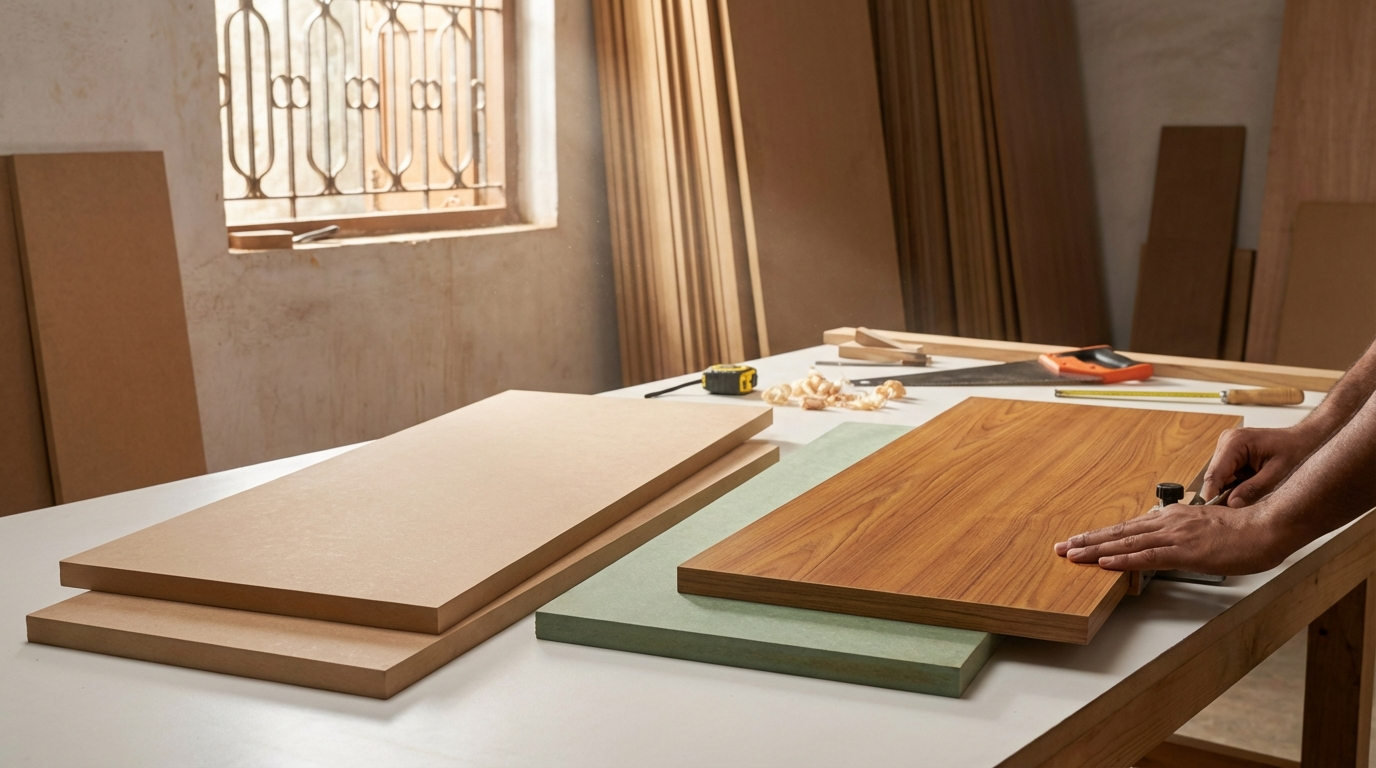
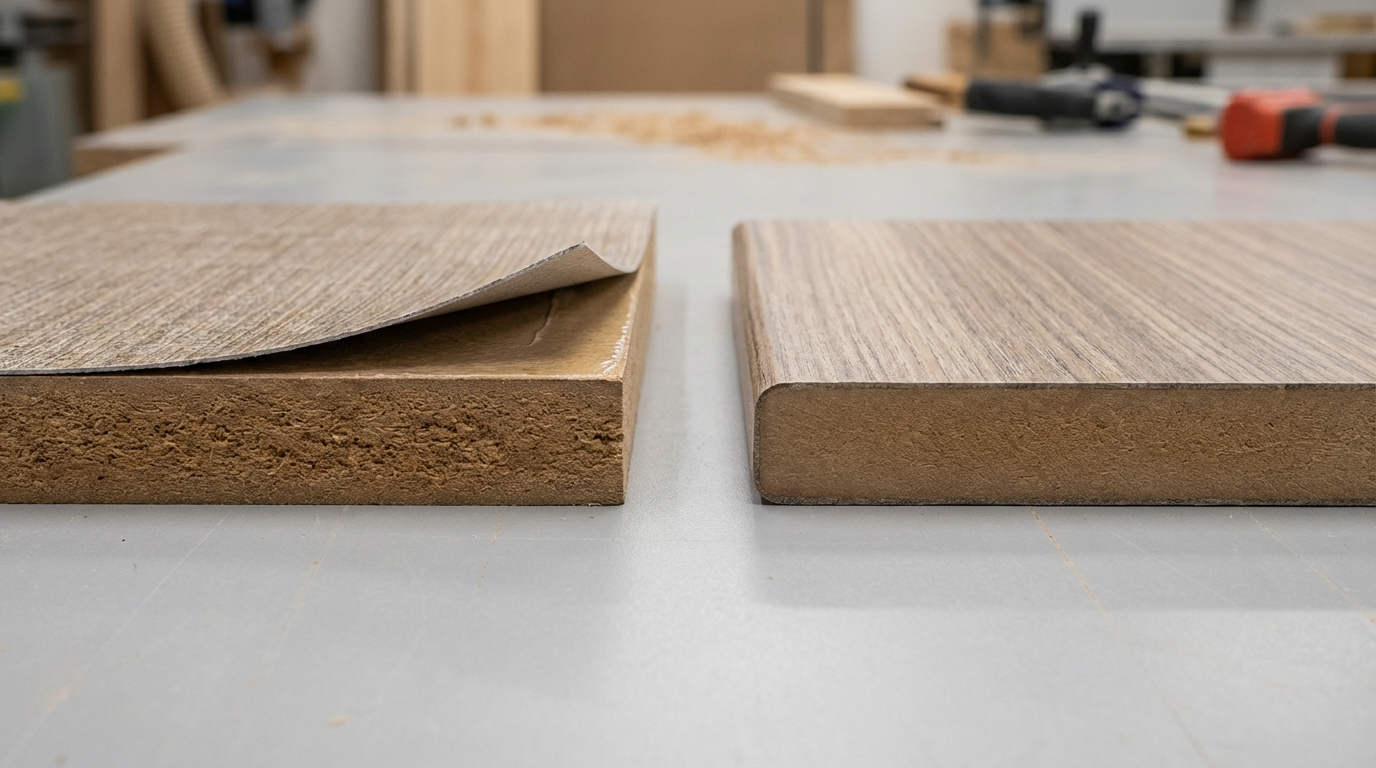
VIR MDF vs Rushil Decor MDF: Honest Comparison 2026
VIR MDF vs Rushil Decor comparison: quality, range, pricing & availability. Honest brand comparison to help you choose the best MDF for your project.
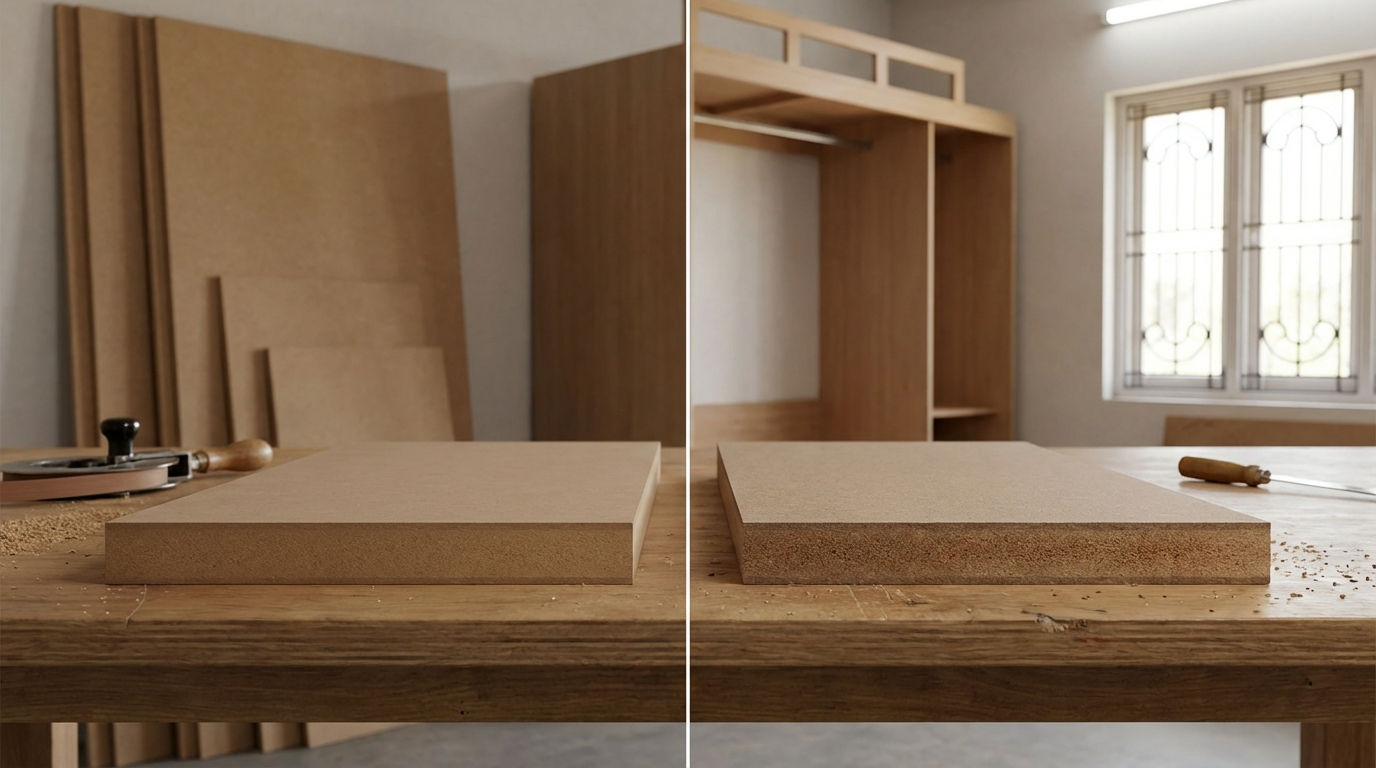
Quick Answer: VIR MDF and Rushil Decor MDF are the same product manufactured by the same company—Rushil Décor Limited. VIR is the brand name, while Rushil Décor is the parent company. There is no difference in quality, manufacturing, or specifications between them. If you've been comparing these as separate options, you can confidently choose VIR MDF knowing it carries Rushil Décor's full manufacturing standards and warranty.
Quick Decision Summary
If you're in a hurry: VIR MDF is manufactured by Rushil Décor Limited, an ISO 9001:2000 certified organization based in Gujarat with 3-Star Export House status. The company exports to 56+ countries and produces MDF boards at state-of-the-art facilities using plantation-based eucalyptus and silver oak. When dealers mention "Rushil MDF" or "VIR MDF," they're referring to identical products from the same production line.
- Choose VIR MDF if: You need consistent quality MDF from an established Indian manufacturer
- Choose VIR MDF if: You want boards available in multiple thicknesses (2mm to 25mm)
- Choose VIR MDF if: You need moisture-resistant options like VIR MAXPRO (HDFWR)
- Choose VIR MDF if: You require pre-laminated decorative panels for faster project completion
- Clarify with dealer if: They quote different prices for "Rushil" vs "VIR"—these should be identical
- Verify authenticity if: Pricing seems significantly below market rates
What VIR MDF and Rushil Décor Actually Mean
VIR MDF refers to Medium Density Fibreboard manufactured under the VIR brand by Rushil Décor Limited. The confusion between "VIR MDF" and "Rushil Decor MDF" stems from how branding works in the building materials industry—similar to how Maruti manufactures Suzuki vehicles, Rushil Décor manufactures VIR products.
Rushil Décor Limited was founded in 1993 and has grown into one of India's leading manufacturers of decorative laminates and engineered wood panels. The company operates modern manufacturing facilities with German continuous-press technology, ensuring uniform density and quality control across all VIR products.
The VIR Product Range Under Rushil Décor
The complete VIR lineup includes:
- VIR PRO: Interior grade MDF for standard furniture applications
- VIR PROPLUS: Exterior grade MDF with enhanced moisture resistance
- VIR MAXPRO (HDFWR): High-Density Fibre Water Resistant boards—plywood alternative
- VIR PRELAM: Pre-laminated decorative MDF panels in various finishes
Why This Clarification Matters for Indian Homes
Understanding that VIR and Rushil Décor are the same entity prevents several common purchasing mistakes in the Indian market. During monsoon season (June-September), buyers often panic-search for alternatives when their regular dealer is out of stock, sometimes paying premium prices for what they believe is a "different brand."
In coastal areas like Mumbai, Chennai, and Kerala, humidity levels regularly exceed 80%. Buyers specifically seeking moisture-resistant boards may encounter dealers offering "Rushil HDFWR" at one price and "VIR MAXPRO" at another—when both are identical products. This knowledge protects you from paying inflated margins.
Common Market Confusions to Avoid
- Some dealers stock VIR boards but invoice them as "Rushil MDF"—this is legitimate
- Price variations between dealers for identical VIR products can exceed ₹200-400 per sheet
- Warranty claims should be processed through Rushil Décor Limited regardless of brand labeling
- Both names may appear on technical specification sheets and invoices interchangeably
VIR MDF Complete Product Specifications
Since VIR is the only brand in this comparison (Rushil Décor being the manufacturer, not a separate brand), here are the complete specifications you need for project planning:
| Specification | VIR PRO (Interior) | VIR PROPLUS (Exterior) | VIR MAXPRO (HDFWR) |
|---|---|---|---|
| Density Range | 700-750 kg/m³ | 720-780 kg/m³ | 850-900 kg/m³ |
| Moisture Resistance | Standard (interior only) | Enhanced (semi-exterior) | High (kitchen/bathroom safe) |
| Termite Resistance | Yes (treated) | Yes (treated) | Yes (treated) |
| Borer/Fungus Resistance | Yes | Yes | Yes |
| Available Sizes | 8x4 ft, 8x6 ft, 6x4 ft | 8x4 ft, 8x6 ft, 6x4 ft | 8x4 ft, 8x6 ft, 6x4 ft |
| Thickness Options | 2mm to 25mm | 2mm to 25mm | 3mm to 25mm |
| Best Application | Wardrobes, TV units, shelves | Balcony furniture, covered areas | Kitchen cabinets, bathroom vanities |
Available Thickness Options (in mm)
VIR MDF boards are manufactured in the following thicknesses: 2mm, 3.3mm, 4mm, 4.3mm, 4.6mm, 5.5mm, 7mm, 7.3mm, 7.5mm, 9.75mm, 11mm, 14.5mm, 16mm, 16.5mm, 17mm, 18mm, and 25mm. This extensive range accommodates everything from backing panels (2-4mm) to heavy-duty cabinet carcasses (18-25mm).
Price Ranges and Cost Factors for VIR MDF in 2026
VIR MDF pricing varies by thickness, grade, and region. The following ranges reflect typical market prices across major Indian cities—actual prices depend on dealer margins, transport costs, and local demand.
| Thickness | VIR PRO (Interior) per sq ft | VIR MAXPRO (HDFWR) per sq ft | VIR PRELAM per sq ft |
|---|---|---|---|
| 4-6mm | ₹15-22 | ₹25-35 | ₹35-50 |
| 8-12mm | ₹28-42 | ₹50-70 | ₹55-80 |
| 16-18mm | ₹45-65 | ₹85-110 | ₹90-130 |
| 25mm | ₹75-95 | ₹100-130 | ₹120-160 |
Factors That Affect VIR MDF Pricing
- Location: Gujarat (manufacturing hub) typically has 10-15% lower prices than distant markets like Kerala or Northeast India
- Quantity: Bulk orders (50+ sheets) often qualify for dealer discounts of 5-8%
- Season: Pre-festival periods (Diwali, Durga Puja) may see temporary price increases due to demand
- Finish: Pre-laminated boards cost 40-60% more than plain MDF due to factory lamination
- Transport: Remote locations add ₹50-150 per sheet for freight
Budget Estimation Example
For a standard 10x10 ft modular kitchen using 18mm VIR MAXPRO for carcasses and 12mm for backs:
- Carcass material (approximately 120 sq ft): ₹10,200-13,200
- Back panels (approximately 60 sq ft): ₹3,000-4,200
- Total board cost estimate: ₹13,200-17,400
Note: This excludes shutters, hardware, labour, and finishing costs.
Decision Framework: Choosing the Right VIR MDF Grade
| Your Condition | Recommended VIR Product | What to Verify Before Buying |
|---|---|---|
| Standard bedroom wardrobe | VIR PRO (Interior MDF) | Check for VIR branding on board edge; confirm 16-18mm thickness |
| Kitchen cabinets (under sink) | VIR MAXPRO (HDFWR) | Verify "HDFWR" marking; test weight (should feel significantly heavier than regular MDF) |
| Bathroom vanity unit | VIR MAXPRO (HDFWR) | Ensure all edges will be sealed; confirm moisture-resistant grade |
| Coastal area furniture | VIR MAXPRO or VIR PROPLUS | Ask dealer about anti-fungal treatment; plan for AC environment if possible |
| Quick project with ready finish | VIR PRELAM | Match colour/texture codes; check for scratches before accepting delivery |
| CNC-routed decorative panels | VIR PRO (12-18mm) | Uniform density crucial for clean routing; avoid boards with visible density variations |
| Budget furniture (low humidity area) | VIR PRO (Interior MDF) | Acceptable for dry climates; seal all exposed edges with primer or edge band |
| TV unit backing panel | VIR PRO (4-6mm) | Thinner grades adequate for non-structural use; check for warping in thin sheets |
Common Buyer Mistakes (And How to Avoid Them)
These mistakes occur frequently when purchasing VIR/Rushil Décor MDF in Indian markets:
Mistake 1: Paying Different Prices for "VIR" vs "Rushil" Labels
Some dealers exploit brand confusion to charge premium prices. Both names refer to identical products from the same factory. Ask for the manufacturing batch code—it should follow the same format regardless of how the dealer labels it.
Mistake 2: Using Interior Grade MDF in Kitchens
VIR PRO (interior grade) lacks the moisture resistance needed for kitchen environments. Within 6-12 months of installation, edges may swell and laminate may delaminate near sinks or dishwashers. Always specify VIR MAXPRO (HDFWR) for any area where water exposure is possible.
Mistake 3: Ignoring Edge Sealing Requirements
Even moisture-resistant HDFWR boards absorb water through exposed cut edges. Every cut edge must be sealed with PVC edge banding, primer, or waterproof paint. Skipping this step voids the material's moisture resistance advantage.
Mistake 4: Storing Boards Flat on Damp Floors During Construction
Indian construction sites often have unsealed floors that accumulate moisture. Stacking MDF directly on such floors causes bottom sheets to absorb moisture and warp. Use wooden battens or plastic sheets as barriers.
Mistake 5: Not Verifying Thickness at Purchase
Actual thickness may vary by 0.5-1mm from stated thickness. For precision furniture work, measure sample boards before committing to large orders. A "17mm" board that's actually 16.5mm affects your joinery calculations.
Mistake 6: Choosing Based on Price Alone Without Checking Grade
The cheapest VIR board on offer may be interior grade being sold for kitchen use. Always confirm the specific grade (PRO, PROPLUS, or MAXPRO) rather than assuming all VIR boards are equivalent.
Mistake 7: Accepting Delivery Without Inspection
Transport damage, edge chips, and surface scratches are common. Inspect every sheet before signing delivery receipts. Damaged boards are difficult to return once accepted.
Mistake 8: Assuming Warranty Covers Moisture Damage in Wrong Applications
Manufacturer warranties typically exclude damage from using interior-grade boards in wet areas. Using VIR PRO where VIR MAXPRO is needed may void any warranty claim.
Failure Modes and How to Prevent Them
Failure 1: Edge Swelling Near Water Sources
Symptom: Bubbling or expansion along cabinet edges near sinks, usually within 3-8 months of installation
Root Cause: Water penetration through unsealed cut edges or use of interior-grade MDF in wet zones
Prevention: Use VIR MAXPRO (HDFWR) exclusively near water; apply waterproof edge banding on all cut surfaces; add silicone sealant at countertop junctions
Fix if Already Happening: Cut back affected sections 2-3 inches beyond visible damage; replace with HDFWR; ensure proper sealing before reinstalling
Failure 2: Laminate Delamination in Humid Climates
Symptom: Decorative laminate peeling away from MDF substrate, especially during monsoon season
Root Cause: Moisture cycling causing substrate expansion/contraction that breaks adhesive bond
Prevention: Use commercial-grade contact adhesive rated for humidity; consider factory-laminated VIR PRELAM boards; maintain AC or dehumidifier in high-humidity rooms
Fix if Already Happening: Remove delaminated sections completely; sand substrate; reapply laminate with moisture-resistant adhesive during dry weather
Failure 3: Screw Pull-Out in Hinge Zones
Symptom: Door hinges becoming loose over time; screws no longer gripping
Root Cause: Screws placed too close to board edge; incorrect pilot hole size; repeated stress from heavy doors
Prevention: Use hinge screws minimum 25mm from board edge; drill appropriate pilot holes; choose cup hinges designed for MDF; limit door weight with 18mm boards for doors over 600mm wide
Fix if Already Happening: Fill existing holes with wood filler mixed with sawdust; relocate hinges to fresh wood; use longer screws with wider threads
Failure 4: Sagging Shelves Under Load
Symptom: Visible bow in shelves, especially those over 600mm span
Root Cause: Insufficient thickness for span length; lack of support rails; excessive weight concentration
Prevention: Use 18mm minimum for shelves over 500mm span; add metal support rails for shelves over 800mm; distribute heavy items across multiple shelves
Fix if Already Happening: Add center support bracket; replace with thicker board; reduce span by adding vertical dividers
Failure 5: Surface Bubbling After Painting
Symptom: Paint lifting or bubbling on MDF surface months after application
Root Cause: Painting on unsealed MDF; moisture trapped beneath paint film; incompatible primer used
Prevention: Always apply MDF-specific primer/sealer before painting; ensure board is fully dry before finishing; use compatible paint systems
Fix if Already Happening: Sand affected areas back to bare MDF; apply proper sealer; repaint with breathable paint in thin coats
Failure 6: Warping During Storage
Symptom: Boards curved or twisted before installation
Root Cause: Uneven moisture absorption from one side; improper stacking; long-term horizontal storage without support
Prevention: Store boards vertically or on flat, supported surfaces; keep in climate-controlled areas; don't remove factory wrapping until ready to use
Fix if Already Happening: Minor warps may flatten under weight over 48-72 hours; severe warping cannot be reversed—reject such boards
Quality Checks Without Lab Tests
Before Buying: Visual and Physical Inspection
- Check branding: Look for VIR or Rushil Décor marking on board edge—unbranded boards may be inferior substitutes
- Assess weight: Pick up a corner of an 18mm sheet. HDFWR should feel significantly heavier than standard MDF (approximately 45-50 kg for 8x4 sheet vs 35-40 kg)
- Inspect surface: Run your hand across the face—should be uniformly smooth without rough patches or undulations
- Check edges: Look for chips, dents, or handling damage along sheet edges
- Verify thickness: Carry a measuring tape; spot-check thickness at multiple points
- Look for colour consistency: Core colour should be uniform brown throughout; patches of lighter or darker areas suggest density variations
Questions to Ask the Dealer
- "Is this VIR PRO, PROPLUS, or MAXPRO grade?" (Don't accept vague answers like "moisture resistant MDF")
- "Can you show me the batch manufacturing date?" (Avoid boards over 12 months old)
- "What's your return policy for boards with visible defects?"
- "Do you have the product specification sheet from Rushil Décor?"
Red Flags to Walk Away From
- Boards without any manufacturer marking
- Prices significantly below market rates (may indicate factory seconds or counterfeits)
- Dealer unable to specify which VIR grade is being sold
- Visible core voids when viewing board edge
- Strong chemical smell (may indicate uncured resins or non-standard manufacturing)
After Cutting: Quality Verification
- Edge examination: Cut edge should show uniform density throughout—no visible layers or voids
- Dust colour: Sawdust should be consistent brown; white patches indicate moisture or density issues
- Cutting resistance: Should cut smoothly without excessive resistance or burning; irregular cutting suggests density variations
After Installation: Ongoing Checks
- Monitor cabinet doors for alignment during first monsoon season
- Check under-sink areas quarterly for any signs of moisture damage
- Inspect edge banding adhesion after 6 months
- Note any unusual odours that might indicate moisture problems
Tips by User Type
For Homeowners
Setting realistic expectations: VIR MDF provides excellent value for modular furniture, but requires proper specification. Interior-grade boards in dry bedrooms can last 15+ years. Kitchen installations using HDFWR grade with proper edge sealing typically provide 10-12 years of service before any refurbishment becomes necessary.
Cleaning and maintenance: Wipe laminated surfaces with damp (not wet) cloth. Avoid harsh chemicals or abrasive cleaners that can damage laminate finish. For painted MDF, use mild soap solution. Never allow water to pool on horizontal surfaces.
When to worry: Bubbling at edges, laminate lifting, doors not closing properly, or musty smell from cabinets—these indicate moisture penetration requiring immediate attention before damage spreads.
For Carpenters and Fabricators
Cutting tips: Use 80-tooth carbide-tipped blades for clean cuts. Feed rate should be moderate—too fast causes tear-out, too slow causes burning. Support large sheets adequately to prevent binding.
Edge preparation: Sand cut edges with 120-grit before edge banding. Clean dust thoroughly—residual dust prevents proper adhesive bond. For painted edges, apply dedicated MDF edge sealer before primer.
Screw zones: Pre-drill pilot holes 70% of screw diameter. Minimum edge distance 25mm for face screws, 40mm for edge screws. Use confirmat screws for structural joints; standard wood screws for hardware attachment.
Hinge installation: Cup hinges designed for particle board work well on MDF. Use mounting plates for better load distribution. For heavy doors (over 10 kg), use three hinges minimum.
Handling: VIR boards are heavier than plywood—plan for two-person handling of full sheets. Store vertically to prevent warping. Keep wrapped until ready for cutting.
For Architects and Interior Designers
Specification language: Specify "VIR MAXPRO HDFWR as manufactured by Rushil Décor Limited" for wet-zone applications to avoid substitution. Include thickness, size, and grade in all schedules.
Wet-zone detailing: Call for minimum 100mm raised toe-kick in kitchens to protect base cabinets from floor-mopping water. Specify silicone sealant at all counter-to-cabinet junctions. Detail drainage slopes away from cabinet bases.
Finish selection: VIR PRELAM reduces site lamination variables but limits colour matching flexibility. For large projects, sample approval from specific production batches ensures consistency. Factor 5-8% material wastage into quantity calculations.
For Modular Furniture and OEM Manufacturers
Quality control checkpoints: Incoming inspection should verify grade, thickness, and manufacturer marking on every batch. Random density checks using core samples help identify inconsistent deliveries. Maintain batch traceability for warranty claim support.
Reducing customer complaints: Edge sealing is the primary failure point—invest in quality edge banding machines and materials. Train assembly staff on correct screw torque settings for MDF. Include moisture care instructions with every kitchen delivery.
Batch consistency: Order full project requirements from single manufacturing batch where possible. Different batches may have slight colour variations in core that become visible at exposed edges.
VIR MDF vs Alternative Materials: When to Choose What
Understanding how VIR MDF compares to other common materials helps you make appropriate selections:
| Material | Best For | Avoid For | Cost vs VIR MDF |
|---|---|---|---|
| VIR PRO (Interior MDF) | Wardrobes, beds, TV units, study tables | Kitchens, bathrooms, outdoor use | Baseline |
| VIR MAXPRO (HDFWR) | Kitchens, bathrooms, humid areas | Complete outdoor exposure | 40-60% higher |
| BWP Plywood | Areas requiring superior screw-holding | Termite-prone areas (unless treated) | 50-80% higher |
| Particle Board | Budget furniture, dry areas only | Any moisture exposure, heavy loads | 30-40% lower |
| PVC/WPC Boards | Complete waterproofing needed | Load-bearing furniture, screw joints | Similar to HDFWR |
Regional Availability and Dealer Network
Rushil Décor Limited operates manufacturing facilities in Gujarat (Ahmedabad region) and Andhra Pradesh. This affects availability and pricing across India:
Best Availability and Pricing
- Gujarat, Maharashtra, Rajasthan—proximity to manufacturing
- Major metro cities—multiple dealer options create competitive pricing
Moderate Availability
- South India (Karnataka, Tamil Nadu, Kerala)—established distribution network
- Delhi NCR, Uttar Pradesh—large market with good supply chains
Limited Availability (Higher Transport Costs)
- Northeast India—few dealers, higher prices
- Remote tier-3 cities—may require advance ordering
Note: Dealers in smaller towns may stock limited thickness options. Confirm availability of your required specifications before finalizing designs.
Frequently Asked Questions
Is VIR MDF and Rushil Décor MDF the same product?
Yes, VIR MDF and Rushil Décor MDF are identical products. VIR is the brand name under which Rushil Décor Limited manufactures and markets its MDF and engineered wood panels. The company, founded in 1993 and headquartered in Gujarat, produces all VIR products at its own facilities. When dealers refer to "Rushil MDF" or "VIR MDF," they mean the same boards from the same production lines with identical specifications and quality standards.
Which VIR MDF grade should I use for kitchen cabinets?
For kitchen cabinets, always use VIR MAXPRO (HDFWR—High Density Fibre Water Resistant). This grade has a density of 850-900 kg/m³ and includes water-resistant resins that prevent swelling when exposed to humidity and occasional water splashes. Standard VIR PRO (interior MDF) lacks adequate moisture resistance and will fail within 6-18 months in kitchen environments. Use 18mm MAXPRO for carcasses and 12mm for back panels, ensuring all cut edges are sealed with PVC edge banding.
How does VIR MDF price compare to plywood in 2026?
VIR MDF is typically 25-40% cheaper than equivalent BWP (boiling waterproof) plywood. An 18mm VIR MAXPRO sheet (8x4 ft) costs approximately ₹2,700-3,500 depending on location, while comparable marine-grade plywood costs ₹4,000-5,000. For interior applications like wardrobes, VIR PRO offers even greater savings at 40-50% below plywood prices. However, total project cost depends on application—plywood may be more economical where extensive edge finishing would be required on MDF.
Can VIR MDF be used in humid coastal areas like Mumbai or Chennai?
VIR MAXPRO (HDFWR) can be used in coastal areas, though additional precautions are necessary. Coastal humidity regularly exceeds 75-85%, which accelerates moisture absorption even in resistant grades. Recommendations include: using air conditioning or dehumidifiers in furnished rooms; ensuring excellent edge sealing on all cut surfaces; choosing factory-laminated VIR PRELAM where possible; and avoiding use in non-AC rooms that remain closed for extended periods. Standard VIR PRO is not suitable for coastal area furniture.
What warranty does Rushil Décor provide on VIR MDF boards?
Rushil Décor typically offers a 5-7 year warranty on VIR MDF products against manufacturing defects such as abnormal delamination, density inconsistencies, or termite attack despite treatment. However, warranty terms vary by product grade and dealer. Warranty claims require original purchase invoice and are generally voided if boards are used in applications beyond their specified grade—for example, using interior-grade VIR PRO in kitchen wet zones. Always confirm specific warranty terms with your dealer at purchase time.
Is VIR MDF termite-proof and borer-resistant?
Yes, all VIR MDF products are treated with anti-termite and anti-borer chemicals during manufacturing. The treatment is integrated into the board rather than applied as surface coating, providing protection throughout the material thickness. Additionally, the high density and resin-bonded fibre structure makes the board inhospitable to pests. However, no treatment is absolutely permanent—adjacent untreated wood or severe infestations can still pose risks. Maintain overall pest control in your home for comprehensive protection.
What thickness of VIR MDF should I use for different furniture?
Thickness selection depends on structural requirements: Use 2-4mm for back panels and drawer bottoms with adequate support. Choose 8-12mm for internal partitions, modesty panels, and shelves under 400mm span. Select 16-18mm for cabinet carcasses, wardrobe bodies, and shelves with longer spans. Use 25mm for heavy-duty applications like bed frames or commercial fixtures requiring maximum rigidity. For doors, 18mm is standard; lighter doors may use 16mm while very large doors may benefit from 25mm to prevent warping.
How do I verify if VIR MDF is genuine and not a counterfeit?
Genuine VIR MDF boards carry manufacturer markings on the board edge, typically including the VIR or Rushil Décor logo and product grade. Check that weight corresponds to stated grade—HDFWR boards should feel noticeably heavier than standard MDF of same thickness. Request specification sheets from your dealer and compare stated density with manufacturer published data. Purchase only from established dealers who can provide proper tax invoices. Prices significantly below market rates often indicate factory seconds, damaged goods, or counterfeits.
Can VIR MDF be painted directly or does it need preparation?
VIR MDF requires proper preparation before painting. The board surface absorbs paint unevenly if not sealed, and edges absorb significantly more than faces, causing inconsistent finish. Apply MDF-specific primer/sealer first—this reduces absorption and provides uniform base. Sand lightly between coats with 180-220 grit. Edges require additional sealer coats or dedicated edge sealer before priming. For best results, use spray application rather than brush to avoid raising fibres. Water-based primers are suitable but require good drying conditions.
Where can I buy VIR MDF boards at best prices?
Competitive pricing is typically available through authorized dealers in major cities and near manufacturing locations (Gujarat, Andhra Pradesh, Maharashtra). Compare quotes from multiple dealers as margins vary significantly—price differences of ₹200-500 per sheet are common for identical products. Building material wholesale markets often have better rates than retail showrooms. For large orders (50+ sheets), request direct dealer quotes with quantity discounts. Avoid extremely low-priced offers that may indicate seconds, damaged stock, or substitutes.
How long will VIR MDF furniture last in Indian conditions?
Properly specified and installed VIR MDF furniture typically lasts 12-15 years in normal residential use. VIR MAXPRO in kitchens with proper edge sealing provides 10-12 years before significant refurbishment becomes necessary. Wardrobes and bedroom furniture using VIR PRO in air-conditioned or low-humidity environments can exceed 15 years. Lifespan depends heavily on correct grade selection, edge sealing quality, and environmental conditions. Furniture in non-AC rooms experiencing monsoon humidity cycling typically shows faster wear than climate-controlled environments.
Is VIR MDF environmentally friendly compared to plywood?
VIR MDF offers environmental advantages through efficient use of plantation timber. Rushil Décor uses fast-growing eucalyptus and silver oak rather than old-growth forest timber. The manufacturing process utilizes wood fibres including material that would be waste in plywood production. However, MDF production does involve formaldehyde-based resins—modern VIR boards typically meet E1 emission standards (low formaldehyde). For maximum eco-friendliness, confirm your batch meets E1 or E0 standards and ensure proper sealing to minimize any emissions post-installation.
Note: This is independent informational content and is not affiliated with Rushil Décor Limited or any manufacturer. Prices and specifications mentioned are approximate and may vary by location and time. Always verify current specifications and pricing with authorized dealers before making purchase decisions.
Disclaimer: This content is provided for general informational purposes based on industry practices and publicly available information. Product specifications, standards, prices, and availability may vary by manufacturer, region, and time. Readers should independently verify details with manufacturers, dealers, or qualified professionals before making purchase or construction decisions.Want Plywood Suggestions?
Share a few details and a VIR MDF specialist will suggest suitable brands and connect you to responsive dealers.