VIR Studio: A Quick Tour of MDF Design Ideas, Finishes & Color Pairings
Explore MDF design ideas, finish options, and modern color pairings you can use for wardrobes, wall panels, and office furniture.
Note: This is independent informational content and is not affiliated with any manufacturer.
Quick Decision Summary
MDF shines in designs with melamine or laminate finishes paired with neutrals like greys and woods for wardrobes, panels, and units.
If you’re in a hurry, pick 18mm pre-laminated MDF in matte walnut-grey for most Indian homes—handles monsoon humidity better than gloss, hides fingerprints, and pairs with white accents for modern looks. Test samples under site lighting, ensure edge banding matches, and verify screw-hold on thicker boards. This combo works for 80% of wardrobe or TV unit projects without major rework.
- Choose this if you want affordable modern aesthetics with easy carpentry workflows in dry-to-moderate humidity zones.
- Avoid this if your site has constant water exposure; opt for HDFWR boards instead with sealed edges.
What This Material/Option Actually Is
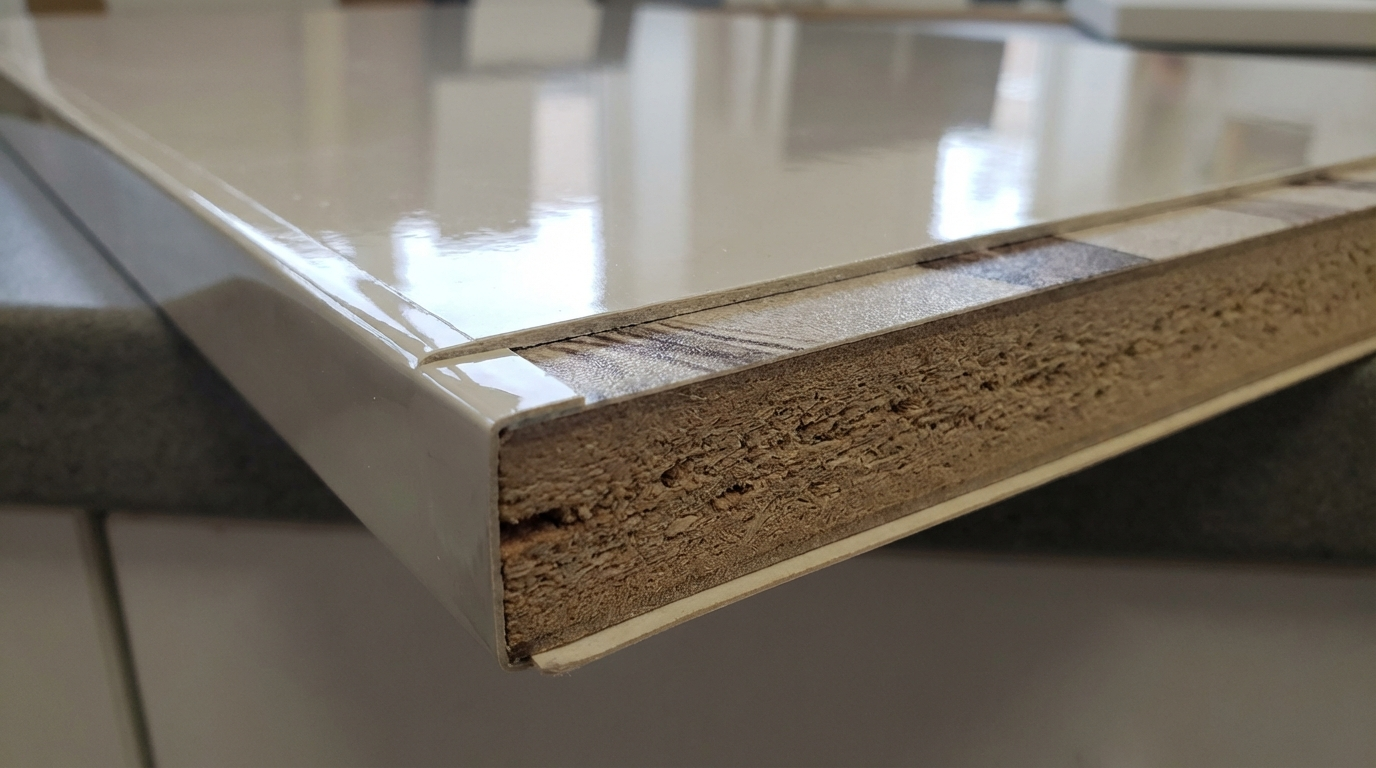
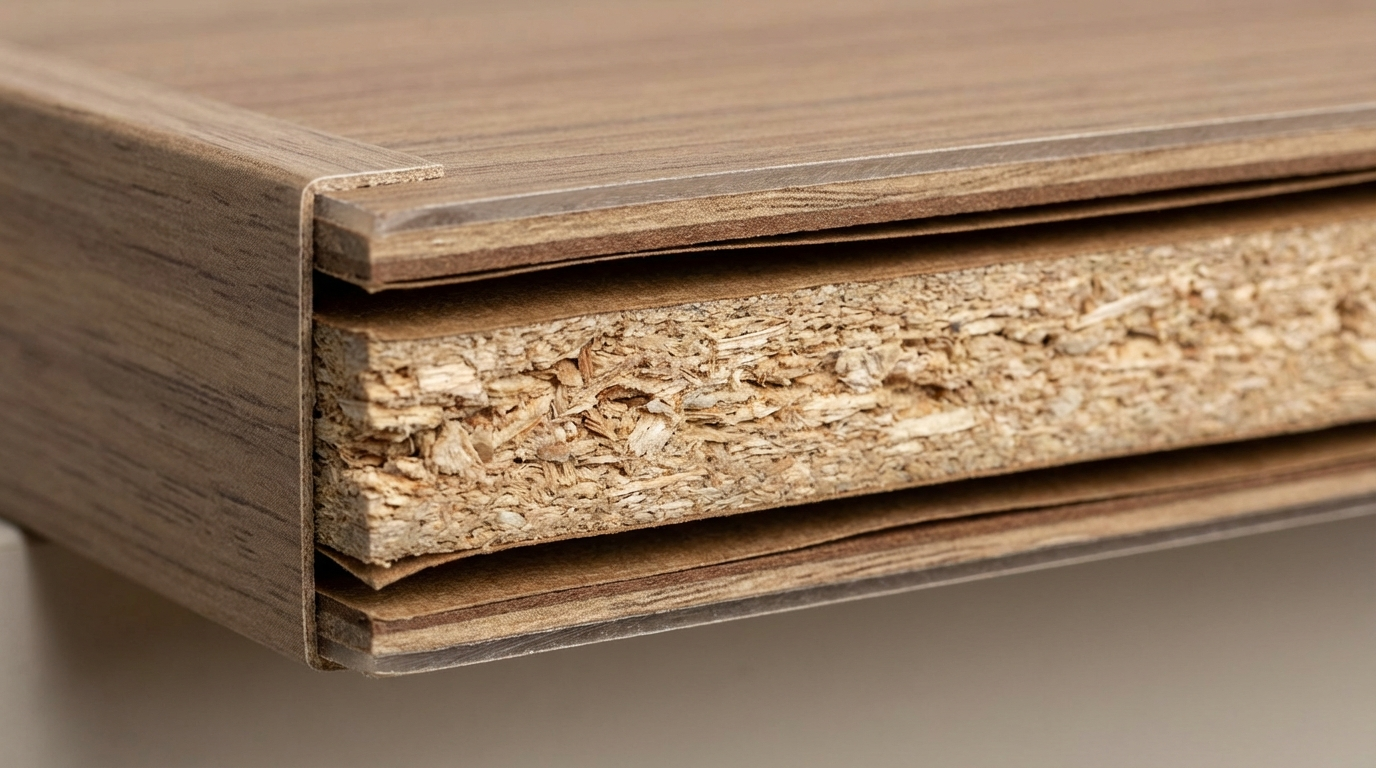
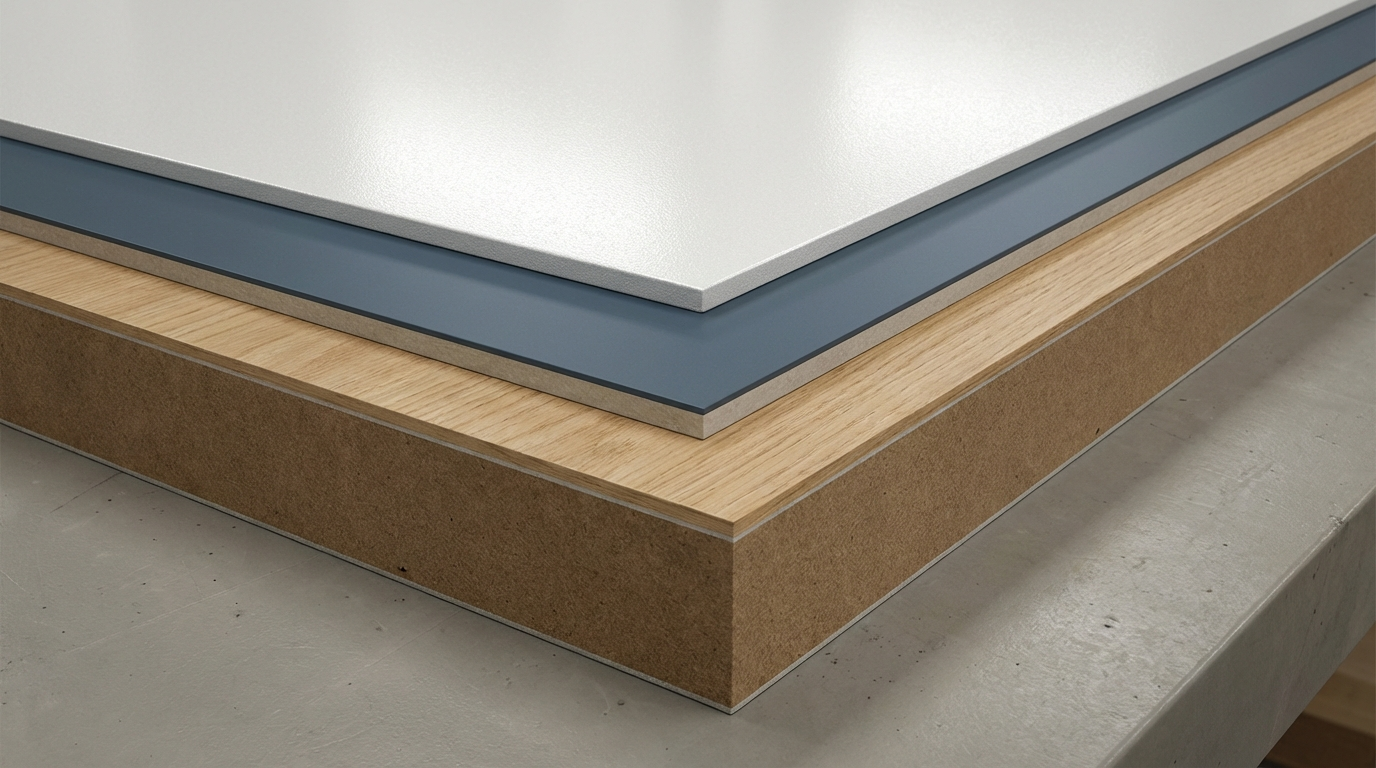
MDF, or medium-density fiberboard, forms the base for countless design ideas through added finishes like melamine, laminates, or PVC foils. These surfaces turn plain boards into wardrobe shutters, wall panels, or office desks with wood grains, solids, or textures. Color pairings involve matching tones—like oak with taupe—for cohesive rooms.
Finishes range from factory-applied melamine (thin resin layer) to high-pressure laminates (thicker, durable sheets). Pre-laminated MDF comes ready-to-use, saving time, while raw MDF needs post-laminate application. In Indian workflows, these suit CNC cutting for precise modular pieces.
Design ideas here mean practical combos: board type + finish + color scheme + edge details. Not just visuals—must factor thickness (6-25mm), density (650-850kg/m³ typically), and moisture resistance for real-site use.
Why It Matters in Indian Homes and Sites
Monsoon humidity (70-90% in coastal areas like Mumbai or Chennai) swells untreated MDF edges, causing delamination or warp. Designs with unsealed finishes fail faster in kitchens or bathrooms, leading to peeling or bubbling after 6-12 months.
Site realities amplify issues: poor storage exposes boards to rain during transport; carpenter delays mean open cuts absorb moisture. Coastal salt air scratches gloss finishes quicker. Well-paired designs with moisture-resistant variants and proper edging hold up, saving 20-30% on rework costs.
Practical upside: MDF designs enable fast modular installs, ideal for tier-2 city apartments with tight timelines. Pair light colors with dark accents to mask dust in high-traffic offices.
Practical Use Cases (What Works, What Fails)
| Use Case | Recommended Thickness | Finish Notes | Risk Notes |
|---|---|---|---|
| Wardrobes | 18mm | Matte melamine in wood grains | Edge swelling in humid storage; seal immediately |
| Wall Panels | 8-12mm | Laminate solids (greys) | Scratch-prone in kids' rooms; add protective film |
| TV Units | 18-25mm | Textured laminates | Screw-hold fails on thin boards; test pilot holes |
| Office Partitions | 12mm | White melamine | Yellowing from smoke; choose UV-stable resins |
| Kitchen Shutters | 18mm HDFWR | High gloss laminate | Steam delam if unsealed; use WR variants |
Failures happen when thickness mismatches load—like 12mm sagging under wardrobe weight. Works best in ventilated AC rooms; fails in open balconies without overhangs.
What thickness works best for wardrobe designs?
18mm MDF handles typical Indian wardrobe loads (clothes, shelves) without flexing. Thinner 15mm suits light-use kids' units but risks bowing over time.
Nuance: pair with internal framing for heavy items. In humid Delhi summers, add back panel gaps for airflow. Check by loading a sample shelf with 20kg—minimal sag means good density. Next, confirm carpenter uses 35mm confirms for hinges to avoid pull-out.
Can MDF wall panels handle coastal humidity?
Yes, with HDFMR finishes and PVC edge tapes. Standard MDF warps above 20% moisture content.
Conditions: apply in ventilated spaces, avoid direct rain. Trade-off: matte over gloss for less stickiness. Verify by pressing edges—smooth seal resists fingernail digs. Install with 2mm expansion gaps.
Design Ideas You Can Actually Build
Group by room: wardrobes get shaker-style panels in grey-oak; kitchens favor handle-less slabs in white-marble effect.
- Wardrobe: Vertical grain laminate (walnut) + matte grey frames; 18mm, ABS edging. Fits monsoon sites with WR base.
- TV Unit: High-gloss black base + wood shelves; LED recesses via CNC. Coastal ok if sealed.
- Wall Panel: Textured stone finish in beige; 12mm floating install. Hides imperfections in uneven walls.
- Office Desk: Laminate in ash wood + white drawer fronts; cable management slots. Scratch-resistant for daily use.
- Partition: Two-tone melamine (navy bottom, light top); acoustic fabric inset. Budget-friendly for startups.
Each idea uses cost-effective pairings: neutrals expand small spaces, woods warm large ones.
How to pair colors for small Indian apartments?
Use light bases like off-white MDF with 20% dark accents (charcoal lines). Avoid all-dark to prevent cave feel.
Conditions: test under fluorescent lights—pairings shift tones. India tip: dust-hiding greys over pure white. Check harmony by placing samples adjacent; adjust saturation for balance.
What finishes suit modular kitchens?
Acrylic or thick laminates on HDFWR for steam resistance. Melamine for budget slabs.
Nuance: semi-gloss cleans spills fast but fingerprints show. Verify adhesion by tape test on sample. Seal joints with silicone for monsoon leaks.
Popular Finishes for MDF in India
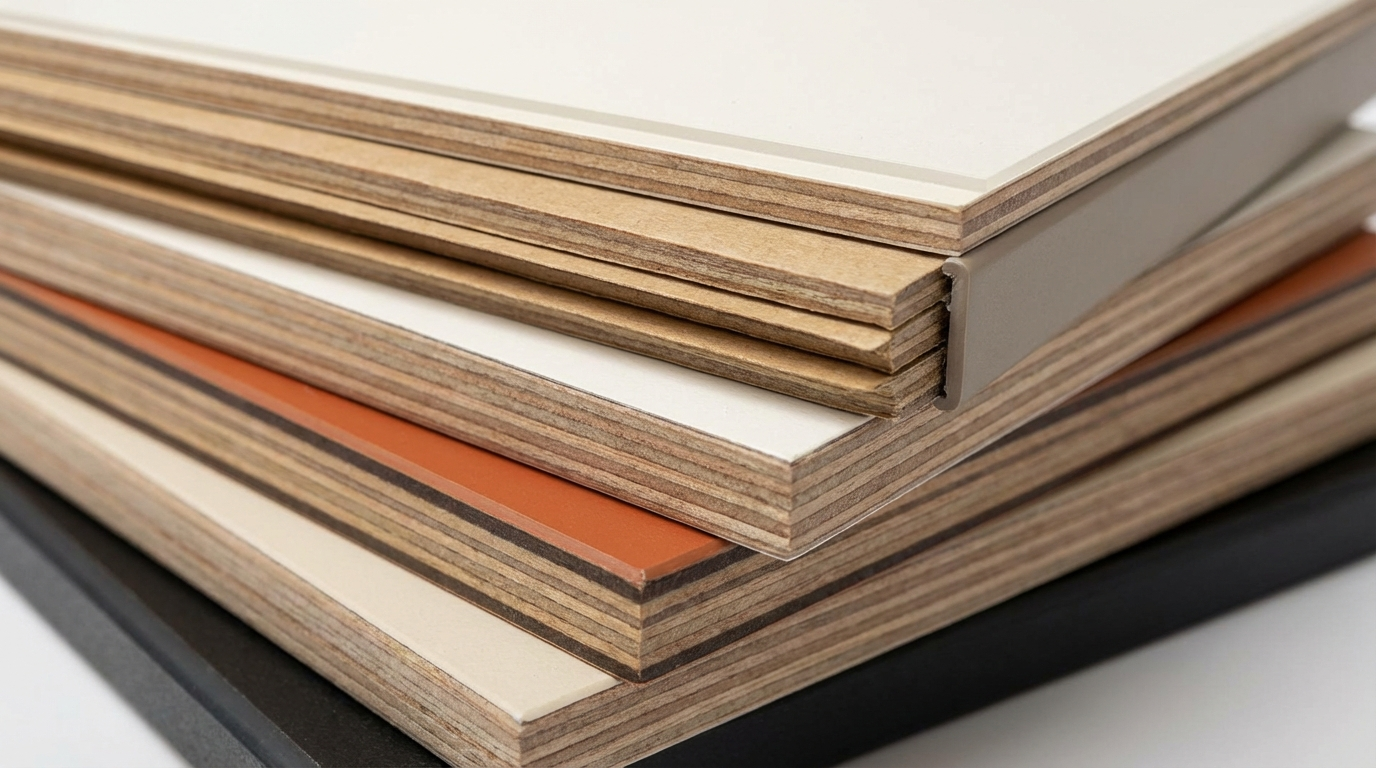
Melamine leads for affordability—thin, uniform layer in 1000+ prints. Laminates offer depth (0.7-1.5mm thick), better scratch resistance. PVC membranes wrap curves for 3D effects.
Matte popular in homes (hides smudges); gloss in showrooms (easy wipe). Textures mimic stone/wood without veneer cost. Trade-off: gloss yellows faster in UV-heavy sites.
In workflows, pre-lam saves 2 days vs post-application. CNC routes designs precisely on finished boards.
Matte vs gloss—which for high-traffic areas?
Matte for traffic zones; masks scratches, fingerprints from coastal humidity.
Conditions: gloss suits low-touch kitchens but needs daily polish. Check: rub sample with cloth—minimal shine loss wins. Pair matte with durable edges.
Color Pairing Strategies
60-30-10 rule: 60% base (light grey MDF), 30% secondary (wood grain), 10% accent (yellow hardware). Monochrome stacks shades of one hue for calm offices.
Contrasts pop: white cabinets + navy islands. India tweak: earth tones (teak-browns) blend with furniture; avoid pastels—they stain in kitchens.
Test pairings: lay samples flat, view from angles. Digital mocks help but site lighting rules.
Best neutral palettes for office interiors?
Greys (warm-cool mix) + natural woods on MDF panels. Adds professionalism without overwhelming.
Nuance: cooler greys suit AC spaces; warms for natural light. Coastal: anti-fade laminates. Verify: expose sample to sunlight 48hrs—no color shift.
Failure Modes and Fixes
- Symptom: Edge swelling. Cause: Moisture ingress post-cut. Prevent: Band edges same day. Fix: Sand, re-band if minor.
- Symptom: Delamination bubbles. Cause: Poor resin adhesion in humidity. Prevent: WR boards. Fix: Replace panel.
- Symptom: Surface scratches. Cause: Gloss in kids' areas. Prevent: Matte/texture. Fix: Polish lightly.
- Symptom: Screw pull-out. Cause: Thin board/low density. Prevent: 18mm+ with pilots. Fix: Reinforce with inserts.
- Symptom: Color mismatch. Cause: Lighting variance. Prevent: Site-test samples. Fix: Blend with trim.
- Symptom: Chipping at cuts. Cause: Dull CNC bits. Prevent: Sharp tools, tape edges. Fix: Fill, sand.
Common Buyer Mistakes and How to Avoid Them
- Mistake 1: Ignoring humidity—buy standard MDF for coastal kitchens. Avoid: Specify MR/WR, check density.
- Mistake 2: Gloss everywhere—shows dust in offices. Avoid: Matte for 70% surfaces.
- Mistake 3: No edge banding plan—swells post-install. Avoid: Match band to finish thickness.
- Mistake 4: Mismatched colors—looks patchy. Avoid: Buy full set samples.
- Mistake 5: Thin boards for shelves—sag city. Avoid: Load-test before commit.
- Mistake 6: Skipping CNC preview—design flaws emerge late. Avoid: Mock in software.
- Mistake 7: Dark colors in small rooms—claustrophobic. Avoid: Light base rule.
- Mistake 8: No expansion gaps—warps against walls. Avoid: 2mm per meter.
Decision Framework for MDF Designs
| Site Condition | Recommended Finish/Color | What to Verify |
|---|---|---|
| Wet zone (kitchen) | HDFWR + semi-gloss laminate / whites | Edge seal test, WR stamp feel |
| Coastal humidity | MR MDF matte / earth tones | Weight per sqm, no warp in sample |
| Heavy use (office) | Thick laminate texture / greys | Scratch resistance rub test |
| Tight budget | Pre-melamine / neutrals | Uniform print, no bubbles |
| Fast delivery | Stock pre-lam / popular woods | Batch consistency across sheets |
| High scratch risk (kids) | Textured PVC / darks | Finger dig resistance |
Quality Checks You Can Do Without Lab Tests
Before buying: Weigh a sheet—650kg/m³+ feels solid. Tap edges—dull thud means good density. Check finish: uniform color, no fish eyes.
After cutting: Edges smooth, no fuzz. Test screw: holds without crumbling. Water drop on finish—beads up, not absorbs.
After install: Gaps even, no gaps at hinges. Clean with microfiber— no residue. Press joints—tight, no creak.
Red flags: lightweight boards, patchy prints, sticky surfaces.
How to spot low-quality finishes on-site?
Low-quality shows orange peel texture or thin spots. Rub fingernail—no digs.
Conditions: humid storage worsens. Next: compare two suppliers' samples side-by-side under light.
Persona-Specific Tips
Homeowners: Do: Wipe daily with damp cloth, avoid abrasives. Don’t: Drag heavy items, expose to steam.
Carpenters: Cut with taped edges, pilot holes 3mm, fasten 50mm from ends. Use PVA glue for banding.
Architects/Designers: Spec 18mm min, detail 10mm edge returns, WR for zones >60% RH. Logic: matte scales better.
OEM/Modular Makers: QC: caliper thickness every 10 sheets, color meter match. Reduce returns: pre-seal cut parts.
FAQs
Can standard MDF handle Indian monsoons?
Standard MDF struggles above 65% humidity, swelling 5-10% at edges without protection. Switch to MR or WR variants with sealed laminates for wardrobes or panels. In practice, store upright under cover during rains, and install within a week of delivery. This setup lasts 5+ years in Mumbai-like conditions, but always leave ventilation gaps behind panels to prevent trapped moisture buildup.
What’s the difference between melamine and laminate finishes?
Melamine is a thin impregnated paper layer, quicker to apply but less impact-resistant than 0.8mm+ laminates which handle scratches better. Melamine suits budget TV units; laminates fit kitchens. Trade-off: laminates add weight and cost but edge better on curves. Check by thickness gauge—deeper color means laminate.
Are dark color pairings practical for dusty Indian homes?
Dark greys or blacks on MDF hide dust well but show scratches more than lights. Pair with matte textures for offices. In Delhi dust belts, vacuum weekly. Avoid pure gloss darks—they fingerprint. Test: dust sample, wipe—easy clean wins for your site.
How does thickness affect MDF design strength?
12mm flexes under 10kg shelf loads; 18mm holds 25kg steady for wardrobes. Thicker aids screw grip in humid woods. For wall panels, 8mm suffices if framed. Always brace spans over 60cm. Carpenter tip: double-layer thin boards if budget tight, but align grains.
Should I use PVC over laminate for curved designs?
PVC membranes wrap 3D shapes seamlessly via vacuum press, unlike rigid laminates. Ideal for handle-less cabinets. Downside: softer surface scratches easier. In coastal areas, choose UV-stable PVC. Verify: bend sample—no cracks. CNC preps flat faces first.
What edge treatments match modern MDF designs?
ABS or PVC tapes (2mm thick) in matching prints prevent moisture entry, essential for India sites. Machine-press for flush fit. Avoid paper edges—they peel. For premium, aluminum channels on shelves. Check: pull test post-application—no lift.
Do textures outperform plain finishes in kids' rooms?
Textures like linen or stone on MDF resist fingerprints and minor bangs better than smooths. Pair with earth colors for play walls. Humidity note: ensure resin binds fibers tightly. Clean with soft brush; avoids swirl marks common on gloss.
How to mix wood grains with solids in one room?
Limit to two grains (e.g., oak shelves, walnut doors) with solid grey accents at 40%. Creates depth without chaos. Site-test: place in room light—harmonizes or clashes? Indian tip: lighter grains brighten low-light apartments.
Is pre-laminated MDF worth the premium for DIY?
Pre-lam skips glue-ups, reducing bubbles in home workflows. Suits small carpenters without presses. Cost 10-20% more but halves time. Verify stock freshness—no yellowing. For monsoons, pair with quick-band edges.
Can MDF designs integrate with metal accents?
Yes, powder-coated frames pair with white MDF for industrial kitchens. Ensure thermal expansion match—leave 1mm gaps. Coastal salt corrodes cheap metals; spec marine-grade. Design rule: metal at base, MDF uppers for clean lines.
Disclaimer: This content is provided for general informational purposes based on industry practices and publicly available information. Product specifications, standards, prices, and availability may vary by manufacturer, region, and time. Readers should independently verify details with manufacturers, dealers, or qualified professionals before making purchase or construction decisions.Want Plywood Suggestions?
Share a few details and a VIR MDF specialist will suggest suitable brands and connect you to responsive dealers.